Burundi is one of the smallest countries in Africa, and its plant list is still being written. Meso’s national checklist counts about 1,600 plants, a single savanna reserve (Ruvubu National Park) holds roughly 17% of the country’s known vascular flora, and some corners have barely been surveyed. Most of what you see around Bujumbura is not native at all: one garden survey found that 85% of 567 species were introduced.
So here’s a short field guide to Burundi’s native plants. Twelve species, grouped by where they grow, with common names where they exist, what threatens them, and what people have used them for.
Contents
- Native, endemic or introduced?
- Montane forest: Kibira and the highlands
- Rivers, swamps and wetlands
- Lake Tanganyika shore
- Burundi’s native plants at a glance
- Conservation: what is at risk
Native, endemic or introduced?
Three words get mixed up constantly.
A native plant arrived in Burundi without human help and has grown there for thousands of years. An endemic plant is native to one place and nowhere else, so a Burundi endemic grows only inside Burundi’s borders. Many plants described as endemic here are really range-restricted: they also occur in a neighboring country, usually Rwanda or the Democratic Republic of the Congo, because the highlands of the Albertine Rift don’t stop at a border. An introduced plant came with people.
Eucalyptus is the classic mix-up. Those tall, peeling-barked trees lining Burundian hillsides are Australian, planted for timber and firewood. Avocado, tea, coffee, jacaranda and most ornamental hedges are also imports.
The real native flora comes from several zones. Cool, wet mountain forest runs along the Congo-Nile divide. Wooded savanna, gallery forest and swamp cover the Ruvubu valley in the east, a mix that researchers describe as Zambezian vegetation at the northern edge of its range meeting eastern African flora. And the warm lowlands run down to the shores of Lake Tanganyika.
Montane forest: Kibira and the highlands
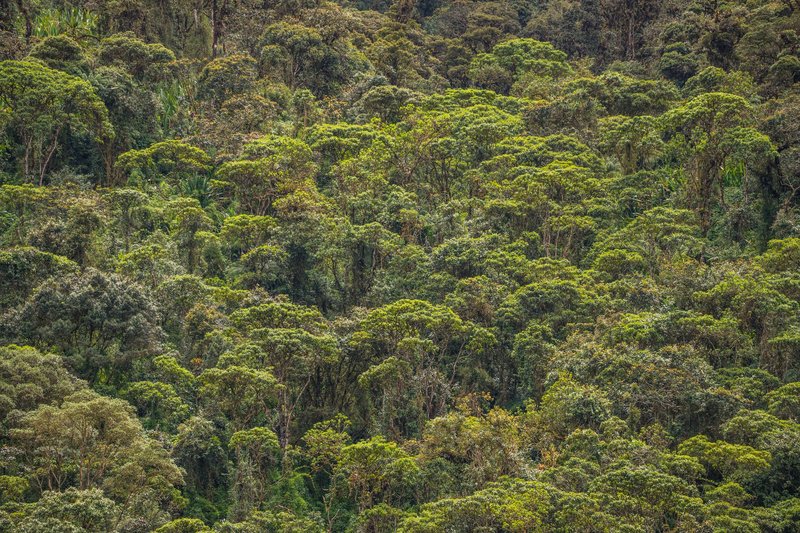
Kibira National Park, in the northwest, is the largest block of intact mountain rainforest Burundi has left. Eight of the twelve plants below grow here or in forests like it.
1. Mountain cedar (Entandrophragma excelsum)
This is the tree that defines Kibira’s canopy. It’s an emergent, meaning it pokes above the surrounding forest, and big specimens can pass 50 meters. It’s a relative of the mahoganies, and like them it’s prized for timber, which is the reason it is listed as Vulnerable by the IUCN. Park descriptions put it among the dominant trees alongside Symphonia globulifera and Newtonia buchananii.
2. Symphonia globulifera
Cut the bark and it bleeds yellow resin. That sticky latex has been used for sealing canoes and for treating wounds across Africa and tropical America, since this is one of the few trees with a range on both sides of the Atlantic. In Kibira it grows as a dominant canopy species, and in wetter pockets it develops arching stilt roots.
3. Afrocarpus usambarensis
A podocarp, which makes it a conifer, in a forest otherwise full of broadleaf trees. Podocarps are an ancient lineage, and finding one here is a small reminder that African mountain forests are older than the farmland around them. The wood is fine-grained and has long been taken for building and carpentry, which has put pressure on wild stands across the highlands.
4. Hagenia abyssinica
Known as kousso or African redwood, this is a tree of the cool upper slopes and forest edges. It drapes itself in long, drooping clusters of reddish flowers, and the female blooms were traditionally dried and brewed to expel tapeworms. In Kibira it shows up in secondary forest, the regrowth zone that forms after the original canopy is cleared.
5. Harungana montana
A pioneer tree, one of the first to colonize a landslide scar, a clearing or an abandoned field. Cut a twig and orange-red sap runs out, a trait shared by the whole genus. Because pioneers like this grow fast and spread easily, they’re what you see at the edges of degraded forest, where they shade the ground and give slower forest trees a way back in.
6. Stapfiella claoxyloides
The obscure one. This small tree belongs to the passionflower family and is known from the montane forests of the Albertine Rift, which is why it appears on Burundi’s species lists. It has no popular name and almost no photographs, which is itself the point: a good share of Burundi’s native plants are documented mostly by herbarium specimens and checklists, not field guides.
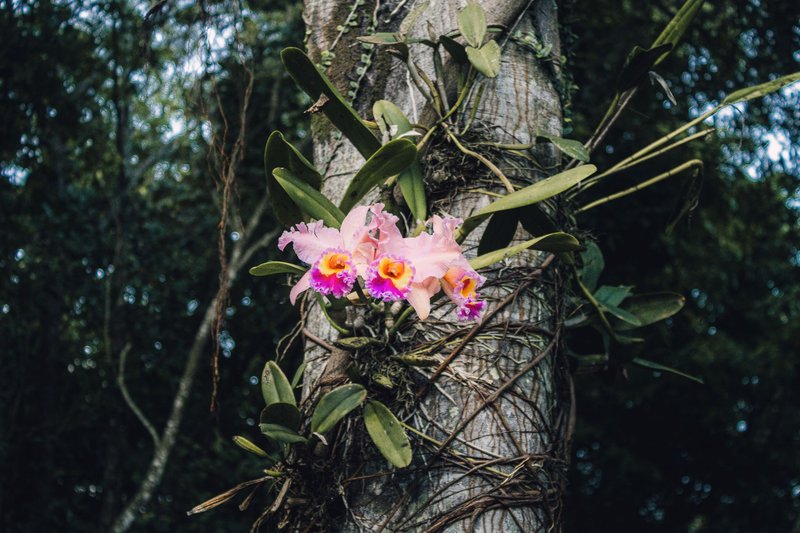
7. Polystachya maculata
This is the plant that conservationists worry about most. A small epiphytic orchid, it grows perched on tree trunks and branches rather than in soil, storing water in swollen stems called pseudobulbs. Kew’s plant database lists its range as the DR Congo to Burundi, while the IUCN Red List classes it as Critically Endangered, the last category before extinction in the wild. Epiphytic orchids depend on standing forest, so every hectare cleared removes the habitat itself, not just individual plants.
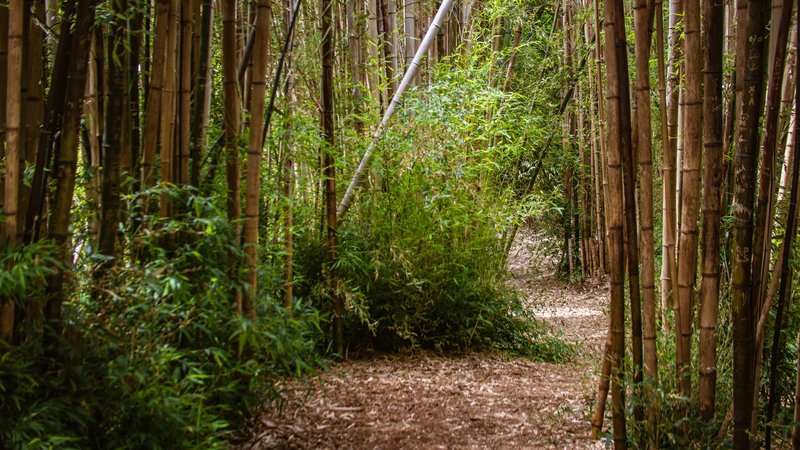
8. African highland bamboo (Arundinaria alpina)
Kibira’s secondary forest includes thickets of this bamboo, a tall grass that can reach 15 meters. The young shoots are eaten, and the mature canes go into fences, baskets, roofing and building frames. Bamboo also holds soil on steep slopes, which matters in a country where hillsides erode quickly after heavy rain.
Rivers, swamps and wetlands
The Ruvubu River winds through the east of the country, and the Ruvubu National Park wetland is a Ramsar site, meaning it is recognized as a wetland of international importance. Wooded savanna dominates the dry ground, with gallery forest along the water and swamp in the lowest pockets. Ten species in the park are on Burundi’s national list of threatened plants.
9. Utricularia troupinii
A carnivorous plant, and one of the most unusual on the list. Bladderworts have no true roots. They float in or creep through shallow water and wet ground, catching tiny prey in bladder-shaped traps that snap open and suck the animal in within a fraction of a second. Utricularia troupinii is shared between Burundi and Rwanda, so it is range-restricted rather than strictly endemic, and it is named for Georges Troupin, the Belgian botanist who spent years documenting the flora of the region.
10. Water berry (Syzygium guineense)
A riverbank specialist and one of the more common trees of African gallery forests. It likes wet feet, grows beside streams and swamp edges, and produces small purple-black fruits that people eat fresh and that birds and monkeys strip from the branches. The bark and leaves have a long record in traditional medicine. If you walk a river corridor in Ruvubu, this is the kind of tree you’ll find holding the bank together.
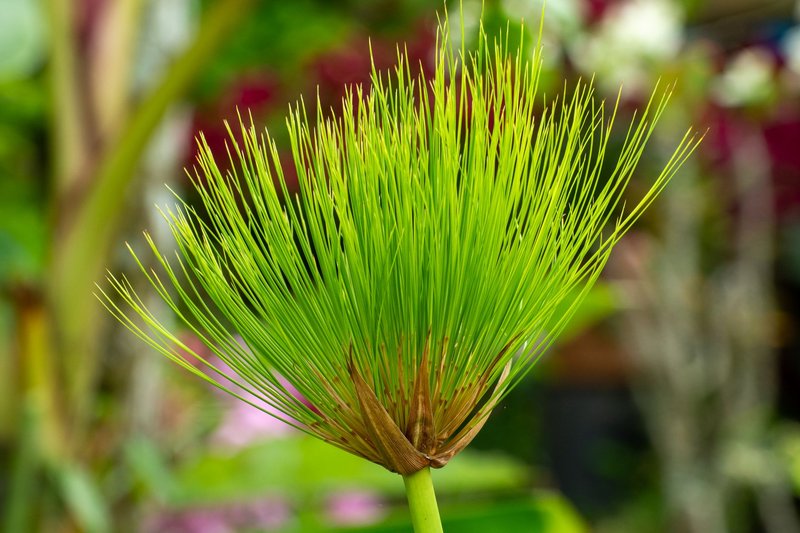
11. Papyrus (Cyperus papyrus)
Papyrus forms dense floating mats in swamps and along lake edges, with stems that reach 3 to 5 meters topped by a feathery umbrella of fine green threads. The same plant the ancient Egyptians made paper from is still woven into mats and baskets across East and Central Africa. Papyrus swamps also filter water and shelter fish nurseries and wetland birds, which makes them worth far more standing than drained.
Lake Tanganyika shore
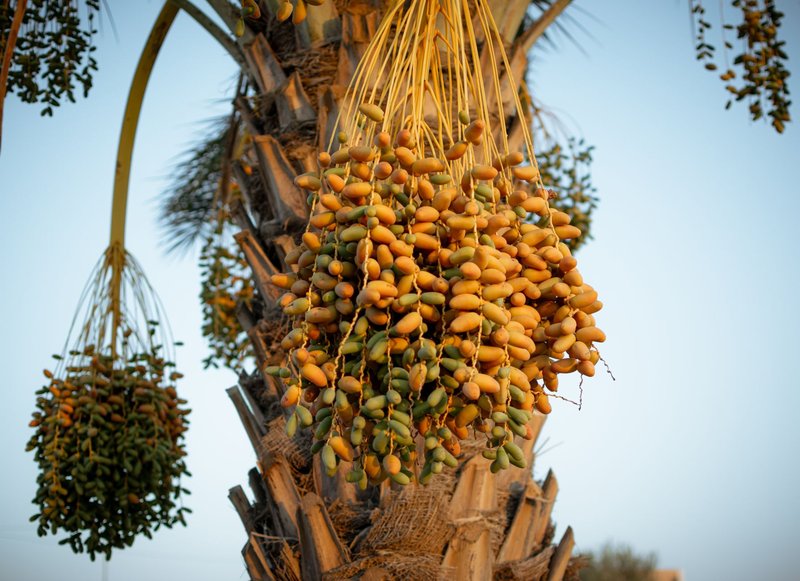
12. Wild date palm (Phoenix reclinata)
Burundi’s western border is the northern end of Lake Tanganyika, the second deepest lake on Earth, and the wild date palm is the tree you’ll recognize on the warm lowland shore. It grows in clumps of curved, slender trunks, usually on riverbanks and damp ground. The sap can be tapped and fermented into palm wine, the fronds are woven into mats, brooms and baskets, and the small orange fruits are edible.
Burundi’s native plants at a glance
| Plant | Common name | Habitat | Status |
|---|---|---|---|
| Entandrophragma excelsum | Mountain cedar | Kibira montane forest | Vulnerable (IUCN) |
| Symphonia globulifera | Symphonia | Kibira forest, wet pockets | Native, widespread |
| Afrocarpus usambarensis | Podocarp | Montane forest | Native, timber pressure |
| Hagenia abyssinica | Kousso, African redwood | Upper slopes, secondary forest | Native, widespread |
| Harungana montana | None widely used | Forest edges, clearings | Native, widespread |
| Stapfiella claoxyloides | None | Albertine Rift montane forest | Native, rarely recorded |
| Polystachya maculata | None | Epiphyte in montane forest | Critically Endangered (IUCN) |
| Arundinaria alpina | African highland bamboo | Highland and secondary forest | Native, widespread |
| Utricularia troupinii | Bladderwort | Shallow water, wet ground | Range-restricted (Burundi, Rwanda) |
| Syzygium guineense | Water berry | Rivers, gallery forest | Native, widespread |
| Cyperus papyrus | Papyrus | Swamps, lake edges | Native, widespread |
| Phoenix reclinata | Wild date palm | Lake shore, riverbanks | Native, widespread |
Conservation: what is at risk
Burundi is one of the most densely populated countries in Africa, and almost all of its original forest has been cleared for farming, charcoal and firewood. What remains is concentrated in protected areas such as Kibira, with swamps and savanna holding on in Ruvubu and the Rusizi delta. A plant that lives in only one forest, like the orchid Polystachya maculata, can be wiped out by a single season of clearing.
The knowledge gap makes it worse. A species can’t be protected until someone has recorded it, mapped it and assessed it, and for many of Burundi’s native plants that work has not been done. The checklists from places like Ruvubu are the starting point, not the end.
If you visit, the simplest way to help is to hire a local guide for Kibira or Ruvubu, which gives communities a reason to keep these habitats standing. And if you’re planting a garden in Burundi, choose native species over eucalyptus. The wild date palm and the water berry both do the job, and neither of them dries out the soil.