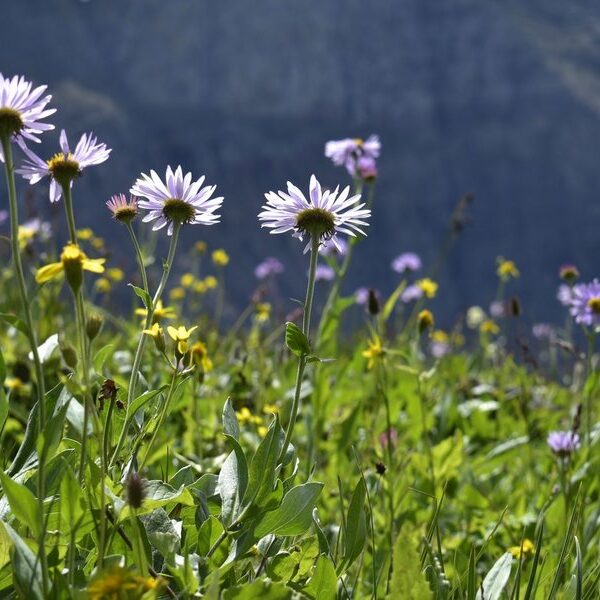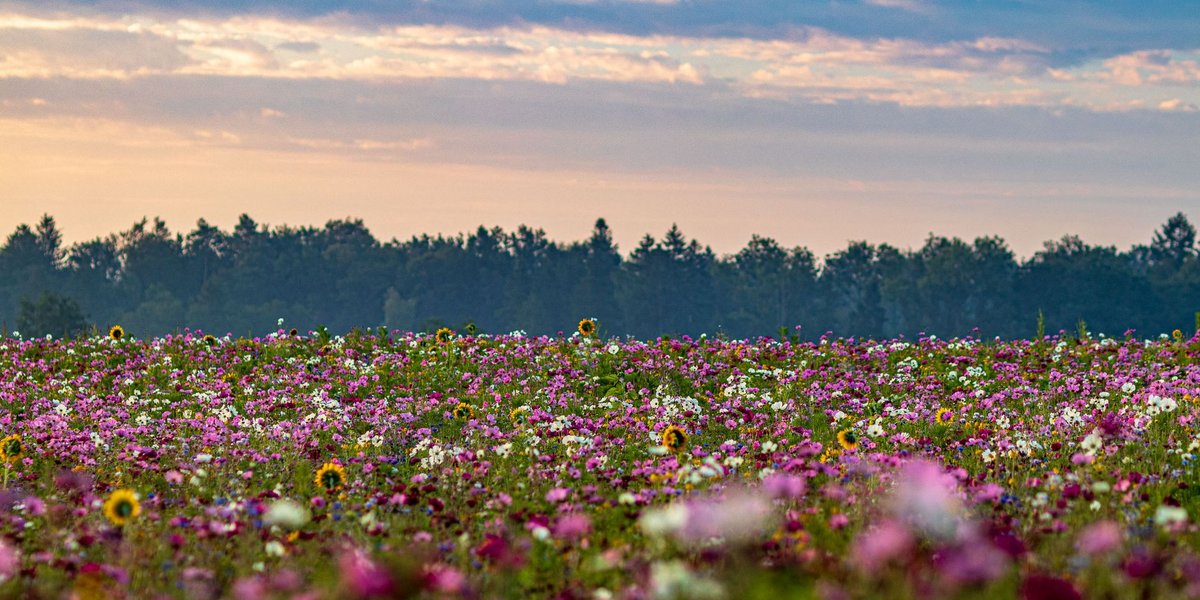
Germany has no single “German flora.” It has six or seven distinct ones, stacked by habitat: beech forest floors that bloom before the leaves open, Alpine meadows above 1,500 meters, salt marshes on the North Sea, sandy heath that turns purple for a few weeks each August. The flora of Germany makes sense once you sort it by where plants grow and when they flower, so that’s how this guide is built.
TLDR
- Germany has roughly 2,600 to 3,000 native and long-established vascular plant species. Counts above 3,500 add neophytes, and figures near 4,500 usually include hundreds of near-identical microspecies.
- Beech forests peak in March to May, Alpine meadows in June and July, coasts in July and August, heathland in late August and September.
- All native orchids, edelweiss, sea holly, and many more are legally protected. Look, photograph, leave them.
- For identification, Flora Incognita (app) and Schmeil-Fitschen (book) cover most needs. FloraWeb has distribution maps.
Contents
- How big is the flora of Germany?
- Beech and mixed forests
- Alpine meadows
- Baltic and North Sea coasts
- Heathlands
- Moors and bogs
- Farmland and field margins
- Orchids and limestone grassland
- Protected and endangered species
- Identification books and apps
- Where to go, month by month
How big is the flora of Germany?
The honest answer is “it depends what you count,” and the three numbers you’ll see online each count something different.
Around 2,600 to 3,000 covers native species plus archaeophytes, the plants that arrived with Neolithic farmers and early trade before 1492. Cornflower and corn poppy are archaeophytes. They’ve grown in German fields for thousands of years, which is why botanists count them as part of the flora.
Above 3,500 adds neophytes, plants introduced after 1492 that now live wild. Himalayan balsam, giant hogweed and the rugosa rose lining Baltic dunes are in this group. The Federal Agency for Nature Conservation (BfN) tracks both groups separately, because native and introduced plants are managed differently.
Near 4,500 shows up when a source counts microspecies. Brambles, dandelions, hawkweeds and lady’s mantles reproduce without fertilization and form thousands of tiny, locally stable lineages. Some floras split each of these genera into dozens or hundreds of “species.” Others lump them into one aggregate. That alone accounts for much of the gap between the figures.
The numbers here refer to ferns and flowering plants. Mosses, lichens and fungi are counted separately.
Beech and mixed forests
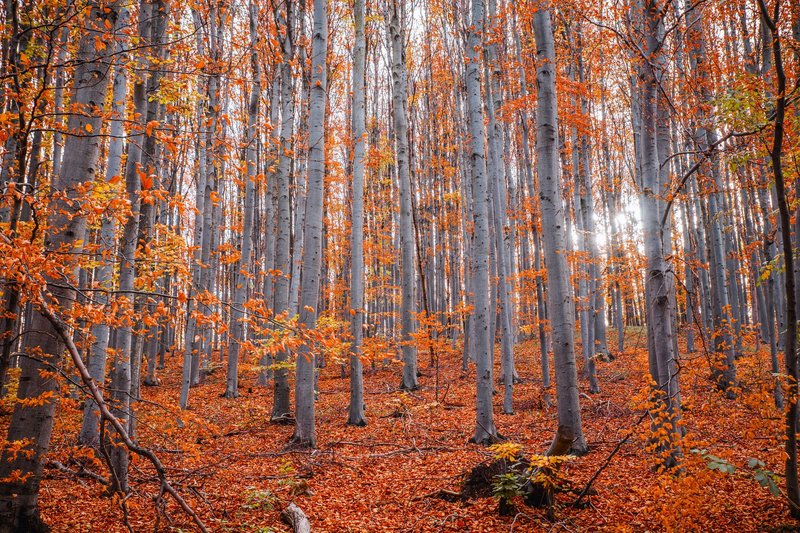
Without people, most of Germany would be beech forest. Common beech (Fagus sylvatica) casts such dense summer shade that the forest floor flora has worked out a schedule: flower and photosynthesize in spring, before the canopy closes, then disappear. By June the carpets are gone.
That’s why March through May is the season. The ancient beech forests of Germany, including Hainich in Thuringia and Jasmund on the chalk cliffs of Rügen, are UNESCO World Heritage sites, and both are good places to see the spring flora.
| Common name | German name | Latin name | Blooms | Look for it |
|---|---|---|---|---|
| Wood anemone | Buschwindröschen | Anemone nemorosa | March to April | White carpets under bare beech trees |
| Liverleaf | Leberblümchen | Hepatica nobilis | March to April | Lime-rich beech woods, blue-violet flowers |
| Ramsons (wild garlic) | Bärlauch | Allium ursinum | April to May | Damp floodplain forest; you’ll smell it first |
| Lily of the valley | Maiglöckchen | Convallaria majalis | May | Dry, light deciduous woods |
| Martagon lily | Türkenbund-Lilie | Lilium martagon | June to August | Open mixed woodland and forest edges |
Ramsons are the one most visitors notice. In Leipzig’s floodplain forest the smell hangs over whole stretches of path in late April. Foraging a few leaves for personal use is generally tolerated outside protected areas, but pulling up bulbs is not.
Alpine meadows
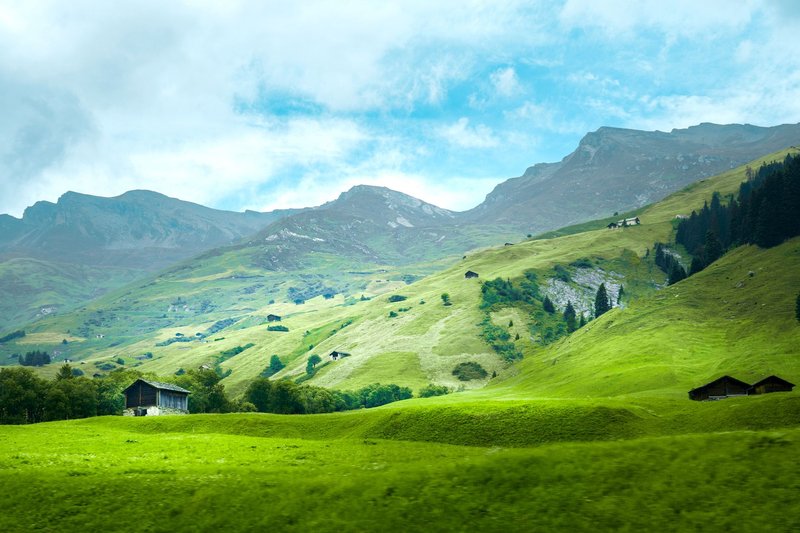
Germany’s share of the Alps is a thin strip along the Bavarian border, from the Allgäu to Berchtesgaden, topping out at the Zugspitze (2,962 m). It’s small, but it holds the flora you won’t find anywhere else in the country: plants adapted to short summers, thin soil and a lot of ultraviolet light.
| Common name | German name | Latin name | Blooms | Look for it |
|---|---|---|---|---|
| Stemless gentian | Stängelloser Enzian | Gentiana acaulis | May to July | Deep blue trumpets on short-grass slopes |
| Rusty-leaved alpenrose | Rostblättrige Alpenrose | Rhododendron ferrugineum | June to July | Acidic soils near the tree line |
| Edelweiss | Edelweiß | Leontopodium nivale subsp. alpinum | July to September | Rocky limestone ledges; rare and protected |
| Alpine pasqueflower | Alpen-Küchenschelle | Pulsatilla alpina | May to July | White flowers, then feathery seed heads |
| Globeflower | Trollblume | Trollius europaeus | May to July | Moist mountain meadows, yellow and round |
The alpenrose is not a rose. It’s a true rhododendron, and the “rusty” part refers to the undersides of the leaves. Edelweiss has a reputation as a common Alpine souvenir. In Germany it’s scarce, mostly found on high limestone ground, and its fuzzy white bracts are an adaptation to cold and drying wind rather than decoration. Photograph it from the trail.
Baltic and North Sea coasts
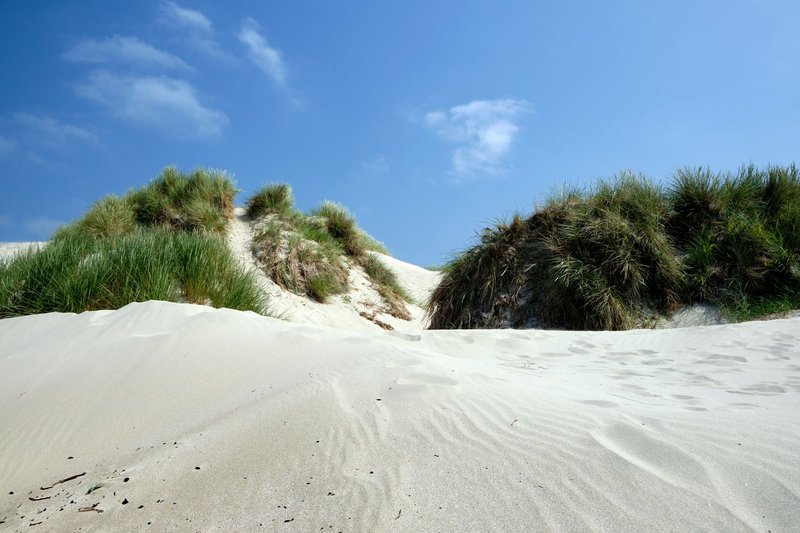
German coasts contain two different plant worlds. The North Sea side is tidal: salt marshes and mudflats in the Wadden Sea, where plants survive being flooded twice a day. The Baltic side has almost no tide, so you find dunes, shingle beaches and cliffs.
| Common name | German name | Latin name | Blooms | Look for it |
|---|---|---|---|---|
| Sea holly | Stranddistel | Eryngium maritimum | July to September | Steel-blue spiny leaves on dunes; protected |
| Sea lavender | Strandflieder | Limonium vulgare | July to September | Purple haze across North Sea salt marshes |
| Glasswort | Queller | Salicornia europaea agg. | August to October | Tidal flats; turns red in autumn |
| Sea buckthorn | Sanddorn | Hippophae rhamnoides | March to April | Orange berries ripen September to October |
| Sea kale | Meerkohl | Crambe maritima | June to July | Rare, on Baltic shingle beaches |
Glasswort is edible, salty, and sold in German restaurants as “Queller.” Sea buckthorn berries end up in juice, jam and a surprisingly large range of Baltic gift shop products. Marram grass (Ammophila arenaria) does the structural work on both coasts, binding sand with a root network that holds dunes in place. Walk only on marked boardwalks. A single trampled path can open a blowout in a dune within a few seasons.
Heathlands
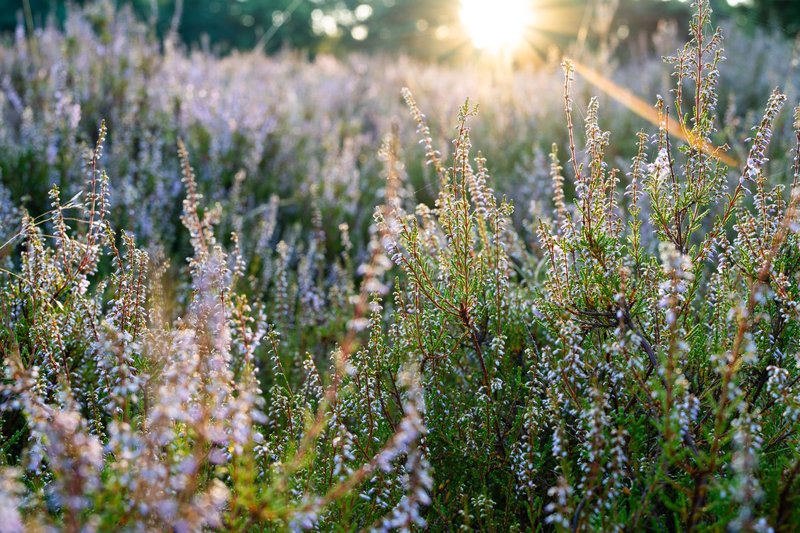
The Lüneburger Heide in Lower Saxony is one of the largest connected heathlands in Central Europe, and it’s not natural. Centuries of grazing by sheep and cutting of turf cleared the original forest and kept it clear. Stop the grazing and trees return within decades, which is why the heath’s shepherds, with their moorland Heidschnucken sheep, are part of conservation here.
Heather blooms from about mid-August to mid-September, so timing matters. Come in June and you’ll see brown scrub and juniper.
| Common name | German name | Latin name | Blooms | Look for it |
|---|---|---|---|---|
| Common heather | Besenheide | Calluna vulgaris | August to September | The purple carpet itself |
| Cross-leaved heath | Glockenheide | Erica tetralix | July to September | Damper patches, pale pink bells |
| Common juniper | Wacholder | Juniperus communis | Evergreen | Dark, spire-shaped shrubs scattered across the heath |
| Arnica | Berg-Wohlverleih | Arnica montana | June to August | Nutrient-poor grassland; protected |
| Marsh gentian | Lungen-Enzian | Gentiana pneumonanthe | August to September | Wet heath, endangered |
Arnica is also the famous bruise-remedy plant, and wild populations have declined enough that it’s protected in Germany. You’ll find it on the Lüneburger Heide, in the Rhön and the Harz, and in the Black Forest.
Moors and bogs
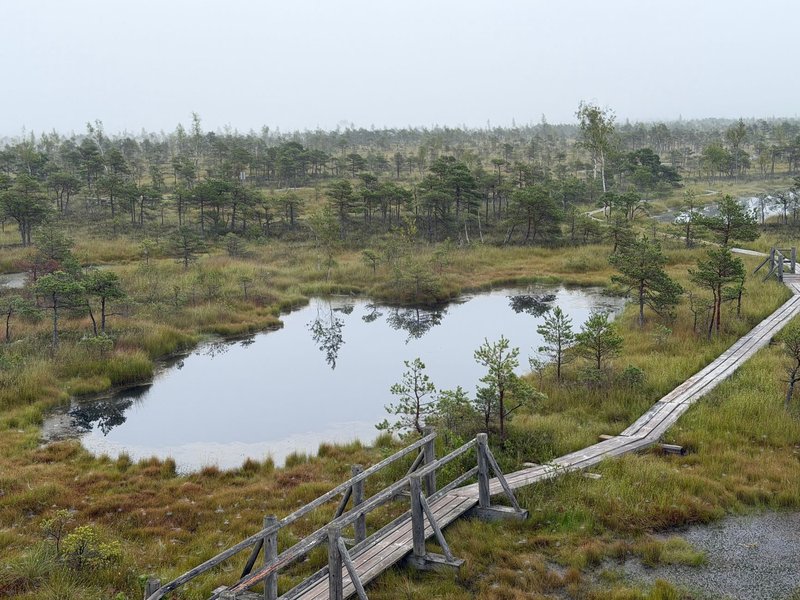
Raised bogs get all of their water from rain, which means almost no nutrients. The plants that live there have solved that problem in some inventive ways. Bogs are also the most fragile habitat on this list. Peat takes thousands of years to form, and Germany has drained most of its bogs for farming and fuel.
| Common name | German name | Latin name | Blooms | Look for it |
|---|---|---|---|---|
| Round-leaved sundew | Rundblättriger Sonnentau | Drosera rotundifolia | June to August | Red, sticky-leaved rosettes that trap insects |
| Small cranberry | Gewöhnliche Moosbeere | Vaccinium oxycoccos | June to July | Creeping stems on top of sphagnum |
| Common cottongrass | Schmalblättriges Wollgras | Eriophorum angustifolium | May to July | White fluffy seed heads blowing in wind |
| Bog rosemary | Rosmarinheide | Andromeda polifolia | May to June | Small pink urn-shaped flowers |
| Bog moss | Torfmoos | Sphagnum spp. | Year-round | The living layer that builds the peat |
For accessible bogs with boardwalks, try the Schwarzes Moor in the Rhön, the Teufelsmoor near Bremen, or the Murnauer Moos in the Bavarian Alpine foothills, one of the biggest moorlands in Central Europe. Sundews are small, often under 10 centimeters across, so look at your feet.
Farmland and field margins
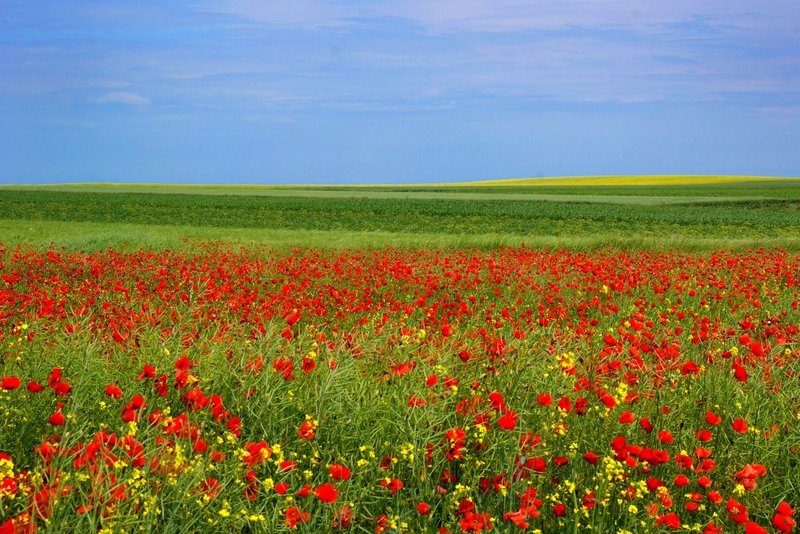
This is where the “doubtful claims” you see online usually go wrong. Cornflower (Centaurea cyanus) is sometimes described as a woodland plant. It isn’t. It’s a grain-field weed, and it spread with cereal farming. Germany has no official national flower, but cornflower is the unofficial one, tied to Prussian history and to Queen Luise, who by legend hid in a cornfield with her children. Its decline is also one of the clearest examples of how modern farming changed German flora: herbicides and cleaner seed removed it from most fields.
| Common name | German name | Latin name | Blooms | Look for it |
|---|---|---|---|---|
| Cornflower | Kornblume | Centaurea cyanus | June to August | Cereal field edges, flower strips |
| Corn poppy | Klatschmohn | Papaver rhoeas | May to July | Disturbed soil, field margins |
| Corn cockle | Kornrade | Agrostemma githago | June to July | Almost gone from fields; mostly seen in sown strips |
| Scented mayweed (chamomile) | Echte Kamille | Matricaria chamomilla | May to September | Roadsides and fallow land |
Your best chances are organic farms and the sown flower strips (Blühstreifen) that many municipalities now plant along fields. Some of these are seeded with regional wildflower mixes, so they’re a decent preview of what field flora used to look like.
Orchids and limestone grassland
Warm, dry, lime-rich slopes with thin soil carry some of Germany’s richest plant communities, and most of its wild orchids. The Kaiserstuhl in Baden-Württemberg, the Swabian Alb, the Franconian Jura and the limestone hills of Thuringia are the places to look.
| Common name | German name | Latin name | Blooms | Look for it |
|---|---|---|---|---|
| Early purple orchid | Stattliches Knabenkraut | Orchis mascula | April to June | Meadows and open woodland on lime |
| Bee orchid | Bienen-Ragwurz | Ophrys apifera | June to July | Flowers that mimic a bee; mostly self-pollinates |
| Pyramidal orchid | Pyramiden-Spitzorchis | Anacamptis pyramidalis | June to July | Dense pink cones on dry grassland |
| Pasqueflower | Gewöhnliche Küchenschelle | Pulsatilla vulgaris | March to May | Silky purple bells on dry slopes |
Bee orchids in northern Europe are an odd case. The flower looks like a female bee, but in most of its northern range it pollinates itself, because the insects that evolved alongside it aren’t there.
Protected and endangered species
The rule in Germany is simple: protected species are not to be picked, dug up or damaged. The federal nature protection law and species protection ordinance list the plants concerned, and the Federal Agency for Nature Conservation maintains the references. Fines for harming protected plants can reach tens of thousands of euros.
Notable protected species and groups:
- All native orchids. Every wild orchid in Germany is specially protected.
- Yellow lady’s slipper (Frauenschuh, Cypripedium calceolus). Blooms May to June in lime-rich beech and mixed woods. It’s the largest-flowered native orchid, and also covered by EU habitat legislation. Its sites are often kept quiet for good reason.
- Edelweiss. Rare in the Bavarian Alps and protected.
- Sea holly. Protected on both coasts.
- Arnica. Protected because of past over-collection.
For everything else, the general rule is that you may take a small bunch (a Handstrauß) of common, unprotected wild flowers for your own use, but never inside a nature reserve or national park. When in doubt, don’t pick. Inside protected areas, stay on the paths.
Identification books and apps
Photograph first, identify after. The tools below handle most of the work.
- Flora Incognita. A free app developed by researchers at TU Ilmenau and the Max Planck Institute for Biogeochemistry. Take a photo, get a species suggestion. The Flora Incognita project also collects the observations as research data.
- Schmeil-Fitschen: Die Flora Deutschlands und angrenzender Länder. The standard German identification flora, now in its 97th edition at about 1,000 pages. It’s in German and uses dichotomous keys, so expect a learning curve, but it’s the book botanists carry.
- Rothmaler: Exkursionsflora von Deutschland. Another major German-language key, often used by professionals and university courses.
- Flora-de. A German-language app built on the flora of Germany, useful alongside a book.
- FloraWeb. The Federal Agency for Nature Conservation’s online plant database gives distribution maps, status and ecology for German species, in German.
- An English field guide. A general European guide such as the Collins Flower Guide covers lowland species well, but check it against a local source for Alpine plants.
If your German is limited, use Flora Incognita to get a name, then search the Latin name in English.
Where to go, month by month
| Month | Highlights | Where |
|---|---|---|
| March to April | Wood anemone, liverleaf, ramsons, pasqueflower | Hainich, Leipzig floodplain forest, dry limestone slopes |
| May to June | Orchids, yellow lady’s slipper, lily of the valley | Swabian Alb, Franconian Jura, Kaiserstuhl |
| June to July | Alpine gentians, alpenrose, globeflower; cornflower and poppy in fields | Berchtesgaden, Allgäu Alps; organic farm margins |
| July to August | Sea lavender, sea holly, bog sundew and cottongrass | North Sea salt marshes, Baltic dunes, Rhön and Teufelsmoor bogs |
| August to September | Heather bloom, marsh gentian | Lüneburger Heide |
| September to October | Sea buckthorn berries, red glasswort | Baltic and North Sea coasts |
If you have only one trip, aim for late May in a limestone beech forest or the second week of August on the Lüneburger Heide. Both show Germany’s plant life at its fullest, and neither needs a mountain.