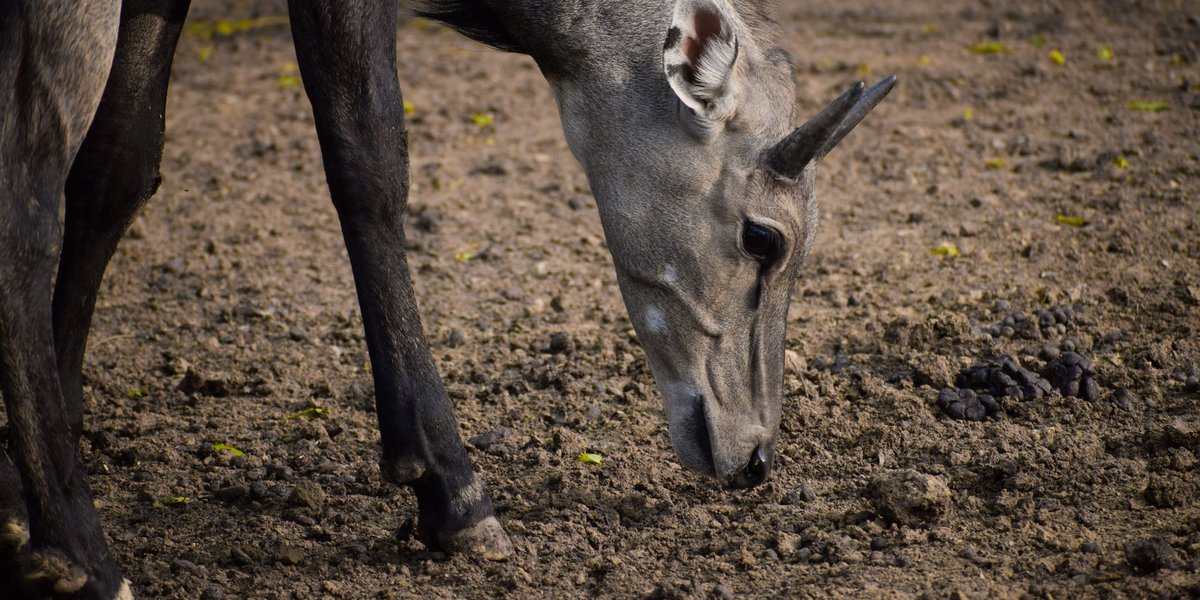
Nilgai are mixed feeders. They eat grasses, herbs, leaves, twigs, fruits, flowers, and seed pods — and they switch between grazing and browsing depending on what’s in front of them and what time of year it is. That flexibility is the whole story of the nilgai diet, and it’s why this antelope thrives everywhere from the dry scrub of Rajasthan to the brush country of South Texas.
Most species profiles give the blue bull’s diet a one-paragraph mention buried between “habitat” and “conservation.” This isn’t that. Below is the full picture: what nilgai eat in India versus Texas, how the menu changes from monsoon to dry season, the odd things they do to reach food, and why ranchers and farmers keep an eye on them.
Table of Contents
- The Quick Answer
- Grazer or Browser? Both
- What Nilgai Eat in India
- What Nilgai Eat in Texas
- How the Diet Shifts by Season
- Feeding Behavior and Water
- Nilgai and Crops: The Conflict
- What Nilgai Eat in Zoos and Captivity
- Frequently Asked Questions
The Quick Answer
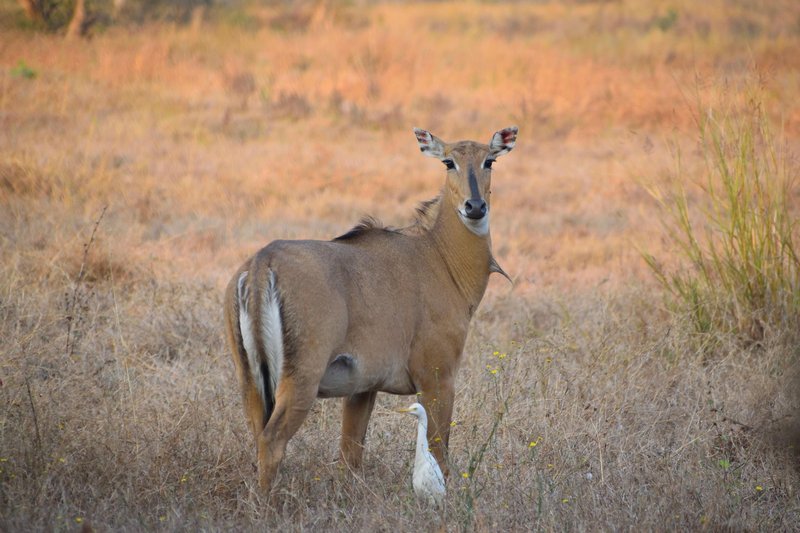
Nilgai (Boselaphus tragocamelus), the largest antelope native to Asia, are herbivores with a broad, opportunistic diet. On any given day a nilgai might eat:
- Grasses — the staple, especially when fresh and green
- Herbs and forbs — leafy non-grass plants
- Browse — leaves, shoots, and twigs from shrubs and trees
- Fruits — like Zizyphus (ber/jujube)
- Flowers — Butea monosperma (flame of the forest) blooms are a known favorite
- Pods and seeds — Acacia pods, Prosopis (mesquite) beans
- Crops — when farms sit near their range
The ratio between grazing (grass) and browsing (woody plants) isn’t fixed. It tracks the seasons and the local landscape, which is exactly why the same animal looks like a grazer in one study and a browser in another.
Grazer or Browser? Both
This is the question that trips people up. Nilgai are classified as mixed feeders — they sit between dedicated grazers (like cattle) and dedicated browsers (like giraffes). When grass is abundant and lush, they graze. When it dries out and goes nutritionally flat, they pivot hard to browse.
What makes them effective browsers is their build. A nilgai stands a full meter and a half at the shoulder, and it will rear up onto its hind legs to pull down leaves and pods well above the reach of smaller deer and antelope. That vertical advantage lets them work a feeding niche that a lot of competitors can’t touch.
So the honest answer to “are nilgai grazers or browsers” is: yes. Their digestive flexibility is the survival trait that let them colonize semi-arid habitats where the food supply swings wildly through the year.
What Nilgai Eat in India
In their native range across the Indian subcontinent, nilgai diet has been documented in detail, especially in dry-forest reserves like Sariska Tiger Reserve in Rajasthan. The menu leans on whatever the season offers:
- Grasses dominate when the monsoon greens up the landscape
- Butea monosperma (flame of the forest) — nilgai browse the leaves and seek out the bright orange flowers
- Acacia species — pods and foliage
- Zizyphus — the small fruits are eaten readily in the dry months
- Crop plants — sugarcane, wheat, gram, and pulses where reserves border farmland
Indian nilgai are generalists by necessity. The deciduous forests and scrublands they prefer aren’t reliably productive year-round, so the animals keep a wide menu and shift between food classes rather than depending on any single one.
What Nilgai Eat in Texas
Here’s the twist most profiles skip. Nilgai aren’t just an Indian species anymore. They were introduced to the King Ranch in South Texas in the 1920s and 1930s, and the free-ranging Texas population now numbers in the tens of thousands. The diet adapted to a completely different plant community.
In the Texas brush country, nilgai eat:
- Mesquite (Prosopis glandulosa) — leaves and the sugary bean pods
- Prickly pear cactus (Opuntia) — pads and fruit, a key moisture source
- Oak — acorns and browse
- Native grasses — when seasonal rain produces them
- Forbs and shrubs — whatever the South Texas thornscrub provides
The Texas diet is a clean illustration of how adaptable this animal is. Drop a generalist herbivore into a new continent and it doesn’t starve waiting for familiar food — it reads the new landscape and eats what works. That same adaptability is why Texas wildlife managers treat nilgai as both a prized exotic game animal and a competitor for rangeland forage with cattle and native deer.
How the Diet Shifts by Season
Season is the single biggest variable in what a nilgai eats. The pattern documented in Indian dry forests is clear:
| Season | Primary Foods | Feeding Strategy |
|---|---|---|
| Monsoon / wet | Fresh grasses, new herb growth | Mostly grazing |
| Post-monsoon | Maturing grasses, ripening fruits | Mixed |
| Dry season | Browse, Butea flowers, Acacia pods, Zizyphus fruit | Mostly browsing |
When the rains hit and grass shoots up green and protein-rich, nilgai graze. As the dry season sets in and grass cures into low-value roughage, they climb the shift toward woody browse, tree pods, and whatever fruit and flowers are available. The flame-of-the-forest blooms and Acacia pods that come on during the dry months aren’t an accident in the data — they’re filling the gap left by dead grass.
This is the part the encyclopedic profiles flatten into a single sentence. The reality is a moving target the animal tracks month to month.
Feeding Behavior and Water
A few habits set nilgai feeding apart:
They feed at the edges of the day. Nilgai are most active in the early morning and late afternoon, doing the bulk of their eating before the sun is high and again as it drops. Midday is for resting and rumination — they’re ruminants, so they chew cud like cattle.
They stand on their hind legs to browse. This bipedal reach lets a nilgai strip leaves, pods, and flowers from heights that smaller herbivores can’t get to. It’s an efficient way to exploit a vertical band of vegetation with little competition.
They don’t need much water. Nilgai are remarkably independent of standing water. They pull a lot of their moisture straight from the plants they eat — succulent browse, fruit, and in Texas, prickly pear cactus. That low water dependence is a big reason they do so well in semi-arid country where surface water is scarce for stretches of the year.
Nilgai and Crops: The Conflict
The diet has a flashpoint: farms. Where nilgai range overlaps agricultural land — common across northern and central India — the animals raid crops. Wheat, gram, pulses, sugarcane, and vegetable fields are all on the menu, and a herd can do real damage in a night.
This puts nilgai at the center of a genuine human-wildlife conflict. In India the species carries cultural protection in many regions (the “nil” in nilgai and its “gai,” meaning cow, links it to the cow in popular perception), which complicates lethal control even where crop losses are severe. Farmers fence, guard, and lobby; the antelope keep eating. Some Indian states have at times reclassified nilgai to allow culling in response to agricultural pressure.
In Texas the framing flips. There nilgai are a hunted exotic and a rangeland forage competitor, and management leans on hunting and population control rather than crop-damage permits. Same animal, same broad appetite — two very different conflicts shaped by local context.
What Nilgai Eat in Zoos and Captivity
Captive nilgai diets are built to mimic the wild generalist pattern without the seasonal swing. Zoos and wildlife parks typically feed:
- Grass hay — the dietary base, mirroring wild grazing
- Leafy browse — fresh-cut branches when available
- Herbivore pellets — formulated to cover protein, minerals, and vitamins
- Produce — carrots, leafy greens, and other vegetables as supplements
The goal is a balanced ruminant diet high in fiber. Because captive nilgai don’t get the natural variety and don’t burn the same energy ranging for food, keepers watch portions to avoid the overconditioning that comes easy to a hardy, food-flexible animal in a low-effort environment.
Frequently Asked Questions
What do nilgai eat in the wild? Grasses, herbs, leaves, twigs, fruits, flowers, and seed pods. They’re mixed feeders that graze when grass is fresh and browse woody plants when it isn’t.
Are nilgai grazers or browsers? Both. They’re classified as mixed feeders and switch between grass and browse depending on season and availability.
What do nilgai eat in Texas? Mesquite leaves and pods, prickly pear cactus, oak, native grasses, and various forbs and shrubs from the South Texas brush country.
Do nilgai eat crops? Yes. Where their range meets farmland they raid wheat, gram, pulses, sugarcane, and vegetables, which makes them a significant agricultural pest in parts of India.
Do nilgai need a lot of water? No. They get much of their moisture from the plants they eat and can go without standing water for long periods, which suits them to dry, semi-arid habitats.
What’s a nilgai’s favorite food? There’s no single favorite, but in Indian dry forests they’re strongly drawn to Butea monosperma (flame of the forest) flowers and Zizyphus fruit during the dry season, alongside fresh grass when the monsoon delivers it.