Lowe’s otter civets eat fish, crabs, freshwater mollusks, and other small aquatic prey, supplemented by birds, small mammals, and fruit they grab by climbing. That’s the short answer. The longer answer comes with a caveat that most species-profile pages skip entirely: almost everything we “know” about the Lowe’s otter civet’s diet is actually borrowed from its better-documented cousin, and the two animals might not even be separate species.
So let’s untangle that. Here’s what these animals eat, how they catch it, why the science is thinner than you’d expect, and why the name on the label is genuinely contested.
Table of Contents
- Otter Civet Diet at a Glance
- The Lowe’s vs. Bennettii Naming Problem
- How Otter Civets Actually Hunt
- Why We Infer Diet From Teeth
- Fruit, Birds, and the Climbing Habit
- Is It Actually an Otter?
- Is the Otter Civet Endangered?
- Frequently Asked Questions
Otter Civet Diet at a Glance {#diet-at-a-glance}
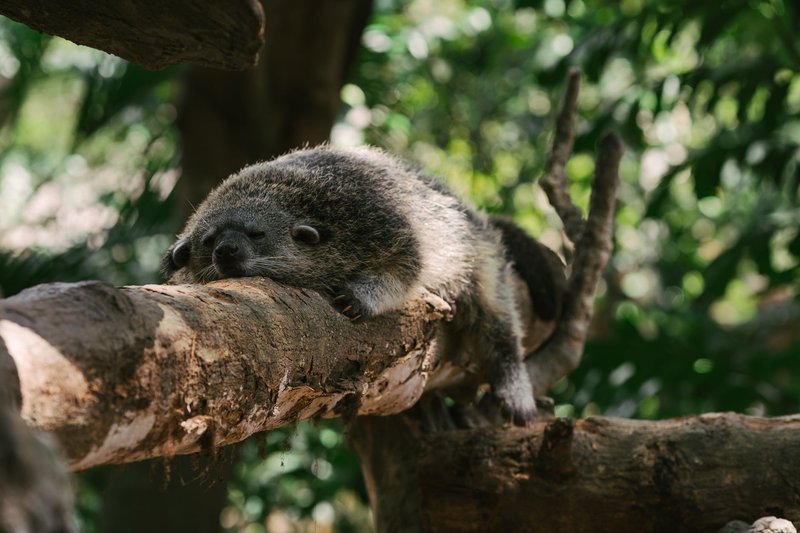
The otter civet (Cynogale bennettii) is a semi-aquatic carnivore from the rainforests and wetlands of Southeast Asia. Its diet leans heavily on whatever lives in or near slow-moving water.
| Food source | What it includes | How important |
|---|---|---|
| Fish | Small freshwater fish caught at the surface or in shallows | Primary |
| Crustaceans | Freshwater crabs, crayfish | Primary |
| Mollusks | Freshwater snails and other shellfish | Primary |
| Birds | Small birds taken near water or while climbing | Supplementary |
| Small mammals | Rodents and other small prey near the water’s edge | Supplementary |
| Fruit | Reached by climbing trees and shrubs | Supplementary |
Notice the pattern. The core of the diet is animal protein pulled from the water — soft enough to grab, slow enough to ambush, abundant in the wetland habitats this animal calls home. The fruit and birds are extras, taken when the opportunity shows up rather than sought out as a staple.
This is a carnivore in the technical sense (it belongs to the order Carnivora) and a carnivore in the practical sense too, but with the opportunistic streak you see across the civet family.
The Lowe’s vs. Bennettii Naming Problem {#naming-problem}
Here’s the part nobody else explains clearly.
When you search “Lowe’s otter civet,” you’re chasing a taxon — Cynogale lowei — that is known from exactly one specimen. A single skin collected in northern Vietnam in 1926. That’s it. No documented feeding observations, no stomach-content studies, no field notes on what it ate. The holotype was described, and the animal has barely been seen since.
So when a website tells you what a “Lowe’s otter civet” eats, it is almost certainly describing the diet of Cynogale bennettii, the regular otter civet — the one with an actual (if still sparse) record. Most taxonomists today treat lowei as, at best, a questionable subspecies or simply a junior synonym of bennettii. The IUCN Red List assesses the otter civet under Cynogale bennettii and folds the Vietnamese population into that account.
Why does this matter for a diet question? Because honesty matters. There is no separate, verified “Lowe’s otter civet diet.” What you can say with confidence is this: any otter civet — whether you call it lowei or bennettii — shares the same body plan, the same wetland niche, and by every reasonable inference, the same menu. The fish-crab-mollusk core applies to both because it’s a product of anatomy and habitat, not a quirk of one population.
When the rest of this article says “otter civet,” read it as covering both names. The biology is one animal. The label is a debate.
How Otter Civets Actually Hunt {#how-they-hunt}
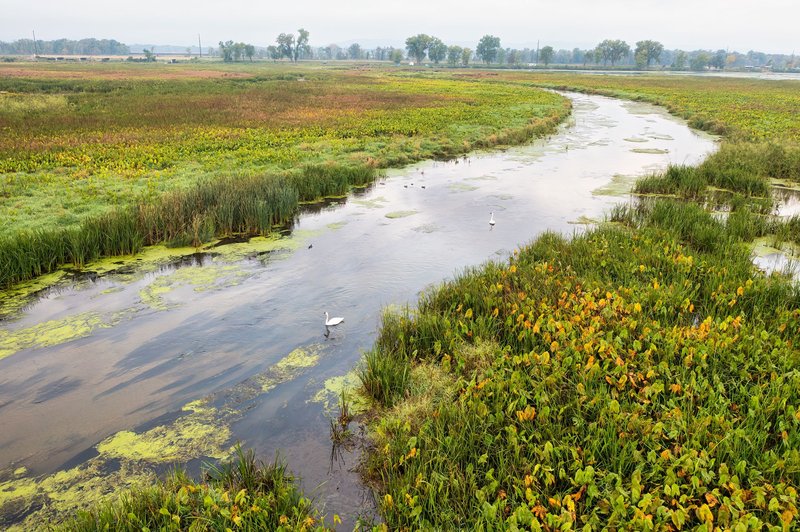
This is where the otter civet gets genuinely strange, and where every thin database page leaves you hanging.
It hunts at night, working the edges of streams, swamps, and rivers. The body is built for it. The otter civet has a broad, flattened muzzle full of stiff whiskers, and those whiskers do real work — in murky water where eyesight fails, they pick up the tiny pressure waves that a moving fish or crab pushes through the water. Touch replaces sight.
Then there’s the face. The nostrils sit high and can close off with valve-like flaps, and the ears seal too. That combination lets the animal submerge with its eyes and the top of its head barely breaking the surface — a posture that gets compared to a crocodile for good reason. It can lie low in the water, almost invisible, and skim or wait until prey comes within reach. A slow, patient ambush rather than a fast chase.
The teeth back this up. Otter civets have sharp, well-developed canines and cutting cheek teeth suited to gripping slippery, wriggling prey and crunching through crab shell and snail. This isn’t a grinder built for plants. It’s a grabber built for things that try to escape.
Put it together and you get a feeding style closer to a fishing cat or a true otter than to the fruit-loving palm civets people usually picture when they hear “civet.”
Why We Infer Diet From Teeth {#teeth}
Be honest about the evidence: direct observations of wild otter civets feeding are rare. These are secretive, nocturnal, low-density animals in habitats that are hard to survey. Camera-trap records are scarce and stomach-content studies scarcer still.
So a lot of what gets stated as fact about the diet is inferred — drawn from anatomy rather than watched in the wild. Dentition is the big clue. When scientists see canines and carnassial-style teeth shaped for shearing flesh and cracking shell, they read that as a predator of fish, crustaceans, and mollusks, because that’s what those tools are good for. The valve-like nostrils and sensory whiskers point the same direction: an animal optimized to hunt underwater prey.
That inference is sound. But it’s an inference, and the better species accounts (like the one at the Animal Diversity Web) say so plainly. The fish-and-crab diet isn’t sloppy guesswork — it’s the most defensible reading of a body that is, quite literally, shaped for catching things in water. Anyone who states the diet with total certainty and zero caveats is overselling what the field data supports.
Fruit, Birds, and the Climbing Habit {#fruit-and-birds}
The otter civet isn’t strictly aquatic. It climbs — and that opens a second pantry.
In trees and shrubs it takes fruit, which gives the diet a mixed, omnivorous edge that separates it from a pure piscivore like an otter. It will also take small birds and, by various accounts, small mammals near the water’s edge. None of this is the bulk of the diet, but it explains why field guides list a longer menu than “just fish.”
This dual lifestyle — wade and ambush in the water, climb and forage in the canopy — is the otter civet’s real signature. Most semi-aquatic predators commit to the water. This one keeps a foot on land, literally, and eats from both columns.
Is It Actually an Otter? {#otter-or-not}
No. And this trips people up constantly, so it’s worth a clean answer.
True otters belong to the weasel family (Mustelidae). The otter civet belongs to the family Viverridae — civets and their relatives. They are not closely related. The otter civet just looks and behaves like an otter because of convergent evolution: put any mammal in a “hunt small prey at the water’s edge” niche for long enough and natural selection sands it into a similar shape — webbed-ish feet, dense fur, a streamlined head, sensory whiskers.
A quick comparison:
| Otter civet | True otter | Palm civet | |
|---|---|---|---|
| Family | Viverridae | Mustelidae | Viverridae |
| Diet core | Fish, crabs, mollusks | Fish, crustaceans | Fruit, small animals |
| Lifestyle | Semi-aquatic + climbs | Aquatic | Arboreal |
| Hunts in water | Yes | Yes | No |
So the otter civet sits in a strange middle. It eats more like an otter than its own civet cousins do, while being family to those cousins and a stranger to otters. That contradiction is exactly what makes it interesting.
Is the Otter Civet Endangered? {#endangered}
Yes. The otter civet is listed as Endangered by the IUCN. The driver is habitat loss — the lowland freshwater wetlands and peat-swamp forests it depends on across Sumatra, Borneo, Peninsular Malaysia, Thailand, and parts of mainland Southeast Asia are being drained, logged, and converted at a steep rate.
That habitat dependency ties directly back to diet. An animal this specialized for hunting fish, crabs, and mollusks in slow freshwater can’t simply relocate to dry forest when its wetland disappears. The menu and the marsh come as a package. Lose the water, lose the prey, lose the civet.
The Lowe’s population — that lone Vietnamese specimen — is even more precarious in the record, which is part of why its very existence as a distinct animal remains unresolved.
Frequently Asked Questions {#faq}
What do Lowe’s otter civets eat? The same things any otter civet eats: mainly fish, freshwater crabs, and mollusks, plus occasional birds, small mammals, and fruit. There is no separate verified diet for “Lowe’s” specifically — the data comes from Cynogale bennettii, the broader otter civet species.
Are otter civets carnivores or omnivores? Technically carnivores (order Carnivora), but functionally omnivorous. The bulk of the diet is animal prey from the water, supplemented by fruit reached by climbing.
How do otter civets catch fish? By nocturnal ambush at the water’s edge. They submerge with closable valve-like nostrils, use stiff facial whiskers to detect prey in murky water, and grab fish and crustaceans with sharp teeth — a slow, crocodile-like surface skim rather than a fast chase.
Is the Lowe’s otter civet a real species? That’s contested. It’s known from a single 1926 specimen from Vietnam, and most taxonomists treat it as a doubtful subspecies or synonym of Cynogale bennettii rather than a distinct species.
Is an otter civet the same as an otter? No. Otter civets are in the civet family (Viverridae); true otters are in the weasel family (Mustelidae). The resemblance is convergent evolution, not close kinship.
Is the otter civet endangered? Yes — it’s listed as Endangered by the IUCN, mainly due to the loss of the freshwater wetland habitats its diet depends on.