In a forest that swings from berry-heavy autumns to frozen, prey-scarce winters, the animals that thrive are the ones that aren’t picky. A pure plant-eater struggles when the leaves drop. A strict hunter goes hungry when prey hides under the snow. The omnivore eats whatever the season hands it, and that flexibility is exactly why some of the most successful animals in temperate forests sit squarely in the middle of the food web.
This isn’t a generic “animals of the forest” list. It’s a specific look at the omnivores of temperate deciduous forests, what’s actually on their menu, and the job each one does in the food web.
Table of Contents
- What “omnivore” means in a temperate forest
- Why omnivory wins in a four-season forest
- 12 temperate forest omnivores
- Herbivores vs. carnivores vs. omnivores
- Where omnivores sit in the food web
- Quick answers
What “omnivore” means in a temperate forest
An omnivore eats both plant and animal matter as a regular part of its diet, not by accident. A deer that swallows an insect clinging to a leaf is still a herbivore. A raccoon that spends one night cracking snail shells and the next stripping a wild grapevine is an omnivore by design.
The temperate deciduous forest, the kind that covers the eastern United States, much of Europe, and parts of East Asia, is built for this. According to the National Park Service, these forests run on a four-season cycle: a spring flush of insects and new growth, a productive summer, a fall packed with nuts and fruit, and a lean winter. An animal that can shift its diet across all four has a built-in advantage.
Why omnivory wins in a four-season forest
Seasonality is the whole story. A temperate forest doesn’t offer the same food year-round, so a fixed diet is a liability.
Walk through the year from an omnivore’s point of view:
- Spring: Insects hatch, frogs and salamanders emerge, bird eggs appear in nests, and tender shoots push up. Protein is suddenly everywhere.
- Summer: Berries ripen, soft fruit drops, and insect populations peak. Easy calories.
- Fall: The big one. Oaks, beeches, and hickories drop acorns and nuts (collectively called mast), and an animal can fatten up fast for winter.
- Winter: The forest goes quiet. Prey burrows or migrates, plants die back, and survival means scavenging carrion, raiding stored nuts, or going torpid.
A strict herbivore has nothing to eat under January snow. A strict carnivore burns precious energy hunting scarce prey. The omnivore raids a bird nest in May, gorges on blackberries in July, packs on fat from acorns in October, and scavenges a winter-killed deer in February. Same animal, four completely different diets. That’s the edge.
12 temperate forest omnivores
Here are twelve animals you’ll actually find in temperate deciduous forests, with a real breakdown of what each one eats and the role it plays.
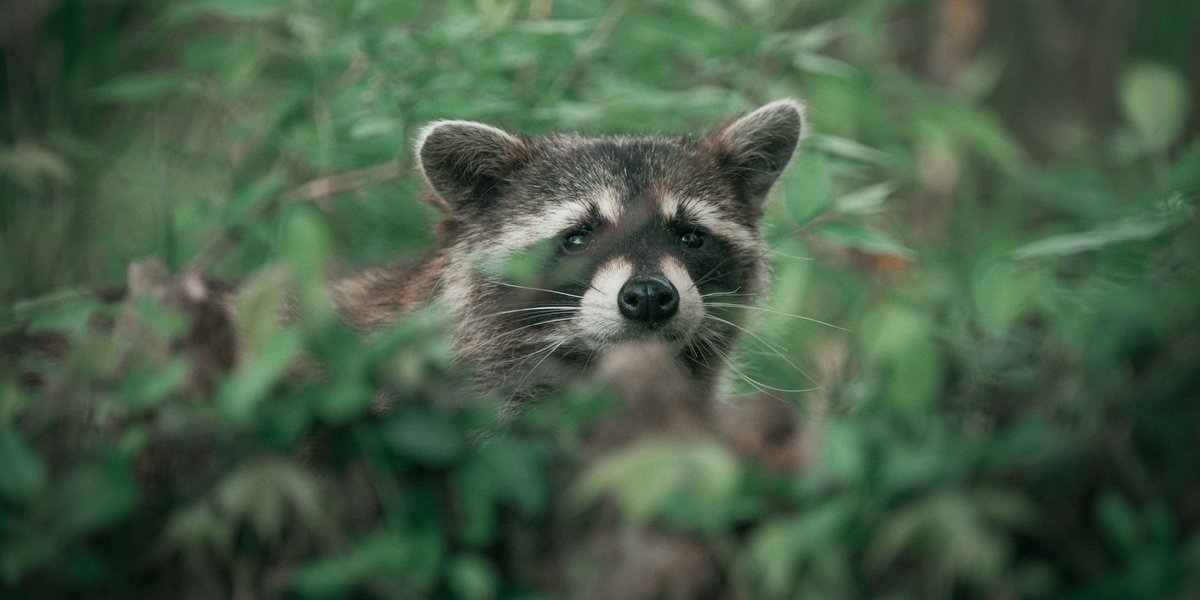
1. Raccoon
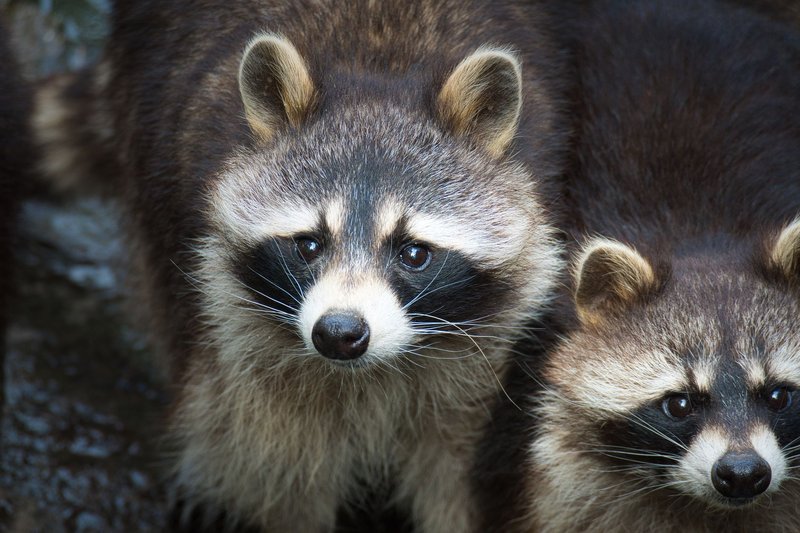
The poster child of forest omnivory. A raccoon’s diet is famously opportunistic, leaning heavily on whatever is abundant and easy to reach.
- Plant side: Acorns, berries, wild grapes, persimmons, corn.
- Animal side: Crayfish, frogs, snails, insects, bird eggs, small rodents.
- Food-web role: Mid-level mesopredator and seed disperser. Raccoons keep insect and amphibian numbers in check while spreading the seeds of the fruit they eat.
Those dexterous front paws are the trick. A raccoon can flip rocks for crayfish, peel open a mussel, and unlatch a trash can, which is why it does so well around people.
2. American Black Bear
The largest omnivore in most temperate forests, and despite the fangs, its diet is roughly 80% plant matter. The U.S. Forest Service notes black bears feed heavily on berries, nuts, and vegetation.
- Plant side: Berries, acorns, beechnuts, roots, grasses.
- Animal side: Insects (especially ant and bee larvae), fish, carrion, the occasional fawn.
- Food-web role: Apex omnivore and major seed disperser. A single bear can move millions of seeds a season through its droppings.
Fall is everything for a black bear. It enters a feeding frenzy called hyperphagia, eating up to 20,000 calories a day to build the fat it needs to survive winter denning.
3. Virginia Opossum
North America’s only marsupial, and one of its most underrated cleanup crews.
- Plant side: Fruit, berries, nuts, grasses.
- Animal side: Insects, slugs, snails, carrion, small rodents, and famously, ticks.
- Food-web role: Scavenger and pest controller. Opossums eat carrion that would otherwise spread disease and consume large numbers of ticks while grooming.
They’re also remarkably resistant to snake venom, which lets them prey on copperheads and other snakes that would kill most animals their size. The opossum is far from alone in this clean-up role, either, sharing the forest floor with a whole guild of temperate forest scavengers that strip carrion before it can spread disease.
4. Striped Skunk
Better known for its defense than its diet, but the skunk is a thorough omnivore that does most of its eating at ground level.
- Plant side: Berries, nuts, fallen fruit, grasses.
- Animal side: Beetles, grubs, grasshoppers, small rodents, bird eggs, amphibians.
- Food-web role: Insect controller. Skunks dig up huge numbers of beetle larvae and grubs, which is why you’ll find their cone-shaped foraging holes in lawns and forest floors alike.
5. Red Fox
The fox leans more toward meat than most animals on this list, but it’s a true omnivore, not a strict hunter.
- Plant side: Berries, apples, grasses, acorns.
- Animal side: Mice, voles, rabbits, birds, insects, earthworms.
- Food-web role: Mesopredator. The red fox is a major check on rodent populations, and its famous pouncing leap is tuned for catching mice under snow or grass.
In late summer, a surprising amount of a fox’s diet can be fruit. Foxes have been documented eating so many blackberries that their droppings turn purple.
6. Wild Turkey
A bird that spends its day scratching the forest floor apart in search of food.
- Plant side: Acorns, beechnuts, seeds, berries, buds.
- Animal side: Insects, spiders, snails, small lizards, salamanders.
- Food-web role: Seed and mast consumer, ground-layer forager. Young poults rely almost entirely on insect protein in their first weeks before shifting to a more plant-based adult diet.
Acorns are the cornerstone of a wild turkey’s fall and winter survival, which ties their numbers directly to the oak mast crop.
7. Eastern Box Turtle
Slow, long-lived, and far more carnivorous as a youngster than most people expect.
- Plant side: Berries, mushrooms (including some toxic to humans), fallen fruit, flowers.
- Animal side: Earthworms, slugs, snails, insects, grubs.
- Food-web role: Fungus and seed disperser. Box turtles eat fruit and pass viable seeds, and they’re one of the few animals that readily eat mushrooms, helping spread fungal spores.
Hatchlings eat mostly meat to fuel fast growth, then drift toward a more plant-heavy diet as adults, a reverse of the usual pattern. Much of that early meat comes from the same beetles, caterpillars, and other temperate forest insects that fuel so many of the omnivores on this list.
8. Eastern Gray Squirrel
Mostly known as a nut-hoarder, but the gray squirrel rounds out its diet with animal protein, especially in spring.
- Plant side: Acorns, hickory nuts, walnuts, tree buds, fungi, seeds.
- Animal side: Insects, bird eggs, nestlings, occasionally small frogs.
- Food-web role: Keystone seed disperser. Squirrels bury far more nuts than they recover, and those forgotten caches grow into oak and hickory trees. In a real sense, gray squirrels plant the forest.
9. American Crow
One of the most intelligent birds in any forest, and an omnivore that misses nothing.
- Plant side: Grains, nuts, fruit, seeds.
- Animal side: Insects, worms, small rodents, frogs, eggs, nestlings, carrion.
- Food-web role: Scavenger and generalist predator. Crows clean up roadkill and carrion while preying on insects and the eggs of other birds.
Crows have been observed using tools and remembering individual human faces for years, which helps them exploit a constantly shifting menu.
10. Wild Boar
In European temperate forests and increasingly across North America, the wild boar (and its feral pig cousins) is a powerful, rooting omnivore. It’s a staple of the Far East temperate woodlands too, ranking among the most adaptable wildlife of Russia.
- Plant side: Roots, tubers, acorns, beechnuts, fungi, agricultural crops.
- Animal side: Earthworms, insect larvae, small mammals, reptiles, eggs, carrion.
- Food-web role: Soil engineer and mast consumer. Boar root through the forest floor (called grubbing), turning over soil in a way that reshapes plant communities, sometimes destructively.
Their reliance on acorns and beechnuts is so strong that European boar populations historically rose and fell with the oak and beech mast cycle.
11. American Badger
A digging specialist that hunts underground but doesn’t turn down plant matter.
- Plant side: Roots, seeds, some fruit (a smaller share of its diet).
- Animal side: Ground squirrels, mice, gophers, snakes, insects, bird eggs.
- Food-web role: Fossorial predator. Badgers are powerful diggers that excavate burrowing rodents, and their abandoned digs become shelter for other species.
12. Hedgehog
In European temperate woodlands, the hedgehog is a small, spiny omnivore that patrols the leaf litter at night.
- Plant side: Fallen fruit, berries, mushrooms.
- Animal side: Beetles, earthworms, slugs, snails, caterpillars, occasionally bird eggs.
- Food-web role: Insect and invertebrate controller. A hedgehog can eat its way through a remarkable number of slugs and beetles in a single night, which is why gardeners welcome them.
Herbivores vs. carnivores vs. omnivores
It helps to see where omnivores sit relative to the forest’s plant-eaters and meat-eaters. Same forest, three completely different strategies.
| Group | What they eat | Temperate forest examples | Main food-web role |
|---|---|---|---|
| Herbivores | Plants only: leaves, bark, nuts, grasses | White-tailed deer, beaver, cottontail rabbit, vole | Convert plant matter into prey; shape vegetation |
| Carnivores | Animals only | Bobcat, gray wolf, great horned owl, weasel | Control prey populations from the top |
| Omnivores | Both plants and animals | Raccoon, black bear, opossum, wild turkey | Bridge plant and animal energy; disperse seeds; scavenge |
The omnivore’s job is unique: it links the plant base of the food web directly to the predator level. A bear eating both acorns and a fawn moves energy across two trophic levels at once, something neither a pure herbivore nor a pure carnivore can do.
Where omnivores sit in the food web
Picture the temperate forest food web as layers:
Apex predators
     (wolf, bobcat, great horned owl)
              ▲
              │
   OMNIVORES (raccoon, black bear, opossum,
   skunk, fox, turkey, crow, boar...)
        ▲           ▲
        │           │
   Herbivores    Insects /
   (deer,        invertebrates
   squirrel,     (beetles, worms,
   rabbit)       grubs)
        ▲           ▲
        │           │
   ─────────────────────────
        Producers
   (oaks, maples, berries,
    grasses, fungi)
Omnivores occupy the messy middle. They feed on producers (acorns, berries) and on the herbivore and insect layers (grubs, eggs, small rodents), while themselves being prey for apex predators. That central position makes them ecological connectors, and it’s why a single omnivore species can have outsized effects: gray squirrels plant trees, opossums suppress ticks, bears scatter seeds across miles.
It also makes them resilient. When one food source crashes, a strict specialist suffers. An omnivore just shifts its weight to another part of the web and waits the lean season out.
Quick answers
What is the most common omnivore in temperate forests? The raccoon. It’s widespread, adaptable, and its diet shifts freely between crayfish, insects, fruit, and nuts depending on the season.
Are bears omnivores or carnivores? Black bears are omnivores, and despite their size and teeth, roughly 80% of their diet is plant matter, mostly berries, nuts, and vegetation.
Why are there so many omnivores in temperate forests? Because temperate forests are strongly seasonal. Food changes dramatically across the year, so animals that can eat both plants and animals always have something available, while specialists struggle in the lean months.
Is a squirrel an omnivore? Yes. While squirrels are best known for eating nuts and seeds, they also eat insects, bird eggs, and occasionally nestlings, especially in spring when they need extra protein.
Omnivory isn’t a compromise in a temperate forest. It’s the winning move. The animals that refuse to specialize are the ones still eating well in February, and that’s the whole point of being able to eat almost anything.