The full checklist for this part of the continent runs past 600 species, which is useless if what you actually want is to know what to look for and where to point your binoculars. So this isn’t the database dump. It’s the shortlist of birds of Eastern Europe that pull birders across borders into Hungary, Poland, Romania, and the Balkans every spring — the eagles you scan ridgelines for, the bustards that strut across pancake-flat puszta, and a warbler so rare that whole conservation programs exist to keep its marsh from drying out.
Each entry below gives you the field marks, the habitat, and the one place you’ve got the best odds of actually seeing it. After the species, there’s a quick look at the migration corridor that funnels all this through the region, plus a rundown of the hotspots and the seasons that matter.
Table of Contents
- The Eastern Flyway, in brief
- Birds of prey
- Grassland and steppe birds
- Wetland and marsh birds
- Forest birds
- Best places and seasons to go birding
The Eastern Flyway, in brief
Most of the migratory traffic you’ll see here is moving along the eastern edge of the Black Sea–Mediterranean flyway. Soaring birds — storks, eagles, buzzards, harriers — hate crossing open water because there’s no thermal lift over the sea, so they bottleneck around coastlines and land bridges. That’s why the Bosphorus and the Black Sea coast turn into raptor rivers in autumn, and why the Danube Delta, sitting right on the route, racks up species counts no inland marsh can touch.
The seasonal split matters. Spring (April–May) brings birds north in breeding plumage and full song, which makes them both easier to identify and easier to find. Autumn (late August–October) is the volume show: bigger numbers, longer streams of migrating raptors, but quieter, drabber birds. Resident specialties — woodpeckers, owls, the Great Bustard — stay put year-round, and several are actually easiest in winter when the leaves are down or the birds gather in flocks.
Birds of prey
The region’s raptors are the headline act, and several of them are genuinely hard to see anywhere else in Europe.
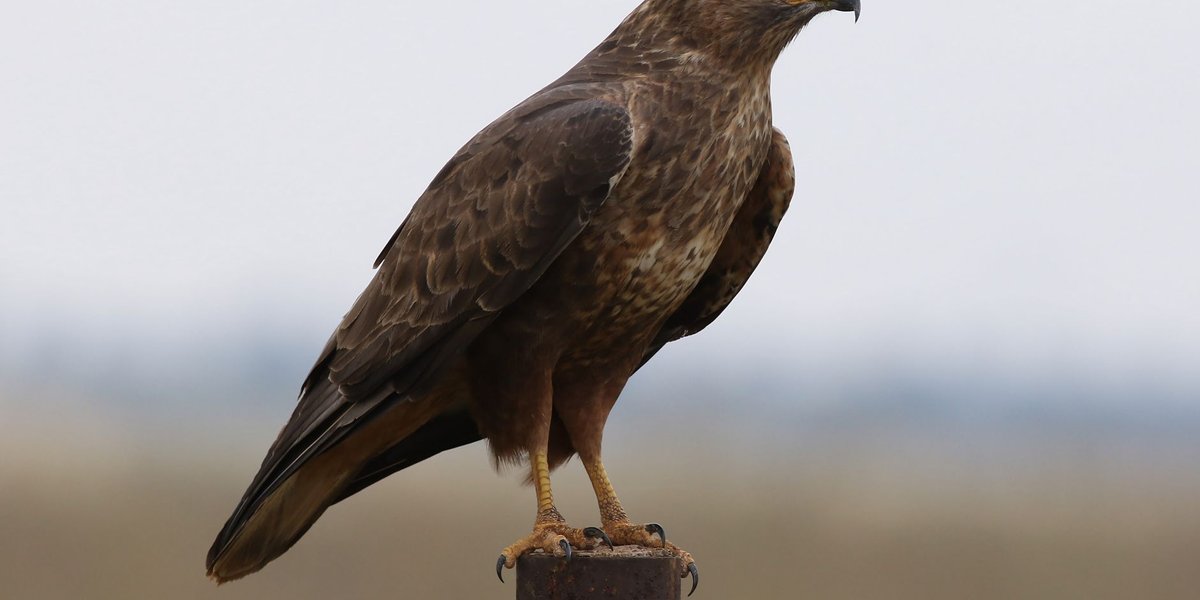
Eastern Imperial Eagle. A big, dark eagle with pale “braces” — those white shoulder patches are the clincher against the similar Golden Eagle, which lacks them. Adults show a strikingly pale, golden nape. They like lowland and foothill country with scattered trees and open hunting ground, not deep mountains. Hungary’s Hortobágy and the surrounding farmland hold one of the densest populations in the EU; the IUCN Red List classes the species as Vulnerable globally, so this isn’t a guaranteed tick anywhere — but Hortobágy is your best shot.
Saker Falcon. A heavy, broad-winged falcon, browner and less slate-grey than a Peregrine, with a paler head and a less defined moustache. It hunts ground squirrels (sousliks) over open steppe, so its fortunes track theirs. The Hungarian puszta and the agricultural plains of eastern Slovakia are the strongholds; conservation nest-box programs on power pylons have propped up the population.
Lesser Kestrel. Smaller and more sociable than the Common Kestrel, and colonial — it nests in colonies in old buildings and cliffs rather than alone. Males have an unmarked chestnut back and blue-grey wing panel; in the hand, the claws are pale, not black. Look for them around old towns and church roofs in the southern Balkans and the lowlands of North Macedonia and Bulgaria, hawking insects in loose flocks.
Ural Owl. A large, round-headed grey owl with a plain, almost expressionless facial disc and dark eyes — think of a giant, washed-out Tawny Owl. It’s a bird of mature beech and mixed forest, and it can be aggressively defensive of its nest. The old-growth forest of Białowieża on the Poland–Belarus border is the classic site, along with the Carpathian foothills of Slovakia and Romania.
Pallid Harrier. A pale, slender harrier of open grassland. Adult males are almost ghostly grey-white with a narrow black wedge in the wingtip — cleaner and paler than a Montagu’s. They breed on the eastern steppes and pass through the region on migration; the grasslands of the Hortobágy and the Dobrogea plateau near the Danube Delta are good bets in spring and autumn.
Grassland and steppe birds
The puszta and the southern steppes hold birds you simply won’t find in Western Europe’s hedgerow-and-woodland landscape.
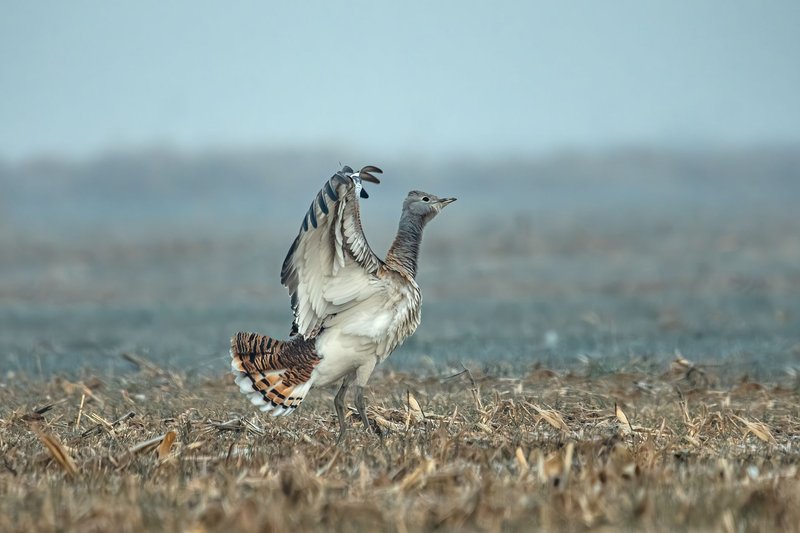
Great Bustard. One of the heaviest flying birds on Earth — big males can top 16 kg. On the ground they look like a turkey crossed with a goose; in spring, displaying males turn themselves nearly inside out into a froth of white feathers visible from a kilometre away. They need vast, undisturbed open plains. Hungary’s Kiskunság and the Dévaványa reserve protect a recovering population, and they’re easiest to find in the cold months when birds flock up.
Stone-curlew. A cryptic, long-legged plover-relative of dry, stony ground, with a big yellow eye that gives it a permanently startled look. Mostly crepuscular — you’ll often hear the wailing, curlew-like call at dusk before you see anything. The sandy grasslands of the Kiskunság and the steppe edges of Bulgaria’s Dobrogea are reliable.
Roller. Electric-blue and chestnut, the most tropical-looking bird in Europe, and unmistakable when it drops off a wire to grab a beetle. It’s a summer visitor that nests in tree holes and nest boxes across the Hungarian and Romanian lowlands. Hortobágy and the Danube floodplain forests are dependable from May onward.
Red-footed Falcon. A small, colonial falcon that breeds in old rook colonies. Males are slate-grey with rusty-red “trousers” and undertail; females have an orange-buff head and barred underparts. They hunt insects over open grassland, often in loose groups, sometimes hovering. The Hortobágy and the Vojvodina plains of northern Serbia hold significant colonies.
Collared Pratincole. A strange tern-meets-plover bird — short-legged, fork-tailed, with long pointed wings, hawking insects in the air like an oversized swallow. A cream throat patch ringed with black is the field mark. It nests on bare, dried mud near shallow water; the margins of Hungary’s fishponds and the lagoons of the Danube Delta are the spots.
Wetland and marsh birds
The fishpond systems of Central Europe and the vast reedbeds of the Danube Delta are the engine room for the region’s water birds.

Aquatic Warbler. The rarest songbird breeding on mainland Europe, and the reason serious birders detour into the backwater fens of eastern Poland. It looks like a streaky Sedge Warbler but with a bold pale crown-stripe and a colder, more contrasted pattern. It needs exactly the right fen-mire — too wet or too dry and it’s gone. The Biebrza Marshes in northeast Poland are the European stronghold; the species is globally classified as Vulnerable.
Dalmatian Pelican. The world’s largest freshwater pelican and a true Danube Delta signature. In breeding plumage it grows curly nape feathers and the throat pouch flushes brick-orange. Tell it from the White Pelican by its grey-white (not pure white) plumage and dark, not pink, legs. The Delta and Greece’s Lake Kerkini hold the main European colonies.
Pygmy Cormorant. A tiny, short-billed cormorant of reed-fringed water, easy to dismiss as a duck at distance. It roosts and breeds colonially in waterside trees and reeds. The Danube Delta, the lower Sava and Drava rivers, and Hungary’s larger fishponds are all strongholds — it’s recovered well across the region in recent decades.
Ferruginous Duck. A rich mahogany-brown diving duck with a startling white eye (in the male) and a clean white undertail that shows even on a swimming bird. It favours shallow, reed-rich lakes and fishponds. The Hungarian fishpond systems around Hortobágy and the Hungarian–Croatian border wetlands are good, as is the Danube Delta. The border marshes are worth a trip in their own right, and if you’re crossing south the rest of the country’s wildlife is well worth a detour beyond the water birds.
Squacco Heron. A small, buff-and-cream heron that looks dull and hunched at rest, then flashes brilliant white wings the instant it flies. It hugs reed edges and lily pads in warm, shallow marshes. The Delta, Lake Balaton’s reedy western bays, and the fishponds of southern Hungary host good numbers in summer.
Forest birds
The old-growth forests of the east — Białowieża above all — hold a woodpecker and grouse community that’s been logged out of most of the continent.
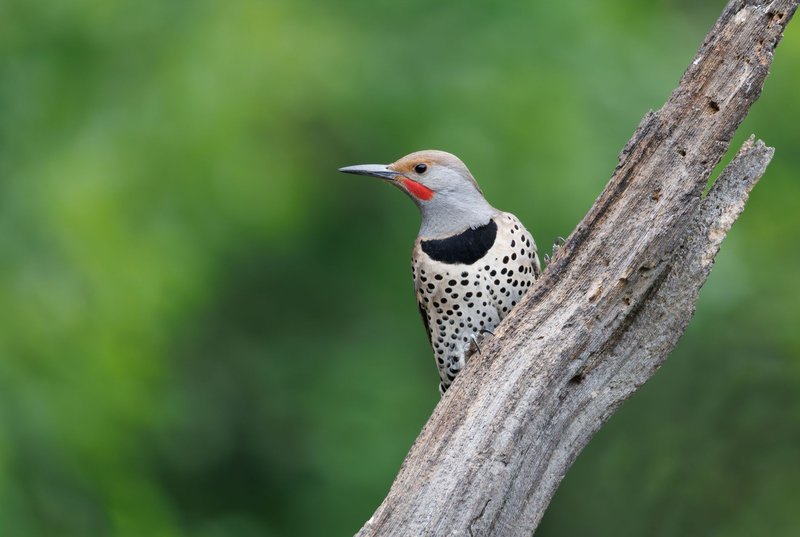
Black Woodpecker. Crow-sized, all-black, with a blood-red crown (full red cap on the male, just a rear patch on the female). The flight is loose and slightly crow-like, and the loud, ringing “kree-kree-kree” call carries across the forest. It needs big mature trees for its oversized nest holes — which dormice, owls, and goldeneyes later move into. Białowieża and the Carpathian forests are excellent.
White-backed Woodpecker. The hardest of the region’s woodpeckers, tied to old, untidy deciduous forest with plenty of standing deadwood — the kind of forest modern forestry tidies away. Look for the white lower back and heavily barred wings, with males showing a full red crown. The natural reserve of Białowieża, where deadwood is left to rot, is the classic European site.
Hazel Grouse. A small, secretive woodland grouse, intricately barred in grey, brown, and rust, with a short crest and a thin, high whistle that’s easier to detect than the bird itself. It skulks in dense mixed forest with a thick understorey. The Carpathians of Romania and Slovakia and the larger Polish forests hold it, but you’ll work for every sighting. The character of these woods depends on the deciduous species that build them, and the same temperate forest belt shapes the native woodlands just east in Moldova, where oak and hornbeam dominate.
Wallcreeper. Not strictly a forest bird, but a mountain specialty worth the detour: a grey, butterfly-winged climber that flicks open crimson-and-black wings as it works sheer rock faces. It breeds on high crags in the Carpathians and Balkans and drops to lower gorges and even old buildings in winter. The limestone gorges of Slovakia and Romania are where to try, especially in the cold months.
Best places and seasons to go birding
Five regions cover most of what’s above, and each one rewards a different time of year.
Hortobágy, Hungary. The puszta — Europe’s largest continuous lowland grassland, a UNESCO site — plus the country’s biggest fishpond complex. This is your one-stop shop for Imperial Eagle, Saker, Red-footed Falcon, Roller, Great Bustard, and a wall of marsh birds. Spring (April–May) for breeders and song; autumn for crane migration, when tens of thousands of Common Cranes stage here.
Danube Delta, Romania. The largest reedbed on the planet and the richest single birding site in Europe. Dalmatian Pelican, Pygmy Cormorant, Squacco Heron, Glossy Ibis, and an avalanche of terns and warblers. You bird it from a boat. Late April through June is peak; it sits right on the migration flyway, so passage adds even more.
Białowieża Forest, Poland. The last large lowland old-growth forest in Europe, straddling the Belarus border. The destination for forest specialists: Black, White-backed, and Three-toed Woodpeckers, Ural and Pygmy Owls, Hazel Grouse, and Collared Flycatcher. Late spring for drumming woodpeckers; winter for owls and tracks in snow.
Biebrza Marshes, Poland. Vast, intact fen and river valley northeast of Białowieża, and the place for Aquatic Warbler. Spring flooding draws displaying Great Snipe and Ruff; May is the month, both for the warbler and the dawn lekking.
Dobrogea & the Bulgarian Black Sea coast. The steppe plateau and coastline south of the Delta funnel autumn raptor and stork migration, and hold steppe breeders like Stone-curlew, Pied Wheatear, and Lesser Kestrel. Late August to October is the migration window; the coast at Cape Kaliakra is a known watchpoint.
A practical note: nearly all of this is most rewarding with local knowledge. The species are findable, but birds like the Aquatic Warbler or Ural Owl reward a guide who knows this year’s territories — sites shift with water levels, mowing, and which old trees blew down over winter. Build a trip around two or three of these regions rather than trying to sweep them all, and pick your season around the birds you most want to see. The eagles and woodpeckers wait for nobody, but they’re right where the map says they are.