Croatia gets sold as beaches and walled cities, and the wildlife gets left out of the brochure. That’s a mistake. This is a country where a blind salamander lives in cave water that hasn’t seen sunlight in millennia, where brown bears outnumber the ones in most of the Alps, and where the national currency was literally named after a forest weasel. The animals here are weirder and more reachable than most visitors realize.
Below are 20 species worth knowing, grouped by where they live, each with its Croatian name, its conservation status, and the specific park or coast where you’ve actually got a shot at seeing it. There’s a quick-reference table near the end so you can match an animal to a season before you book.
Table of Contents
- Large mammals
- Marine life
- Birds
- Reptiles and amphibians
- Endemics and oddities
- Where to see them: the cheat sheet
- Safety around bears, wolves, and snakes
Large mammals {#large-mammals}
1. European pine marten (kuna) — Least Concern. Start here, because Croatia did. The kuna is the national animal, and the old currency, the kuna, was named after it; medieval tax in the region was once paid in marten pelts. It’s a cat-sized weasel with a cream throat patch, mostly nocturnal, living in mature forest across the country. Your best odds are dawn or dusk in the woodlands of Risnjak and the wider Gorski Kotar region.
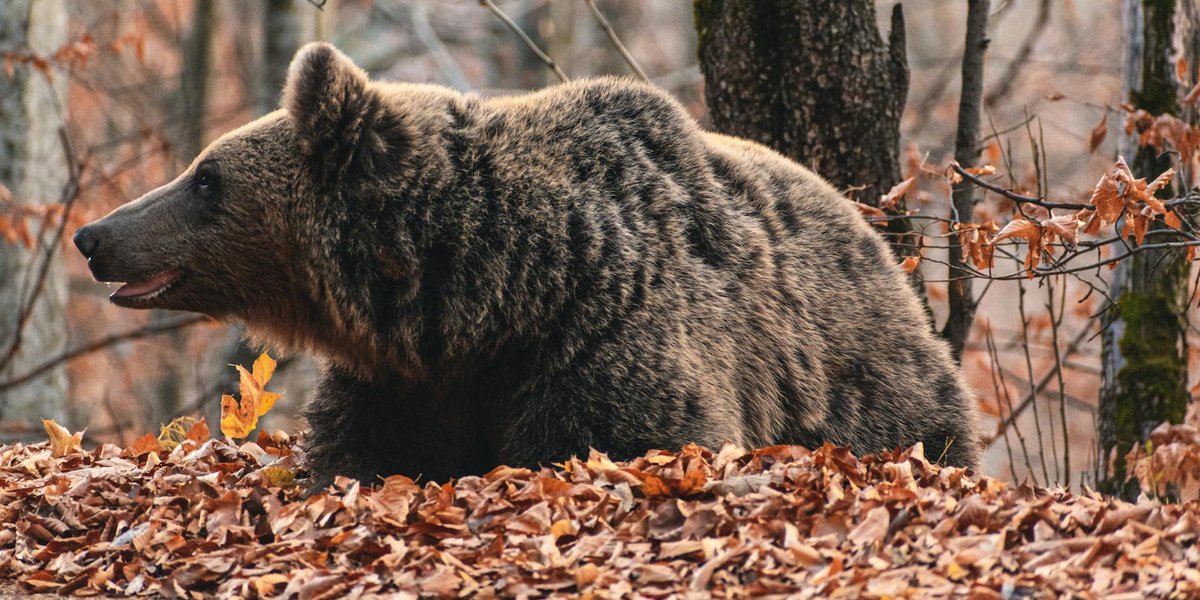
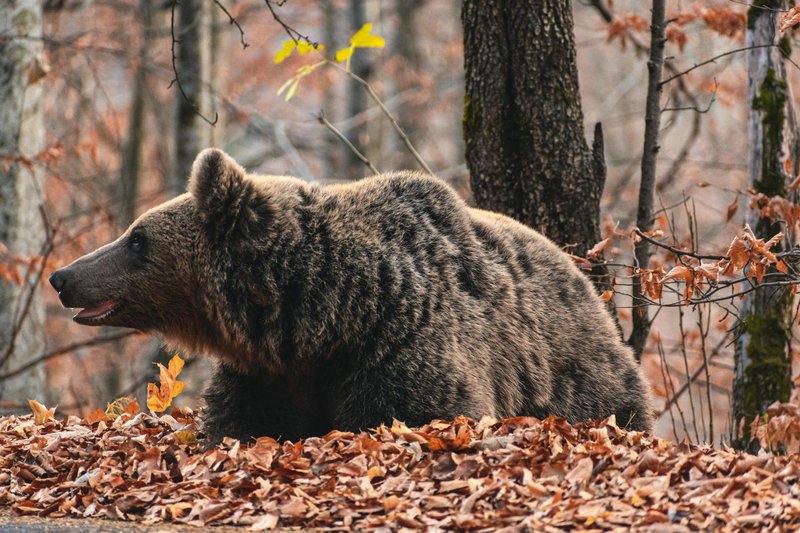
2. Brown bear (medvjed) — Least Concern in Croatia, but protected. Croatia holds roughly 1,000 brown bears, one of the healthiest populations in this part of Europe, concentrated in the Dinaric forests of Gorski Kotar and Lika. You won’t bump into one casually. Specialized hides near Kuterevo and in the Velebit foothills run evening photography sessions where bears come to feeding stations. Spring and autumn are peak.
3. Grey wolf (vuk) — Strictly protected. Around 200 wolves range across the Dinaric mountains. Seeing one in the wild is a matter of luck and patience; tracks and scat in winter snow are far more realistic than a sighting. Northern Velebit and the Plitvice highlands are core territory. The same Dinaric range spills across the border, and many of these large carnivores are shared with Bosnia and Herzegovina’s native fauna, where the forests are even less disturbed.
4. Eurasian lynx (ris) — Critically Endangered in Croatia. The lynx vanished from Croatia in the early 20th century and was reintroduced from the Carpathians in 1973. Risnjak National Park is named for it (ris = lynx). The population stayed dangerously inbred until the recent LIFE Lynx project brought in fresh animals from Romania and Slovakia. Sightings are rare; the park itself is the place to try.
5. Mouflon (muflon) — Least Concern. A wild sheep with curling horns, introduced to several Adriatic islands and the Velebit massif. The rocky slopes of Velebit and parts of the Kvarner islands hold visible herds, especially in cooler months when they move to lower ground.
6. Wild boar (divlja svinja) — Least Concern. Common across mainland forests and farmland edges. You’ll hear them rooting before you see them, usually at night. Common enough in Lonjsko Polje and the Slavonian oak forests. These six are only the headline mammals; if you want the fuller picture, there’s a longer rundown of Croatia’s native animals covering scientific names and habitat ranges for dozens more species.
Marine life {#marine-life}
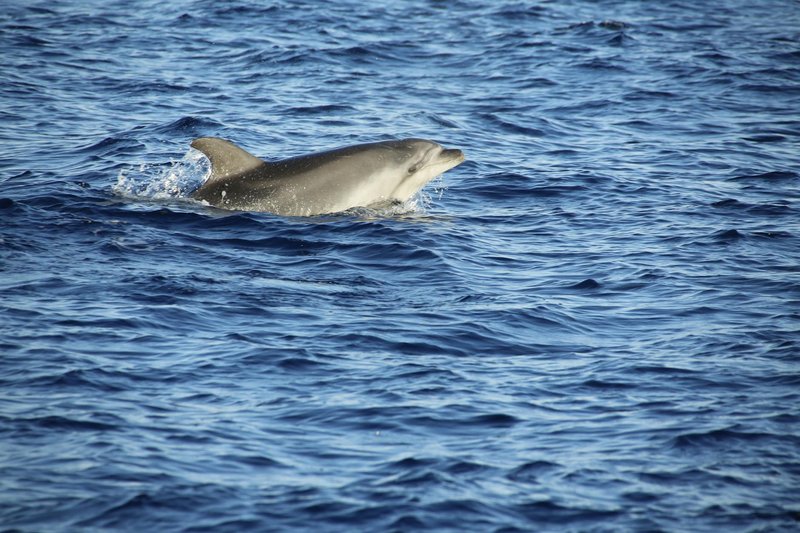
7. Common bottlenose dolphin (dobri dupin) — Data Deficient, protected. The only dolphin species resident year-round in the Croatian Adriatic. The waters around the Cres-Lošinj archipelago host a long-studied resident community, monitored by the Blue World Institute. Boat trips out of Mali Lošinj in summer give you a genuine chance, especially in calm morning seas.
8. Loggerhead sea turtle (glavata želva) — Vulnerable (IUCN). Loggerheads use the northern Adriatic as a feeding and wintering ground, particularly juveniles. They don’t nest on Croatian beaches in any number, but they’re regularly seen and, sadly, regularly treated for injuries at the Aquarium Pula rescue center. Open water off Istria and the Kvarner Gulf is where they turn up.
9. Noble pen shell (plemenita periska) — Critically Endangered. The Mediterranean’s largest bivalve, up to a meter tall, anchored upright in seagrass meadows. A mass die-off from a parasite has wiped out most of the population since 2016, which makes the survivors in protected Croatian bays genuinely precious. Snorkel the seagrass beds inside the Kornati and Telašćica protected areas — and look, don’t touch.
10. Mediterranean monk seal (sredozemna medvjedica) — Endangered. One of the rarest marine mammals on Earth, and one of the most sought-after entries on any list of Europe’s rare animals. It was effectively gone from Croatian waters for decades, but individuals have been documented again along the outer islands in recent years. There’s no reliable spot to see one; a sighting is a lottery win, most likely around remote Vis or the Palagruža islets.
11. Short-beaked common dolphin (obični dupin) — Endangered in the Mediterranean. Once abundant, now scarce in the Adriatic. Pods occasionally pass the southern Dalmatian coast and the deeper channels near Vis. Less predictable than the bottlenose, but unmistakable with its hourglass flank pattern.
Birds {#birds}
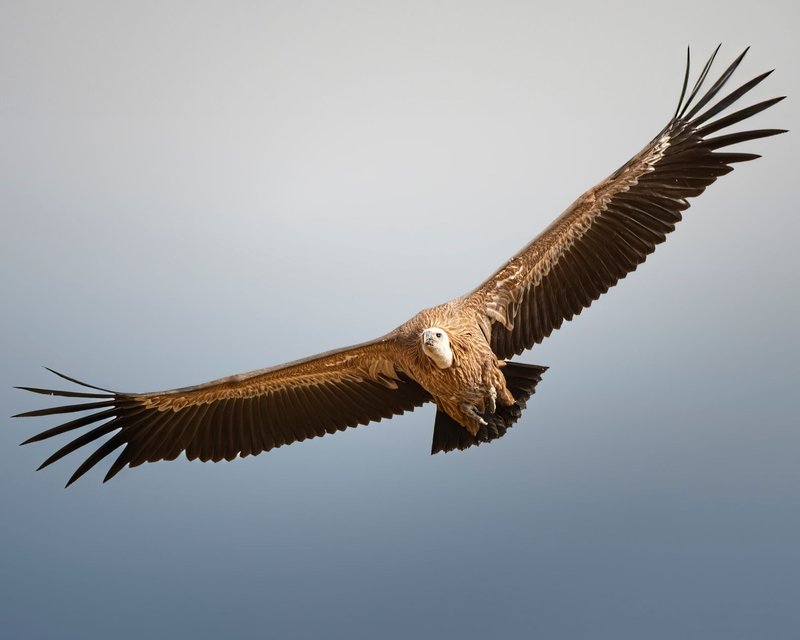
12. Griffon vulture (bjeloglavi sup) — Least Concern globally, protected locally. The Kvarner islands of Cres, Krk, and Prvić host one of the last cliff-nesting griffon colonies in this corner of the Mediterranean. These birds have a near-three-meter wingspan and need to drop from sea cliffs to get airborne — which is why young birds sometimes ditch in the water. Watch from the Beli area on Cres, or take a boat along the eastern Cres cliffs.
13. Dalmatian pelican (kudravi pelikan) — Near Threatened. The heaviest flying bird in the region, with a frizzy nape and an orange pouch in breeding season. It’s a winter and passage visitor to Croatian wetlands rather than a breeder. The Neretva Delta in southern Dalmatia is the spot, best from late autumn through winter.
14. White-tailed eagle (štekavac) — Least Concern, recovering. Europe’s largest eagle, with a wingspan that can clear two meters. The flooded oak forest of Kopački Rit in eastern Slavonia is the stronghold — one of the densest breeding populations in continental Europe. Winter, when the trees are bare, makes them easy to pick out.
15. Eurasian scops owl (ćuk) — Least Concern. You’ll hear this one long before you see it: a monotonous single-note whistle repeated through warm Mediterranean nights, the soundtrack of summer on the Dalmatian coast. It’s tiny, barely bigger than a fist. Any old stone-walled olive grove on islands like Hvar or Korčula will have one calling after dark.
Reptiles and amphibians {#reptiles-and-amphibians}
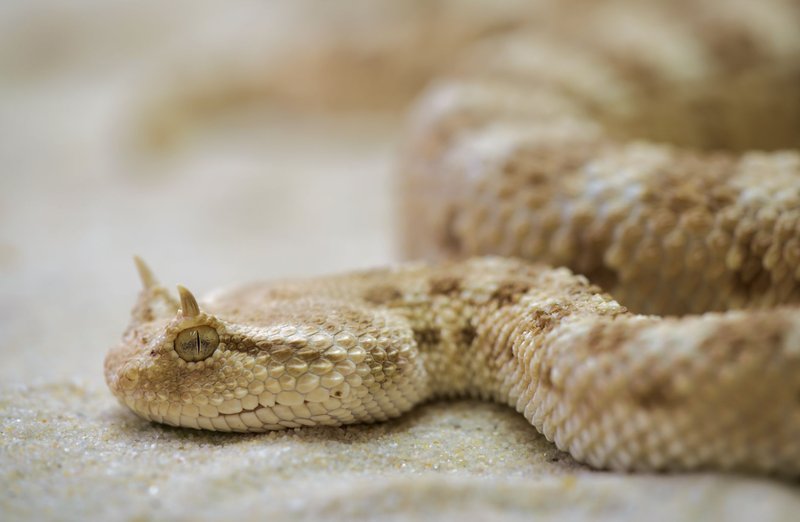
16. Nose-horned viper (poskok) — Least Concern. The most venomous snake in Europe, and yes, it lives in Croatia. The “horn” on its snout makes it unmistakable. Despite the reputation, it’s shy and bites are rare; it favors dry, rocky, sun-baked slopes across Dalmatia and the islands. Watch where you put your hands on a stone wall, and you’ll be fine.
17. European pond turtle (barska kornjača) — Near Threatened. A small dark freshwater turtle that basks on logs in slow rivers and marshes. The wetlands of Lonjsko Polje and the Neretva Delta are reliable. Look along sunny banks on warm mornings, when they haul out to warm up.
18. Hermann’s tortoise (čančara) — Near Threatened. A land tortoise of the Mediterranean scrub, plodding through the garrigue on the southern coast and islands. Spring is your window, when they’re most active before the summer heat drives them to cover. Common in the maquis around Dubrovnik and on Mljet.
Endemics and oddities {#endemics-and-oddities}
19. Olm (čovječja ribica) — Vulnerable. If you see one thing on this list, make it this. The olm is a blind, pale, eel-like salamander that spends its entire life in the flooded caves of the Dinaric karst. It breathes through external gills, never undergoes metamorphosis, and can apparently go years without food and live past a century. Its Croatian name, čovječja ribica, means “human fish,” after its pinkish skin. You can’t reliably find one in the wild — it lives in pitch-dark cave systems — but it’s the headline resident of Croatia’s underground rivers, and a few show caves in the karst region display them.
20. Olm’s cave neighbor — the cave-dwelling fauna of the Dinaric karst. The same underground waters that hide the olm hold a startling concentration of endemic invertebrates: blind cave shrimp, the Velebit cave leech discovered deep in a Velebit pit, and beetles found in single caves and nowhere else on Earth. The Dinaric karst is one of the richest subterranean ecosystems on the planet, and most of it has never been catalogued. You won’t see these on a hike — but knowing they’re there changes how you look at the limestone.
Where to see them: the cheat sheet {#cheat-sheet}
| Animal | Where to see it | Best season |
|---|---|---|
| Pine marten (kuna) | Risnjak, Gorski Kotar | Year-round, dawn/dusk |
| Brown bear | Velebit & Lika hides | Spring, autumn |
| Grey wolf | Northern Velebit | Winter (tracks) |
| Eurasian lynx | Risnjak NP | Year-round (rare) |
| Mouflon | Velebit, Kvarner islands | Autumn, winter |
| Bottlenose dolphin | Cres-Lošinj waters | Summer mornings |
| Loggerhead turtle | Istria, Kvarner Gulf | Summer |
| Noble pen shell | Kornati, Telašćica | Summer (snorkel) |
| Griffon vulture | Cres cliffs (Beli) | Spring–summer |
| Dalmatian pelican | Neretva Delta | Late autumn–winter |
| White-tailed eagle | Kopački Rit | Winter |
| Scops owl | Hvar, Korčula groves | Summer nights |
| Nose-horned viper | Dalmatian rocky slopes | Spring–summer |
| Pond turtle | Lonjsko Polje, Neretva | Warm mornings |
| Hermann’s tortoise | Dubrovnik scrub, Mljet | Spring |
| Olm | Dinaric show caves | Year-round (indoor) |
Safety around bears, wolves, and snakes {#safety}
The headline predators are far less of a threat than the internet suggests. Croatia’s brown bears avoid people and there’s no record of a fatal wild bear attack on a hiker in the country in living memory; give a bear space, never get between a sow and cubs, and make noise on blind forest trails. Wolves you will essentially never encounter — they hear you coming from a kilometer away.
Snakes deserve real but calm respect. The nose-horned viper is the only seriously venomous species you’re likely to meet, and it would much rather flee than strike. Most bites happen when someone reaches into a rock crevice or steps on one barefoot. Wear closed shoes on rocky slopes and walls, watch your hand placement, and if you are bitten, stay calm, keep the limb still, and get to a hospital — Croatian emergency services keep antivenom, and serious outcomes are rare.
The animals that will actually bother you in summer are mosquitoes in the wetlands and sea urchins in the shallows. Pack accordingly, respect the wild ones from a distance, and Croatia turns into one of the best wildlife-watching countries in this part of Europe.