Every mushroom is a fungus. But not every edible fungus is a mushroom. That distinction trips up a lot of people, and it’s the whole reason this list exists.
The bread you ate this morning, the blue veins in your cheese, the meat-free strips in your stir-fry, the wine in your glass – all of those involve fungi you’re eating on purpose. Mushrooms are just the visible, fruiting tip of a much larger kingdom we put on our plates. So this isn’t only a roundup of which caps to sauté. It’s the full span: the gourmet ones you’d pay a fortune for, the microscopic ones doing quiet work in your kitchen, and the processed ones food scientists engineered into protein.
Table of Contents
- The Quick Answer
- What Counts as an Edible Fungus
- Culinary Mushrooms
- Prized Wild and Gourmet Fungi
- Microscopic and Processed Fungi
- Comparison Table
- A Word on Look-Alikes and Safety
- Nutrition in Brief
The Quick Answer
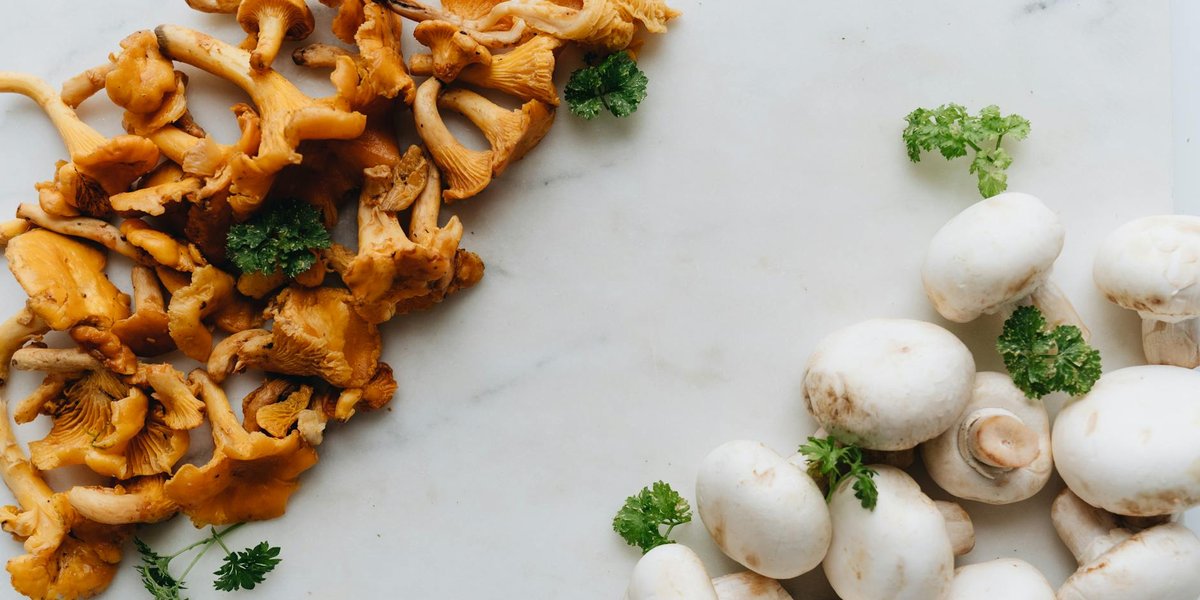
Edible fungi fall into three groups. First, culinary mushrooms – button, cremini, portobello, shiitake, oyster, enoki, maitake, lion’s mane. These are the ones you buy by the punnet. Second, wild and gourmet fungi – truffles, morels, chanterelles, porcini – foraged or cultivated, expensive, and worth it. Third, microscopic and processed fungi – baker’s and brewer’s yeast, the Penicillium molds that ripen cheese, the Fusarium and Rhizopus species behind Quorn and tempeh.
If you only remember one thing: “mushroom” and “edible fungus” are not synonyms. The second category is much bigger.
What Counts as an Edible Fungus
Fungi are their own kingdom of life, separate from plants and animals. They don’t photosynthesize. They feed by breaking down organic matter, and they reproduce with spores. That single biological family includes organisms as different as a portobello cap, a speck of baker’s yeast, and the fuzz that gives Roquechfort its bite.
A mushroom is specifically the fleshy, spore-bearing fruiting body of certain fungi – the part you can see and pick. Most of the fungus lives out of sight as a web of thread-like cells called mycelium. According to Biology LibreTexts, the macrofungi we call mushrooms are only one slice of the fungal kingdom that humans eat; yeasts and molds are just as much “fungi” as any chanterelle.
So when the question is “edible fungi examples,” the honest answer reaches past the produce aisle and into the bakery, the cheese counter, and the freezer.
Culinary Mushrooms
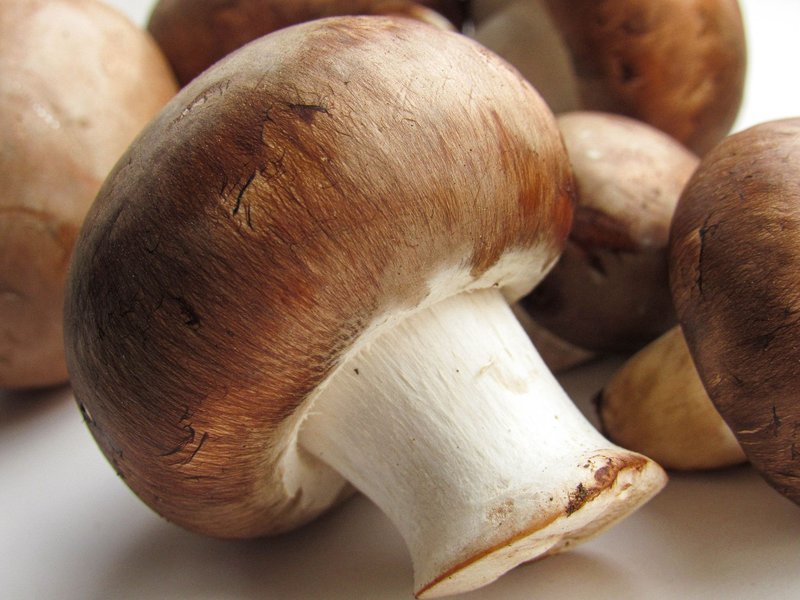
These are the workhorses. Most are cultivated, cheap, and available year-round, which is exactly why they show up in so much home cooking.
- Button, cremini, and portobello are all the same species, Agaricus bisporus, at different stages of growth. White buttons are youngest and mildest. Cremini (“baby bella”) are the same mushroom grown a bit longer and browner, with deeper flavor. Portobellos are fully mature creminis – big, meaty caps you can grill like a burger. One species, three products, three price points.
- Shiitake (Lentinula edodes) brings a savory, smoky depth. The stems are too tough to eat but make excellent stock. Native to East Asia and now grown worldwide, it’s the second most cultivated mushroom on the planet.
- Oyster mushrooms (Pleurotus species) grow in fan-shaped clusters and cook fast, with a mild, slightly sweet taste. They’re a favorite for beginner foragers and home growers because they fruit aggressively on straw and sawdust.
- Enoki (Flammulina velutipes) are the thin, long-stemmed white clusters you see in ramen and hot pot. Cultivated ones look nothing like their wild cousins – the lack of light keeps them pale and stretched.
- Maitake (Grifola frondosa), also called hen-of-the-woods, grows in ruffled, overlapping clusters at the base of oak trees. Earthy and rich, it holds its texture better than most mushrooms when roasted.
- Lion’s mane (Hericium erinaceus) is the white, shaggy one that looks like a frozen waterfall. Cooked, it has a texture people compare to crab or lobster, which is why it’s a darling of plant-based menus.
Prized Wild and Gourmet Fungi
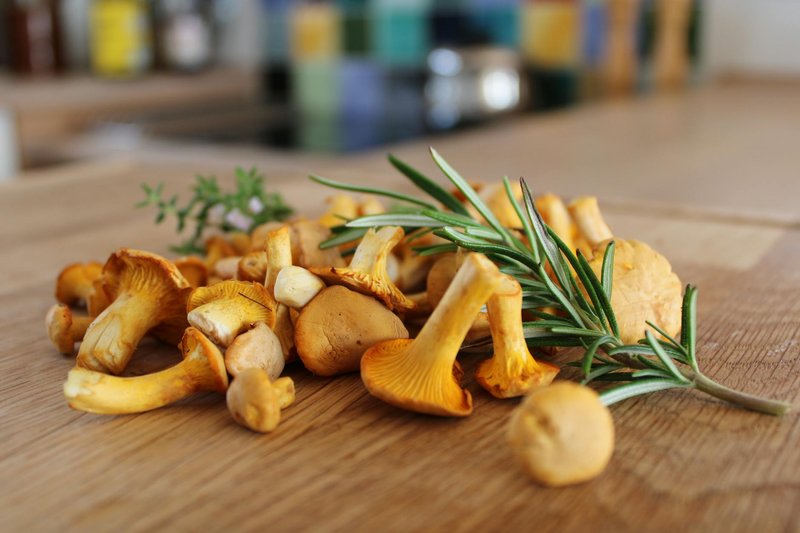
These resist easy cultivation, which keeps them rare and expensive. Many form partnerships with tree roots – a relationship called mycorrhiza – so you can’t just grow them in a bag of substrate.
- Truffles (Tuber species) grow underground near the roots of oak and hazel. Pigs and trained dogs sniff them out. White Alba truffles from Italy regularly sell for thousands of dollars per pound, and the aroma is so volatile it fades within days of harvest. You use them in shavings, raw, off the heat.
- Morels (Morchella species) have a distinctive honeycomb cap and a short spring season. They cannot be reliably farmed at scale, so nearly all morels are wild-foraged. Always cook them – raw or undercooked morels can make you sick.
- Chanterelles (Cantharellus species) are golden, funnel-shaped, and faintly fruity, sometimes described as smelling like apricots. They appear in summer and fall in forests across the Northern Hemisphere.
- Porcini (Boletus edulis), known as cep in France, is a thick-stemmed bolete with a nutty, deeply savory flavor. Dried porcini is a pantry staple in Italian kitchens because the drying concentrates that umami punch.
Microscopic and Processed Fungi
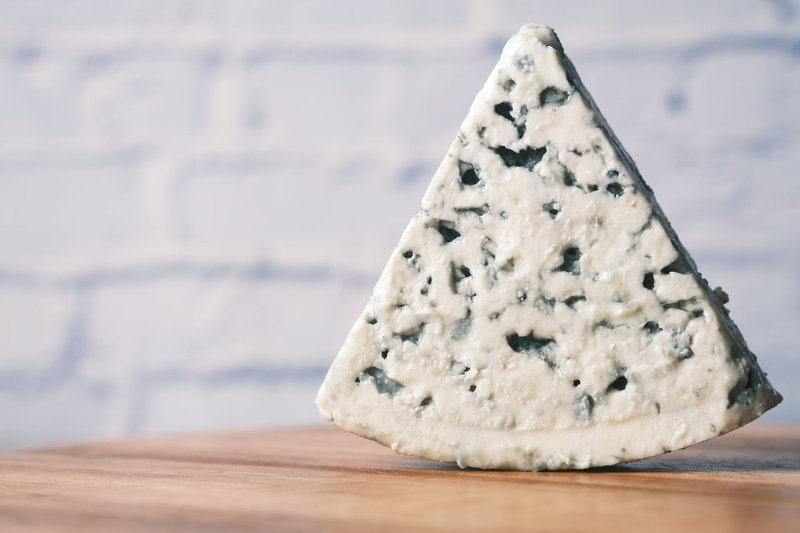
This is the category most “edible fungi” lists ignore, and it’s the most interesting one. You eat these constantly without thinking of them as fungi at all.
- Baker’s and brewer’s yeast (Saccharomyces cerevisiae) is a single-celled fungus. It ferments sugars into carbon dioxide and alcohol, which is what makes bread rise and turns grape juice into wine and grain into beer. The same species sits behind your sourdough and your pint. Nutritional yeast – the cheesy flakes vegans love – is this fungus deactivated and dried.
- Penicillium cheese molds give us blue cheese and the white rinds of brie and camembert. Penicillium roqueforti makes the blue veins in Roquefort and Stilton; Penicillium camemberti forms the soft white bloom on camembert. Yes, it’s a close relative of the mold that produces penicillin, and yes, it’s safe and intentional in cheese.
- Mycoprotein (Fusarium venenatum) is the fungus fermented into Quorn, the meat substitute. It’s grown in large vats, harvested as a fibrous biomass, and shaped into nuggets and mince. The University of Exeter and other researchers have studied mycoprotein’s protein quality and its lower environmental footprint compared with beef.
- Tempeh’s Rhizopus is the mold that binds cooked soybeans into the firm, sliceable cake known as tempeh. Rhizopus oligosporus knits the beans together with its white mycelium during fermentation, adding a nutty flavor and making the soy more digestible.
None of these grows a cap. All of them are fungi, and all of them are edible by design.
Comparison Table
| Name | Type | Flavor | Common Use |
|---|---|---|---|
| Button / cremini / portobello | Culinary mushroom | Mild to meaty | Everyday cooking, grilling |
| Shiitake | Culinary mushroom | Savory, smoky | Stir-fries, broths |
| Oyster | Culinary mushroom | Mild, sweet | Sautés, vegan dishes |
| Enoki | Culinary mushroom | Delicate, crisp | Ramen, hot pot |
| Maitake | Culinary mushroom | Earthy, rich | Roasting |
| Lion’s mane | Culinary mushroom | Seafood-like | Meat substitute |
| Truffle | Gourmet fungus | Pungent, aromatic | Shaved raw over dishes |
| Morel | Gourmet fungus | Nutty, woodsy | Sautéed (cooked only) |
| Chanterelle | Gourmet fungus | Fruity, peppery | Pan-fried sides |
| Porcini | Gourmet fungus | Nutty, umami | Risotto, sauces (often dried) |
| Baker’s/brewer’s yeast | Microscopic fungus | Neutral to bready | Bread, beer, wine |
| Penicillium mold | Microscopic fungus | Sharp, tangy | Blue and bloomy cheeses |
| Mycoprotein (Quorn) | Processed fungus | Neutral, savory | Meat substitute |
| Rhizopus (tempeh) | Processed fungus | Nutty | Fermented soy cake |
A Word on Look-Alikes and Safety
The cultivated mushrooms above are safe because someone grew them under controlled conditions. The danger lives in foraging. Several deadly species closely resemble edible ones, and the consequences are not a stomachache – they’re liver failure. It pays to know the worst offenders by sight, and our rundown of poisonous fungi and their toxins covers the species most often mistaken for dinner.
The death cap (Amanita phalloides) looks enough like edible field mushrooms and some Asian varieties that it kills foragers every year. False morels (Gyromitra) mimic true morels but contain a toxin related to rocket fuel. The rule that experienced foragers actually follow: never eat a wild mushroom unless you can identify it with total certainty, ideally confirmed by someone who knows the region. The North American Mycological Association maintains poisoning resources and stresses that “edible look-alike” is a phrase that has gotten people killed.
Two more practical notes. Cook wild fungi – morels especially are toxic raw. And introduce any new mushroom in a small amount the first time, since individual sensitivities exist even with safe species. If you do plan to forage, it’s worth learning the field methods used to identify mushrooms safely, from spore prints to habitat cues, before you ever put one in your basket.
Nutrition in Brief
Edible fungi are low in calories and fat, and they bring something most plants can’t: when exposed to UV light, mushrooms produce vitamin D, the same form your skin makes in sunlight. They also supply B vitamins, selenium, copper, and a fiber called beta-glucan linked to immune and heart benefits.
The processed fungi pull their weight too. Mycoprotein and tempeh are complete or near-complete proteins, which is rare in the non-animal world, and both come with far less environmental cost than meat. So the kingdom that gave you blue cheese and beer also happens to be one of the more nutrient-dense, sustainable things you can put on a plate. Not bad for an organism that’s neither plant nor animal.