Burkina Faso doesn’t have a single salamander or newt. It also has no caecilians. What it has is frogs and toads — 36 species of them, all anurans, documented across a country that stretches from the dry Sahel in the north to gallery forests in the south. That number isn’t a guess. It comes from a 2020 commented checklist published in Zoosystema, the most thorough accounting anyone has done for this landlocked corner of West Africa.
Most of what’s written about these amphibians is locked inside paywalled PDFs and citation-dense taxonomy papers. The general “wildlife of Burkina Faso” pages mention frogs in a sentence or two before moving on to elephants and antelope. This guide does the thing nobody else has bothered to do: lay out all 36 species, grouped by family, with the habitats they live in, the seven that were only recently confirmed for the country, and the reason a Mossi healer might want one.
Table of Contents
- Why 36 species, and why all frogs
- The habitat gradient: Sahel to gallery forest
- The families and their species
- Seven new country records
- Frogs as food and medicine
- What the amphibians tell us about the land
Why 36 species, and why all frogs
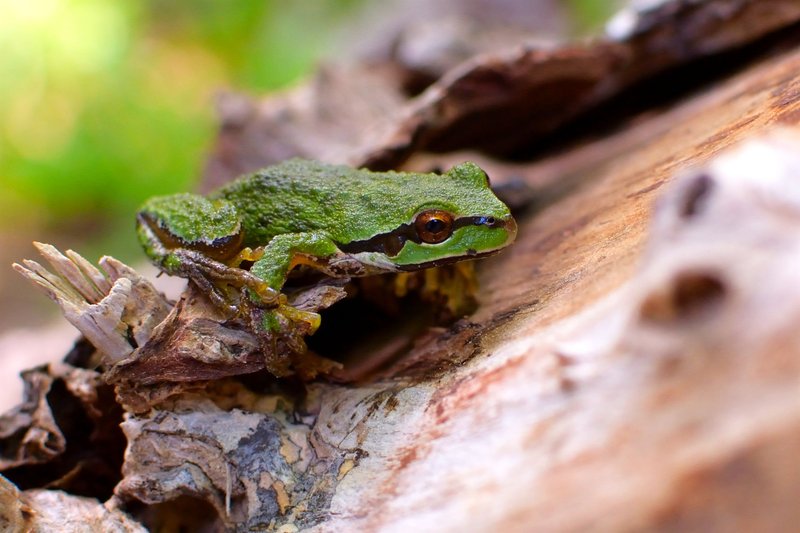
Amphibians come in three orders: frogs and toads (Anura), salamanders and newts (Caudata), and the limbless, burrowing caecilians (Gymnophiona). Caudata is essentially a temperate, Northern Hemisphere group — you won’t find a wild salamander anywhere in sub-Saharan Africa. Caecilians do live in parts of West Africa, but their range doesn’t reach the dry interior. That leaves Burkina Faso with anurans, full stop.
The 36-species count reflects survey effort as much as actual diversity. Burkina Faso has historically been under-sampled compared to its wetter, more biodiverse neighbors. The number has crept upward as herpetologists run new transects, and the checklist authors are explicit that more species likely await confirmation in the south, where the country edges toward the Guinean forest zone. Treat 36 as a floor, not a ceiling.
For comparison, neighboring countries with more forest cover host considerably richer frog faunas, and the frogs are only one slice of a regional fauna that runs from desert reptiles to forest primates — the broader roster of West African wildlife puts Burkina’s modest list in context. Burkina’s relatively modest list is a direct consequence of its climate: the Sahel is a hard place to be an amphibian, and aridity is the dominant filter on which species can survive here.
The habitat gradient: Sahel to gallery forest
You can’t understand Burkina’s frogs without understanding the rain. The country runs along a sharp north-to-south moisture gradient. The far north sits in the Sahel, where annual rainfall can dip below 600 mm and the dry season runs most of the year. The south, around the borders with Ghana, Togo, and Côte d’Ivoire, gets closer to 1,200 mm and supports gallery forests — narrow ribbons of denser woodland that hug rivers and streams.
That gradient sorts the species. Sahelian frogs are aridity specialists: explosive breeders that emerge with the first heavy rains, lay eggs in temporary pools, and race to metamorphose before the water vanishes. Many spend the long dry season buried, dormant, waiting. The southern species can afford a slower life history because permanent water and forest cover are within reach.
Gallery forests matter out of proportion to their size. These thin green corridors are where the forest-associated frogs persist in an otherwise savanna landscape, and they’re exactly the kind of habitat most vulnerable to clearing, firewood collection, and dry-season fires. A frog that needs shaded, humid streambanks has nowhere to retreat to when the gallery forest goes.
The families and their species
The 36 species spread across 11 families. A handful of families do most of the heavy lifting — the Ptychadenidae (grass frogs) and Hyperoliidae (reed and sedge frogs) together account for a large share of the total. Here’s the breakdown by family, with the kind of habitat and lifestyle you’d associate with each group.
| Family | Common group name | What they’re like | Where you’d find them |
|---|---|---|---|
| Bufonidae | True toads | Dry-skinned, warty, terrestrial; tolerate aridity well | Savanna, around villages, Sahel |
| Ptychadenidae | Grass / ridged frogs | Long-legged jumpers, explosive rainy-season breeders | Open savanna, temporary pools, floodplains |
| Hyperoliidae | Reed & sedge frogs | Small, often brightly colored, with adhesive toe pads | Vegetation around ponds, marshes, gallery forest |
| Pipidae | Clawed frogs | Fully aquatic, flat-bodied, tongueless | Permanent and semi-permanent water bodies |
| Dicroglossidae | Fork-tongued frogs | Robust, water-associated, includes large species | Ponds, ditches, slow streams |
| Phrynobatrachidae | Puddle frogs | Tiny, cryptic, abundant near any standing water | Puddles, ditches, wet grass |
| Ranidae | True frogs | Streamlined, semi-aquatic, strong swimmers | Streams, river margins |
| Microhylidae | Narrow-mouthed frogs | Small, plump, often ant- and termite-eaters | Leaf litter, burrows, near termite mounds |
| Rhacophoridae / Arthroleptidae | Squeaker & tree-associated frogs | Small, leaf-litter or low-vegetation dwellers | Gallery forest, moist litter |
| Conrauidae | Slippery frogs | Large, stream-dependent | Forested streams (southern edge) |
| Pyxicephalidae | Includes African bullfrogs | Burrowing, large, drought-surviving | Savanna pans, seasonal wetlands |
A few groups deserve a closer look.
Bufonidae (true toads) are the frogs you’re most likely to actually encounter. African toads in the genus Sclerophrys are comfortable around human settlements, hunting insects under porch lights and sheltering in gardens. Their dry, warty skin and tolerance for low humidity make them the most “Sahel-proof” amphibians in the country.
Ptychadenidae (grass frogs) are the savanna’s signature anurans. The genus Ptychadena is built for the boom-and-bust rhythm of the rains: powerful legs for covering ground, and a breeding strategy that triggers the moment temporary pools fill. After a big storm, the chorus can be deafening.
Pipidae (clawed frogs) are the oddballs. The African clawed frog, Xenopus, is fully aquatic, has no tongue, and feeds by stuffing prey into its mouth with its forelimbs. It survives dry spells by burrowing into mud and waiting for water to return — which is exactly how it persists in a country with such unreliable rainfall.
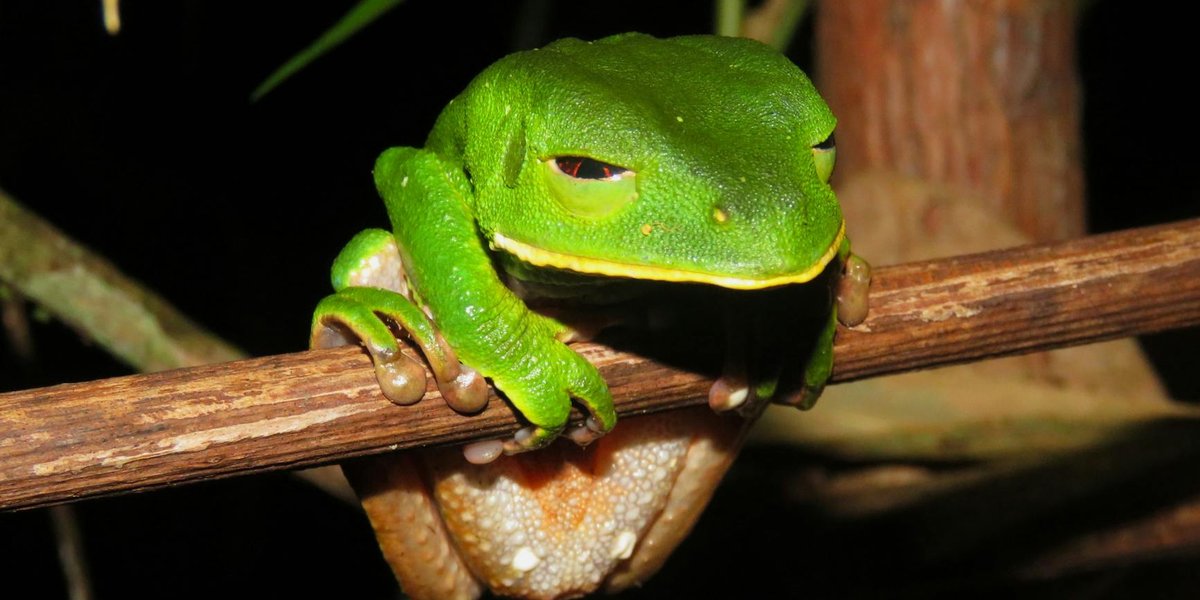
Hyperoliidae (reed frogs) bring the color. These small frogs cling to reeds and sedges around water with adhesive toe pads, and many sport vivid patterns. Several of Burkina’s more recently confirmed species belong to this family, which makes sense — small, cryptic, vegetation-dwelling frogs are easy to overlook.
Seven new country records
One of the more interesting things the modern checklist surfaced is how recently parts of this fauna were confirmed. Several species were only formally documented for Burkina Faso in the last couple of decades, including Hyperolius lamottei and Kassina cassinoides. A 2013 paper on new records of amphibians and reptiles from Burkina Faso and Mali captured part of this wave of discovery.
These aren’t newly evolved animals or even newly discovered species globally — most are known from neighboring countries. They’re new to the country list, which is a statement about survey effort rather than biology. When a frog that’s common in Ghana or Mali finally gets recorded just across the border, it usually means someone finally walked that transect at the right time of year.
That distinction matters for how you read the 36 number. A country list that’s still gaining species through basic fieldwork is a list that isn’t finished. The southern gallery forests, in particular, are the most likely place for the count to keep rising.
Frogs as food and medicine
In much of the world, frogs are background wildlife. In Burkina Faso, some of them are a resource. Ethnozoological research has documented that the medicinal and dietary uses of amphibians in Burkina Faso run through several ethnic groups, including the Mossi and Gourmanché peoples.
On the dietary side, larger-bodied frogs — the kind that bulk up during the rains — are collected and eaten as a seasonal protein source. This is opportunistic rather than industrial: frogs are gathered when they’re abundant and accessible, which is precisely when the temporary pools are full and the explosive breeders are out in force.
On the medicinal side, various frog and toad parts feature in traditional remedies. Toads in particular show up in this context across many cultures, partly because their skin secretions are pharmacologically active compounds (bufotoxins) — which is also why a dog that bites a toad has a very bad evening. Whether traditional preparations work is a separate question from why people reach for them, but the cultural knowledge is real and locally specific.
This human dimension is what the taxonomy papers tend to skip and the wildlife overviews don’t know about. Frogs here aren’t just a checklist; for some communities they’re food and pharmacy, which also means collection pressure is a factor worth watching as habitats shrink.
What the amphibians tell us about the land
Amphibians are the ecologists’ canaries. Their permeable skin and dual aquatic-terrestrial lives make them sensitive to water quality, habitat change, and shifting rainfall — which is why the IUCN treats them as one of the most threatened vertebrate groups worldwide. In a country on the front line of Sahelian drying, that sensitivity makes them a useful gauge of what’s happening to the land.
Burkina Faso’s frogs face the same pressures as the rest of the country: expanding agriculture, firewood and charcoal cutting, the steady loss of gallery forest, and a Sahel that is, on the whole, getting hotter and more erratic. The aridity specialists will probably ride it out — they’re built for hard conditions. The forest-associated species clinging to those thin streamside corridors are the ones with nowhere to go.
The honest takeaway is that we still don’t know enough. A country whose amphibian list is still growing through routine fieldwork is a country where the baseline isn’t fully drawn. Thirty-six species is the best current count, grouped across 11 families, shaped by a rainfall gradient that runs the length of the map. It’s a real answer to a question almost nobody had bothered to answer clearly. It’s just not the last word.