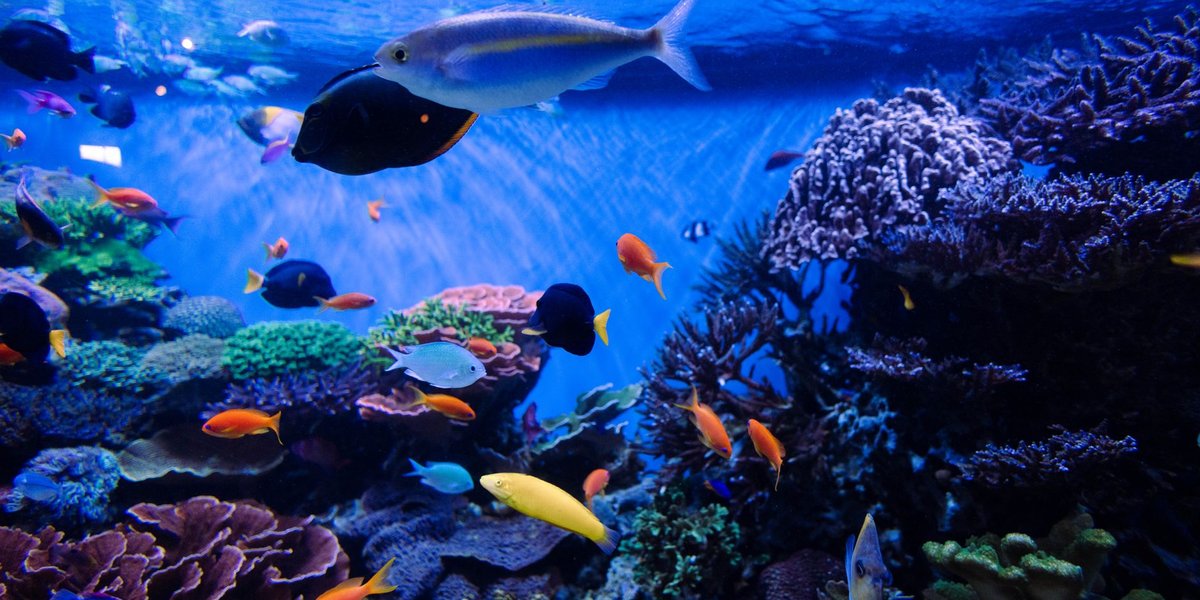
Malaysia sits on roughly 2,000 fish species, give or take, depending on which checklist you trust. FishBase logs over 2,000 for the country, spread across muddy lowland rivers, peat swamps, fast highland streams, mangrove estuaries, and the coral shelves of the South China Sea and the Strait of Malacca. That’s a lot of fish for a country you can drive across in a day.
Most lists either dump the whole taxonomic database on you or stop at ten of the obvious ones. This one profiles 20 species worth actually knowing — the prized, the strange, the endangered, and the ones your Malaysian uncle will argue about at the dinner table. Each entry gives you the common name, the local Malay name (because that’s what people actually call them), the scientific name, rough size, where it lives, and the one thing that makes it stick.
We’ve split them into freshwater and saltwater, and flagged anything endemic or threatened along the way.
Table of Contents
- Freshwater Fish of Malaysia
- 1. Giant Snakehead (Toman)
- 2. Malaysian Mahseer (Kelah)
- 3. Asian Arowana (Kelisa)
- 4. Clown Featherback (Belida)
- 5. Hampala Barb (Sebarau)
- 6. Climbing Perch (Puyu)
- 7. Giant Gourami (Kalui)
- 8. Tinfoil Barb (Lampam Sungai)
- 9. Walking Catfish (Keli)
- 10. Iridescent Shark Catfish (Patin)
- Saltwater Fish of Malaysia
- 11. Barramundi (Siakap)
- 12. Giant Trevally (Gerepoh)
- 13. Spanish Mackerel (Tenggiri)
- 14. Threadfin (Senangin)
- 15. Grouper (Kerapu)
- 16. Red Snapper (Ikan Merah)
- 17. Black Marlin (Setuhuk)
- 18. Indo-Pacific Sailfish (Layaran)
- 19. Mandarin Dragonet
- 20. Whale Shark (Yu Paus)
- Quick-Scan Summary Table
Freshwater Fish of Malaysia
Malaysia’s rivers and lakes punch above their weight. The Tasik Kenyir reservoir, the Pahang and Perak river systems, and the peat swamps of the lowlands hold some of Southeast Asia’s most sought-after sport and aquarium fish. A few of these are found nowhere else on earth.
1. Giant Snakehead (Toman)
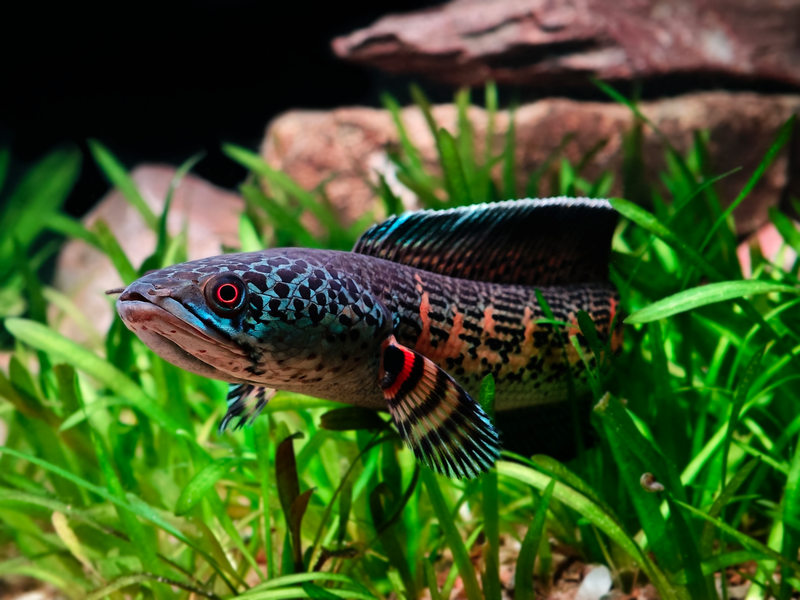
Malay name: Toman · Scientific name: Channa micropeltes · Size: up to 1.3 m, 20+ kg · Habitat: lakes, reservoirs, slow rivers
The Toman is the apex predator of Malaysian freshwater and the holy grail for local anglers. It breathes air, survives in low-oxygen swamp water, and guards its young in a tight orange-red ball of fry that the parents will violently defend. Hook one and you’ll understand why catch-and-release anglers travel to Kenyir for it. The strike is a freight train, and adults will take frogs, smaller fish, even small birds off the surface.
2. Malaysian Mahseer (Kelah)
Malay name: Kelah · Scientific name: Tor tambroides · Size: up to 1 m, 30 kg · Habitat: clear, fast highland rivers
If the Toman is the bruiser, the Kelah is the prince. This golden-scaled mahseer lives in cold, clean upland rivers and is so prized that several states protect it inside designated “kelah sanctuaries” along rivers in Pahang and Terengganu. It feeds partly on fruit and seeds that drop into the water, including the Ficus figs along the riverbank. A large Kelah can take years to grow and commands eye-watering prices on the rare occasions one is legally sold.
3. Asian Arowana (Kelisa)
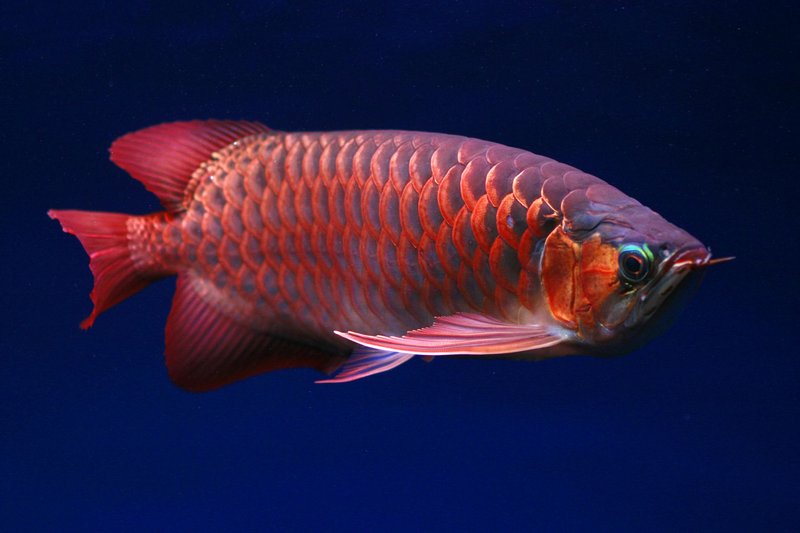
Malay name: Kelisa · Scientific name: Scleropages formosus · Size: up to 90 cm · Habitat: slow blackwater rivers, peat swamps
The “dragon fish” is the most valuable aquarium fish on earth, and the red and gold strains come straight out of Malaysian and Indonesian waters. It’s listed as endangered on the IUCN Red List and protected under CITES, so legal specimens are farmed and microchipped. In the wild it’s a surface-cruising ambush predator that can leap clear of the water to snatch insects off overhanging branches, which is why it earned the nickname “monkey fish.”
4. Clown Featherback (Belida)
Malay name: Belida · Scientific name: Chitala ornata · Size: up to 1 m · Habitat: rivers, oxbow lakes, flooded forest
The Belida looks prehistoric, and it more or less is — a knife-bodied fish with a long undulating anal fin it ripples to hover and reverse like a hovercraft. The row of black eye-spots along its silver flank gives it the “clown” name. In Malaysian kitchens its springy flesh is the traditional base for keropok lekor, the fish crackers of the east coast, though wild stocks have thinned enough that farmed and substitute fish now fill in.
5. Hampala Barb (Sebarau)
Malay name: Sebarau · Scientific name: Hampala macrolepidota · Size: up to 70 cm · Habitat: rivers and reservoirs with current
Anglers call the Sebarau the “jungle perch” of the lures-and-light-tackle crowd. It’s a fast, predatory barb with a bold black bar across the body and red-tinged fins, and it hammers spinners and small jerkbaits in open river runs. Where the Toman demands patience, the Sebarau rewards an active caster working the seams behind submerged rocks. It’s the most accessible trophy in many Malaysian rivers.
6. Climbing Perch (Puyu)
Malay name: Puyu · Scientific name: Anabas testudineus · Size: up to 25 cm · Habitat: ponds, ditches, paddy fields, swamps
The Puyu is small but absurdly tough. It can breathe air through a labyrinth organ, walk overland on its gill covers and fins to reach a new puddle, and survive buried in damp mud through a dry spell. Kampung kids catch them in flooded paddy fields, and despite the bony body it’s a beloved fried fish. Drop one in a bucket and it’ll try to climb out — the “climbing” name is literal.
7. Giant Gourami (Kalui)
Malay name: Kalui · Scientific name: Osphronemus goramy · Size: up to 70 cm · Habitat: slow rivers, lakes, ponds
A heavyweight relative of the little aquarium gouramis, the Kalui is a slab-sided fish that grazes on aquatic plants and fruit and is widely farmed for the table. Older fish develop a pronounced forehead hump and an almost dog-like willingness to be hand-fed. In premium Chinese-Malaysian restaurants a steamed Kalui is a centerpiece dish, priced accordingly.
8. Tinfoil Barb (Lampam Sungai)
Malay name: Lampam Sungai · Scientific name: Barbonymus schwanenfeldii · Size: up to 35 cm · Habitat: rivers, streams, reservoirs
That flash of silver schooling through a clear Malaysian river is usually a shoal of Lampam. Bright reflective scales, red fins edged in black, and a constant appetite for plants, insects, and detritus make them both an aquarium staple worldwide and a popular eating fish at home. They’re often stocked into reservoirs and turn up in the catch of recreational and subsistence anglers alike.
9. Walking Catfish (Keli)
Malay name: Keli · Scientific name: Clarias batrachus · Size: up to 47 cm · Habitat: swamps, ditches, paddy fields, muddy pools
Keli is the everyman’s fish — cheap, farmed by the ton, and the star of “ikan keli bakar,” grilled whole and slathered in sambal at roadside stalls. Like the Puyu it breathes air and can wriggle overland between water bodies on wet nights. Wild bottom-dwelling specimens are darker; farmed ones are pale. Watch the pectoral spines when you handle one, they’re sharp.
10. Iridescent Shark Catfish (Patin)
Malay name: Patin · Scientific name: Pangasius spp. · Size: up to 1.3 m · Habitat: large rivers, reservoirs
The Patin is a big, sleek, scaleless river catfish and the fish behind one of Pahang’s signature dishes, “patin masak tempoyak” — patin simmered in fermented durian paste. The Sungai Pahang population is famous enough that wild river-caught patin sells at a steep premium over the pond-farmed version. Fatty, soft-fleshed, and rich, it’s a fish built for slow curries.
Saltwater Fish of Malaysia
Malaysia has two coastlines and a lot of reef. The Strait of Malacca, the South China Sea, and the dive-famous waters around Sipadan and the Perhentian Islands hold everything from estuary table fish to billfish and the biggest fish in the ocean.
11. Barramundi (Siakap)
Malay name: Siakap · Scientific name: Lates calcarifer · Size: up to 1.8 m · Habitat: estuaries, mangroves, river mouths
The Siakap is the workhorse of Malaysian seafood and one of the most widely farmed fish in the country. It’s a catadromous predator that moves between fresh and salt water, and every fish starts life as a male before some switch to female with age. On a plate it’s the steamed fish you’ll see at half the Chinese restaurants in the country; on a line it’s a hard-fighting estuary target around mangrove snags.
12. Giant Trevally (Gerepoh)
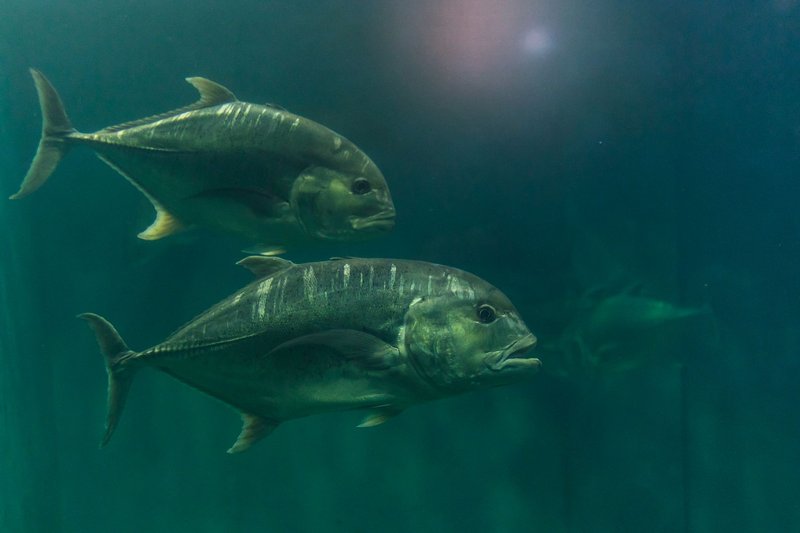
Malay name: Gerepoh · Scientific name: Caranx ignobilis · Size: up to 1.7 m, 80 kg · Habitat: reefs, drop-offs, lagoons
The GT is the reef thug that saltwater fly and popper anglers cross oceans to chase, and Malaysia’s offshore reefs and atolls hold good ones. It hunts in blistering high-speed ambushes, has been filmed launching out of the water to eat seabirds, and pulls so hard it straightens cheap hooks. Hook a big Gerepoh off a reef edge and the first run is a genuine emergency.
13. Spanish Mackerel (Tenggiri)
Malay name: Tenggiri · Scientific name: Scomberomorus commerson · Size: up to 2.4 m · Habitat: coastal pelagic waters, reefs
If you’ve eaten Malaysian fish curry or “otak-otak,” you’ve probably eaten Tenggiri. This long, fast, toothy mackerel is one of the most commercially important food fish on both coasts, prized for firm flesh with few bones. It travels in loose schools chasing baitfish and is a favorite of trolling anglers. Prices climb sharply around festive seasons, when demand for the curry-grade middle cuts spikes.
14. Threadfin (Senangin)
Malay name: Senangin · Scientific name: Eleutheronema tetradactylum · Size: up to 2 m · Habitat: muddy coastal waters, estuaries
The Senangin gets its name from the loose, thread-like lower fin rays it trails along the seabed to feel for prey in murky water. It’s considered a premium table fish in Malaysia, soft and clean-tasting, and is a traditional choice for confinement meals and recovery diets because it’s gentle on the stomach. Estuary anglers prize it; chefs pay up for it.
15. Grouper (Kerapu)
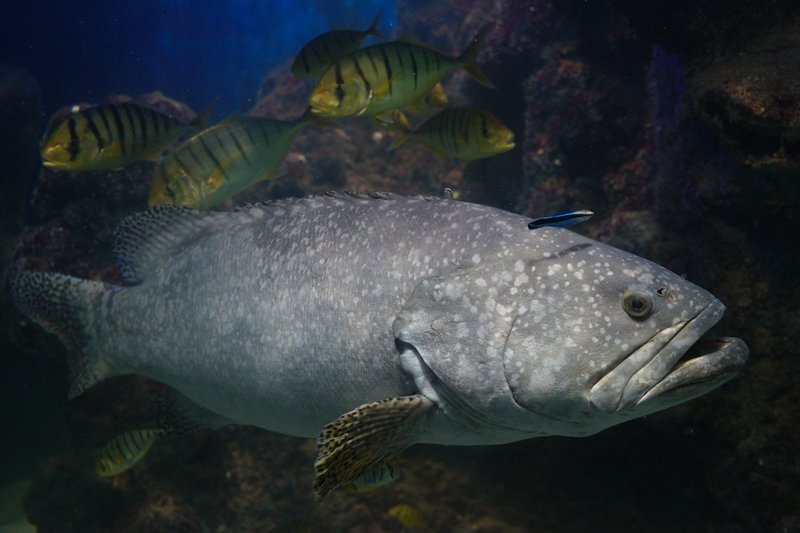
Malay name: Kerapu · Scientific name: Epinephelus spp. · Size: varies; giant grouper to 2.7 m, 400 kg · Habitat: reefs, wrecks, rocky bottoms
“Kerapu” covers a whole family of reef ambush predators, from plate-sized coral groupers to the colossal giant grouper (Epinephelus lanceolatus), one of the largest bony reef fish alive. They’re live-export stars of the Hong Kong seafood trade, which has hammered wild stocks hard enough to push several reef giants onto the lists of Malaysia’s threatened species, so much of the Kerapu you’ll eat is now farmed in coastal cages off Sabah and the east coast. A whole steamed grouper is a wedding-banquet fish.
16. Red Snapper (Ikan Merah)
Malay name: Ikan Merah · Scientific name: Lutjanus spp. · Size: up to 1 m · Habitat: reefs, wrecks, deeper coastal bottoms
“Ikan merah” literally means red fish, and these crimson reef snappers are among the most reliable bottom-fishing catches in Malaysian waters. Firm, white, forgiving in the kitchen, they’re the default “fresh fish of the day” at countless seafood restaurants. Charter boats out of ports like Kuala Rompin and Mersing fill coolers with them on reef and wreck drops.
17. Black Marlin (Setuhuk)
Malay name: Setuhuk · Scientific name: Istiompax indica · Size: up to 4.6 m, 700+ kg · Habitat: offshore blue water
Kuala Rompin off Pahang is one of the best places on the planet to catch a sailfish, but it’s the bigger billfish, the Black Marlin, that anglers dream about. It’s one of the fastest fish in the ocean, a blue-water missile that can spool a reel in seconds. Malaysia’s billfish are almost entirely catch-and-release now, tagged and returned to keep the fishery alive.
18. Indo-Pacific Sailfish (Layaran)
Malay name: Layaran · Scientific name: Istiophorus platypterus · Size: up to 3.5 m · Habitat: offshore surface waters
The Layaran is the headline act of the Kuala Rompin sailfish season, roughly August through October, when the fish pack into the area to feed and the catch rates are world-famous. Sailfish raise a huge dorsal “sail” and flash neon stripes when excited, lighting up electric blue as they corral baitballs. It’s widely cited among the fastest fish in the sea, and on light tackle it greyhounds across the surface for minutes.
19. Mandarin Dragonet
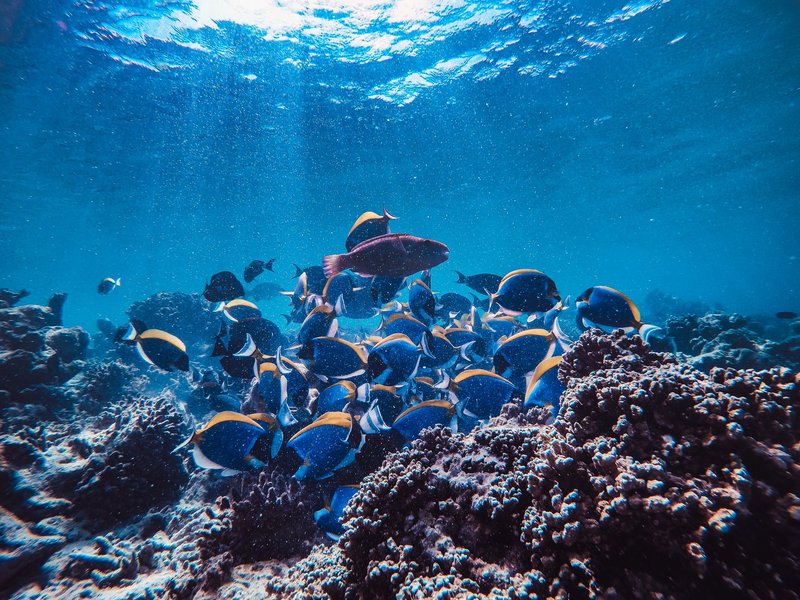
Malay name: (no common local name; an aquarium and dive species) · Scientific name: Synchiropus splendidus · Size: about 6 cm · Habitat: sheltered coral lagoons, rubble reefs
Tiny, jewel-bright, and almost unreal, the mandarinfish is one of the few animals whose blue color comes from actual blue pigment cells rather than reflected light. Divers around Malaysian reefs hunt for them at dusk, when pairs rise off the coral to spawn in a slow vertical dance. They’re a reminder that Malaysia’s fish wealth isn’t only the big eating species, but the small reef gems too.
20. Whale Shark (Yu Paus)
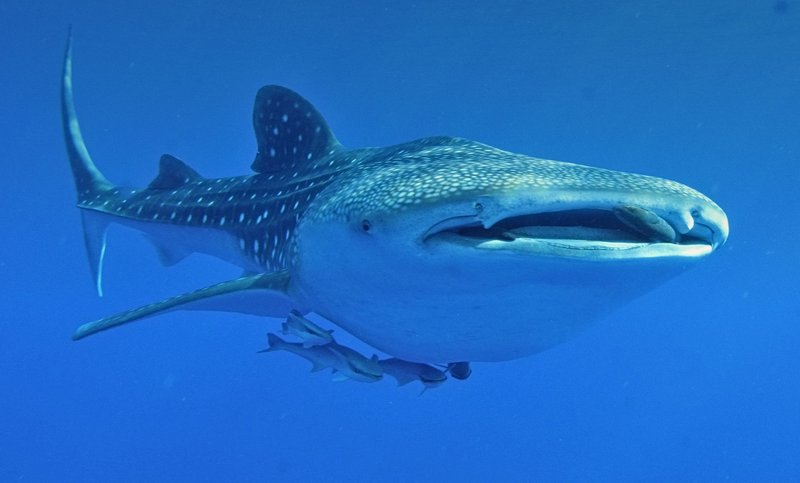
Malay name: Yu Paus · Scientific name: Rhincodon typus · Size: up to 12 m or more · Habitat: open coastal seas, plankton-rich waters
The biggest fish in the ocean swims in Malaysian waters too, drifting through the seas off Sabah and occasionally turning up near coastal nets and oil platforms. Despite the size it’s a gentle filter feeder, straining plankton and tiny fish, and each one carries a unique spot pattern researchers use like a fingerprint. It’s listed as endangered by the IUCN, and Malaysia fully protects it; encounters are a once-in-a-lifetime thrill for divers.
Quick-Scan Summary Table
| # | Common Name | Malay Name | Scientific Name | Water | Note |
|---|---|---|---|---|---|
| 1 | Giant Snakehead | Toman | Channa micropeltes | Fresh | Top sport predator |
| 2 | Malaysian Mahseer | Kelah | Tor tambroides | Fresh | Protected, prized |
| 3 | Asian Arowana | Kelisa | Scleropages formosus | Fresh | Endangered, CITES |
| 4 | Clown Featherback | Belida | Chitala ornata | Fresh | Keropok base fish |
| 5 | Hampala Barb | Sebarau | Hampala macrolepidota | Fresh | Lure-fishing target |
| 6 | Climbing Perch | Puyu | Anabas testudineus | Fresh | Walks on land |
| 7 | Giant Gourami | Kalui | Osphronemus goramy | Fresh | Farmed table fish |
| 8 | Tinfoil Barb | Lampam Sungai | Barbonymus schwanenfeldii | Fresh | Silver river schooler |
| 9 | Walking Catfish | Keli | Clarias batrachus | Fresh | Grilled with sambal |
| 10 | Iridescent Shark Catfish | Patin | Pangasius spp. | Fresh | Tempoyak curry fish |
| 11 | Barramundi | Siakap | Lates calcarifer | Salt/brackish | Most-farmed table fish |
| 12 | Giant Trevally | Gerepoh | Caranx ignobilis | Salt | Hard-fighting reef GT |
| 13 | Spanish Mackerel | Tenggiri | Scomberomorus commerson | Salt | Curry and otak-otak |
| 14 | Threadfin | Senangin | Eleutheronema tetradactylum | Salt/brackish | Premium soft fish |
| 15 | Grouper | Kerapu | Epinephelus spp. | Salt | Reef ambush giant |
| 16 | Red Snapper | Ikan Merah | Lutjanus spp. | Salt | Reliable reef catch |
| 17 | Black Marlin | Setuhuk | Istiompax indica | Salt | Catch-and-release billfish |
| 18 | Indo-Pacific Sailfish | Layaran | Istiophorus platypterus | Salt | Kuala Rompin star |
| 19 | Mandarin Dragonet | — | Synchiropus splendidus | Salt | Tiny reef jewel |
| 20 | Whale Shark | Yu Paus | Rhincodon typus | Salt | Endangered ocean giant |
Twenty fish barely scratches the 2,000-odd species swimming through Malaysia’s rivers and reefs, but it covers the ones worth knowing by name — on a line, in a tank, on a plate, or through a dive mask. Learn the Malay names and you’ll follow any fish-market haggle or kampung fishing story from here on.