TLDR
Black musk deer (Moschus fuscus) are picky eaters with a hard seasonal split. In summer they graze herbaceous plants — buckwheat, wild geranium, grasses, spirea. Once the snow comes, they switch almost entirely to lichen, which can make up 70–80% of stomach contents by winter, with some field samples running even higher. Across the genus, researchers have logged more than 130 plant species in musk deer diets. They forage alone, mostly at night, on steep forested slopes between roughly 2,700 and 4,200 meters — and that lichen dependency is part of why the species struggles to adapt when its habitat shrinks.
Table of Contents
- The Short Version, With Numbers
- Summer Diet: The Green Season
- Winter Diet: Lichen or Nothing
- The Full Plant Menu, By Category
- How They Actually Forage
- What the New DNA Research Adds
- How This Compares to Other Deer
- Diet and the Conservation Problem
- Quick Answers
The Short Version, With Numbers
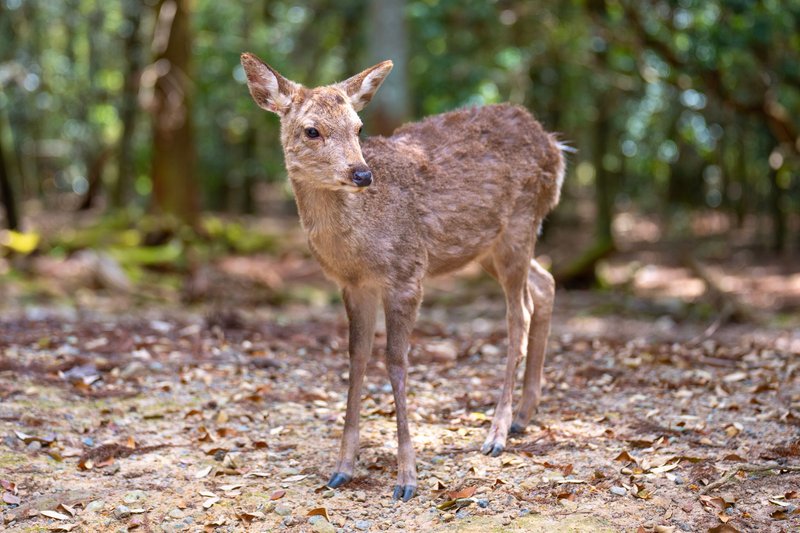
Most write-ups on black musk deer bury the diet three paragraphs into a taxonomy lesson. It shouldn’t be buried — it’s the single most useful fact for understanding why this animal lives where it lives and why conservationists are worried about it.
The deer is a specialized browser, not a grazer. It doesn’t eat grass in bulk the way a red deer or elk does. It picks: specific forbs in summer, specific lichen species in winter, supplemented year-round by bark, buds, and shoots off a short list of trees and shrubs. That pickiness is the whole story. It explains the seasonal migration between meadow and slope, the solitary foraging pattern, and — eventually — why a shrinking, fragmented habitat hits this species harder than it would hit a diet generalist.
Summer Diet: The Green Season
When the alpine meadows and shrub thickets green up, black musk deer shift onto herbaceous plants. Buckwheat, wild geranium, assorted grasses, and spirea make up the bulk of what gets eaten in the warm months. This is the season of abundance — food is everywhere on the slope, so the deer doesn’t need to travel far or take risks reaching it.
Lichen doesn’t disappear from the diet in summer, though. Field studies on related musk deer species have found the animals keep nibbling lichen year-round in smaller amounts, likely because it helps digest the fibrous green plant matter that dominates the summer menu. Think of it as a digestive aid rather than a meal.
Winter Diet: Lichen or Nothing
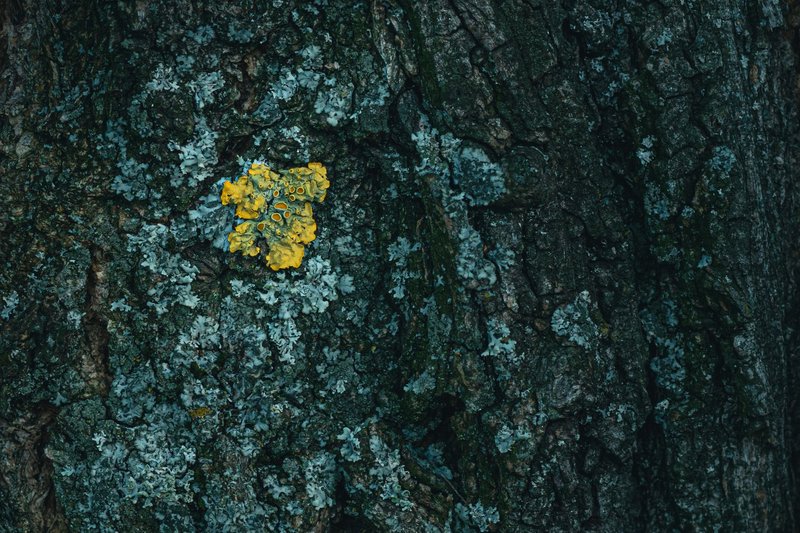
Winter flips the equation. The forbs die back, the ground freezes, and lichen becomes the only reliable calorie source on a steep, snow-covered slope. Stomach-content studies on musk deer put lichen at roughly 70–80% of winter intake by weight, and some individual samples have shown it accounting for nearly all of what the animal ate that day.
Musk deer will climb an inclined tree trunk several meters off the ground to strip arboreal lichen — mostly Usnea species, the pale, stringy “old man’s beard” lichen that grows on conifer bark — when the ground-level supply runs thin. A single animal can work through close to a kilogram of lichen a day in the depths of winter. What little else gets eaten this time of year is opportunistic: young shoots, conifer needles, buds, and bark stripped from mountain ash, willow, birch, maple, and honeysuckle.
The Full Plant Menu, By Category
Across the genus, researchers have catalogued upward of 130 plant species in musk deer diets. Black musk deer don’t eat all of them in any given range, but the diet consistently sorts into three buckets:
| Category | Season eaten | Examples |
|---|---|---|
| Lichens (arboreal & terrestrial) | Dominant in winter, present year-round | Usnea species, ground-dwelling foliose lichens |
| Woody browse (bark, shoots, buds) | Fall through spring, opportunistic | Willow, birch, mountain ash (rowan), maple, honeysuckle, conifer needles |
| Herbaceous forbs & grasses | Dominant in summer | Buckwheat, wild geranium, spirea, assorted alpine grasses |
That table looks tidy. The reality on a mountainside is messier — a deer working a single slope might hit six or seven species in one feeding bout before bedding down.
How They Actually Forage
Black musk deer are solitary and territorial; you won’t find them in herds, and adults mostly tolerate each other only during the rut. Feeding happens mostly at dusk, through the night, and again near dawn — a crepuscular-to-nocturnal pattern that keeps them off the slope during the hours predators like leopards and wolves are most active.
A deer will travel along the same worn paths repeatedly, moving a few kilometers between a sheltered daytime lair and known feeding patches, then doubling back. This isn’t random wandering. It’s a fixed circuit built around known food sources, which is part of why habitat fragmentation is so damaging — cut the corridor, and the deer can’t just improvise a new route to food.
What the New DNA Research Adds
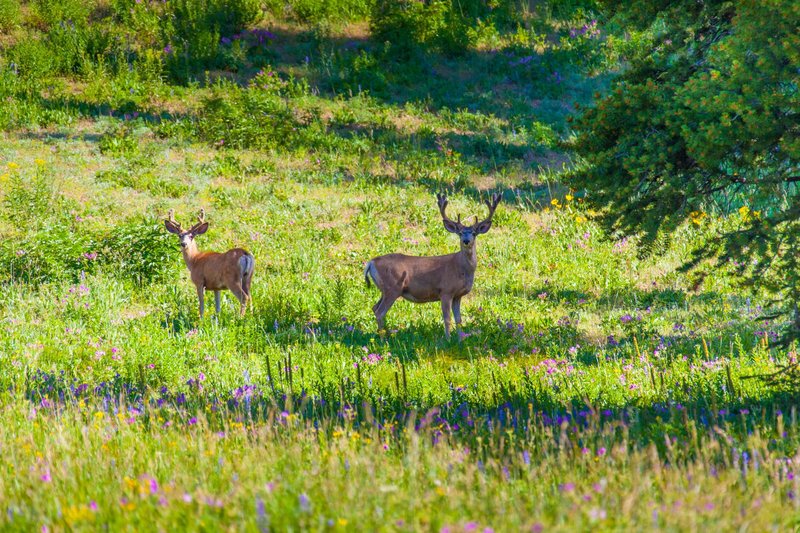
Older diet studies relied on picking through stomach contents, which tells you what an animal ate but not always at what proportions, and it requires a dead animal. Newer research uses DNA metabarcoding — sequencing plant DNA fragments recovered from droppings — to reconstruct diet without ever touching the animal.
A 2024 fecal DNA metabarcoding study on the closely related Siberian musk deer (Moschus moschiferus) identified 213 distinct plant genera in spring feeding, dominated by mulberry (Morus, 44.9%), oak (Quercus, 39.7%), and cherry (Prunus, 7.8%) — together nearly 85% of spring intake, with woody species accounting for almost all of it. The study also turned up something unexpected: DNA from mistletoe (Viscum), a parasitic plant that grows high in tree canopies, which only makes sense if the deer is climbing to reach it. That’s a tree-climbing behavior nobody had documented in this genus before genetic diet analysis made it visible.
Separately, feeding trials on forest musk deer (Moschus berezovskii) fawns have looked at the gut side of the equation — testing pelleted diets against traditional feed and tracking which gut bacteria thrive on each. Diets with higher digestible energy cut diarrhea rates and boosted populations of Akkermansia and Lachnospira, bacteria known for producing short-chain fatty acids that support gut lining health. It’s a captive-breeding study, not a wild-diet study, but it’s a useful data point on just how sensitive this genus’s digestion is to what it’s fed — which tracks with how narrow their wild diet already is.
Field-specific DNA work on black musk deer itself is still thin, which is exactly the kind of gap that makes this genus worth watching for future research.
How This Compares to Other Deer
Red deer, elk, and white-tailed deer are mixed feeders or outright grazers — they’ll take a mouthful of grass, then browse, then graze again, adjusting to whatever’s available in bulk. Musk deer don’t work that way. They’re concentrate selectors: animals built to pick out the most digestible, nutrient-dense bites rather than process large volumes of low-quality forage.
That distinction shows up in the body. Musk deer have a smaller rumen relative to body size than grazing deer, tuned for a diet of selected browse and lichen rather than fibrous grass in bulk. It’s also why you won’t find musk deer on open grassland — there’s nothing there worth the trip. Their whole physiology assumes a forested, structurally complex slope with lichen, shrubs, and forbs layered within reach.
Diet and the Conservation Problem
The black musk deer is listed as Endangered on the IUCN Red List, with populations declining across its range in the eastern Himalayas and adjacent hill forests—terrain that shelters other remarkable Himalayan wildlife. The immediate threat is poaching — males carry a musk gland used in traditional medicine and perfumery since roughly the 5th century, and that market has never fully gone away despite international trade restrictions.
Diet specialization compounds the problem. A deer that needs a specific mix of winter lichen, particular browse species, and intact forest cover on steep terrain can’t simply relocate to degraded or fragmented habitat the way a grass-eating generalist might. Recent fecal DNA and gut microbiota research on related musk deer species is starting to quantify exactly how narrow that dietary window is — and narrow diets in a shrinking range are a hard combination for a species to recover from. A 2025 synthesis of musk deer conservation research flagged exactly this: fragmented habitat plus specialized diet plus ongoing poaching pressure, stacked on top of each other, rather than any single cause.
Quick Answers
What do black musk deer eat in winter? Mostly lichen — arboreal Usnea species and ground lichens make up roughly 70–80% of winter stomach contents, supplemented by bark, buds, and shoots from willow, birch, and mountain ash.
What do black musk deer eat in summer? Herbaceous plants: buckwheat, wild geranium, grasses, and spirea, with some lichen still eaten as a digestive aid.
Do black musk deer eat meat? No. They’re strict herbivores — browsers and selective grazers, not omnivores.
Why does diet matter for conservation? Their winter survival depends on a narrow set of lichen species that only grow in intact, undisturbed forest. Lose the forest structure, and the deer loses its one reliable winter food source — on top of ongoing poaching pressure for musk.