Protein and energy needs by stage
Cattle need two main things from feed: protein and energy. Protein builds muscle, the calf and milk. Energy keeps the animal warm and moving and pays for growth and milk. Feed labs measure energy as TDN, short for total digestible nutrients. TDN is the share of the feed the animal can digest and use for energy, so hay with 55% TDN supplies 55 lb of usable energy in every 100 lb of dry matter.
Both needs are given as a share of the diet’s dry matter. Dry matter is the feed with the water taken out. Hay tests report protein and TDN on this basis, so you can compare the two numbers directly.
| Weight | Dry matter a day | Hay a day, as fed | Protein (% of diet) | Energy, TDN (% of diet) |
|---|---|---|---|---|
| Pregnant cowmiddle months, calf weaned | ||||
| 1,000 lb | 20 lb | 22 lb | 6.9% | 49.2% |
| 1,200 lb | 24 lb | 27 lb | 6.9% | 49.4% |
| 1,400 lb | 28 lb | 31 lb | 6.9% | 49.5% |
| 1,600 lb | 32 lb | 36 lb | 6.9% | 49.5% |
| Pregnant cow, last 3 monthsdue to calve within 3 months | ||||
| 1,000 lb | 20 lb | 22 lb | 8% | 54.6% |
| 1,200 lb | 24 lb | 27 lb | 8.1% | 54.7% |
| 1,400 lb | 28 lb | 31 lb | 8.1% | 55.1% |
| 1,600 lb | 32 lb | 36 lb | 8.1% | 55.1% |
| Nursing cowfirst 3 months after calving | ||||
| 1,000 lb | 23 lb | 26 lb | 11% | 60.3% |
| 1,200 lb | 28 lb | 31 lb | 10.7% | 59.9% |
| 1,400 lb | 32 lb | 36 lb | 10.3% | 59.1% |
| 1,600 lb | 37 lb | 41 lb | 10.3% | 59.1% |
| Heifergrowing replacement heifer, about 1 lb a day | ||||
| 400 lb | 9.6 lb | 11 lb | 10.8% | 59.8% |
| 600 lb | 13 lb | 15 lb | 9.2% | 59.9% |
| 800 lb | 16 lb | 18 lb | 8.4% | 59.8% |
| Growing calf or steerstocker or backgrounder, about 1.5 lb a day | ||||
| 400 lb | 10 lb | 11 lb | 12.5% | 62.6% |
| 600 lb | 14 lb | 15 lb | 10.1% | 62.5% |
| 800 lb | 17 lb | 19 lb | 8.9% | 62.1% |
| Finishing steeron a grain ration, about 3.3 lb a day | ||||
| 700 lb | 18 lb | 20 lb | 12.6% | 71.2% |
| 900 lb | 21 lb | 24 lb | 10.5% | 71.3% |
| 1,100 lb | 25 lb | 28 lb | 9.1% | 71.2% |
| 1,300 lb | 28 lb | 32 lb | 8.1% | 71.2% |
| Bullmature bull, holding weight | ||||
| 1,600 lb | 32 lb | 36 lb | 5.7% | 48.9% |
| 1,800 lb | 36 lb | 40 lb | 5.7% | 48.9% |
| 2,200 lb | 44 lb | 49 lb | 5.7% | 48.9% |
The table lists each class at several weights. For a 1,200 lb cow the needs climb through the year:
- Mid-pregnancy, calf weaned: 6.9% protein and 49.4% TDN, or about 1.5 lb of protein and 10 lb of TDN a day. This is the cheapest time of year to feed her.
- Last three months before calving: 8.1% protein and 54.7% TDN, about 1.8 lb of protein and 12 lb of TDN a day. The calf does most of its growing in these months.
- First three months after calving: 10.7% protein and 59.9% TDN, about 2.8 lb of protein and 16 lb of TDN a day. Milk production peaks about two months after calving.
Young cattle need richer feed than cows because they are still growing. A 600 lb heifer gaining 1 lb a day needs 9.2% protein and 59.9% TDN. A 500 lb steer calf gaining 1.5 lb a day needs 11.1% protein and 62.2% TDN. A mature 1,800 lb bull holding his weight needs only 5.7% protein and 48.9% TDN.
How to read a hay test
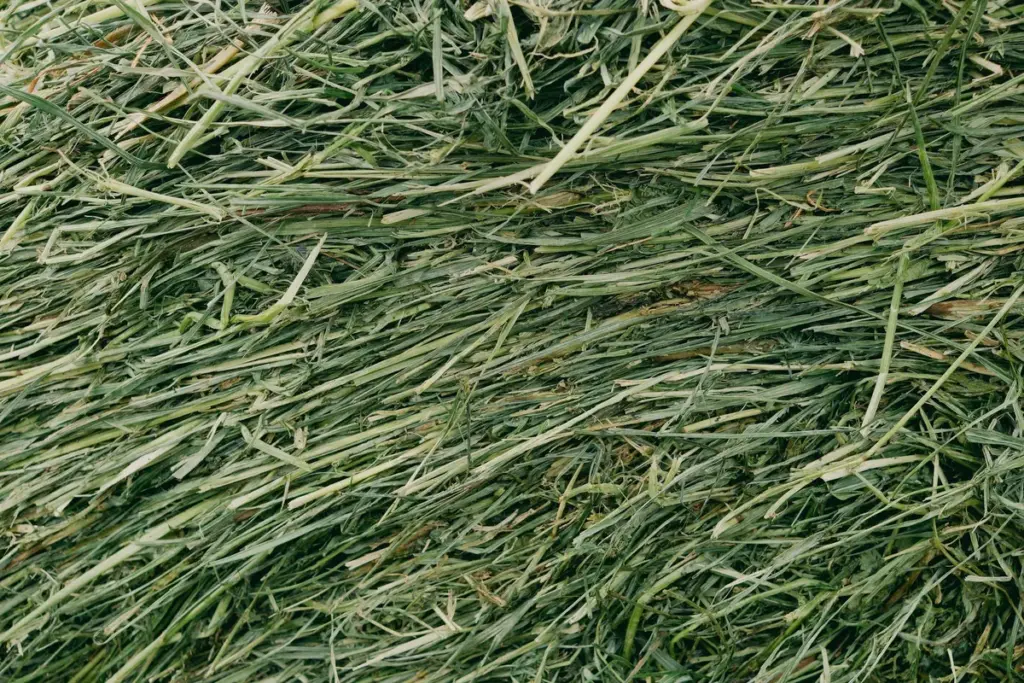
You can’t judge protein or energy by looking at hay. Green, leafy hay is usually better than brown, stemmy hay, but two bales that look alike can test several points apart. A hay test costs far less than a winter of the wrong supplement. Your county extension office can tell you which labs serve your area and lend or sell a hay probe. Take core samples from many bales in the same lot (hay from one field and one cutting) and mix them into one sample. A hay probe that drills into the bale gives a far better sample than a handful pulled from the outside.
A hay report has two columns: as fed (or as received) and dry matter. Use the dry-matter column for protein and energy. The terms that matter for beef cattle:
- DM (dry matter): the share of the hay that isn’t water. Most dry hay is 88% to 90%. Use it to convert dry-matter pounds to pounds of hay as fed.
- CP (crude protein): the protein in the hay. Average grass hay runs about 10%, poor grass hay about 7% and alfalfa about 17%.
- TDN (total digestible nutrients): the energy in the hay. Good grass hay is about 60%, average about 55% and poor about 50%. Wheat straw is about 43%.
- ADF and NDF: two fiber measures. Higher fiber means lower digestibility and lower intake. Labs use ADF to estimate TDN.
- RFV (relative feed value): an index built from the fiber numbers, where full-bloom alfalfa scores 100. It is mostly used to price alfalfa and dairy hay. For beef cows, CP and TDN tell you more.
Enter your CP, TDN and DM in the calculator’s custom hay fields. For example, hay that tests 8% protein and 52% TDN covers a cow in mid-pregnancy. The same hay falls short for a cow in her last three months, and the calculator suggests about 3.3 lb of 20% range cubes a day.
When hay alone is enough and when to supplement
Compare the hay test with the needs for each stage. For a 1,200 lb cow:
| Hay | Protein / TDN | Mid-pregnancy | Last 3 months | Nursing |
|---|---|---|---|---|
| Good grass hay | 12% / 60% | Enough | Enough | Enough |
| Average grass hay | 10% / 55% | Enough | Enough | Short on both |
| Poor grass hay | 7% / 50% | Enough | Short on both | Short on both |
| Grass and alfalfa mix | 13.5% / 58% | Enough | Enough | Short on energy |
| Alfalfa | 17% / 58% | Enough | Enough | Short on energy |
| Wheat straw | 3% / 43% | Short on both | Short on both | Short on both |
When hay falls short, match the supplement to what is missing.
- Range cubes (20% protein) add protein and some energy. They are the usual fix when hay is short on both. A late-pregnant cow on poor hay needs about 5.3 lb a day. A cow in mid-pregnancy on wheat straw needs about 5 lb.
- Shelled corn adds energy but almost no protein. It has about 9% protein, less than most hay, so it can’t fix a protein shortage. It fits hay that has plenty of protein and not enough energy: a nursing cow on alfalfa needs about 2 lb a day.
- Dried distillers grains (DDGS) are high in both protein (29%) and energy (92% TDN). They often close a gap with fewer pounds. A late-pregnant cow on poor hay needs about 3.1 lb of DDGS against 5.3 lb of cubes. A nursing cow on average hay needs about 4 lb of DDGS, while 6 lb of cubes still leaves her short on energy.
For cows on hay, the calculator holds cubes and corn to 0.5% of body weight a day (6 lb for a 1,200 lb cow) and DDGS to 0.75%. Larger amounts of grain push hay out of the diet and can upset the rumen. If even the top amount can’t close the gap, the hay is too poor for that stage. Buy better hay for that group or ask a nutritionist for a ration.
Body condition and timing
Body condition score (BCS) rates fat cover on a 1 to 9 scale, where 1 is very thin and 9 is very fat. Most beef cows do best at a 5 at calving, and first-calf heifers at a 5 to 6, because they are still growing. Cows that calve thin take longer to come back into heat and breed late the next season, which means lighter calves at weaning.
Time any weight gain to the stage when it costs least. Mid-pregnancy, right after weaning, is when a cow’s needs are lowest (6.9% protein and 49.4% TDN), so average hay or a little supplement can put weight back on a thin cow. In the last three months her needs climb and the calf is growing fast, which makes adding condition harder. After calving it is harder still: milk takes priority, and a nursing cow needs a diet of 59.9% TDN to milk without losing weight.
Calving season sets which months need the best hay. Spring-calving herds reach late pregnancy in mid-winter, when cattle are on stored hay. Save your best-testing hay for the last weeks before calving and the first months after, and feed the poorer hay in fall right after weaning. Sort thin cows and first-calf heifers into their own group so they get the better feed without competition from older cows.
Hay is only part of the plan. For how many pounds of hay to buy for the winter and how much each feeder wastes, use our cattle feed calculator.
How this calculator works
- Needs. It reads daily protein and TDN from the NASEM 2016 requirement tables for the class and weight, interpolating between table weights. Cow stages average the table months: months 8 and 9 for mid-pregnancy, months 10 to 12 for the last three months and months 1 to 3 for nursing, with 18 lb of peak milk.
- Intake. For cows and bulls, dry-matter intake is a share of body weight that depends on hay quality. For heifers and calves it comes from the NASEM tables.
- Verdict. It divides the needs by the intake to get the protein and TDN the diet must contain, then compares those with your hay.
- Supplement. If the hay is short, it finds the smallest amount of cubes, corn or DDGS that closes the gap. The supplement replaces hay pound for pound of dry matter, so total intake stays the same.
Key assumptions: 20% range cubes are 90% dry matter and about 74% TDN; shelled corn is 9% protein and 88% TDN; DDGS is 29% protein and 92% TDN; heifers gain about 1 lb a day and growing calves about 1.5 lb a day. For a 1,200 lb cow the calculator’s needs fall within a few percent of SDSU and Texas A&M figures (7.9% protein and 54% TDN for late pregnancy in the SDSU table, against our 8.1% and 54.7%). The tool does not balance minerals or vitamins. Feed a free-choice beef mineral year-round, and use one with extra magnesium on lush spring grass to prevent grass tetany.
Frequently asked questions
How much protein does a beef cow need?
What does TDN mean in cattle feed?
What should I feed a cow in late pregnancy?
Is hay enough for a nursing cow?
How many range cubes should I feed a cow?
Is corn or distillers grains better for cows on hay?
Where can I get my hay tested?
How should I feed cows by body condition score?
Do beef cattle need mineral supplements?
Sources
- Gadberry, S. Beef Cattle Nutrition Series Part 3: Nutrient Requirement Tables (MP391). University of Arkansas System Division of Agriculture. Tables generated from the Nutrient Requirements of Beef Cattle, 8th revised edition (NASEM 2016).
- Hersom, M. Basic Nutrient Requirements of Beef Cows (AN190). UF/IFAS Extension.
- 2014 Feed Composition Table. BEEF magazine, reprinted by Alabama Cooperative Extension System.
- Harty, A. and K. Olson. Nutrient Requirements of Beef Cows (iGrow Beef, Chapter 14). SDSU Extension, 2020.
- Nutrient Requirements of Beef Cattle tables. Utah State University Extension.
- Mullenix, K. and D. Rankins. Nutrient Requirements of Beef Cattle (ANR-0060). Alabama Cooperative Extension System, 2023.
- Womble, S. (summarizing J. Banta). Cattle Winter Feeding Tips. Texas A&M AgriLife, 2017.
- Banta, J. Which cube is right for your situation? Progressive Cattle, 2023.