Nepal’s varied landscapes — from lowland Terai wetlands to alpine lakes and foothill forests — support a wide range of birdlife across elevation and season. Whether you’re a visitor planning a trip or a local curious about species in nearby parks, a compact list helps spot patterns and plan outings.
There are 50 Birds of Nepal, ranging from Bar-headed Goose to Wire-tailed Swallow. For each species the list shows Scientific name,Size (cm),Where found — you’ll find below.
When is the best time to see a large number of species in Nepal?
Winter brings many migratory waterfowl and lowland species, while spring and autumn migration windows offer high turnover of passage migrants; the monsoon months favor breeding residents in the hills. Plan sites and timing by habitat (wetlands, forests, alpine) to maximize sightings.
Can I rely on this list for field identification and trip planning?
The list gives scientific names, approximate sizes and typical locations to guide ID and itinerary choices, but pair it with a field guide or app for visuals and recent range updates; local guides and recent checklists are useful for seasonal or rare records.
Birds of Nepal
| Name | Scientific name | Size (cm) | Where found |
|---|---|---|---|
| House Sparrow | Passer domesticus | 14–16 | Throughout Nepal, lowlands to foothills; 0–1,500 m |
| Eurasian Tree Sparrow | Passer montanus | 12–14 | Lowlands and hills; widespread 0–2,000 m |
| Common Myna | Acridotheres tristis | 22–26 | Terai and hills; 0–2,000 m |
| Oriental Magpie-Robin | Copsychus saularis | 19–23 | Terai and mid-hills; 50–1,800 m |
| Rufous Treepie | Dendrocitta vagabunda | 44–47 | Terai and lower hills; 100–1,800 m |
| Oriental Turtle Dove | Streptopelia orientalis | 26–30 | Widespread; lowlands to hills 100–2,000 m |
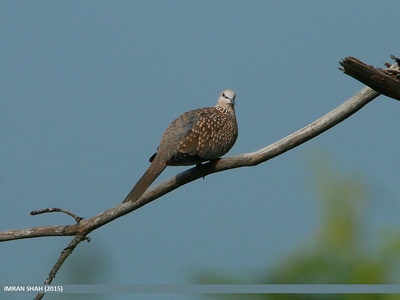
| Spotted Dove | Spilopelia chinensis | 26–31 | Lowlands and hills; common 0–1,500 m |
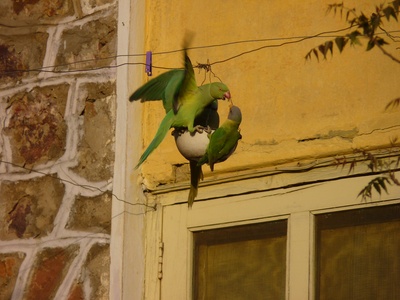
| Rose-ringed Parakeet | Psittacula krameri | 37–42 | Terai and low hills; 100–900 m |
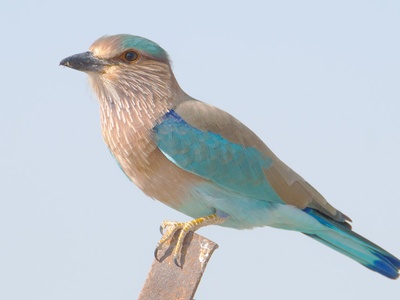
| Indian Roller | Coracias benghalensis | 26–30 | Terai and open country; 50–1,000 m |
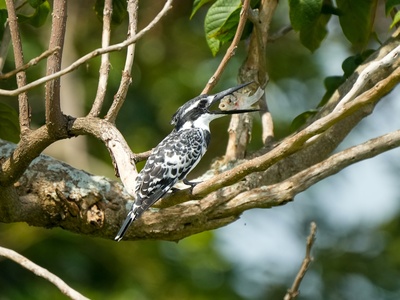
| Pied Kingfisher | Ceryle rudis | 25–28 | Wetlands and rivers across Nepal; 0–1,500 m |
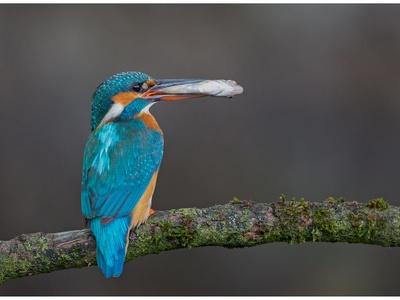
| Common Kingfisher | Alcedo atthis | 16–18 | Rivers and streams across Nepal; 0–2,500 m |
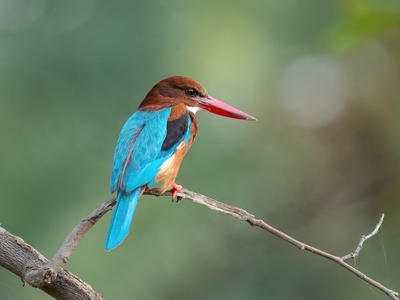
| White-throated Kingfisher | Halcyon smyrnensis | 27–29 | Widespread lowlands and hills; 0–1,800 m |
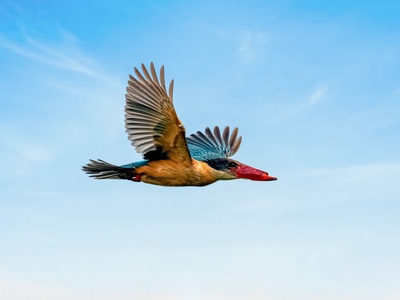
| Stork-billed Kingfisher | Pelargopsis capensis | 35–38 | Terai rivers and wetlands; 50–800 m |
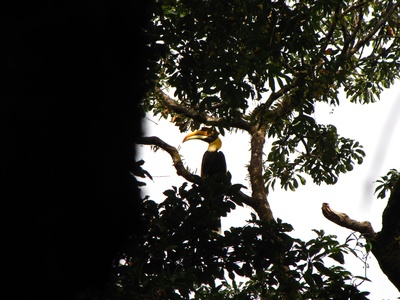
| Great Hornbill | Buceros bicornis | 95–105 | Lowland and foothill forests of south Nepal; 150–1,500 m |
| Oriental Pied Hornbill | Anthracoceros albirostris | 55–65 | Terai and foothill forests; 100–1,200 m |
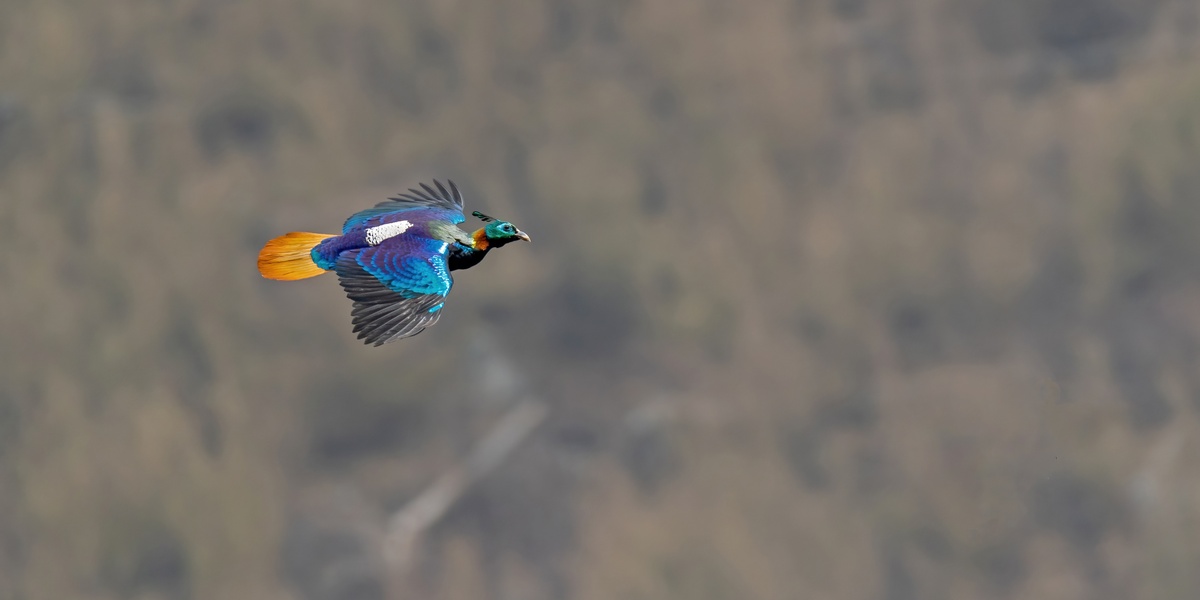
| Himalayan Monal | Lophophorus impejanus | 53–60 | High Himalaya and western/trans-Himalayan slopes; 2,400–4,200 m |
| Satyr Tragopan | Tragopan satyra | 55–70 | Mid- to high-hills, central/eastern Nepal; 2,000–3,600 m |
| Blood Pheasant | Ithaginis cruentus | 30–40 | High forest edge and alpine zones; 2,400–4,500 m |
| Koklass Pheasant | Pucrasia macrolopha | 58–65 | Forested hills and ridges; 1,500–3,500 m |
| Cheer Pheasant | Catreus wallichii | 70–75 | Western Nepal mid-hills; 1,200–3,000 m |
| Himalayan Snowcock | Tetraogallus himalayensis | 45–55 | Alpine zones and high plateaus; 3,500–5,000 m |
| Sarus Crane | Antigone antigone | 140–160 | Terai grasslands and wetlands; 100–500 m |
| Bar-headed Goose | Anser indicus | 60–75 | Wetlands and lakes, migratory altitudes; 0–3,000 m |
| Ruddy Shelduck | Tadorna ferruginea | 53–60 | Lakes and rivers; common in lowlands and mid-hills 0–2,500 m |
| Painted Stork | Mycteria leucocephala | 85–95 | Lowland wetlands and floodplains; 50–1,500 m |
| Black-necked Stork | Ephippiorhynchus asiaticus | 110–120 | Terai wetlands and marshes; 50–800 m |
| White-rumped Vulture | Gyps bengalensis | 85–95 | Lowlands and hills; widespread 0–2,000 m |
| Himalayan Griffon | Gyps himalayensis | 95–110 | High hills and mountains; 1,500–5,000 m |
| Indian Vulture | Gyps indicus | 75–90 | Terai and foothills; 0–2,000 m |
| Steppe Eagle | Aquila nipalensis | 60–75 | Open country and plains; winter visitor 0–2,000 m |
| Golden Eagle | Aquila chrysaetos | 66–90 | High mountains and alpine zones; 2,000–5,000 m |
| Black Kite | Milvus migrans | 50–55 | Widespread across Nepal; 0–2,000 m |
| Osprey | Pandion haliaetus | 55–60 | Lakes and rivers, seasonal visitor; 0–1,500 m |
| Great Barbet | Psilopogon virens | 30–36 | Mid-hills and forests; 600–2,400 m |
| Coppersmith Barbet | Psilopogon haemacephalus | 15–17 | Lowlands and urban areas; 0–1,500 m |
| White-bellied Woodpecker | Dryocopus javensis | 35–40 | Large forests in hills and lowlands; 200–2,200 m |
| Great Spotted Woodpecker | Dendrocopos major | 22–26 | Hills and montane forests; 1,000–3,000 m |
| Red-vented Bulbul | Pycnonotus cafer | 20–25 | Widespread lowlands and hills; 0–2,000 m |
| Himalayan Bulbul | Pycnonotus leucogenys | 18–22 | Mid-hills and foothills; 600–2,500 m |
| Blue Whistling Thrush | Myophonus caeruleus | 29–31 | Hilly streams and forests; 300–3,000 m |
| Plumbeous Water Redstart | Rhyacornis fuliginosus | 15–17 | Mountain streams and rivers; 300–3,000 m |
| Ultramarine Flycatcher | Ficedula superciliaris | 10–12 | Mid-hill forests and rhododendron; 1,500–3,000 m |
| Scarlet Minivet | Pericrocotus speciosus | 16–20 | Forests and edges; Terai to mid-hills 100–2,200 m |
| Black Drongo | Dicrurus macrocercus | 28–32 | Widespread open country; 0–2,000 m |
| Barn Swallow | Hirundo rustica | 15–20 | Open country and villages; widespread 0–2,500 m |
| Wire-tailed Swallow | Hirundo smithii | 16–18 | Near rivers and wetlands; lowlands to mid-hills 0–1,500 m |
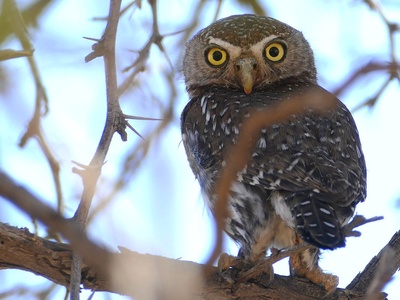
| Spotted Owlet | Athene brama | 20–25 | Villages and open woodlands; 0–1,500 m |
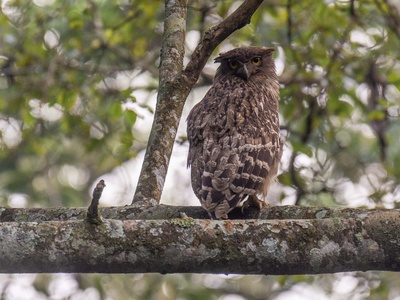
| Brown Fish Owl | Ketupa zeylonensis | 38–45 | Riverine forests and wetlands; Terai and foothills 50–1,500 m |
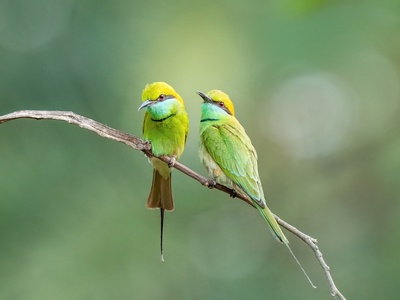
| Green Bee-eater | Merops orientalis | 16–18 | Open scrub and farmland; widespread lowlands 0–1,500 m |
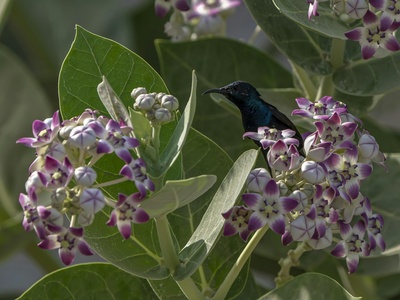
| Purple Sunbird | Cinnyris asiaticus | 8–12 | Terai and lowland gardens; 50–1,500 m |
Images and Descriptions
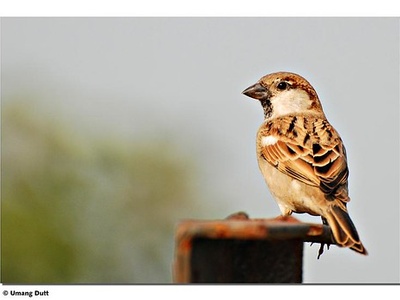
House Sparrow
A familiar urban and village bird, the House Sparrow is chunky with streaked brown back and grey head. Often seen around homes and markets, it feeds on seeds and scraps and is one of Nepal’s most widespread small birds.
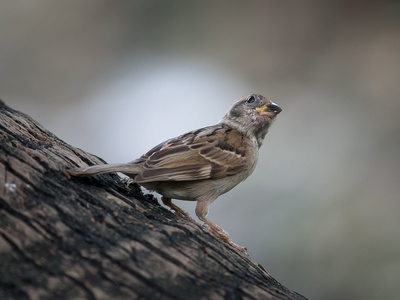
Eurasian Tree Sparrow
Smaller than House Sparrow with a distinctive black cheek patch and rich brown crown. Common in towns, farms and woodlands, it feeds on insects and seeds and often nests in cavities or building crevices.
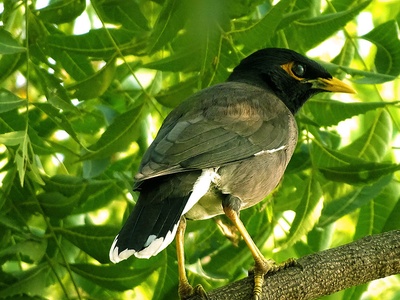
Common Myna
A noisy, adaptable bird with brown body and black head, yellow eye patch and strong gape. Common in urban areas and farmland, Mynas are omnivorous and bold, often seen scavenging or perching conspicuously on buildings and wires.
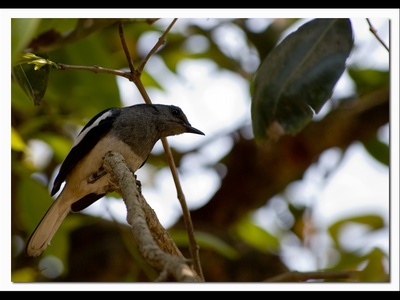
Oriental Magpie-Robin
A small, black-and-white singer often found near human habitation and gardens. Males are glossy black with white underparts; females browner. Known for melodious songs, it gleans insects from foliage and ground.
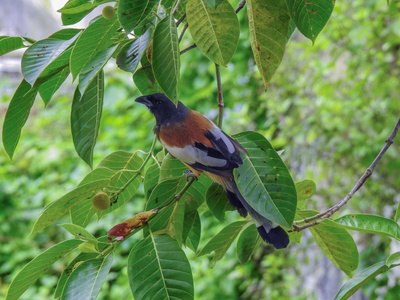
Rufous Treepie
A long-tailed, noisy corvid with rufous body, grey head and black tail tip. It is omnivorous—fruit, insects, eggs—and bold around people; often seen hopping through trees and edge habitats.
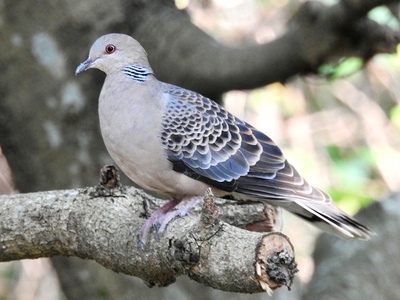
Oriental Turtle Dove
A chunky dove with warm brown back and subtle barring on nape. Prefers woodlands, gardens and fields. Often feeds on seeds on the ground and gives a soft cooing call echoing across valleys.
Spotted Dove
A slender dove with distinctive black-and-white spotted neck patch and scalloped plumage. Frequently seen in gardens, farmland and roadside trees; forages for seeds and small invertebrates on the ground.
Rose-ringed Parakeet
A noisy green parakeet with a red beak and, in males, a subtle neck ring. Forms flocks in woodlands, orchards and towns. Eats fruit, seeds and flowers; a common sight at dusk when birds roost communally.
Indian Roller
Brightly colored with electric blues and brown, often perches conspicuously on posts. Performs dramatic aerial displays. Eats insects and small vertebrates; a signature bird of open habitats and road verges in southern Nepal.
Pied Kingfisher
A striking black-and-white hovering kingfisher that dives for fish. Found on lakes, rivers and irrigation channels. Easily identified by crest and distinctive hovering hunt behavior close to water.
Common Kingfisher
Tiny, bright blue-and-orange kingfisher of clear streams and ponds. Perches low and dives for small fish; distinctive high-pitched call and quick, direct flight. Favored by photographers for brilliant plumage.
White-throated Kingfisher
A large kingfisher with blue wings, brown head and bright red bill. Hunts from perches taking fish, frogs, insects and small reptiles; common along rivers, paddy fields and gardens throughout Nepal.
Stork-billed Kingfisher
A bulky kingfisher with a huge red bill, chestnut head and green back. Prefers large rivers and wetlands, preys on fish and crustaceans, and nests in riverbanks or tree cavities.
Great Hornbill
A spectacular forest giant with a massive bill and casque. Black body with white and yellow markings; a frugivore that plays a key role in seed dispersal. Iconic but locally declining where forests are lost.
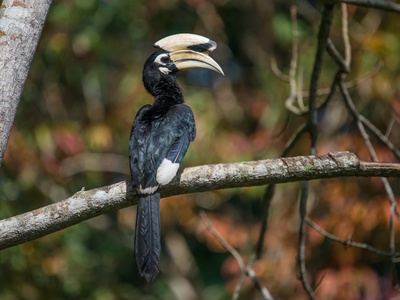
Oriental Pied Hornbill
A medium-sized hornbill with black plumage and pale bill. Often seen in pairs or small groups in riverine and forested patches, feeding on fruit and small animals; more tolerant of disturbed habitats than larger hornbills.
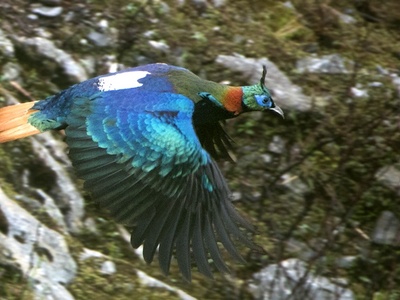
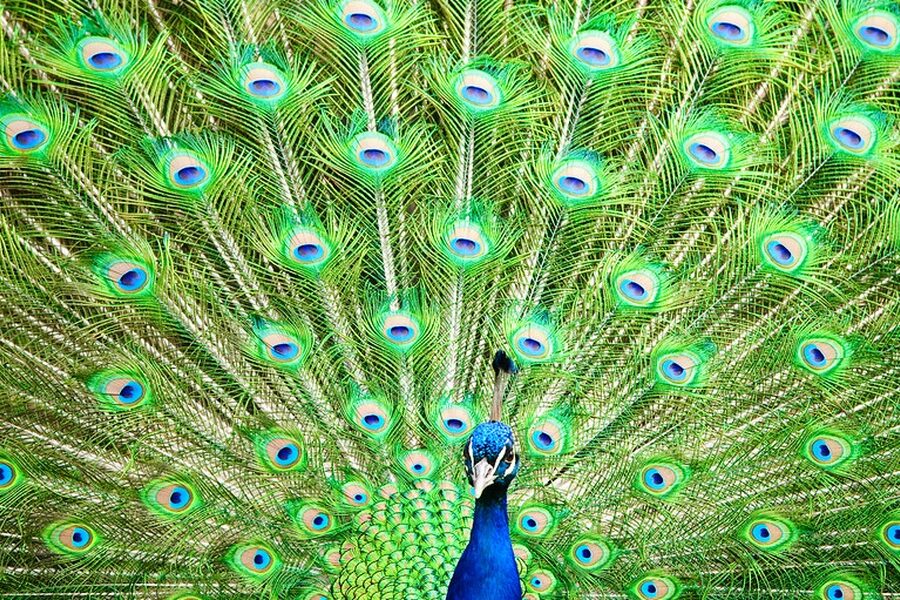
Himalayan Monal
Nepal’s colorful national bird: male iridescent metallic blues and greens with crest; female more cryptic. Found in alpine meadows and rhododendron forests. Ground-feeding pheasant, often seen at dawn and dusk.
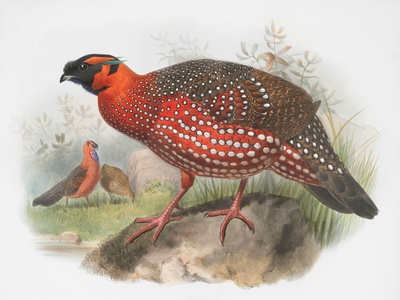
Satyr Tragopan
A striking red-and-black pheasant with ornate facial warts and inflatable throat lappets in males during display. Secretive in dense rhododendron and oak forests; a sought-after species for mountain birdwatchers.
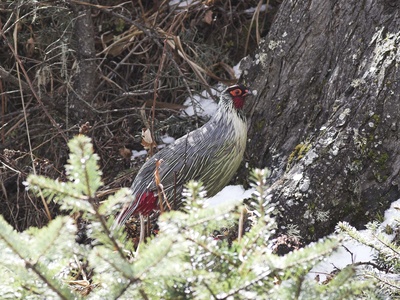
Blood Pheasant
A small, shy pheasant with crimson markings on flanks and underwing. Lives in high-altitude scrub and rhododendron belts; feeds on seeds, berries and insects, often in small groups.
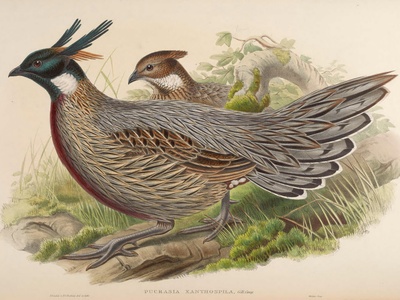
Koklass Pheasant
A cryptic, loud pheasant with barred plumage and a distinctive, far-carrying call. Found in coniferous and mixed forests, often heard more easily than seen, running on the ground through leaf litter.
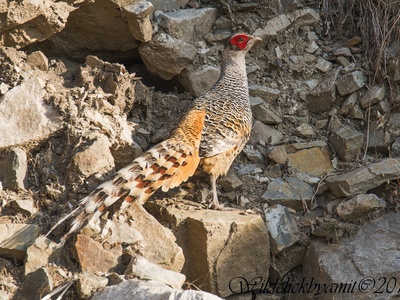
Cheer Pheasant
A rare, shy pheasant of steep grassy slopes and scrub. Long-tailed and pale brown with barred underparts. Locally endangered; best searched for in known historical sites rather than widespread areas.
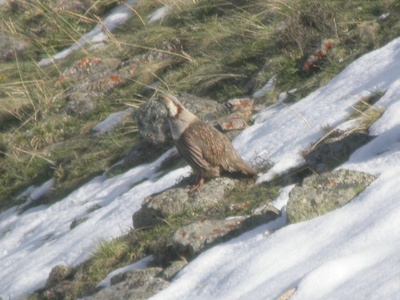
Himalayan Snowcock
A hardy high-altitude gamebird, pale and mottled to blend with rocky slopes. Occurs above treeline, feeding on vegetation and seeds; often seen in pairs or small flocks on open slopes.
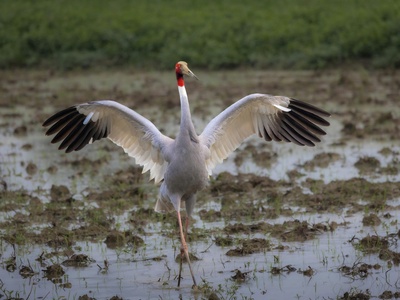
Sarus Crane
The world’s tallest flying bird, pale grey with red head and neck. Sarus cranes are resident in Nepal’s wetlands and floodplains, performing elaborate dances; they prefer tall grasslands and shallow marshes.
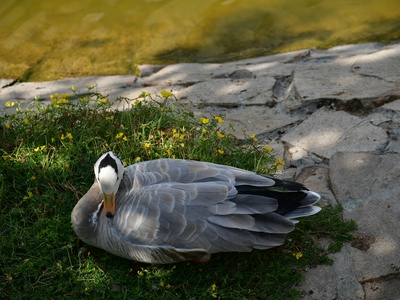
Bar-headed Goose
Famous for high Himalayan migrations, with distinctive two dark bars on white head. Winters on lakes and wetlands in lowlands; grazes aquatic vegetation and often flies in strong V-formations.
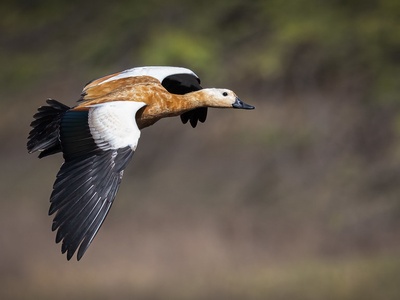
Ruddy Shelduck
A smart orange-brown waterfowl with pale head and black tail. Found on lakes and wetlands, often in flocks; feeds on grasses, grains and small aquatic animals.
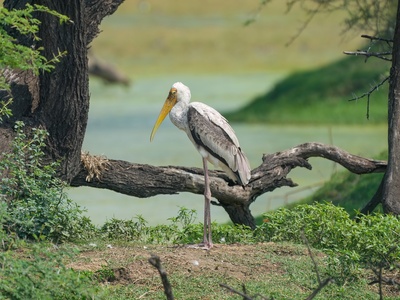
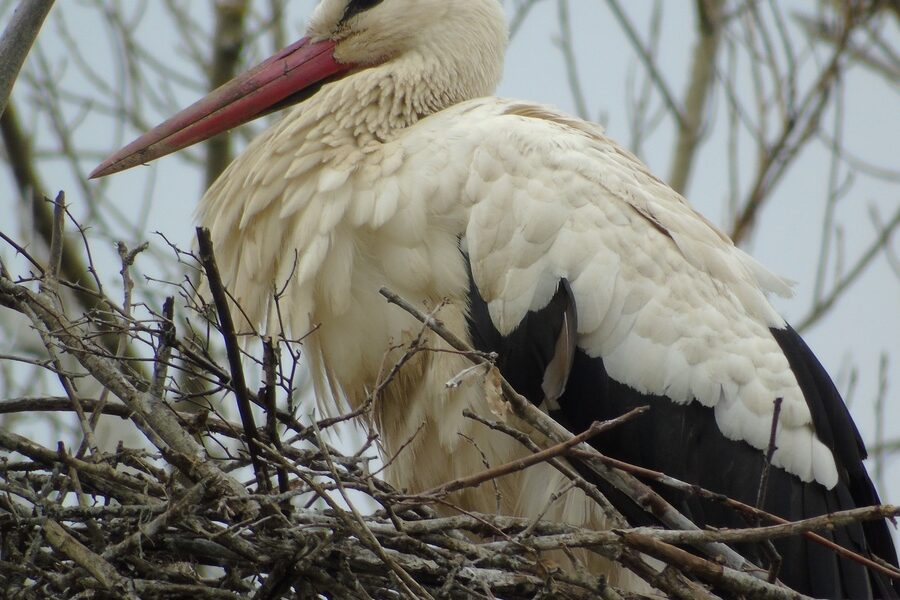
Painted Stork
Large stork with pink tertials, long yellow bill and distinctive foraging style—sweeping bill through shallow water. Feeds on fish and frogs; nests colonially in riverside trees.
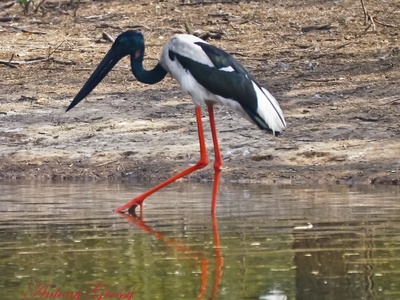
Black-necked Stork
A tall, elegant stork with glossy black neck and white body. Solitary or in pairs, it wades in shallow wetlands hunting fish, frogs and large invertebrates; striking in flight.
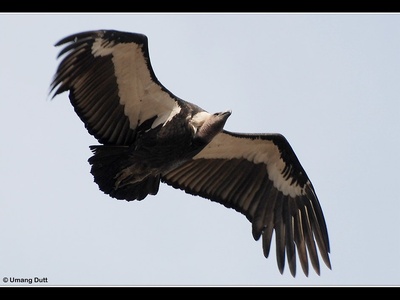
White-rumped Vulture
A pale, broad-winged vulture with white rump band. Once common, now dramatically reduced due to poisoning from veterinary drugs. Important scavenger of carcasses, often seen soaring in thermals.
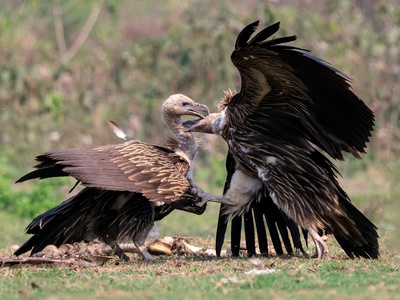
Himalayan Griffon
A large, pale vulture of the high Himalaya with long wings and broad tail. Scavenges on high-elevation carcasses; often seen in large groups circling over ridges and valleys.
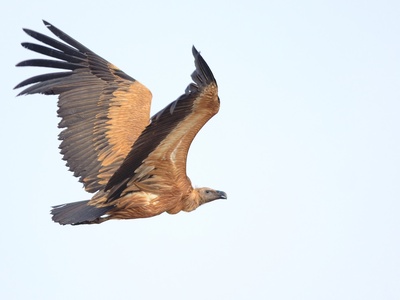
Indian Vulture
Slender-faced vulture with dark body and pale head. Critically reduced in numbers due to diclofenac poisoning. Once common at carcass sites, now much rarer and a conservation focus in Nepal.
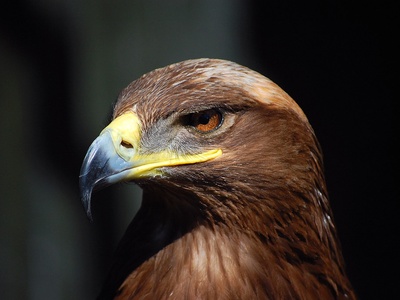
Steppe Eagle
A powerful migratory raptor with broad wings and dark-brown plumage. Winters in Nepal’s flatlands and valleys; hunts small mammals and scavenges, often seen perched on poles or soaring.
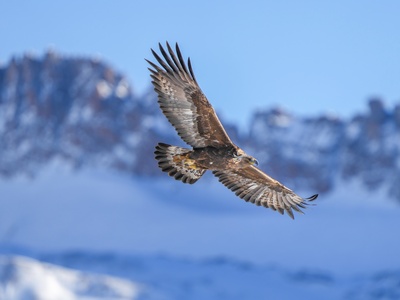
Golden Eagle
A large, dark-brown eagle with golden nape. Prefers open upland terrain where it hunts mammals and birds. Rare but iconic in high Himalayan regions, often seen soaring along ridgelines.
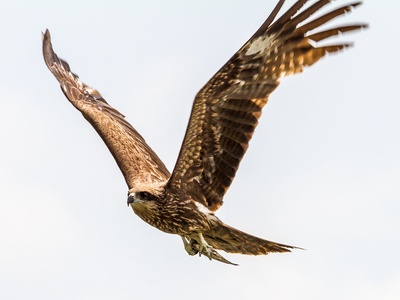
Black Kite
A common, adaptable scavenging raptor with forked tail. Frequently seen over towns, rivers and wetlands feeding on carrion and refuse; often mobbed in flight by smaller birds.
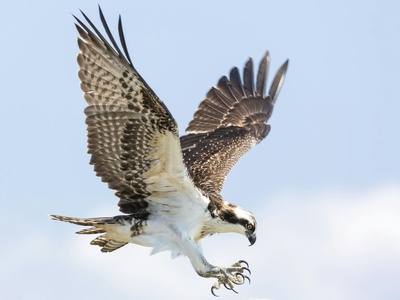
Osprey
A specialist fish-eating raptor with white underparts and dark eye stripe. Dives feet-first to catch fish and nests near water. Seen seasonally on large rivers and reservoirs across Nepal.
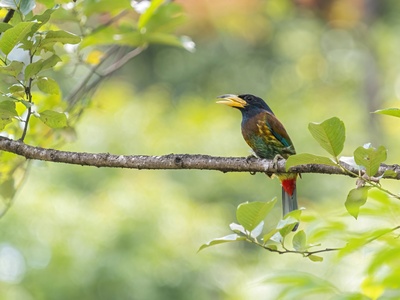
Great Barbet
A chunky, loud bird with vivid green, blue and red facial markings. Eats fruit and insects in forests; its resonant, repeated calls carry through valleys—an unmistakable sign of mature woodland.
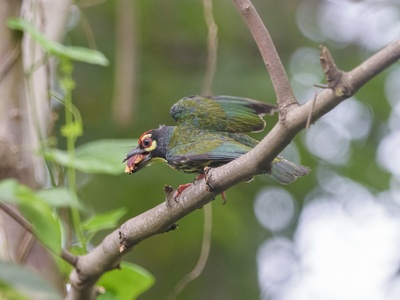
Coppersmith Barbet
Small, stout green barbet with bright red crown and yellow throat. Often found in gardens and city trees; its repetitive metallic “tuk…tuk” call is a familiar sound near fruiting trees.
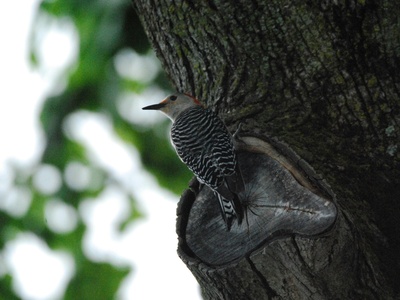
White-bellied Woodpecker
A large, black woodpecker with white belly and strong bill. Drills large cavities in mature trees to find insects and for nesting; more frequent in older forest tracts with big trees.
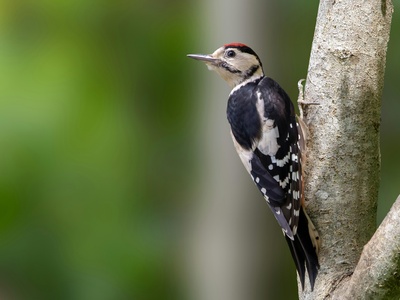
Great Spotted Woodpecker
Black and white woodpecker with bold pattern and red undertail coverts. Drums on trees and taps for insects; commonly seen in wooded parks and mountain forests across Nepal.
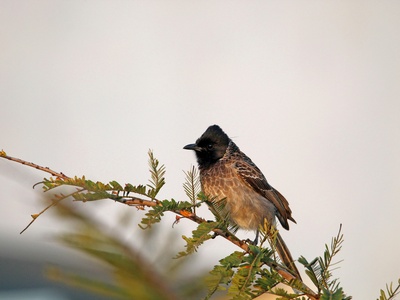
Red-vented Bulbul
A familiar, noisy garden bird with dark head and rufous vent. Eats fruit, nectar and insects and adapts well to human-altered landscapes. Often perches conspicuously and sings a varied repertoire.
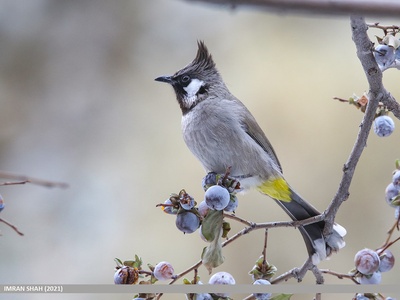
Himalayan Bulbul
A white-cheeked bulbul of forest edges and gardens with a pleasant, whistling song. Feeds on fruit and insects; common in temperate and subtropical hill forests of Nepal.
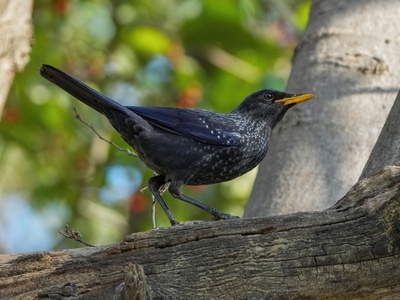
Blue Whistling Thrush
A large, deep-blue thrush with loud, melodious whistle-like calls at dawn and dusk. Often found near water and rocky streams, feeding on insects, frogs and small invertebrates.
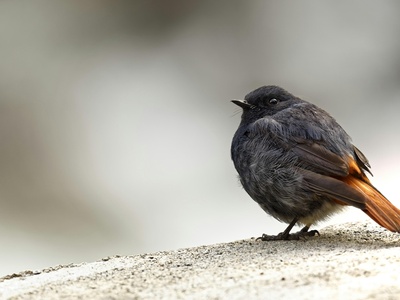
Plumbeous Water Redstart
A dark grey, bold flycatcher-like bird that flicks its tail on rocks beside fast-flowing streams. Males darker with chestnut tail; feeds on aquatic insects and small invertebrates.
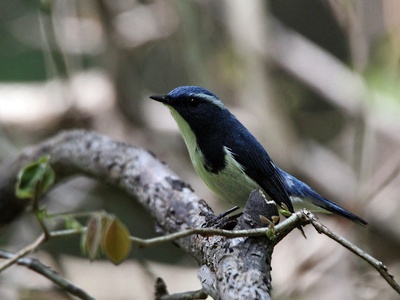
Ultramarine Flycatcher
A tiny forest flycatcher with intense blue upperparts in males and bold eye stripe. Perches in shaded understory, catching insects on the wing; a charming highlight for hill birding.
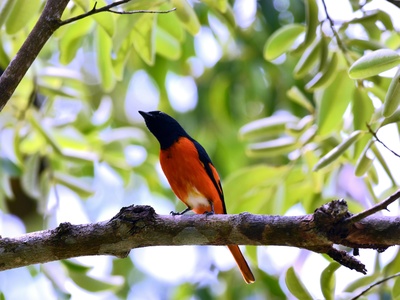
Scarlet Minivet
A slender, brightly colored insect-eater; males vivid scarlet and black, females yellow. Forages in canopy sallies to catch insects. Often seen in mixed flocks during the breeding season.
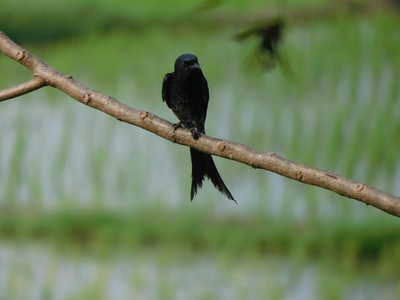
Black Drongo
A glossy black passerine with distinctive forked tail and aggressive aerial habits. Hunts insects from perches and fearlessly defends territory against larger birds. Common over fields, roads and villages.
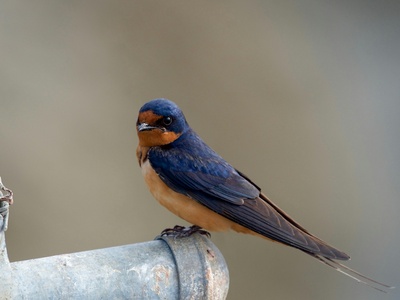
Barn Swallow
A familiar migratory swallow with forked tail and blue upperparts. Nests on human structures, catching insects in flight. Arrives seasonally to breed in Nepal and often seen perched on wires in flocks.
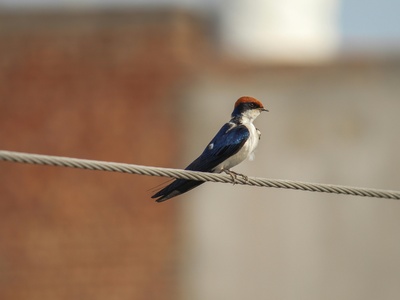
Wire-tailed Swallow
Small, sleek swallow with long filamentous tail streamers and glossy blue back. Perches on wires near water and hawks insects over rivers and fields; an elegant sight when on the wing.
Spotted Owlet
A small, daytime-tolerant owl with barred body and spotted head. Roosts in tree holes and buildings, hunting insects and small rodents by night. Often seen perched in village trees by day.
Brown Fish Owl
A large, nocturnal owl with tufted ear-like feathers and cryptic plumage. Prefers wooded riversides and wetlands, feeding on fish and amphibians; roosts in dense riparian trees.
Green Bee-eater
A slender, bright green bee-eater with black eye stripe and long central tail streamers. Catching insects on the wing, especially bees and wasps, it perches on exposed wires and branches in open habitats.
Purple Sunbird
A tiny, fast-moving nectar-feeder; male metallic purple in breeding season, female olive-brown. Feeds on nectar and insects, hovering briefly or perching at flowers. Common in gardens and scrubby areas.