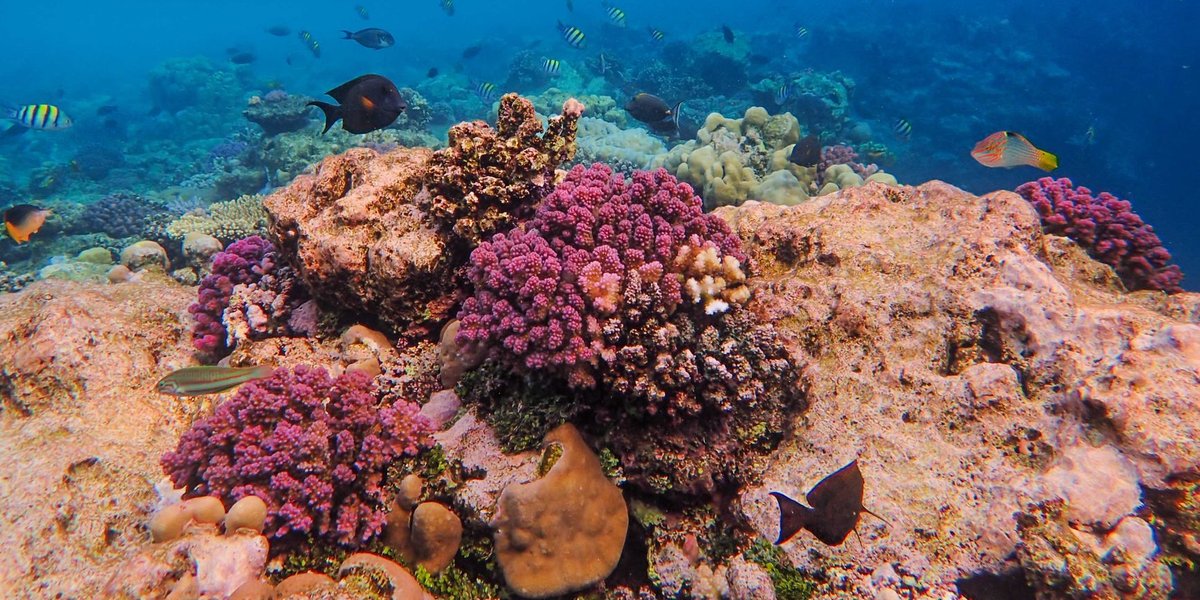
Here’s the thing most people miss about a coral reef: the coral itself is an animal, and it’s an invertebrate. The whole structure — that limestone city you see in nature documentaries — is built by soft-bodied animals with no backbone, working in colonies of millions. And corals are just the start. Spineless creatures outnumber the fish on a reef by a wide margin, and they do most of the actual work: building the reef, grazing the algae that would otherwise smother it, filtering the water, and turning dead things back into nutrients.
If you’ve only ever thought of reefs as places where colorful fish live, this is the part that reframes everything. The fish are guests. The invertebrates are the landlords, the construction crew, and the cleanup crew all at once.
This guide walks through the major invertebrate groups by phylum — the same way marine biologists organize them — with a standout species for each, the ecological job it does, and a few weird ones that earn their own spotlight.
Table of Contents
- What counts as a reef invertebrate
- Cnidarians: the reef builders
- Sponges: the living filters
- Mollusks: shells, snails, and the octopus
- Arthropods: the armored crowd
- Echinoderms: stars, urchins, and cucumbers
- Worms: the reef’s hidden workforce
- At a glance: the reef invertebrate cheat sheet
- Weird ones worth knowing
- What’s threatening them
What counts as a reef invertebrate
An invertebrate is any animal without a backbone. That’s a low bar that captures something like 95% of all animal species on Earth, and on a coral reef the proportion is even more lopsided. A single square meter of healthy reef can host thousands of individual invertebrates spread across half a dozen phyla.
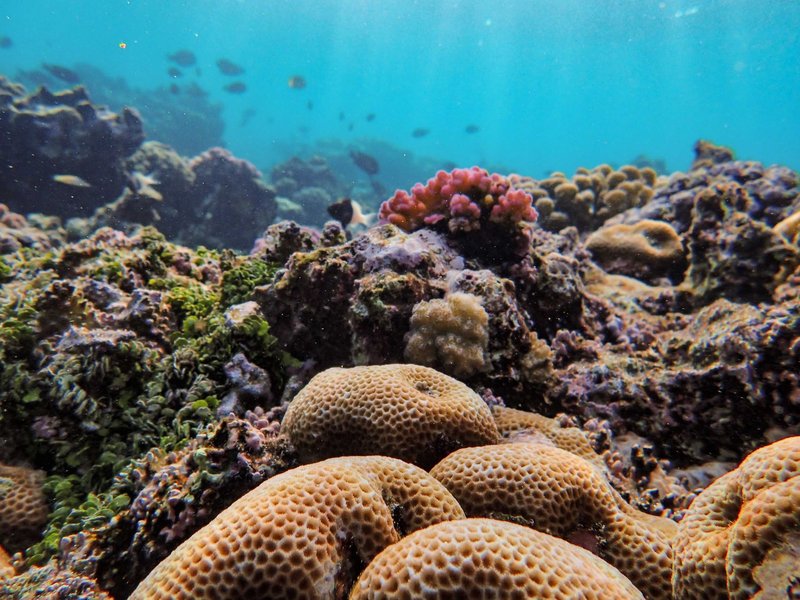
The groups that matter most on a reef are six:
- Cnidaria — corals, anemones, jellyfish
- Porifera — sponges
- Mollusca — snails, clams, octopuses, nudibranchs
- Arthropoda — crabs, shrimp, lobsters
- Echinodermata — sea stars, urchins, cucumbers
- Annelida — segmented worms
Each does a different job. Some build, some graze, some filter, some clean up the dead. Together they make the reef a functioning ecosystem rather than just a pile of calcium carbonate.
Cnidarians: the reef builders
This is the phylum that makes the reef a reef. Cnidarians include the hard corals, soft corals, sea anemones, and jellyfish — all built on the same body plan of a stomach with tentacles and stinging cells called nematocysts.
Standout species: staghorn coral (Acropora cervicornis). Staghorn is one of the fastest-growing reef-building corals in the Caribbean, capable of adding several inches of branch length a year. Its antler-shaped colonies create the dense thickets that juvenile fish hide in. It’s also one of the most threatened — listed as critically endangered, which tells you how much the whole system depends on a single vulnerable builder.
The reef-building trick is symbiosis. Stony corals host microscopic algae called zooxanthellae inside their tissue. The algae photosynthesize and hand most of the sugar they make to the coral; the coral gives the algae shelter and raw materials. According to the NOAA Coral Reef Conservation Program, this partnership supplies up to 90% of a coral’s energy. Pull the algae out — which is what happens during bleaching — and the coral starves.
Ecological role: Reef construction. Hard corals lay down the calcium carbonate skeleton that every other reef organism lives on, in, or around.
Sponges: the living filters
Sponges are the oldest animal group on the reef and arguably the simplest — no organs, no nervous system, just a body riddled with pores that pump water through. But simple doesn’t mean unimportant. A reef sponge can filter its own body volume of seawater every few seconds, straining out bacteria and dissolved organic matter that nothing else can use.
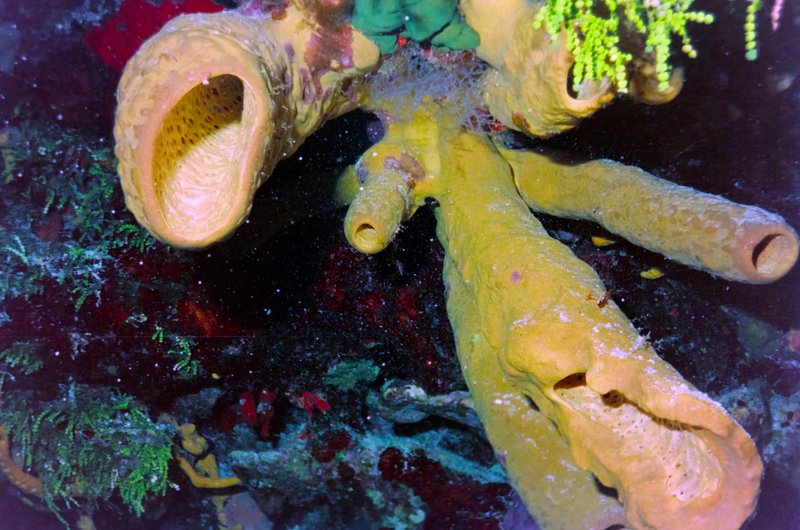
Standout species: giant barrel sponge (Xestospongia muta). Sometimes called the “redwood of the reef,” large barrel sponges are among the longest-lived animals on the reef, with the biggest individuals estimated to be hundreds of years old. They filter enormous volumes of water and provide shelter for shrimp, brittle stars, and small fish that live inside the barrel.
Sponges also do something sneaky and crucial called the sponge loop. They take dissolved organic carbon — food too diffuse for anything else to eat — and convert it into cellular debris that gets eaten by snails and worms, recycling energy back into the food web that would otherwise drift away. Research published in Science first described this loop and showed how it keeps nutrients circulating on otherwise nutrient-poor reefs.
Ecological role: Water filtration and nutrient recycling. Sponges keep the water clear and pull dissolved nutrients back into the food chain.
Mollusks: shells, snails, and the octopus
Mollusca is the catch-all for soft-bodied animals that usually (but not always) make shells. On a reef that means sea snails, giant clams, cone snails, nudibranchs, and the octopus. It’s one of the most diverse phyla on the planet, and the reef showcases the full range.
Standout species: giant clam (Tridacna gigas). The largest living bivalve, a giant clam can exceed four feet across and weigh over 400 pounds. Like corals, it hosts symbiotic zooxanthellae in the brightly colored mantle tissue you see along the shell opening, which is why the flesh glows electric blue, green, or gold. It grows partly by farming its own algae, just like the coral around it.
Then there are the grazers. Reef snails like Cerithium and various sea slugs scrape algae off rock and dead coral, doing the same lawn-mowing job that keeps fast-growing algae from overtaking living coral. That grazing pressure is one of the main checks on the reef’s coral reef vegetation — the seagrasses, macroalgae, and coralline algae that would otherwise blanket the living coral. On the predator side, the octopus is the brain of the phylum — a problem-solving hunter that pries open shells and squeezes through any gap bigger than its beak.
One mollusk to respect: cone snails. Species like the geographer cone (Conus geographus) hunt with a venom-loaded harpoon, and the venom of the largest species is potent enough to be dangerous to humans. The flip side is that cone snail venom has become a serious source of pain-medication research, with one compound developed into an approved analgesic.
Ecological role: Mixed. Grazing snails control algae, giant clams filter and contribute reef calcium, octopuses sit near the top of the invertebrate food chain.
Arthropods: the armored crowd
If you tallied individual animals on a reef, arthropods might win. This is the phylum of crabs, shrimp, lobsters, and a swarm of tiny crustaceans that live in every crack. Hard exoskeleton, jointed legs, and a body plan that’s been refined for half a billion years.
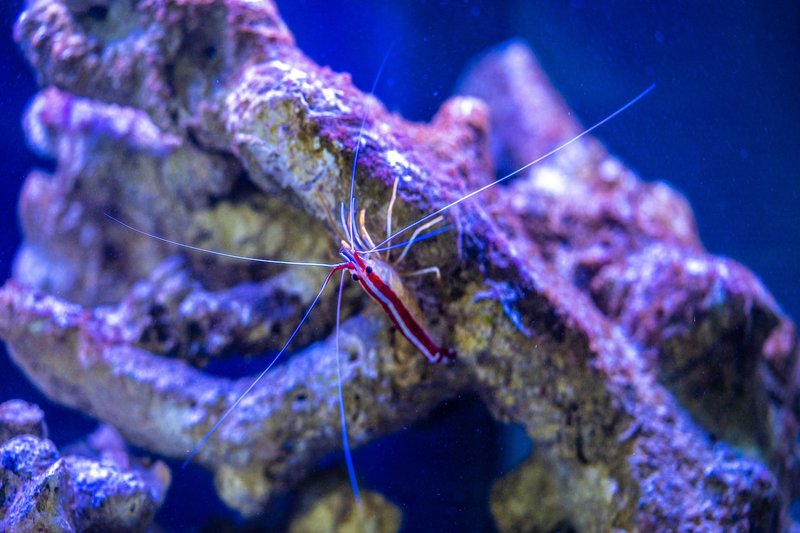
Standout species: cleaner shrimp (Lysmata amboinensis). These set up “cleaning stations” where fish line up — sometimes including predators that could easily eat them — and wait to have parasites and dead skin picked off. The shrimp gets a meal; the fish gets pest control. A big predatory fish will open its mouth and let the shrimp walk inside to clean its teeth, and the shrimp walks back out unharmed. It’s one of the clearest examples of mutualism you can watch with your own eyes on a dive.
Other arthropods earn their keep differently. Hermit crabs recycle empty snail shells and scavenge dead matter. The mantis shrimp — technically its own thing — punches with a club that accelerates as fast as a .22 bullet, cracking open clams and snails. And countless tiny copepods and amphipods form the base of the food web that feeds the small fish.
Ecological role: Cleaning, scavenging, and predation. Arthropods recycle dead matter and run the reef’s pest-control service.
Echinoderms: stars, urchins, and cucumbers
Echinoderms are the reef’s oddballs — radially symmetrical animals with no head, no brain, and a water-powered hydraulic system of tube feet that lets them walk, grip, and feed. The group includes sea stars, brittle stars, sea urchins, and sea cucumbers.
Standout species: long-spined sea urchin (Diadema antillarum). This urchin is a grazing machine, one of the most important coral reef primary consumers that keep algae from running riot. In the Caribbean, Diadema was the dominant algae-grazer until a disease outbreak in the early 1980s wiped out something like 95% of the population almost overnight. The result was a textbook lesson in keystone species: with the urchins gone, algae bloomed and smothered coral across the region, and many reefs never recovered. According to the IUCN’s reef assessments, this kind of grazer collapse is one of the recognized drivers of reef decline.
Sea cucumbers handle a less glamorous job: they’re the reef’s earthworms. They swallow sand, digest the organic film and microbes coating each grain, and excrete clean sediment. In doing so they recycle nutrients and even help buffer the water against acidification by dissolving calcium carbonate as they feed.
Ecological role: Grazing and decomposition. Urchins keep algae in check; sea cucumbers clean and turn over the sediment.
Worms: the reef’s hidden workforce
Annelids — segmented worms — are the group most divers swim right past. Most of them live buried in sediment or bored into the reef rock, out of sight. But they’re everywhere, and the visible ones are some of the prettiest animals on the reef.
Standout species: Christmas tree worm (Spirobranchus giganteus). These embed their bodies inside living coral and project two spiraling, feather-duster crowns in colors from electric blue to bright orange. The crowns are feeding and breathing structures, filtering plankton out of the water. Touch the water near one and it snaps the whole thing back into its tube in an instant.
The unsung work, though, happens underground. Burrowing polychaete worms aerate the sediment, break down detritus, and form a major food source for fish and crustaceans. Some, like the bobbit worm, are ambush predators that strike from a buried tube fast enough to slice small fish in half. Reefs run on this invisible layer of worms doing the dirty work.
Ecological role: Filtration and decomposition. Filter-feeding worms clean the water; burrowing worms recycle waste in the sediment.
At a glance: the reef invertebrate cheat sheet
| Phylum | Example species | Ecological role | Fun fact |
|---|---|---|---|
| Cnidaria | Staghorn coral | Reef building | The reef structure itself is a colony of animals |
| Porifera | Giant barrel sponge | Water filtration | Some individuals are hundreds of years old |
| Mollusca | Giant clam | Filtering, grazing, predation | Giant clams farm algae in their own mantle |
| Arthropoda | Cleaner shrimp | Cleaning, scavenging | Predatory fish let shrimp walk inside their mouths |
| Echinodermata | Long-spined urchin | Algae grazing | Their 1980s die-off helped crash Caribbean reefs |
| Annelida | Christmas tree worm | Filtration, decomposition | They snap their crowns shut in a fraction of a second |
Weird ones worth knowing
A few reef invertebrates are strange enough to deserve their own mention.
The mantis shrimp sees in a way no other animal does. Where humans have three types of color receptor, mantis shrimp have up to sixteen, including ones tuned to ultraviolet and polarized light. Pair that with the fastest strike in the animal kingdom and you have a thumb-sized animal that can shatter aquarium glass.
The Spanish dancer is a nudibranch — a shell-less sea slug — that can reach over a foot long and swims by flapping the red-and-white folds along its body, looking exactly like a flamenco dress in motion. Most nudibranchs are tiny; this one puts on a show.
The flamingo tongue snail is a small sea snail whose shell looks like it’s covered in leopard spots. The spots are a trick — they’re not on the shell at all but on living mantle tissue the snail stretches over the outside, and it pulls the tissue back in when threatened.
The crown-of-thorns starfish is the villain of the bunch. A single one can grow over a foot across, bristle with venomous spines, and eat its own body area in coral tissue every day. When their populations boom, they strip reefs bare — outbreaks are a major cause of coral loss on the Great Barrier Reef.
What’s threatening them
Every invertebrate group on the reef is under pressure, and because they do the building, grazing, and cleaning, their decline cascades through the whole system.
Bleaching hits the cnidarians hardest. When water gets too warm, corals expel their zooxanthellae and lose their main food source. Prolonged bleaching kills the coral outright, and when the builders die, the structure that every other invertebrate depends on starts to erode.
Overharvesting thins out specific groups. Giant clams have been collected nearly to local extinction in many areas for their meat and shells. Queen conch — a large reef snail — has been fished hard enough across the Caribbean to land it under international trade protection. Sea cucumbers are now heavily harvested for Asian markets, removing the reef’s decomposition crew.
Disease can erase a keystone grazer almost overnight, as the Diadema urchin collapse showed. With the urchins gone, nothing kept the algae in check, and the reefs they once cleaned turned to weed.
The pattern is the same across all of it: lose the invertebrates and you don’t just lose some animals, you lose the functions that hold the reef together. The fish get the attention, but the spineless majority is what keeps the lights on. Protecting a reef means protecting the snails, sponges, urchins, and worms most people never think to look at.