TLDR
El Salvador’s national tree is the maquilishuat, which blooms pink from roughly February to April. The national flower is the izote, though its native status and official date are disputed. The country’s rarest plants, such as the majagua (Hampea reynae) and the small herb Tubella inconspicua, are endemics found almost nowhere else. The 12 species below cover trees, food plants and endemics, plus where to see them.
Table of Contents
- What “native” means in El Salvador
- The 12 native plants
- Quick comparison table
- Where to see them
- Growing native plants at home
What “native” means in El Salvador
El Salvador is the smallest country in Central America and the most densely populated. Most of its original forest is gone, cleared for coffee, sugar cane, pasture and cities. What survives sits in pockets: the cloud forests of the northern mountains, the dry forests of the Pacific slope, and the flanks of volcanoes too steep to farm.
That history makes “native” a loaded word here. A plant counts as native if it grew in the region before people moved it around. Many familiar Salvadoran plants, including coffee and mango, arrived from elsewhere, and some of those arrivals have spread so well they now crowd out local species. The list of invasive species in El Salvador covers 21 of them, with native ranges and status notes. Others, like the ones below, were growing here long before the first farms. Some are common in yards and markets. Others are so restricted that botanical checklists, such as this Phytoneuron survey of Salvadoran Acanthaceae, are the only places most people will ever read about them.
The 12 native plants
1. Maquilishuat (Tabebuia rosea)
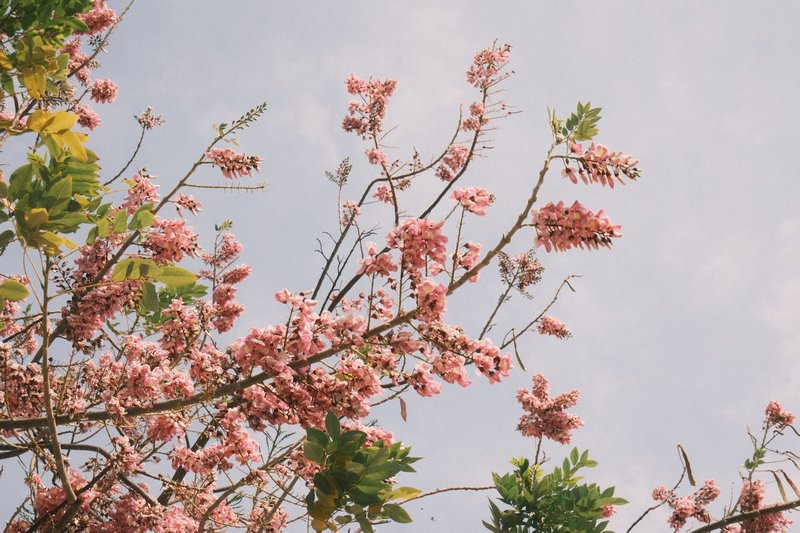
The national tree, and the easiest plant on this list to recognize. In the dry season, usually February through April, the maquilishuat drops its leaves and covers its bare branches in pink to pale lavender trumpet flowers. The effect is a tree that looks like it belongs in a different, wetter country.
The name comes from Nahuat, the language of the pre-Columbian peoples of the region. You’ll find it on avenues in San Salvador and in dry forest on the Pacific side. The wood is hard and was long used for construction, which didn’t help wild populations. Planting programs have pushed it back into parks and schoolyards.
2. Izote (Yucca gigantea)
The national flower is not a flower on a delicate stem. It’s the creamy white bloom cluster of a spiky, tree-sized yucca, and Salvadorans eat it. Flor de izote is boiled or sautéed with eggs, in soups, or in pupusas, with a slightly bitter edge that cooks off.
Here’s the honest part: sources disagree. Some list the species as Yucca gigantea, others as Yucca elephantipes, and those names are often treated as the same plant. Its official designation is dated 1939 in some places and 1995 in others. Its range in Mexico and Central America is well established, but whether it grew wild in El Salvador or spread early through cultivation is argued. Treat it as long-established and culturally native, with the botany still debated.
3. Majagua (Hampea reynae)
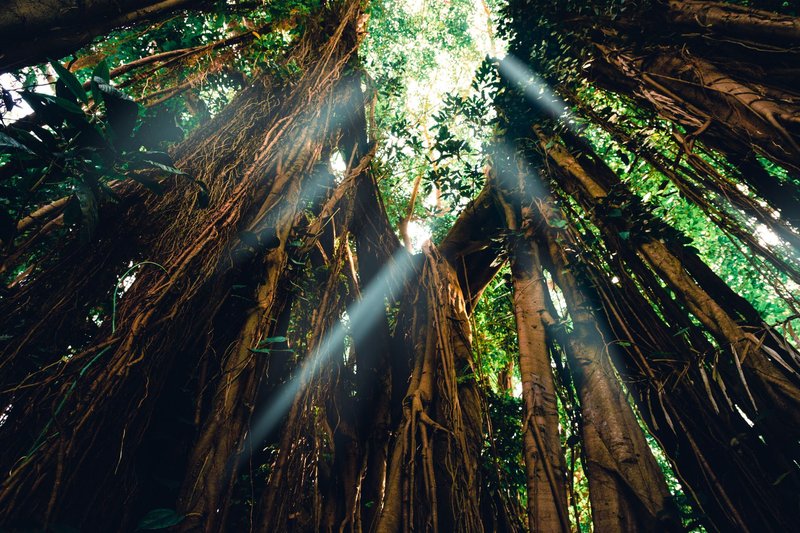
A member of the mallow family (the same family as cotton and hibiscus) and listed in botanical references as endemic to El Salvador. That means it grows nowhere else on Earth. Few people outside botany know its name, and there’s very little consumer writing about it.
Plants in the Hampea genus are known for their fibrous inner bark, which is why “majagua” is a name used for several unrelated fiber trees across Latin America. Check which species a nursery or guide means before you trust the label.
4. Tubella inconspicua
An understated plant with a name that matches it. Tubella inconspicua is a small member of the acanthus family, also treated as a Salvadoran endemic. It isn’t showy, it has no folk name worth repeating, and you won’t see it for sale.
Its value is in what it signals. Endemic species in a heavily cleared country are indicators: where they persist, the habitat still works. Botanists working through the country’s acanths, as in the Phytoneuron work cited above, keep finding that small, overlooked plants carry most of the diversity.
5. Ceiba (Ceiba pentandra)
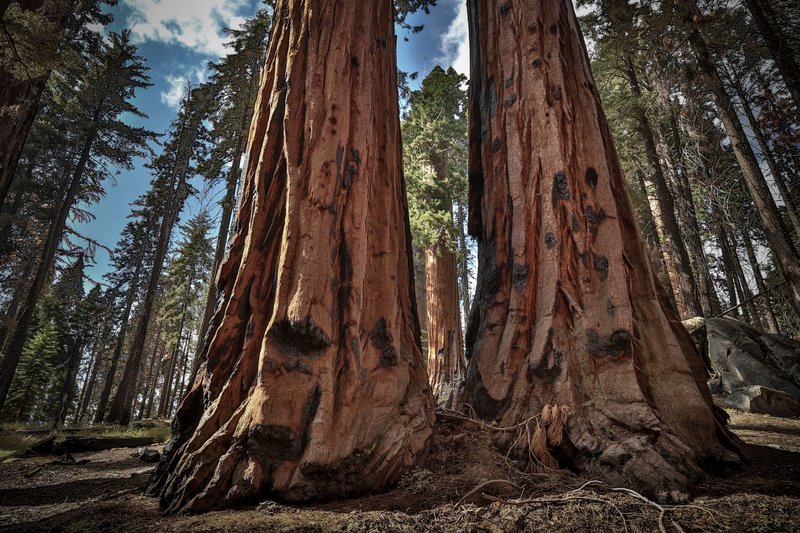
The kapok tree is one of the largest trees in the tropical Americas, with a buttressed trunk and a crown that rises above the canopy. In El Salvador it grows in lowland and mid-elevation forest and as a protected village tree. Its seed pods hold silky fibers once used to stuff pillows and life vests.
Ceibas carry weight in Mesoamerican tradition, tied to the idea of a world tree linking earth and sky. Old specimens in plazas are often left standing when everything around them is rebuilt.
6. Conacaste (Enterolobium cyclocarpum)
A giant of dry-forest country. The conacaste spreads wide rather than tall, making a umbrella-shaped crown that livestock farmers have always valued for shade. The pods curl into tight, ear-like rings, which is why it’s also called the guanacaste or elephant-ear tree.
Cattle eat the pods and spread the seeds. The trees still standing in pastures are often survivors of the original forest, left because the shade was worth more than the lumber.
7. Jocote (Spondias purpurea)
A native fruit tree that turns up in Salvadoran yards. The small fruits, red, yellow or purple depending on the variety, are eaten green with salt and lime, or ripe and sweet. Green jocotes with salt are a street snack.
The tree is hardy enough that cut branches stuck in the ground will root, which is how many Salvadoran fences become living fences.
8. Loroco (Fernaldia pandurata)
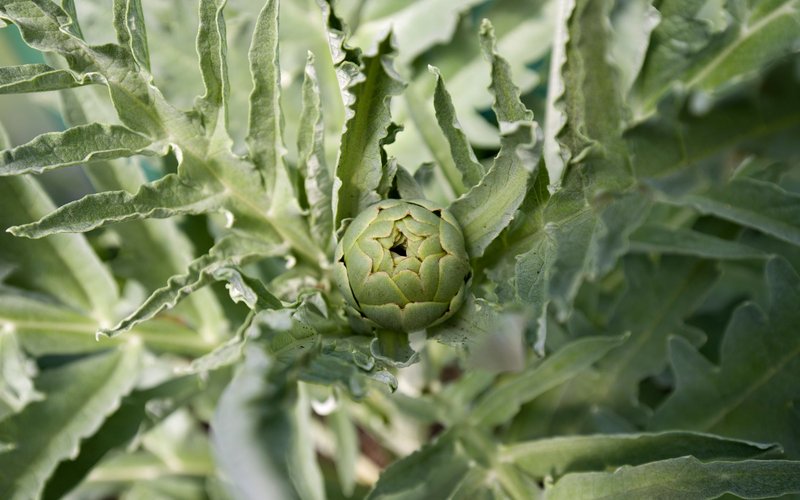
If you’ve eaten a pupusa de loroco, you’ve eaten this plant. The edible part is the flower bud of a climbing vine native to Mesoamerica, with a flavor between green asparagus and something floral. Many Salvadorans call it the signature pupusa filling alongside beans and cheese.
It grows on fences and trellises, and the vine can be grown at home in a warm climate. The buds are picked by hand, which is part of why they cost more than most pupusa fillings.
9. Chipilín (Crotalaria longirostrata)
A leafy plant in the pea family used in soups, tamales and rice dishes across El Salvador and neighboring countries. The leaves are cooked, never raw. It’s a shrubby plant that grows fast in warm, moist conditions and self-seeds readily.
It’s the kind of native plant that sits at the border of wild and cultivated, which is typical for Central American food plants: gathered at first, then tended.
10. Morro (Crescentia alata)
The calabash relative that produces hard, round fruits. The shell of the fruit is dried and cut into bowls and cups, called jícaras or morros, and used for the traditional drink tiste and for craft. The tree has distinctive three-lobed leaves and flowers growing directly from the trunk.
It tolerates dry, poor soils, which explains why it’s common in rural Pacific lowlands.
11. Ojushte (Brosimum alicastrum)
Also called ramón or breadnut. It’s a large forest tree in the fig family, and its seeds can be boiled or roasted and ground into flour. Archaeologists connect it to Maya food systems, and its nutritional value has made it a topic in agroforestry research.
It needs more moisture than the dry-forest species above, so look for it in wetter lowland and mid-elevation woods.
12. Pacific mahogany (Swietenia humilis)
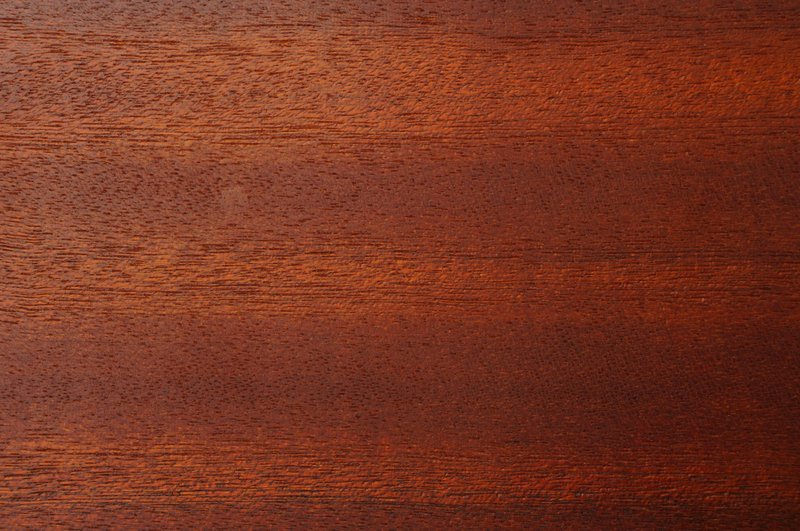
The Pacific coast cousin of the better-known big-leaf mahogany. It’s a smaller tree of dry forest, and its heavily logged status landed it on international trade restrictions through CITES, which lists mahoganies in its appendices. Local names include caoba.
Seeing a mature tree in the wild is increasingly rare. When you do, it’s usually in protected land.
Quick comparison table
| Plant | Latin name | Habitat | Use or note |
|---|---|---|---|
| Maquilishuat | Tabebuia rosea | Dry forest, urban streets | National tree; pink blooms Feb to April |
| Izote | Yucca gigantea | Dry slopes, gardens | National flower; edible blooms; native status debated |
| Majagua | Hampea reynae | Forest | Endemic; fibrous bark genus |
| Tubella inconspicua | Tubella inconspicua | Forest understory | Endemic herb |
| Ceiba | Ceiba pentandra | Lowland to mid-elevation | Cultural world tree; kapok fiber |
| Conacaste | Enterolobium cyclocarpum | Dry forest, pasture | Shade tree; ear-shaped pods |
| Jocote | Spondias purpurea | Yards, dry forest | Fruit; living fences |
| Loroco | Fernaldia pandurata | Fences, gardens | Pupusa filling |
| Chipilín | Crotalaria longirostrata | Gardens, disturbed ground | Cooked leafy green |
| Morro | Crescentia alata | Dry lowlands | Dried fruit shells for cups |
| Ojushte | Brosimum alicastrum | Moist lowland forest | Edible seeds, flour |
| Pacific mahogany | Swietenia humilis | Dry forest | Protected timber tree |
Where to see them
The best single stop is La Laguna Botanical Garden (Jardín Botánico La Laguna) in Antiguo Cuscatlán, near San Salvador. It sits in a volcanic crater, with collections of Salvadoran and tropical species labeled in one place, so it’s the easy way to see the country’s trees without a long drive.
For wild habitat, head to the northern highlands. Montecristo cloud forest, at the point where El Salvador, Guatemala and Honduras meet, holds the best-preserved wet forest. El Imposible National Park in the southwest protects a large block of lowland and mid-elevation forest. Look for maquilishuat in the dry season along roadsides on the Pacific side, when the bare pink-topped trees are hard to miss.
If you want authoritative species data before you go, Kew’s Plants of the World Online lets you search any species above by Latin name and check its recorded range.
Growing native plants at home
Natives are worth planting because they already match the local climate and support local insects and birds. For a longer list to choose from, a guide to 34 Salvadoran flowers, with heights and where each grows is a useful starting point. A few practical notes:
- Maquilishuat: Full sun, well-drained soil, and patience. It sheds leaves in the dry season by design, so don’t assume it’s dying.
- Izote: Very drought tolerant. Plant in full sun and keep the spiky leaves away from paths.
- Loroco: Needs a trellis or fence and warm weather. Water regularly while it establishes.
- Chipilín: Easy from seed. Pinch growing tips to keep it bushy and harvest often.
- Jocote: Root a cutting in the ground at the start of the rains.
- Conacaste and ceiba: Only for large properties. Both get big and fast.
Buy from nurseries that propagate their own plants. Taking wild seedlings, or buying protected species like mahogany with unclear origins, undoes the point of growing natives.