Eurasian steppe plants and animals represent a distinctive ecological community across the vast temperate grasslands of Eurasia. These species are adapted to open landscapes, seasonal temperature extremes, and grazing pressures, producing a mix of drought-tolerant grasses, hardy shrubs, and specialized mammals and birds. From deep-rooted perennial grasses that stabilize soils to migratory herbivores and raptors that patrol the skies, the flora and fauna carry out essential ecological functions like nutrient cycling and seed dispersal. Together they underlie traditional pastoral livelihoods and have shaped human history across a broad continental corridor.
Context
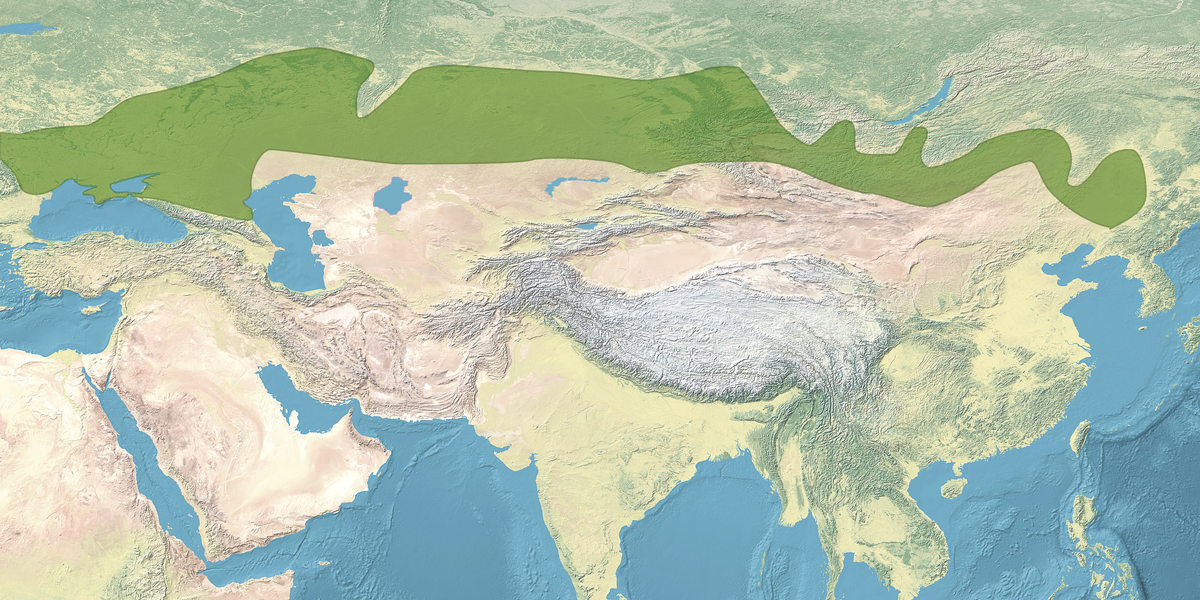
The Eurasian steppe is a vast biome stretching from eastern Europe through the Pontic–Caspian region, across Kazakhstan, and into Mongolia and northern China. Historically it supported nomadic pastoral systems and served as a conduit for cultural and economic exchange along routes that later became part of the Silk Road. Archaeological finds, including evidence from the Botai culture (c. 3,500–3,000 BCE), link early horse domestication and intensive horse use to steppe communities. Ecologically, the steppe hosts grasses such as feather grass and fescues, shrubs, and a range of mammals and birds adapted to open terrain. Today the region is important for grazing, wildlife conservation, and agriculture where fertile chernozem soils occur, while facing pressures from land conversion, infrastructure, and climate variability.
Scope and coverage
This collection of Eurasian Steppe Animals and Plants encompasses the main biological groups and ecological interactions found across temperate grasslands of Eurasia. Coverage focuses on native grasses, forbs, and shrubs; soil types and plant adaptations to drought and fire; large and small herbivores (including wild and reintroduced horses, antelopes, and gazelles); key predators and scavengers; characteristic bird species; and the roles of insects and soil organisms. The material also highlights how wildlife and vegetation intersect with pastoralism, migration routes, and conservation efforts, offering a broad view of species, habitats, and ecological processes rather than exhaustive species lists or single-site studies.
Little-known facts about Eurasian steppe plants and animals:
- The Eurasian Steppe stretches for roughly 8,000 kilometers from eastern Europe through Kazakhstan to Mongolia, forming one of the world’s largest temperate grassland zones.
- Chernozem, or “black earth,” soils common in parts of the steppe are highly fertile, which is why those areas have been intensively converted to cropland.
- Archaeological evidence from the Botai culture (c. 3,500–3,000 BCE) provides some of the earliest indications of horse domestication and use on the steppe.
- Saiga antelope undertake seasonal migrations of several hundred kilometers, and their populations have experienced dramatic fluctuations due to disease outbreaks and hunting.
- Przewalski’s horse, once extinct in the wild, has been reintroduced to portions of the Mongolian steppe through coordinated captive-breeding and release programs.
- Many steppe-specialist birds, such as the sociable lapwing, are now listed as globally threatened, highlighting the region’s conservation importance for migratory species.