Peru doesn’t have one fruit scene. It has three.
The coast, the Andes highlands, and the Amazon basin each produce fruits so different from each other that calling them all “Peruvian” is a bit like calling every European cheese the same thing because it comes from the same continent. The geography is the story. The Andes alone spans sea level to over 6,000 meters, and the eastern slopes spill into one of the most biodiverse rainforests on the planet. The result is a fruit catalog that most of the world has never encountered — and that most “exotic fruits of Peru” articles flatten into a disorganized list.
This guide organizes them the way Peru actually works: by climate zone. You’ll find what each fruit tastes like, when it’s in season, where to buy it in Lima, and how it shows up in traditional cooking. There’s a quick-reference table at the end if you just want the facts.
Table of Contents
- The Coast: Familiar Shapes, Surprising Flavors
- The Andes: The Altitude Fruits
- The Amazon Basin: The Wild Ones
- Where to Buy Peruvian Fruits in Lima
- Where to Buy Peruvian Fruits Outside Peru
- Quick-Reference Table
The Coast: Familiar Shapes, Surprising Flavors {#coast}
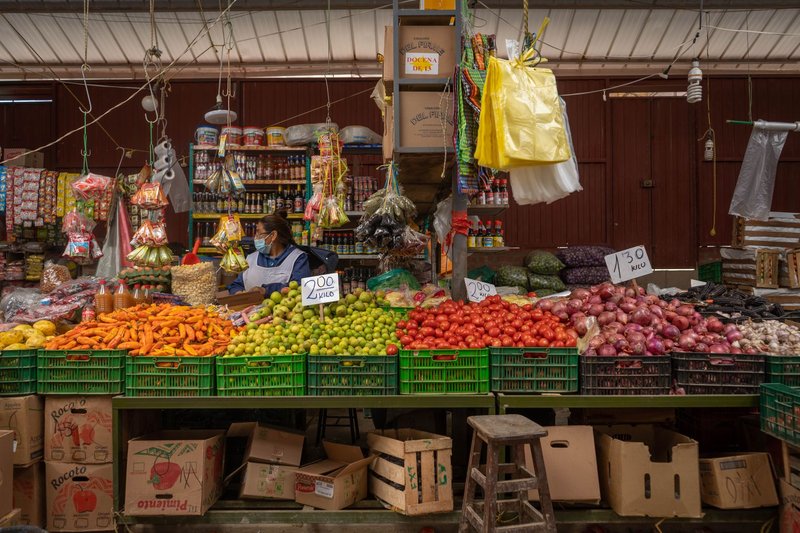
The Peruvian coast runs 2,400 kilometers along the Pacific and is mostly desert — hot, dry, and irrigated in patches. The fruits grown here lean tropical and are the easiest to find for first-time visitors because Lima sits on the coast and most markets stock them year-round.
Chirimoya (Cherimoya)
Chirimoya (Annona cherimola) is native to the Andean valleys between Peru and Ecuador, but it thrives at coastal elevations too. Mark Twain called it “the most delicious fruit known to men” — which is the kind of quote that gets repeated endlessly, but in this case isn’t wrong. The flesh is white, custardy, and tastes like someone blended vanilla, pineapple, and banana, then added a texture that melts instead of chews. The seeds are hard, black, and numerous — spit them out.
Buy it ripe (skin should give slightly under pressure) and eat it the same day. You’ll find it at both Mercado de Surquillo and Mercado Central in Lima from April through October. Outside that window, you’ll mostly see frozen pulp.
Maracuyá (Passion Fruit)
This is the yellow-skinned version of passion fruit, not the purple variety that dominates supermarkets in the US and UK. Peruvian maracuyá is intensely tart — more acidic than the purple type — which is why it shows up almost exclusively as juice (jugo de maracuyá), pisco sour variations, and sauces for ceviche. Nobody sits down and eats a maracuyá like an apple.
Available year-round on the coast, cheapest from January to March.
Granadilla
Granadilla looks like a smoother, orange-colored cousin of passion fruit, and it’s in the same family (Passiflora ligularis). But the flavor is completely different — sweeter, less acidic, almost floral. You crack open the hard shell and eat the gelatinous seed sacs directly. Kids love it. The juice is used in cocktails and agua frescas. Peak season runs April through August.
Tuna (Prickly Pear)
Tuna is the fruit of the opuntia cactus, which grows wild along Peru’s desert coast and in the lower Andean slopes. The flesh ranges from white to deep magenta depending on variety, tastes like a mild watermelon crossed with bubblegum, and the seeds are edible but gritty. Street vendors sell them peeled in coastal cities. The magenta variety bleeds intensely — don’t wear white.
The Andes: The Altitude Fruits {#andes}
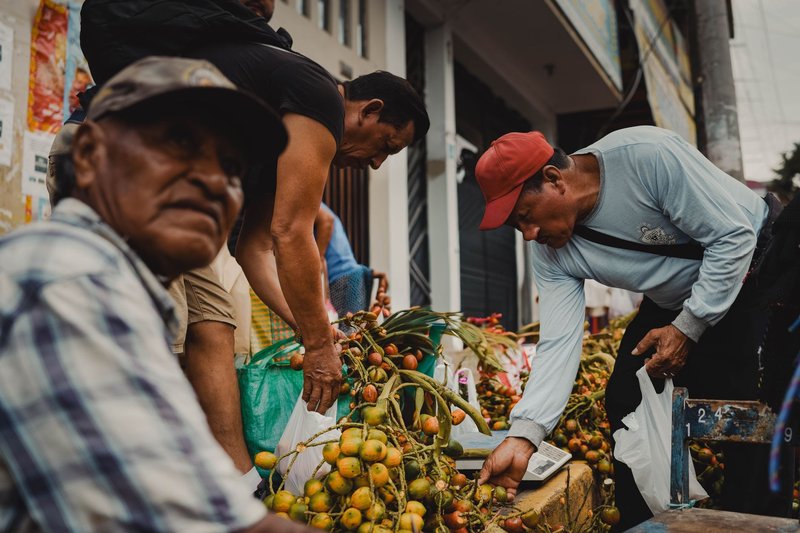
The Andes produce fruits that have adapted to thin air, cold nights, and intense UV radiation. Many of them don’t travel well — they oxidize fast or require conditions that make export impractical. If you’re going to encounter the real Andean fruit diversity, Lima’s markets are your best shot without leaving the capital.
Lúcuma
Lúcuma (Pouteria lucuma) is the flagship Peruvian fruit. It doesn’t taste like anything you’ve had before: dry, starchy, maple-adjacent, with notes of sweet potato and a faint butterscotch finish. The texture is too dry to eat raw — it almost chokes you. That’s why you’ll almost never see it served fresh. Instead, it’s blended into ice cream, cakes, and smoothies, where it adds a rich, caramel-like depth that sugar alone can’t replicate.
Peruvian ice cream shops treat lúcuma as their identity flavor the way Italy treats pistachio. If you see “helado de lúcuma” on a menu, order it. Fresh lúcuma is available April through July at Mercado de Surquillo. Frozen pulp and powder are year-round.
Pepino Dulce (Sweet Pepino)
Despite the name (pepino = cucumber in Spanish), this is a fruit, not a vegetable. Native to the Andean valleys of Peru and Bolivia, pepino dulce (Solanum muricatum) looks like a small, cream-colored melon with purple streaks and tastes like a mild honeydew with a faint vanilla note. The texture is crisp near the skin and softer at the center. It’s eaten fresh, often with a squeeze of lime. Season runs roughly June through September.
Aguaymanto (Cape Gooseberry / Goldenberry)
Aguaymanto (Physalis peruviana) is probably the most globally recognized Andean fruit right now, sold as “goldenberry” in health food stores across North America and Europe. In Peru, it grows at 2,000–3,800 meters altitude and has been cultivated there for centuries before the superfood marketing caught up. The flavor is tart and bright — a bit like a tomatillo crossed with a cherry tomato, with more sweetness. It’s used in jams, salsas, chicha de aguaymanto, and eaten fresh straight from the papery husk.
Research published in Food Chemistry has documented high levels of polyphenols and antioxidants in aguaymanto, which is part of why it’s been absorbed into the international health food market so quickly. Peru is the world’s largest exporter.
Peak season: March through May in the highlands, though frozen pulp is available year-round.
Tumbo (Banana Passion Fruit)
Tumbo (Passiflora tripartita) grows at Andean elevations between 1,500 and 3,500 meters — altitudes that would kill most passion fruit relatives. The fruit is elongated (hence “banana passion fruit”), bright yellow-orange, and contains a tart, aromatic pulp used almost exclusively for juice and desserts. It has more pectin than maracuyá, which makes it useful for jams and marmalades. Very rarely exported; find it at highland markets in Cusco, Arequipa, or Lima’s Mercado Central from June through September.
Pacay (Ice Cream Bean)
Pacay (Inga feuilleei) is a pod, not a round fruit — a long, bumpy green pod that can reach 60–80 cm. Inside, each seed is surrounded by a layer of white, cotton-soft flesh that tastes exactly like vanilla ice cream. That’s not an approximation. The sweetness and fragrance are genuinely startling. Kids eat it by pulling the white fluff off the seeds. It grows on the eastern Andean slopes and in the Amazon edges, found at markets mainly in rainy season (November through March).
Capulí Cherry
Capulí (Prunus serotina subsp. capuli) is a small, dark cherry native to the high Andean valleys — related to black cherry but smaller, tangier, and grown at elevations above 2,500 meters. It’s eaten fresh, fermented into chicha, and used in preserves. You’ll find it at highland markets and occasionally at Lima’s Mercado de Surquillo from October through January.
The Amazon Basin: The Wild Ones {#amazon}
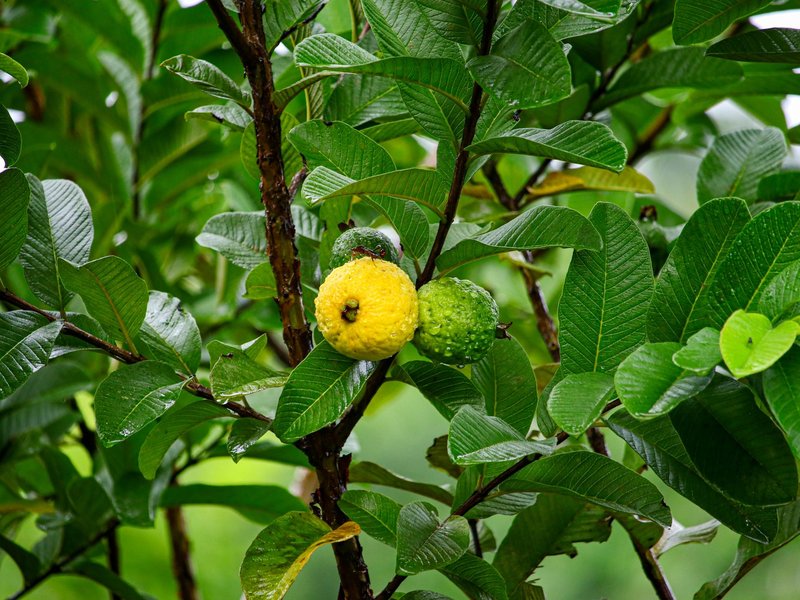
The Peruvian Amazon covers roughly 60% of the country’s territory. The fruit diversity here is extreme — estimates from the Amazon Conservation Association suggest hundreds of edible species, most of which never leave the region. What reaches Lima is a fraction. What reaches international markets is a fraction of that.
Camu Camu
Camu camu (Myrciaria dubia) is a small, cherry-like fruit that grows on shrubs along Amazonian riverbanks, flooding regularly. The vitamin C content is extraordinary — gram for gram, camu camu contains roughly 50 times the vitamin C of oranges. That statistic has been published in nutritional databases maintained by institutions like the USDA and confirmed repeatedly in nutritional analyses. The flavor is intensely sour, far too sharp to eat fresh in any quantity. In Peru, it’s consumed as juice (diluted heavily), blended into smoothies, or sold as freeze-dried powder. The powder form travels well and is what you’ll find in international health food stores.
In Lima, fresh camu camu juice is occasionally found at specialty juice bars. Frozen pulp appears at Mercado Central sporadically. Powder is increasingly available at supermarkets like Wong and Plaza Vea.
Cocona
Cocona (Solanum sessiliflorum) looks like an orange tomato and grows in the Amazonian lowlands. The flavor is aggressively tart — sour enough that it’s almost never eaten raw. It’s used in traditional Amazonian cooking as a souring agent for stews and fish dishes, and it makes one of the best hot salsas in the region (salsa de cocona, with chili and coriander, is a standard condiment in jungle restaurants). Season runs roughly May through October. Rare in Lima; look for it at Mercado Central or specialty jungle-produce vendors.
Copoazú
Copoazú (Theobroma grandiflorum) is a close relative of cacao — same genus, similar-looking pod. The white pulp inside is used to make a white chocolate-like product called “cupulate” that some Amazonian communities have been developing as an alternative crop. The pulp itself is tart and creamy, used for juice and ice cream in the Amazon region. Hard to find in Lima; appears occasionally at Mercado Central and some specialty juice bars near Miraflores.
Guanábana (Soursop)
Guanábana (Annona muricata) is familiar across Latin America and parts of Asia, but Peru’s Amazon varieties are worth noting for their size — fruit often exceeds 4 kg. The white flesh is fibrous, sweet, and tart at the same time, with a fragrance that fills a room when cut open. In Peru it’s drunk as juice, blended into ice cream, and used in jugo de guanábana that street vendors sell from carts. Don’t eat the seeds or the skin. Season peaks from December through February.
Arazá
Arazá (Eugenia stipitata) is a small, yellow, golf-ball-sized fruit from the Amazon that’s related to guava. The flavor is extreme — acidic, aromatic, intensely tropical — and the smell when ripe is almost fermented. It’s too sour to eat fresh; instead it’s used for jams, liqueurs, and juices. Almost nonexistent outside the Amazon and a few Lima markets; considered a regional specialty. Season: November through March.
Sacha Inchi (not technically a fruit, but it is)
Technically a seed rather than a traditional fruit, sacha inchi (Plukenetia volubilis) grows in star-shaped pods in the Amazon and has become a significant export crop. The seeds are pressed for oil (used extensively in Peruvian fine dining) or eaten roasted, tasting like a cross between a walnut and a peanut. High in omega-3 fatty acids. You can find sacha inchi in its roasted form at nearly every Lima supermarket now, and it’s exported widely under the “sacha inchi” label.
Ungurahui (Patawa Palm)
Ungurahui (Oenocarpus bataua) is a palm fruit from the Peruvian Amazon with a dark purple skin and an oily, avocado-like flesh. The extracted oil is nutritionally similar to olive oil — a comparison that’s been studied and noted in botanical literature. The pulp is also used to make a fermented drink called chapo. Found only in deep Amazonian markets; not common in Lima.
Where to Buy Peruvian Fruits in Lima {#lima-markets}
Lima is the clearinghouse for the whole country. Even fruits from the Amazon show up here, which is remarkable given the logistics.
Mercado de Surquillo (Av. Paseo de la República, Miraflores border) is the market that food writers always name-check for good reason. It’s organized, relatively visitor-friendly, and stocks a wide range of Andean and coastal fruits. Vendors know their products and can tell you what’s ripe. This is where you’ll find chirimoya, lúcuma, aguaymanto, pepino dulce, and seasonal Andean varieties.
Mercado Central de Lima (Jirón Ayacucho, Cercado de Lima) is larger, less polished, and has deeper variety in Amazonian produce. If you’re looking for cocona, copoazú, or fresh camu camu juice, this is where to look. Bring small bills and be prepared to navigate.
Supermarkets (Wong, Plaza Vea, Vivanda) stock frozen pulps for most commercial varieties — lúcuma, maracuyá, guanábana, camu camu — year-round. Convenient but expensive compared to markets.
Where to Buy Peruvian Fruits Outside Peru {#outside-peru}
Most fresh Peruvian fruits don’t survive international shipping. The ones that have crossed over into export markets do so as frozen pulp, powder, or dried form.
Aguaymanto / Goldenberry: Widely available as dried or freeze-dried berries at Whole Foods, Trader Joe’s, and online retailers like Amazon and Thrive Market. Look for brands that source from Peru specifically.
Camu Camu powder: Sold at health food stores globally under multiple brand names. Effective in smoothies; the vitamin C degrades significantly above 40°C, so don’t cook with it.
Lúcuma powder: Found at Whole Foods and Latin grocery stores in the US and UK, often labeled as a natural sweetener or superfood. Works in smoothies, baking, and ice cream.
Sacha Inchi seeds: Available at specialty snack retailers and Amazon.
Chirimoya: Occasionally imported fresh to specialty Latin grocery stores in the US (particularly in Florida, California, and New York) during peak Peruvian season. California also grows its own variety, so “cherimoya” in US grocery stores may be domestic.
Frozen pulps: Latin grocery stores in major cities often carry frozen maracuyá, guanábana, and lúcuma pulps from Peruvian brands like Camposol or D’Onofrio.
Quick-Reference Table {#table}
| Fruit | Region | Best Form | Peak Season | Lima Market |
|---|---|---|---|---|
| Chirimoya | Coast / Andes foothills | Fresh | Apr–Oct | Mercado de Surquillo |
| Maracuyá | Coast | Juice | Year-round (cheapest Jan–Mar) | Both |
| Granadilla | Coast / Andes | Fresh | Apr–Aug | Both |
| Tuna | Coast | Fresh (peeled) | Year-round | Street vendors |
| Lúcuma | Andes | Ice cream, powder | Apr–Jul (fresh) | Mercado de Surquillo |
| Pepino Dulce | Andes | Fresh | Jun–Sep | Mercado de Surquillo |
| Aguaymanto | Andes | Fresh, jam, powder | Mar–May | Both |
| Tumbo | Andes | Juice | Jun–Sep | Mercado Central |
| Pacay | Andes / Amazon edge | Fresh | Nov–Mar | Mercado Central |
| Capulí Cherry | Andes | Fresh, chicha | Oct–Jan | Mercado de Surquillo |
| Camu Camu | Amazon | Juice, powder | Year-round (powder) | Mercado Central |
| Cocona | Amazon | Salsa, juice | May–Oct | Mercado Central |
| Copoazú | Amazon | Juice, ice cream | Sporadic | Mercado Central |
| Guanábana | Amazon / coast | Juice, ice cream | Dec–Feb | Both |
| Arazá | Amazon | Jam, juice | Nov–Mar | Mercado Central (rare) |
| Sacha Inchi | Amazon | Roasted seeds, oil | Year-round | Supermarkets |
| Ungurahui | Amazon | Oil, fermented drink | Sporadic | Amazon markets only |
The best time to visit Lima for fruit diversity is the Peruvian summer (December through March), when Amazonian species peak and the coast is at full production. But honestly, any month produces something worth eating. The Andean fruits have a different calendar, and frozen pulps bridge whatever gap you find.
If you’re not traveling to Peru anytime soon, the powder and dried forms of camu camu, lúcuma, and aguaymanto are legitimate — not just marketing. The flavors aren’t the same as fresh, but the nutritional profile travels well, and the taste of lúcuma in a smoothie is genuinely distinct from anything you’d get by substituting another fruit.