Timor-Leste covers a little under 15,000 square kilometers, sits inside the Wallacea biodiversity hotspot, and has never had a comprehensive, species-by-species accounting of what’s eating it from the inside. Most of what threatens this island’s native plants and animals isn’t a bulldozer or a chainsaw. It’s a weed that arrived around 1975 and never left, a pig that went feral generations ago, and a cat that hunts whether or not it’s hungry.
Islands lose the evolutionary arms race fast. Native species here evolved without ground-dwelling predators that hunt in packs, without a fast-growing thicket-forming shrub, without a toad that poisons anything that bites it. Drop those things into the landscape and the locals have no playbook. That’s the whole story of invasive species in East Timor, and it’s scattered across gated datasheets, policy dashboards, and the occasional academic paper. Here it is in one place.
Table of Contents
- Why islands are sitting ducks
- Quick reference table
- Siam weed (Chromolaena odorata)
- Feral pigs
- Free-roaming dogs
- Cats
- Rats
- Invasive toads
- What’s being done about it
Why islands are sitting ducks
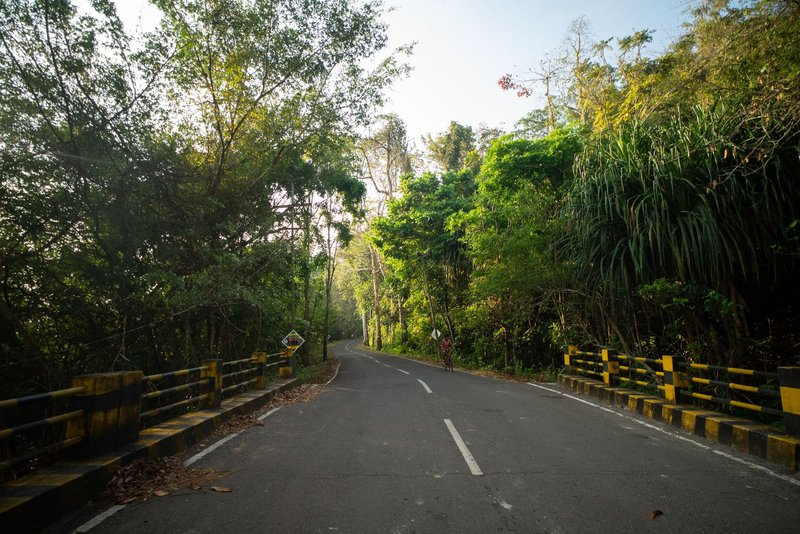
An island is a closed room. Species evolve in isolation, often losing the defenses they don’t need — flightlessness, fearlessness, slow reproduction, naivety toward novel predators. The trade-off works fine until something new walks through the door.
Timor-Leste makes the problem worse in three specific ways. First, it shares a land border and a busy sea trade with Indonesia, which means a constant pipeline for new arrivals. Second, decades of conflict and a young, resource-stretched government meant biosecurity infrastructure started from near zero after independence in 2002. Third, much of the country’s forest is already fragmented and fire-prone, which is exactly the kind of disturbed ground that invaders colonize first.
The result is an ecosystem where the threats compound. A weed that fuels dry-season fires clears ground for more of the same weed. Feral pigs churn soil that the weed then seeds into. The IUCN’s Invasive Species Specialist Group ranks several of the species below among the world’s worst precisely because they create these feedback loops.
Quick reference table
| Species | Origin | Main impact | Established |
|---|---|---|---|
| Siam weed (Chromolaena odorata) | Central/South America | Smothers regrowth, fuels fires | ~1975 |
| Feral pigs | Domestic stock gone wild | Soil damage, crop loss, seed predation | Long-standing |
| Free-roaming dogs | Domestic | Hunt wildlife, spread disease | Long-standing |
| Cats | Domestic | Predation on birds, reptiles, small mammals | Long-standing |
| Rats (Rattus spp.) | Stowaways via trade | Eat eggs, seeds, seedlings | Long-standing |
| Invasive toad (Ingerophrynus biporcatus) | Indonesian archipelago | Poisons native predators | Spreading on Roti |
Siam weed (Chromolaena odorata)
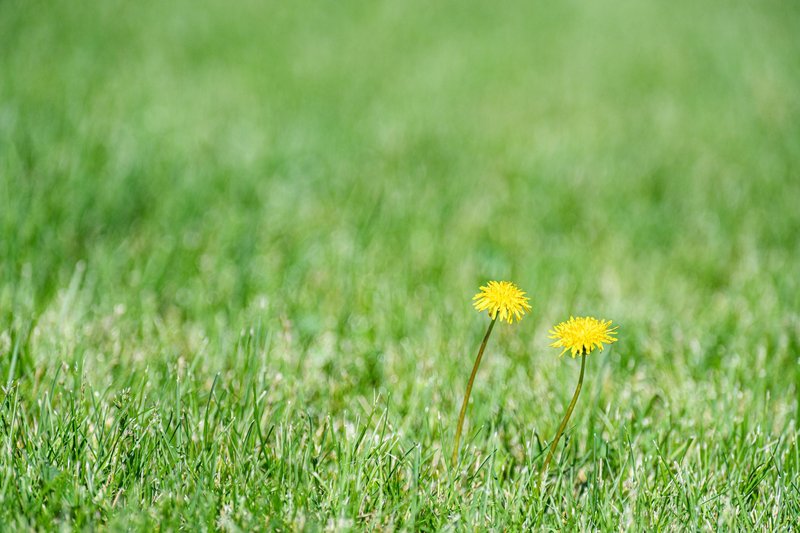
If you only learn one invasive species in Timor-Leste, make it this one. Chromolaena odorata — Siam weed, Christmas bush, triffid weed depending on who you ask — is on the IUCN list of 100 of the world’s worst invasive species, and it’s been established here since around 1975.
It’s a sprawling shrub native to the Americas. In its home range, natural enemies keep it in check. Here, nothing does. It grows fast, scrambles over other vegetation, and forms dense thickets up to several meters tall that block sunlight from everything beneath. Cleared land, roadsides, abandoned gardens, burned forest edges — all of it gets colonized within a season or two.
The fire angle is what makes it genuinely dangerous rather than just ugly. Siam weed dies back and dries out in the dry season, leaving a mass of flammable biomass right where you don’t want it. A fire runs through, kills the native seedlings that were slowly trying to come back, and clears yet more ground for the weed to reseed. The forest doesn’t regenerate; it homogenizes into a Siam weed monoculture. For a country trying to hold onto fragmented dry-forest habitat, that’s a slow-motion conversion of native woodland into something with almost no wildlife value.
It hits agriculture too. The thickets choke pasture and young plantations, and the leaves contain compounds toxic to livestock if eaten in quantity. For subsistence farmers, that’s not an abstract ecological loss — it’s a field that stopped working.
Feral pigs
Pigs in Timor-Leste occupy a strange dual role: prized livestock and cultural cornerstone on one hand, ecological wrecking ball on the other. The feral and free-ranging populations are the problem.
A rooting pig is essentially a tiller with no off switch. They churn through leaf litter and topsoil hunting for roots, tubers, invertebrates, and eggs, leaving the ground disturbed and bare. That disturbance is an open invitation to — you guessed it — Siam weed and other opportunistic invaders. Pigs and weeds tag-team the same patch of forest.
They also eat the things that were supposed to grow into next year’s forest: seeds and seedlings of native trees, plus the eggs and young of ground-nesting birds and reptiles. And they raid crops, which puts them squarely in conflict with the rural households who can least afford the loss. Because pigs are economically and culturally valuable, control is socially complicated in a way that, say, rat control isn’t. You can’t just call for eradication of an animal half the village is raising.
Free-roaming dogs
Dogs are everywhere in Timorese villages, and most aren’t kept on leads or behind fences. Free-roaming and feral dogs hunt — singly and in loose packs — and on an island with naive native fauna, they’re efficient at it. Ground-dwelling birds, reptiles, and small mammals are the usual victims.
The second-order problem is disease. Dense, unvaccinated dog populations are reservoirs and vectors for pathogens that can spill into wildlife and people alike. Rabies has been a persistent regional concern across the wider Indonesian archipelago, and free-roaming dog populations are exactly the conditions under which it spreads. Managing dogs is as much a public-health question as a conservation one, which is part of why it gets attention that the quieter invaders don’t.
Cats
The cat problem is the same one playing out on islands worldwide, and the math is brutal. Cats hunt on instinct, not hunger, so a well-fed village cat still kills. Multiply that by a free-roaming population across a country full of small birds, lizards, and rodents with no co-evolved defense against an ambush predator, and you get sustained, year-round pressure on exactly the small vertebrates that are hardest to monitor and easiest to lose.
Cats are also nearly invisible as a threat. There’s no thicket to point at, no churned-up field. The decline shows up only as an absence — the bird you used to hear, the gecko you used to see — which is precisely why feral cats are among the most underestimated drivers of island extinctions globally. On Timor, the impact is real even if the data on it is thin.
Rats
Rats arrive the way they always do: as stowaways in cargo, on boats, in trade. Several Rattus species are now thoroughly established across Timor-Leste, and like everywhere else they’ve colonized, they’re generalists that eat whatever’s available.
For native wildlife, that “whatever” includes the eggs and chicks of birds, reptile eggs, seeds, and seedlings. Seed predation in particular is an underrated way to hollow out a forest — kill enough seeds and the canopy simply stops replacing itself, even if no adult tree is ever cut. Rats also compete directly with native small mammals for food and shelter, and they carry diseases. They’re the least glamorous invader on this list and quite possibly the most pervasive.
Invasive toads
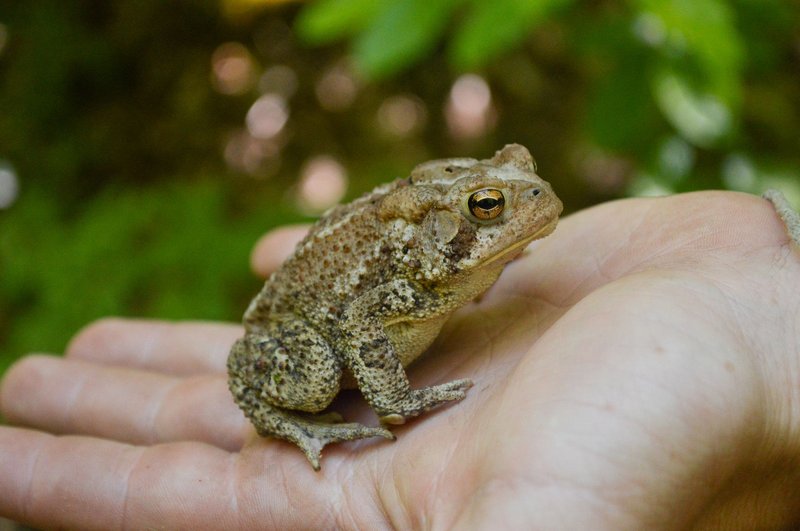
This one is a watch-this-space entry. Ingerophrynus biporcatus, an Asian toad, has been spreading on Roti, an Indonesian island just off Timor’s western tip. It hasn’t established the kind of destructive foothold that the cane toad did in Australia, but the warning signs rhyme.
The danger with invasive toads is chemical. They carry toxins in their skin and glands, so any native predator — a snake, a monitor lizard, a bird — that tries to eat one can be poisoned and die. Many of those predators are formidable in their own right, and a tour through the most dangerous animals in East Timor shows just how much venomous and reptilian firepower the island’s native fauna brings to the table — firepower that counts for nothing against a toxin it has never met. On islands where predators have never encountered a toxic amphibian, there’s no instinct to avoid them, and naive predator populations can crash. With Roti so close and movement between islands so routine, the proximity to Timor-Leste’s own herpetofauna is the reason ecologists are paying attention now rather than after the fact. Research published in Scientific Reports has documented how poorly studied this region’s reptile and amphibian fauna remains, which makes a novel toxic invader especially hard to plan around.
What’s being done about it
Honestly, less than the problem warrants — and that’s the most important takeaway, not a footnote.
Timor-Leste is a young nation with a small budget and enormous competing priorities, and biosecurity rarely wins the funding fight against health, food security, and infrastructure. There’s no national eradication campaign for Siam weed, no coordinated feral-cat program, no island-wide rat control. Most of what exists is local, project-based, and dependent on NGO or academic involvement.
The realistic levers are the boring, effective ones. Border and port biosecurity to slow new arrivals, since prevention is orders of magnitude cheaper than removal. Targeted control of Siam weed along forest edges and burned ground, paired with fire management, because the two problems are the same problem. Community programs around dog and pig management that work with cultural realities instead of against them. And basic survey work — you can’t manage what you haven’t counted, and the counting here is badly incomplete.
The opportunity is that early action is cheap. Timor-Leste hasn’t yet hit the worst-case scenario that places like Guam or Hawaii reached. The window to keep it that way is open, but it narrows every dry season the weed reseeds and every generation the pigs and cats keep hunting. The first step is simply naming the threats clearly — which, until now, almost nobody had bothered to do in one place.