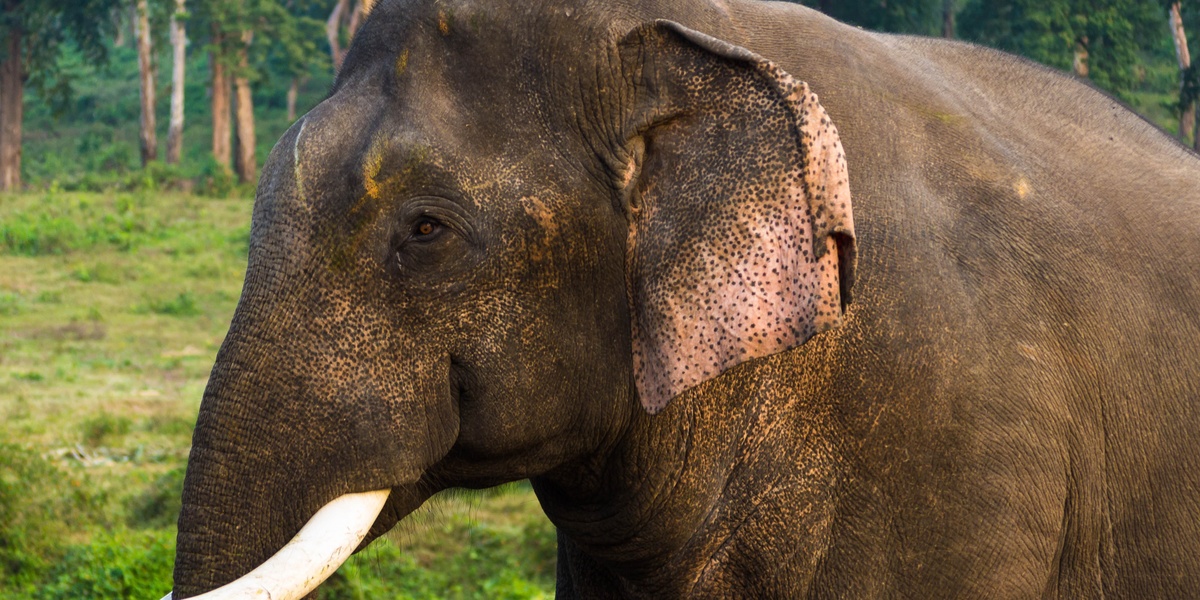
Cambodia’s mix of lowland rivers, seasonal wetlands and upland forests supports a broad set of mammals, from large herbivores to small insectivores and bats. Protected areas and remnant forest blocks still hold surprises for researchers and nature-watchers alike.
There are 38 Mammals of Cambodia, ranging from Asian elephant to Wrinkle-lipped free-tailed bat. For each species we list Scientific name,IUCN status,Range / habitat so you can quickly see taxonomy, conservation concern and where they live — details you’ll find below.
Which Cambodian mammals are most at risk?
Large, wide-ranging species and specialized forest dwellers tend to be most vulnerable because of habitat loss and hunting pressure; for example, the Asian elephant is among those facing significant threats. Use the IUCN status column to spot species listed as Endangered or Critically Endangered and prioritize those for conservation attention or careful observation.
How can I use this list for spotting or conservation?
Start with the Range / habitat column to narrow search areas and seasons, check IUCN status to understand legal protections and urgency, and note scientific names for accurate reporting. When observing, go with local guides, follow protected-area rules, and submit verified sightings to conservation groups or citizen-science platforms to help update knowledge.
Mammals of Cambodia
| Common name | Scientific name | IUCN status | Range / habitat |
|---|---|---|---|
| Asian elephant | Elephas maximus | EN | Eastern plains, Cardamom foothills; deciduous and evergreen forest |
| Banteng | Bos javanicus | EN | Grasslands and mixed forest in Cardamoms, eastern plains |
| Gaur | Bos gaurus | VU | Remote evergreen hills, Cardamoms and eastern Cambodia |
| Sambar deer | Rusa unicolor | VU | Lowland and hill forests across Cambodia |
| Wild boar | Sus scrofa | LC | Widespread in forests, agricultural edges, mangroves |
| Red (Indian) muntjac | Muntiacus muntjak | LC | Woodland, scrub and secondary forest nationwide |
| Long-tailed macaque | Macaca fascicularis | LC | Rivers, mangroves, lowland forest, Tonle Sap region |
| Stump-tailed macaque | Macaca arctoides | VU | Lowland and hill forests in eastern and southern Cambodia |
| Pygmy slow loris | Nycticebus pygmaeus | EN | Lowland and montane forests, eastern Cambodia |
| Sun bear | Helarctos malayanus | VU | Lowland evergreen forest, Cardamoms and eastern plains |
| Binturong | Arctictis binturong | VU | Lowland and hill forests, canopy of protected areas |
| Asian palm civet | Paradoxurus hermaphroditus | LC | Widespread forests, plantations and gardens |
| Masked palm civet | Paguma larvata | LC | Forests and disturbed habitats across Cambodia |
| Large Indian civet | Viverra zibetha | LC | Lowland forests and scrublands nationwide |
| Small-toothed palm civet | Arctogalidia trivirgata | LC | Lowland and hill forest canopy, protected areas |
| Leopard cat | Prionailurus bengalensis | LC | Forests, scrub and agricultural mosaics nationwide |
| Fishing cat | Prionailurus viverrinus | VU | Wetlands, flooded forests, Tonle Sap floodplain |
| Asian golden cat | Catopuma temminckii | NT | Dense forest in Cardamoms, eastern plains |
| Clouded leopard | Neofelis nebulosa | VU | Remote mountain and hill forests, Cardamoms |
| Dhole | Cuon alpinus | EN | Forest and mixed habitats; rare, Cardamoms possible strongholds |
| Smooth-coated otter | Lutrogale perspicillata | VU | Rivers, larger wetlands and Tonle Sap system |
| Asian small-clawed otter | Aonyx cinereus | VU | Wetlands, rivers, flooded forests, Tonle Sap |
| Irrawaddy dolphin | Orcaella brevirostris | EN | Mekong River (Kratie–Stung Treng), Tonle Sap confluence |
| Large flying fox | Pteropus vampyrus | VU | Lowland forests, mangroves and roosts near rivers |
| Lesser short-nosed fruit bat | Cynopterus brachyotis | LC | Forests, plantations and gardens across Cambodia |
| Red giant flying squirrel | Petaurista petaurista | LC | Mature forest canopy in foothills and low mountains |
| Giant squirrel | Ratufa bicolor | NT | Lowland and hill forests, fragmented but locally present |
| Malayan porcupine | Hystrix brachyura | LC | Woodlands, scrub and agricultural areas nationwide |
| Greater bamboo rat | Rhizomys sumatrensis | LC | Bamboo and secondary forest, lowland areas |
| Common treeshrew | Tupaia glis | LC | Forest edge, secondary woodland and gardens |
| Small Indian mongoose | Herpestes auropunctatus | LC | Open country, scrub and agricultural areas |
| Banded civet | Hemigalus derbyanus | LC | Lowland forest floor, protected areas of southeast Cambodia |
| Mainland serow | Capricornis sumatraensis | VU | Steep, rocky hills and forested mountains (Cardamoms) |
| Sunda pangolin | Manis javanica | CR | Lowland forest and degraded habitat; heavily hunted |
| Lesser false vampire bat | Megaderma spasma | LC | Caves and forested areas; insectivorous hunter |
| Wrinkle-lipped free-tailed bat | Chaerephon plicatus | LC | Large colonies in caves, buildings and karst areas |
| Greater false vampire bat | Megaderma lyra | LC | Forest and cave habitats across Cambodia |
| Sunda pangolin entry duplicated? OMITTED per rules | N/A | N/A | N/A |
Images and Descriptions
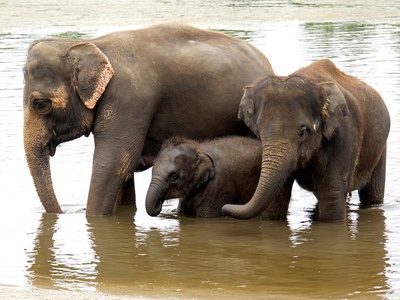
Asian elephant
Massive forest elephant, 2–4 tonnes, unmistakable trunks and tusks. Surviving in eastern and southwestern Cambodia but fragmented by poaching and development; best seen in protected areas like Mondulkiri and Cardamom landscapes.
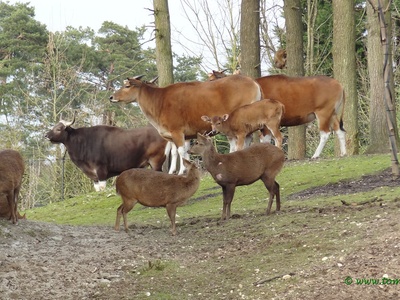
Banteng
Wild cattle with a muscular build and stocky horns; males dark, females reddish. Critically reduced by hunting and habitat loss but still in Cardamom Mountains and eastern Cambodia; shy and often in small herds.
Gaur
Asia’s largest wild cattle, heavy-bodied and powerful. Gaur are rare but persist in protected highlands; vulnerable to hunting and habitat fragmentation. Sightings are uncommon and usually from camera traps.

Sambar deer
Large, shaggy deer up to 200 kg with impressive antlers on males. Sambar are browsers of dense forest and remain patchily distributed; hunted heavily but still encountered in national parks and remote reserves.
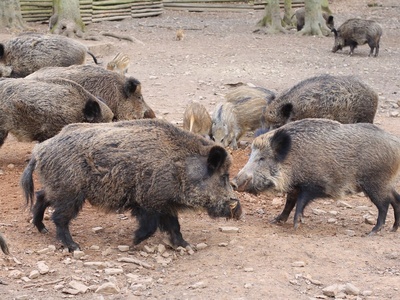
Wild boar
Stout omnivore with distinctive tusks and bristly coat. Very adaptable and common throughout Cambodia; often seen at forest edges and near villages, important prey for large predators.
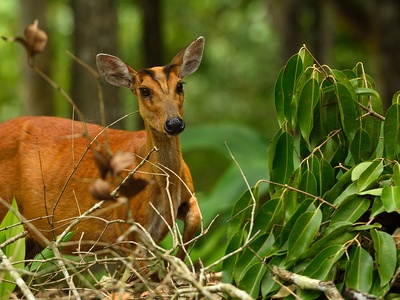
Red (Indian) muntjac
Small, barking deer often heard before seen. Solitary and reddish-brown, with short antlers on males. Common but secretive; frequent in woodlands, secondary growth and near waterholes.
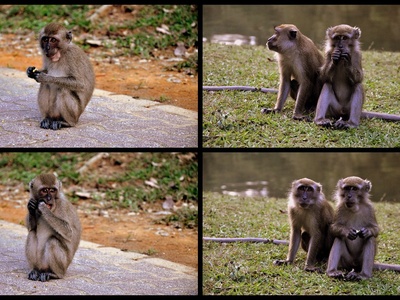
Long-tailed macaque
Social, opportunistic monkey often seen near water and human settlements. Agile, with long tails and cheek pouches; common at riverine sites and temple areas around Cambodia.
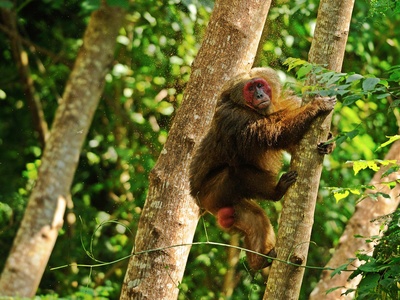
Stump-tailed macaque
Stocky macaque with short tail and flat face; prefers dense forest and is shy of humans. Populations have declined from hunting and habitat loss but survive in remote forest blocks.
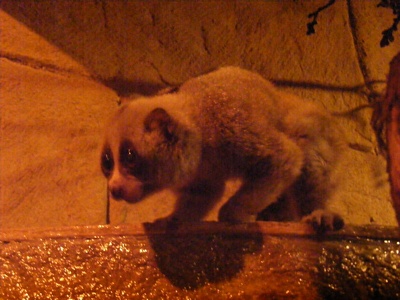
Pygmy slow loris
Small nocturnal primate with large eyes and slow, deliberate movements. Rare and threatened by pet trade and deforestation; best detected by night surveys in intact forest.
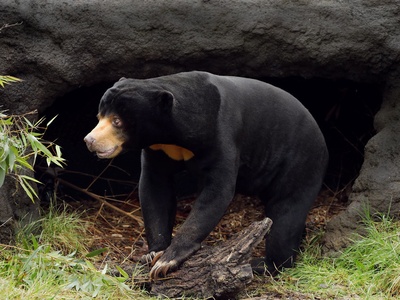
Sun bear
Smallest bear species with a distinctive chest patch and long tongue. Arboreal and shy; vulnerable to hunting and habitat loss, persisting in remote forested areas and seen mainly via camera traps.
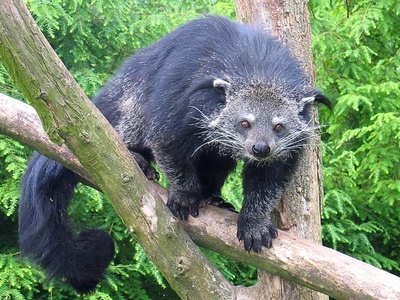
Binturong
Large, arboreal carnivore with prehensile tail and popcorn-like scent. Nocturnal and elusive; threatened by logging and hunting, occasional sightings occur in dense forest canopies.
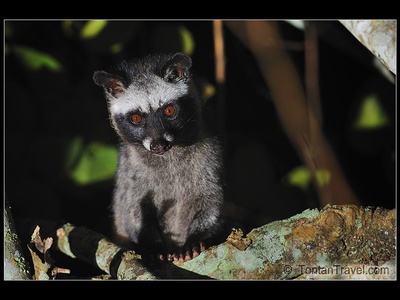
Asian palm civet
Medium-sized, adaptable nocturnal carnivore feeding on fruits and small animals. Common and often tolerant of human-modified habitats; known for scattering seeds and frequent in disturbed forests.
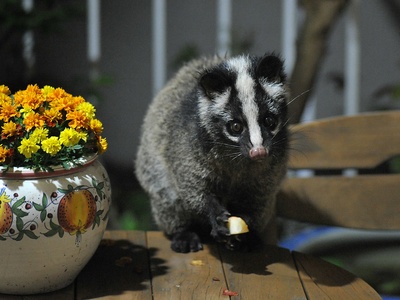
Masked palm civet
Striped face mask and long body; nocturnal and omnivorous. Occurs in a variety of habitats from forest to agricultural areas; secretive but widespread.
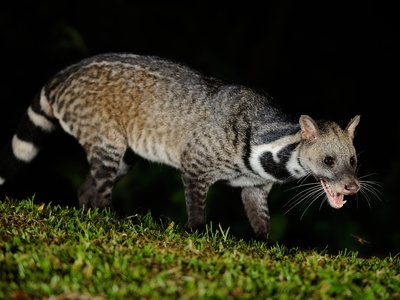
Large Indian civet
Long-bodied nocturnal carnivore with bold markings and scent glands. Scans for small mammals and fruits; survives in fragmented landscapes though uncommon in heavily hunted regions.
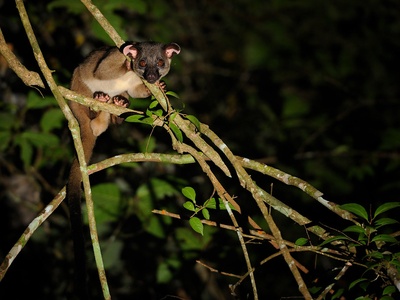
Small-toothed palm civet
Sleek, nocturnal civet with three dark stripes and arboreal habits. Eats fruit and animals; elusive but distributed through intact forest blocks.
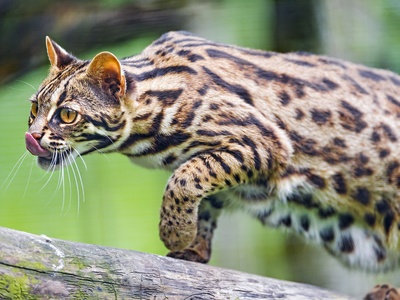
Leopard cat
Small wild cat resembling a tabby with spots; excellent climber and nocturnal hunter. Commoner than big cats and often recorded near farms and wetlands.
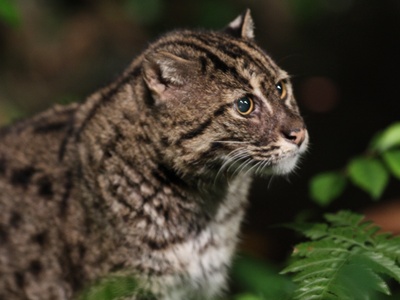
Fishing cat
Stocky, water-adapted cat that dives for fish; partially webbed feet. Threatened by wetland loss and persecution; best chance to see near wetlands and lake margins.
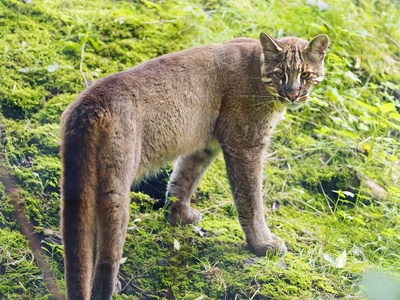
Asian golden cat
Medium-sized forest cat with variable coat colours; secretive and primarily nocturnal. Occurs in remote forest interiors and detected mainly by camera traps.
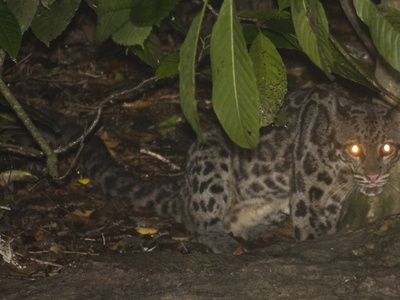
Clouded leopard
Striking large-spotted cat adapted to canopy life with long canines. Rare and elusive; sightings are infrequent, mostly from remote camera-trap records.
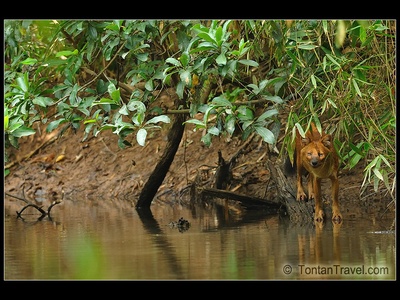
Dhole
Social wild dog with reddish coat and high-pitched calls. Packs have declined drastically; occasional records suggest remnant populations in large protected forests.
Smooth-coated otter
Sleek, social otter hunting fish in rivers and floodplains. Vulnerable due to habitat degradation and persecution; seen by lucky observers along major waterways.
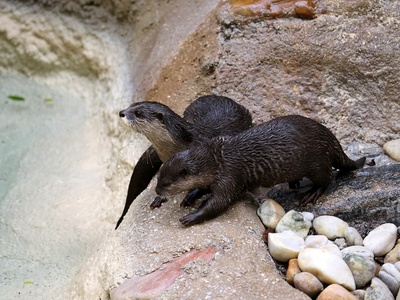
Asian small-clawed otter
Smallest otter with dexterous front paws for catching crustaceans and fish. Lives in family groups; threatened by wetland loss and water pollution.
Irrawaddy dolphin
Stocky, blunt-headed dolphin inhabiting freshwater stretches and estuaries. Highly endangered in the Mekong; very restricted and best observed on specialist river tours near Kratie.
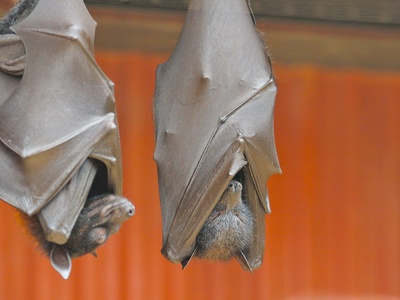
Large flying fox
Massive fruit bat with wingspan over 1 metre; roosts in large colonies. Important seed disperser but threatened by hunting and roost disturbance.
Lesser short-nosed fruit bat
Small fruit bat often found in orchards and secondary forest. Roosts in foliage tents and plays a key role pollinating and dispersing fruit trees.
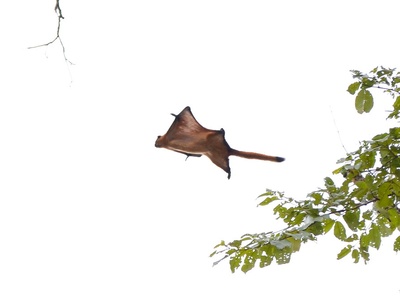
Red giant flying squirrel
Large nocturnal gliding mammal with impressive membrane between limbs. Glides between trees and is secretive; best detected at night near mature forests.
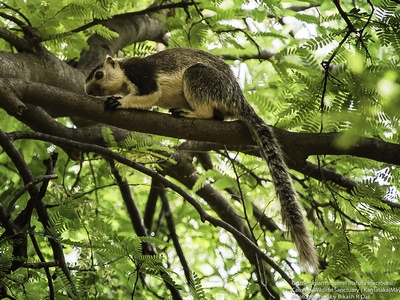
Giant squirrel
Large diurnal tree squirrel with striking coloration; feeds on fruits and seeds. Declining from hunting and deforestation; seen in remaining primary forest patches.
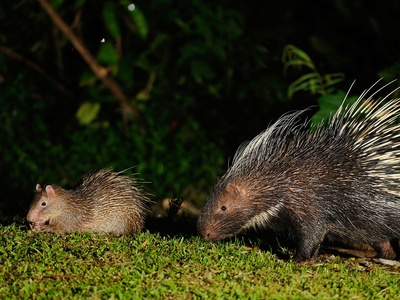
Malayan porcupine
Large, nocturnal rodent with quills for defense. Feeds on roots and tubers; fairly common where hunting pressure is low and survives in farmland edges.
Greater bamboo rat
Stout burrowing rodent that feeds on roots and bamboo. Often detected by fresh burrows and crop damage; hunted locally but persists in suitable habitat.
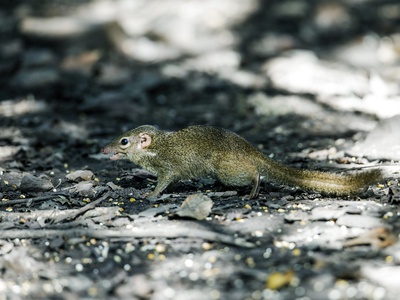
Common treeshrew
Active diurnal insectivore resembling a squirrel. Agile and curious, treeshrews are common in forest edges and plantations, often seen during the day.
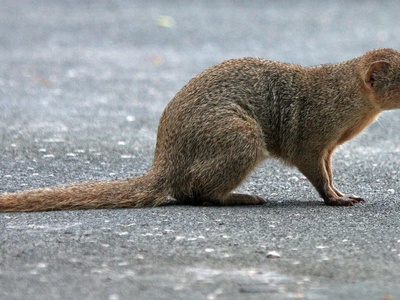
Small Indian mongoose
Small, bold mongoose introduced or widespread in disturbed habitats; hunts rodents and reptiles. Often seen near villages and farmland; adaptable and opportunistic.
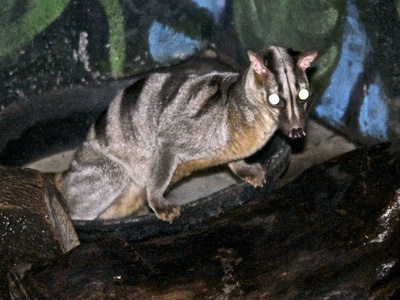
Banded civet
Nocturnal civet with distinctive banding and secretive habits. Prefers intact lowland forest and is rarely seen; camera traps are best method to detect presence.
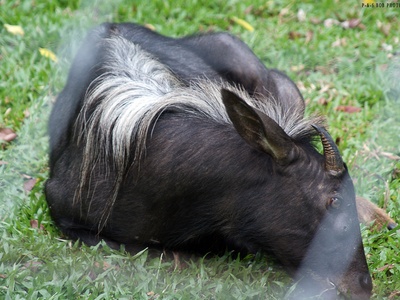
Mainland serow
Goat-like ungulate with rugged build and short horns. Prefers rugged terrain and is shy; threatened by hunting and habitat loss but persists in remote ranges.
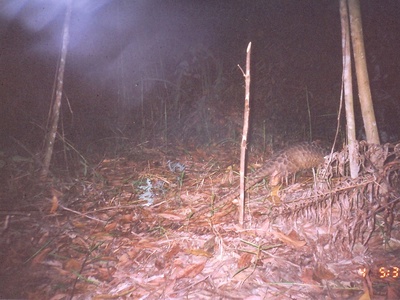
Sunda pangolin
Scaly, nocturnal insectivore with long tongue and defensive rolling. Critically endangered from illegal trade; any wild record is important and populations are dangerously low.
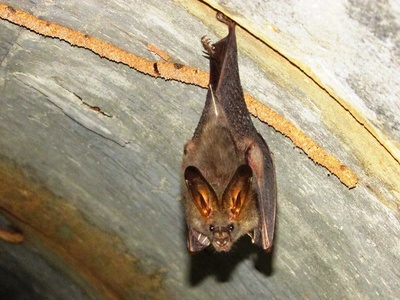
Lesser false vampire bat
Medium-sized bat with large ears and facial leaf structures. Hunts large insects and sometimes small vertebrates; roosts in caves, hollow trees and buildings.
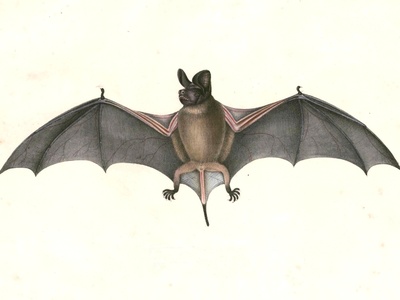
Wrinkle-lipped free-tailed bat
Small insectivorous bat forming huge roosts, often seen emerging at dusk in large numbers. Common in karst regions and near human structures.
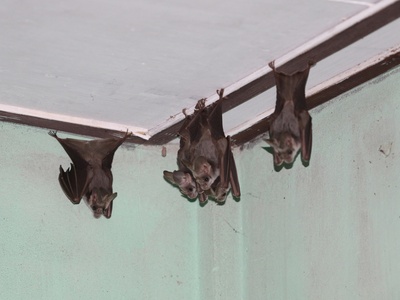
Greater false vampire bat
Carnivorous/insectivorous bat with large ears and slow flight. Hunts in understory and near forest edges; roosts in caves and dense foliage.
Sunda pangolin entry duplicated? OMITTED per rules
N/A