Saint Vincent and the Grenadines’ scattered islands and coastal waters support a surprisingly varied set of mammals, from small bats that roost in caves to marine visitors along the reefs and cliffs. Island size and human activity have shaped which species persist, which arrive as introductions, and which are only occasional visitors.
There are 16 Mammals of Saint Vincent and the Grenadines, ranging from Black rat to Velvety free-tailed bat. For each species you’ll find Scientific name,IUCN status,Occurrence in the table you’ll find below.
Which of these mammals are native versus introduced?
Check the “Occurrence” column to see whether a species is native, introduced, or vagrant: many of the land mammals recorded are bats (typically native), while species like the Black rat are introduced and common around settlements; marine mammals are usually listed as occasional visitors. Use the occurrence notes alongside Scientific name and IUCN status to judge origin and local prevalence.
How current is the conservation status information?
IUCN statuses reflect the latest published assessments but can lag behind new surveys; the IUCN status in the list gives a snapshot, and for the most recent changes consult the IUCN Red List entries and recent local studies cited in the table you’ll find below.
Mammals of Saint Vincent and the Grenadines
| Common name | Scientific name | IUCN status | Occurrence |
|---|---|---|---|
| Jamaican fruit bat | Artibeus jamaicensis | LC | Resident / forests and gardens |
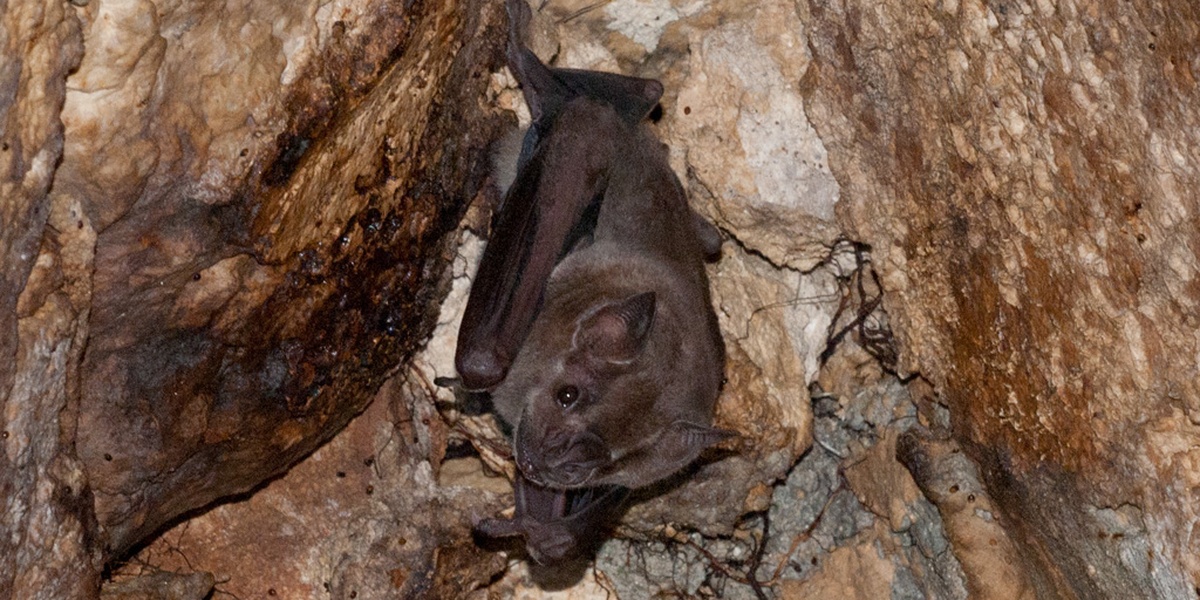
| Velvety free-tailed bat | Molossus molossus | LC | Resident / cliffs, buildings and open areas |
| Brazilian free-tailed bat | Tadarida brasiliensis | LC | Resident / caves, buildings and coastal areas |
| Pallas’s long-tongued bat | Glossophaga soricina | LC | Resident / forests, gardens and flowering plants |
| Cuban fruit-eating bat | Brachyphylla cavernarum | LC | Resident / caves and rocky sites |
| Black rat | Rattus rattus | LC | Introduced / settlements and plantations |
| Brown rat | Rattus norvegicus | LC | Introduced / ports, sewers and agricultural areas |
| House mouse | Mus musculus | LC | Introduced / buildings and human habitations |
| Small Indian mongoose | Herpestes auropunctatus | LC | Introduced / agricultural and scrubland areas |
| Feral cat | Felis catus | LC | Introduced / urban, rural and wild habitats |
| Bottlenose dolphin | Tursiops truncatus | LC | Resident / coastal waters and bays |
| Pantropical spotted dolphin | Stenella attenuata | LC | Vagrant/Resident / offshore pelagic waters |
| Spinner dolphin | Stenella longirostris | LC | Vagrant / offshore and nearshore waters |
| Short-finned pilot whale | Globicephala macrorhynchus | LC | Vagrant/Resident / deep offshore waters |
| Sperm whale | Physeter macrocephalus | VU | Vagrant/Resident / deep offshore waters |
| Humpback whale | Megaptera novaeangliae | LC | Seasonal visitor / offshore breeding waters |
Images and Descriptions
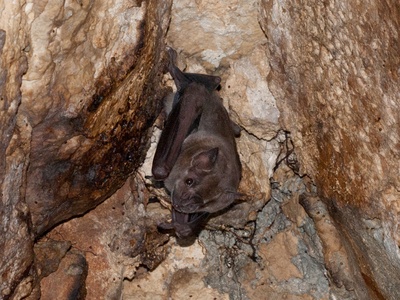
Jamaican fruit bat
Medium-sized fruit bat common on islands; roosts in trees and buildings. Active at night, feeds on figs and fruit, important seed disperser. Locally widespread but sensitive to large-scale deforestation and disturbance.
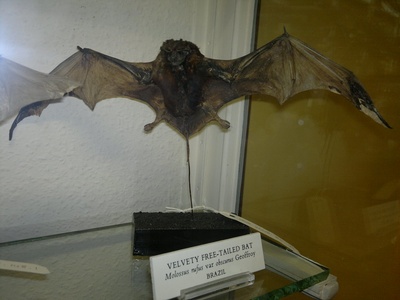
Velvety free-tailed bat
Small fast-flying insectivore often seen at dusk over towns and coastlines. Roosts in crevices and buildings. Common and adaptable to human-modified landscapes, helping control insect populations.
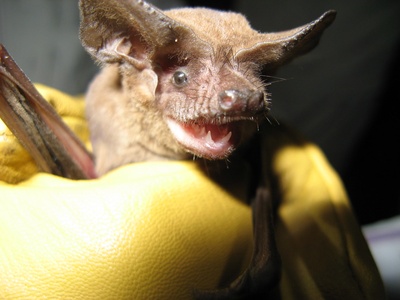
Brazilian free-tailed bat
High-flying, insect-eating bat frequently seen at dusk. Forms colonies in caves and man-made structures. Common in agricultural and coastal zones; notable for strong, rapid flight and large nightly insect consumption.
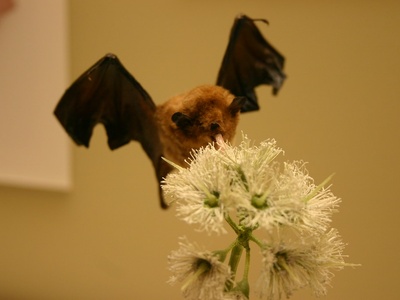
Pallas’s long-tongued bat
Small nectar-feeding bat important for pollination of native plants. Found in forest edges, gardens and riparian zones. Common but reliant on flowering resources and roost sites.
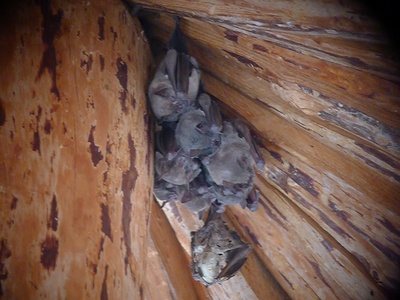
Cuban fruit-eating bat
Medium fruit bat roosting in caves and rock crevices; forages in forests and coastal vegetation. Present on several Lesser Antillean islands, contributes to seed dispersal and forest regeneration.

Black rat
Introduced commensal rodent widespread around homes, farms and ports. Agile climber that damages crops and preys on bird eggs; major invasive species impacting native fauna and agriculture.
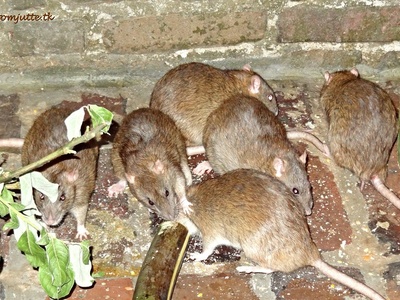
Brown rat
Larger, ground-dwelling introduced rodent common near docks, farms and urban areas. Omnivorous and highly adaptable, important pest species linked to disease transmission and ecological impacts.
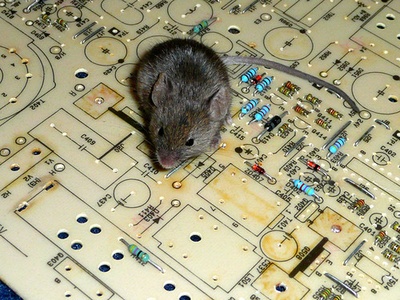
House mouse
Small introduced rodent ubiquitous in houses, warehouses and farms. Highly commensal with humans; competes with native fauna and can affect stored food and crops.
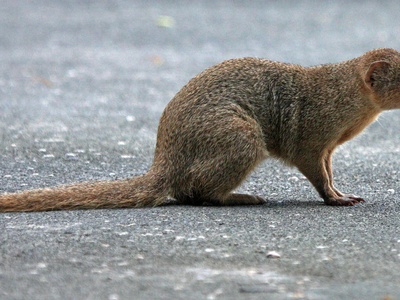
Small Indian mongoose
Introduced predator established on many Caribbean islands; hunts rodents, birds and reptiles. Has significant negative impacts on native ground-nesting birds and reptiles; common in disturbed and agricultural landscapes.
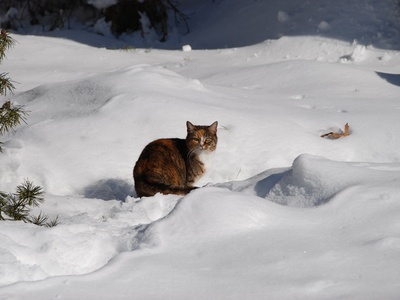
Feral cat
Domestic cat populations have feral individuals across islands, hunting birds, bats and reptiles. Widespread and ecologically impactful; implicated in declines of native wildlife and seabird colonies.
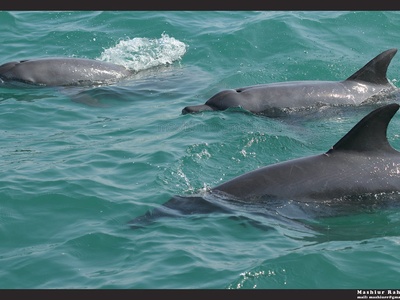
Bottlenose dolphin
Common coastal dolphin observed around St. Vincent and in Grenadine waters. Forms small groups, often seen nearshore and around reefs; popular with boaters and important top predator in coastal ecosystems.
Pantropical spotted dolphin
Small spotted dolphin occurring offshore; seen in deeper waters around the Grenadines. Often in large, active groups and occasionally approaches boats; mainly a pelagic species.
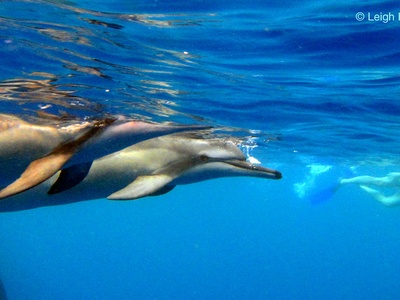
Spinner dolphin
Streamlined dolphin known for aerial behavior and spinning leaps. Occurs in nearby pelagic waters and sometimes near reefs; forms large social groups and is seen during boat surveys.
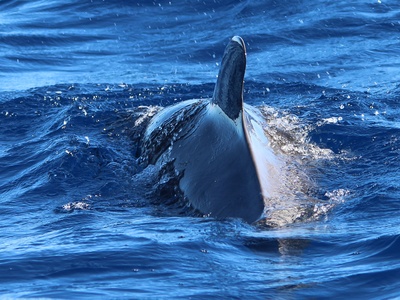
Short-finned pilot whale
Dark, social whale frequenting deep tropical waters. Occurs around islands in small or large pods; occasional strandings and sightings reported in the region.
Sperm whale
Large deep-diving whale that feeds on squid; recorded in deep Caribbean waters near Saint Vincent. Vulnerable globally due to past whaling; now occasionally sighted by offshore observers.
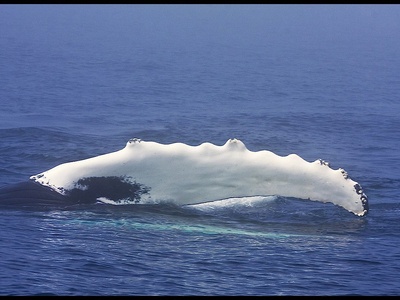
Humpback whale
Large baleen whale that migrates to Caribbean breeding grounds in winter; occasional sightings reported around the Lesser Antilles. Notable for surface breaches and complex songs.