Half of Bosnia and Herzegovina is forest, and tucked inside it is a flora most travel guides skip entirely. The country sits on the Dinaric Alps, one of Europe’s richest pockets of endemism, where roughly 3,500 plant species grow and a stubborn handful of them grow nowhere else on Earth. Two of those endemics ended up on the national coat of arms and the country’s stamps.
This is a field guide to the plants worth knowing before you go — or worth knowing just because. Twelve species, each with its Latin name, where it actually grows, and the cultural or medicinal story that makes it more than a name on a list. Plus a section at the end on where and when to see the headline acts in the wild.
Table of Contents
- The forest zones, briefly
- The endemics worth crossing a country for
- The 12 plants
- Comparison table
- Where and when to see them
- FAQ
The forest zones, briefly
Before the species, the layout. Bosnia’s plant life sorts itself by elevation into three broad belts, and knowing them tells you what you’ll see and roughly where.
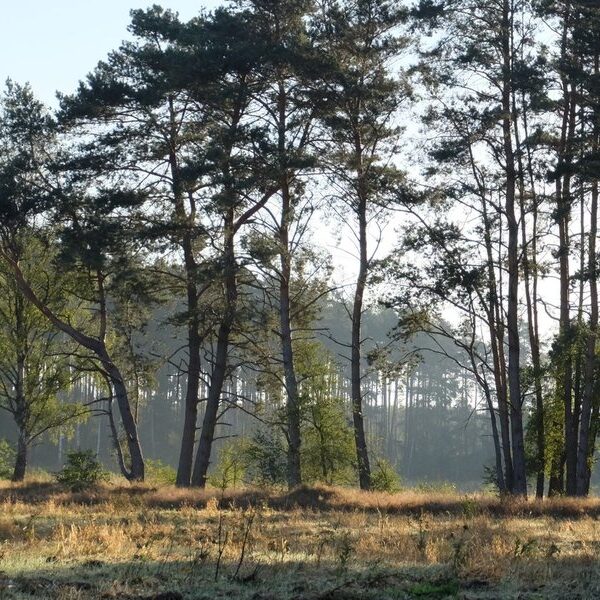
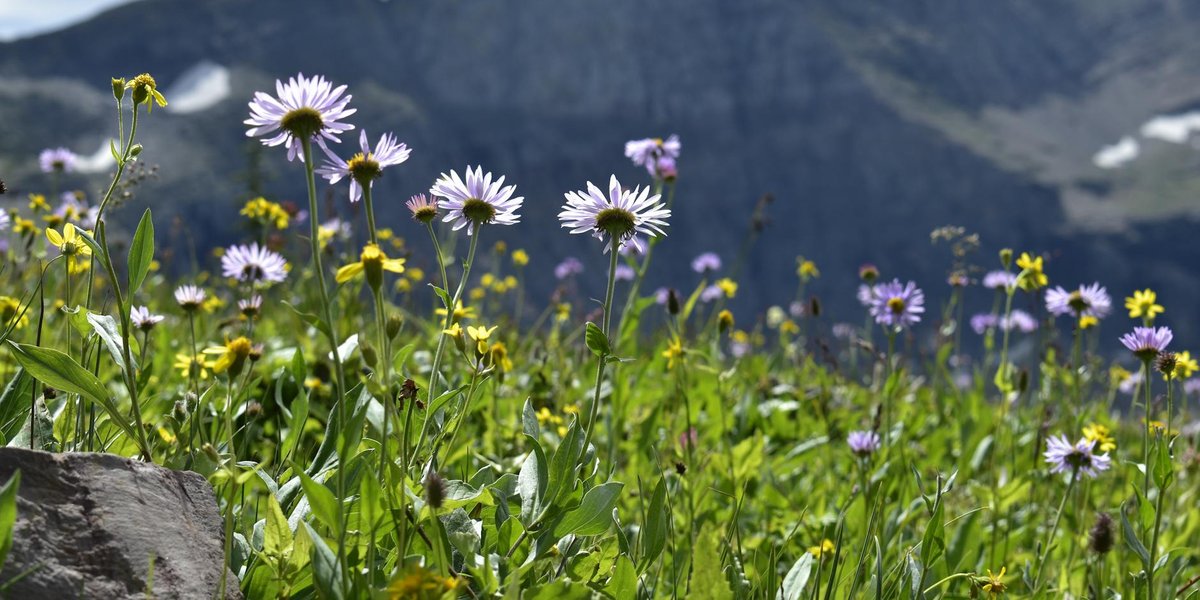
Down low, along the Mediterranean-influenced south near Herzegovina, you get oak and hornbeam woodland with patches of garrigue scrub. The middle belt — the bulk of the country — is beech and fir forest, dense and dim, the kind of woods Sutjeska and Perućica are famous for. Climb above the treeline in the Dinaric high country and you reach subalpine meadows and rocky karst, where the endemic mountain flora hangs on in conditions that filter out almost everything else.
That third belt is the interesting one. Isolation does to plants what it does to islands: it breeds specialists found in a single valley or massif.
The endemics worth crossing a country for
The Dinaric Alps are a recognized biodiversity hotspot, and Bosnia holds a real share of its endemic plants. The IUCN tracks several of the country’s rarer species on regional red lists, and the karst caves of Herzegovina hide an entire underground ecosystem of their own.
For a visitor, three names matter most: the Bosnian lily and the Bosnian iris, both national symbols, and the Bosnian pine, a tree that lives for a thousand years on ground nothing else wants. Start there and the rest of the list fills in around them.
The 12 plants
1. Bosnian Lily — Lilium bosniacum
The national flower, and the one you’ll see rendered on souvenirs before you ever see it on a mountainside. A golden-yellow lily with recurved petals, it grows on subalpine meadows and rocky slopes in the Bosnian highlands. The plant carries serious historical weight: a stylized version of it, the fleur-de-lis of the Kotromanić dynasty that ruled medieval Bosnia, sits on the national coat of arms. Whether Lilium bosniacum is a full species or a subspecies of the more widespread Lilium carniolicum is still debated among botanists, but its status as a symbol isn’t up for argument.
2. Bosnian Iris — Iris bosniaca
A dwarf iris, often classed within Iris reichenbachii, that hugs dry, sunny limestone slopes. It’s small — a few inches tall — with blooms ranging from pale yellow to violet. Less famous than the lily but no less protected, it’s part of the same national-symbol conversation and one of the genuine Dinaric endemics that draws plant hunters to the region in late spring.
3. Bosnian Pine — Pinus heldreichii
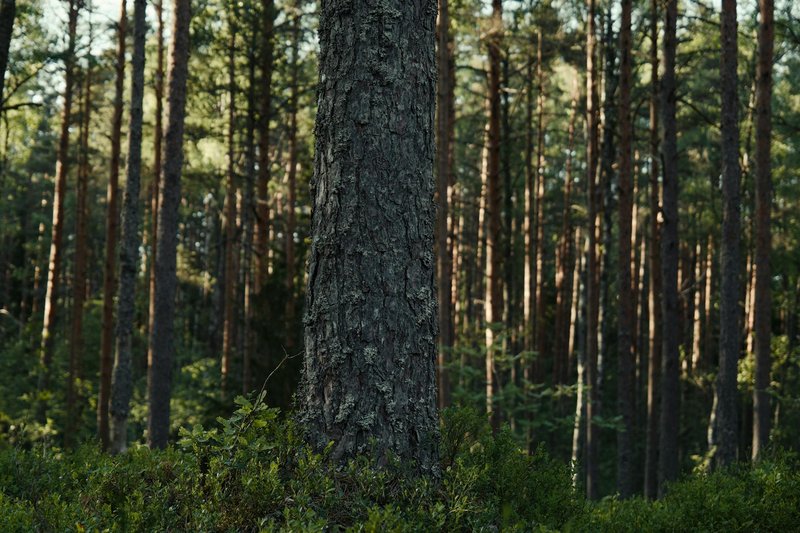
The thousand-year tree. Pinus heldreichii (also called Heldreich’s pine or, in older texts, Pinus leucodermis) is a high-altitude conifer with pale, smooth, snake-skin bark that grows on the most hostile karst ridges in the Balkans. Some individuals in the wider region have been dated past 1,000 years, making them among the oldest living things in Europe. It’s slow, tough, and indifferent to thin soil and exposure — exactly the resume needed to survive where it does. Look for it near the treeline in the Dinaric ranges.
4. Dalmatian Pyrethrum — Tanacetum cinerariifolium
The flower that built an industry. This daisy-like plant, native to the Balkan coast including parts of Herzegovina, is the natural source of pyrethrin — one of the oldest botanical insecticides in use. Crush the dried flower heads and you get a compound that’s been repelling insects for centuries. It still shows up in “natural” insect sprays today, and the plant remains commercially cultivated for it.
5. Oriental Sweetgum — Liquidambar orientalis
A relict tree from a warmer geological past, surviving in scattered southern pockets. Its star-shaped leaves turn deep red and orange in autumn, and the bark yields an aromatic resin — storax — historically used in perfumery and traditional medicine. It’s a botanical leftover, a species whose range shrank as the climate cooled, now clinging to a few favorable spots.
6. Balkan Hornbeam — Carpinus orientalis
The workhorse of the low and mid-elevation woods. Oriental hornbeam is a small, hardy tree with fluted gray bark and toothed leaves, forming dense thickets across the warmer parts of the country. It’s not glamorous, but it’s everywhere in the oak-hornbeam belt, and its tough, fine-grained wood has been used for tool handles and fuel for as long as people have lived here.
7. Wild Grapevine — Vitis vinifera subsp. sylvestris
The ancestor of the cultivated grape, still growing wild in Herzegovina’s river valleys and forest edges. This is the genetic wellspring that domesticated wine grapes came from, and Herzegovina’s wine country — built on native varieties like Žilavka and Blatina — sits right on top of its range. Finding the wild form is a quiet thrill for anyone who knows what they’re looking at.
8. European Beech — Fagus sylvatica
If Bosnia has a signature tree by sheer volume, it’s beech. The mid-elevation forests are dominated by it, often mixed with silver fir, and the primeval beech stands of Perućica — one of the last old-growth forests in Europe — are protected within Sutjeska National Park. Smooth gray trunks, a closed canopy that keeps the forest floor dim and open, leaves that glow copper in fall.
9. Silver Fir — Abies alba
Beech’s constant companion in the highland forests. Silver fir gives those woods their vertical scale, growing tall and straight with flat, dark needles and upright cones that disintegrate on the branch rather than dropping whole. The beech-fir mix is the classic Dinaric forest, and Perućica’s stands include firs over 50 meters tall.
10. St. John’s Wort — Hypericum perforatum
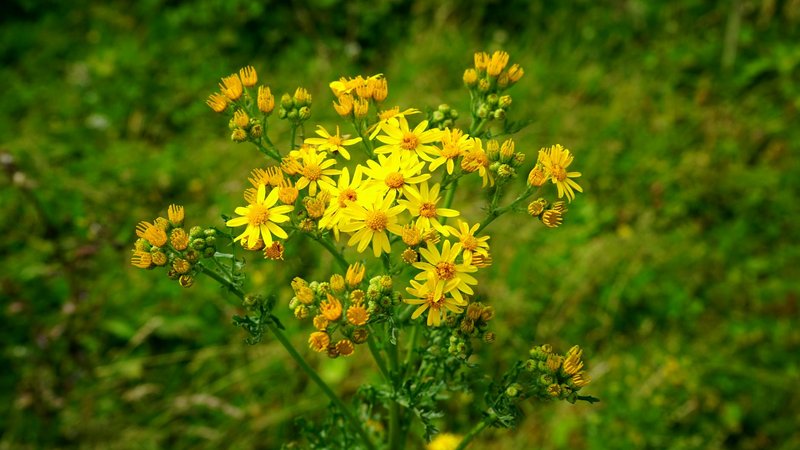
The most reached-for plant in the Bosnian folk medicine cabinet. Known locally as kantarion, it’s gathered around midsummer, steeped in olive or sunflower oil until the oil turns blood-red, and used on burns, wounds, and aches. The red color comes from hypericin, one of its active compounds. You’ll find it sun-soaked along roadsides and meadow edges across the country, its bright yellow flowers dotted with tiny dark glands — hold a petal to the light and you’ll see the “perforations” the name refers to.
11. Wild Thyme — Thymus serpyllum
A creeping, aromatic groundcover of the dry karst slopes, releasing its scent when you step on it. In the Bosnian kitchen and apothecary it’s majčina dušica — “mother’s little soul” — brewed as a tea for coughs and colds and used to flavor food. It’s one of those plants that ties the landscape to the table: the same hillside herb shows up in a winter tisane.
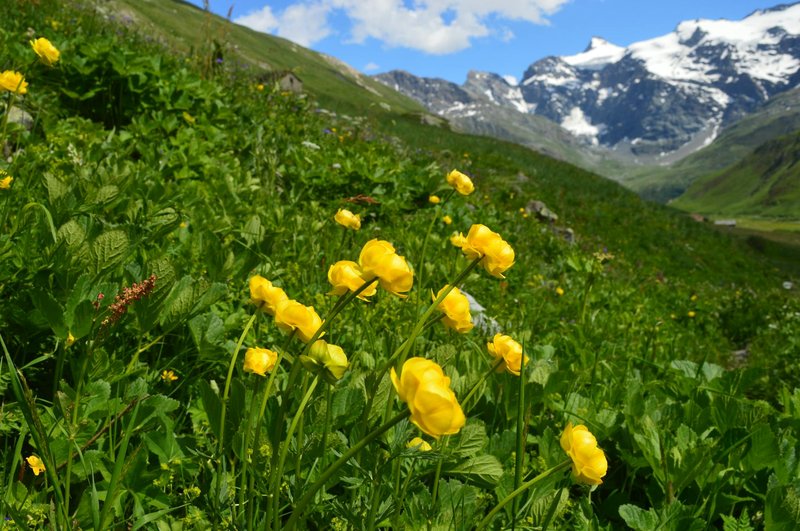
12. Gentian — Gentiana lutea
Yellow gentian closes out the high-meadow roster. A tall plant with whorled leaves and clusters of yellow star-flowers, its bitter root is the base of traditional digestive tonics and bitters across the Balkans. It’s slow-growing and over-harvested in places, which has pushed it onto conservation watchlists — a reminder that “medicinal” and “abundant” aren’t the same thing.
Comparison table
| Plant | Latin name | Where it grows | Notable for |
|---|---|---|---|
| Bosnian lily | Lilium bosniacum | Subalpine meadows | National flower, on the coat of arms |
| Bosnian iris | Iris bosniaca | Dry limestone slopes | Endemic, protected |
| Bosnian pine | Pinus heldreichii | High karst ridges | Lives 1,000+ years |
| Dalmatian pyrethrum | Tanacetum cinerariifolium | Coastal/Herzegovina scrub | Natural insecticide source |
| Oriental sweetgum | Liquidambar orientalis | Warm southern pockets | Aromatic resin (storax) |
| Balkan hornbeam | Carpinus orientalis | Low–mid woodland | Dominant thicket-former |
| Wild grapevine | Vitis vinifera sylvestris | River valleys | Ancestor of wine grapes |
| European beech | Fagus sylvatica | Mid-elevation forest | Old-growth at Perućica |
| Silver fir | Abies alba | Highland forest | Trees over 50 m tall |
| St. John’s wort | Hypericum perforatum | Roadsides, meadows | Folk-medicine staple |
| Wild thyme | Thymus serpyllum | Dry karst slopes | Culinary and medicinal |
| Yellow gentian | Gentiana lutea | High meadows | Bitter tonic root |
Where and when to see them
The single best target is Sutjeska National Park in the southeast, home to the Perućica primeval forest and the Maglić massif. The old-growth beech and fir are accessible on guided routes, and the surrounding high country is where the Bosnian pine and subalpine endemics live. Perućica itself is a strict reserve, so the upper viewpoint and ranger-led walks are how you see it without trampling it.
For the endemic flora — the lily, the iris, the high-meadow gentian — aim for late spring through early summer, roughly May to July, when the subalpine meadows bloom. Lower down, the oak-hornbeam woods and Herzegovina’s river valleys (good for the wild grapevine) are pleasant from spring through autumn, with the sweetgum and beech putting on their best color in October.
Other strong options are Una National Park in the northwest, with its river-canyon forests, and the Prenj, Čvrsnica, and Čabulja massifs in Herzegovina, which botanists treat as endemism hotspots in their own right. Wherever you go, the rule for the rare ones is the same: photograph, don’t pick. Several of these plants are protected by law, and the populations are smaller than the postcards suggest.
FAQ
What is the national flower of Bosnia and Herzegovina? The Bosnian lily, Lilium bosniacum — a golden-yellow mountain lily. A stylized version of it, the medieval Bosnian fleur-de-lis, appears on the national coat of arms.
How many plant species grow in Bosnia and Herzegovina? Roughly 3,500, a high number for the country’s size, driven by its position on the Dinaric Alps and the variety of elevation zones from Mediterranean lowland to subalpine peak.
What is the Bosnian pine and why does it matter? Pinus heldreichii is a high-altitude conifer with pale snake-skin bark that grows on harsh karst ridges. Some specimens in the region are over 1,000 years old, making them among Europe’s oldest living trees.
Are any of these plants endemic to Bosnia? Yes. The Bosnian lily and Bosnian iris are among the Dinaric endemics, and the high massifs of Herzegovina hold additional species found only in that mountain system. Many are legally protected.
Which Bosnian plants are used in traditional medicine? St. John’s wort (kantarion) for wounds and burns, wild thyme (majčina dušica) for coughs, and yellow gentian root for digestive bitters are the most common in Bosnian folk medicine.