South Africa holds more than 22,000 indigenous plant species, roughly 10% of all the plants on Earth, on a patch of land under 1% of the planet’s surface. Most of them fall into five biomes, and each one has its own cast of plants you won’t find anywhere else.
This guide walks through them biome by biome, with the signature species, what makes each one recognizable, and when to see it. A quick-reference table follows, then a short section on where to go.
Table of Contents
- Why South Africa’s flora is so strange
- Fynbos: the Cape’s tiny, packed kingdom
- Succulent Karoo: the driest hotspot
- Savanna and bushveld: trees that define the skyline
- Grassland: bulbs, fire and frost
- Forest and coast: the shaded understory
- Edible and medicinal plants
- Quick-reference table
- Where to see them
- Conservation: what’s at risk
Why South Africa’s flora is so strange
Southern Africa has about 227 plant families and over 4,700 succulent species, the largest succulent diversity on the planet. Part of the reason is geography: a coastline that meets two oceans, mountains that trap rain on one side and cast a shadow on the other, and soils ranging from nutrient-rich clay to ancient, almost sterile sandstone.
The extreme case is the Cape. The Cape Floral Kingdom is the smallest of the world’s six floral kingdoms, and entirely inside one country, yet it is the richest per unit area. UNESCO’s World Heritage listing for the Cape Floral Region describes it as one of the most remarkable concentrations of plant diversity anywhere, with a large share of species found nowhere else.
That’s the context for everything below. Same country, five very different plant worlds.
Fynbos: the Cape’s tiny, packed kingdom
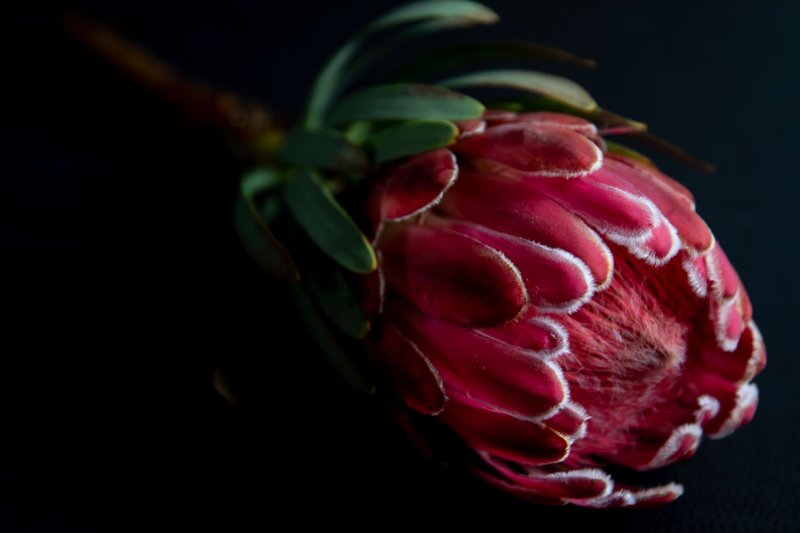
Fynbos (“fine bush”) is the shrubland that covers the southwestern Cape. It holds around 9,000 plant species, about 70% of them endemic. It grows on poor sandstone soils, burns every 10 to 20 years, and many of its plants depend on that fire to release seed.
Signature species:
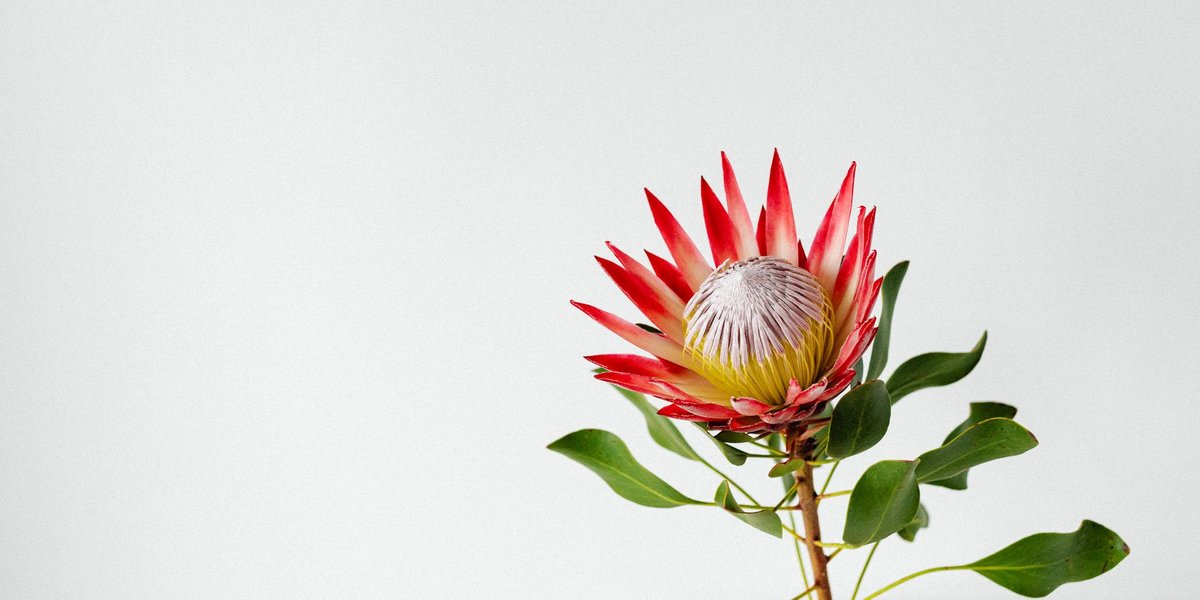
- King protea (Protea cynaroides). South Africa’s national flower. A dinner-plate bloom up to 30 cm across, pink to cream, with silvery bracts that look like petals. Flowers mainly from late winter to early summer. Garden-friendly if you have sharp drainage and acidic soil.
- Pincushion protea (Leucospermum cordifolium). Orange, red or yellow domes bristling with curved styles, like pins in a cushion. Blooms in spring and early summer. Good in warm, sunny, well-drained gardens.
- Cape reed or restio (Elegia capensis). Looks like a grass or horsetail, but it’s a restio, a family that defines fynbos the way grasses define prairie. Feathery, bamboo-like stems. Tolerates wet soil better than most fynbos.
- Ericas (Erica spp.). The Cape has about 480 of the 650 known Erica species, from tiny bells to tubular red flowers a thumb long. Bloom times vary by species, so some are in flower in nearly every month. Most need acidic, sandy soil and hate fertilizer.
- Sugarbush (Protea repens). Cream or pink cups that ooze nectar, which is why sunbirds and Cape sugarbirds cluster in it. Cape sugarbirds nest in sugarbush territory by the dozens. Hardy and fast-growing.
If you’re going to try one fynbos plant at home, choose a sugarbush or a pincushion. They’re the most forgiving. Their shared rule: low phosphorus, full sun, no rich compost.
Succulent Karoo: the driest hotspot
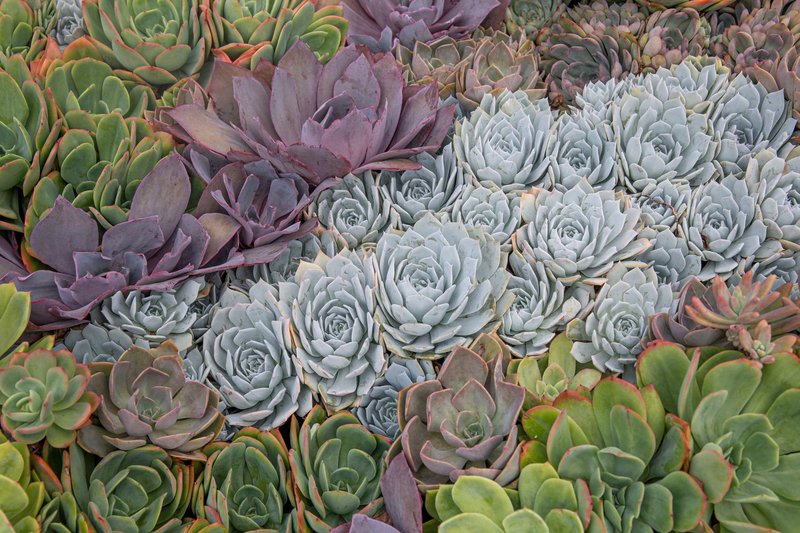
Along the northwest coast and inland to the Richtersveld, rainfall can fall below 100 mm a year. The Succulent Karoo is one of only two arid biodiversity hotspots in the world, and it holds roughly a third of the world’s succulent species.
Signature species:
- Living stones (Lithops spp.). Pairs of fat, pebble-colored leaves that sit flush with the ground to hide from herbivores. Each autumn a daisy-like flower pushes up between them. They need very little water, and overwatering kills them quickly.
- Quiver tree (Aloidendron dichotomum). A tree aloe with a forked crown, found in the Northern Cape and Namibia. The San people hollowed its branches into arrow quivers. Flowers yellow in mid-winter.
- Aloe ferox (bitter aloe). Tall, orange-spiked candelabra that bloom in winter across the Karoo and into the Eastern Cape. It’s an excellent garden aloe in frost-free, dry climates.
- Spekboom (Portulacaria afra). Round green leaves on red stems, a favorite of elephants in the Eastern Cape thicket. It’s a tough, easy container plant, and the one most beginners should start with.
- Namaqualand daisies (Dimorphotheca and relatives). Not succulents, but the reason people visit. In a good rain year, hills turn orange from August to September.
Savanna and bushveld: trees that define the skyline
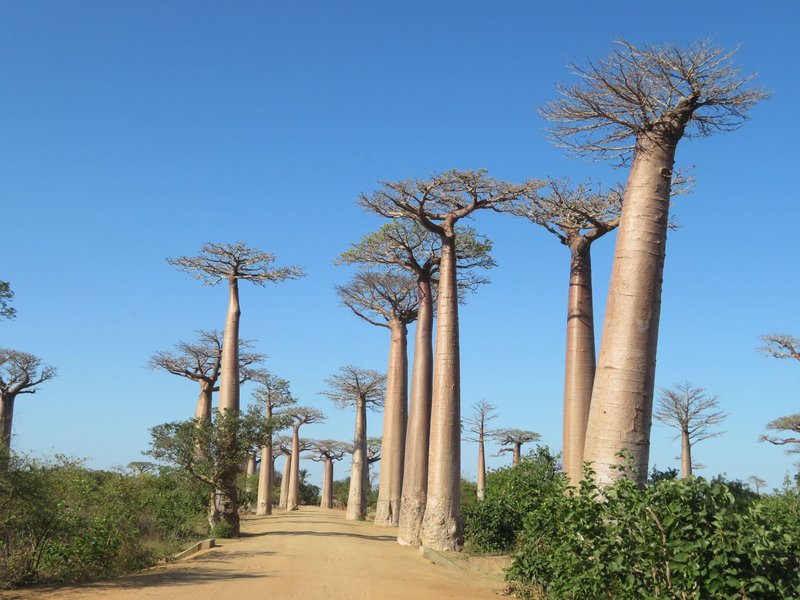
The Savanna is the largest biome in South Africa, covering the Limpopo, Mpumalanga and North West provinces plus the Kruger area. Grass between scattered trees, summer rain, winter drought and frequent fire.
Signature species:
- Baobab (Adansonia digitata). Limpopo’s swollen-trunked giants can live for well over a thousand years. The bare winter crown looks like roots sticking up in the air. Big white flowers open at night in summer, pollinated by bats and hawkmoths. Only for frost-free gardens with plenty of room.
- Marula (Sclerocarya birrea). Wide-crowned shade tree with yellow fruit that elephants and people go after. The fruit is the base of the cream liqueur Amarula. Fruits from January to March.
- Fever tree (Vachellia xanthophloea). Yellow-green bark that looks lit from within, growing along rivers and swamps. Early settlers blamed it for malaria because it grew near the mosquitoes’ breeding water.
- Umbrella thorn (Vachellia tortilis). The flat-topped silhouette in every safari photograph. Fragrant white puffball flowers in spring.
- Mopane (Colophospermum mopane). Butterfly-shaped leaves, and the food plant of the mopane worm, a caterpillar eaten across southern Africa. It dominates the hot lowveld of the far north.
Grassland: bulbs, fire and frost
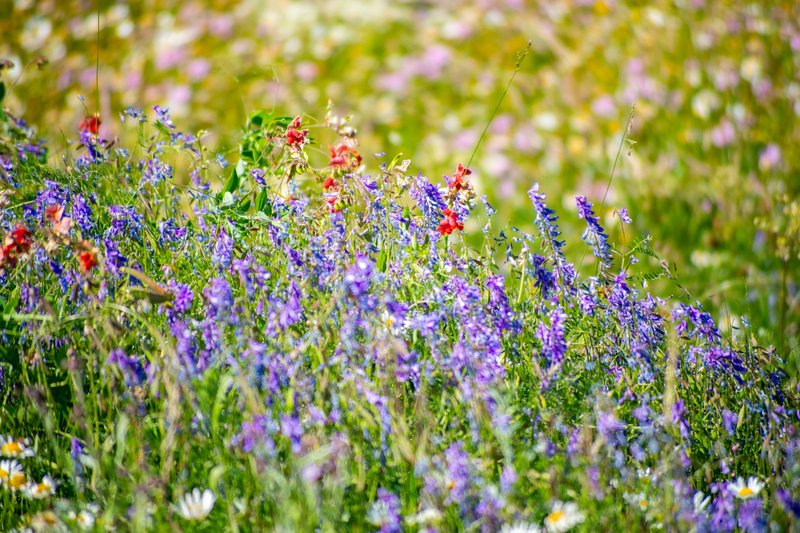
The Highveld and the Drakensberg foothills are grass country. Trees are rare; frost, fire and grazing keep them out. The interesting plants are underground. Bulbs, corms and tubers wait through the dry winter and flower after burns or the first spring rains.
Signature species:
- Red hot poker (Kniphofia spp.). Torch-shaped spikes of orange and yellow tubular flowers, loved by sunbirds. Blooms in summer. Happy in garden beds with moist soil and full sun.
- Pineapple lily (Eucomis spp.). A flower spike topped with a tuft of leaves like a pineapple. Blooms mid to late summer. Easy in pots.
- Watsonia (Watsonia spp.). Tall wands of pink, orange or red tubular flowers, often appearing in numbers after a burn.
- Wild gladiolus (Gladiolus spp.). South Africa has about 120 species of this genus, which is the ancestor of many garden gladioli.
- Agapanthus (Agapanthus spp.). Blue and white umbels, from the Eastern Cape and the Drakensberg, widely grown worldwide. The easiest plant in this list to keep alive.
Forest and coast: the shaded understory
Afromontane forest is patchy in South Africa, covering far less than 1% of the land, in pockets along the southern and eastern coast and in mountain ravines. Coastal belts to the east host subtropical thicket and dune forest.
Signature species:
- Real yellowwood (Podocarpus latifolius). South Africa’s national tree. A conifer with long, strap-like leaves. Slow-growing, and it was heavily logged for timber, so large old trees are rare.
- Clivia (Clivia miniata). Orange trumpet flowers on a plant that actually wants shade. Blooms in late winter and spring. One of the best indoor and shade-garden plants in the world.
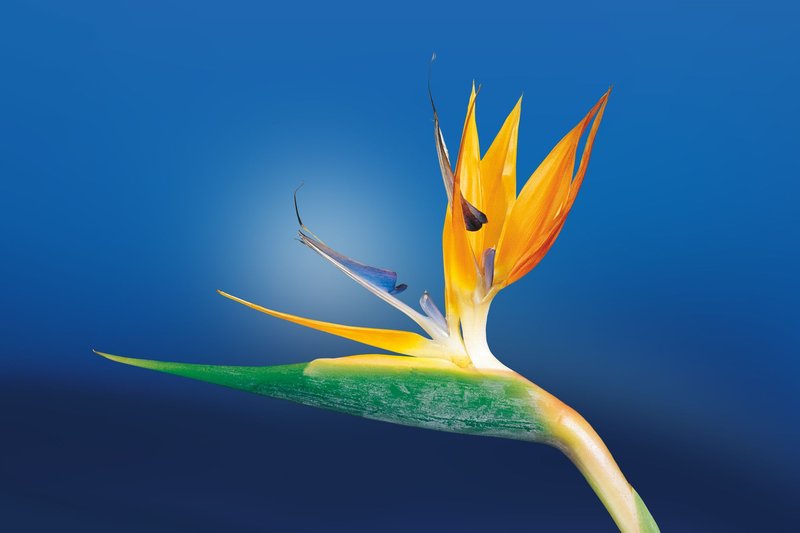
- Bird of paradise (Strelitzia reginae). Orange and blue flowers that look like a crane’s head, native to the Eastern Cape coast. Flowers most of the year in warm climates.
- Cycads (Encephalartos spp.). Prehistoric-looking palm-like plants. Encephalartos woodii is extinct in the wild. Every known specimen is a clone of one male plant collected in Natal in 1895.
- Cape chestnut (Calodendrum capense). A tree covered in pink, spidery flowers in early summer, native to the coastal forests.
Edible and medicinal plants
Several South African natives are already in your kitchen or your medicine cabinet.
- Rooibos (Aspalathus linearis). The red bush tea plant grows wild in the Cederberg and nowhere else commercially. Caffeine-free.
- Buchu (Agathosma betulina). A fynbos shrub with a strong blackcurrant-like scent, used traditionally as a tonic and in flavorings.
- Sutherlandia (Sutherlandia frutescens). Known as cancer bush. Used traditionally across southern Africa for a wide range of ailments.
- African potato (Hypoxis hemerocallidea). A yellow-flowered tuberous plant used in traditional medicine. Overharvesting has put wild populations under pressure.
As always with medicinal plants, traditional use is not a prescription. Check with a healthcare professional before consuming any of them, especially if you take other medication.
Quick-reference table
| Plant | Biome | Bloom season | Garden-friendly? |
|---|---|---|---|
| King protea | Fynbos | Late winter to early summer | Yes, with acidic, well-drained soil |
| Pincushion protea | Fynbos | Spring to early summer | Yes |
| Restio | Fynbos | Foliage plant | Yes |
| Erica | Fynbos | Varies by species | Challenging |
| Lithops | Succulent Karoo | Autumn | Yes, in pots |
| Quiver tree | Succulent Karoo | Mid-winter | Yes, dry climates |
| Spekboom | Succulent Karoo/Thicket | Late winter | Yes, very easy |
| Baobab | Savanna | Summer | Only in frost-free areas |
| Marula | Savanna | Spring | Frost-free areas only |
| Red hot poker | Grassland | Summer | Yes |
| Agapanthus | Grassland | Summer | Yes, very easy |
| Clivia | Forest | Late winter to spring | Yes, in shade |
| Bird of paradise | Coastal forest | Most of the year | Yes, in warm climates |
Where to see them
Kirstenbosch National Botanical Garden, Cape Town. The best single stop. SANBI’s Kirstenbosch page lists the garden’s collections, which include fynbos, cycads and succulents on the slopes of Table Mountain.
West Coast and Namaqualand, August to September. The spring flower season depends on winter rain, so check conditions before you go. Flowers open with the sun and close on cloudy days, so go midday.
Cape Floral Region parks. Table Mountain National Park, Cederberg and De Hoop all protect fynbos in the wild. Winter and spring are the best times.
Kruger and the Limpopo lowveld. For baobabs, marulas and fever trees.
Drakensberg. For grassland bulbs, mainly in summer.
Conservation: what’s at risk
South Africa’s plant richness comes with a long red list. The SANBI Red List of South African Plants assesses the country’s species, and a significant number are threatened, especially in lowland fynbos, where agriculture, housing and invasive trees have wiped out most of the original habitat. Globally, the IUCN Red List tracks several South African cycads and proteas among the species at risk.
If you want to help, buy plants from licensed nurseries rather than harvesting wild ones, avoid spreading alien invasives such as Australian acacias, and visit parks, since entry fees help pay for protection.
South Africa is a country where you can stand in a desert, a rainforest and a protea-filled mountainside in the same week. Pick one biome, go in the right season, and it will show you something new.