Portugal’s varied coastline, river systems and island refuges support wildlife you won’t see everywhere. From estuaries and offshore reefs to high mountain slopes and remote islets, uncommon species turn up in surprising places and seasons, so local knowledge matters when planning a visit.
There are 20 Rare Animals in Portugal, ranging from Atlantic sturgeon to Zino’s petrel. For each species you’ll find below the key details organized as Scientific name,Status,Range in Portugal so you can quickly see where they occur and how threatened they are — you’ll find below.
How can I safely observe rare animals in Portugal without harming them?
Use binoculars or a camera with a zoom, keep to marked trails and viewing points, and avoid nesting or resting sites. Join guided tours or contact local conservation groups for up-to-date locations and seasonal restrictions; volunteers and guides can help you see animals responsibly while minimizing disturbance.
Which protections exist for these species and how can I help their conservation?
Many are covered by EU and Portuguese laws (Birds and Habitats Directives, national protections) and by marine or terrestrial reserves. Support by following regulations, reporting sightings to local monitoring schemes, reducing pollution and bycatch where possible, and donating time or funds to trusted conservation organizations.
Rare Animals in Portugal
| Name | Scientific name | Status | Range in Portugal |
|---|---|---|---|
| Iberian lynx | Lynx pardinus | EN; strictly protected (national/EU) | Mainland: Alentejo, Algarve reintroduction sites |
| Mediterranean monk seal | Monachus monachus | CR; strictly protected (national/EU) | Mainland & Madeira: Algarve coast, Desertas Is. |
| Azores bullfinch | Pyrrhula murina | EN; endemic, fully protected | Azores: São Miguel (Pico da Vara) |
| Zino’s petrel | Pterodroma madeira | CR; endemic, strictly protected | Madeira: central mountain massif (Pico do Arieiro area) |
| Madeira laurel pigeon | Columba trocaz | VU; endemic, protected | Madeira: laurel forest zones on Madeira and Desertas |
| Monteiro’s storm‑petrel | Hydrobates monteiroi | VU; endemic, protected | Azores: Santa Maria and nearby islets |
| Fea’s petrel | Pterodroma feae | VU; breeds on Desertas & Selvagens; protected | Range: Madeira archipelago (Desertas, Selvagens) |
| Atlantic sturgeon | Acipenser sturio | CR; strictly protected | Range: Historic estuaries (Tagus, Douro); rare occurrences |
| European eel | Anguilla anguilla | CR; protected | Range: Rivers and coastal waters across Portugal |
| Loggerhead turtle | Caretta caretta | VU; protected (national/EU) | Range: Algarve beaches, Madeira and Azores waters |
| Leatherback turtle | Dermochelys coriacea | VU; protected | Range: Offshore Atlantic waters; occasional strandings on coasts |
| Pyrenean desman | Galemys pyrenaicus | VU; protected | Range: Northwest rivers and streams (Minho, Douro basins) |
| Azores noctule | Nyctalus azoreum | VU; endemic, protected | Range: Azores islands (notably São Miguel, Terceira) |
| Madeira firecrest | Regulus madeirensis | LC; endemic, protected | Range: Madeira laurel forests, mid‑elevations |
| Spanish imperial eagle | Aquila adalberti | VU; protected (national/EU) | Range: Alentejo and southwest Portugal |
| Iberian wolf | Canis lupus signatus | LC; legally protected in parts of Portugal | Range: Northern mainland (Peneda‑Gerês, Trás‑os‑Montes) |
| Mehely’s horseshoe bat | Rhinolophus mehelyi | VU; protected | Range: Southern mainland caves and woodlands (Alentejo, Algarve) |
| Madeira storm‑petrel (Fea’s complex) | Oceanodroma/Pterodroma spp. | VU; endemic forms, protected | Range: Desertas and Selvagens islands (Madeira) |
| Madeiran long‑toed pigeon (regional fauna note) | Columba trocaz (young populations) | VU; endemic, protected | Range: Madeira laurel and upland woods |
| Macaronesian shearwater (Cory’s / regionally distinct colonies) | Calonectris borealis / local taxa | VU (regional colonies protected) | Range: Azores, Madeira offshore breeding islets |
Images and Descriptions
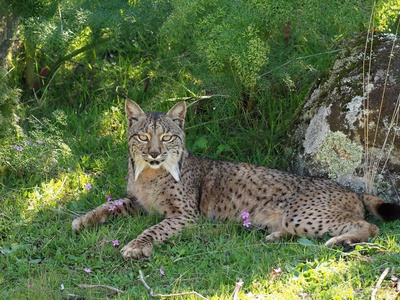
Iberian lynx
The Iberian lynx is one of the world’s rarest cats, restricted to cork‑oak landscapes and scrub. Threats included prey collapse, habitat loss and roadkill; intensive restoration, captive breeding and reintroductions have slowly rebuilt populations in southern Portugal.
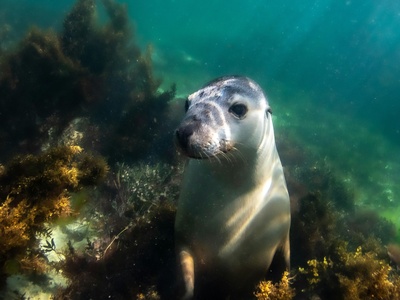
Mediterranean monk seal
Critically endangered marine mammal that uses coastal caves and remote islets to haul out and breed. Small, fragmented colonies face disturbance, fisheries interactions and habitat loss; conservation focuses on protected sites, monitoring and reducing bycatch.
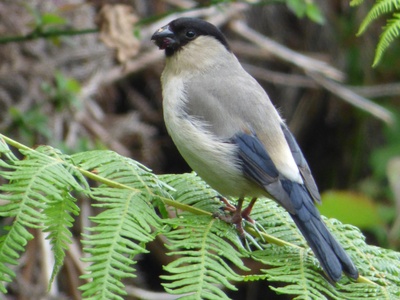
Azores bullfinch
Endemic forest specialist confined to São Miguel’s laurel woodland. Decades of habitat loss, invasive plants and limited range made it rare; habitat restoration and invasive control have improved the outlook but populations remain small and localized.
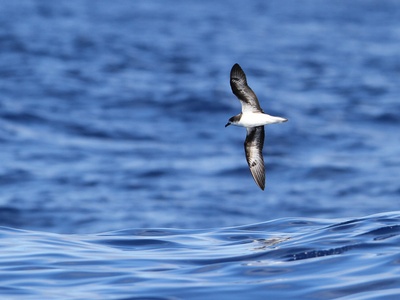
Zino’s petrel
Critically endangered seabird that breeds in high, forested hollows on Madeira. Threats include introduced predators, habitat degradation and light pollution; intensive conservation, predator control and monitoring target recovery of this iconic endemic.
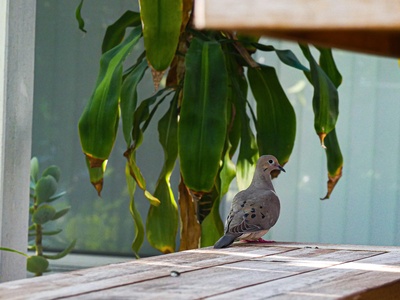
Madeira laurel pigeon
Endemic fruit‑eating pigeon dependent on laurel forests. Small population limited by habitat loss, hunting historically, and predation. Protected areas and habitat restoration have been central to stabilizing numbers.

Monteiro’s storm‑petrel
A small, nocturnal seabird breeding in rock crevices on a few Azores islands. Vulnerable due to introduced predators, light attraction and limited colonies; conservation focuses on nest protection and predator control.
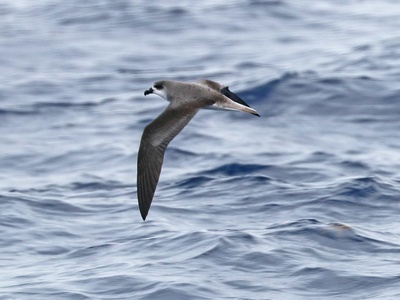
Fea’s petrel
Oceanic breeder that nests on rugged islets. Vulnerable from invasive predators, human disturbance and light pollution; colonies are small but conservation on breeding islets has reduced some threats.
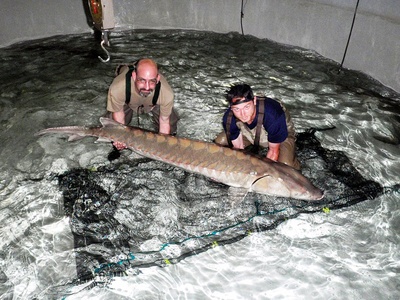
Atlantic sturgeon
Critically endangered anadromous fish once common in Iberian rivers. Now nearly extirpated by dams, habitat loss and overfishing; occasional wanderers appear in coastal waters and strict protection aims for eventual recovery.
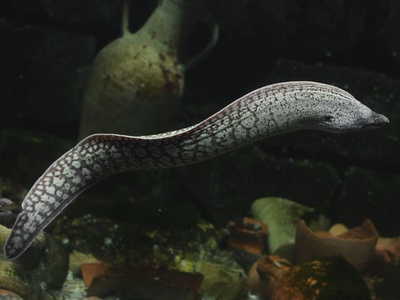
European eel
Catadromous species that migrates to the Sargasso Sea to spawn. Populations collapsed from overfishing, barriers, pollution and disease. Conservation includes fishing limits, habitat restoration and barrier mitigation to help juveniles access inland waters.
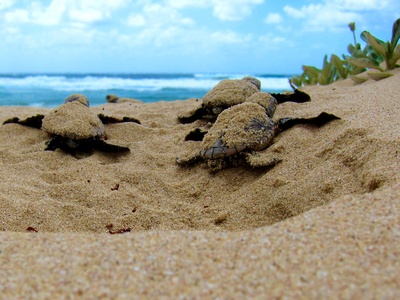
Loggerhead turtle
Vulnerable sea turtle that forages offshore and nests occasionally on southern Portuguese beaches. Threatened by fisheries bycatch, coastal development and light disturbance; monitoring and protected nesting beaches are conservation priorities.
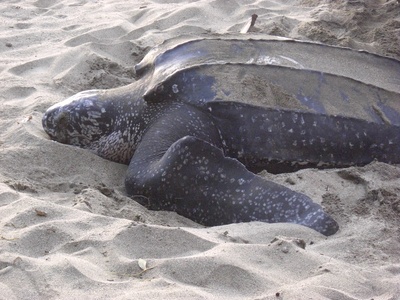
Leatherback turtle
The largest sea turtle, a deep‑diving migratory species visiting Portuguese waters. Rarely seen, leatherbacks face bycatch, plastic ingestion and shifting prey; strandings and at‑sea protections inform conservation efforts.
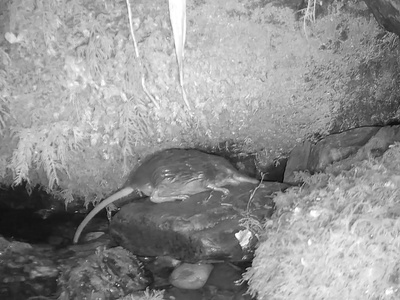
Pyrenean desman
Small, semi‑aquatic mammal with a sensitive, patchy distribution in cold, oxygenated mountain streams. Vulnerable to water pollution, habitat alteration and dams; conservation requires river protection and improved water quality.
Azores noctule
A rare, small bat found only in the Azores. Populations are limited and island‑restricted; threats include habitat loss, light pollution and introduced predators. Monitoring and roost protection are key to its survival.
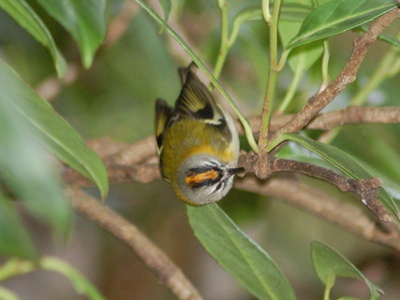
Madeira firecrest
Tiny, endemic songbird confined to native laurel forest. Although globally listed as Least Concern, its restricted range makes it regionally rare; laurel forest conservation and invasive species control maintain habitat quality.
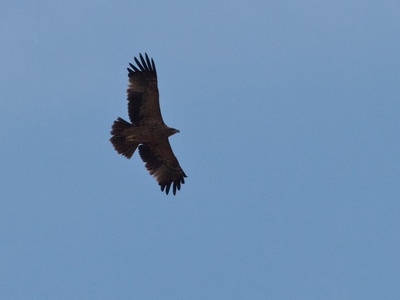
Spanish imperial eagle
Large raptor rare in Portugal, breeding in scattered woodland and farmland. Population decline came from habitat loss, poisoning and electrocution; protection of nests, powerline mitigation and habitat measures have supported recovery in Iberia.
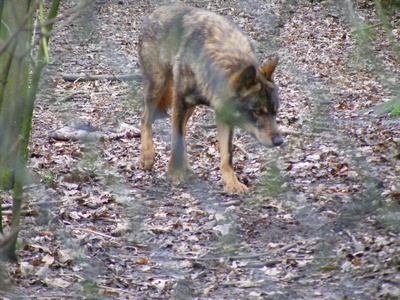
Iberian wolf
Distinct Iberian subspecies or population that is regionally uncommon and protected in northern Portugal. Small, fragmented populations face human–wildlife conflict and habitat fragmentation; coexistence programs and legal protection aim to reduce persecution.
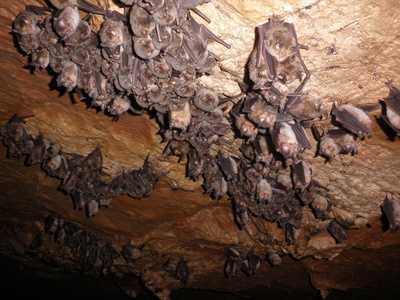
Mehely’s horseshoe bat
A rare bat of southern Iberia reliant on old buildings, caves and foraging grounds. Declines stem from roost disturbance, habitat loss and insect declines; roost protection and habitat management support local colonies.
Madeira storm‑petrel (Fea’s complex)
Small, nocturnal seabirds breeding on remote islets; several Macaronesian forms are limited to the Madeira region. Threatened by introduced predators and disturbance; conservation secures nesting islets and controls invasives.
Madeiran long‑toed pigeon (regional fauna note)
Madeira’s native pigeon is a forest specialist with a small range in humid laurel woodlands. Fragmentation and habitat change historically reduced numbers; ongoing habitat protection and predator control help stabilize populations.
Macaronesian shearwater (Cory’s / regionally distinct colonies)
Large shearwaters form important—but sometimes vulnerable—breeding colonies in Macaronesia. Threats include light pollution, fisheries bycatch and introduced predators on breeding islets; island protection and bycatch mitigation are central to conservation.