Singapore’s green pockets and coastal edges hide more wildlife than many expect — from nocturnal insects in Bukit Timah to frogs in mangroves and freshwater streams. Walking a nature trail or joining a guided survey can reveal species you wouldn’t guess exist in a city-state.
There are 35 Rare Animals in Singapore, ranging from Atlas Moth to Wallace’s Flying Frog. For each species you’ll find below the Scientific name,Status,Where seen (locations), so you can match sightings to habitat and conservation notes you’ll find below.
How can I increase my chances of seeing these rare animals in Singapore?
Visit at the right time (many are most active at dawn, dusk, or night), stick to known habitats like primary forest patches, mangroves and freshwater streams, go slowly and quietly, and join guided walks or citizen-science groups. Use apps (e.g., iNaturalist) to compare photos and learn seasonal patterns.
Are any of the species on this list legally protected or threatened?
Yes — several are listed as threatened or legally protected; check the Status column for each entry. For official protection details consult NParks or the IUCN, and never collect or disturb wildlife — instead report important sightings to local conservation groups.
Rare Animals in Singapore
| Name | Scientific name | Status | Where seen (locations) |
|---|---|---|---|
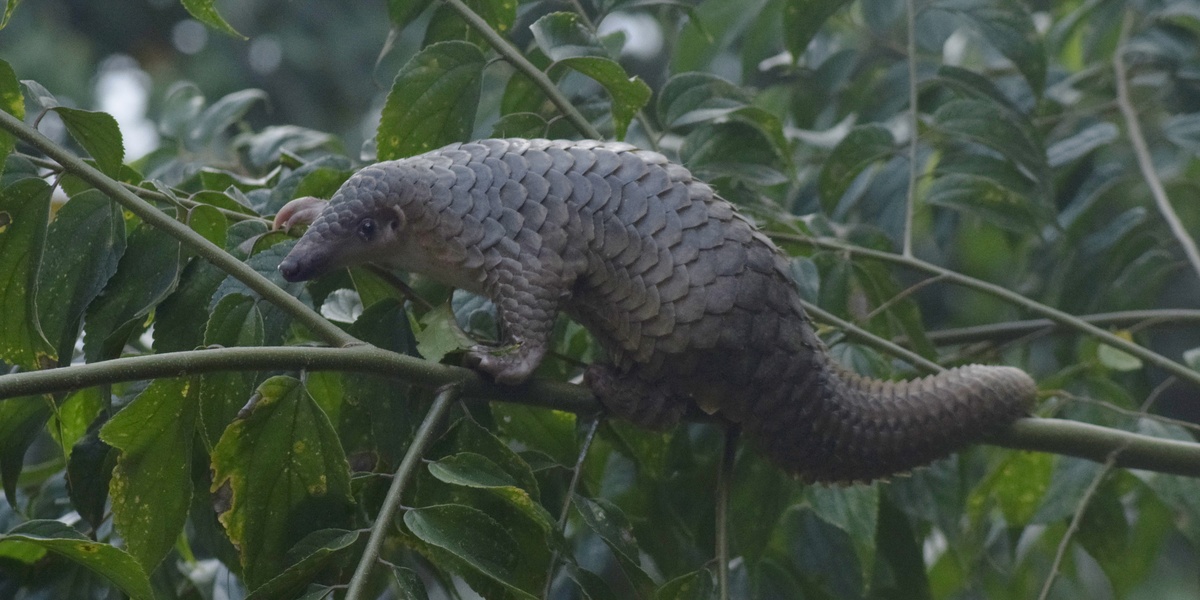
| Sunda Pangolin | Manis javanica | Critically Endangered | Central Catchment and Bukit Timah Nature Reserves, Pulau Ubin, Western Catchment. |
| Raffles’ Banded Langur | Presbytis femoralis femoralis | Critically Endangered | Central Catchment Nature Reserve, specifically around Thomson area. |
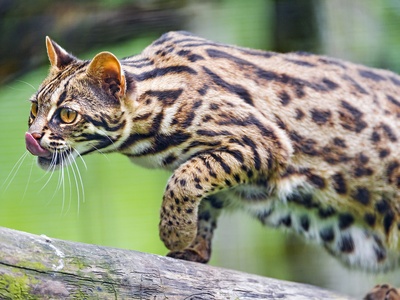
| Leopard Cat | Prionailurus bengalensis | Critically Endangered | Pulau Tekong, Pulau Ubin, and the Western Catchment area. |
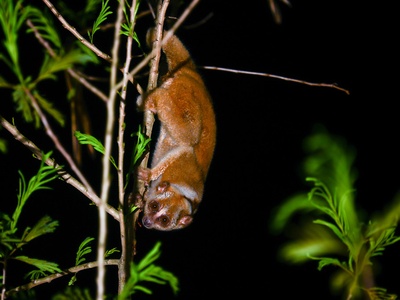
| Sunda Slow Loris | Nycticebus coucang | Critically Endangered | Central Catchment Nature Reserve, Bukit Timah Nature Reserve, and surrounding forests. |
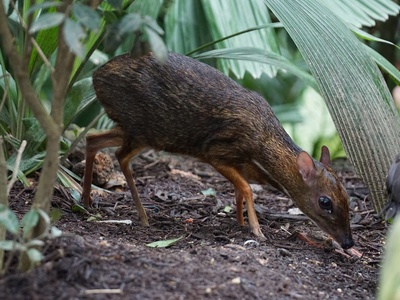
| Lesser Mousedeer | Tragulus kanchil | Endangered | Central Catchment Nature Reserve, Bukit Timah Nature Reserve. |
| Cream-coloured Giant Squirrel | Ratufa affinis | Critically Endangered | Central Catchment Nature Reserve. |
| Malayan Colugo | Galeopterus variegatus | Vulnerable | Central Catchment, Bukit Timah, Singapore Botanic Gardens, Dairy Farm. |
| Dugong | Dugong dugon | Critically Endangered | Johor Strait, especially between Pulau Ubin and Changi. |
| Indo-Pacific Humpbacked Dolphin | Sousa chinensis | Vulnerable | Southern waters of Singapore, around the Southern Islands. |
| Sunda Skunk | Mydaus javanensis | Critically Endangered | Pulau Ubin and Changi, in scrubland and secondary forest. |
| Straw-headed Bulbul | Pycnonotus zeylanicus | Critically Endangered | Pulau Ubin and the Western Catchment. |
| Grey-headed Fish Eagle | Haliaeetus ichthyaetus | Critically Endangered | Central Catchment reservoirs, Poyan Reservoir, Kranji Marshes. |
| Spotted Wood Owl | Strix seloputo | Endangered | Central urban areas, Pasir Ris Park, Pulau Ubin. |
| Mangrove Pitta | Pitta megarhyncha | Endangered | Sungei Buloh Wetland Reserve, Pulau Ubin, Pasir Ris Park. |
| Oriental Pied Hornbill | Anthracoceros albirostris | Endangered | Pulau Ubin, Changi, Central Catchment, St John’s Island. |
| Buffy Fish Owl | Ketupa ketupu | Uncommon | Water bodies in parks and forests, such as Singapore Botanic Gardens and Sungei Buloh. |
| Red-crowned Barbet | Psilopogon rafflesii | Nationally Threatened | Central Catchment and Bukit Timah Nature Reserves. |
| Changeable Hawk-Eagle | Nisaetus cirrhatus | Uncommon | Central Catchment, Bukit Brown, Pulau Ubin. |
| Greater Racket-tailed Drongo | Dicrurus paradiseus | Uncommon | Central Catchment and Bukit Timah Nature Reserves. |
| Estuarine Crocodile | Crocodylus porosus | Critically Endangered | Sungei Buloh Wetland Reserve and northern coastal areas. |
| Hawksbill Sea Turtle | Eretmochelys imbricata | Critically Endangered | East Coast Park beaches and Southern Islands’ reefs. |
| King Cobra | Ophiophagus hannah | Vulnerable | Central Catchment and Bukit Timah Nature Reserves, forested areas. |
| Green Crested Lizard | Bronchocela cristatella | Endangered | Forested areas like Central Catchment and Bukit Timah. |
| Malayan Box Turtle | Cuora amboinensis | Endangered | Forest streams and ponds in the Central Catchment Nature Reserve. |
| Spiny Hill Terrapin | Heosemys spinosa | Critically Endangered | Hill streams within the Central Catchment Nature Reserve. |
| Singapore Blind Snake | Grypotyphlops acuticaudus | Critically Endangered | Bukit Timah Nature Reserve, Central Catchment Nature Reserve. |
| Wallace’s Flying Frog | Rhacophorus nigropalmatus | Critically Endangered | Central Catchment Nature Reserve, especially Nee Soon Swamp Forest. |
| Spotted Tree Frog | Nyctixalus pictus | Critically Endangered | Nee Soon Swamp Forest, Bukit Timah Nature Reserve. |
| Singapore Freshwater Crab | Johora singaporensis | Critically Endangered | Small hill streams in Bukit Timah Nature Reserve. |
| Harlequin Rasbora | Trigonostigma heteromorpha | Critically Endangered | Nee Soon Swamp Forest and upper Peirce Reservoir streams. |
| Atlas Moth | Attacus atlas | Uncommon | Island-wide, but sightings are infrequent and unpredictable. |
| Singapore Blue Tarantula | Omothymus violaceopes | Very Rare | Central Catchment Nature Reserve. |
| Neptune’s Cup Sponge | Cliona patera | Critically Endangered | Waters around Saint John’s Island and Sisters’ Islands Marine Park. |
| Fluted Giant Clam | Tridacna squamosa | Critically Endangered | Coral reefs of the Southern Islands. |
| Mangrove Horseshoe Crab | Carcinoscorpius rotundicauda | Vulnerable | Northern mangrove areas like Sungei Buloh and Kranji. |
Images and Descriptions
Sunda Pangolin
Singapore’s only native pangolin. This shy, nocturnal mammal is covered in protective keratin scales and is one of the most illegally trafficked animals globally. It feeds exclusively on ants and termites.
Raffles’ Banded Langur
An elegant black and white primate endemic to Singapore and southern Johor. A tiny, vulnerable population survives here, threatened by habitat fragmentation. Conservation programs are actively trying to save this iconic species.
Leopard Cat
Singapore’s last remaining wild cat species. This elusive, nocturnal hunter is about the size of a domestic cat but with beautiful leopard-like spots. It is threatened by habitat loss and road accidents.
Sunda Slow Loris
A small, nocturnal primate with huge eyes and a toxic bite. Its slow, deliberate movements help it hunt insects. It is severely threatened by the illegal pet trade and habitat destruction.
Lesser Mousedeer
One of the world’s smallest hoofed animals, standing only 30 cm tall. This timid forest dweller is not a true deer but belongs to its own family. It forages on the forest floor for fallen fruits and leaves.
Cream-coloured Giant Squirrel
A massive and stunningly beautiful squirrel with a creamy white belly and dark upperparts. It forays high in the forest canopy, making it very difficult to spot. Its population is extremely small and fragile.
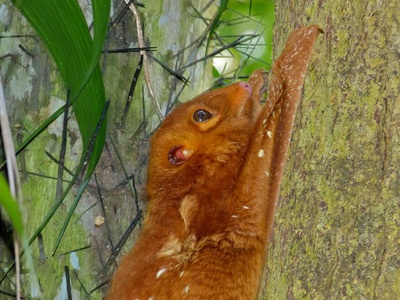
Malayan Colugo
Also known as a flying lemur, this mammal glides between trees using a skin membrane. It is a master of camouflage, often looking like a piece of bark on a tree trunk during the day.
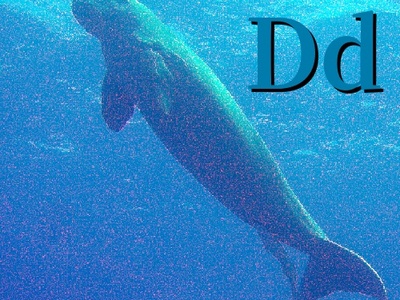
Dugong
A gentle marine mammal, also known as a ‘sea cow’, that feeds on seagrass. Dugongs are threatened by boat collisions and the loss of seagrass meadows. Sightings are extremely rare in Singapore’s waters.
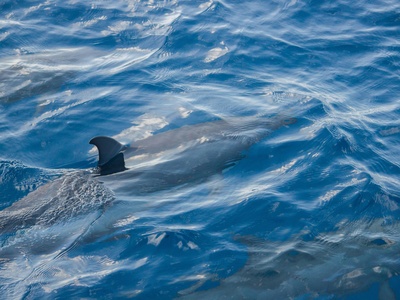
Indo-Pacific Humpbacked Dolphin
Often called ‘pink dolphins’, these marine mammals are a captivating sight. They are typically found in shallow coastal waters and are threatened by heavy marine traffic, pollution, and habitat degradation.
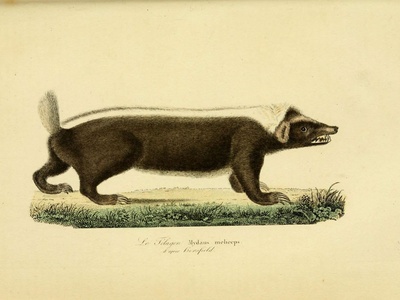
Sunda Skunk
Also known as the Malayan Stink Badger, this powerfully scented mammal is extremely elusive. It uses its long claws to dig for invertebrates and is primarily active at night. Very few people have ever seen it.
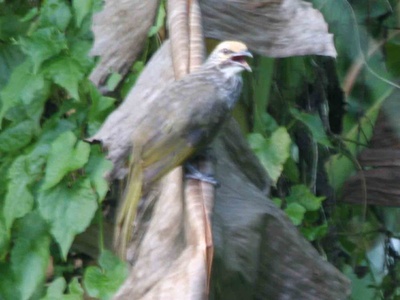
Straw-headed Bulbul
A globally threatened songbird for which Singapore is a crucial stronghold. Prized for its melodious voice, it has been hunted to near extinction elsewhere for the songbird trade. Its loud, bubbly song is unmistakable.
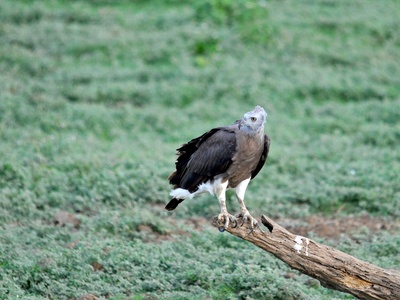
Grey-headed Fish Eagle
A majestic raptor that preys on fish. With a very small local population, it is threatened by water pollution and disturbance to its nesting sites near large, undisturbed water bodies.
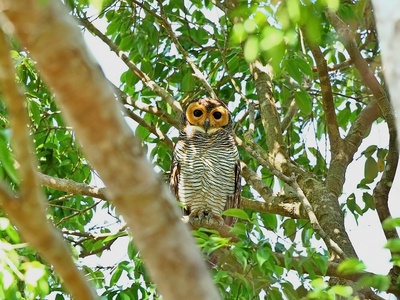
Spotted Wood Owl
A large, beautiful owl with distinctive white spots and no ear tufts. It has adapted surprisingly well to some urban green spaces but remains rare and threatened by a lack of suitable nesting hollows.
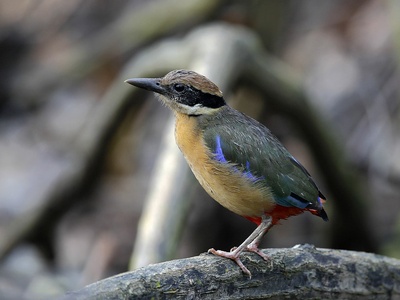
Mangrove Pitta
A brilliantly coloured ‘jewel’ of the mangrove forest. This shy bird forages on the muddy forest floor for crabs and insects. It is threatened by the destruction of its specialized mangrove habitat.
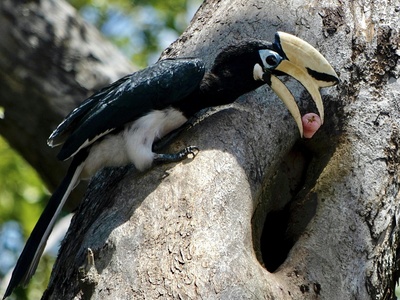
Oriental Pied Hornbill
A large, charismatic bird that was once extinct in Singapore. Thanks to dedicated conservation efforts, it has made a remarkable comeback but still requires protected nest sites in mature trees to thrive.
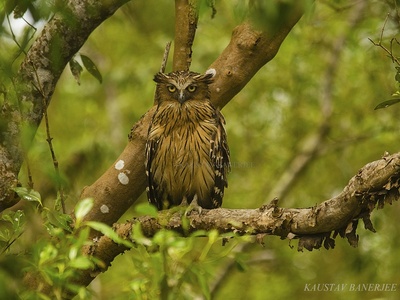
Buffy Fish Owl
A large, tawny-coloured owl with prominent ear tufts that specializes in hunting fish and crustaceans. It is typically found near water and its eerie calls can sometimes be heard at dusk.
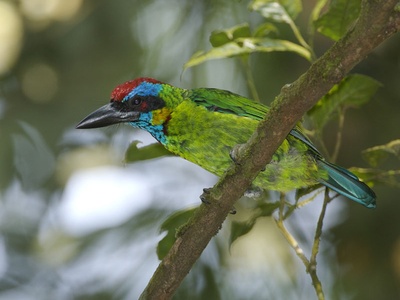
Red-crowned Barbet
A vibrant green bird with a stunningly colourful head. It is a forest specialist that uses its strong bill to excavate nest holes in dead trees, making it dependent on mature forest habitats.
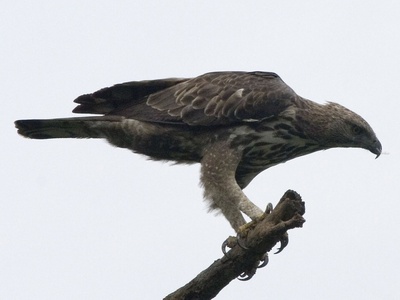
Changeable Hawk-Eagle
A large and powerful bird of prey with a distinct crest. It soars over forests hunting for mammals, birds, and reptiles. It is an uncommon resident, and its presence indicates a healthy forest ecosystem.
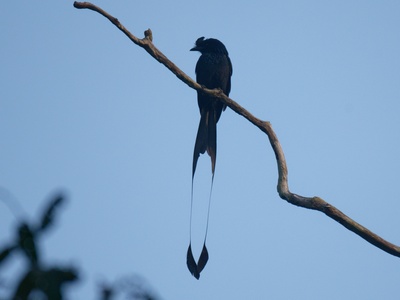
Greater Racket-tailed Drongo
A glossy black forest bird famous for its two long, racket-tipped tail feathers. It is an expert mimic, capable of imitating the calls of many other birds and even the alarm call of squirrels.
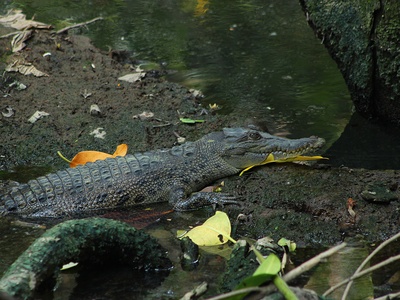
Estuarine Crocodile
The largest living reptile, this powerful predator has made a comeback in Singapore’s mangrove reserves. While the population is growing, it is still very small and vulnerable to habitat disturbance.
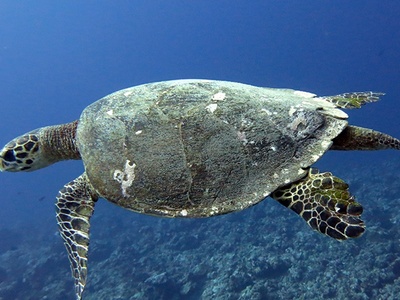
Hawksbill Sea Turtle
Named for its narrow, hawk-like beak, this critically endangered turtle nests on Singapore’s shores. Hatchlings face immense dangers, and adults are threatened by plastic pollution and boat strikes.
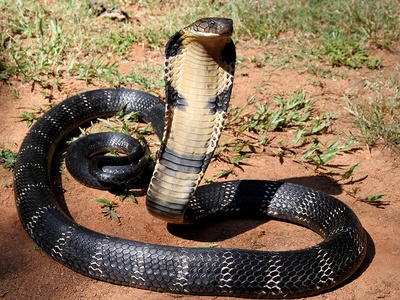
King Cobra
The world’s longest venomous snake, this intelligent hunter feeds primarily on other snakes. Despite its fearsome reputation, it is shy and avoids humans. It is protected but threatened by habitat loss.
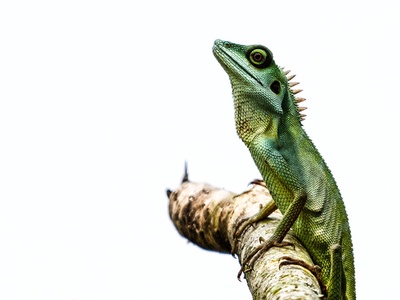
Green Crested Lizard
Singapore’s native green lizard, recognized by the prominent crest on its neck. It has become rare due to competition from the invasive Changeable Lizard and is now mostly restricted to deep forested areas.
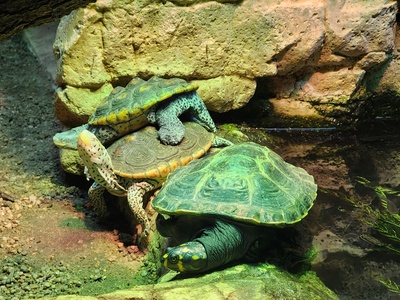
Malayan Box Turtle
A semi-aquatic turtle with a domed shell and a hinged plastron that allows it to fully enclose itself. It is threatened by the illegal pet trade and the degradation of its freshwater habitats.
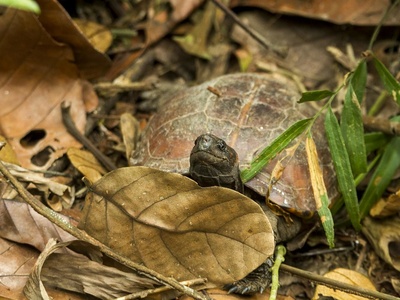
Spiny Hill Terrapin
A unique turtle with a spiky-edged shell, especially prominent in juveniles. This rare forest species is highly threatened by poaching for the pet and food trades, making every individual critically important.

Singapore Blind Snake
An endemic species found only in Singapore. This tiny, harmless burrowing snake is rarely seen as it lives within soil and leaf litter. Its survival is completely dependent on the protection of our last primary forests.
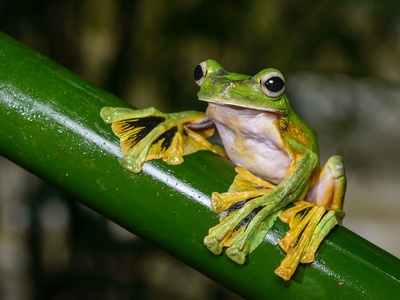
Wallace’s Flying Frog
A spectacular green and yellow frog that can glide from trees using its large, webbed feet. It lives high in the forest canopy, making it extremely difficult to find. It is a symbol of our fragile swamp forest ecosystem.
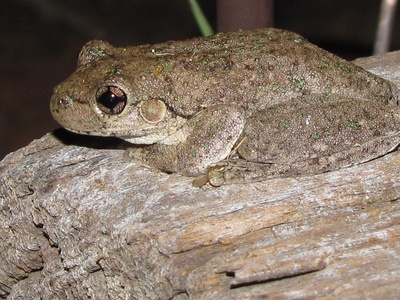
Spotted Tree Frog
A small, beautiful frog with a reddish-brown body covered in tiny white spots. This rare amphibian breeds in water-filled tree holes and is highly sensitive to changes in its forest environment.
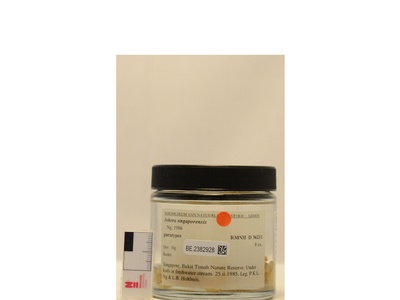
Singapore Freshwater Crab
A tiny crab found nowhere else on Earth. It is one of the world’s 100 most threatened species, living in specific clean, fast-flowing streams. Pollution or drought could wipe out the entire species.
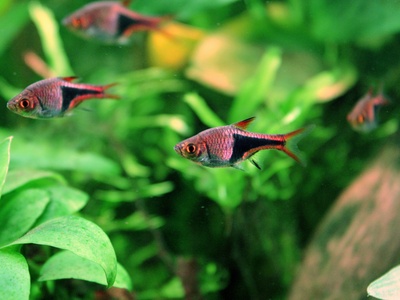
Harlequin Rasbora
A small, popular aquarium fish that is now critically endangered in its native Singaporean habitat. It requires clean, acidic blackwater streams, a habitat that has become exceedingly rare on the island.
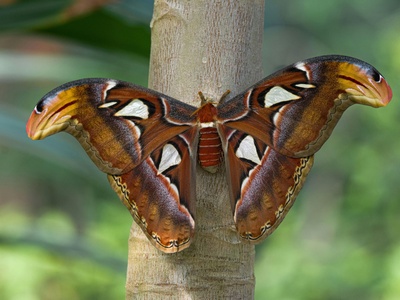
Atlas Moth
One of the largest moths in the world by wing surface area. Its caterpillar is huge, and the adult moth has no mouth, living only for a few days to reproduce. Sightings are a rare and magical treat.
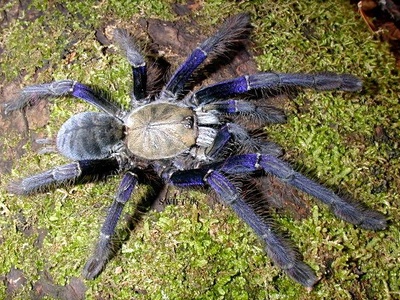
Singapore Blue Tarantula
A large, arboreal tarantula with stunning iridescent blue legs. This spectacular spider is highly sought after in the illegal pet trade and is very rarely seen in its natural habitat in Singapore’s forests.
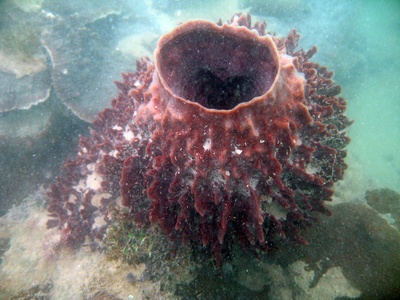
Neptune’s Cup Sponge
Thought to be extinct for over a century, this giant sea sponge was rediscovered in Singapore’s waters in 2011. It is a living fossil, and its protection is a high priority for marine conservation.
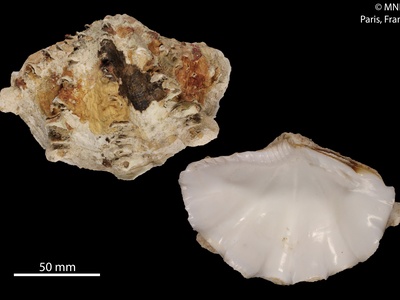
Fluted Giant Clam
The largest of Singapore’s native giant clams, this bivalve is a crucial part of the reef ecosystem. Over-collection and habitat degradation led to its decline, but reintroduction projects are helping it recover.
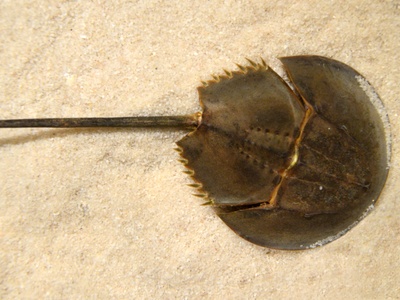
Mangrove Horseshoe Crab
A living fossil that has remained unchanged for millions of years. Its blue blood is vital for medical science. This species is threatened by the loss of its mangrove and mudflat habitats.