A 6-month-old rat is 18 in human years, a 1-year-old rat is about 33 and a 2-year-old is about 64. A mouse ages faster: 6 months is 30, 1 year is 46 and 2 years is 79. This page converts rat and mouse age in human years from 3 weeks old, using the typical lifespan of a well-kept pet: 2.5 years for a rat and 2 years for a mouse. The popular “2.5 human years per rat month” chart gives lower ages for a young adult rat, and the Jackson Laboratory lab-mouse chart gives lower ages for an older mouse.
Enter your pet’s age below. The other pet tools are on the calculators page.
- Pup
- Adolescent
- Young adult
- Adult
- Senior
- Geriatric
- Next human-decade birthday: 20 human years, at 7 months old (in 4 months).
- The senior stage starts at 1 year 6 months (about 49 in human years). Weight, lumps and breathing need more frequent checks.
- The senior stage starts at 1 year 6 months (about 49 in human years).
- The geriatric stage starts at 2 years (about 64 in human years).
- The typical lifespans come from vet manuals and pet-owner sources. Surveys of pet rats report shorter averages. See the method.
Pick rat or mouse, enter an age in weeks, months or years and the calculator returns the human-equivalent age, the life stage and how the result compares with the popular chart or the lab chart. It also runs in reverse, from a person’s age to a rat or mouse age. The rest of this page answers how long pet rats and mice live and shows every chart from the same model.
How to use the rat and mouse years calculator
Pick a species, enter an age and read the human equivalent. The calculator takes four steps.
- Pick rat or mouse. The species sets the typical lifespan, which sets how fast the scale runs after the first months. The calculator covers pet (fancy) rats and house mice. Gerbils, hamsters, spiny mice and deer mice are different animals.
- Enter the age. Use weeks, months or years, or a birth date. Weeks matter below 12 weeks: a 3-week-old and a 6-week-old differ by 11 human years.
- Read the result. You get the human-equivalent age, the life stage and the bars that compare it with the other methods.
- Switch to human to pet years to turn a person’s age into a rat or mouse age. The conversion is the exact inverse of the pet-to-human one.
A rat or mouse older than its species’ typical lifespan is labeled “past the typical lifespan”. That describes where the animal sits on the scale. It is not a prognosis, and some pets live well beyond it with good care. The scale stops at 122 human years, the oldest verified human age.
Also own another pet? The dog years calculator, the cat years calculator and the horse years calculator use the same approach.
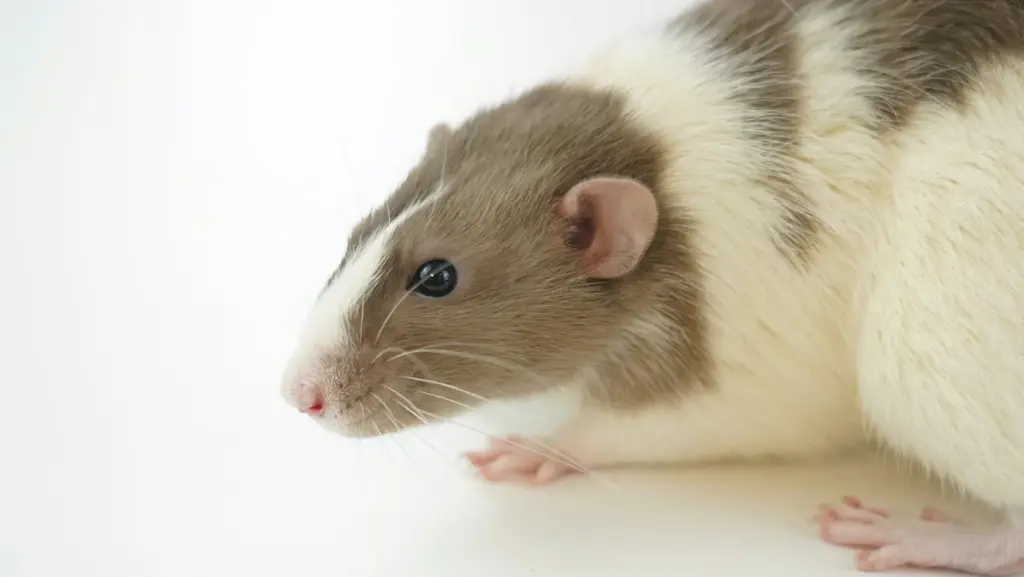
Rat years to human years chart
A 6-month-old rat is 18 in human years, a 1-year-old is 33.3, a 2-year-old is 63.8 and a 30-month-old rat, at the typical lifespan, is 79. The chart covers ages from 3 weeks to 3 years 6 months.
| Rat age | Human years | Life stage |
|---|---|---|
| 3 weeks | 0.5 | Pup |
| 6 weeks | 11.5 | Adolescent |
| 9 weeks | 12.4 | Adolescent |
| 3 months | 13.8 | Adolescent |
| 4 months | 15.2 | Adolescent |
| 6 months | 18.0 | Young adult |
| 9 months | 25.6 | Young adult |
| 1 year | 33.3 | Adult |
| 1 year 3 months | 40.9 | Adult |
| 1 year 6 months | 48.5 | Senior |
| 1 year 9 months | 56.1 | Senior |
| 2 years | 63.8 | Geriatric |
| 2 years 6 months | 79.0 | Geriatric |
| 3 years | 86.6 | Geriatric |
| 3 years 6 months | 94.3 | Geriatric |
The first rows look odd. A rat at 3 weeks is 0.5 and at 6 weeks is 11.5. Both come from the published anchors: weaning at about 3 weeks pairs with a human baby weaned at 6 months, and sexual maturity at about 6 weeks pairs with human puberty at 11.5 years (Sengupta 2013). A rat covers 11 human years in three weeks. After 6 months the pace settles at about 2.5 human years per rat month, which is why the popular rule works for adults.
The chart in a short form: 3 weeks = 0.5, 6 weeks = 11.5, 6 months = 18, 1 year = 33, 18 months = 49, 2 years = 64, 30 months = 79, 3 years = 87.
Mouse years to human years chart
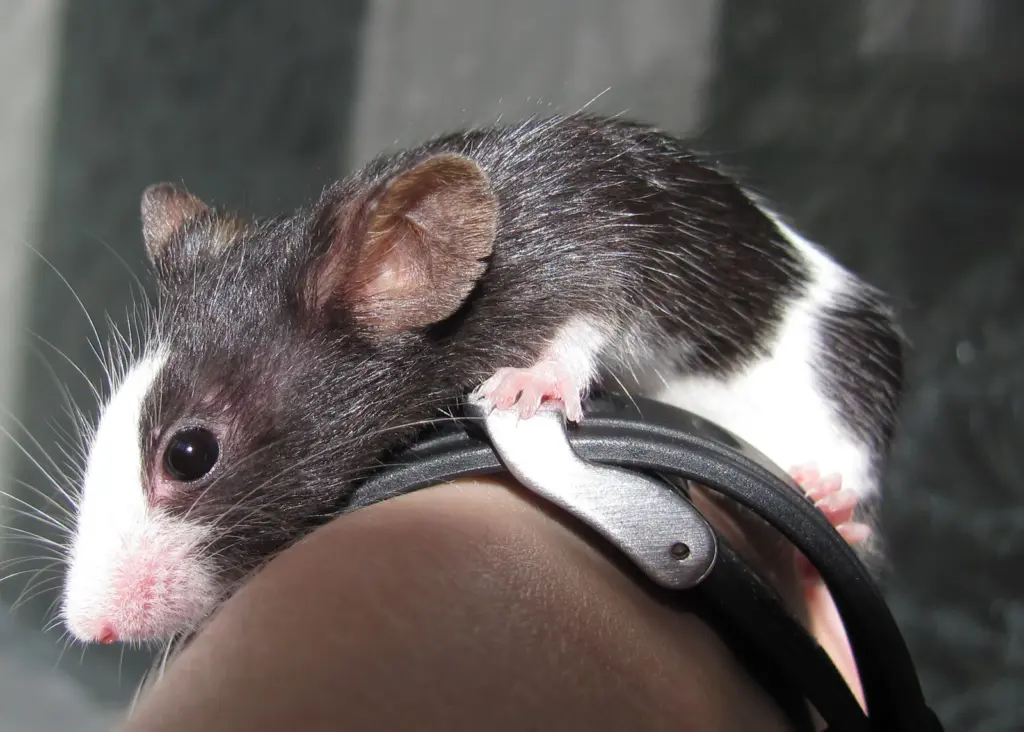
A 3-month-old mouse is 20 in human years, a 6-month-old is 30, a 1-year-old is 46.3 and a 2-year-old, at the typical lifespan, is 79.0. A mouse reaches human adulthood at 3 months, three months sooner than a rat reaches 18.
| Mouse age | Human years | Life stage |
|---|---|---|
| 3 weeks | 0.5 | Pup |
| 6 weeks | 11.5 | Adolescent |
| 9 weeks | 14.8 | Adolescent |
| 3 months | 20.0 | Young adult |
| 4 months | 23.3 | Young adult |
| 6 months | 30.0 | Young adult |
| 9 months | 38.2 | Young adult |
| 1 year | 46.3 | Adult |
| 1 year 3 months | 54.5 | Adult |
| 1 year 6 months | 62.7 | Senior |
| 1 year 9 months | 70.8 | Senior |
| 2 years | 79.0 | Geriatric |
| 2 years 6 months | 87.2 | Geriatric |
| 3 years | 95.3 | Geriatric |
Mice share the rat’s early anchors: 0.5 at 3 weeks and 11.5 at 6 weeks. The difference starts at 3 months. The Jackson Laboratory puts a mature adult mouse at 3 to 6 months, equal to 20 to 30 human years, and the calculator uses those two points. A mouse is 40.9 at 10 months, the start of the JAX “middle-aged” group, and 62.7 at 18 months.
The chart in a short form: 3 weeks = 0.5, 6 weeks = 11.5, 3 months = 20, 6 months = 30, 1 year = 46, 18 months = 63, 2 years = 79, 3 years = 95.
Human years to rat and mouse years chart
A 10-year-old child matches a rat or mouse of 6 weeks, an 18-year-old matches a 6-month-old rat or an 11-week-old mouse, and a 50-year-old matches a rat of 1 year 7 months or a mouse of 1 year 1 month. Find the human age in the first column.
| Human age | Rat | Mouse |
|---|---|---|
| 10 | 6 weeks | 6 weeks |
| 18 | 6 months | 11 weeks |
| 30 | 11 months | 6 months |
| 40 | 1 year 3 months | 10 months |
| 50 | 1 year 7 months | 1 year 1 month |
| 60 | 1 year 11 months | 1 year 5 months |
| 70 | 2 years 2 months | 1 year 9 months |
| 79 | 2 years 6 months | 2 years |
| 90 | 3 years 3 months | 2 years 8 months |
How long do pet rats live?
Pet rats typically live 2 to 3 years. The calculator uses 2.5 years (30 months) as the typical lifespan of a well-kept pet rat, and a rat at that age is 79 in human years. That figure is a judgment placed inside the published ranges. No study has followed pet rats from birth to death, so no measured median exists.
| Source | Figure for pet rats | What it is |
|---|---|---|
| MSD Veterinary Manual, Mice and Rats as Pets | 18 to 36 months | Average lifespan. Another MSD page says 1.5 to 3 years. |
| Vet Times (Mancinelli 2015) | 2.5 to 3 years | Veterinary trade press |
| Guinness World Records | 2 to 2.5 years | Typical lifespan, on the oldest-rat page |
| A UK pet-rat survey reported by ratbehavior.org (Clark 2004) | Mean 21.6 months; 95% dead by age 3 | Cohort figure. We could not find the original survey. |
| Neville et al. 2021, Veterinary Record | Owner’s oldest rat typically 1.5 to 2 years; 1.79% of owners had a rat over 3 | 677 UK owners and 3,893 rats, recruited online. It counts living rats, not age at death. |
| This calculator | 30 months | Typical lifespan of a well-kept pet |
The survey figures run lower than the vet-manual ranges because they cover every pet rat, healthy or not. The calculator targets the typical lifespan of a well-kept pet and shows the survey numbers next to it so you can judge.
Why do rats live only 2 to 3 years?
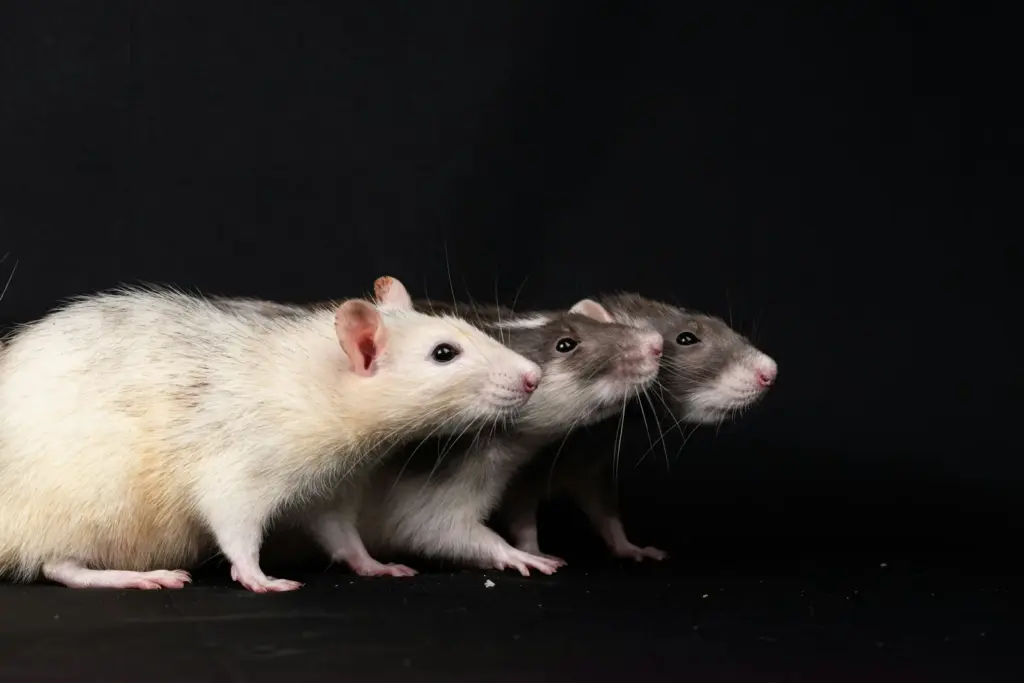
Rats develop fast. They are weaned at about 3 weeks and sexually mature at about 6 weeks, while a human reaches puberty at 11 to 12 years. We found no source that explains the short lifespan beyond that, and disease takes a large share. In the Neville survey owners reported respiratory problems (60.4%), tumours (36.6%), abscesses or cysts (31.2%) and hind leg degeneration (25.0%), and most of these were more likely in older rats. The MSD manual says most pet rats have chronic respiratory disease to some degree and that rats with it “rarely live longer than 2 years”.
How long do pet mice live?
Pet mice typically live 18 to 24 months. The calculator uses 2 years (24 months), the top of that range, as the typical lifespan of a well-kept pet mouse, and a mouse at that age is 79 in human years. As with rats, no cohort study of pet mice exists, so the figure is a judgment.
| Source | Figure for mice | What it is |
|---|---|---|
| MSD Veterinary Manual, Mice and Rats as Pets | 18 to 24 months | Average lifespan. Its physiology table lists 1 to 3 years. |
| Pet-care sources | 1.5 to 2.5 years | No cohort behind the figure |
| The Jackson Laboratory | Over 24 months is “very old” | Lab mice. Survivorship “drops off markedly” after that age. |
| AnAge database | Maximum 4 years | A male of a wild-derived lab strain, not a typical pet |
| This calculator | 24 months | Typical lifespan of a well-kept pet |
We placed the mouse at the top of the MSD range because 24 months is also where JAX starts calling lab mice very old. A shorter lifespan would make every mouse older on the scale after 6 months. Cancer is the main cause of death in lab house mice (AnAge), and the MSD manual says mouse mammary tumours are nearly always malignant, unlike the mostly benign mammary tumours of rats.
Rat life stages, from pup to geriatric
A rat is a pup until 6 weeks, an adolescent until 6 months, a young adult until 12 months, an adult until 18 months, a senior from 18 months and geriatric from 24 months. The calculator fixes these boundaries because the species’ typical lifespan is fixed.
| Life stage | Age | Human years |
|---|---|---|
| Pup | Birth to 6 weeks | 0 to 12 |
| Adolescent | 6 weeks to 6 months | 12 to 18 |
| Young adult | 6 months to 12 months | 18 to 33 |
| Adult | 12 months to 18 months | 33 to 49 |
| Senior | 18 months to 24 months | 49 to 64 |
| Geriatric | 24 months and older | 64 and older |
- Pup (birth to 6 weeks, human 0 to 11.5): nursing, then weaning at about 3 weeks. Sexual maturity arrives at about 6 weeks in the lab literature. The MSD manual gives 6 to 10 weeks for males and 8 to 12 weeks for females, so 6 weeks is the early edge.
- Adolescent (6 weeks to 6 months, human 11.5 to 18): a rat reaches social maturity at 5 to 6 months (Sengupta 2013, citing Adams and Boice 1983).
- Young adult (6 to 12 months, human 18 to 33.3): skeletal growth tapers at 7 to 8 months in Sprague-Dawley lab rats.
- Adult (12 to 18 months, human 33.3 to 48.5): a French study of 375 pet rats advised one vet visit around 15 months to find lumps early (Rey et al. 2015). Female rats show reproductive decline at 15 to 20 months (Sengupta 2013).
- Senior (18 to 24 months, human 48.5 to 63.8): the Jackson Laboratory’s “old” band for mice starts at 18 months. No separate cut-off has been published for rats, so the calculator uses the same one.
- Geriatric (24 months on, human 63.8 and up): spinal cord degeneration appears in rats older than 2 years (MSD), and Mancinelli (2015) reports it in 75 to 90% of older rats.
A rat becomes geriatric at 24 months, 6 months before its typical lifespan of 30.
Mouse life stages, from pup to geriatric
A mouse is a pup until 6 weeks, an adolescent until 3 months, a young adult until 10 months, an adult until 18 months, a senior from 18 months and geriatric from 24 months. The adult and senior bands follow the Jackson Laboratory’s lab chart.
| Life stage | Age | Human years |
|---|---|---|
| Pup | Birth to 6 weeks | 0 to 12 |
| Adolescent | 6 weeks to 3 months | 12 to 20 |
| Young adult | 3 months to 10 months | 20 to 41 |
| Adult | 10 months to 18 months | 41 to 63 |
| Senior | 18 months to 24 months | 63 to 79 |
| Geriatric | 24 months and older | 79 and older |
- Pup (birth to 6 weeks, human 0 to 11.5): weaned at about 21 days. JAX puts sexual maturity at around 35 days and the MSD manual at 6 to 8 weeks.
- Adolescent (6 weeks to 3 months, human 11.5 to 20): between sexual maturity and the JAX mature-adult band.
- Young adult (3 to 10 months, human 20 to 40.9): JAX’s mature adult group is 3 to 6 months, equal to 20 to 30 human years.
- Adult (10 to 18 months, human 40.9 to 62.7): JAX’s middle-aged group starts at 10 months, extended here to 18.
- Senior (18 to 24 months, human 62.7 to 79.0): JAX’s “old” band, where senescent changes show in almost all biomarkers.
- Geriatric (24 months on, human 79.0 and up): JAX calls mice over 24 months “very old”.
A mouse becomes geriatric exactly at its typical lifespan, which is why the mouse stage and the “past the typical lifespan” label arrive together.
How to tell a rat’s or mouse’s age
You cannot tell a pet rat’s or mouse’s age reliably at home after the first 6 to 8 weeks. Ask the breeder, shelter or pet store for a birth date, and when none exists, enter a range in the calculator and read both ends.
- Weight is a poor guide. In lab rats, males weighing 250 to 274 g ranged in age from 49 to 70 days, and same-age males differed by up to 100 g (Sengupta 2013). Adult pet females weigh 350 to 450 g and adult males 450 to 650 g (MSD), so size tells you a rat is adult, not how old.
- Early life has landmarks. Both species are weaned at about 3 weeks. Mice are sexually mature at 6 to 8 weeks, male rats at 6 to 10 weeks and female rats at 8 to 12 weeks (MSD).
- Later life has none that we could verify. Lab methods such as eye-lens weight work only up to 3 to 4 months of age (Sengupta 2013) and are not tools an owner can use. Web claims about incisor colour darkening have no source.
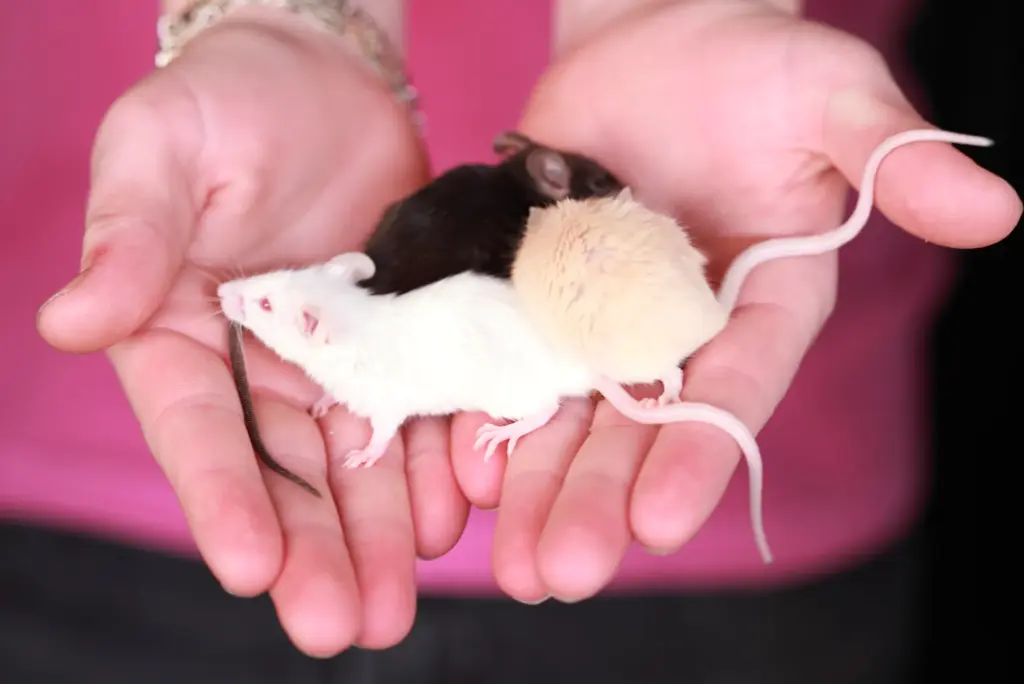
Use a known birth date when you have one, and treat any age estimate for an animal of unknown history as a guess.
Signs of ageing and caring for an older rat or mouse
An older rat or mouse needs more vet attention, not less. Disease is common in rats after about 2 years, and the signs below are worth a visit at any age.

- Weight loss and lethargy. Common in old rats but not specific to any one disease (Mancinelli 2015).
- Weak or dragging hind legs. Spinal degeneration, mostly in rats older than 2 years.
- Lumps. Mammary tumours are the most common rat tumour and most are benign fibroadenomas (MSD). Check your rats for new lumps regularly. In mice, mammary tumours are nearly always malignant, so a lump on a mouse needs a prompt vet visit.
- Head tilt, circling or depression. Signs of a pituitary tumour, which is common in older rats, especially females.
- Sneezing or breathing changes. Respiratory disease is the most commonly reported problem in pet rats.
- Red tears. Porphyrin staining around the eyes and nose is a non-specific sign of stress. It does not point to a single cause.
- Kidney disease. Chronic progressive nephrosis is the most common disease of aged rats, and it is worse in males. Early signs overlap with the weight loss and lethargy above, so a vet check is the way to find it.
- Weight and diet. Obesity is common in pet rats and mice. Restricting calories without causing malnutrition lengthens life, and pituitary tumours increase with high-calorie diets (MSD).
Weigh your pet on a kitchen scale so that weight loss shows early. Ask a vet who treats exotic pets how often a senior check-up is due, and book the first one at the senior age this calculator shows.

Do male and female rats and mice live equally long?
No study has published a lifespan difference by sex for pet rats or pet mice, so the calculator has no sex setting. The evidence is about which diseases each sex gets, and it is clear for rats.
| Problem | Which rats it affects more | Source |
|---|---|---|
| Mammary tumours | Females. In 375 rats seen at three French centres, 22% had surgery, more often females because of mammary tumours. | Rey et al. 2015; MSD; Neville et al. 2021 |
| Pituitary tumours | Common, especially in females | MSD |
| Kidney disease (chronic progressive nephrosis) | Males: it starts earlier and is more severe. Incidence of up to 75% is reported in males. | MSD; Mancinelli 2015 |
| Abscesses and cysts | Owners of male rats reported them more often | Neville et al. 2021 |
Spaying female rats before 7 months reduces the later risk of mammary tumours (MSD). That is a vet decision. For mice we found no pet data by sex. The MSD manual notes that male mice generally fight when housed together.
Hairless rats and other varieties
The calculator uses one curve for every rat and mouse variety, because no source gives a lifespan by variety. Hairless rats are the one variety people ask about. Pet-care websites say hairless rats have more health problems and shorter lives, but their figures contradict each other, from under 1 year to 2.5 years, and none cites a survey or clinic data. Wikipedia’s version of the claim carries “citation needed” tags.

The Neville survey did not collect variety data and its authors call for it as future work. Dumbo (an ear type), rex and other coat types are in the same position. If you keep a hairless rat, treat the shorter-life claim as unproven and take any skin or breathing change to a vet. The calculator will not show your rat as older or younger.
Rat and mouse years vs “2.5 per month” and the lab chart
The popular rat rule, 2.5 human years per rat month, agrees with this calculator at 6 weeks and 6 months and runs about 3 to 4 years lower from 12 to 24 months. The JAX lab-mouse chart agrees at 3 and 6 months and runs 6 to 10 years lower from 18 to 24 months. The tables show both against the calculator.
Rats
| Rat age | This calculator | Popular chart (2.5 human years per rat month) | 3 human years per rat month (lab review) |
|---|---|---|---|
| 6 weeks | 11.5 | 11.5 | 4.1 |
| 6 months | 18.0 | 18.0 | 18.0 |
| 1 year | 33.3 | 30.0 | 36.0 |
| 1 year 6 months | 48.5 | 45.0 | 54.0 |
| 2 years | 63.8 | 60.0 | 72.0 |
| 2 years 6 months | 79.0 | 75.0 | 90.0 |
| 3 years | 86.6 | 90.0 | 108.0 |
The popular chart comes from ratbehavior.org, a page that calls itself “a fun exercise and should not be taken too seriously”. It cites Ruth (1935) for 2.5 human years per rat month. Andreollo and colleagues (2012) repeat it for adult rats. It is a flat rate from 12 months. It gives a 3-week-old rat 5.7 where this calculator gives 0.5, because the calculator ties weaning to a human baby of 6 months.
The “3 human years per rat month” column quotes the Sengupta 2013 abstract, which says one rat month in adulthood equals three human years. In the paper that figure is an average over the first 7 months of life, not a rate for older rats. Applied at every age it makes a 3-year-old rat 108 and a 3.5-year-old rat 126, above the 122 cap.
The popular chart is lower than this calculator through the first two years (30.0 against 33.3 at 12 months, 60.0 against 63.8 at 24) and then crosses it: at 36 months it gives 90.0 against 86.6 here. The difference comes from the lifespan. This calculator stretches 30 months to 79 human years, and the flat rule adds the same amount each month.
Mice
| Mouse age | This calculator | Jackson Laboratory life-stage chart (lab mice) | 9 mouse days per human year (whole-life average) |
|---|---|---|---|
| 6 weeks | 11.5 | 9.2 | 4.7 |
| 3 months | 20.0 | 20.0 | 10.1 |
| 6 months | 30.0 | 30.0 | 20.3 |
| 1 year | 46.3 | 42.5 | 40.6 |
| 1 year 6 months | 62.7 | 56.0 | 60.9 |
| 2 years | 79.0 | 69.0 | 81.2 |
| 2 years 6 months | 87.2 | 82.0 | 101.5 |
| 3 years | 95.3 | 95.0 | 121.8 |
No popular mouse rule exists. The Jackson Laboratory chart (figure adapted from Flurkey, Currer and Harrison 2007) is the standard lab reference. It prints ranges, such as 56 to 69 human years for 18 to 24 months, so the column uses one end of each range and straight lines between points. Extended on that line the JAX chart reaches 79 at about 28.6 months. This calculator sets 79 at 24 months to match the typical lifespan of a pet mouse, so after 6 months it reads older than the lab chart.
The “9 mouse days per human year” column is the whole-lifespan ratio in the abstract of Dutta and Sengupta (2016). Their abstract says it does not hold when each life phase is taken separately. The column shows why: a 6-week-old mouse comes out at 4.7 against 11.5 for a human child at puberty.
Oldest rats and mice on record
The oldest pet rat on record is Rodney, who lived 7 years 4 months and died on 25 May 1990 in Tulsa, Oklahoma, according to Guinness World Records. It lists a Pacific pocket mouse as the oldest mouse, which is a different species from the house mouse.
| Record | Animal | Age |
|---|---|---|
| Oldest rat | Rodney, a pet common rat (born January 1983, died 25 May 1990) | 7 years 4 months |
| Oldest mouse | Patrick Stewart, a Pacific pocket mouse at San Diego Zoo Wildlife Alliance (born 14 July 2013) | 9 years 180 days on 10 January 2023 |
| Longest-lived lab rat (AnAge) | Rattus norvegicus | 3.8 years; 4.6 years under calorie restriction |
| Longest-lived lab house mouse (AnAge) | Mus musculus, a male of a wild-derived strain | 4 years |
Treat Rodney as an outlier. The claim’s authenticity has been questioned, and the longest lab rat is 3.8 years. The calculator accepts rat ages up to 8 years and mouse ages up to 6, and it caps the result at 122 human years. A rat reaches the cap at 5.3 years and a mouse at 4.6 years, above the credible lab maxima and below Rodney.
How this calculator works
The calculator pairs published developmental milestones with human ages, then runs a straight line to the species’ typical lifespan and slows down after it. It is the same method as the horse years calculator.
The model
- Fixed anchors. Birth is 0. A rat or mouse of 3 weeks is 0.5, because weaning pairs with a human baby of 6 months. At 6 weeks it is 11.5, the age of human puberty. A rat is 18 at 6 months, when it reaches social maturity. A mouse is 20 at 3 months and 30 at 6 months, the two ends of the JAX mature-adult band.
- Linear to the typical lifespan. After the last anchor the scale is a straight line chosen so that the typical lifespan maps to 79, the 2024 US life expectancy at birth (CDC NCHS Data Brief 548). A rat gains 2.542 human years per month (30.5 a year) and a mouse 2.722 (32.7 a year).
- A slower tail. Past the typical lifespan each month counts half as much: 1.271 human years for a rat and 1.361 for a mouse. The factor is a modelling choice, checked against record ages. The result is capped at 122.
- Species only. There is no variety or sex input, because no source supports a lifespan for either.
Data
The rat anchors come from Sengupta (2013) and the MSD Veterinary Manual, and the mouse anchors from the Jackson Laboratory and the MSD manual. The rat and mouse lifespans are judgments within the vet-manual ranges, set to the typical lifespan of a well-kept pet rather than the lower cohort figures. Nothing in the sources states 2.5 or 2 years as such.
Validation
- Human age never decreases as pet age rises. The check covered 2,389 pairs of species and age, from birth to the species maximum in 0.05-month steps, with 0 violations.
- Converting a human age back to a pet age returns the original to within 0.064 months (0.28 weeks), even after the human age is rounded to one decimal.
- The calculator reproduces the popular rat chart at 6 weeks (11.5) and 6 months (18.0), and the JAX chart at 3 months (20.0) and 6 months (30.0).
- A rat at 7 months is 20.5 against Sengupta’s 20, and at 19.7 months, the paper’s reproductive-senescence point, it is 52.8 against the paper’s 51.
Limitations
- The typical lifespan is an estimate for a well-kept pet, not a prognosis. The calculator shows how far along its expected life an animal is and does not predict how long yours will live.
- No cohort data on pet rodent lifespans exists. The cohort-style numbers we found are one unverified UK survey mean (21.6 months) and one owner survey of living rats.
- The mouse anchors at 3 and 6 months rest on the JAX chart, a lab reference. We read only the abstract of Dutta and Sengupta (2016). Its puberty and adult-onset values come from summaries of the paper and are not checked against the full text.
- The rat’s senior and geriatric boundaries are borrowed from lab and vet-manual statements, because no rat-specific cut-offs have been published.
- One curve covers every variety and both sexes.
- No measurement defines a rat’s or mouse’s “human age”. Every conversion, including this one, is a model.
Sources
- Sengupta P (2013). The laboratory rat: relating its age with human’s. International Journal of Preventive Medicine 4(6):624-630. PMC3733029
- Dutta S, Sengupta P (2016). Men and mice: relating their ages. Life Sciences 152:244-248. PMID 26596563
- The Jackson Laboratory (2017). When are mice considered old? Figure adapted from Flurkey K, Currer JM, Harrison DE (2007), The Mouse in Biomedical Research, 2nd ed., vol 3.
- MSD Veterinary Manual. Mice and rats as pets; Disorders and diseases of rats; Description and physical characteristics of rats.
- Neville VM, Mounty J, Benato L, Hunter K, Mendl MT, Paul ES (2021). Pet rat welfare in the United Kingdom: the good, the bad, and the ugly. Veterinary Record 189(6):e559. doi:10.1002/vetr.559
- Rey F, Bulliot C, Bertin N, Mentre V (2015). Morbidity and disease management in pet rats: a study of 375 cases. Veterinary Record 176(15):385. PMID 25745083
- Mancinelli E (2015). Health problems in geriatric rats. Vet Times, 20 July.
- Andreollo NA, Santos EF, Araujo MR, Lopes LR (2012). Rat’s age versus human’s age: what is the relationship? ABCD Arquivos Brasileiros de Cirurgia Digestiva 25(1). SciELO
- Rat Behavior and Biology. How old is a rat in human years? (cites Ruth 1935, Adams and Boice 1983, Durbin 1966, Pass and Freeth 1993 and Clark 2004; we did not find the originals).
- Guinness World Records. Oldest rat ever and Oldest mouse.
- AnAge database. Rattus norvegicus and Mus musculus.
- Kochanek KD, Murphy SL, Xu JQ, Arias E (2026). Mortality in the United States, 2024. NCHS Data Brief 548 (US life expectancy 79.0 years).
The lifespans, all conversions and the charts are florafaunafun.com calculations, and the original authors did not review or endorse them.
How long do pet rats live?
Pet rats typically live 2 to 3 years. The MSD Veterinary Manual gives 18 to 36 months, and a UK pet-rat survey reported by ratbehavior.org found a mean of 21.6 months with 95% dead by age 3. No study has followed pet rats from birth to death, so this calculator uses 2.5 years (30 months) as the typical lifespan of a well-kept pet, not a prognosis for any one rat.
How long do pet mice live?
Pet mice typically live 18 to 24 months, according to the MSD Veterinary Manual, and pet-care sources quote 1.5 to 2.5 years. This calculator uses 2 years (24 months) as the typical lifespan of a well-kept pet mouse. No cohort study of pet mice exists, and the number is a guide rather than a prediction for an individual mouse.
How old is a 1-year-old rat in human years?
About 33 (33.3). A 6-month-old rat is 18, an 18-month-old is 48.5 and a 2-year-old is 63.8. A rat reaches human puberty (11.5) at 6 weeks and adulthood (18) at 6 months, then gains about 2.5 human years per rat month until its typical lifespan of 30 months, which equals 79.
How old is a 1-year-old mouse in human years?
About 46 (46.3). A mouse is 20 at 3 months, 30 at 6 months, 62.7 at 18 months and 79 at 2 years. It reaches human adulthood at 3 months, three months before a rat does, and gains about 2.7 human years per month after 6 months.
Is 1 rat month 2.5 human years?
Close to it for an adult rat: this calculator gains 2.54 human years per rat month after 6 months. Before that the rule fails, because a rat goes from 0.5 at 3 weeks to 11.5 at 6 weeks to 18 at 6 months. The Sengupta 2013 lab review says 3 per month, an average over the first 7 months.
When is a rat or mouse a senior?
A rat or mouse is a senior from 18 months. That is 48.5 human years for a rat and 62.7 for a mouse. Both are geriatric from 24 months, at 63.8 human years for a rat and 79.0 for a mouse. Spinal degeneration and kidney disease become common in rats around 2 years, so book a senior check-up at 18 months.
How can you tell how old a rat or mouse is?
You cannot tell reliably at home after 6 to 8 weeks. Weight is a poor guide: in lab rats, males weighing 250 to 274 g ranged from 49 to 70 days old, and same-age males differed by up to 100 g. Use a birth date from the breeder or shelter. For an animal of unknown age, enter a range in the calculator and read both ends.
Do male or female rats live longer?
No study has published a lifespan difference by sex for pet rats, but the diseases differ. In 375 pet rats at three French centres, 22% had surgery, more often females because of mammary tumours. Kidney disease starts earlier and is worse in males, and up to 75% incidence is reported. The calculator has no sex setting because no lifespan figure supports one.
Do hairless rats live shorter lives?
Pet-care websites say so, with figures from under 1 year to 2.5 years that contradict each other, and none cites survey or clinic data. A 2021 UK survey of 677 owners did not collect variety data. Treat the claim as unproven. The calculator uses one curve for every variety, so a hairless rat is not shown older or younger.
What is the oldest rat or mouse ever?
The oldest pet rat on record is Rodney, who lived 7 years 4 months and died on 25 May 1990, according to Guinness; its authenticity has been questioned. The oldest mouse is Patrick Stewart, a Pacific pocket mouse that reached 9 years 180 days at a zoo. That is a different species from the house mouse, whose lab maximum is about 4 years.
How do I convert human years to rat years or mouse years?
A person of 18 matches a rat of 6 months and a mouse of 11 weeks. A person of 40 matches a rat of 1 year 3 months and a mouse of 10 months, and a person of 79 matches a rat of 2 years 6 months and a mouse of 2 years. Switch the calculator to human to pet years for any age. It is the exact inverse of the pet-to-human conversion.
How accurate is a rat years or mouse years calculator?
No calculator is exact, because no measurement defines a rodent's human age. This one pairs published milestones (weaning at 3 weeks, puberty at 6 weeks, social maturity at 6 months in rats) with human ages, then stretches the typical lifespan to 79. It reproduces the popular rat chart at 6 weeks and 6 months and the Jackson Laboratory chart at 3 and 6 months.