The smallest well-known blue animal is the steelblue ladybird, a beetle about 4 mm (0.16 in) long. Everything else on this list is bigger, and a lot of the “blue” animals you’ve seen in other roundups are blue in name only.
Most “blue animals” lists open with the blue whale, which is the largest animal on Earth and the opposite of what you searched for. This one sorts 12 small blue species from tiny to larger, gives every size in metric and imperial, and says which ones are actually blue.
Table of Contents
- Quick answer: the size table
- Why blue animals are so rare
- The smallest blue animals, ranked
- 1. Steelblue ladybird
- 2. Western pygmy blue
- 3. Small blue
- 4. Blue glaucus
- 5. Blue dasher
- 6. Blue poison dart frog
- 7. Electric blue gecko
- 8. Blue tit
- 9. Indigo bunting
- 10. Blue dacnis
- 11. Blue-ringed octopus
- 12. Little blue penguin
Quick answer: the size table
Sizes are the longest typical measurement: body length for most animals, wingspan for the two butterflies.
| # | Animal | Size | Where the blue is |
|---|---|---|---|
| 1 | Steelblue ladybird | about 4 mm (0.16 in) | Whole body, metallic |
| 2 | Western pygmy blue | 12 to 22 mm (0.5 to 0.9 in) wingspan | Faint dusting near the body |
| 3 | Small blue | 16 to 27 mm (0.6 to 1.1 in) wingspan | Males only, a dusting at the wing bases |
| 4 | Blue glaucus | up to 3 cm (1.2 in) | Whole animal |
| 5 | Blue dasher | 25 to 43 mm (1 to 1.7 in) | Mature males, abdomen |
| 6 | Blue poison dart frog | 3 to 5 cm (1.2 to 2 in) | Whole body |
| 7 | Electric blue gecko | 5 to 8 cm (2 to 3 in) | Males, whole body |
| 8 | Blue tit | 11 to 12 cm (4.3 to 4.7 in) | Cap, wings, tail |
| 9 | Indigo bunting | 11.5 to 13 cm (4.5 to 5.1 in) | Males, whole body |
| 10 | Blue dacnis | about 13 cm (5 in) | Males, most of the body |
| 11 | Blue-ringed octopus | 12 to 20 cm (5 to 8 in) | Rings, flashed when threatened |
| 12 | Little blue penguin | about 33 cm (13 in) tall | Head and back |
Why blue animals are so rare
Animals build most of their colors from pigments, and they get many of those pigments from food. Carotenoids from plants make flamingos pink and canaries yellow. No plant produces a true blue pigment to pass along, so an animal can’t eat its way to blue.
Nearly every blue animal fakes it with structure. Microscopic ridges, layers or beads in a feather, scale or skin cell scatter light so that only blue wavelengths reach your eye. The effect is called structural color, and it has a quirk: crush a blue feather and the color disappears, because the color was never in the material. It was in the shape.
True blue pigment is almost unheard of. The obrina olivewing butterfly is the standard example, and it makes the pigment from a bile compound. That’s why the “is it really blue?” column in the table matters. A butterfly with “blue” in its name often turns out to be brown.
The smallest blue animals, ranked
1. Steelblue ladybird
Size: about 4 mm (0.16 in) long Where it lives: Native to Australia; introduced to New Zealand and Hawaii
Halmus chalybeus is the smallest blue animal most people will ever photograph, and it looks nothing like the red-and-black ladybird in a children’s book. The wing covers are a glossy, metallic blue with no spots. Held in the light, the shell shifts between steel blue and green, a sign of structural color.
It earns its keep, too. The adults and larvae feed on scale insects and other small pests, which is why it was carried to other countries as a garden ally.
2. Western pygmy blue
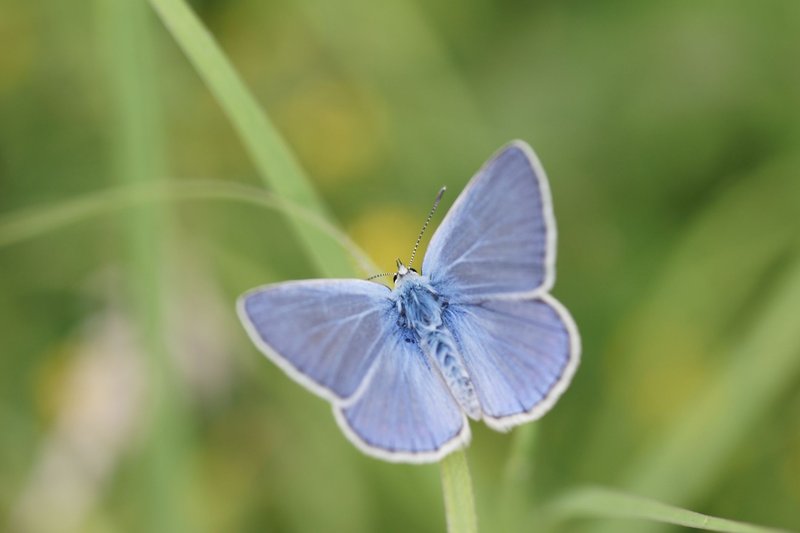
Size: 12 to 22 mm (0.5 to 0.9 in) wingspan Where it lives: Salt marshes, alkali flats and coastal scrub from the southwestern United States to Mexico, plus Hawaii
Brephidium exilis is among the smallest butterflies in the world and the smallest in North America. A fully grown adult has a wingspan about the width of a thumbnail. The upper wings are coppery brown with a flush of iridescent blue near the body, so “blue” here is mostly a family name. The caterpillars feed on saltbush and pickleweed, which is why you find the adults over saline ground where little else flies.
3. Small blue
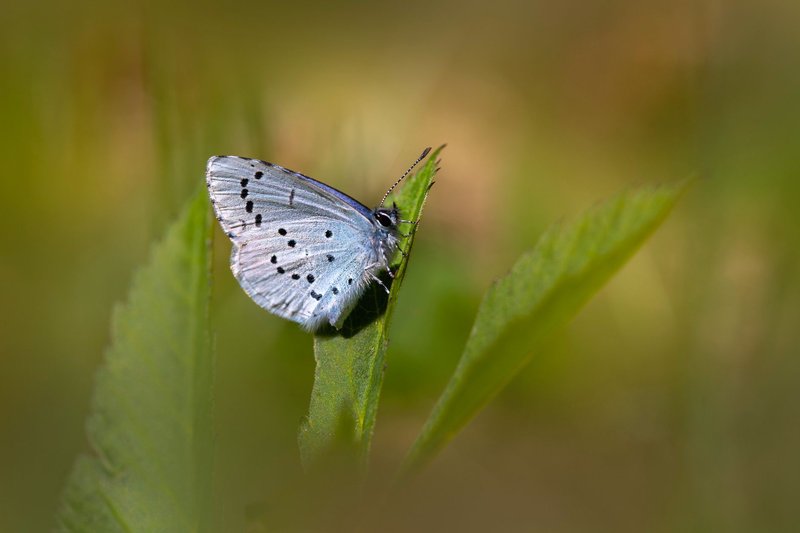
Size: 16 to 27 mm (0.6 to 1.1 in) wingspan Where it lives: Chalk and limestone grassland across Europe; in Britain, scattered sites mostly in the south
Cupido minimus is the smallest butterfly in the United Kingdom, according to The Wildlife Trusts. It’s also a disappointment if you expect blue. Males have a dusting of blue-grey scales near the body and are otherwise dark brown. Females are plain brown. The underwings are pale silver-grey with a row of black dots.
It’s a specialist. The caterpillars eat only kidney vetch, so the butterfly lives only where that plant grows on poor, short turf.
4. Blue glaucus
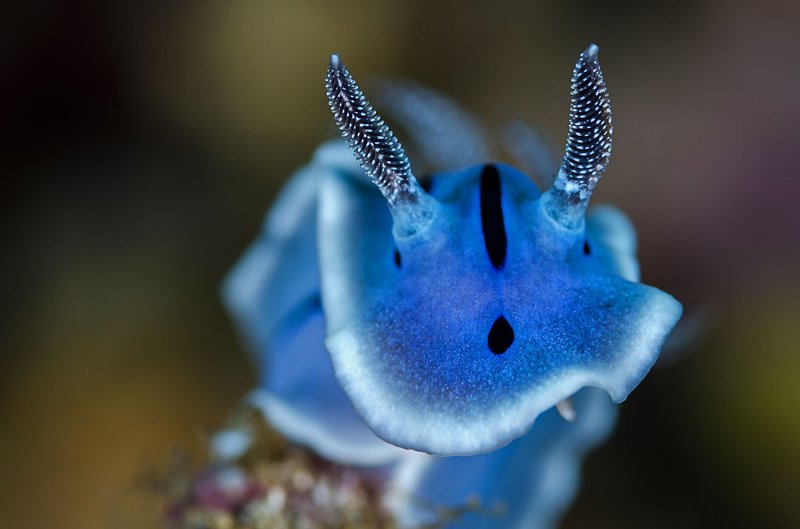
Size: up to 3 cm (1.2 in) long Where it lives: Warm surface waters of the Atlantic, Pacific and Indian Oceans; washes up on beaches after onshore winds
Glaucus atlanticus is a sea slug that floats upside down on the surface, held up by a gas bubble in its stomach. Its underside, now facing the sky, is bright blue; the back, facing down, is silver-grey. A bird looking down sees blue water, and a fish looking up sees pale sky.
It eats the Portuguese man o’ war and keeps the stinging cells for its own defense. Small and pretty, but if one washes up near you, don’t pick it up. It can sting painfully.
5. Blue dasher
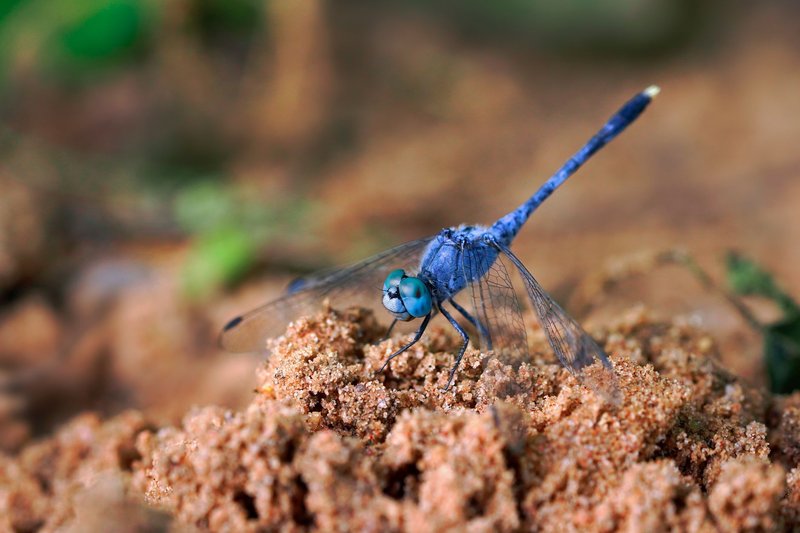
Size: 25 to 43 mm (1 to 1.7 in) long Where it lives: Ponds, marshes and slow streams across North America, down into Central America and the Caribbean
Pachydiplax longipennis is one of the most common dragonflies in North America. Young males and females are striped yellow and brown. As males mature, a powdery, waxy bloom builds up on the abdomen and turns it pale blue. Look for the green eyes and the habit of perching with the abdomen pointed up at the sky, a posture called the obelisk, which cuts the heat load from midday sun.
6. Blue poison dart frog
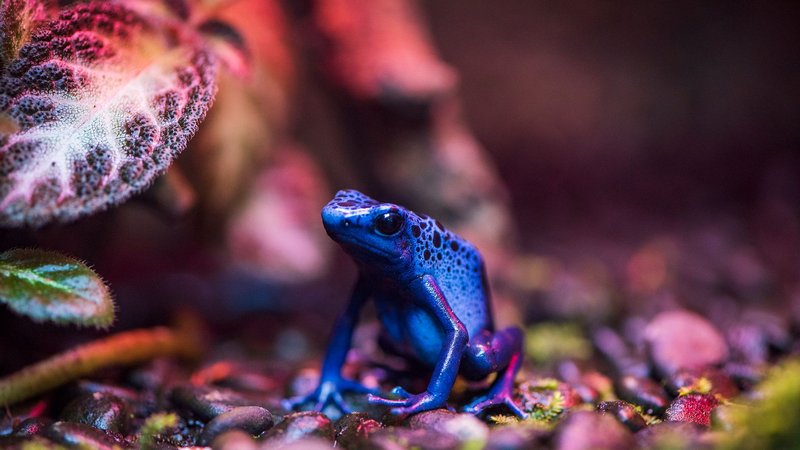
Size: 3 to 5 cm (1.2 to 2 in) long Where it lives: Small forest patches in the Sipaliwini savanna of southern Suriname
The Dendrobates tinctorius “azureus” form is sky blue with black spots, and no two frogs carry the same pattern. The color is a warning. The skin holds alkaloid toxins the frog collects from the ants and mites it eats, and in captivity, where those prey are missing, the frogs lose their toxicity.
It’s the smallest backboned animal on this list that is blue from head to toe.
7. Electric blue gecko
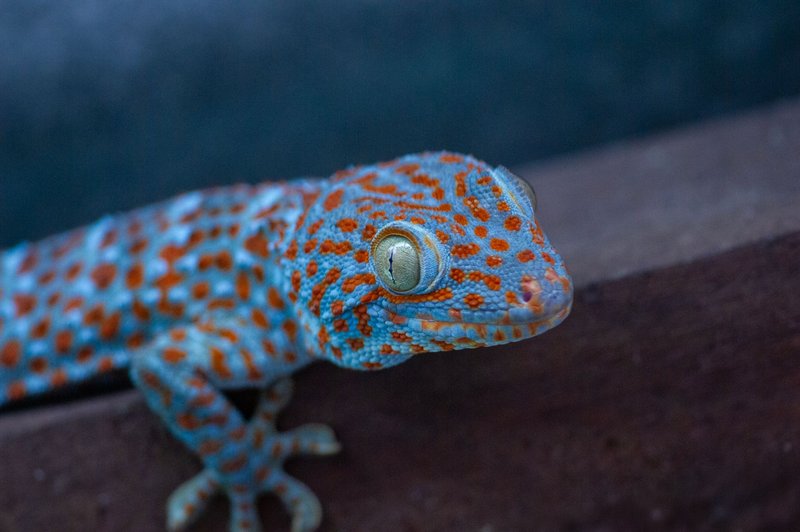
Size: 5 to 8 cm (2 to 3 in) long Where it lives: Kimboza Forest Reserve in Tanzania, and nowhere else
Lygodactylus williamsi is a dwarf gecko that spends its days clinging to trees. Males are electric blue with a black throat and belly; females are green. It lives on screwpine trees, which anchors it to a very small patch of forest.
A range of a few forest patches is a problem when pet collectors want the animal. The Edge of Existence programme at ZSL lists it as Critically Endangered, with collection for the pet trade as the main threat.
8. Blue tit
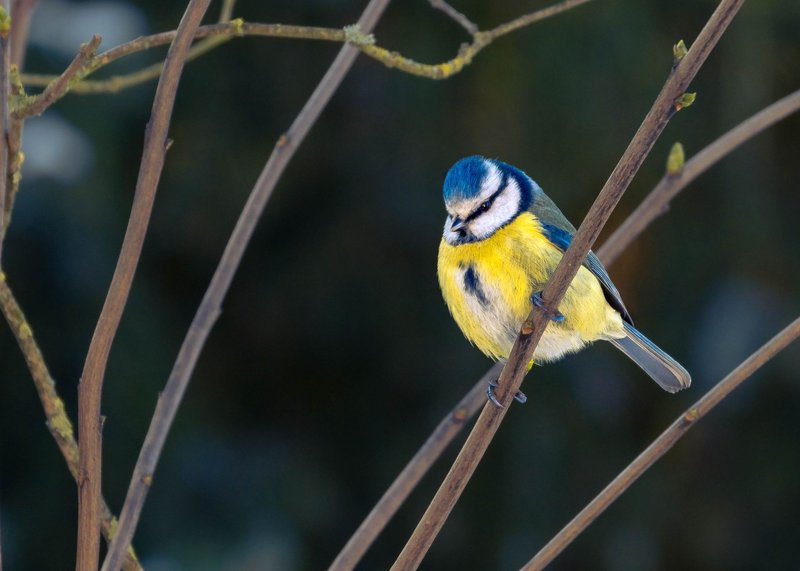
Size: 11 to 12 cm (4.3 to 4.7 in) long, 9 to 12 g (0.3 to 0.4 oz) Where it lives: Woodland, parks and gardens across Europe and western Asia
Cyanistes caeruleus is the smallest bird on this list that most Europeans see every winter. It weighs about as much as a pound coin, and it still bullies bigger birds off the feeder. The blue cap reflects ultraviolet light as well, which humans can’t see but other tits can, and which is part of how they judge each other.
9. Indigo bunting
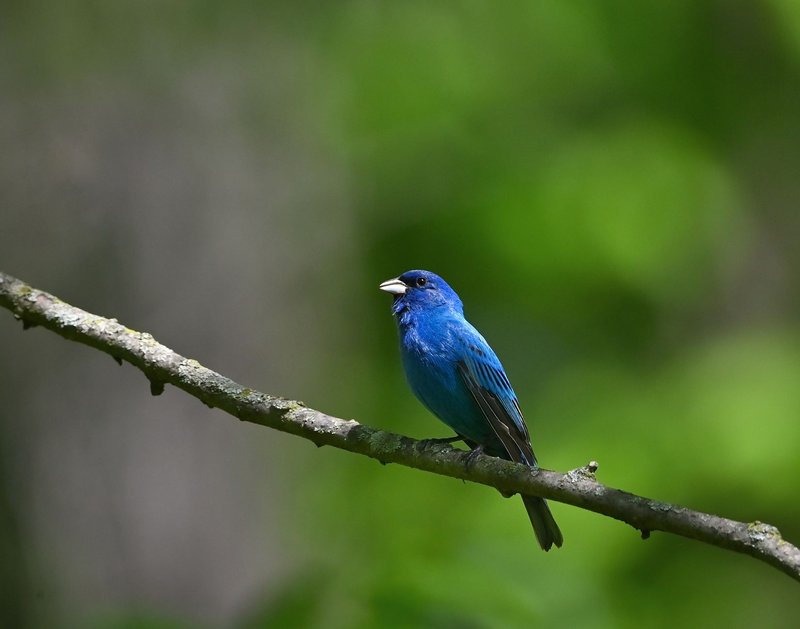
Size: 11.5 to 13 cm (4.5 to 5.1 in) long Where it lives: Brushy field edges and clearings in eastern North America in summer; winters in Central America and the Caribbean
The male Passerina cyanea looks like a drop of ink in full sun. The Cornell Lab of Ornithology lists it as a bird of weedy edges and open woodland. Strip away the structure and the feathers underneath are dark, which is why a singing male in shade can look black. Females are plain brown.
10. Blue dacnis
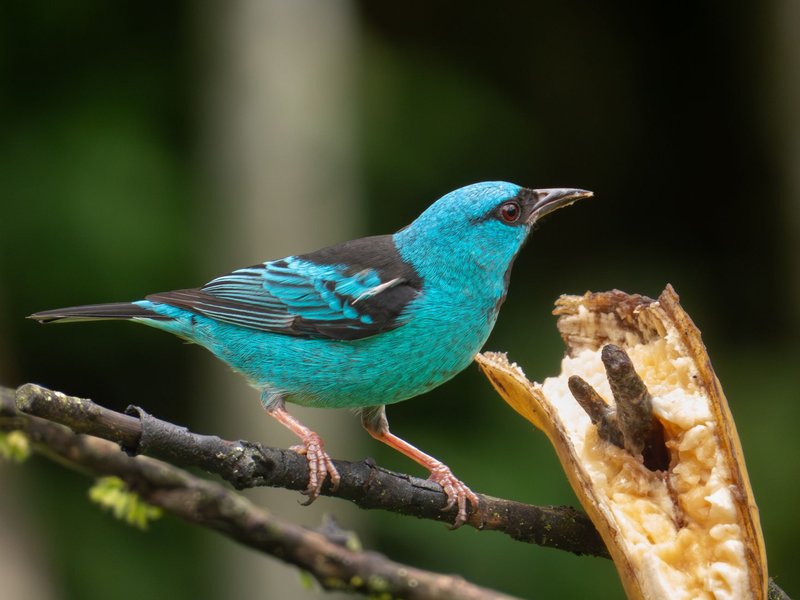
Size: about 13 cm (5 in) long Where it lives: Forest canopy from Central America to Brazil and Bolivia
The male Dacnis cayana is turquoise-blue with a black throat, back and tail, with a violet-tinged sheen in some light. Females are green. It’s a canopy bird that eats fruit, nectar and insects, and it often joins mixed flocks with tanagers, so you’ll spot it high up when you spot it at all.
11. Blue-ringed octopus
Size: 12 to 20 cm (5 to 8 in) including arms Where it lives: Tide pools and coral reefs of the Indo-Pacific, from Japan to southern Australia
An adult Hapalochlaena octopus fits in the palm of your hand. At rest it’s a dull yellow-brown. Threatened, it flashes about 60 iridescent blue rings, produced by layered reflecting structures in the skin. The rings are a warning, not decoration: the saliva contains tetrodotoxin, which has no known antidote. It’s the most dangerous animal on this list, and it’s the size of a lemon.
12. Little blue penguin
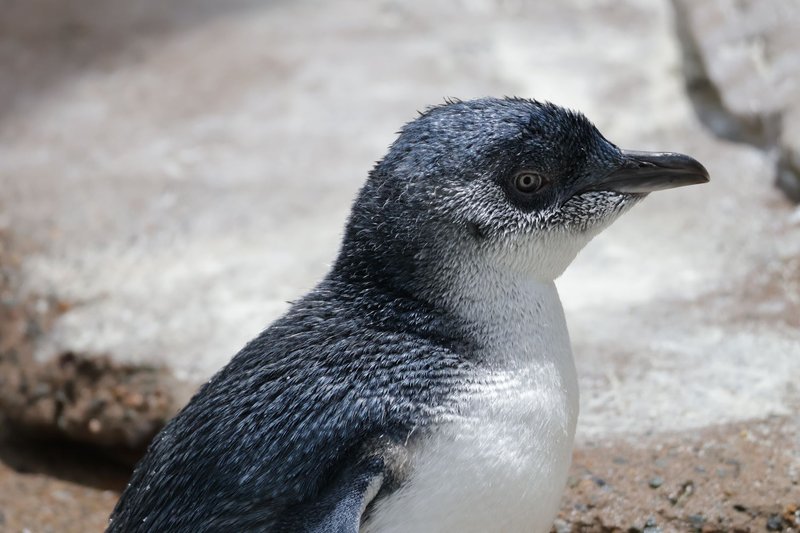
Size: about 33 cm (13 in) tall, around 1 kg (2.2 lb) Where it lives: Coasts of southern Australia and New Zealand
Eudyptula minor is the smallest penguin in the world. Its back and head are slate-blue, a color that reads as grey on a cloudy day and blue in direct light. It spends the day at sea and comes ashore after dusk, which is why the evening “penguin parade” at Phillip Island is a tourist draw. The list ends here because anything larger stops being small.