Scotland’s hills, glens and coasts are threaded with a mix of native woodlands and planted trees that tell a lot about the island’s history and habitats. From wet lowland riverbanks to exposed highland edges, tree species shape the scenery and offer easy ways to read the land.
There are 20 Trees of Scotland, ranging from Alder to Yew. For each entry you’ll find below the Scientific name, Native status, Max height (m) so you can compare identity, origin and size at a glance — Alder and Yew show the list’s breadth from common riverside trees to long-lived evergreens; you’ll find below the full table of entries.
How can I tell native Scottish trees from introduced species?
Look at leaf, fruit/seed type, bark and typical habitat first — natives often occupy consistent local habitats (e.g., birch on poorer soils, oak in richer woodlands). Use the “Native status” column below as a starting point, then confirm with the Scientific name and regional distribution guides or local conservation resources.
When is the best time to identify trees in Scotland?
Late spring and summer are easiest because leaves, flowers and fruits are visible; autumn helps with leaf shape and color; winter is useful for bark, buds and overall form. Cross-referencing the Scientific name and Max height (m) fields below lets you confirm ID across seasons.
Trees of Scotland
| Common name | Scientific name | Native status | Max height (m) |
|---|---|---|---|
| Scots pine | Pinus sylvestris | Native | 35 |
| Silver birch | Betula pendula | Native | 25 |
| Downy birch | Betula pubescens | Native | 20 |
| Sessile oak | Quercus petraea | Native | 30 |
| Pedunculate oak | Quercus robur | Native | 30 |
| Rowan | Sorbus aucuparia | Native | 15 |
| Aspen | Populus tremula | Native | 20 |
| Wild cherry | Prunus avium | Native | 30 |
| Holly | Ilex aquifolium | Native | 15 |
| Yew | Taxus baccata | Native | 20 |
| Alder | Alnus glutinosa | Native | 25 |
| Grey alder | Alnus incana | Native | 20 |
| Goat willow | Salix caprea | Native | 12 |
| Crack willow | Salix fragilis | Naturalised | 20 |
| Sycamore | Acer pseudoplatanus | Naturalised | 35 |
| Beech | Fagus sylvatica | Introduced long-established | 30 |
| Sitka spruce | Picea sitchensis | Introduced long-established | 60 |
| Douglas fir | Pseudotsuga menziesii | Introduced long-established | 75 |
| European larch | Larix decidua | Introduced long-established | 40 |
| Horse chestnut | Aesculus hippocastanum | Introduced long-established | 35 |
Images and Descriptions
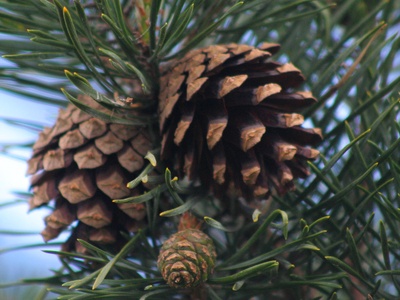
Scots pine
A tall native conifer with flaky orange-brown bark and long blue-green needles. Common in Caledonian pinewoods and upland slopes across Scotland; usually 20 to 35 m. Iconic native timber tree, central to Highland ecology and conservation.
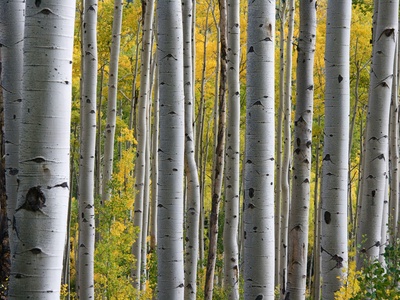
Silver birch
Graceful pale-barked tree with triangular, serrated leaves that tremble in the breeze. Widespread across Scotland from lowlands to mountains, often a pioneer on poor soils; typically 15 to 25 m. Notable for white bark and silver catkins in spring.
Downy birch
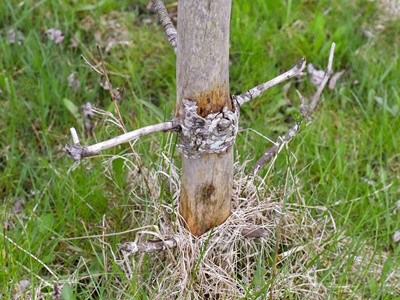
Stout, hairy-twigged birch with duller bark and rounded leaves. Common in wetter, upland and peatland parts of Scotland, often forming groves to 12 to 20 m. Important pioneer and wildlife tree, supporting insects and providing autumnal colour.
Sessile oak
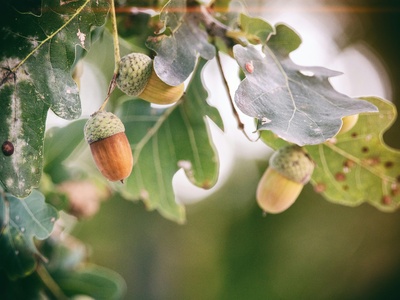
Native oak with stalkless leaves and smooth older bark, favouring acidic soils in western and northern Scotland. A long-lived canopy tree reaching 20 to 30 m. Famous for rich biodiversity—supporting hundreds of insect and lichen species in native woodlands.
Pedunculate oak
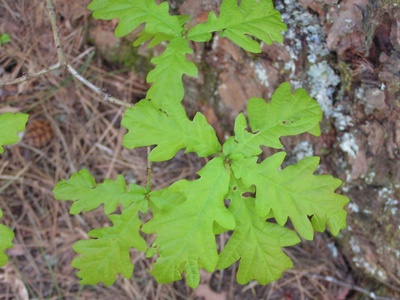
Sturdy broadleaf with lobed leaves and long stalked acorns; more common in lowland southeast Scotland but present elsewhere. Grows to 20 to 30 m. Culturally important timber tree with deep ties to woodland history and veteran tree landscapes.
Rowan
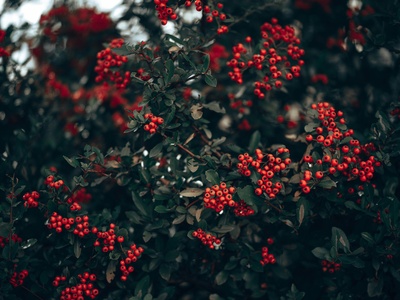
Slender tree with pinnate leaves and clusters of bright red berries in autumn. Widespread across Scotland from sea level to mountains, typically 8 to 15 m. Valued for its hardiness and folklore associations; berries feed birds through winter.
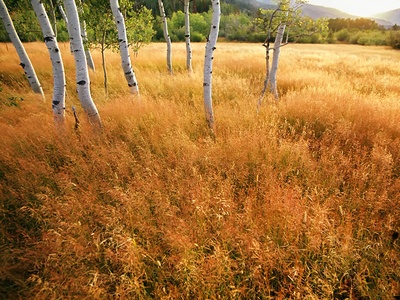
Aspen
Light-filled, trembling leaves on smooth pale trunks make this poplar distinctive. Found across Scotland, especially in upland woods and riparian zones, usually 12 to 20 m. Clonal groves propagate by root suckers; some stands are genetically identical.
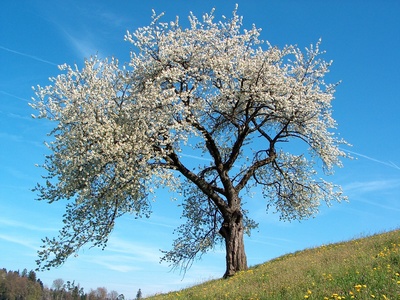
Wild cherry
Deciduous tree with glossy leaves and showy white blossom in spring; bark often smooth and striped. Occurs in woods and hedgerows across Scotland, reaching 20 to 30 m. Notable for its attractive spring flowers and valuable timber.
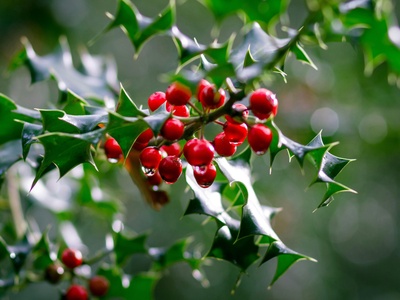
Holly
Evergreen tree or large shrub with glossy, spiny leaves and red berries on female plants. Common in woodlands and churchyards across Scotland, can reach 10 to 15 m. Important winter food for birds and often culturally associated with Christmas.
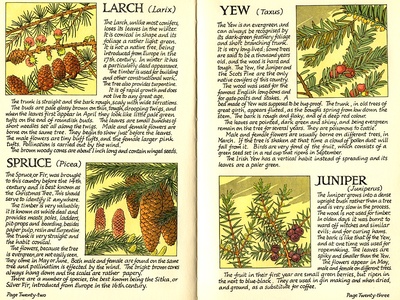
Yew
Dark-needled evergreen with red arils, often forming dense crowns. Scattered ancient yews occur in churchyards and on rocky hills across Scotland, typically 10 to 20 m. Extremely long-lived—some specimens are among the oldest living trees in Britain.
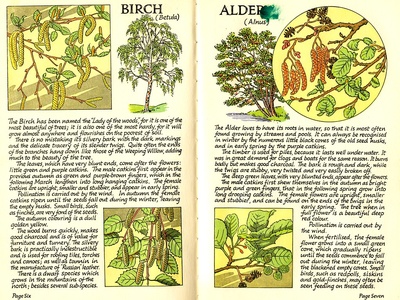
Alder
Glossy-leaved tree often by rivers, with dark bark and distinctive cone-like seed catkins. Widespread in lowland and upland wet places across Scotland, typically 15 to 25 m. Roots fix nitrogen, helping colonise poor or waterlogged soils.
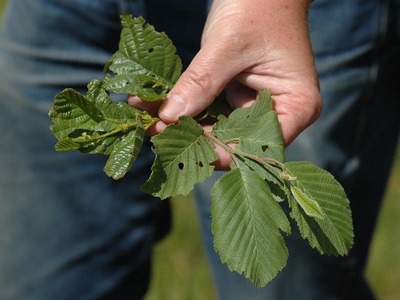
Grey alder
Smaller, paler alder with hairy shoots and lighter bark than common alder. Native to upland and northern parts of Scotland near streams and mountain gullies, usually 10 to 20 m. Valuable for stabilising soils and supporting specialist lichens.
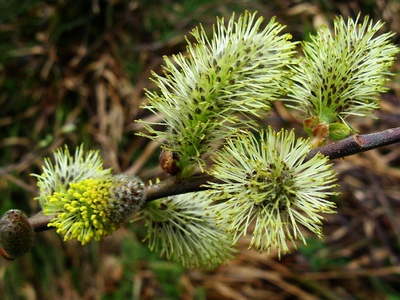
Goat willow
Fuzzy catkins and rounded leaves identify this early-flowering willow. Found across Scotland in woods, hedgebanks and damp ground, often as small tree to 8 to 12 m. Important nectar source for spring insects and food for herbivores.
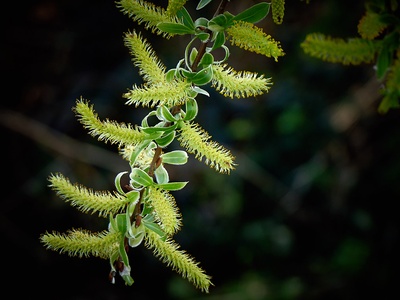
Crack willow
Fast-growing willow with narrow leaves and brittle branches that root on contact; common along rivers and wet ground in lowland Scotland, reaching 15 to 20 m. Notable for rapid colonisation and forming tall riverside stands.
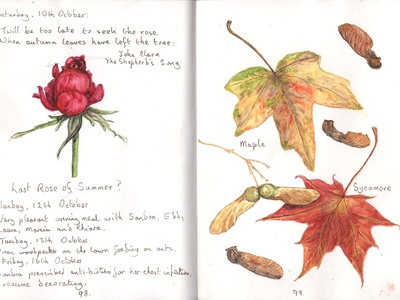
Sycamore
Large maple with palmate leaves and winged seeds (samaras). Common in woods, hedgerows and urban parks across Scotland, typically 20 to 35 m. Much planted historically; can naturalise and support diverse fungi and epiphytes.
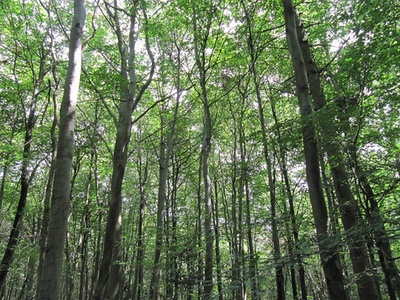
Beech
Smooth-barked deciduous tree with glossy leaves and dense canopy. Found in lowland and southern estates in Scotland, typically 20 to 30 m. Known for ornamental beechwoods and avenues and for casting deep summer shade that limits understorey growth.
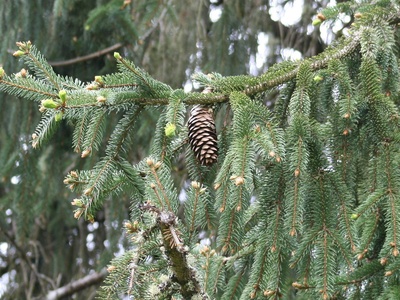
Sitka spruce
Tall, fast-growing conifer with soft blue-green needles in whorls; widely planted in commercial forests across Scotland, particularly in the west and Highlands, reaching 40 to 60 m. Economically important timber species but altering native habitats.

Douglas fir
Impressive conifer with pointed cones and thick furrowed bark, thriving in many Scottish plantations and sheltered valleys. Often 50 to 75 m where established. Introduced from North America, it provides high-yield timber and supports different wildlife than native conifers.
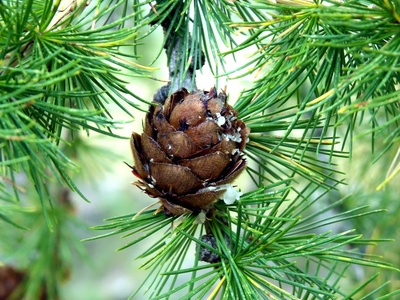
European larch
Deciduous conifer with soft needle clusters that turn golden in autumn before dropping. Planted widely in Scottish uplands and estates, reaching 30 to 40 m. Noted for seasonal colour and use in timber plantations; needles fall each winter.
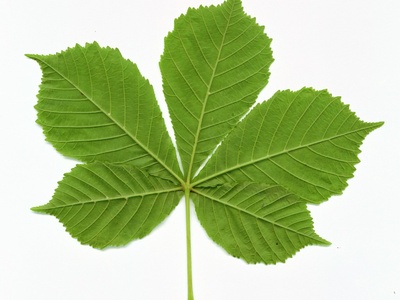
Horse chestnut
Large deciduous tree with palmate leaves and showy upright white flower spikes in spring. Planted in parks and avenues across Scotland, typically 20 to 35 m. Famous for glossy conkers and as an ornamental of 19th-century landscapes.