Table of Contents
- The Quick Answer
- What’s Actually on the Menu
- How the Diet Shifts Through the Year
- Bank Vole vs. Field Vole vs. Wood Mouse
- Are Bank Voles a Garden Problem?
- Feeding an Orphaned or Injured Bank Vole
The Quick Answer
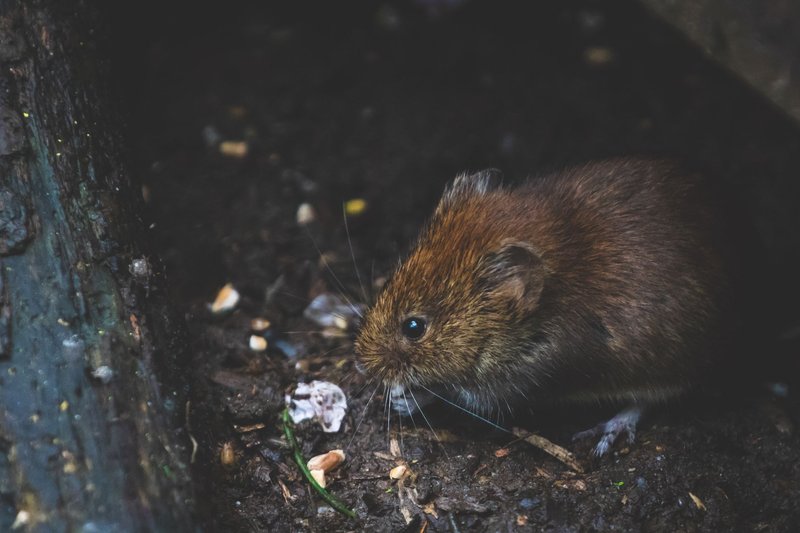
Bank voles (Myodes glareolus) are opportunistic omnivores, not the strict grass-grazers most people picture when they hear “vole.” Their diet runs on hazelnuts, blackberries, seeds, fungi, moss, and green shoots, topped up with snails, beetles, and other invertebrates whenever protein is in short supply. What they eat changes hard with the season — spring shoots give way to autumn caching and winter bark-stripping — and that seasonal swing is the part most species profiles skip entirely.
What’s Actually on the Menu
Split it into three categories and the bank vole’s diet makes a lot more sense.
Plant matter does the heavy lifting. Hazelnuts and blackberries are the standout favorites — a bank vole will gnaw a hazelnut clean through a small round hole near the base, a signature so distinct that naturalists use it to tell vole activity apart from squirrel or mouse damage. Beyond that: acorns, beechmast, seeds, berries, tree bark, roots, and the tender green shoots of grasses and herbs.
Fungi get less attention in most write-ups, but they’re a real part of the diet, especially underground truffle-like species that voles locate by smell and dig up in leaf litter and moss. Fungi matter more than the word “vole” suggests — for a small mammal, they’re a dense, low-effort calorie source when fruit and nuts are scarce.
Invertebrates round things out. Snails, beetles, caterpillars, and other small insects show up more often during the breeding season, when females need the extra protein to support litters. A bank vole isn’t hunting the way a shrew does — it’s opportunistic, snapping up whatever slow-moving protein crosses its path while foraging for plants.
That combination — nuts and fruit for energy, fungi and roots as a backup, insects for protein — is why researchers studying diet differentiation among European rodents classify bank voles as generalist omnivores, distinct from the far more grass-restricted voles in open grassland.
How the Diet Shifts Through the Year
No standard field guide bothers to break this down by season, but it’s the single biggest driver of what a bank vole is actually eating on any given month.
Spring brings a diet dominated by green plant matter — new grass shoots, herb leaves, moss, and emerging buds. Protein needs climb as breeding starts, so invertebrate intake rises alongside the greens.
Summer is the fruit-and-insect stretch. Ripening berries, seeds forming on grasses, and a steady supply of beetles and caterpillars support the second and third litters of the year. This is peak abundance — the easiest months to be a bank vole.
Autumn is caching season. As hazelnuts, acorns, and beechmast drop, bank voles gather far more than they can eat in a day and store the surplus — carried in their cheeks, hamster-style — in burrow chambers, under logs, and tucked into leaf litter. That cache is the difference between surviving winter and not.
Winter is when the diet gets grim by necessity. Bank voles don’t hibernate, so when snow or frost locks down most other food sources, they fall back on stored caches, persistent seeds, and — when supplies run thin — stripping bark from young trees to reach the soft cambium layer underneath. Beech, maple, larch, Douglas fir, and elder saplings are common targets, and heavy vole activity in a cold winter can genuinely damage a young plantation, which is why foresters track vole numbers as closely as gardeners do.
Bank Vole vs. Field Vole vs. Wood Mouse
These three small mammals overlap in the same UK hedgerows and woodland edges, and their diets are one of the clearest ways to tell them apart if you can’t get a good look at the animal itself.
| Bank Vole | Field Vole | Wood Mouse | |
|---|---|---|---|
| Primary diet | Nuts, fruit, fungi, roots, green shoots | Almost exclusively grass leaves and stems | Seeds, nuts, fruit |
| Insects/invertebrates | Regular, especially in breeding season | Rare | Regular |
| Habitat match | Woodland edges, hedgerows, scrub | Open grassland, rough tussocky pasture | Woodland, hedgerows, gardens |
| Winter strategy | Caches food; strips bark | Relies on grass roots and stems year-round | Caches food underground |
| Dietary breadth | Broad, omnivorous | Narrow, near-specialist grazer | Broad, similar to bank vole |
The practical takeaway: if you’re watching an animal strip bark off a sapling or raid a hazel bush, you’re almost certainly looking at a bank vole, not a field vole. Field voles stay close to grass and rarely bother with nuts, bark, or fungi at all — their whole biology is built around a near-monotonous grass diet, which is also why they’re such reliable prey for kestrels hunting over open ground.
Are Bank Voles a Garden Problem?
Sometimes, yes — though “problem” is relative to what you’re growing. Bank voles will dig up and eat bulbs and tubers, with a particular fondness for tulip and crocus bulbs, and they’ll take a run at root vegetables like carrots and potatoes if the soil is soft enough to tunnel through.
Bird feeders are a bigger factor than most people realize. Dropped seed — sunflower hearts and millet especially — collects at ground level under a feeder and becomes a dependable food source that can sustain a small vole colony through winter. If you’ve noticed vole runs or burrow entrances near your feeding station, that’s usually why.
A few things actually reduce the problem: move feeders 20 to 30 feet from flower beds and vegetable patches, switch to tube feeders with a catch tray to cut down on ground spillage, and plant bulbs behind a layer of hardware cloth or gravel if voles have targeted a bed before. The RHS notes that most rodent damage in gardens traces back to an accessible food source rather than the animal actively seeking out ornamental plants — remove the easy meal and the pressure usually drops on its own. Bank voles are also a genuine part of the food chain for owls, kestrels, and weasels, so total eradication isn’t really the goal most gardeners should be aiming for anyway, per the Woodland Trust.
Feeding an Orphaned or Injured Bank Vole
If you’ve found a baby vole that’s clearly orphaned or hurt, the first move is not to feed it. Contact a wildlife rehabilitator or a local rescue before offering anything, since an animal that’s dehydrated or in shock can be harmed by food or water given too soon, and rehabilitators often need to assess the animal before it’s had anything at all.
Once a rehabilitator is involved, very young voles (still hairless or barely furred) are typically hand-reared on a milk substitute rather than solid food, fed in tiny amounts every hour or two during the day. As the vole gets older and grows fur, feeding stretches out and the animal starts weaning onto soft greens — dandelion, clover, and chickweed are commonly used first foods, mirroring what a wild vole would naturally be nibbling at that stage. Solid nuts, seeds, and harder plant matter come later, once the animal is eating independently and close to release age. Don’t attempt full hand-rearing without guidance — a properly staffed wildlife rescue will have both the milk formula ratios and the release protocol dialed in, and a vole raised without other voles around risks becoming too tame to survive once it’s back outside.