TLDR
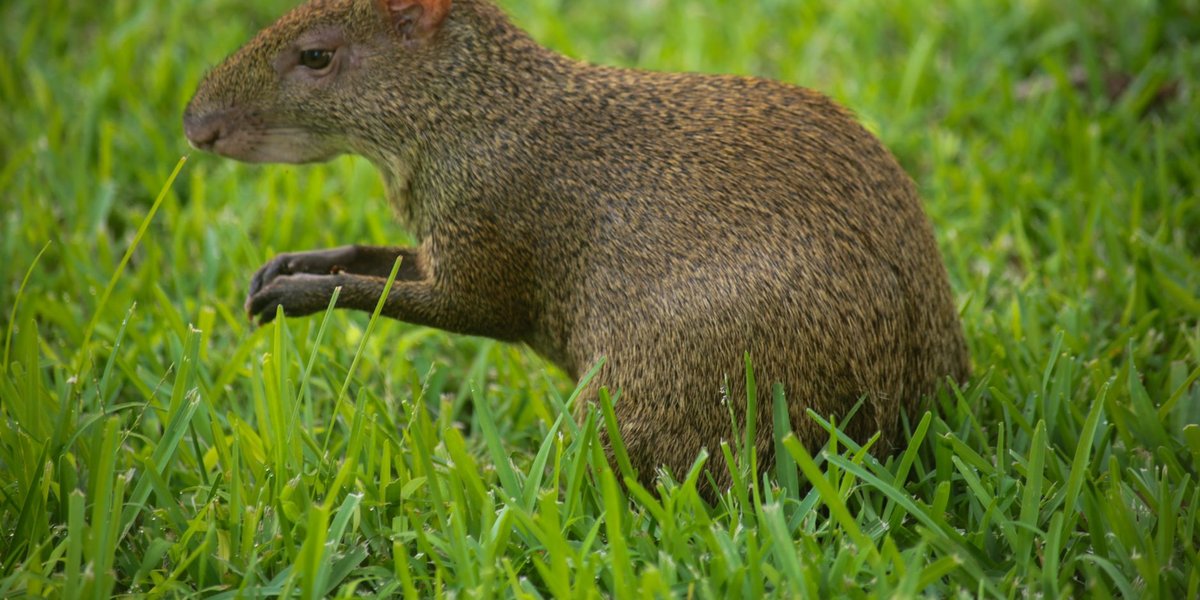
Mexican agoutis (Dasyprocta mexicana) are frugivores — roughly 87% of their diet is fruit, with the rest split between soft seeds, new-growth leaves, bark, and the occasional insect. They cache surplus food by burying it around the forest floor, a habit called scatter-hoarding that ends up replanting the very trees they feed on. In captivity, that diet becomes rabbit or rodent pellets, chopped vegetables, and the odd handful of nuts.
Table of Contents
- The short answer: what’s actually on the menu
- The full food list
- Scatter-hoarding: the habit that grows the forest
- How they crack what other animals can’t
- Diet shifts during pregnancy
- Wild diet vs. captive diet
- Feeding a pet or rescue agouti
- Why diet matters for a species this endangered
The short answer: what’s actually on the menu
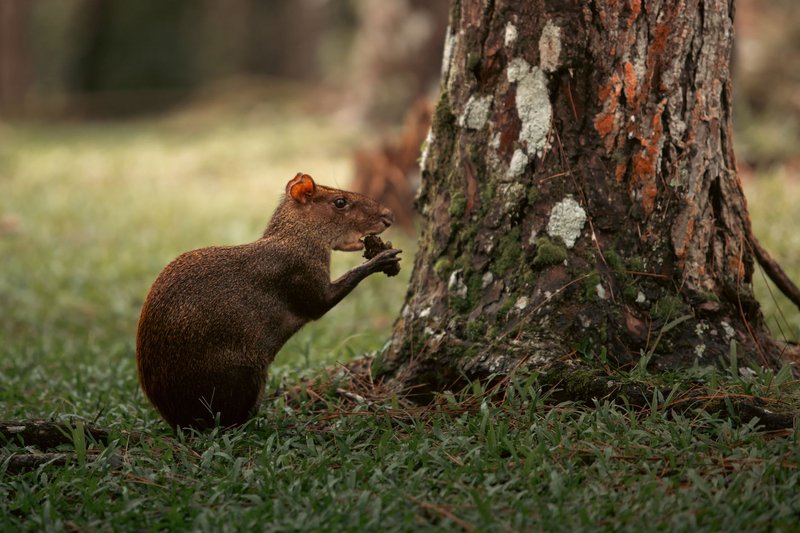
Mexican agoutis are fruit specialists first, opportunists second. Fallen fruit makes up the bulk of what they eat — figs, palm fruit, wild mangoes, whatever’s dropping in a given month in the lowland forests of Veracruz, Oaxaca, Tabasco, and Chiapas. When fruit is scarce, they switch to seeds, bark, roots, and new leaf growth, and they’ll take an insect or grub if one crosses their path. That’s not a footnote; it’s the difference between a species that can ride out a lean season and one that can’t.
What sets agoutis apart from most fruit-eating rodents is the jaw. Their incisors generate enough force to crack shells that stump squirrels and rats twice their size, which opens up a food category — hard nuts — that most competitors simply can’t touch.
The full food list
Here’s what shows up in stomach-content studies and field observations of Dasyprocta mexicana and its close relatives across Central America:
| Food type | Examples | How often |
|---|---|---|
| Fruit | Wild figs, mango, papaya, citrus, palm fruit, Spondias mombin (hog plum) | Daily staple, up to ~87% of intake |
| Hard nuts and seeds | Brosimum alicastrum (ramón nut), palm nuts, Brazil nuts (in related species) | Regular, especially in dry season |
| Bark and new growth | Young leaves, tender shoots, cambium layer | Fallback when fruit is scarce |
| Roots and tubers | Wild roots, underground storage organs | Occasional, seasonal |
| Invertebrates | Beetle larvae, other soft-bodied insects | Rare, opportunistic |
According to Animal Diversity Web, a research database maintained by the University of Michigan’s Museum of Zoology, agoutis in this genus are classified as primarily frugivorous but readily shift toward seeds and vegetation when fruiting trees thin out — which in a fragmented, agriculture-pressured landscape happens more often than it used to.
Scatter-hoarding: the habit that grows the forest
An agouti with more fruit than it can eat doesn’t waste it. It buries individual seeds and nuts one at a time, scattered across dozens of separate spots rather than one stash — a behavior researchers call scatter-hoarding. The agouti comes back for some of those caches later. It forgets, or loses track of, a good number of the rest.
Those forgotten seeds sprout. In the Amazon, research on the closely related Brazil nut tree found that agoutis buried a much higher share of seeds intact during the wet season (74.4%) than the dry season (38.2%), and that cached seeds typically ended up 15 to 30 meters from where the fruit originally fell — occasionally as far as 60 meters, according to a study published in the Journal of Tropical Ecology. That’s not incidental. Agoutis are one of the only animals capable of opening certain hard-shelled fruit pods in the first place, which makes them a load-bearing part of forest regeneration rather than just another seed-eater.
How they crack what other animals can’t
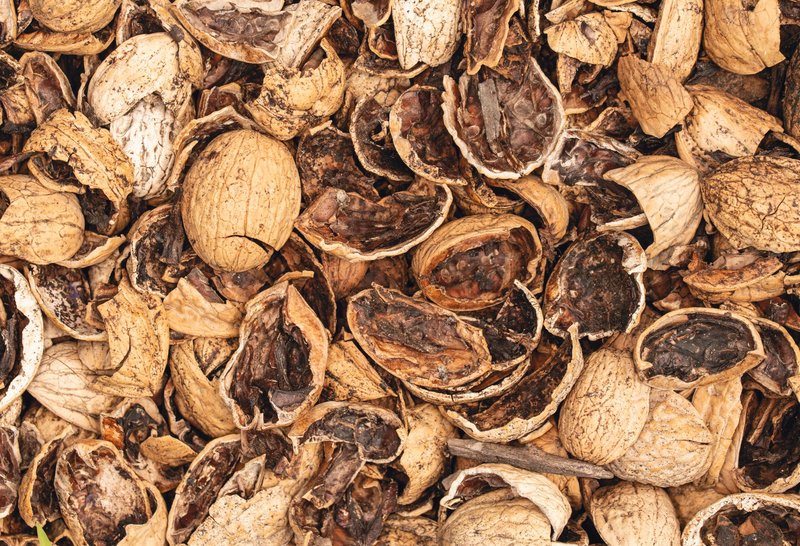
The trait that gets agoutis into the “unique diet” conversation is jaw strength relative to body size. Their incisors can split shells tough enough to defeat most rodents outright — the classic example, seen in related agouti species working Brazil nut pods, is a shell so dense that few other forest animals can even dent it. For the Mexican agouti specifically, the same mechanism applies to the ramón nut (Brosimum alicastrum) and various palm seeds with thick, woody coats.
This isn’t just a party trick. It means agoutis get first access to a calorie-dense food source that’s locked away from most of the rest of the local food web, which matters a great deal during the months when soft fruit is thin on the ground.
Diet shifts during pregnancy
Pregnant and nursing female agoutis increase their intake of protein- and calcium-relevant foods where available — favoring nuts, seeds, and any invertebrates they come across over the lighter, more water-heavy fruit that makes up the bulk of the everyday diet. The shift makes sense energetically: gestation and lactation are expensive, and a diet that leans harder on dense, cached nuts rather than perishable fruit also fits with how far females tend to range from the den during this period, since they’re drawing more on stored, already-buried food rather than actively foraging fresh fruit each day.
Wild diet vs. captive diet
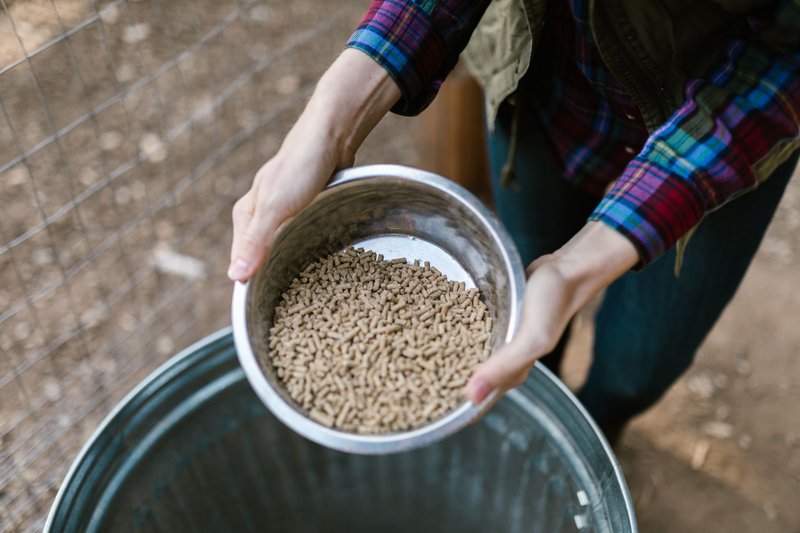
Zoos and private keepers can’t replicate a Central American forest floor, so captive diets substitute processed staples for the wild variety:
| Wild diet | Captive diet | |
|---|---|---|
| Base | Fallen fruit (fresh, varies daily) | Rabbit or rodent pellets |
| Protein/fat | Nuts, seeds, occasional insects | Nuts, occasional mealworms |
| Fiber | Bark, leaves, roots | Hay, leafy greens |
| Treats | N/A — foraged as found | Carrots, peanuts, small fruit portions |
| Water source | Moisture-rich fruit | Fresh water dish, moisture from produce |
The Smithsonian’s National Zoo, which keeps the related red-rumped agouti, feeds its animals a mix of assorted fruits and vegetables, nuts, leafy greens, rodent pellets, and insects — a diet built specifically to approximate what the species would forage for on its own. That combination, pellets plus fresh produce plus occasional protein, is the template most keepers follow across agouti species, Mexican agoutis included.
Feeding a pet or rescue agouti
Agoutis aren’t a mainstream pet, but they do turn up in private collections and rescues, and the feeding mistakes are predictable: too much sugary fruit, not enough fiber, and pellets chosen for rabbits or guinea pigs without checking the nutrient profile against what a much larger, more active rodent actually needs.
A workable baseline: rabbit or rodent pellets as the daily base, hay available at all times, a rotating handful of vegetables (carrots, leafy greens, squash), and nuts or peanuts as a limited treat rather than a staple — mirroring the “calorie-dense but occasional” role nuts play in the wild diet. Citrus and other high-acid fruit should be offered sparingly. It shows up in the wild diet, but in small quantities relative to the fruit’s overall volume, not as a daily ration.
Why diet matters for a species this endangered
The Mexican agouti’s conservation status has slid fast — from a low-concern listing in the 1990s to Critically Endangered today, with population declines tied directly to the loss of the lowland forest that supplies its food. Fewer fruiting trees and ramón stands means less of the fruit and hard-nut supply the species depends on, and less habitat overall for a scatter-hoarder that needs room to bury and retrieve caches. A 2025 assessment of the species’ state of knowledge points to exactly this: agricultural conversion and grazing land expansion in Veracruz, Oaxaca, Chiapas, and Tabasco have stripped away the food-producing trees the agouti relies on, faster than the species can adapt its range.
It’s a detail that gets skipped in most write-ups about this animal: the food it eats and the forest it needs are the same problem. Protect the fruiting and nut-bearing trees, and you protect the agouti’s food supply and its habitat in the same move — which is also, not coincidentally, how the agouti has been keeping those forests regenerating all along.