Bhutan’s 2008 constitution enshrines environmental protection and requires maintaining at least 60% forest cover, a legal commitment that shapes every valley and ridge. That mandate isn’t just paperwork — it helps safeguard habitats, stabilize water supplies downstream, and keep rare species viable across elevation bands from subtropical foothills to alpine ridgelines.
The wildlife of bhutan benefits directly: intact forests and community stewardship reduce poaching pressure, sustain pastoral livelihoods, and create routes for species to shift upslope as the climate warms. For travelers and ecologists alike, Bhutan offers concentrated opportunities to see high-mountain predators, endemic mammals, and rare wetland birds that are otherwise hard to find.
Below are eight species that capture Bhutan’s ecological and cultural richness. Each entry includes where you’ll find the animal, its conservation status, why it matters (ecological, cultural, or economic), and a concrete example or statistic that illustrates ongoing protection or threat.
High-altitude Mammals

Species adapted to alpine and subalpine zones (roughly 2,500–5,500 m) show extreme cold-weather physiology, seasonal migrations, and tight links to fragile food webs. These mammals act as indicators of high-mountain ecosystem health and are a growing focus of scientific camera-trap work and high-value ecotourism.
Protected areas such as Jigme Dorji National Park provide core habitat and transboundary corridors, while citizen-science camera-trap studies help park managers track populations and direct anti-poaching patrols.
1. Snow Leopard (Panthera uncia)
The snow leopard is an iconic high‑mountain predator in Bhutan’s northern ranges, occupying steep alpine terrain roughly between 3,000–5,500 m. Across its range, estimates cluster around 4,000–6,500 mature individuals, though national numbers are naturally much smaller and patchy.
As an apex (or near‑apex) predator, snow leopards help regulate populations of blue sheep and other ungulates, keeping alpine plant communities in balance. Threats include retaliatory killing after livestock depredation, loss of wild prey, and shifting snowlines from warming.
In Bhutan, camera‑trap surveys and community monitoring (notably in parts of Jigme Dorji National Park) have informed targeted compensation schemes and community-based payments for ecosystem services, which reduce retaliatory killings and link tourism revenue to local livelihoods. Recent park monitoring (2018–2022) has helped map seasonal ranges and identify key corridors for cross-border conservation.
2. Royal Bengal Tiger (Panthera tigris tigris)
Tigers occur in Bhutan’s southern foothills and subtropical forests, using large tracts of lowland reserves and riparian corridors. Their presence signals intact predator–prey dynamics and functioning forest ecosystems.
Bhutan’s Royal Manas National Park (over 1,000 km²) and other southern reserves form part of a larger transboundary landscape that supports tiger movement between India and Bhutan. Camera‑trap detections and occasional pugmarks confirm tigers persist, and anti‑poaching patrols have been stepped up in recent years to protect both tigers and their prey.
Beyond ecology, tigers are a flagship species that attract international conservation partnerships and bring ecotourism opportunities to local guide networks. Community-based monitoring and stricter patrols have reduced snaring in some sectors, demonstrating how focused law enforcement and incentives can yield results.
3. Red Panda (Ailurus fulgens)
Red pandas are small, arboreal mammals of Bhutan’s temperate bamboo forests, typically found between about 2,200–4,000 m elevation. Their diet is heavily bamboo-based, and they spend much of their time in the canopy.
Classified as Endangered, red pandas serve as a flagship for protecting mid‑elevation forest blocks. Conserving their bamboo habitat benefits many other species and helps secure watershed protection for downstream communities.
Monitoring projects in mid‑hill forest blocks and community forest management programs have helped protect corridors where red pandas move seasonally. For example, localized camera‑trap studies since the late 2010s have guided community patrols and informed ecotourism routes that boost local incomes while limiting disturbance.
Remarkable Birds of Wetlands and Valleys
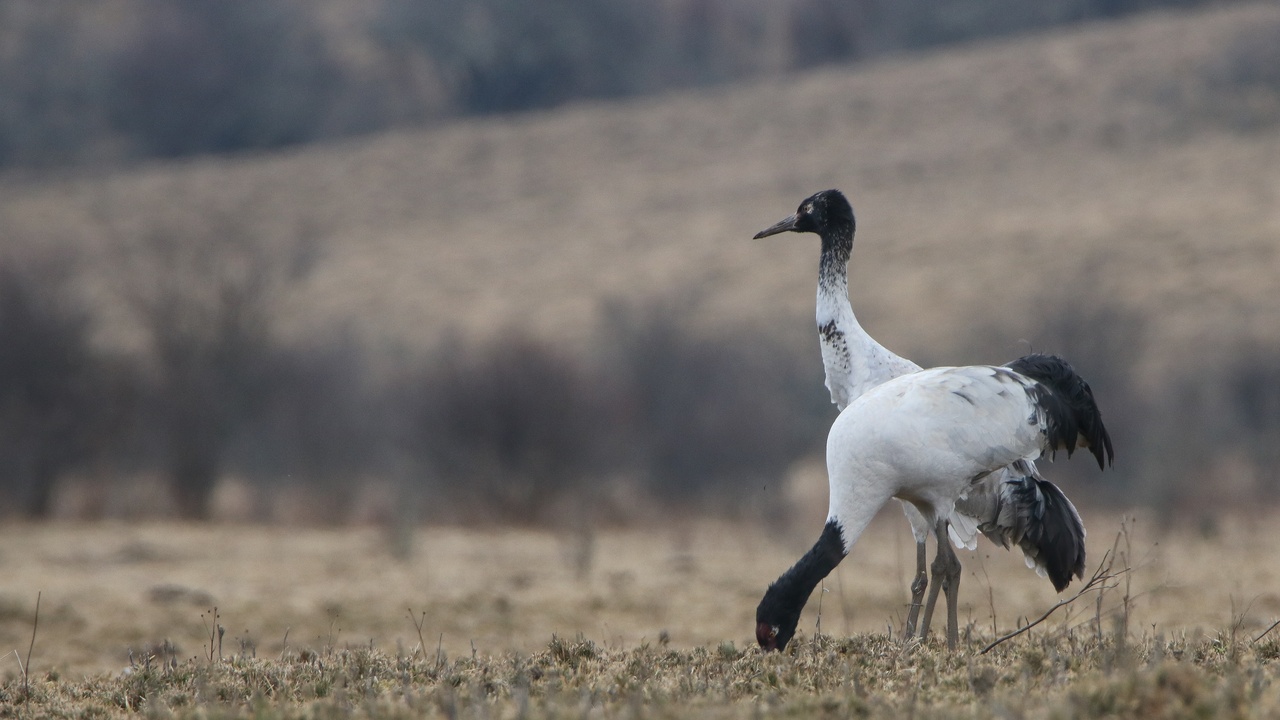
Bhutan’s wetlands and central valleys are seasonal refuges and breeding grounds for several iconic birds. Places like Phobjikha valley combine ecological importance with strong cultural protection: villagers hold festivals, restrict activities during sensitive months, and guide low-impact tourism.
Community stewardship, paired with NGO support, helps buffer wetlands from drainage and conversion, which remain the main threats to these valley systems.
4. Black‑necked Crane (Grus nigricollis)
Black‑necked cranes are both culturally revered and ecologically important, especially in Phobjikha valley where they arrive to winter from late October through March. Typical winter counts in Phobjikha often range from roughly 150–250 birds, depending on the year.
Local festivals celebrate the cranes, and strict community‑led habitat protection helps maintain the wetlands and adjacent grasslands they require. Crane‑centered ecotourism in Phobjikha provides income to guides and homestays while promoting visitor rules that minimize disturbance.
Annual counts coordinated with park staff and NGOs form the backbone of monitoring programs, linking cultural tradition to practical conservation outcomes and broader wetland health.
5. White‑bellied Heron (Ardea insignis)
The white‑bellied heron is among Asia’s rarest birds and has been recorded along Bhutan’s lowland rivers and marshes. It is listed as Critically Endangered, with estimates suggesting fewer than 250 mature individuals globally.
Riverine habitat loss, disturbance, and reduced fish stocks threaten the species. Protecting heron nesting sites through community awareness, nest monitoring, and river protection yields direct benefits for freshwater biodiversity and local fisheries.
NGO‑led surveys and targeted nest‑monitoring initiatives in recent years have helped identify important river stretches for protection and informed restrictions on sand‑extraction and development near key sites.
6. Satyr Tragopan (Tragopan satyra)
The satyr tragopan is a colorful pheasant of Bhutan’s rhododendron and oak belts, typically found in mid‑elevation forests (roughly 1,800–3,200 m). Males perform striking breeding displays that make them a favorite among birdwatchers.
Because they depend on intact understory and bamboo patches for nesting, tragopans benefit from forest protection policies that also serve many other species. Birdwatching routes that target upland transects provide seasonal work for local guides.
Popular birding trails near protected forest blocks regularly record tragopan lekking activity in the spring months, and guides trained in low‑impact viewing help keep disturbance to a minimum.
Rare and Endemic Mammals
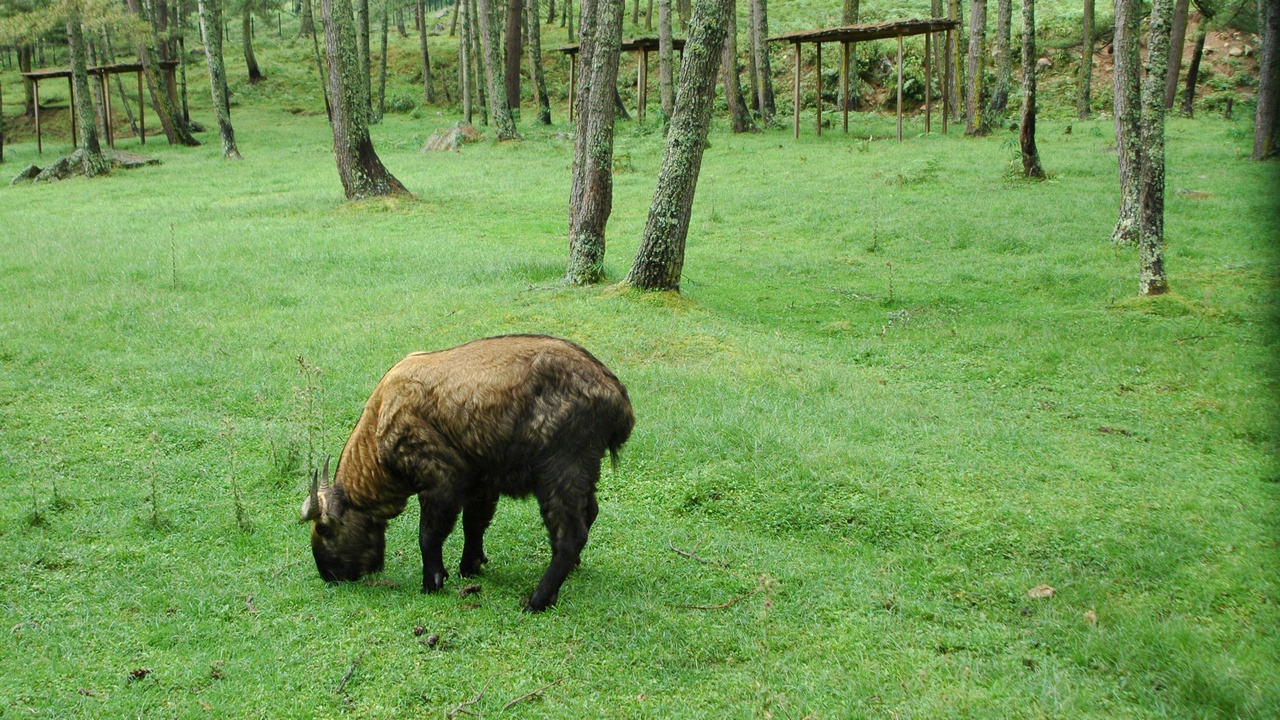
This group highlights animals with deep cultural ties or unique evolutionary histories in Bhutan’s forests and foothills. Conservation for these species often overlaps with community‑managed forests and local livelihoods, making protection a social as well as ecological task.
Threats include habitat fragmentation and illegal hunting, so protected‑area coverage and community surveillance are key tools for keeping populations viable.
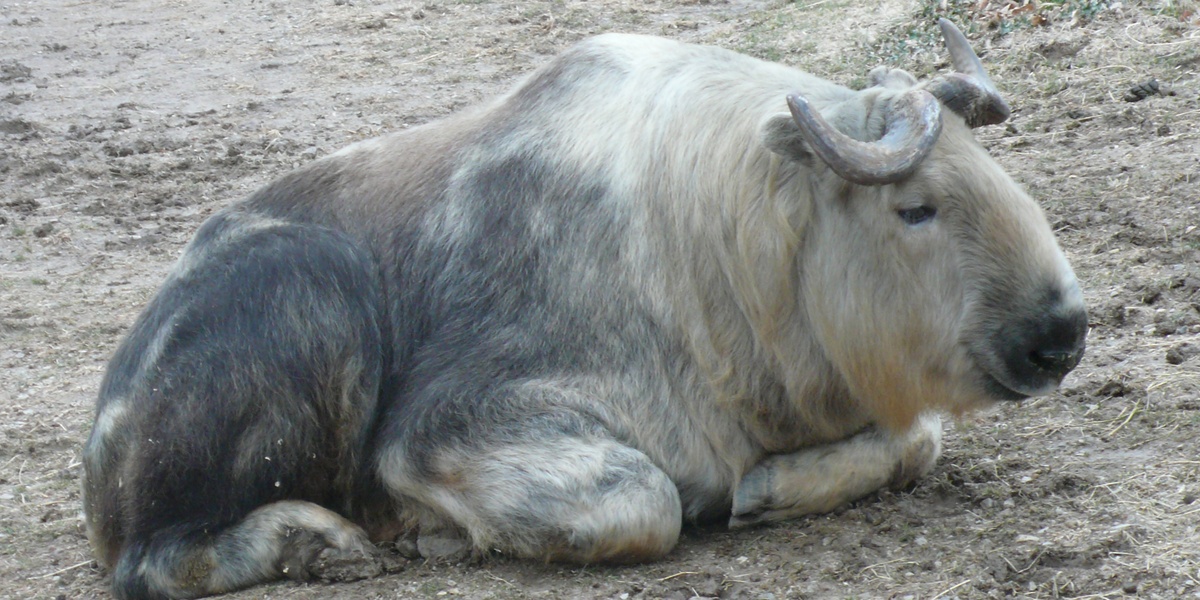
7. Bhutan Takin (Budorcas taxicolor) — National Animal
The takin, Bhutan’s national animal, is a large, stocky ungulate that prefers forested alpine meadows and subalpine slopes, frequently moving between 1,000 and 4,500 m with the seasons. Its unique appearance features a heavy neck, arched nose, and thick coat adapted to cold.
Takin feature in folklore and official symbolism, and they help shape a nature‑based national identity that shows up in education and local festivals. Their seasonal migrations concentrate them in protected valleys, where visitors may observe small herds with low‑impact guidance.
Managers monitor takin in several protected corridors, and community reporting of sightings contributes to seasonal range maps used by park authorities. That local engagement makes takin conservation both culturally meaningful and practically effective.
8. Himalayan Musk Deer (Moschus spp.)
Musk deer occupy alpine and subalpine forests and shrubs, often in remote, steep terrain. Their musk gland has driven intense poaching pressure historically, putting them at risk despite protective laws and trade restrictions under CITES.
Population declines in parts of the Himalaya reflect illegal hunting for high‑value musk. In response, Bhutan has strengthened anti‑poaching patrols and promoted community surveillance and alternative livelihoods to reduce incentives for poaching.
Protected areas and ranger patrols, combined with outreach to local communities, remain the most effective tools to reduce illegal trade and preserve these cryptic ungulates and the high‑elevation forests they help sustain.
Summary
- Bhutan’s constitutional and policy commitments (notably the 2008 constitution and a 60% forest‑cover mandate) underpin a landscape where rare species can persist.
- From snow leopards to black‑necked cranes, each species links ecological function with cultural identity and local livelihoods — protection yields multiple community and conservation benefits.
- Community stewardship, targeted protected areas (such as Jigme Dorji and Royal Manas), and camera‑trap and nest‑monitoring programs provide concrete evidence that collaborative conservation works.
- Many species remain globally rare or threatened, so responsible visitation, support for community‑based conservation, and consultation of authoritative sources (IUCN, WWF, Bhutan government reports) are practical ways to help.