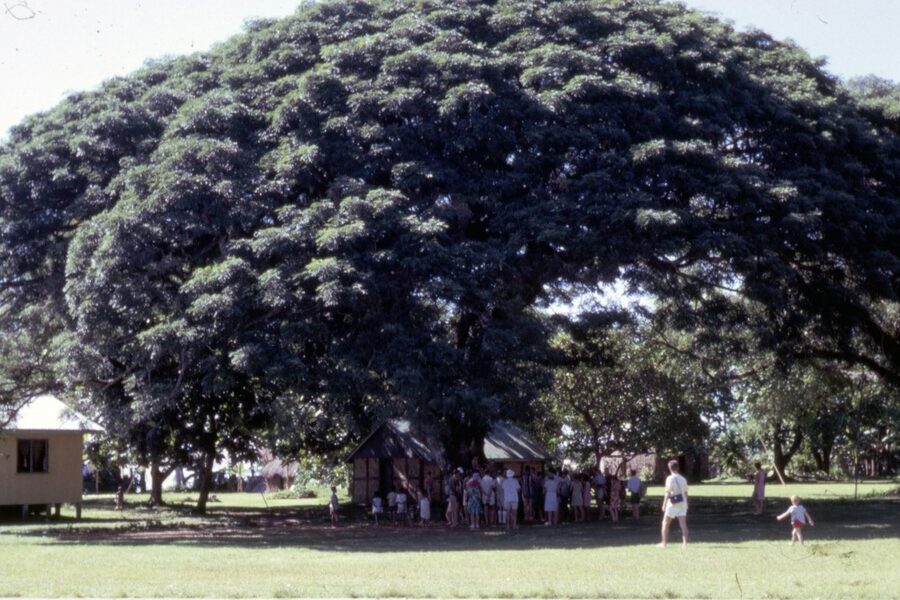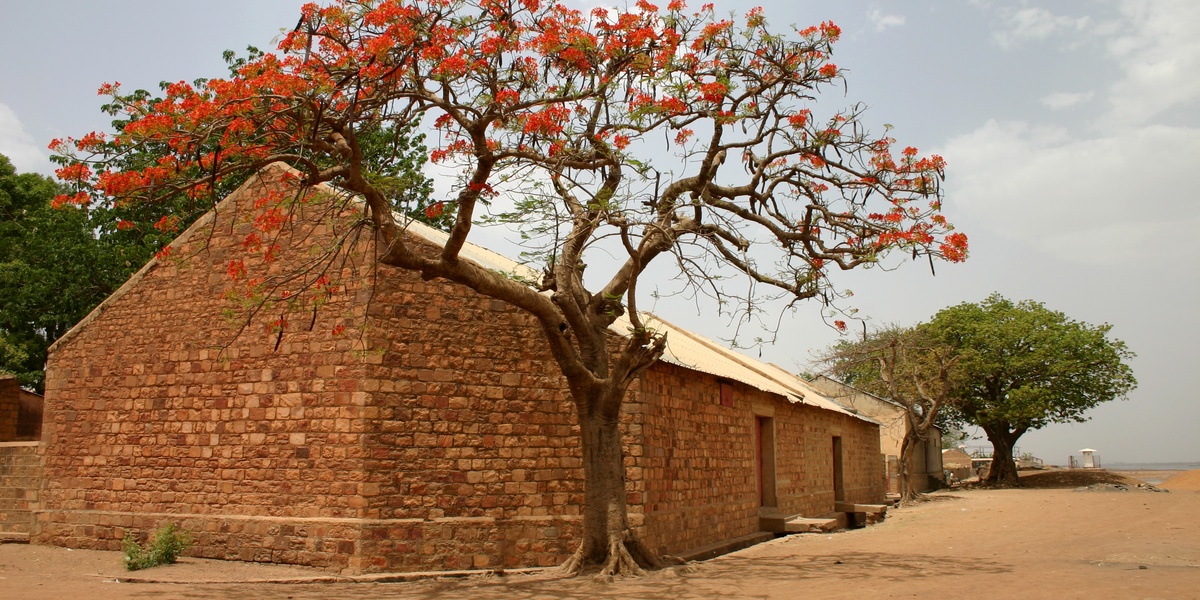
Saint Lucia’s hills, rainforests and coastal fringes host a wide variety of tree species that shape the island’s look and ecology. Whether you’re walking a plantation trail or driving the coastal road, the trees here mark habitats, provide food and shade, and tell the story of local landscapes.
There are 42 Trees of Saint Lucia, ranging from Ackee to Wild fig (Ficus spp.). The list below is organized for easy reference with columns showing Scientific name,Height (m),Habitat so you can compare size and preferred growing conditions at a glance — you’ll find below.
How can I identify these trees when I’m out walking on the island?
Start with obvious features: leaf shape and arrangement, bark texture, flowers or fruit, and overall height. Use the Scientific name from the list to verify IDs online or in field guides, and check the Habitat and Height (m) columns to match the location and size you observe; carrying a simple leaf or bark photo helps confirm uncertain matches.
Are any of these trees protected or unsuitable for home planting?
Some native species may be protected or require permits, and others grow too large for small yards; consult the Habitat and Height (m) details in the list first. For planting, choose species suited to your soil and space, and check with local nurseries or authorities about availability and any legal restrictions.
Trees of Saint Lucia
| Name | Scientific name | Height (m) | Habitat |
|---|---|---|---|
| Coconut | Cocos nucifera | 10-30 m | Beaches, coastal villages |
| Breadfruit | Artocarpus altilis | 10-20 m | Village gardens, farms, lowland forests |
| Mango | Mangifera indica | 10-30 m | Home gardens, lowland areas |
| Sea grape | Coccoloba uvifera | 3-12 m | Beaches, coastal dunes |
| Tropical almond | Terminalia catappa | 8-20 m | Beaches, roadsides, parks |
| Flamboyant (Royal Poinciana) | Delonix regia | 6-12 m | Roadsides, parks, dry lowlands |
| Tamarind | Tamarindus indica | 10-18 m | Villages, roadsides, farms |
| Mahogany | Swietenia mahagoni | 20-30 m | Moist forests, secondary growth |
| Spanish cedar | Cedrela odorata | 20-30 m | Moist forests, plantations |
| Red mangrove | Rhizophora mangle | 5-20 m | Coastal mangroves, estuaries |
| Black mangrove | Avicennia germinans | 3-12 m | Upper mangrove zones, tidal flats |
| White mangrove | Laguncularia racemosa | 3-10 m | Mangrove edges, lagoons |
| Buttonwood | Conocarpus erectus | 3-10 m | Coastal fringe, lagoons, salterns |
| Breadnut | Artocarpus camansi | 8-18 m | Village gardens, old cultivations |
| Soursop | Annona muricata | 5-10 m | Gardens, secondary forest edges |
| Sugar apple | Annona squamosa | 3-8 m | Home gardens, fences |
| Ackee | Blighia sapida | 6-20 m | Secondary forests, gardens |
| Mamey (Mammee apple) | Mammea americana | 6-12 m | Home gardens, old estates |
| Noni | Morinda citrifolia | 2-10 m | Coastal scrub, disturbed sites |
| Kapok (Ceiba) | Ceiba pentandra | 20-40 m | Dry to moist forests, pastures |
| Rain tree (Saman) | Samanea saman | 15-25 m | Roadsides, pastures, parks |
| Jacaranda | Jacaranda mimosifolia | 6-12 m | Parks, streets, gardens |
| Royal palm | Roystonea regia | 20-30 m | Roadsides, gardens, promenades |
| Avocado | Persea americana | 8-20 m | Home gardens, farms |
| Allspice | Pimenta dioica | 6-12 m | Moist forests, secondary growth |
| Cocoa | Theobroma cacao | 4-8 m | Shaded plantations, farm gardens |
| Strangler fig | Ficus citrifolia | 10-20 m | Rainforest, riverine areas, towns |
| Coral tree | Erythrina variegata | 6-12 m | Coastal plantings, roadsides, dry areas |
| Neem | Azadirachta indica | 10-20 m | Roadsides, disturbed sites, gardens |
| Tabebuia (Pink/Yellow poui) | Tabebuia heterophylla | 6-12 m | Gardens, streets, secondary forest edges |
| Spanish lime (Mamoncillo) | Melicoccus bijugatus | 10-20 m | Home gardens, villages |
| Bay rum | Pimenta racemosa | 3-10 m | Coastal forests, gardens |
| Silver thatch palm | Coccothrinax argentata | 3-8 m | Coastal scrub, sandy soils |
| Calabash | Crescentia cujete | 6-10 m | Roadsides, village edges, disturbed sites |
| Sea hibiscus | Hibiscus tiliaceus | 3-10 m | Beaches, coastal fringe |
| Soursop relative (Cherimoya/Annona group) | Annona spp. | 3-10 m | Gardens, secondary forest |
| Jackfruit | Artocarpus heterophyllus | 10-20 m | Home gardens, farms |
| White mangrove variant (Laguncularia racemosa noted again) | Laguncularia racemosa | 3-10 m | Upper mangrove fringe, lagoons |
| Wild fig (Ficus spp.) | Ficus spp. | 5-20 m | Riverbanks, wet forests, gardens |
| Silk cotton (kapok) repeat (Ceiba) | Ceiba pentandra | 20-40 m | Lowland forests, savannas |
| Pomme cytherea (Ambarella) | Spondias dulcis | 8-15 m | Home gardens, villages |
| Tropical coralwood (Erythrina cystylosa group) | Erythrina spp. | 6-12 m | Gardens, roadsides, dry sites |
Images and Descriptions
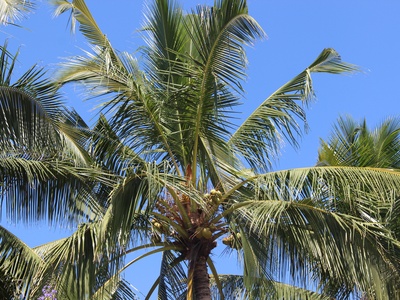
Coconut
Tall, iconic palm with a smooth trunk and crown of fronds. Look along beaches and settlements for coconuts used for food, oil and shade; fronds and fibrous husks are distinctive and easy to spot.
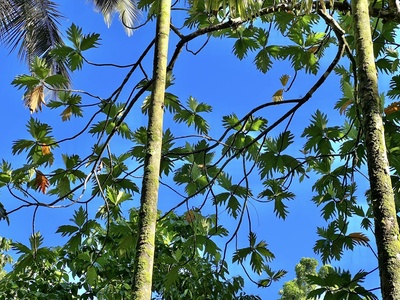
Breadfruit
Large-leaved tree bearing starchy round fruits; common in home gardens and old plantations. Identify by huge lobed leaves and spiky green fruits; widely used for baking, roasting and traditional Caribbean dishes.
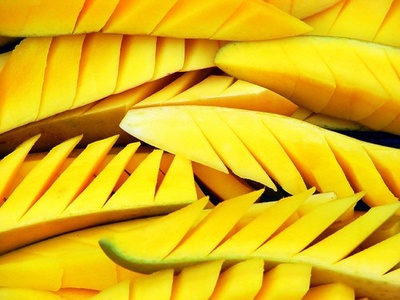
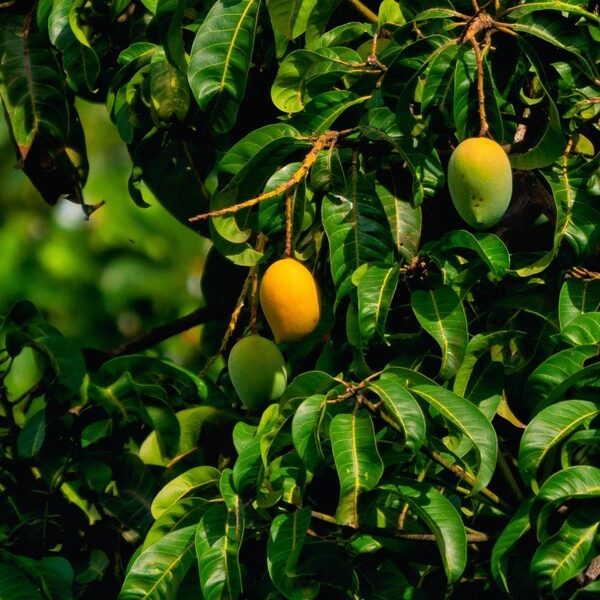
Mango
Familiar fruit tree with dense canopy and aromatic fruit; many cultivated varieties. Look for leathery leaves, strong fragrance when fruiting, and wide planting around houses and farms for shade and fruit.
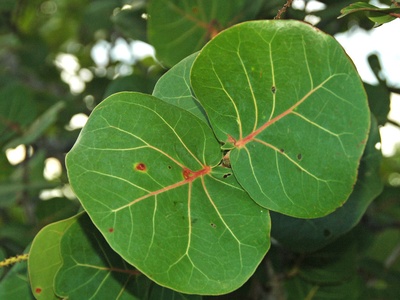
Sea grape
Coastal shrub-tree with rounded leaves and grape-like fruit clusters. Common on sandy beaches; identify by thick, leathery leaves and edible tart grapes used for jam and drinks.

Tropical almond
Broad, tiered tree commonly planted for shade on the coast. Recognizable by layered branches and large almond-like seeds; leaves turn red before dropping, and nuts are edible.
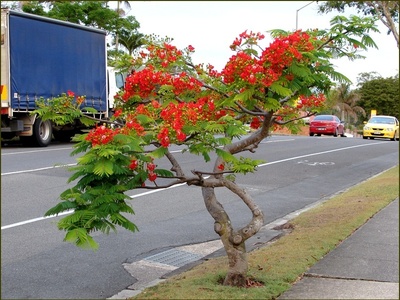
Flamboyant (Royal Poinciana)
Showy flowering tree with wide umbrella canopy and brilliant orange-red flowers in summer. Excellent shade tree often lining streets; look for feathery fern-like leaves and flamboyant blooms.
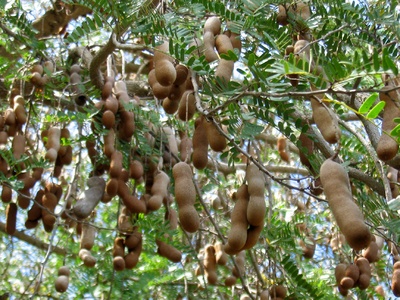
Tamarind
Mature tree with dense foliage and dangling brown pods containing tart pulp. Frequently planted near homes; pulp is used in cooking and drinks and seed pods hang visibly from branches.
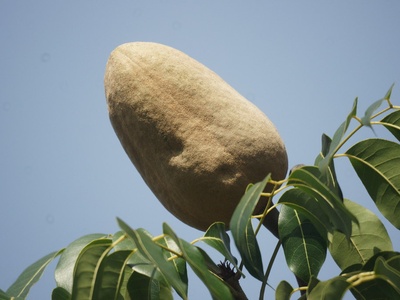
Mahogany
Large native timber tree prized for its rich wood. Identify by pinnate leaves and winged seeds; taller specimens occur in protected forest patches and regenerating woodlands.
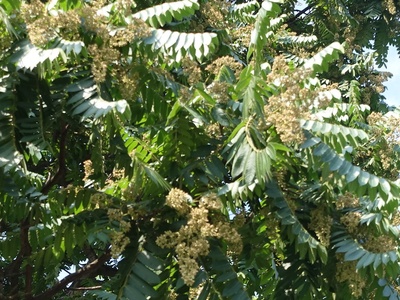
Spanish cedar
Tall timber tree with fragrant wood used for cabinetry and cigar boxes. Look for pinnate leaves and small clusters of cream flowers; often found in mixed lowland forest.
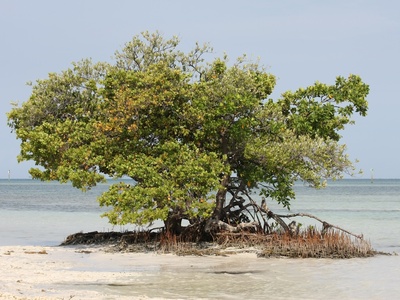
Red mangrove
Distinctive mangrove with prop roots and viviparous seedlings. Found at water’s edge protecting shorelines; identify by arching stilt roots and dense tangled colonies in brackish water.
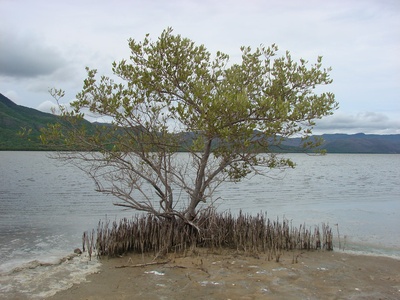
Black mangrove
Mangrove with dark bark and pneumatophores (breathing roots). Common slightly inland from red mangroves; leaves often grey-green and salt-excreting, forming dense stands.
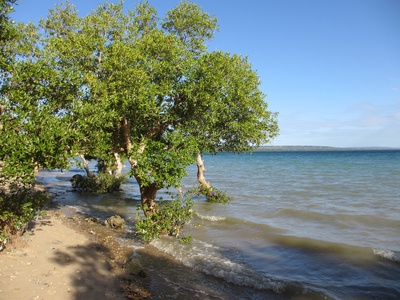
White mangrove
Small to medium mangrove at higher tidal levels with opposite leaves and peg-like glands. Found on the upper mangrove fringe alongside buttonwood and black mangrove.
Buttonwood
Shrubby tree of coastal flats with narrow leaves and peeling bark. Often on higher, drier parts of the mangrove belt; cones and clustered flowers are diagnostic.
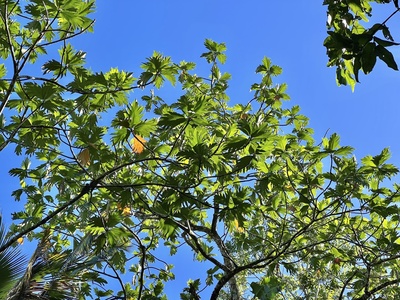
Breadnut
Relative of breadfruit with spiny fruits containing edible seeds. Planted in household gardens; identify by similar lobed leaves and large compound fruits used as a starchy food.
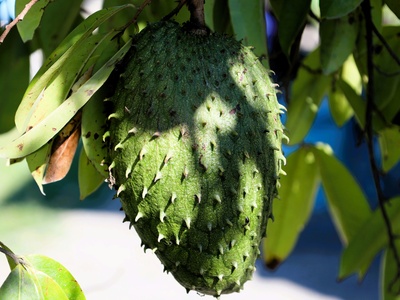
Soursop
Small fruit tree with large soft fruits and fragrant pulp used for drinks and desserts. Leaves are glossy and simple; fruit has distinctive spiny-green skin and soft white flesh.
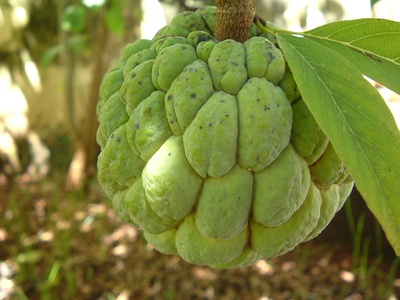
Sugar apple
Small fruit tree with knobbly fruit and sweet segmented flesh. Often planted near houses; leaves and small stature help identify it, and fruit separates into creamy segments.
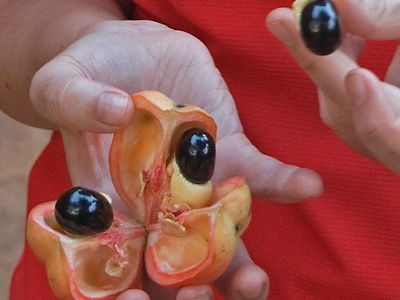
Ackee
Tropical tree with three-lobed pods that split to reveal fatty yellow arils when ripe. Popular regional food when prepared correctly; identifiable by glossy pinnate leaves and clustered fruits.
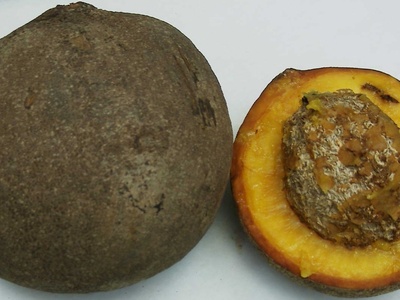
Mamey (Mammee apple)
Stout evergreen fruit tree with dense canopy and large leathery fruits. Used in preserves and desserts; identify by aromatic wood and thick-skinned orange fruit.
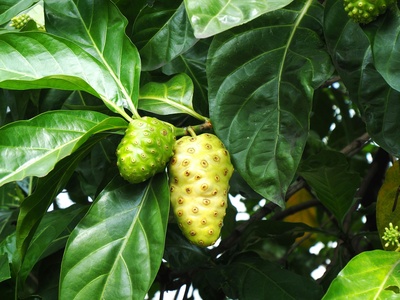
Noni
Small tree or large shrub with bumpy oval fruits and distinctive foul smell when ripe. Common in disturbed coastal areas and gardens; leaves are large and glossy.
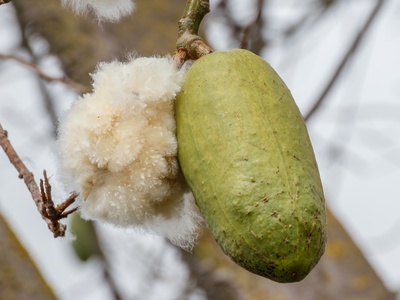
Kapok (Ceiba)
Massive emergent tree with straight trunk and buttresses; produces large siliques of silky kapok. A dramatic forest tree with palmate leaves and seasonal branches bearing thorny trunk in youth.
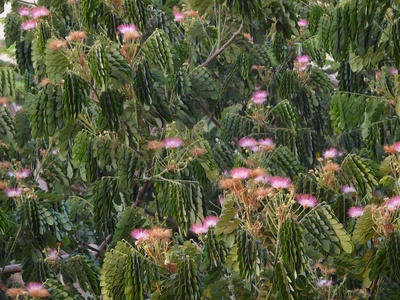
Rain tree (Saman)
Wide-canopied shade tree with spreading umbrella crown and pinkish pom-pom flowers. Popular for shade in fields and roadsides; identifiable by bipinnate leaves and flattened crown.
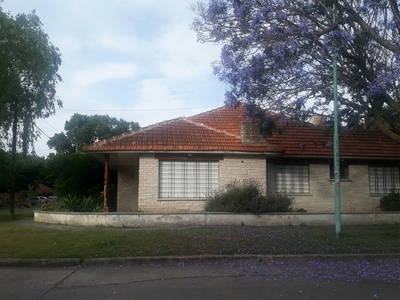
Jacaranda
Ornamental tree with lacy leaves and spectacular purple trumpet flowers in season. Common in town plantings; look for fern-like foliage and clusters of violet blossoms.
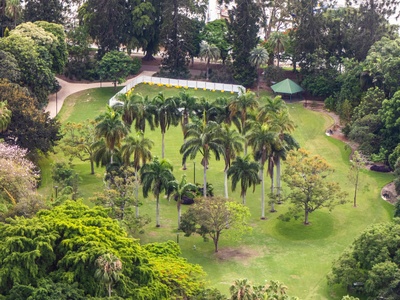
Royal palm
Tall stately palm with smooth gray trunk and large crownshaft topped by feathery fronds. Frequently planted along avenues and near the shore, iconic of Caribbean landscapes.
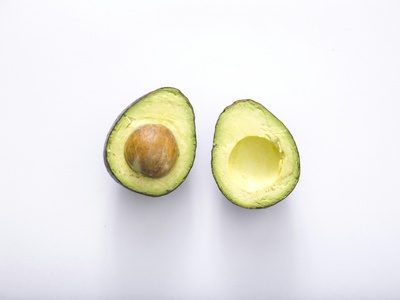
Avocado
Fruit tree with glossy leaves and large green fruits. Grown across the island in gardens and orchards; fertile soils produce tall specimens with dense canopies and creamy edible flesh.
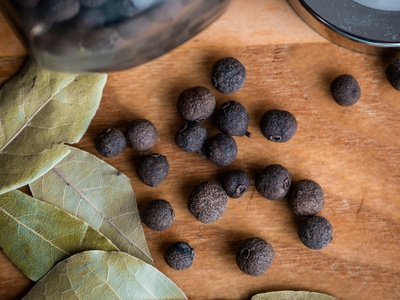
Allspice
Aromatic tree used for spice and bay rum; look for glossy leaves and small dark berries. Grows in shaded forest understory and near homesteads; leaves smell of clove when crushed.
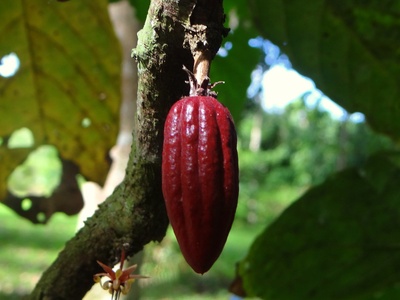
Cocoa
Small understory tree producing cacao pods used for chocolate. Often grown under shade trees on small farms; identify by paddle-shaped pods growing on trunk and branches.
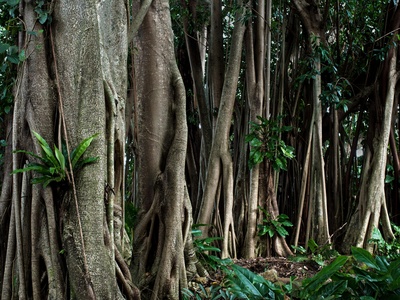
Strangler fig
Fig that often begins as an epiphyte and develops into a knobbly, buttressed tree. Look for broad aerial roots, milky sap and dense figs eaten by birds and bats.
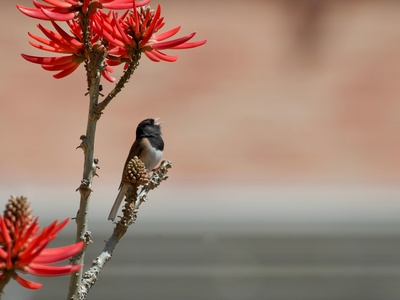
Coral tree
Ornamental with stout spines, pinnate leaves and bright red tubular flowers attracting hummingbirds. Often used as a living fence or shade tree in drier sites.
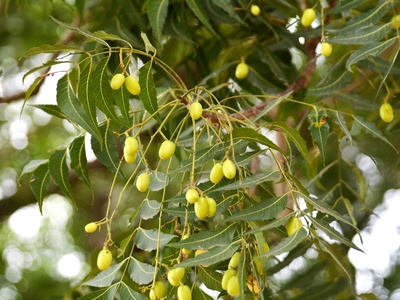
Neem
Hardy, drought-tolerant tree introduced for shade and medicinal uses. Pinnate leaves and fragrant flowers; widely planted in dry, disturbed areas and valued for pest-repellent properties.
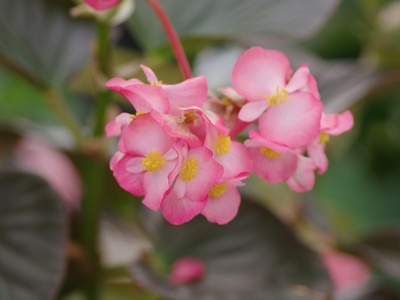
Tabebuia (Pink/Yellow poui)
Flowering tree with trumpet-shaped blooms—pink, white or yellow—valued as an ornamental. Recognizable when in bloom and commonly planted along roadsides and in parks.
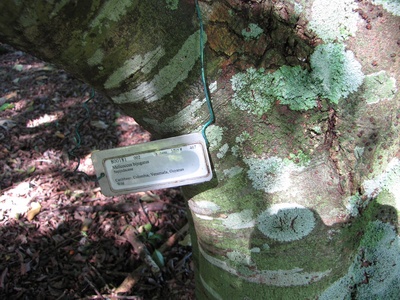
Spanish lime (Mamoncillo)
Small to medium fruit tree bearing green sticky-shelled fruits eaten fresh. Look for pinnate leaves and clusters of round fruits; popular snack tree around homes and roadside stands.
Bay rum
Aromatic small tree used to make bay rum and essential oils. Leaves emit strong spicy aroma when crushed; found in coastal woodland and home gardens.
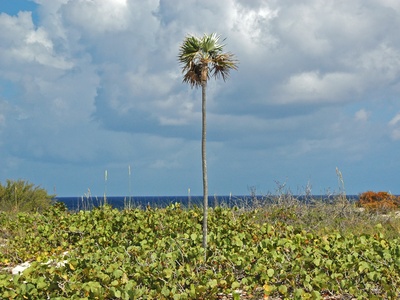
Silver thatch palm
Slender, fan-leaved palm with silvery leaf undersides common in coastal thickets. Used traditionally for thatch; identifiable by small stature and silver-toned fronds.
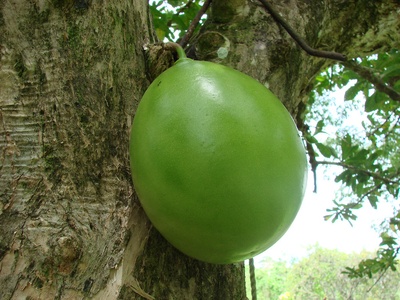
Calabash
Small tree with round woody gourds used as containers and instruments. Recognizable by large spherical fruits and open branching habit; common near settlements.
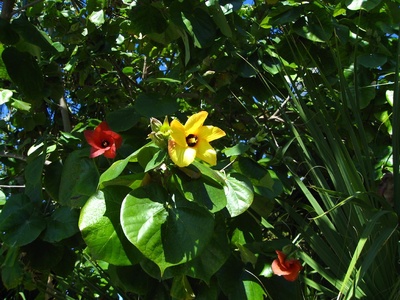
Sea hibiscus
Coastal tree with heart-shaped leaves and yellow hibiscus-like flowers. Often windswept on shorelines; useful for windbreaks and easily identified by its large, soft leaves.
Soursop relative (Cherimoya/Annona group)
Fruit trees in the custard-apple family producing aromatic fruits. Typically small to medium trees in home gardens; identify by simple leaves and distinctive fruit shapes and textures.
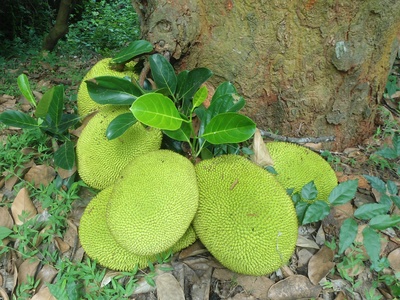
Jackfruit
Large tropical fruit tree with enormous bumpy fruits; heavy branches and large glossy leaves. Found in older homesteads; fruit is distinctive, used fresh or cooked.
White mangrove variant (Laguncularia racemosa noted again)
Typically forms the upper edge of mangrove forests and tolerates variable salinity. Recognize by rounded leaves and small paired glands at the leaf base.
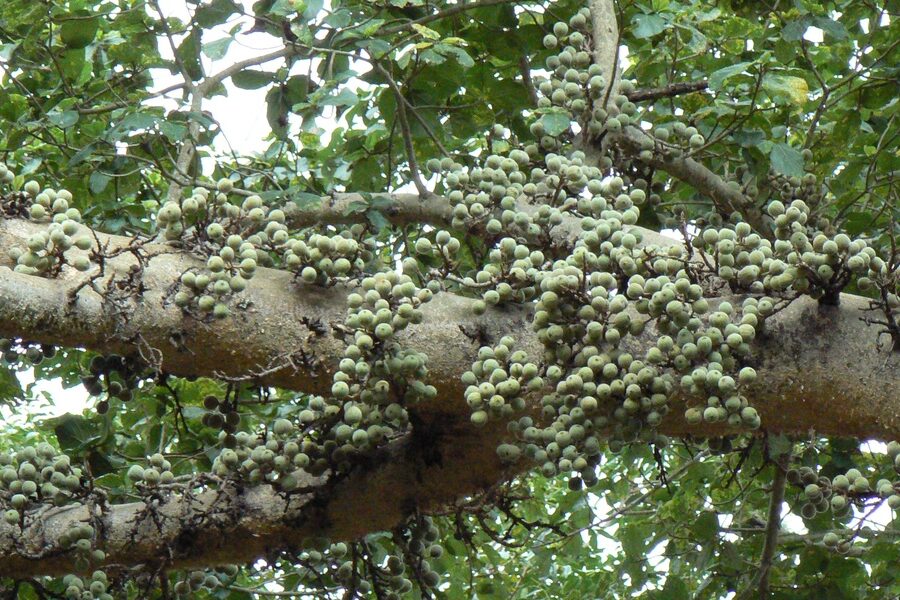
Wild fig (Ficus spp.)
Various fig species form prominent trees with broad crowns and edible fig fruit eaten by wildlife. Look for milky sap, aerial roots and copious figs attracting birds and bats.
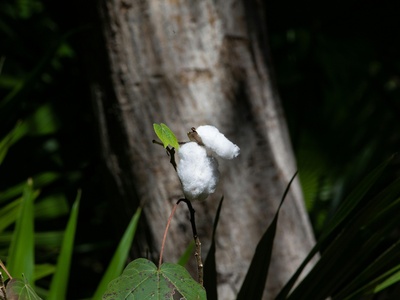
Silk cotton (kapok) repeat (Ceiba)
A massive emergent with buttressed trunk and seasonal flowers; produces silky kapok fibers. A striking landmark tree often seen in remnant forest patches and open fields.
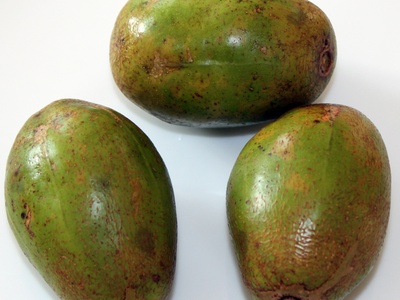
Pomme cytherea (Ambarella)
Fruit tree producing oval orange fruits eaten fresh or made into chutneys. Recognizable by pinnate leaves and clusters of fruit; commonly planted around homes for its tasty harvest.
Tropical coralwood (Erythrina cystylosa group)
Various coral tree species with thorny branches and vivid red flowers. Widely planted for ornament and shade; identifiable by bright flower clusters and pinnate leaves.