Palau’s scattered limestone islands and coral atolls support a compact, varied bird community shaped by ocean, reef and forest habitats. Local shorelines, mangroves and village gardens make the islands easy to explore on short walks or boat trips, with many species visible from shore.
There are 25 Birds of Palau, ranging from Black noddy to White-breasted woodswallow. For each species you’ll find below Scientific name,Status,Length (cm), plus brief notes to help with identification and conservation context — details are listed below.
Are any of the listed species unique to Palau?
Some species on the list are regionally restricted; the Status column flags endemics and conservation notes so you can see which birds are local specialties and which are more widespread.
How can I use the list during a field trip?
Use the Scientific name to confirm identifications in guides or apps, check Status to gauge how common a species is, and compare Length (cm) with field estimates; combining habitat clues and size makes quick ID much easier.
Birds of Palau
| Common name | Scientific name | Status | Length (cm) |
|---|---|---|---|
| Palau fruit dove | Ptilinopus pelewensis | Endemic resident, common | 22 |
| Palau fantail | Rhipidura lepida | Endemic resident, common | 16 |
| Collared kingfisher | Todiramphus chloris | Resident, common | 28 |
| Micronesian myzomela | Myzomela rubratra | Resident, common | 11 |
| Brown booby | Sula leucogaster | Resident, common | 65 |
| Red-footed booby | Sula sula | Resident, common | 65 |
| Masked booby | Sula dactylatra | Resident, common on outer reefs | 75 |
| Great frigatebird | Fregata minor | Resident, common | 89 |
| Lesser frigatebird | Fregata ariel | Resident, uncommon | 75 |
| Brown noddy | Anous stolidus | Resident, common | 35 |
| Black noddy | Anous minutus | Resident, common | 34 |
| White tern | Gygis alba | Resident, common | 28 |
| Sooty tern | Onychoprion fuscatus | Seasonal migrant, common | 33 |
| Bridled tern | Onychoprion anaethetus | Seasonal migrant, common | 28 |
| Black-naped tern | Sterna sumatrana | Resident, common | 30 |
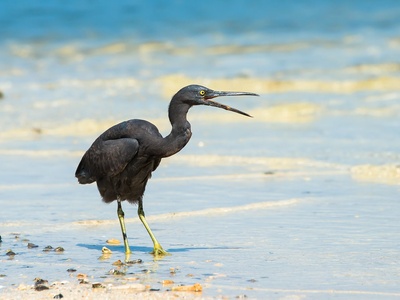
| Pacific reef heron | Egretta sacra | Resident, common | 60 |
| Pacific golden plover | Pluvialis fulva | Migratory, common winter visitor | 27 |
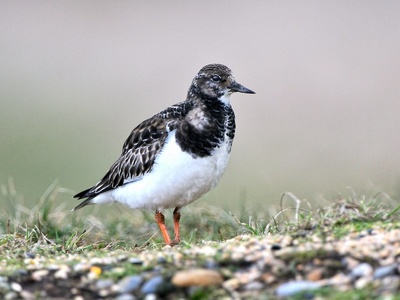
| Ruddy turnstone | Arenaria interpres | Migratory, common | 22 |
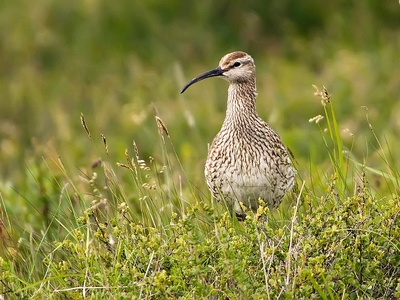
| Whimbrel | Numenius phaeopus | Migratory, common | 40 |
| Wandering tattler | Tringa incana | Migratory, common | 26 |
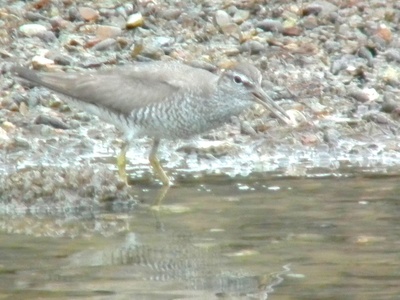
| Gray-tailed tattler | Tringa brevipes | Migratory, common | 25 |
| Common sandpiper | Actitis hypoleucos | Migratory, uncommon | 22 |
| Wedge-tailed shearwater | Ardenna pacifica | Resident, common | 38 |
| White-breasted woodswallow | Artamus leucorynchus | Resident, common | 19 |
| Pacific swallow | Hirundo tahitica | Resident, common | 14 |
Images and Descriptions
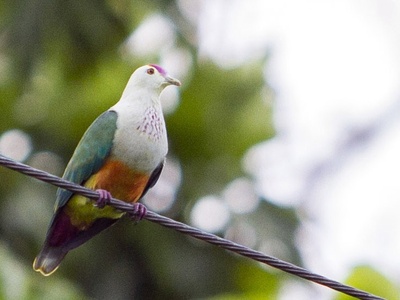
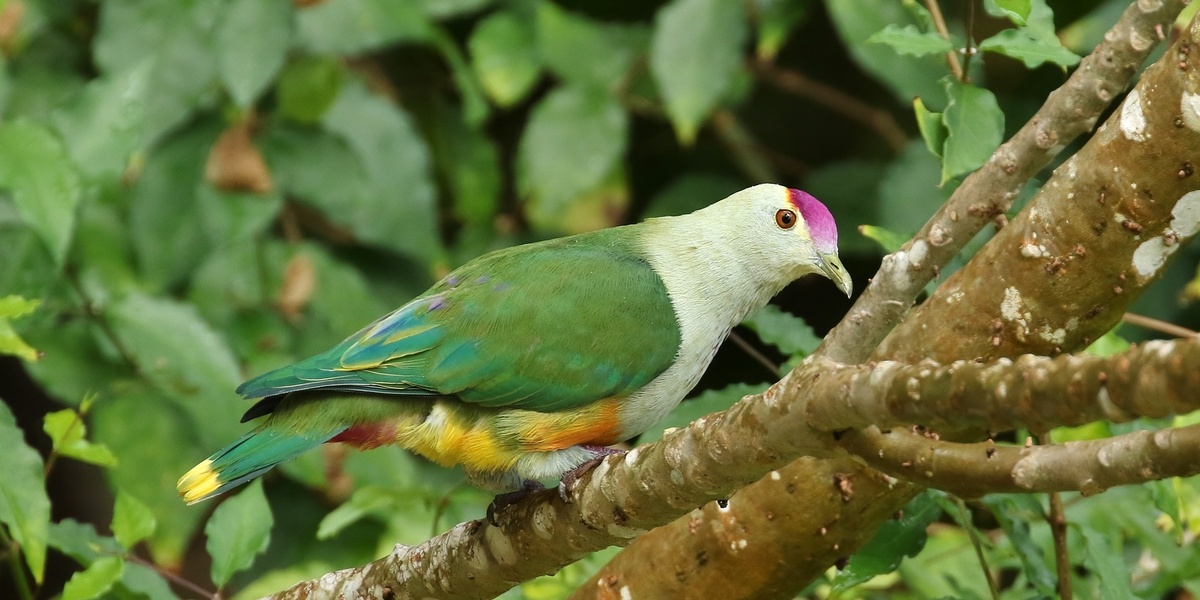
Palau fruit dove
Compact bright dove with vivid green body and pinkish head; found in mature lowland forest and village gardens. Best seen on Babeldaob and the Rock Islands; noted for soft cooing and fruit-eating behavior.
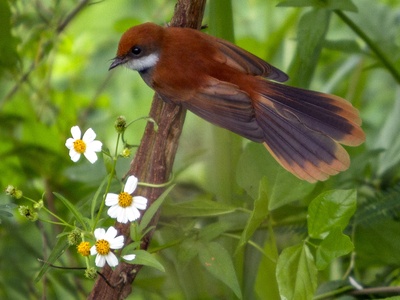
Palau fantail
Small, energetic flycatcher with fan-shaped tail, gray-brown upperparts and paler underparts. Forages in forest edges and secondary growth; especially easy to watch in Babeldaob and roadside woods around Koror.
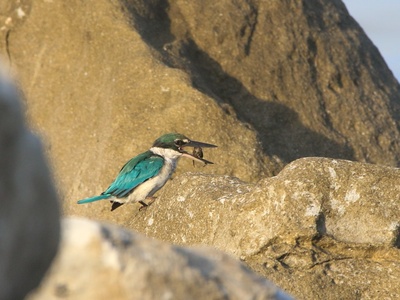
Collared kingfisher
Blue-green back, white underparts and collar, large bill. Frequent along coasts, mangroves and village gardens; nests in tree cavities and on coastal cliffs. Common around Rock Islands and Peleliu beaches.
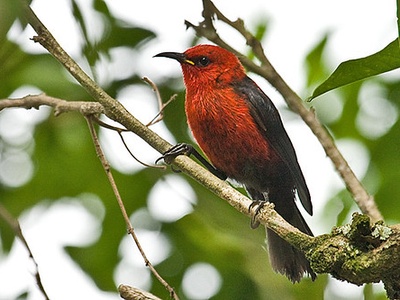
Micronesian myzomela
Tiny, energetic nectar-feeder with bright red male plumage and dark wings; females browner. Visits flowering trees in forests and gardens. Seen widely across Palau, especially where hibiscus and coconut blossoms are abundant.
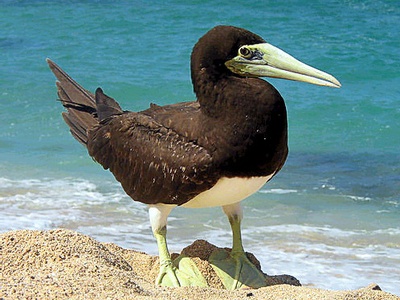
Brown booby
Large, stocky seabird with brown body and white belly; strong, direct flight and plunges for fish. Breeds on offshore islets and rocky cays; easy to see around Rock Islands and outer atolls.
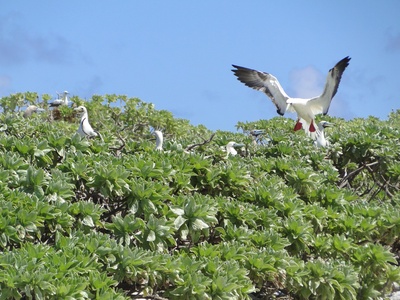
Red-footed booby
Slender booby often with white or brown morphs and distinctive red feet. Nests in colonies on remote islets and trees. Look for groups flying over lagoons and offshore atolls, especially early morning.
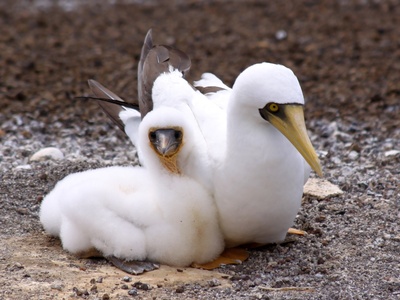
Masked booby
White-bodied booby with contrasting black tail and face mask; large pointed bill. Prefers outer reef islets for nesting. Best views at Peleliu and other remote outer islands.
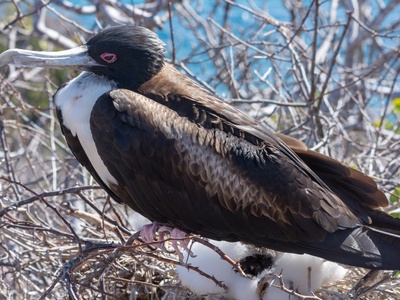
Great frigatebird
Huge, buoyant seabird with long wings and deeply forked tail; males show inflatable red throat pouch. Soars over lagoons and near colonies; frequent above Rock Islands and around fishing boats.
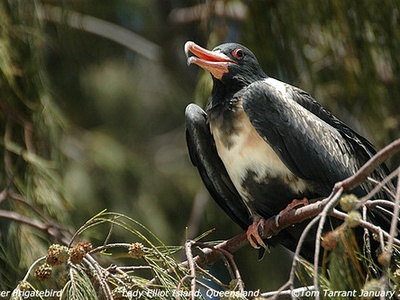
Lesser frigatebird
Smaller frigatebird with angular wings and long forked tail; males have purple-black throat pouch. Soaring bird around outer reefs and islets; occasionally seen with Great Frigatebirds.

Brown noddy
Dark gray-brown tern with stout bill and pale cap; flies in slow, deliberate wingbeats. Breeds on trees and cliffs of islets; readily seen on offshore rocks and around the Rock Islands.
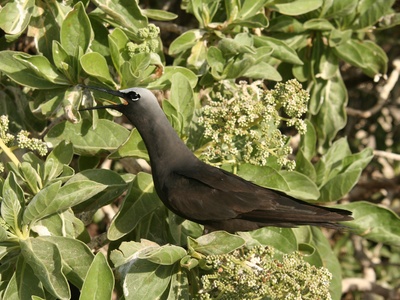
Black noddy
Glossy black tern with crested forehead and pale cap in some birds; calmer, low flight. Nests in trees on offshore islets; frequent around outer reefs and quiet bays.
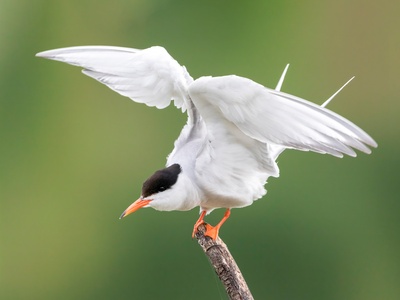
White tern
Slender white seabird with dark bill and black eye ring, appears floating above water. Nestless or uses small stick platforms on cliff ledges and trees; commonly seen over inner lagoons and Rock Islands.
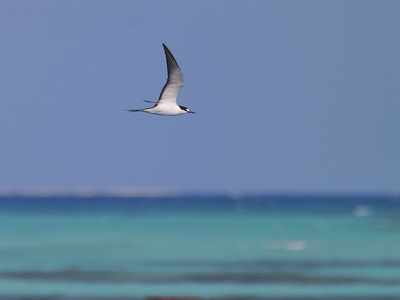
Sooty tern
Dark sooty upperparts with white belly and long pointed wings; flies fast over open ocean. Breeds on offshore colonies in season; plentiful around outer atolls and oceanic waters.
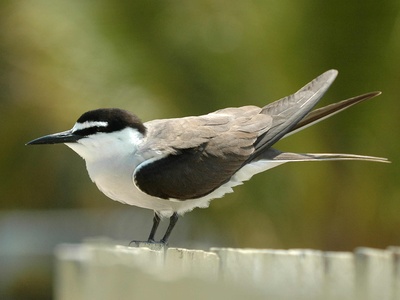
Bridled tern
Pale-faced tern with bridled eye pattern and dark cap; swift, shallow flight. Found around reef edges and offshore waters; often seen around outer Rock Islands and islets at dawn/dusk.
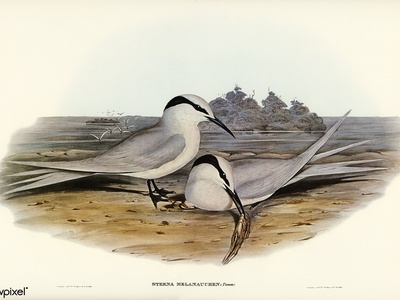
Black-naped tern
Graceful white tern with black nape stripe and slender bill; hovers and dives for small fish. Favors reef edges and sandy islets; regular around Koror and the Rock Islands.
Pacific reef heron
Two color morphs: slate-gray or white; slender heron often seen on reef flats and rocky shorelines. Hunts tidal flats and lagoons; frequent at low tide around Rock Islands and main island shores.

Pacific golden plover
Chunky plover with golden-speckled back in breeding plumage, plain face in winter. Uses open fields, airport grasslands and mudflats; regular on Babeldaob and coastal open areas during migration.
Ruddy turnstone
Stout shorebird with patterned black-and-white breast in breeding season; flips stones and seaweed. Frequent on rocky shorelines and reef flats; easy to see around beaches and jetties on Palau’s islands.
Whimbrel
Large curlew-like shorebird with long, downcurved bill and striped head. Forages mudflats and sandy beaches for crabs and worms; regular migrant along Palau’s coasts.

Wandering tattler
Plain grayish shorebird with distinctive tail-bobbing behavior, sturdy bill. Likes rocky shorelines, piers and reefs; one of the most reliable shorebirds on Palau’s coasts and islands.
Gray-tailed tattler
Slim, gray-backed shorebird with pale eyebrow and teetering gait. Flocks on mudflats, estuaries and reef edges during migration; often seen with Wandering Tattlers.
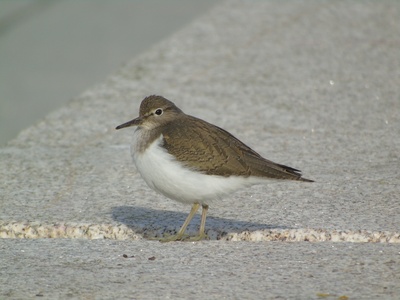
Common sandpiper
Small, brown-and-white sandpiper with distinctive bobbing action. Favors rocky shores, streams and lagoon edges; scattered records across Palau in migration periods.
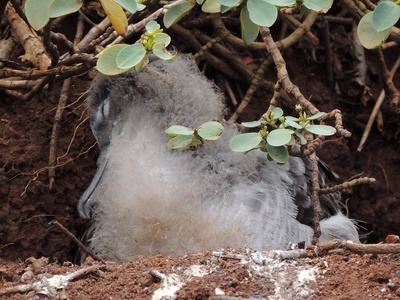
Wedge-tailed shearwater
Brown upperparts with paler underparts and wedge-shaped tail; flies low over water and nests in burrows. Seen offshore and near islets, particularly around Rock Islands and reef-protected shores.
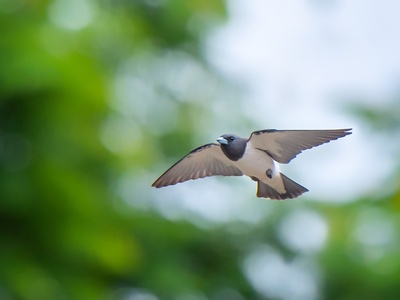
White-breasted woodswallow
Sleek gray swallow with white throat and breast, forked tail and aerial feeding style. Perches on wires and treetops near villages and open forest edges; common across inhabited islands.

Pacific swallow
Small, glossy blue swallow with rufous forehead and breast band. Agile aerial insectivore often seen around villages, airports and shoreline cliffs. Widespread and easy to watch on Koror and Babeldaob.