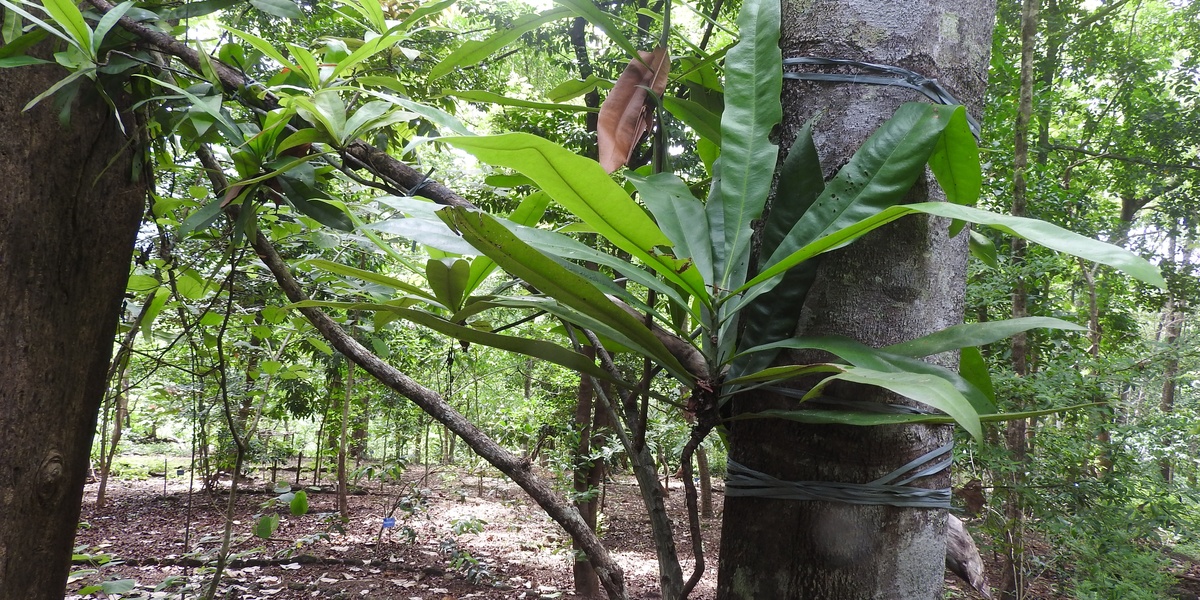
In the humid green depths of tropical forests, vines weave between trunks and branches to link the understory with the canopy. They shape light, provide routes for wildlife, and add a layered, living texture to rainforest landscapes.
There are 38 rainforest vines, ranging from Adanson’s Monstera to Waxvine (australis). For each entry, the data are organized as Scientific name,Native range,Climbing habit; you’ll find these details below.
How do I tell one rainforest vine from another?
Look at leaf shape and size, presence of aerial roots or tendrils, and how the plant climbs (twining, clinging, or scrambling). The Native range column helps narrow likely species for your region, while the Climbing habit gives a quick sense of how it grows on trees or supports.
Are any of these vines suitable for home cultivation?
Yes—some, like Adanson’s Monstera, adapt well to cultivation, while others need specific humidity, heat, or space. Check the Native range and Climbing habit to match species to your climate and support structures, and confirm local regulations since some rainforest vines can be invasive outside their native areas.
Rainforest Vines
| Common name | Scientific name | Native range | Climbing habit |
|---|---|---|---|
| Monstera | Monstera deliciosa | Southern Mexico to Panama | hemiepiphyte |
| Adanson’s Monstera | Monstera adansonii | Central & South America | hemiepiphyte |
| Monstera obliqua | Monstera obliqua | Amazon basin | hemiepiphyte |
| Pothos | Epipremnum aureum | Solomon Islands, pantropical | hemiepiphyte |
| Epipremnum pinnatum | Epipremnum pinnatum | Southeast Asia | hemiepiphyte |
| Scindapsus | Scindapsus pictus | Southeast Asia | hemiepiphyte |
| Rhaphidophora | Rhaphidophora tetrasperma | Southeast Asia | hemiepiphyte |
| Philodendron (scandens) | Philodendron scandens | Central & South America | hemiepiphyte |
| Philodendron (hederaceum) | Philodendron hederaceum | Central America to Bolivia | hemiepiphyte |
| Climbing anthurium | Anthurium scandens | Tropical Americas | root-clinging hemiepiphyte |
| Waxvine (australis) | Hoya australis | Australia, Pacific islands | twining vine |
| Waxplant | Hoya carnosa | Southeast Asia | twining vine |
| Jade vine | Strongylodon macrobotrys | Philippines | woody liana |
| Velvet bean | Mucuna pruriens | Pantropical tropics | tendril or twining stem |
| Sea-heart | Entada gigas | Pantropical coastal rainforests | woody liana |
| Entada (rheedii) | Entada rheedii | Africa, Asia, Australasia | woody liana |
| Ayahuasca vine | Banisteriopsis caapi | Amazon Basin | woody liana |
| Curare vine | Chondrodendron tomentosum | Amazon Basin | woody liana |
| Cat’s claw (tomentosa) | Uncaria tomentosa | Amazon Basin | hook-climbing liana |
| Cat’s claw (guianensis) | Uncaria guianensis | Amazon & Guianas | hook-climbing liana |
| Passionfruit | Passiflora edulis | South America | tendril climber |
| Giant passionflower | Passiflora quadrangularis | Tropical Americas | tendril climber |
| Dutchman’s pipe | Aristolochia grandiflora | Central & South America | twining vine |
| Garlic vine | Mansoa alliacea | Amazon Basin | twining woody vine |
| Guarana | Paullinia cupana | Amazon Basin | woody liana |
| Rubber vine | Landolphia owariensis | West & Central Africa | woody liana |
| Cayratia | Cayratia trifolia | Tropical Asia to Australia | tendril climber |
| Derris | Derris elliptica | Southeast Asia | woody twining liana |
| Rattan (rotang) | Calamus rotang | South & Southeast Asia | rattan |
| Rattan (manan) | Calamus manan | Southeast Asia | rattan |
| Dragon’s-blood rattan | Daemonorops draco | Southeast Asia | rattan |
| Climbing hempweed | Mikania micrantha | Neotropics, now pantropical | twining herbaceous vine |
| Ivy gourd | Coccinia grandis | Africa & Asia | tendril climber |
| Moonflower | Ipomoea alba | Tropical Americas | twining vine |
| Tetrastigma | Tetrastigma leucostaphylum | Southeast Asia | root-clinging liana |
| Freycinetia | Freycinetia arborea | Pacific islands, SE Asia | root-clinging vine |
| Black pepper | Piper nigrum | Western Ghats (India) | tendril-adjacent climber |
| Greenbrier | Smilax china | East & Southeast Asia | hook-climbing woody vine |
Images and Descriptions

Monstera
Iconic split-leaf vine with large perforated leaves climbing tree trunks in lowland rainforests. Hemiepiphytic climber using aerial roots, common from understory to canopy. Fruit edible when ripe; important for habitat structure and widely used in food and houseplant trade.
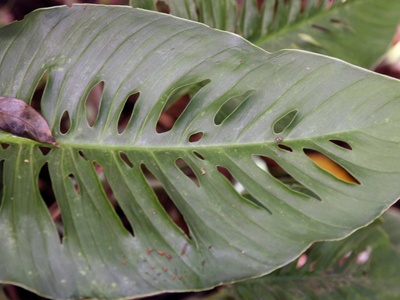
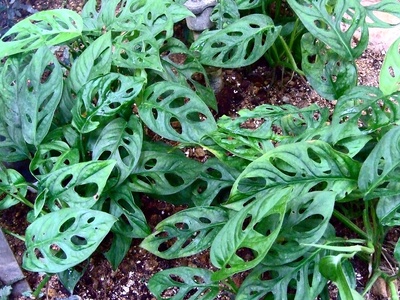
Adanson’s Monstera
Smaller perforated-leaf Monstera with distinctive oval holes and a delicate habit. Climbs by aerial roots, often on trunks and fallen logs in humid rainforests. Valued for ornamental foliage; provides shelter for small animals and contributes to understory connectivity.
Monstera obliqua
Rare small-leaf Monstera with extreme perforations and thin leaves, easily confused with M. adansonii. Climbs tree trunks with aerial roots in lowland rainforest. Collectors prize it; wild populations are scarce and often localized, making conservation concerns real.
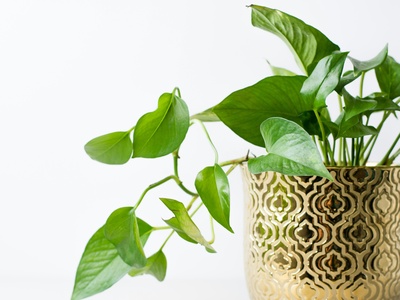
Pothos
Popular pothos vine native to Solomon Islands, now widespread in tropical rainforests and disturbed areas. Climbs by aerial roots along trunks and branches. Tolerant generalist providing fast cover; toxic if eaten but useful for soil stabilization and habitat for invertebrates.
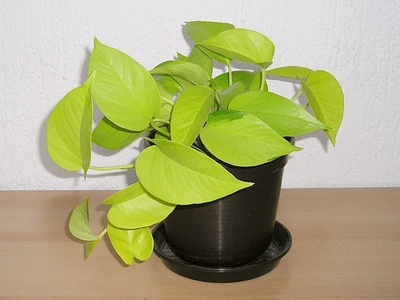
Epipremnum pinnatum
Long-leaf pothos with fenestrations developing with age; climbs tree boles and rocks using aerial roots. Native to tropical Asian rainforests, it often reaches high canopy gaps. Leaves used occasionally for ornament and it plays a role in connecting understory microhabitats.
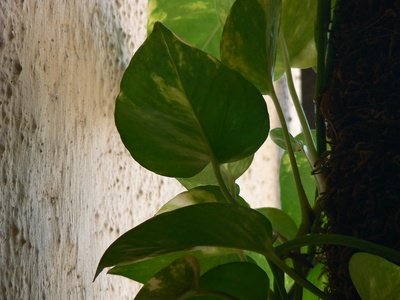
Scindapsus
Silver-variegated aroid vine that climbs trees in lowland and montane rainforests via aerial roots. Leaves are matte with silvery patches; less aggressive than Epipremnum but important as understory cover and occasionally used by local peoples for weaving materials.

Rhaphidophora
Compact Philodendron-like climber with fenestrated leaves when mature. Uses aerial roots to cling to bark and ascend toward canopy in humid forests. Common in understory gaps; popular as a houseplant but originates from wild rainforest populations.
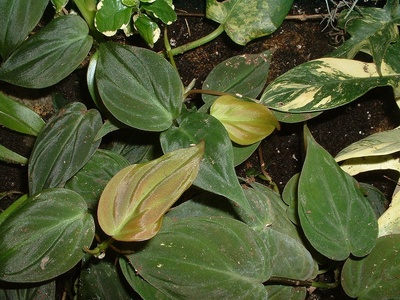
Philodendron (scandens)
Heart-leaved climber common in Neotropical rainforests, ascending trunks with aerial roots. Leaves vary from juvenile to adult forms; provides food and shelter for insects and vertebrates. Many species are harvested for ornament and cultural use.
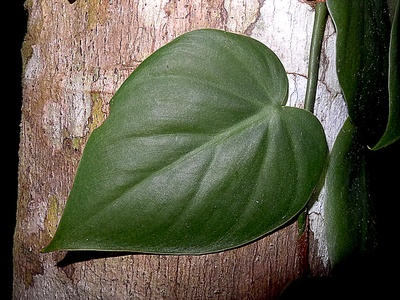
Philodendron (hederaceum)
Trailing-climbing philodendron with glossy heart-shaped leaves that climbs by aerial roots into the canopy. Common in humid forests and secondary growth; used traditionally in local medicine and as a food wrapper in some cultures.
Climbing anthurium
Widespread climbing Anthurium with leathery arrow-shaped leaves that root onto tree trunks. Hemiepiphytic habit allows it to reach light in dense forests. Vibrant spathes are smaller than cultivated types; species is ecologically important for epiphyte communities.
Waxvine (australis)
Robust waxvine climbing by twining stems and clinging to trees in rainforest margins. Thick succulent leaves and star-shaped flowers attract pollinators. Often grows epiphytically but will scramble across trunks; used locally as ornament and nectar source for fauna.
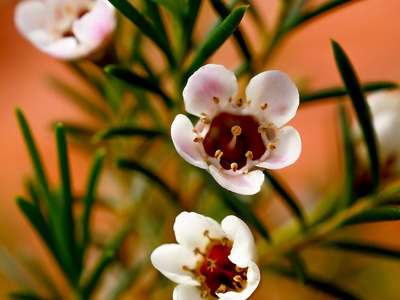
Waxplant
Common waxplant forming twining vines and rooting where stems touch bark in humid forests. Produces fragrant, clustered flowers and sticky nectar that attract ants and pollinators. Often found in canopy gaps and along forest edges.
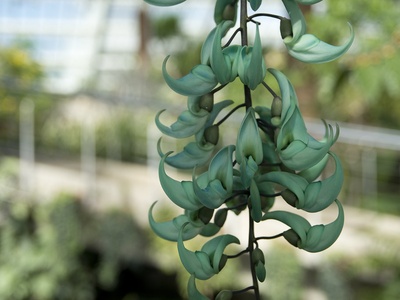
Jade vine
Jade vine with cascading clusters of turquoise flowers; a spectacular Philippine rainforest liana. Clings and twines over branches, attracting bats and birds for pollination. Locally rare and threatened due to habitat loss; prized for its unusual floral color.
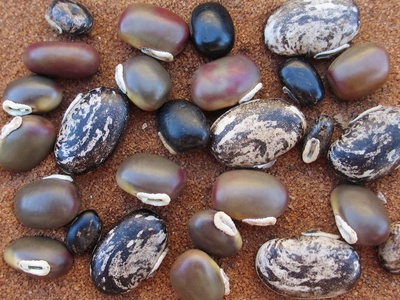
Velvet bean
Hairy tropical legume vine with hooked hairs that can irritate skin; twines over shrubs and trees in rainforests. Seeds used medicinally and as food after processing; plays a role in nitrogen fixation and provides forage for wildlife.
Sea-heart
Giant sea-heart liana forming huge woody stems that scramble into canopies and along riverine forests. Produces massive pods whose drifting seeds are famous for long-distance dispersal. Structurally important in river-edge and coastal rainforest habitats.
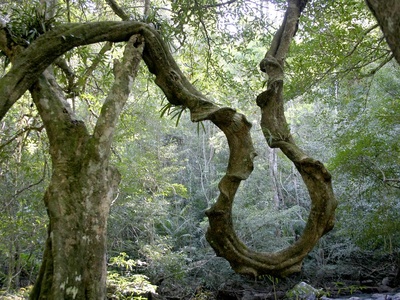
Entada (rheedii)
Large tropical liana with long, rope-like stems and big pods; often found in lowland rainforests and riparian zones. Seeds float and disperse widely; stems provide climbing pathways for animals and contribute to forest connectivity.
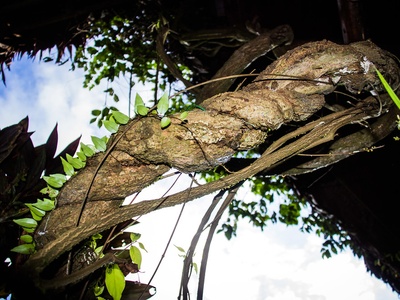
Ayahuasca vine
Thick-stemmed woody liana central to traditional Amazonian ayahuasca brews. Climbs trees by twining and forms dense thickets in forest gaps. Chemically active alkaloids have ceremonial and medicinal uses; species is culturally significant and locally managed.
Curare vine
Amazonian liana source of curare alkaloids historically used for arrow poison. Twining vine with pinnate leaves that climbs into canopy. Important in traditional medicine; chemically potent and ecologically integrated into forest predator-prey interactions.
Cat’s claw (tomentosa)
Cat’s claw liana with curved hooked thorns used to anchor onto hosts while climbing toward light. Valued for anti-inflammatory traditional medicines; extensive harvesting and habitat loss raise conservation concerns in some areas.
Cat’s claw (guianensis)
Second cat’s claw species often confused with U. tomentosa; uses hooked spines to climb trunks. Leaves, bark, and roots used in traditional medicine. Plays a role in forest structure and as browse for wildlife.
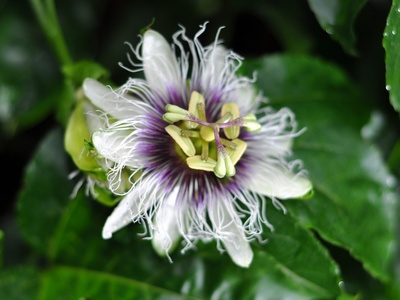
Passionfruit
Passionfruit vine climbing by coiling tendrils on supports in humid forests and forest edges. Produces edible fruit and serves as host plant for many butterfly species. Cultivated widely but originates in tropical rainforest habitats.
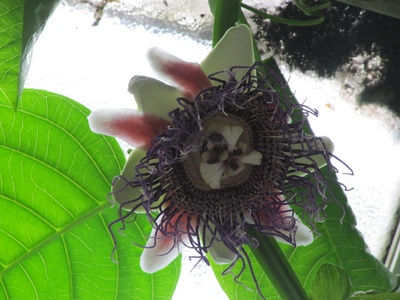
Giant passionflower
Giant passionflower with very large fruits and lobed leaves; climbs by tendrils over trees in lowland rainforests. Fruits are edible and used locally; flowers attract diverse pollinators including bats and large bees.
Dutchman’s pipe
Large-flowered birthwort that twines over supports in humid forests. Produces enormous, fragrant flowers that attract carrion flies for pollination. Leaves are big and heart-shaped; various Aristolochia species are larval hosts for swallowtail butterflies.
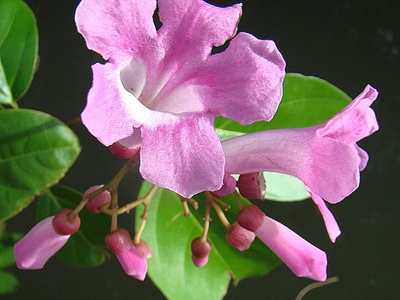
Garlic vine
Garlic vine with fragrant leaves and purple tubular flowers that twine over shrubs and trees. Common in disturbed rainforest and edges, attractive to pollinators. Used medicinally and culturally in Amazonian communities and is sometimes planted near homes.
Guarana
Guarana vine climbing over trees in rainforest understory with compound leaves and tendrils. Seeds are caffeine-rich and widely harvested for energy products. Ecologically it provides fruit for wildlife and is economically important regionally.
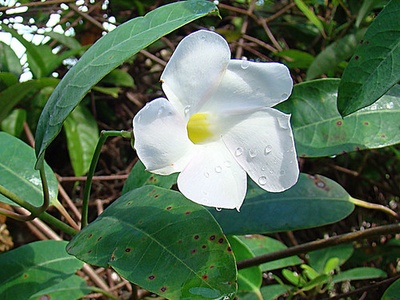
Rubber vine
African rubber vine producing latex and edible fruits; climbs by twining around trees in lowland rainforests. Traditionally tapped for rubber and fruit; populations are locally harvested and sometimes over-exploited for market uses.
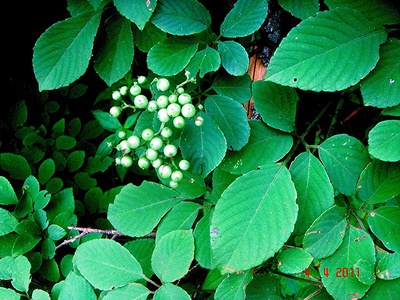
Cayratia
Delicate tendril vine with small white flowers and black berries, climbing through understory and along riverbanks. Fruits feed birds and mammals; common in Asian rainforests and useful for quick identification along trails.
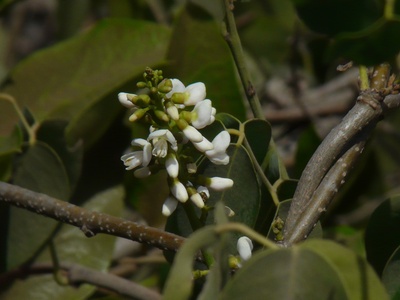
Derris
Twining legume vine producing rotenone-rich roots historically used as fish poison. Climbs trees in rainforest understory and edges. Ecologically, its chemical defenses deter herbivores; historically valuable in traditional hunting and pest control.
Rattan (rotang)
Classic climbing rattan palm with long, spiny cane that hooks to surrounding vegetation to reach canopy. Source of rattan for furniture and handicrafts; overharvesting threatens local populations and associated forest livelihoods.
Rattan (manan)
Large rattan species used for commercial cane production in Asian rainforests. Climbs by hooked spines and cirri; forms long, flexible stems harvested for furniture. Sustainable management is critical to prevent population declines.
Dragon’s-blood rattan
Dragon’s blood rattan that climbs with recurved spines; produces red resin historically harvested as dye and medicine. Occurs in lowland rainforests and swamps; important economically and ecologically for understory structure and local crafts.
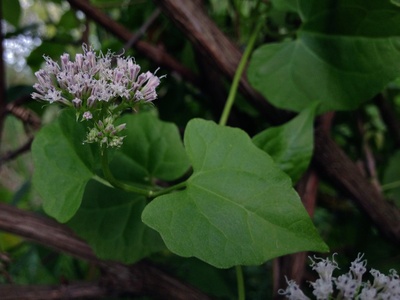
Climbing hempweed
Rapidly growing climber often smothering understory vegetation in disturbed rainforests. Twining herbaceous vine that forms mats over shrubs and young trees; invasive where introduced but native populations play a role in natural successional dynamics.
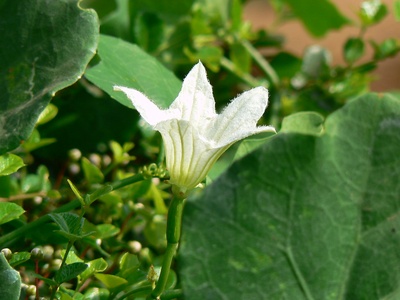
Ivy gourd
Ivy gourd vine with tendrils climbing through rainforest edges and secondary growth. Produces edible gourds and is both foraged and cultivated. Can be vigorous; fruits, leaves, and shoots are used in local cuisines.
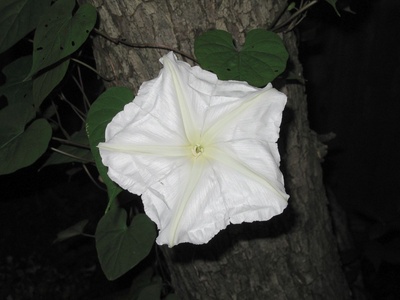
Moonflower
Night-blooming moonflower that twines over shrubs and trees in humid forests. Large fragrant white blooms open at dusk, attracting moth pollinators. Seeds and sap can be toxic; common on forest edges and riverbanks.
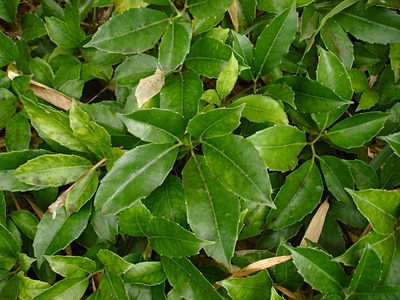
Tetrastigma
Robust rainforest liana with stout stems that root-cling to host trees. Notable as the host genus for parasitic Rafflesia flowers; provides the underground connections Rafflesia relies on, making it central to some rare plant lifecycles.
Freycinetia
Screw-pine relative climbing by adventitious roots and flagella through wet forests. Forms tangled mats and baskets of leaves used locally for weaving. Important in canopy epiphytic communities and as nesting material for birds.
Black pepper
Black pepper vine native to Western Ghats rainforest understory that scrambles and climbs on supports. Cultivated widely but originates in wild rainforests; produces economically vital peppercorns and provides habitat and food for many insects.
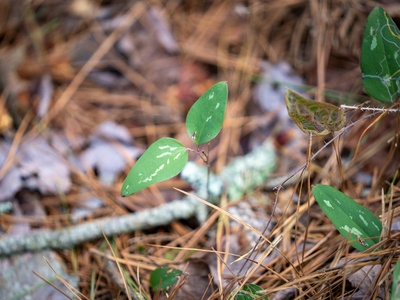
Greenbrier
Spiny, evergreen climbing vine common in Asian tropical forests that anchors with recurved thorns. Forms dense tangles providing shelter for wildlife; some species used medicinally. Vigorous growth can complicate understory regeneration.