TLDR
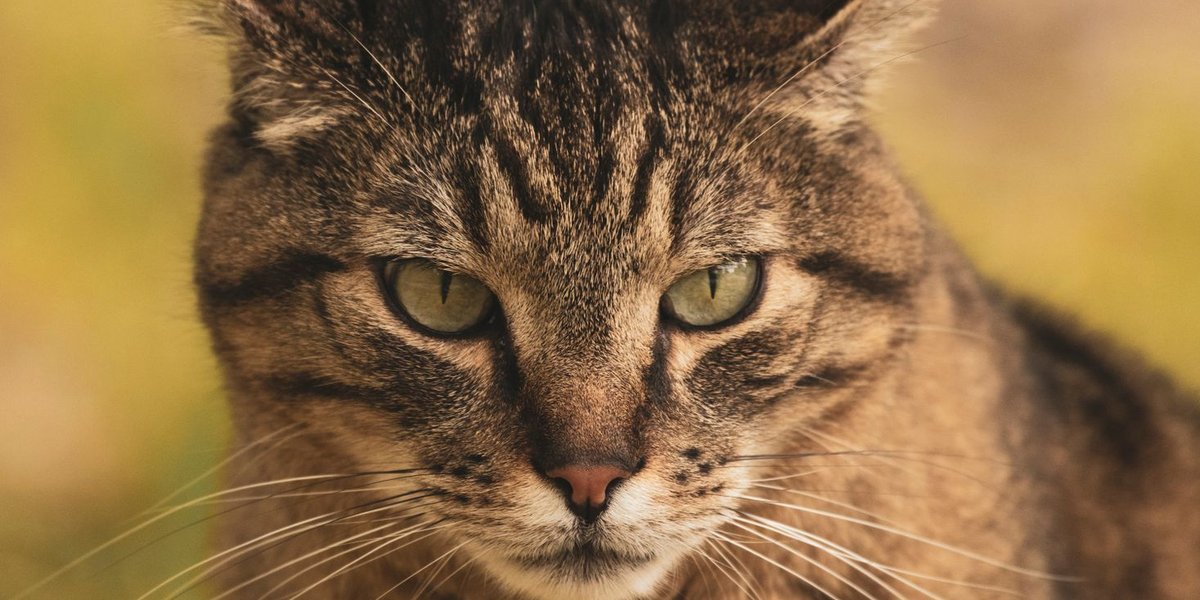
Tabby is a coat pattern, not a breed. Bengals, Egyptian Maus, Abyssinians and Ocicats are the breeds where tabby is the signature look. American Shorthairs, Maine Coons and a handful of others wear it as one color among many. If your cat has an “M” on its forehead, it’s a tabby.
Contents
- Tabby is a pattern, not a breed
- The five tabby patterns
- Tabby cat breeds where stripes are the signature
- Tabby cat breeds where stripes are one option
- Quick comparison table
- Tabby cat FAQ
Tabby is a pattern, not a breed
Nobody breeds “a tabby.” The word describes a coat pattern — much like bicolor — with stripes, swirls, spots or ticking over a lighter background, plus a mark on the forehead. A tabby can be a purebred Maine Coon or a shelter cat with no paperwork at all.
Researchers traced the classic blotched versus mackerel difference to a single gene, Taqpep, in a 2012 study in Science that also covered the patterns of wild cats. The tabby pattern is the cat’s default wiring. Solid coats are the exception.
That’s why the real question behind “tabby cat breeds” is which breeds carry the pattern, and which ones make it their whole identity.
The five tabby patterns
Before the breed list, a quick way to identify what you’re looking at.
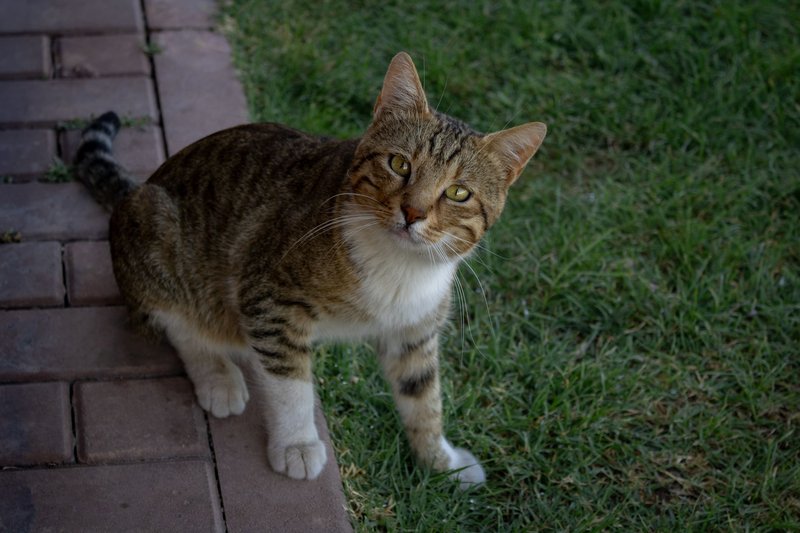
- Mackerel: thin, parallel stripes running down the sides like fish ribs. The most common pattern.
- Classic (blotched): wide swirls on the flanks, often forming a bullseye. Think of a marble cake.
- Ticked: no stripes on the body at all. Each hair has bands of color, giving a sandy, agouti look. Stripes remain only on the face, legs and tail.
- Spotted: broken stripes that read as spots, from small dots to rosettes.
- Patched (torbie): tabby markings mixed with tortoiseshell patches of orange and cream. Almost always female.
Every one of them has the forehead “M,” dark lines around the eyes, and rings on the tail and legs.
Tabby cat breeds where stripes are the signature
In these four breeds, the pattern is the point.
1. Bengal
The Bengal descends from crosses with the Asian leopard cat, and it wears spots or rosettes with a golden glitter to the fur. Some are “marbled,” which is a stretched-out classic pattern. Expect 8 to 15 pounds of muscle, a short coat and a cat that wants a job. Bengals climb, fetch and open cabinets. The Cat Fanciers’ Association describes them as active and vocal.
Patterns: spotted, marbled. Energy: very high.
2. Egyptian Mau
The Mau is a naturally spotted breed, and one of the few with real spots rather than broken stripes. Its coat comes in silver, bronze and smoke. It’s medium-sized, roughly 6 to 14 pounds, with a fine, athletic build and a reputation for speed. It bonds hard with one person and is wary of strangers.
Patterns: spotted only. Energy: high.
3. Abyssinian
The Aby is the ticked tabby. Every Abyssinian carries the ticked pattern, whether the color is ruddy, red, blue or fawn, which is why people often don’t realize they’re looking at a tabby. Slim, about 6 to 10 pounds, short coat, endlessly curious. Abys investigate whatever you’re holding.
Patterns: ticked only. Energy: high.
4. Ocicat
The Ocicat looks like a small ocelot and has no wild blood at all. It was developed from Abyssinian, Siamese and American Shorthair lines. It has a spotted tabby coat, a big, solid frame of 6 to 15 pounds, and a social streak that makes it more dog-like than most breeds. It learns to walk on a leash.
Patterns: spotted. Energy: high.
Tabby cat breeds where stripes are one option
For these breeds, tabby is a common color, not a requirement.
5. American Shorthair
The classic silver tabby is the breed’s calling card, with bold swirls on a silver ground. Solid, calm, 8 to 15 pounds, and easygoing with kids and other pets. This is the cat behind a lot of “tabby” stereotypes.
Patterns: classic, mackerel, ticked, patched. Energy: moderate.
6. British Shorthair
Best known for the solid blue coat, but brown and silver tabbies are standard. The build is dense and round-faced, 9 to 17 pounds. Independent, happy on the couch beside you, less happy on your lap.
Patterns: classic, mackerel, spotted, ticked. Energy: low.
7. Maine Coon
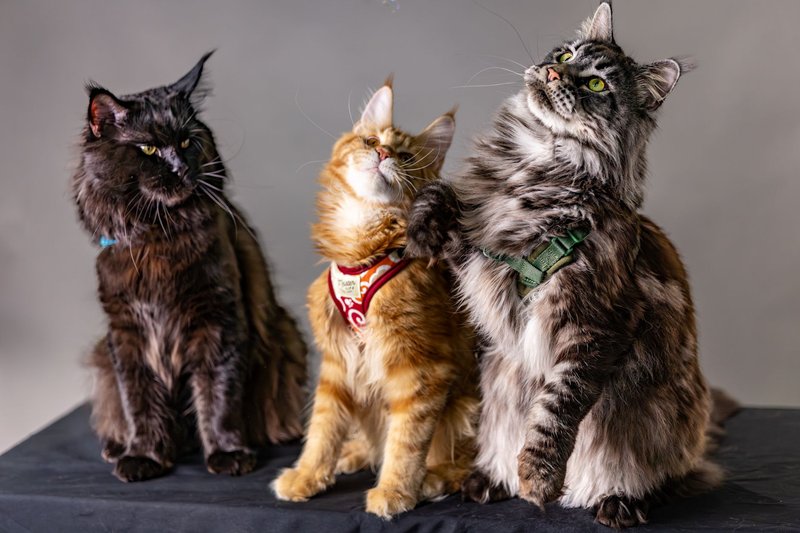
The brown classic or mackerel tabby is the image most people picture. It’s the largest domestic breed, with males reaching 13 to 18 pounds, and a shaggy coat, tufted ears and a tail like a feather boa. Gentle and chatty, with a chirp instead of a meow.
Patterns: classic, mackerel, patched. Energy: moderate.
8. Norwegian Forest Cat
Brown mackerel tabby with white is a common look for this long-haired breed. A water-resistant double coat, a long build, and strong climbing instincts. Friendly but not needy.
Patterns: mackerel, classic, patched. Energy: moderate.
9. Siberian
Brown tabby is the most common Siberian color. The coat is thick and triple-layered, and the cat is powerful at 8 to 17 pounds. Playful and jumpy, and loves heights.
Patterns: mackerel, classic, patched. Energy: moderate to high.
10. Scottish Fold
The folded ears come from a cartilage mutation, and the coat can be almost anything, including all the tabby patterns. Round face, medium body of 6 to 13 pounds, and a mellow, people-focused personality. Folded-ear cats can develop painful joint problems, so ask a breeder about health testing.
Patterns: all five. Energy: low to moderate.
11. Persian
Tabby is one of the many Persian colors, and a flat-faced, long-haired tabby is a real sight. Persians are sedentary, 7 to 12 pounds, and need daily brushing.
Patterns: classic, mackerel, patched. Energy: low.
12. Ragdoll
Ragdolls are pointed cats, so the tabby shows up as “lynx point”: stripes on the face, legs and tail, while the body stays pale. Big, floppy, and famously tolerant of being carried, at 10 to 20 pounds.
Patterns: lynx (tabby points), patched points. Energy: low.
Quick comparison table
| Breed | Tabby patterns | Size | Coat | Energy |
|---|---|---|---|---|
| Bengal | Spotted, marbled | Medium-large | Short | Very high |
| Egyptian Mau | Spotted | Medium | Short | High |
| Abyssinian | Ticked | Small-medium | Short | High |
| Ocicat | Spotted | Medium-large | Short | High |
| American Shorthair | Classic, mackerel, ticked | Medium-large | Short | Moderate |
| British Shorthair | Classic, mackerel, spotted | Medium-large | Short, dense | Low |
| Maine Coon | Classic, mackerel | Very large | Long | Moderate |
| Norwegian Forest Cat | Mackerel, classic | Large | Long | Moderate |
| Siberian | Mackerel, classic | Large | Long | Moderate-high |
| Scottish Fold | All five | Medium | Short or long | Low-moderate |
| Persian | Classic, mackerel | Medium | Long | Low |
| Ragdoll | Lynx points | Very large | Semi-long | Low |
Tabby cat FAQ
Are tabby cats a specific breed?
No. Tabby is a coat pattern found across dozens of breeds and in most mixed-breed cats. That’s why a tabby can weigh 6 pounds or 18.
Are tabby cats friendlier?
Personality follows breed and upbringing, not coat. Owners of orange tabbies do report a friendlier average, but nothing in the pattern itself causes that.
Are orange tabbies usually male?
Yes, roughly 80 percent are. The orange gene sits on the X chromosome, so a female needs two copies while a male needs only one. Females are still out there, just rarer.
What is the “M” on a tabby’s forehead?
It’s part of the pattern, not a separate marking. Every tabby has it, in every color. Folklore credits it to everything from the Prophet Muhammad to the Virgin Mary, but the cause is genetic.
How do I know what tabby pattern my cat has?
Look at the body, not the face. Thin parallel lines mean mackerel, wide swirls mean classic, spots mean spotted, and no stripes on the torso but banded hairs mean ticked. Tortoiseshell patches mixed in mean patched.