As an Amazon Associate we earn from qualifying purchases. Disclosure
The best nonfiction books about cats are Cat Sense by John Bradshaw for the science of how cats think, Decoding Your Cat by the American College of Veterinary Behaviorists for fixing problem behavior, The Lion in the Living Room by Abigail Tucker for how cats spread around the world and Dewey by Vicki Myron for a true story. New owners should start with Total Cat Mojo or Purr. Below are 34 picks in six groups: behavior and science, history and evolution, true stories and memoirs, care, wild cats and books for kids.
Our tabby, Biscuit, has one firm opinion about books: an open one is a bed. Leave a hardcover on the couch for two minutes and he is lying across both pages, chin on the spine, daring anyone to turn the page. Over the years the books under him have shifted from novels to books about cats, mostly because he kept raising questions. Why does he bring a toy to the bedroom door at 5 a.m.? Why does he headbutt guests he has never met and hide from the one who brought treats? The answers are in the books below, along with a few true stories worth reading for their own sake.
Best nonfiction books about cats at a glance
| Book | Best for | Type |
|---|---|---|
| Cat Sense | Understanding how cats think | Science |
| Decoding Your Cat | Fixing behavior problems | Behavior |
| The Trainable Cat | Carrier and vet visit training | Training |
| Purr | A happier cat, backed by studies | Science |
| Think Like a Cat | An all-in-one owner reference | Behavior and care |
| The Inner Life of Cats | Science told through one cat’s life | Science |
| The Secret Language of Cats | Meows, purrs and chirps | Science |
| What Cats Want | A quick illustrated read | Behavior |
| Kitty Language | Reading body language | Illustrated guide |
| The Lion in the Living Room | How cats took over the world | History |
| The Cat: A Natural and Cultural History | An illustrated natural history | History |
| Catwatching | Short answers to classic questions | Behavior |
| Feline Philosophy | Readers who like ideas | Essay |
| Dewey | A heartwarming true story | Memoir |
| A Street Cat Named Bob | A story of recovery | Memoir |
| The Cat Who Came for Christmas | A Christmas gift | Memoir |
| The Cat Who Went to Paris | A light, funny read | Memoir |
| Homer’s Odyssey | Special-needs cat owners | Memoir |
| Making Rounds with Oscar | Readers facing loss | Memoir |
| On Cats | Literary readers | Memoir and essays |
| Cat Daddy | Jackson Galaxy fans | Memoir |
| Total Cat Mojo | New cat owners | Care |
| Cat Owner’s Home Veterinary Handbook | Health questions at home | Health |
| Catification | Setting up a cat-friendly home | Home |
| Cat vs. Cat | Adding a second cat | Behavior |
| Tiny But Mighty | Kitten fosters | Care |
| Cat Wars | Birders and conservationists | Science |
| Wild Cats of the World | Every wild cat species | Reference |
| The Tribe of Tiger | House cats and lions side by side | Natural history |
| The Puma Years | Adventure readers | Memoir |
| Eyewitness Cat | School reports | Kids |
| Science Comics: Cats | Reluctant readers | Kids |
| National Geographic Kids Everything Big Cats | Big cat fans | Kids |
| Kitten Lady’s Big Book of Little Kittens | Young children | Kids |
Best books on cat behavior and science
Cat behavior is a young field. Most of the research these books draw on was published after 2000, and some of it after 2015, so publication date matters more here than in any other group. All nine picks below are written or reviewed by people who study cats for a living: an anthrozoologist, veterinary behaviorists, a phonetics professor, a psychologist and a cat veterinarian.
Best overall
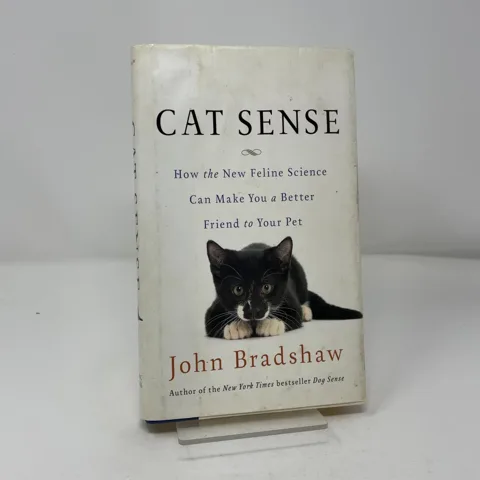
1. Cat Sense by John Bradshaw
John Bradshaw is an anthrozoologist who spent decades studying cats and dogs at the University of Bristol, and Cat Sense is the book most cat behaviorists point to first. It traces the cat from a solitary desert hunter to a house pet, then explains what that history means today: why kittens need to meet people early to be friendly, why cats tolerate other cats instead of seeking them out and why many cats seem to treat their owners like large, harmless cats. It reads like popular science, not a manual.
- 336 pages, Basic Books, 2013
- Covers evolution, kitten socialization, senses, feelings and cat-to-cat relationships
- Published in the UK as Cat Sense: The Feline Enigma Revealed
Good: the clearest explanation of why cats behave as they do. Not great: light on step-by-step fixes; pair it with The Trainable Cat for that.
Best for behavior problems
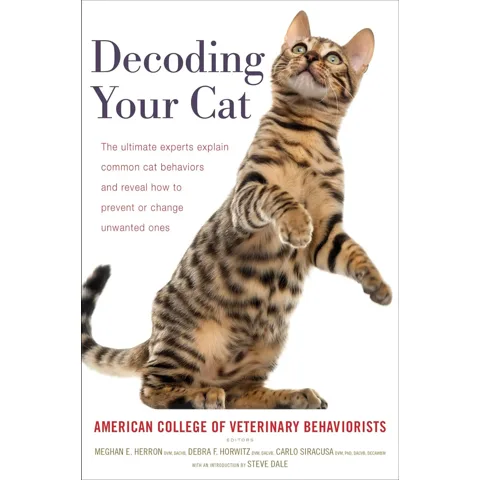
2. Decoding Your Cat by the American College of Veterinary Behaviorists
Each chapter is written by a board-certified veterinary behaviorist, a vet with years of extra training in animal behavior. The book works through the problems that send cats back to shelters: peeing outside the litter box, scratching furniture, aggression toward people or other cats, night yowling and fear of the carrier. Every chapter explains the cause first, then the fix. It also flags when a medical problem may be behind the behavior. Cat behavior consultants on Reddit call it the book they keep coming back to.
- 368 pages, paperback edition 2021
- Edited by veterinary behaviorists Meghan Herron, Debra Horwitz and Carlo Siracusa
- Introduction by pet journalist Steve Dale
Good: the most authoritative behavior book for owners. Not great: organized like a reference, so it is better for looking things up than for reading cover to cover.
Best for training
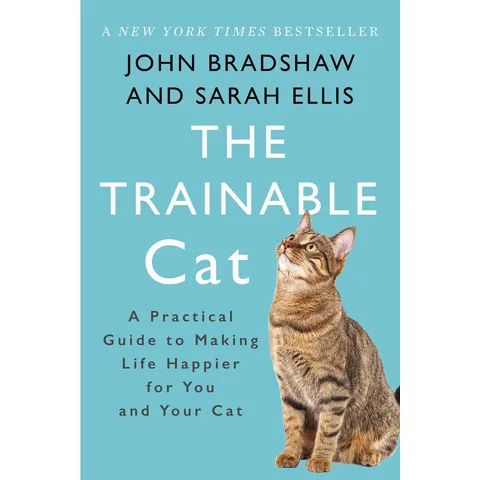
3. The Trainable Cat by John Bradshaw and Sarah Ellis
The title sounds like a joke to most cat owners. The book is not about tricks. It teaches the everyday skills that make a cat’s life less stressful: walking calmly into a carrier, accepting a pill, being handled by a vet, getting along with a new baby or dog. Bradshaw wrote Cat Sense, and Sarah Ellis is a feline behavior specialist; together they use reward-based training in short steps any owner can follow. Owners on r/CatAdvice recommend it more often than any book except Jackson Galaxy’s.
- 352 pages, Basic Books paperback, 2017
- Step-by-step exercises with treats and play
- Chapters on carriers, vet visits, grooming, other pets and outdoor access
Good: practical training built on real research. Not great: repeats some of the background from Cat Sense.
Best recent science book
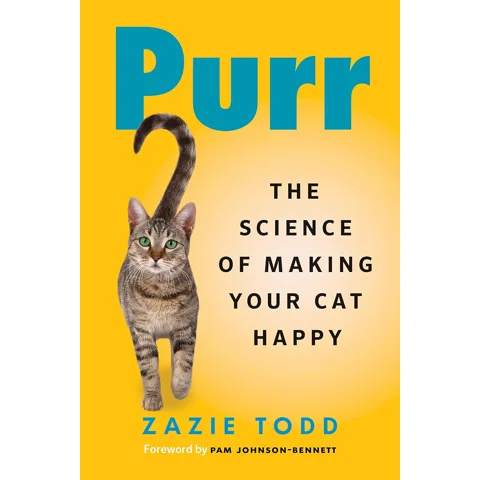
4. Purr: The Science of Making Your Cat Happy by Zazie Todd
Zazie Todd holds a PhD in psychology and writes the Companion Animal Psychology blog. Purr follows a cat’s whole life, from choosing a kitten to caring for a senior, and backs each recommendation with published studies. It covers where cats like to be petted, what different meows mean, how to stop play from turning into biting and how to make vet visits easier. Sarah Ellis, co-author of The Trainable Cat, blurbed it. If you want one up-to-date book and nothing else, choose this one.
- 288 pages, Greystone Books paperback, 2023
- Same author as Wag, the dog version
Good: current research in plain language. Not great: less storytelling than Cat Sense or The Inner Life of Cats.
Best all-in-one owner book
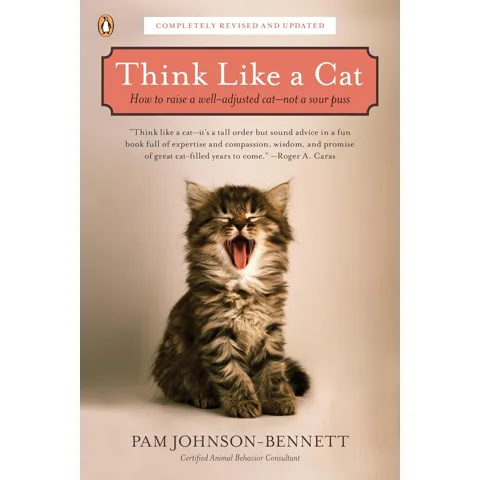
5. Think Like a Cat by Pam Johnson-Bennett
Pam Johnson-Bennett is a certified cat behavior consultant, and this is her largest book. It covers everything from choosing a cat and finding a vet to litter boxes, scratching posts, aggression, travel and old age. The chapters are short and easy to find, so it works as a reference you can pick up when a problem starts. Owners on r/CatAdvice name it as their favorite behavior book alongside Jackson Galaxy’s.
- 432 pages, Penguin paperback, revised edition 2011
- Covers behavior, training, basic health care and home setup
- Same author as CatWise and Cat vs. Cat
Good: covers nearly every everyday question. Not great: the last revision is from 2011, so the health sections are dated.
Best science told as a story
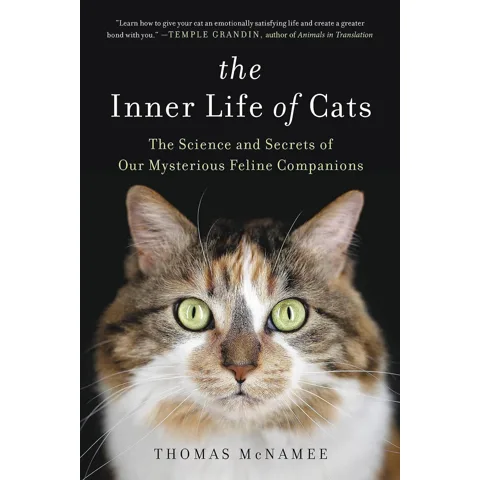
6. The Inner Life of Cats by Thomas McNamee
Thomas McNamee follows his own cat, Augusta, from kittenhood to old age and stops at each stage to explain the science behind it: how a kitten’s brain develops, why cats hunt when they are not hungry, how feral colonies organize themselves. He visits a feral cat colony in Rome and interviews behavior researchers along the way. It is the warmest book in this group and the easiest to give to someone who does not read science.
- 288 pages, Little, Brown paperback, 2018
- Mixes memoir with reporting on cat research
- Chapters follow a cat’s life in order
Good: reads like a memoir and teaches like a science book. Not great: few practical tips.
Best on cat sounds
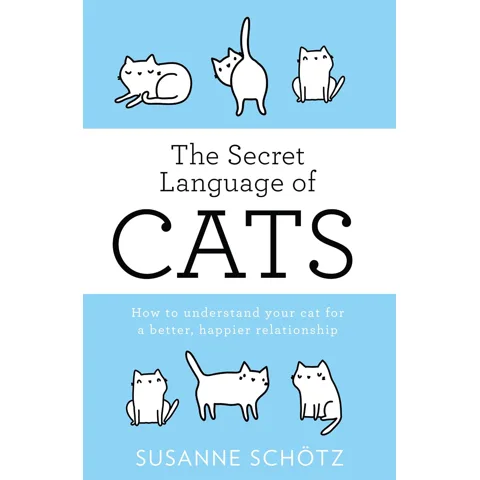
7. The Secret Language of Cats by Susanne Schötz
Susanne Schötz is a phonetics researcher at Lund University in Sweden who studies how cats and people talk to each other. Her book sorts cat sounds into types (meows, purrs, chirps, trills, growls, hisses, yowls) and explains what each tends to mean, with spelled-out examples you can say out loud. She also covers how cats adjust their meows when they talk to people instead of other cats. It answers the question people ask most about cats: what is he saying?
- 272 pages, HQ paperback, 2018
- Translated from Swedish by Peter Kuras
- Based on the author’s research recording house cats
Good: the only full book on cat vocal communication. Not great: phonetic spellings take a few pages to get used to.
Best short read
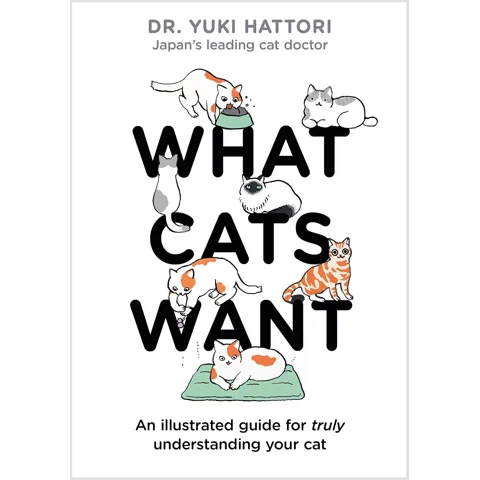
8. What Cats Want by Dr. Yuki Hattori
Yuki Hattori is a cat veterinarian in Japan, and his book is a fast, illustrated guide to everyday cat questions: where to put the water bowl, what tail and whisker positions mean, why cats squeeze into small boxes, how warm a room should be. Each topic gets a page or two with a simple drawing. It takes an evening to read, which makes it a good first book for a teenager or a gift for someone who just adopted.
- 160 pages, Bloomsbury hardcover, 2020
- Illustrated charts for meows, tails and whiskers
- Translated from Japanese
Good: quick and easy. Not great: covers each topic briefly, without the research behind it.
Best for body language
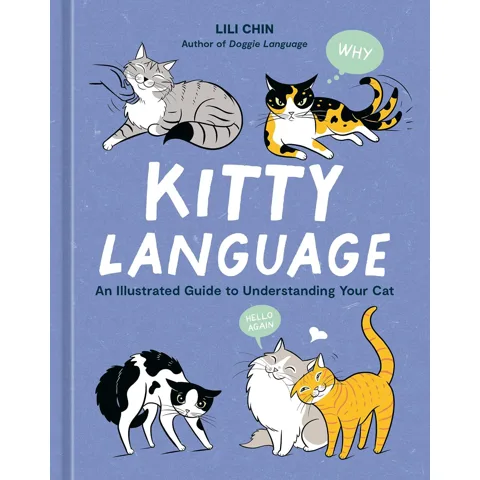
9. Kitty Language by Lili Chin
Lili Chin is the illustrator behind Doggie Language, and Kitty Language does the same for cats. Each page shows one posture or behavior (slow blinks, ear angles, tail positions, kneading, head bumps, loafing) and says what it usually means. The drawings make it easy to compare a relaxed cat with a worried one, which is the skill that prevents most scratches and bites. Kids can follow it, but it was written for adults.
- 160 pages, Ten Speed Press hardcover, 2023
- Full-color illustrations on every page
- From the author of Doggie Language
Good: teaches you to read your cat in an afternoon. Not great: not much text, so it does not explain the reasons behind each signal.
Best books on cat history and evolution
Every pet cat descends from the African wildcat, Felis silvestris lybica, which lived around the first farming villages of the Near East. A 2007 genetic study in Science traced the lineage there, and a 2017 study of ancient cat DNA showed cats spreading in two waves: first with early farmers, then much later on trading ships from Egypt. The same 2017 study found that the blotched tabby pattern was rare until the Middle Ages. The books below tell that story and what it says about the cats we live with.
Best history of house cats
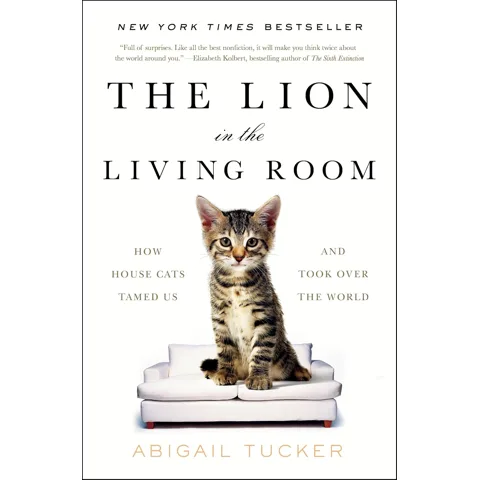
10. The Lion in the Living Room by Abigail Tucker
Abigail Tucker, a science writer for Smithsonian magazine, asks how an animal that offers people so little practical help became one of the most popular pets on Earth. She visits geneticists, cat show breeders, feral cat trappers and the scientists who study Toxoplasma, the parasite cats carry. The book is funny and a little uncomfortable: it makes the case that cats are poor mouse catchers and serious threats to island wildlife, and that we love them anyway. A New York Times bestseller.
- 256 pages, Simon & Schuster paperback, 2017
- Covers domestication, breeding, ecology and internet cat fame
- Based on interviews with researchers on several continents
Good: the most entertaining science book on this list. Not great: owners who let their cats roam outside may not enjoy the ecology chapters.
Best illustrated natural history
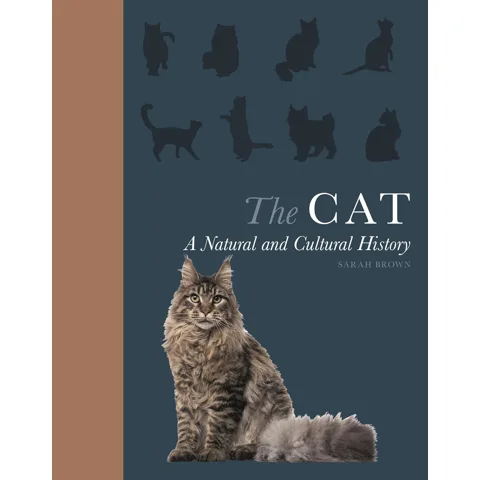
11. The Cat: A Natural and Cultural History by Sarah Brown
Sarah Brown is a cat behavior researcher, and this Princeton University Press book is the closest thing to a textbook that is still a pleasure to read. Four chapters cover evolution and development, anatomy and biology, society and behavior, and cats and humans, with photos and diagrams on nearly every page. It explains how kittens develop, how cats think and organize their social lives, how they communicate with people and how breeds, including extinct ones, came about. It doubles as a coffee table book.
- 224 pages, Princeton University Press hardcover, 2020
- Richly illustrated with photos, art and diagrams
- Part of Princeton’s A Natural History series
Good: the best single book on cat biology. Not great: few stories; it is a book to learn from more than to curl up with.
Best classic
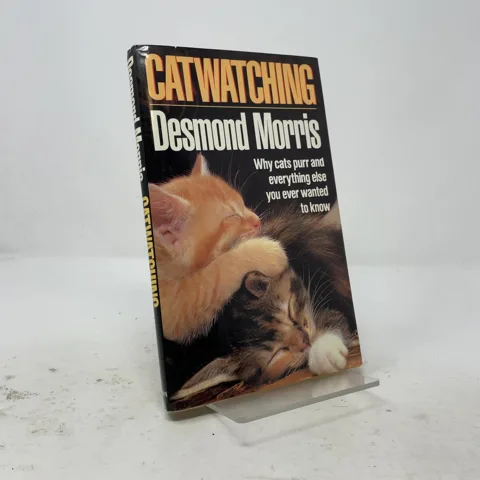
12. Catwatching by Desmond Morris
Desmond Morris, the zoologist who wrote The Naked Ape, set this book up as a series of questions with short answers: why do cats purr, why do they knead, why do they bring home prey, why do they rub against legs? Each answer takes a page or two. It came out in the 1980s, before genetic studies of domestication and before most of the research in Cat Sense and Purr, so read it for Morris’s sharp observation and his writing, not for the latest science.
- 136 pages, Crown hardcover
- Question-and-answer format with line drawings
- Companion to Morris’s Dogwatching
Good: short, clear and easy to dip into. Not great: some explanations have been revised by newer research.
Best for readers who like ideas
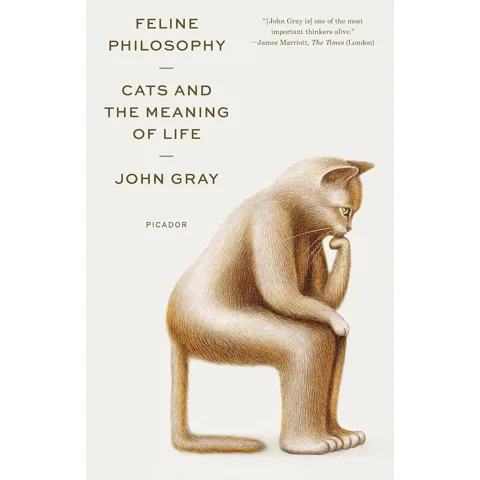
13. Feline Philosophy by John Gray
John Gray is a British philosopher, the author of Straw Dogs, and Feline Philosophy is a short book of essays on what cats might teach people about living well. Gray’s argument is that cats do not chase happiness, worry about death or need a story to explain their lives, and that humans might suffer less if they did the same. It draws on philosophers from Montaigne to Spinoza and on true stories of people and their cats. Opinions on it split sharply, which is part of the appeal.
- 128 pages, Picador paperback, 2021
- Ends with ten suggestions for living like a cat
- No science background needed
Good: a short, original book that starts arguments. Not great: it is about humans as much as cats.
Best true cat stories and memoirs
These are true stories, most of them bestsellers, and most of them about a cat who changed one person’s life. They are the books people ask for when they say they want a cat book “but not a manual.” Several are tearjerkers; the notes below say which.
Best true cat story
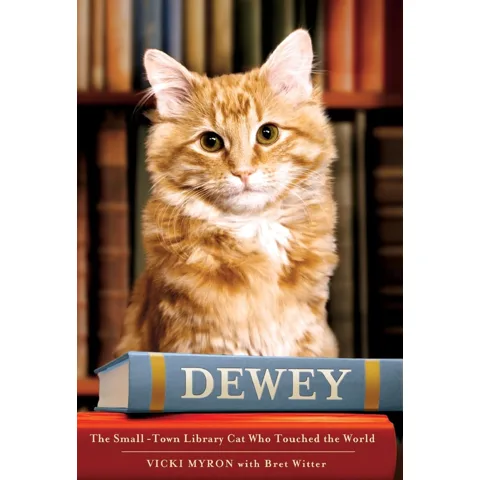
14. Dewey: The Small-Town Library Cat Who Touched the World by Vicki Myron
On the coldest night of the year in Spencer, Iowa, someone pushed a tiny kitten through the book return slot of the public library. Library director Vicki Myron found him the next morning with frostbitten paws. Dewey Readmore Books lived in the library for 19 years and became famous far beyond the town. The book is also the story of a farm town through hard times and of Myron’s own life as a single mother. It has sold more than 2 million copies.
- Written with Bret Witter
- 277 pages, Grand Central hardcover, 2008
- Also adapted as a picture book for young children
Good: warm, funny and true. Not great: the ending will make most readers cry.
Best story of recovery
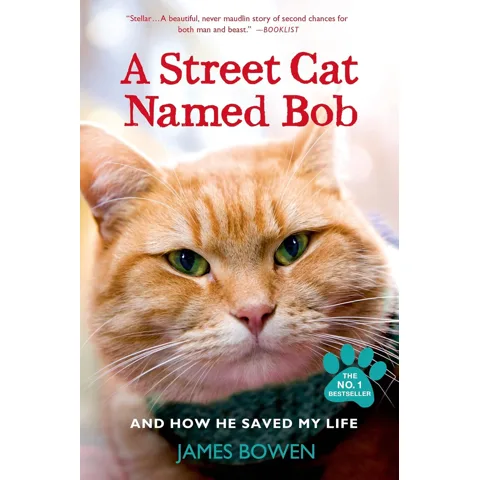
15. A Street Cat Named Bob by James Bowen
James Bowen was a London street musician recovering from heroin addiction when he found an injured ginger cat in the hallway of his building. He paid for the cat’s vet care with money he did not have, and the cat refused to leave. Bob started riding the bus with him and sitting on his shoulder while he busked, and crowds gathered. The book spent 52 weeks on the UK bestseller list and became a 2016 film. It is the most reviewed book on this list, with more than 25,000 Amazon ratings.
- 320 pages, St. Martin’s Griffin paperback
- First of three Bob books for adults
- Honest about addiction and homelessness
Good: a hopeful true story that has reached millions. Not great: plain writing; it is the story that carries it.
Best for Christmas
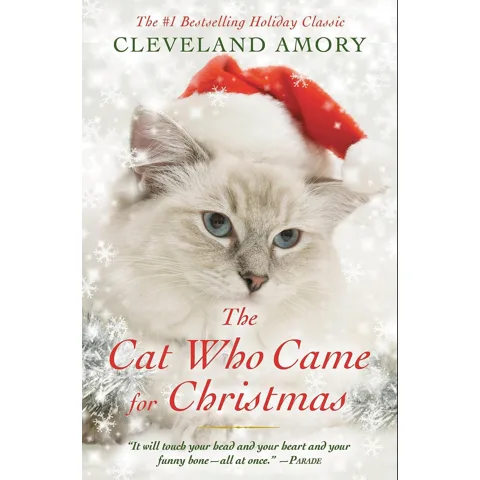
16. The Cat Who Came for Christmas by Cleveland Amory
On Christmas Eve, Cleveland Amory, a famously grumpy writer and the founder of the Fund for Animals, helped rescue a starving white stray from a New York alley. He named the cat Polar Bear, and the rest of the book is their standoff over baths, pills, names and who is in charge. It is funny more than sentimental, and it has been a Christmas gift classic since the late 1980s. Two sequels follow the same pair.
- 257 pages, paperback reissue, 2013
- Followed by The Cat and the Curmudgeon and The Best Cat Ever
- A short, easy holiday read
Good: the obvious stocking stuffer for a cat lover. Not great: Amory’s digressions wander away from the cat at times.
Best light read
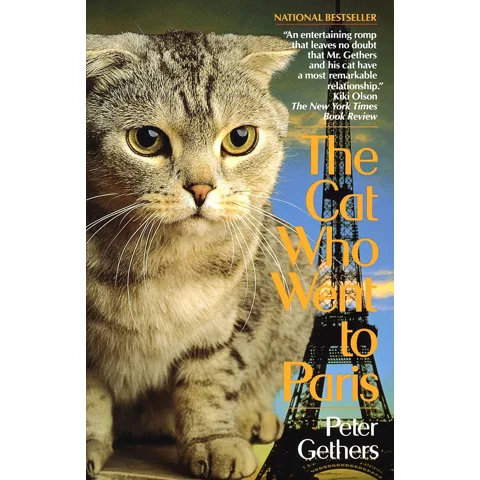
17. The Cat Who Went to Paris by Peter Gethers
Peter Gethers, a New York publisher and screenwriter, called himself a cat hater until a Scottish Fold kitten named Norton came into his life. Norton went everywhere with him: the Fire Island ferry, the Manhattan subway, fine restaurants and the Concorde to Paris. The book is short, funny and full of Norton’s calm in places no cat should be calm. Two sequels finish Norton’s story; the second one is the sad one.
- 208 pages, Ballantine paperback
- First of three Norton books
- A national bestseller in the early 1990s
Good: pure fun. Not great: more about the author’s life than about cat behavior.
Best for special-needs cat owners
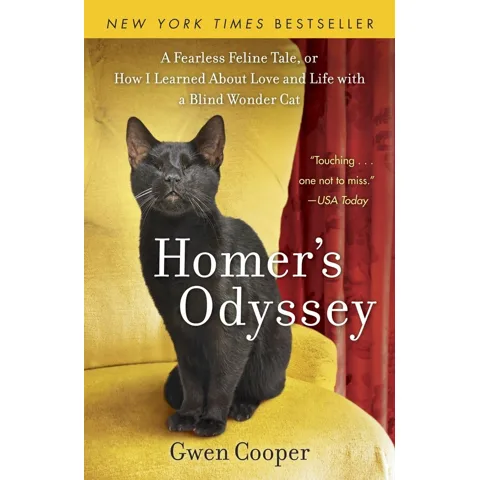
18. Homer’s Odyssey by Gwen Cooper
Gwen Cooper adopted a three-week-old kitten born without eyes after everyone told her he would never have a normal life. Homer climbed seven-foot bookcases and chased an intruder out of her apartment. He also survived days alone in her apartment near the World Trade Center after September 11. Anyone who has adopted a blind, deaf or three-legged cat will recognize the book’s main point: cats do not know they are supposed to be limited.
- 320 pages, Bantam paperback, 2010
- Rated 4.8 stars across nearly 3,000 Amazon ratings
- Followed by Homer: The Ninth Life of a Blind Wonder Cat
Good: inspiring without being saccharine. Not great: a lot of the book is about the author’s dating life.
Best for readers facing loss
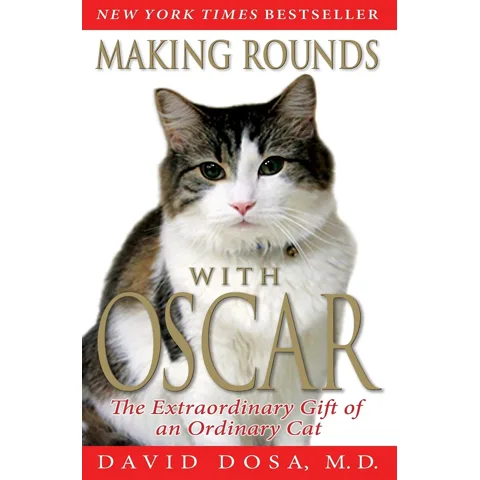
19. Making Rounds with Oscar by David Dosa
Oscar lived on the dementia floor of Steere House, a nursing home in Rhode Island, and the staff noticed that he curled up beside patients in the hours before they died. Dr. David Dosa, a geriatrician there, first described Oscar in a short 2007 essay in The New England Journal of Medicine. This book follows his attempt to understand the cat, but it is mostly about dementia, families and end-of-life care, told through the people Oscar sat with. It is gentler than it sounds.
- 256 pages, Hachette paperback, 2011
- Written by a practicing physician
- Useful for families caring for someone with dementia
Good: a humane book about death that brings comfort. Not great: offers no firm scientific explanation for Oscar’s behavior.
Best literary memoir
20. On Cats by Doris Lessing
Doris Lessing won the Nobel Prize in Literature in 2007, and her cat writing is some of the best ever published. This collection joins three short books: Particularly Cats, about the half-wild cats on the African farm where she grew up and the cats of her London flats; Rufus, about a battered stray; and The Old Age of El Magnifico, about her three-legged cat’s last years. It is unsentimental, sometimes harsh and honest about the cats people fail.
- 256 pages, Harper Perennial paperback, 2008
- Three works in one volume
- For readers who want great prose
Good: the best writing on this list. Not great: the farm chapters describe cats being killed, which some readers find hard.
Best for Jackson Galaxy fans
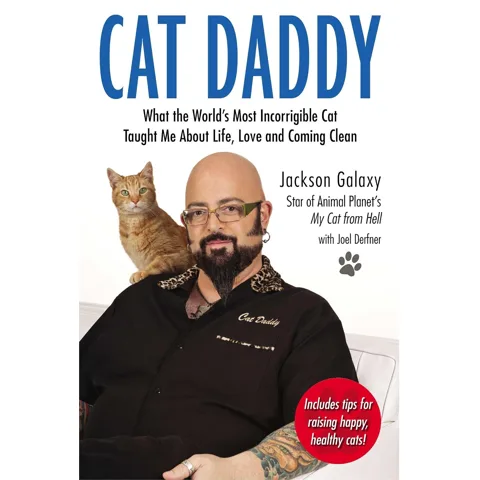
21. Cat Daddy by Jackson Galaxy
Before My Cat From Hell, Jackson Galaxy was a struggling rock musician working at a Boulder animal shelter, and Benny was a difficult gray-and-white cat who came home with him. Cat Daddy tells the story of their 13 years together, through Galaxy’s addiction, recovery and the start of his career. Behavior advice runs through the memoir, so it teaches as much as it tells. Read it after Total Cat Mojo if his approach works for you.
- Written with Joel Derfner
- 320 pages, Tarcher paperback, 2013
- Memoir with practical tips throughout
Good: honest and often funny. Not great: less useful as a reference than his other books.
Best cat care books for owners
These books are for people with a cat at home, or about to have one. Jackson Galaxy’s name comes up more than any other in Reddit threads asking for a first cat book, and for good reason. Add a veterinary reference for health questions, and Cat vs. Cat if a second cat is on the way. For the cost side of owning a cat, try our cat food cost calculator.
Best for new cat owners
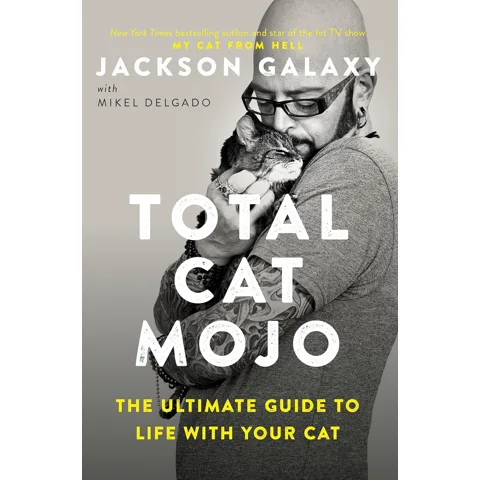
22. Total Cat Mojo by Jackson Galaxy
Jackson Galaxy’s main idea is that most problem behavior comes from a cat who does not feel confident in its territory. Total Cat Mojo explains how to fix that with a daily routine built around the cat’s instincts: hunt, catch, kill, eat, groom, sleep. It covers kitten socialization, litter boxes, introducing cats, play, scratching and aggression, with his own vocabulary of “tree dwellers,” “bush dwellers” and “Mojito cats” to make it stick. It is the cat book recommended most often on r/CatAdvice.
- 384 pages, Tarcher paperback, 2017
- Covers behavior and basic care from kitten to senior
- Includes a section on solving common problems
Good: practical, upbeat and easy to apply. Not great: some readers find the made-up terms distracting.
Best health reference
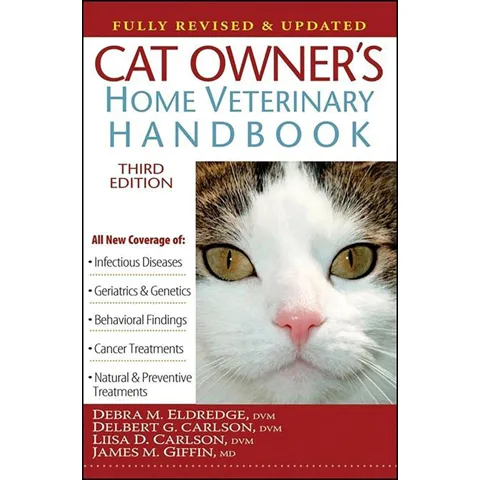
23. Cat Owner’s Home Veterinary Handbook by Debra Eldredge and others
This is the book to reach for when your cat is sick and the clinic is closed. Written by veterinarians, it opens with an index of symptoms (vomiting, limping, sneezing, drinking more water) that points you to the right section, then explains likely causes, home care and when to go to the vet right away. It also covers first aid, vaccines, pregnancy and senior care. It does not replace your vet, but it helps you describe the problem and judge how urgent it is.
- 660 pages, Howell Book House paperback, third edition 2007
- Symptom index plus hundreds of photos, drawings and tables
- Written by veterinarians Debra Eldredge, Delbert Carlson and Liisa Carlson with physician James Giffin
Good: the most complete home health reference for cats. Not great: the latest edition is from 2007, so check drug and vaccine advice with your vet.
Best for a cat-friendly home
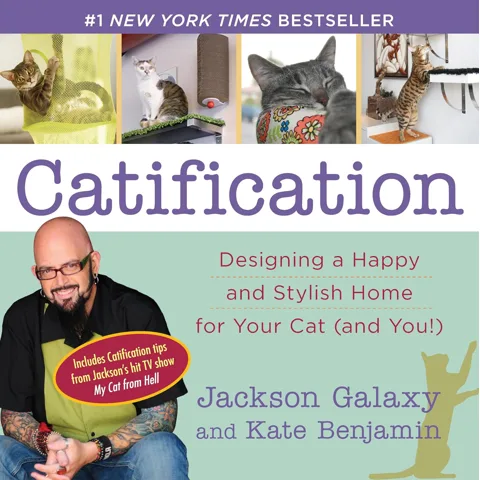
24. Catification by Jackson Galaxy and Kate Benjamin
Cats live in three dimensions, and most homes give them one. Catification shows how to add vertical space, hiding spots, scratching surfaces and walkways along the walls without making the house look like a pet store. Kate Benjamin founded the cat design site Hauspanther, and the book is full of photos of real homes and more than 20 DIY projects. It suits apartment owners and anyone with cats who fight over space.
- 304 pages, Tarcher paperback, 2014
- Full-color photos of real cat-friendly homes
- Follow-up book: Catify to Satisfy
Good: turns behavior science into furniture you can build. Not great: some projects need power tools and a free weekend.
Best for multi-cat homes
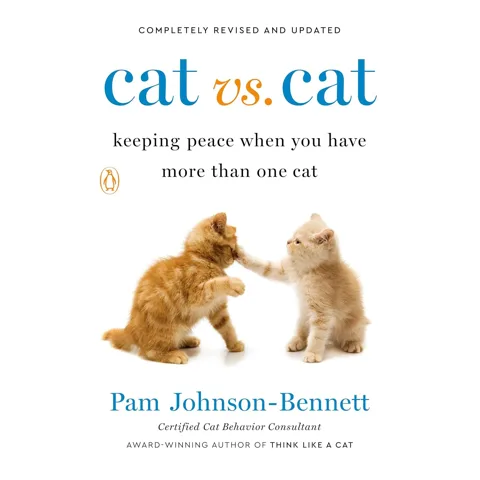
25. Cat vs. Cat by Pam Johnson-Bennett
Introducing a second cat is where many owners go wrong: they put the cats together too fast, and the resident cat stops using the litter box or starts fighting. Cat vs. Cat lays out a slow introduction step by step, then covers how to set up the home so cats do not compete for food, beds and boxes. It also helps with cats who already live together and fight. The 2020 edition is expanded and updated.
- 320 pages, Penguin paperback, 2020 edition
- Step-by-step introduction plan
- Covers territory, litter boxes and feeding stations
Good: the most detailed book on cat introductions. Not great: not much use if you have one cat and plan to keep it that way.
Best for kitten fosters
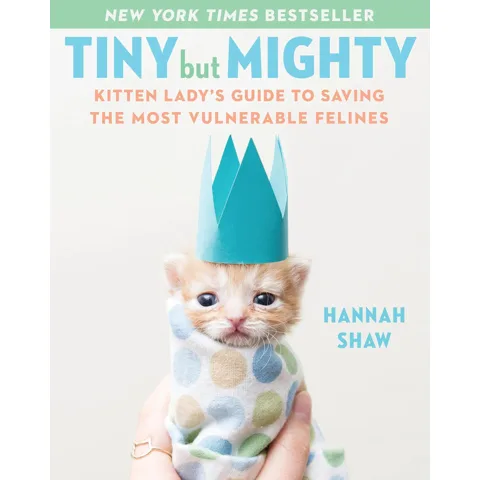
26. Tiny But Mighty by Hannah Shaw
Hannah Shaw, known online as Kitten Lady, rescues newborn kittens, the group shelters struggle most to save. Her book teaches how to bottle-feed, keep a kitten warm, track weight, help it pee and poop, spot illness early and wean it. It also makes the case for fostering and for spay and neuter programs. Rated 4.9 stars across more than 2,700 Amazon ratings, it is the standard book for new kitten fosters.
- 336 pages, Plume hardcover, 2019
- Week-by-week care for kittens from birth
- Covers fostering, rescue and spay and neuter programs
Good: the most useful book for anyone who finds a litter. Not great: too specialized for owners of adult cats.
Best books about wild cats and cats in nature
House cats belong to a family of about 40 species, from the rabbit-sized black-footed cat to the tiger. These books cover the wild side: what cats do to wildlife when they roam, how the wild species live and what it is like to work with a puma. For quick profiles of two North American wild cats, see our pages on the bobcat and the lynx.
Best on cats and wildlife
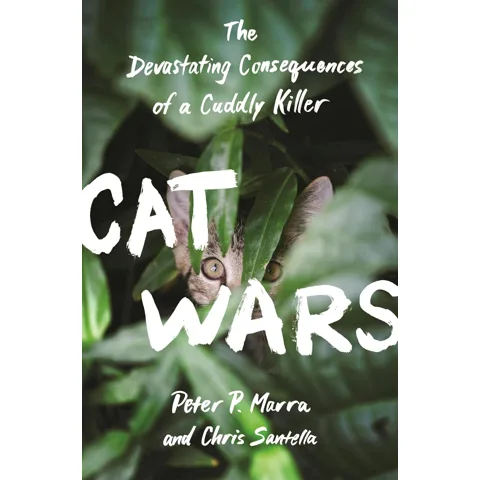
27. Cat Wars by Peter P. Marra and Chris Santella
In 1894 a lighthouse keeper brought a cat to Stephens Island, New Zealand, and within about a year the island’s endemic wren was gone. Peter Marra, a conservation scientist who co-authored the 2013 study estimating that free-ranging cats kill 1.3 to 4 billion birds a year in the United States, lays out the evidence on cats, wildlife and diseases such as rabies and toxoplasmosis. It is a hard read for people who let cats outdoors, and an important one for birders.
- 216 pages, Princeton University Press hardcover, 2016
- Covers bird and mammal losses, disease and policy
- Argues for keeping pet cats indoors or contained
Good: the clearest summary of the science on outdoor cats. Not great: one-sided by design; feral cat advocates dispute its policy proposals.
Best wild cat reference
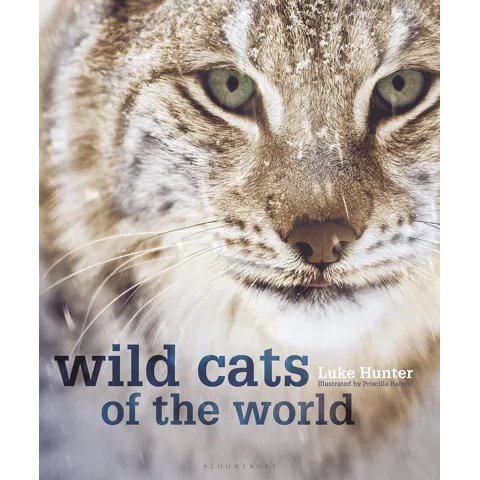
28. Wild Cats of the World by Luke Hunter
Luke Hunter has spent his career on big cat conservation, and this is the most complete book on the wild members of the cat family. Each of the 38 species gets a full profile: range map, size, diet, behavior, breeding and conservation status, with color plates and photos. It covers the obscure cats most books skip, such as the kodkod, the flat-headed cat and the Andean cat, as well as lions and tigers. It is a natural fit for students and wildlife fans.
- 240 pages, Bloomsbury Wildlife hardcover, 2019 reissue
- Range maps and color plates for every species
- Drawn from thousands of scientific papers and field observations
Good: the standard reference on wild cats. Not great: written as a reference, so it is not a book to read in order.
Best for comparing house cats and big cats
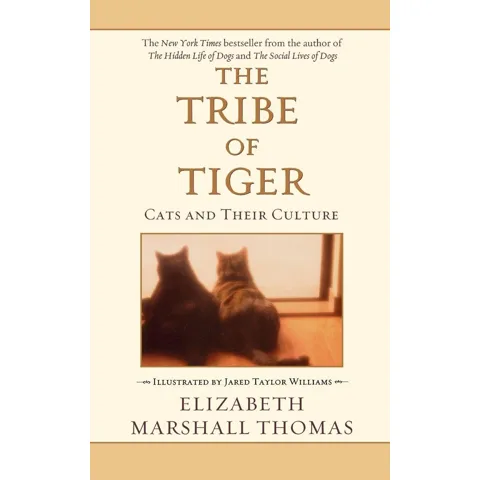
29. The Tribe of Tiger by Elizabeth Marshall Thomas
Elizabeth Marshall Thomas, the anthropologist who wrote The Hidden Life of Dogs, compares her own cats with the lions she watched in the Kalahari as a young woman, plus pumas, tigers and circus cats. Her point is that a house cat stalking a moth and a lion stalking a wildebeest are doing the same thing for the same reasons. It is a 1990s book written from observation, not lab work, and it reads like nature writing.
- 288 pages, Gallery Books paperback, 2001
- Covers lions, tigers, pumas and house cats
- Written from the author’s field experience
Good: links your cat to its wild relatives. Not great: some of its claims have not held up to later research.
Best wild cat memoir
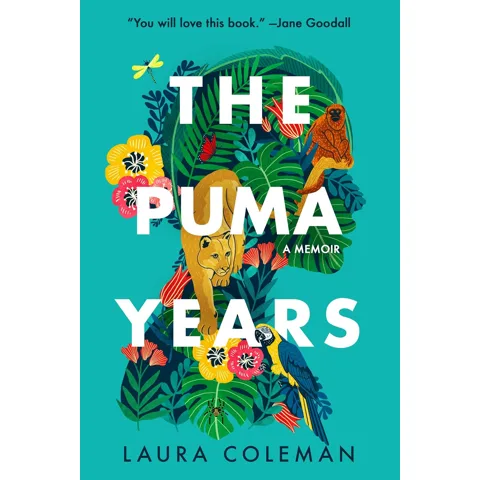
30. The Puma Years by Laura Coleman
Laura Coleman quit her job in her twenties, went backpacking in Bolivia and ended up volunteering at a wildlife sanctuary on the edge of the Amazon, where she was assigned to walk a puma named Wayra. Wayra trusted almost no one. The book follows their years together against a background of deforestation, forest fires and the illegal pet trade that fills sanctuaries like this one, and what working with a wild cat does to a person. More than 13,000 Amazon ratings.
- 319 pages, paperback, 2021
- Set at a wildlife sanctuary in Bolivia
- Volunteers care for monkeys, birds and other rescued animals too
Good: an adventure story with a real wild cat at the center. Not great: long, and the story takes its time to build.
Best nonfiction cat books for kids
Kids who love cats usually want two things: facts about big cats and help looking after a pet. These four cover both, from picture book to middle-grade comic. For a short read on a single species, try our day in the life of a tiger.
Best for school reports
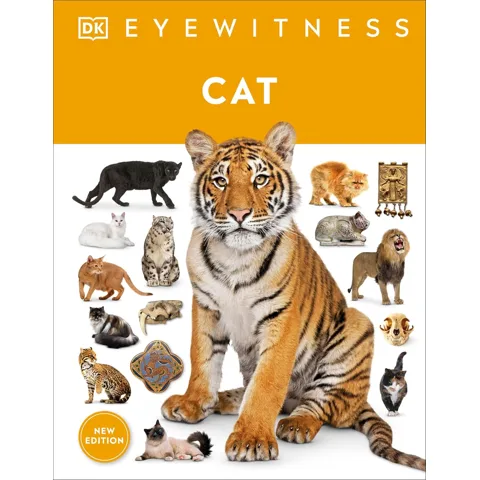
31. Eyewitness Cat by DK
The Eyewitness series has been a school library staple for over 30 years, and the cat volume covers both house cats and their wild relatives. Each two-page spread takes one topic (whiskers, claws, senses, lions’ manes, tiger stripes, cats in ancient Egypt, breeds, pet care) with photos and short captions. It suits ages 9 to 12 and gives a student enough facts for a report without wading through an adult book.
- 72 pages, DK hardcover, current edition
- Covers wild cats, domestic cats, history and myths
- Photos and captions on every page
Good: fact-dense and easy to cite. Not great: short; older kids will outgrow it fast.
Best for reluctant readers
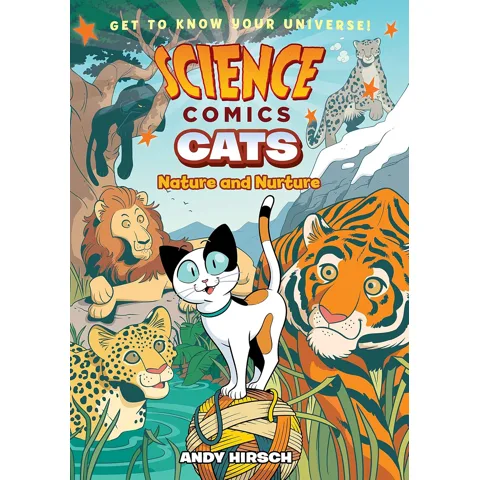
32. Science Comics: Cats: Nature and Nurture by Andy Hirsch
This is a full-length graphic novel about cat science, from the tiny kodkod to the tiger. It explains how cats hunt, how their bodies work, how wildcats became house cats and why the house cat is still partly wild. The comic format pulls in kids who will not open a regular nonfiction book, and the science holds up: the series is made with subject experts. Best for ages 9 to 13.
- 128 pages, First Second paperback
- Part of the Science Comics series
- Covers evolution, anatomy and domestication
Good: real science in comic form. Not great: younger kids may need help with the vocabulary.
Best for big cat fans
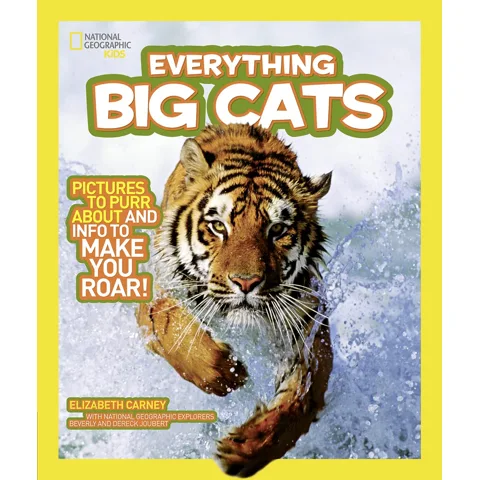
33. National Geographic Kids Everything Big Cats by Elizabeth Carney
Lions, leopards, jaguars and tigers get the full National Geographic treatment: big photos, fact boxes, maps and short sections like a lion’s daily to-do list. The book also compares the big four with smaller wild cats and house cats, and includes tips from wildlife experts. It is a good gift for grade-school kids who have moved past picture books but still want photos on every page.
- 64 pages, National Geographic Kids paperback
- Photos on every page
- Part of the Everything series
Good: great photos and well-chosen facts. Not great: covers only four big cat species in depth.
Best for young children
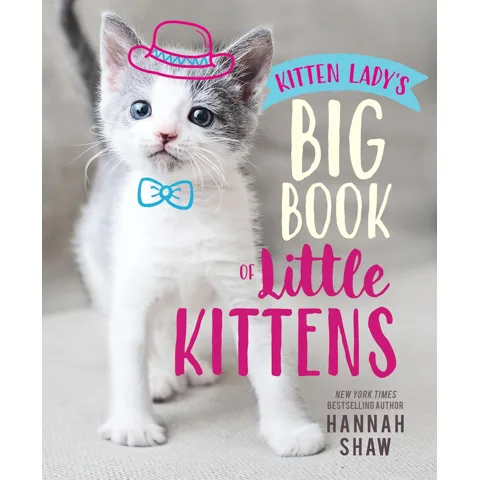
34. Kitten Lady’s Big Book of Little Kittens by Hannah Shaw
A photo picture book that follows real foster kittens from their first days, eyes still closed, to adoption. Hannah Shaw explains in simple words how kittens grow, why a toothbrush can stand in for a mother cat’s tongue and what fosters do. The photos by Andrew Marttila carry it for the youngest readers. It is a good way to prepare a child for a new kitten, or to start a conversation about adopting instead of buying.
- 56 pages, Simon & Schuster hardcover
- Real photos, not illustrations
- For ages 4 to 8
Good: true facts in a format small kids enjoy. Not great: only covers kittens.
Which cat book should you read first?
Pick by the question you are trying to answer.
- You just adopted a cat or kitten: Total Cat Mojo for routine and setup, or Purr if you want the research behind each tip. Still choosing a cat? Our cat breed selector matches breeds to your home.
- Your cat has a behavior problem: Decoding Your Cat. Read the chapter on your problem first, then the chapter on medical causes. Litter box changes in particular are often a health problem, so see a vet before you start training.
- You are adding a second cat: Cat vs. Cat, before the new cat comes home.
- You want to understand cats, not fix anything: Cat Sense, then The Lion in the Living Room.
- You found newborn kittens: Tiny But Mighty, and call a local shelter or rescue the same day.
- You want a good story: Dewey or A Street Cat Named Bob. For something funny, The Cat Who Went to Paris.
- Your cat is old or has died: Making Rounds with Oscar or the El Magnifico section of On Cats. Our cat years calculator shows where an older cat stands in human years.
- You are buying a gift: The Cat Who Came for Christmas in December, The Cat: A Natural and Cultural History for a coffee table. For gifts that are not books, see our gifts for cat lovers, and for the cat itself, Christmas gifts for cats.
Older cat books vs newer ones
Cat science changed more between 2005 and 2020 than in the century before. Three studies shape most of the newer books on this list:
- Where cats came from (2007). A study in Science compared the DNA of nearly 1,000 wild and domestic cats and traced every house cat to the Near Eastern wildcat, domesticated around the first farming villages.
- How cats spread (2017). Ancient DNA from more than 200 cats, published in Nature Ecology & Evolution, showed two waves of spread: with early farmers, then on trade routes out of Egypt.
- Whether cats bond with people (2019). A study in Current Biology used the same test researchers use with babies and dogs. About 64 percent of kittens showed secure attachment to their owner, close to the share seen in human infants.
Older books such as Catwatching and The Tribe of Tiger predate all three. They are still worth reading for their observations and their writing. For current answers on how cats think and what they need, choose a book published in 2013 or later: Cat Sense, The Trainable Cat, Decoding Your Cat, The Cat or Purr.
One more check before you buy a care or health book: look at the edition date. Veterinary advice on diet, vaccines and pain medicine changes. When a book and your vet disagree, go with the vet. The Cornell Feline Health Center publishes free, current articles on cat health, and the American College of Veterinary Behaviorists lists board-certified behaviorists for problems a book cannot fix.
FAQ
What is the best nonfiction book about cats?
Cat Sense by John Bradshaw is the best overall nonfiction book about cats. It explains how cats evolved from solitary hunters and what that means for how they behave at home. For fixing problem behavior, the best book is Decoding Your Cat by the American College of Veterinary Behaviorists.
What is the best book on cat behavior?
Decoding Your Cat is the best book on cat behavior problems, because each chapter is written by a board-certified veterinary behaviorist. For understanding normal behavior, read Cat Sense or Purr by Zazie Todd. For a quick illustrated guide to body language, Kitty Language by Lili Chin is the easiest.
What are the best true stories about cats?
The best-known true cat stories are Dewey by Vicki Myron, about a kitten found in an Iowa library book return, and A Street Cat Named Bob by James Bowen, about a London street musician and the stray who changed his life. Homer’s Odyssey, The Cat Who Came for Christmas and Making Rounds with Oscar are also true.
What book should a first-time cat owner read?
Total Cat Mojo by Jackson Galaxy is the most recommended book for first-time cat owners. It covers home setup, play, litter boxes and common problems in plain language. Purr by Zazie Todd covers the same ground with more research behind each tip.
Is A Street Cat Named Bob a true story?
Yes. A Street Cat Named Bob is James Bowen’s memoir of meeting an injured ginger stray in London in 2007 while recovering from addiction. Bob lived with Bowen until 2020. The book was adapted into a 2016 film in which Bob played himself in many scenes.
What are good nonfiction cat books for kids?
DK Eyewitness Cat is the best for school reports, Science Comics: Cats suits reluctant readers aged 9 to 13, National Geographic Kids Everything Big Cats covers lions, tigers, leopards and jaguars, and Kitten Lady’s Big Book of Little Kittens is a photo book for ages 4 to 8.
How long have cats lived with humans?
Cats have lived alongside people for about 10,000 years. Genetic studies trace all house cats to the Near Eastern wildcat, which moved into the first farming villages of the Fertile Crescent, likely drawn by mice in stored grain. The oldest known burial of a cat with a person, on Cyprus, is about 9,500 years old.
What is a good book to read after a cat dies?
Making Rounds with Oscar by David Dosa is a gentle book about death, care and comfort told through a nursing home cat. Doris Lessing’s The Old Age of El Magnifico, collected in On Cats, follows her cat’s last years with honesty. Dewey also ends with the cat’s death and the town’s grief.
Sources
- Driscoll, C. A. et al. (2007). The Near Eastern Origin of Cat Domestication. Science.
- Ottoni, C. et al. (2017). The palaeogenetics of cat dispersal in the ancient world. Nature Ecology & Evolution.
- Vitale, K. R. et al. (2019). Attachment bonds between domestic cats and humans. Current Biology.
- Loss, S. R., Will, T. and Marra, P. P. (2013). The impact of free-ranging domestic cats on wildlife of the United States. Nature Communications.
- Cornell Feline Health Center, Cornell University College of Veterinary Medicine.
- r/CatAdvice. Best books to learn about cats.
- r/CatAdvice. Good books on cat behavior, psychology, or in general?
- r/CatAdvice. Favorite cat books/blogs other than Jackson Galaxy?