Feeding one 10 lb indoor cat costs about $5 to $18 a month on dry food, $40 to $141 a month on canned food and around $199 a month on a fresh food delivery plan. The American Pet Products Association puts the average at $337.53 a year per cat-owning household in 2025. Your own number depends on your cat’s weight, age and activity, the calories in your food and what you pay for it, which is what the calculator below works out.
Some links on this page go to Amazon. As an Amazon Associate we earn from qualifying purchases. Affiliate disclosure.
The cat food cost calculator gives you the cost per day, week, month and year, the cost over your cat’s expected lifetime, how long a bag lasts and how many cans you go through. It compares your food with typical budget, mid-range and premium foods by cost per 100 calories, shows what a different wet and dry split would cost and can check a monthly budget. It also covers kittens, senior cats, overweight cats and households with more than one cat.
How to use the cat food cost calculator
- Enter your cat’s weight and age. Pick the breed if you know it. The breed sets the typical adult weight and lifespan, which matter for kittens and for the lifetime cost.
- Check the life stage, activity and body shape. The calculator picks kitten, adult or senior from the age. If your cat looks heavier than ideal, it feeds for the goal weight, which also lowers the cost.
- Choose the food. Pick dry, wet, both or fresh. Type the calories per cup or per can from the label for the most accurate result.
- Enter what you pay. Type the bag price and bag weight, the price per can or the case price and number of cans. If you leave the price blank, tap Budget, Mid-range or Premium to use a typical price.
- Add the extras. Set the number of cats, the share of wet food that goes uneaten, any subscribe and save discount, sales tax and what you spend on treats each month.
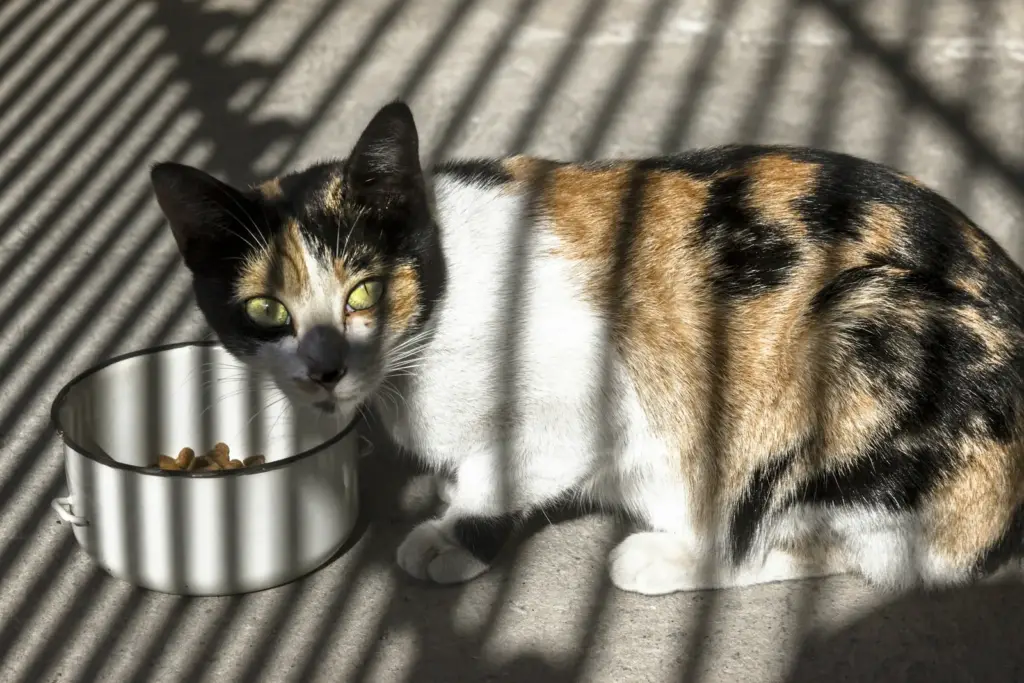
How much does cat food cost per month?
The table shows the monthly and yearly cost of feeding a healthy 10 lb adult cat that is spayed or neutered and lives indoors. It eats about 261 calories a day. Prices are typical US shelf prices checked in November 2026, before tax and discounts.
| Food | Per day | Per month | Per year |
|---|---|---|---|
| Budget dry | $0.17 | $5.11 | $61 |
| Mid-range dry | $0.41 | $13 | $151 |
| Premium dry | $0.61 | $18 | $221 |
| Budget canned | $1.32 | $40 | $480 |
| Mid-range canned | $3.77 | $115 | $1,376 |
| Premium canned | $4.64 | $141 | $1,696 |
| Half mid-range dry, half mid-range canned | $2.01 | $61 | $735 |
| Fresh, fridge aisle | $2.50 | $76 | $914 |
| Fresh, delivery plan | $6.53 | $199 | $2,384 |
Even the most expensive dry food in this table costs less per day than budget canned food. Tufts University’s Cummings School of Veterinary Medicine found the same thing when it priced 18 cat foods in 2022: daily costs for a 10 lb cat ran from $0.23 to almost $6, and the most expensive dry food still cost less per day than the cheapest canned food.
Is wet or dry cat food cheaper?
Dry food is cheaper. At typical prices it costs about one eighth as much per calorie as canned food of the same tier. Canned food is about 75% to 80% water, so a 5.5 oz can holds around 180 calories while a cup of kibble holds about 400. You pay for the water, the can and the shipping weight.
For the 10 lb cat above, mid-range dry food costs $13 a month and mid-range canned food costs $115. Feeding half the calories from each costs $61. Many owners feed wet food for the moisture and dry food for the price, and the calculator’s mix slider shows the cost of every split from all dry to all wet.

Compare foods by cost per 100 calories
The price per pound or per can does not tell you what a food costs to feed. A food with more calories per cup lasts longer, so a bag that looks expensive can cost less per day than a cheaper bag with fewer calories. The fair way to compare is cost per 100 calories:
Cost per 100 calories = price ÷ (calories per bag or can) × 100
Calories per bag are the calories per kg on the label times the bag weight in kg. Calories per can are printed on the can. Here is what typical foods cost per 100 calories:
| Food | Cost per 100 calories |
|---|---|
| Budget dry | $0.06 |
| Mid-range dry | $0.16 |
| Premium dry | $0.23 |
| Budget canned | $0.50 |
| Mid-range canned | $1.44 |
| Premium canned | $1.78 |
| Fresh, fridge aisle | $0.96 |
| Fresh, delivery plan | $2.50 |
Type a second food into the calculator’s compare box to see which of two foods is cheaper to feed your cat, and by how much each month.
Where to find the calories on the label
US pet food labels list calories as “kcal/kg” and “kcal/cup” for dry food, or “kcal/kg” and “kcal/can” for wet food, usually near the guaranteed analysis. A kcal is the same as a food calorie. Dry cat foods range from about 300 to 500 calories per cup. A 3 oz can usually has 60 to 120 calories and a 5.5 oz can 160 to 230.
If you leave the calories blank, the calculator uses 400 calories per cup for dry food and 180 calories per 5.5 oz can for wet food, and marks the result as an estimate.
Cat food cost by weight
A heavier cat eats more, but not in a straight line. A 15 lb cat needs about a third more calories than a 10 lb cat, not half as much again, because calorie needs rise with weight to the power 0.75. Monthly costs for healthy neutered indoor adults at mid-range prices:
| Cat weight | Calories a day | Dry food | Half and half | Canned food |
|---|---|---|---|---|
| 6 lb | 178 | $8.94 | $42 | $75 |
| 8 lb | 221 | $11 | $52 | $92 |
| 10 lb | 261 | $13 | $61 | $109 |
| 12 lb | 299 | $15 | $70 | $125 |
| 14 lb | 336 | $17 | $79 | $141 |
| 16 lb | 371 | $19 | $87 | $156 |
| 18 lb | 406 | $20 | $95 | $170 |
Cat food cost by breed
Breed changes the cost because it sets the adult size. A Maine Coon can weigh twice as much as a Siamese, so it eats more and costs more to feed. The table uses each breed’s typical adult weight, a neutered indoor cat and mid-range prices.
| Breed | Typical weight | Calories a day | Dry food | Half and half | Canned food |
|---|---|---|---|---|---|
| Maine Coon | 17 lb | 384 | $19 | $90 | $161 |
| Ragdoll | 15 lb | 354 | $18 | $83 | $148 |
| Norwegian Forest Cat | 12 lb | 304 | $15 | $71 | $127 |
| American Shorthair | 12 lb | 290 | $15 | $68 | $121 |
| Bengal | 11 lb | 285 | $14 | $67 | $119 |
| British Shorthair | 11 lb | 285 | $14 | $67 | $119 |
| Exotic Shorthair | 10 lb | 271 | $14 | $63 | $113 |
| Sphynx | 10 lb | 261 | $13 | $61 | $109 |
| Persian | 10 lb | 251 | $13 | $59 | $105 |
| Domestic cat (shorthair, longhair) | 9 lb | 251 | $13 | $59 | $105 |
| Scottish Fold | 9 lb | 246 | $12 | $58 | $103 |
| Abyssinian | 9 lb | 231 | $12 | $54 | $97 |
| Russian Blue | 8 lb | 226 | $11 | $53 | $95 |
| Siamese | 8 lb | 226 | $11 | $53 | $95 |
| Devon Rex | 7 lb | 210 | $11 | $49 | $88 |
Large breeds such as the Maine Coon, Norwegian Forest Cat and Ragdoll keep growing until 3 to 4 years old, so they spend longer on higher kitten portions. Pick the breed in the calculator to get the amount and cost for your own cat’s weight.

Kitten and senior cat food costs
Kittens need two to three times the calories per pound of an adult cat while they grow, but they are small, so the monthly bill is close to an adult’s. Calorie needs fall as a kitten nears its adult weight. Senior cats are different from senior dogs: after about 11 years many cats need more calories, not fewer, because they digest fat and protein less well. The calculator adds 10% from 11 years and 20% from 15 years.
| Age | Calories a day | Dry food | Half and half |
|---|---|---|---|
| Kitten, 3 months (3 lb) | 235 | $12 | $55 |
| Kitten, 6 months (6 lb) | 305 | $15 | $72 |
| Kitten, 9 months (8 lb) | 317 | $16 | $74 |
| Adult, 4 years (10 lb) | 261 | $13 | $61 |
| Mature, 9 years (10 lb) | 261 | $13 | $61 |
| Senior, 12 years (10 lb) | 287 | $14 | $67 |
| Senior, 16 years (10 lb) | 313 | $16 | $73 |
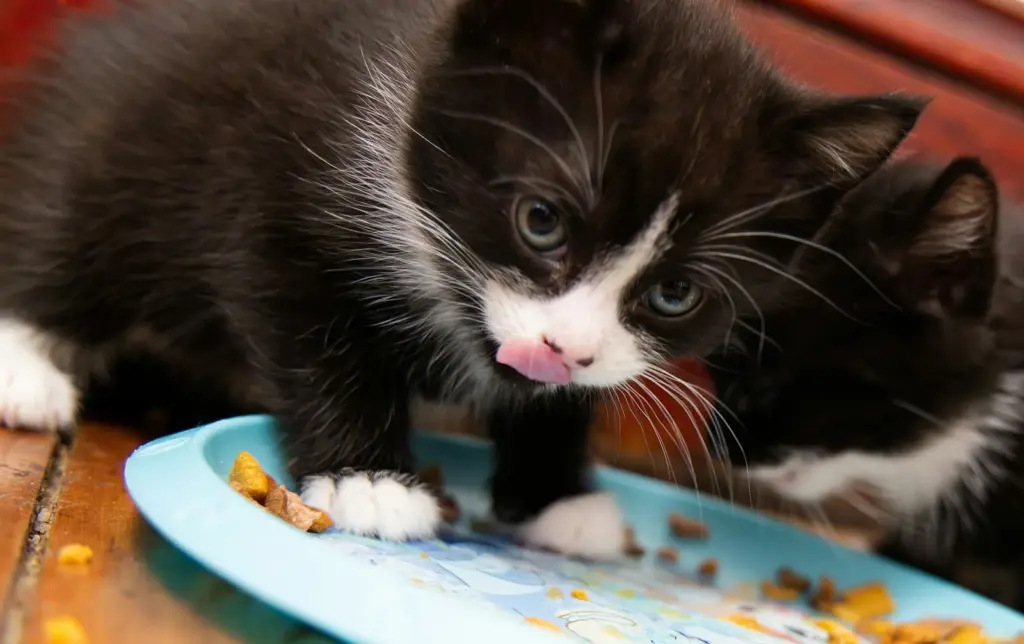

How long does a bag of cat food last?
A 16 lb bag of dry food lasts one 10 lb indoor cat about 98 days, or about 3.2 months. The table assumes 400 calories per cup and 113 g per cup, with healthy neutered indoor adults.
| Bag size | 1 cat | 2 cats | 3 cats |
|---|---|---|---|
| 3.15 lb | 19 days | 10 days | 6 days |
| 7 lb | 43 days | 22 days | 14 days |
| 16 lb | 98 days | 49 days | 33 days |
| 22 lb | 135 days | 68 days | 45 days |
Dry food keeps best in its original bag inside an airtight container. Once opened, aim to finish a bag within about six weeks so the fats do not go stale, which makes the largest bag a poor deal for one cat.
How much does it cost to feed two cats?
Two cats cost twice as much to feed as one, and three cost three times as much. Buying in bulk helps more as the household grows, because a large bag or a 24-can case is used up before it goes stale.
| Cats | Dry food | Half and half | Canned food | Half and half per year |
|---|---|---|---|---|
| 1 | $13 | $61 | $109 | $735 |
| 2 | $26 | $122 | $219 | $1,469 |
| 3 | $39 | $184 | $328 | $2,204 |
| 4 | $52 | $245 | $437 | $2,938 |
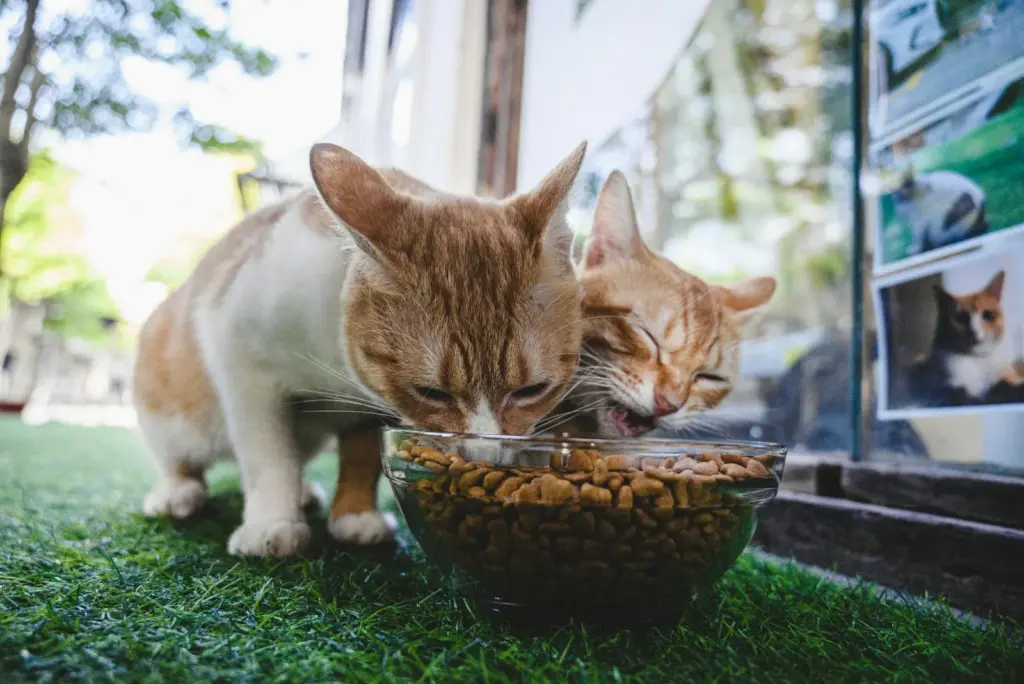
How to cut the cost of cat food
- Compare by cost per 100 calories, not by price per bag. The calculator does this for you.
- Feed the right amount. Overfeeding by 20% raises the food bill by 20% and leads to weight gain. A kitchen scale is the most accurate way to measure dry food: a scoop can be off by a quarter.
- Mix wet and dry. Moving a quarter of the calories from wet to dry food saves money every month without dropping wet food completely.
- Buy cans by the case and dry food in the largest bag your cats finish in about six weeks.
- Use subscribe and save. Amazon, Chewy and most pet stores take 5% to 35% off repeat orders.
- Cover opened cans and refrigerate them so less wet food is thrown away.
- Keep treats under 10% of daily calories. Treats cost more per calorie than meals.
- Help an overweight cat lose weight. Feeding for the goal weight lowers the food bill and the vet bill.
Big bags and cases that cost less per calorie, by price tier:


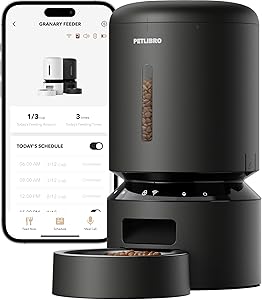
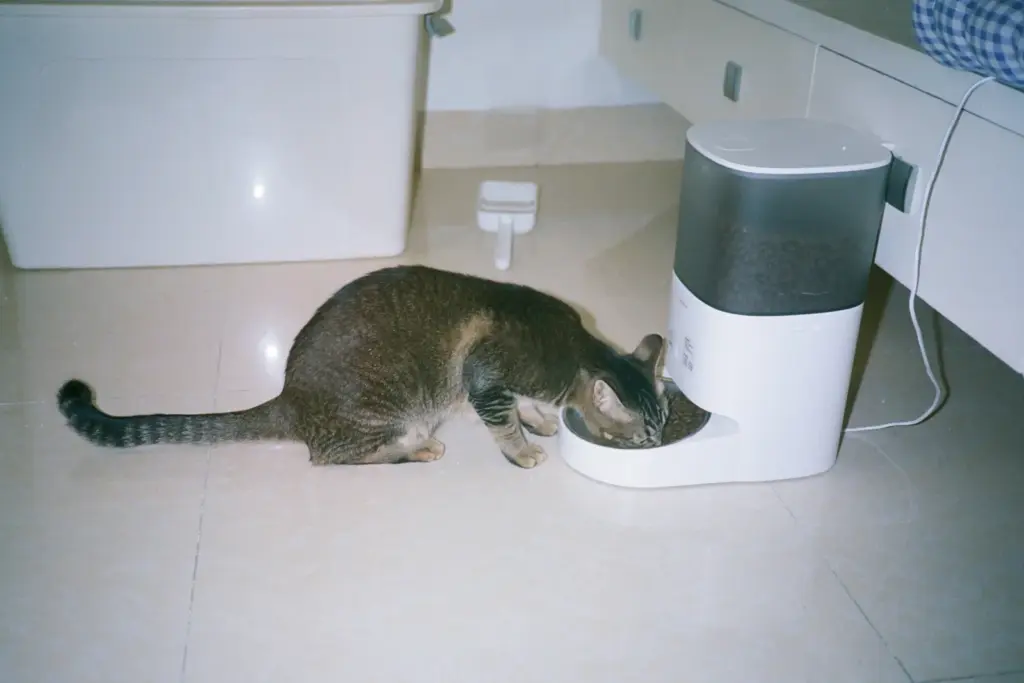
Tools that cut waste and help you measure:



How the calculator works out calories and cost
Every result starts with your cat’s resting energy requirement (RER), the calories its body burns at rest in a day:
RER = 70 × (weight in kg)0.75
The calculator multiplies RER by a factor for life stage and activity from the 2021 AAHA/AAFP Feline Life Stage Guidelines and the WSAVA nutrition guidelines. A 10 lb (4.5 kg) cat has an RER of 218 calories. As a neutered indoor adult it gets a factor of 1.2, which gives 261 calories a day.
| Cat | Factor × RER |
|---|---|
| Spayed or neutered adult | 1.2 (range 1.1 to 1.4) |
| Intact adult | 1.4 (range 1.3 to 1.6) |
| Indoor cat that mostly rests | 1 (range 0.9 to 1.2) |
| Active cat or one that goes outdoors | 1.4 (range 1.2 to 1.6) |
| Weight loss (at goal weight) | 0.8 (range 0.75 to 0.85) |
| Senior from 11 years | adult factor × 1.1 |
| Senior from 15 years | adult factor × 1.2 |
| Kitten | NRC growth formula (about 2 to 3 × RER) |
Kittens use the National Research Council growth formula (NRC 2006), which compares current weight with expected adult weight. Pregnant and nursing cats also use NRC formulas based on body weight, the week and the number of kittens. For weight loss the calculator feeds 0.8 times the RER of the goal weight and plans a loss of about 1% of body weight a week. Cats should not lose weight faster than 2% a week because fast weight loss can cause fatty liver disease.
The cost is the daily amount of each food in grams times its price per gram. Wasted wet food, the number of cats, discounts, tax and treat spending are applied after that. A month is 30.4 days and a year is 365.25 days. The lifetime cost multiplies the current yearly cost by the years left to the breed’s typical lifespan, so it is a rough guide rather than a forecast.
Typical prices are median US shelf prices for each tier, sampled from pet store listings on November 11, 2026, and are rechecked when the page is updated. They are not prices for any product linked on this page. Prices on Amazon and in stores change often.
Sources
- AAHA/AAFP, 2021 Feline Life Stage Guidelines.
- WSAVA, Global Nutrition Guidelines.
- National Research Council, Nutrient Requirements of Dogs and Cats (2006).
- Tufts Petfoodology, Comparing kitty’s calorie costs (2022).
- American Pet Products Association cat report, via Petfood Industry (2026).
- Rover, Cost of cat parenthood (2026).
Cat food cost FAQ
How much does cat food cost per month?
For a 10 lb indoor adult cat, dry food costs about $5 to $18 a month, canned food $40 to $141 and fresh food $76 to $199. Feeding half mid-range dry and half mid-range canned costs about $61 a month. The American Pet Products Association puts the average at $337.53 a year, or about $28 a month.
How much does it cost to feed a cat per year?
A 10 lb cat costs about $61 to $221 a year on dry food, $480 to $1,696 on canned food and up to $2,384 on a fresh food delivery plan, at typical US prices in November 2026. Larger cats, more cats and treats add to that.
Is wet or dry cat food cheaper?
Dry food is much cheaper. At typical prices, mid-range dry food costs $0.16 per 100 calories and mid-range canned food $1.44. Canned food is mostly water, so you pay for more weight per calorie. Even premium dry food ($0.23) costs less per calorie than budget canned food ($0.50).
How much does it cost to feed a cat wet food only?
A 10 lb indoor cat eats about one and a half 5.5 oz cans a day, which costs about $40 a month with budget cans, $115 with mid-range cans and $141 with premium cans. Buying by the case and covering opened cans to cut waste lowers the cost.
How many calories does a cat need per day?
A healthy neutered indoor adult needs about 221 calories a day at 8 lb, 261 at 10 lb, 299 at 12 lb and 371 at 16 lb. Intact and active cats need about a sixth more and cats that mostly rest about a sixth less. Kittens need two to three times as much per pound, and cats over 11 often need 10% to 20% more than younger adults.
How long does a 16 lb bag of cat food last?
A 16 lb bag of dry food with 400 calories per cup lasts one 10 lb indoor cat about 98 days, or a little over three months. It lasts two cats about 49 days and three cats about 33 days. Once opened, dry food is best used within about six weeks, so a smaller bag can be the better buy for one cat.
Is fresh cat food worth the cost?
Fresh food costs far more than dry or canned food: about $76 a month from the fridge aisle and $199 on a delivery plan for a 10 lb cat, against $13 for mid-range dry. Any food labeled complete and balanced to AAFCO standards meets a cat's nutrient needs, whether it is dry, canned or fresh. Many owners choose fresh or canned food for the extra moisture and taste rather than better nutrition.
How can I save money on cat food?
Compare foods by cost per 100 calories instead of price per bag. Measure portions with a kitchen scale, buy cans by the case and dry food in the largest bag your cats finish in about six weeks, use subscribe and save, cover and refrigerate opened cans, keep treats under 10% of daily calories and help an overweight cat reach a healthy weight. Moving some calories from wet to dry food also saves money every month.
How much does it cost to feed two cats?
Two 10 lb indoor cats cost about $26 a month on mid-range dry food, $122 on half dry and half canned and $219 on canned food only. That is about $1,469 a year for the half and half diet. Three cats cost about $184 a month on the same diet.
Does cheap cat food cost more in the long run?
Sometimes. A cheaper food with fewer calories per cup has to be fed in larger amounts, so the bag runs out sooner. Compare foods by cost per 100 calories, using the kcal per kg on the label, to see which one is cheaper to feed. The calculator's compare box does this for any two foods.
How much does it cost to feed a kitten?
A 6-month-old kitten growing to 10 lb needs about 305 calories a day, more than the adult it will become. That is about $15 a month on mid-range dry food or $72 on half dry and half canned. Kittens should eat a food labeled for growth or for all life stages until about 12 months, or 18 to 24 months for large breeds such as the Maine Coon.
More cat tools
- Cat years calculator: your cat’s age in human years.
- What cat breed should I get? A quiz that matches breeds to your home.
- Best automatic litter box for less daily scooping.
- Christmas gifts for cats.
- Dog food calculator for the dogs in the house.