As an Amazon Associate we earn from qualifying purchases. Disclosure
The best dog clippers for thick coats have a strong rotary or brushless motor, a corded or long-lasting power supply and detachable steel blades you can swap when one gets hot. For most owners that means the Andis UltraEdge Super 2-Speed with a 4FC or 5F blade, or a set of stainless guard combs when you want to leave the coat longer. If you only tidy feet, pants and feathering a few times a year, the oneisall kit for thick coats is a cordless clipper that does the job without the weight of a groomer’s clipper.
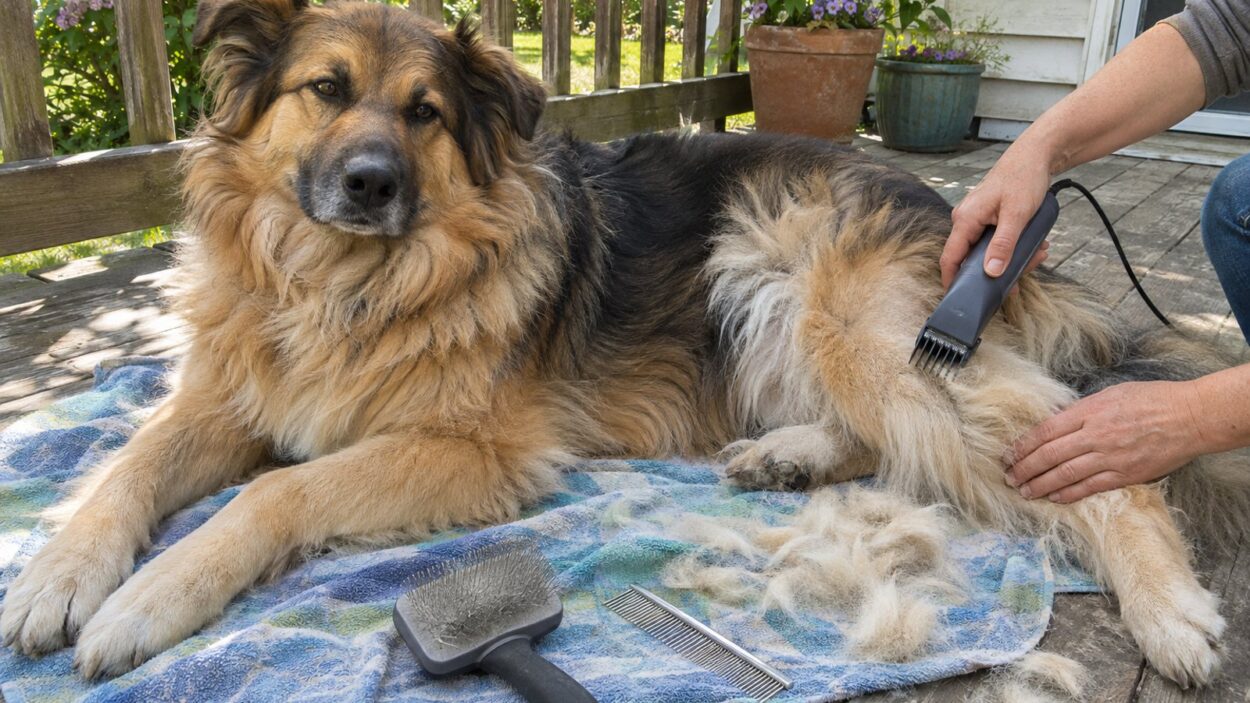
The clipper is only half the answer for thick fur. My shepherd mix blows his undercoat twice a year, and the first spring I had him I went at his back legs with a small trimmer straight out of the box. It slowed to a crawl within a minute, the blade packed solid with gray fluff, and he walked away with a lumpy stripe and a hot patch of skin. The next time I bathed him, blew the loose undercoat out and raked him before the blade touched his coat. Same dog, same legs, and the job took a third of the time. Every pick below assumes you do that prep first, so the prep tools are on the list too.
One rule before anything else: a thick double coat gets trimmed, not shaved to the skin. The section on shaving double-coated dogs explains why, and the breed table shows what a clipper is actually for on a golden retriever, a husky or a doodle.
Quick picks: best dog clippers for thick fur
| Product | Best for | Type |
|---|---|---|
| Andis UltraEdge Super 2-Speed | Most thick coats, years of home use | Corded clipper |
| Oster A5 Turbo 2-Speed | Big dogs and full body clips | Corded clipper |
| Wahl KM10+ | Long sessions with a lighter clipper | Corded clipper |
| oneisall Thick Coat Kit | Trims and touch-ups at home | Cordless kit |
| HOLDOG 3-Speed | Owners who want cordless with speed settings | Cordless clipper |
| Andis 4FC Deep Tooth | A full-looking body trim | Blade (3/8 in) |
| Oster CryogenX 5F | A short summer trim | Blade (1/4 in) |
| Andis UltraEdge 7FC | Sanitary areas and short clips | Blade (1/8 in) |
| Oster Skip Tooth 7 | Coarse, packed coats | Blade (1/8 in) |
| Stainless Guard Comb Set | Leaving 1/8 in to 1 in of coat | Guard combs |
| Shelandy Force Dryer | Blowing out undercoat at home | High-velocity dryer |
| Flying Pig Flying One | A steel dryer with a longer hose | High-velocity dryer |
| FURminator Grooming Rake | Loosening dense undercoat | Undercoat rake |
| FURminator deShedding Tool, Large | Shedding season on dogs over 50 lb | Deshedding tool |
| Chris Christensen Big G Slicker | Brushing out before the blade | Slicker brush |
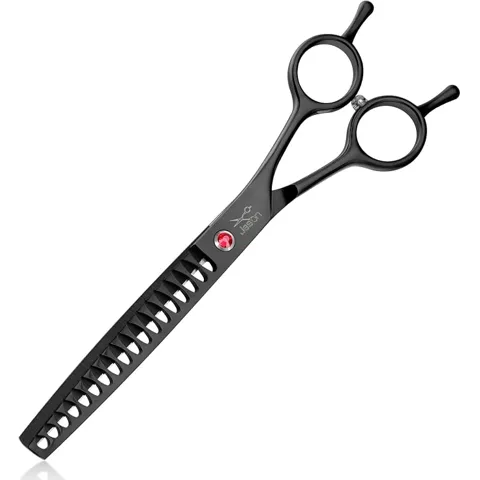
| JASON 7″ Chunkers | Blending clipper lines | Chunker shears |
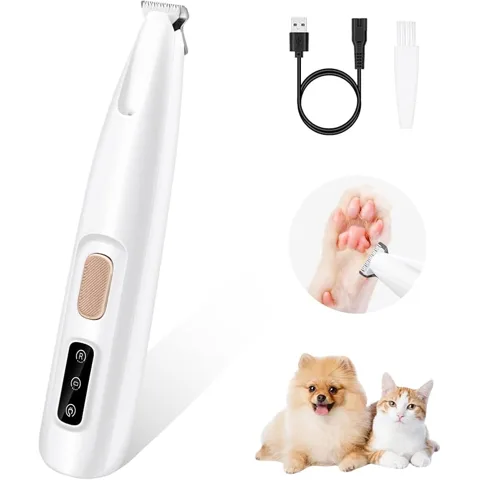
| Mcbazel Micro Trimmer | Paw pads and ears | Detail trimmer |
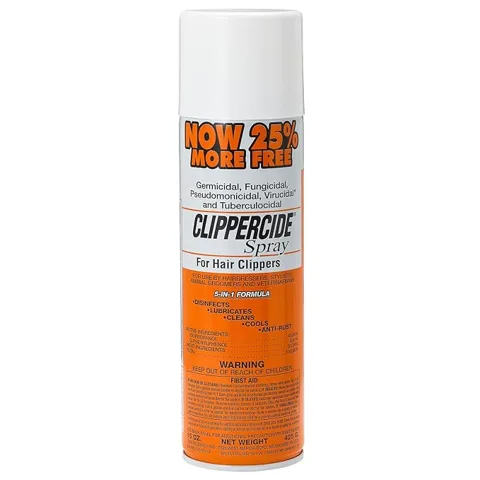
| Clippercide 5-in-1 | Cleaning and cooling blades | Blade spray |
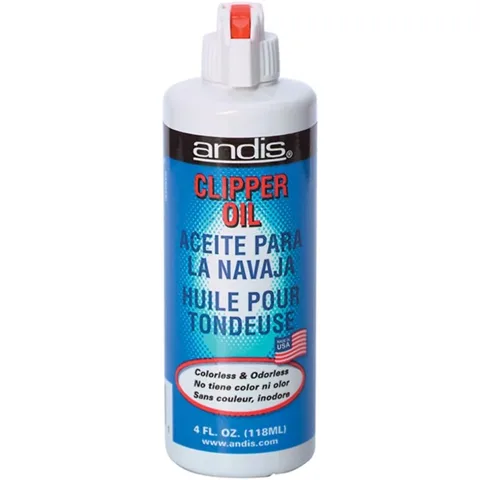
| Andis Clipper Oil | Oiling blades every 15 minutes | Blade oil |
What makes a clipper work on a thick coat
A thick coat beats a clipper in three ways: the motor bogs down, the blade clogs with undercoat and the metal heats up until it burns skin. The clippers that handle it share a few features.
- Rotary or brushless motor. Rotary motors keep their torque when the blade meets resistance. Small magnetic and pivot motors are fine for a face or feet and stall in a dense coat. Andis, Oster and Wahl all build their thick-coat clippers on rotary or brushless motors.
- Detachable A5-style blades. A5 is the blade fitting most groomer clippers use. One clipper then takes dozens of blade lengths, and you can swap a hot blade for a cool one in seconds. Andis, Oster and Wahl KM blades fit each other’s A5-style clippers in most cases.
- Two speeds. Low speed for paws and around the face, high speed for the body. On a thick coat, high speed feeds hair through the blade before it packs.
- A cord, or a battery you trust. A full body clip on a 70 lb dog takes an hour or more. Corded clippers never fade. Cordless clippers suit trims and dogs that tangle themselves in cords.
- Coolant and oil. Every blade heats up in a dense coat. Groomers rotate several blades, touch each one to the inside of the wrist every few passes and oil every 15 minutes.
Clipper speed claims are not the deciding number. The corded clippers here run at 3,000 to 4,400 strokes per minute, while cheap cordless kits advertise 6,800 rpm. The rotary clippers cut a thick coat better because they hold that speed under load.
Should you shave a double-coated dog?
No, not without a medical reason. The American Kennel Club advises against shaving double-coated breeds such as golden retrievers, German shepherds, Labrador retrievers, Siberian huskies and border collies. Its chief veterinary officer, Dr. Jerry Klein, says the coat insulates the dog and protects it from sunburn, and that shaving can leave a dog hotter, not cooler. The undercoat also grows back faster than the longer guard hairs, so a shaved coat can come back patchy and woolly.
Some dogs never grow the coat back properly. Veterinary dermatologists call it post-clipping alopecia, or hair follicle arrest. It shows up most in plush-coated northern breeds like huskies, malamutes, Samoyeds, chows, keeshonds and Pomeranians. Regrowth can take a year or more, and there is no way to tell beforehand which dog it will hit. Groomers on Reddit report both sides: a Samoyed owner whose dog’s undercoat grew back fully, and another whose shaved hind legs came back wiry three years later.
That leaves a clipper four jobs on a double coat:
- Sanitary trims around the rear and belly.
- Tidying the fur on and between the paws.
- Shortening long feathering on legs, pants and tail with a guard comb.
- Removing mats your vet or groomer agrees can’t be brushed out. For a dog that is matted all over, see our guide to dog clippers for matted hair.
Thick single coats are different. Doodles, poodles and other curly or wooly coats keep growing and need a full body clip every 6 to 8 weeks, and that is where a strong clipper earns its place. Curly coats have their own guide: best dog clippers for poodles.
Clipper jobs by breed
The coat type decides the job. Here is what a clipper does on the thick-coated breeds people ask about most. More fluffy breeds are in our list of big fluffy dog breeds.
| Breed | Coat | Clipper job | Blade or comb |
|---|---|---|---|
| Golden retriever | Double, long feathering | Feet, sanitary, shorten feathering | #10 for pads, guard comb on legs, chunkers to blend |
| Labrador retriever | Short, dense double | Almost none; deshed instead | Paw trimmer only |
| German shepherd | Double, medium or long | Pants, feet, sanitary | Guard comb, 7FC for sanitary |
| Husky, malamute, Samoyed | Plush double | Paw pads only | Detail trimmer; never shave the body |
| Bernese mountain dog | Long double | Feet, sanitary, light tidy | #10 for pads, thinning or chunker shears |
| Newfoundland | Heavy double, oily | Feet, sanitary, shaping with shears | Guard comb, chunkers |
| Great Pyrenees | Long double, weather-resistant | Paw pads, sanitary | Detail trimmer, 7FC |
| Goldendoodle, labradoodle | Curly or wavy, thick single | Full body clip every 6 to 8 weeks | 4FC or 5F, or a guard comb for longer |
| Chow chow | Dense double | Feet and sanitary; avoid body shaves | Detail trimmer, 7FC |
Small long-coated breeds need a lighter clipper with a narrower blade. We cover those in dog clippers for Shih Tzus.
Heavy-duty corded clippers
These three clippers carry rotary or brushless motors and take A5-style blades. Pick one of them if you clip a doodle every couple of months, groom a big dog’s full outline or want a clipper that lasts a decade.
Best overall
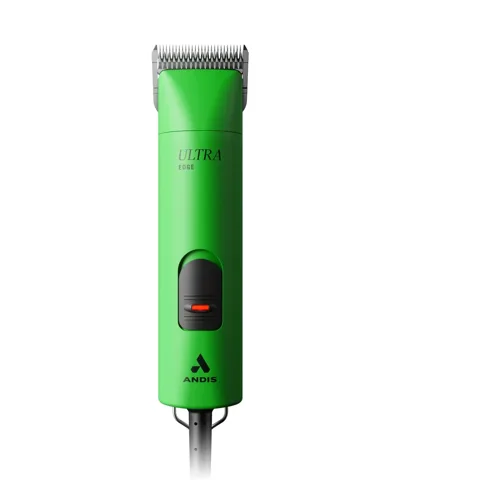
1. Andis UltraEdge Super 2-Speed
The Andis Super 2-Speed, known to groomers as the AGC Super, is the clipper working groomers name most often when asked what lasts. Its rotary motor runs at 3,400 or 4,400 strokes per minute and keeps that pace when the blade hits dense undercoat. It takes Andis UltraEdge and CeramicEdge blades and other A5-style blades, so you can run the included #10 on paw pads and switch to a 4FC for the body.
One working groomer on Reddit’s r/doggrooming wrote that their AGC Super 2-speeds lasted all 17 years of their career, with a switch replaced along the way. That is the case for paying for a professional clipper once instead of replacing cordless kits every few years. The 14 ft cord reaches from an outlet to a grooming table or a towel on the floor, and Andis covers it with a two-year warranty.
Good: keeps its speed in thick fur, takes almost any A5-style blade, built to be repaired. Not great: heavier than cordless clippers, and the blade housing gets warm on long clips, so keep a second blade ready.
Best for big dogs
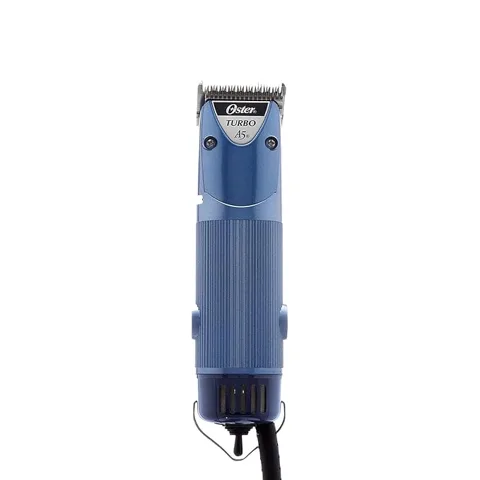
2. Oster A5 Turbo 2-Speed
The A5 is the clipper the blade standard is named after. The Turbo version has a heavy-duty universal motor with two speeds, 3,000 and 4,000 strokes per minute, and Oster rates it for dogs, horses and livestock. That is more clipper than a golden retriever’s feet need, and exactly what a 90 lb doodle’s full body clip needs.
It ships with a #10 CryogenX blade, blade oil, grease, a cleaning brush and spare carbon brushes, so you can service the motor yourself. Oster’s blade line is the widest of the three brands: skip-tooth, F-series finishing blades and wide blades all fit.
Good: power for the biggest dogs, the widest blade selection, owner-serviceable. Not great: the heaviest clipper here and it runs hot; plan breaks and use coolant on long clips.
Lightest corded clipper
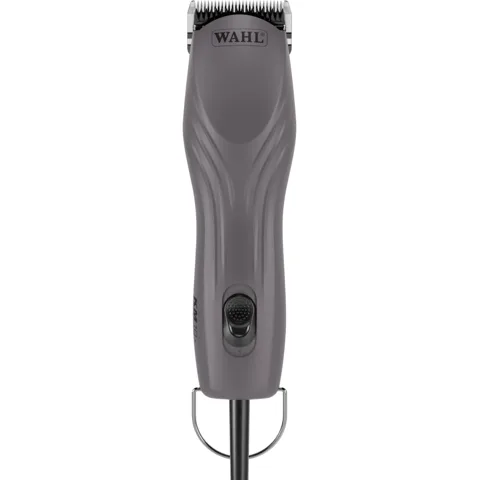
3. Wahl KM10+
The KM10+ uses a brushless motor that Wahl rates for more than 10,000 hours. It runs at 3,000 or 3,700 and has constant speed control, which means the motor adds power when the blade meets thick hair instead of slowing down. At about 12 oz it is the lightest corded clipper here, a difference your wrist notices an hour into a doodle clip.
It comes with a German-made #10 Prime blade, and Wahl KM blades interchange with Oster and Andis A5-style blades. The 14 ft cord matches the Andis. It has fewer Amazon ratings than the other two clippers because the plus version is new; the older KM10 it replaces has thousands of reviews.
Good: light, quiet brushless motor that holds speed in dense coat. Not great: the newest clipper here, with far fewer Amazon reviews than the Andis and Oster.
Cordless clippers for home trims
Cordless kits use fixed blades with plastic guide combs rather than A5-style blades. They suit the trims most double-coated dogs need: feet, pants, sanitary areas and a tidy-up between grooming visits. For a full body clip on a big doodle, buy a corded clipper.
Best cordless kit
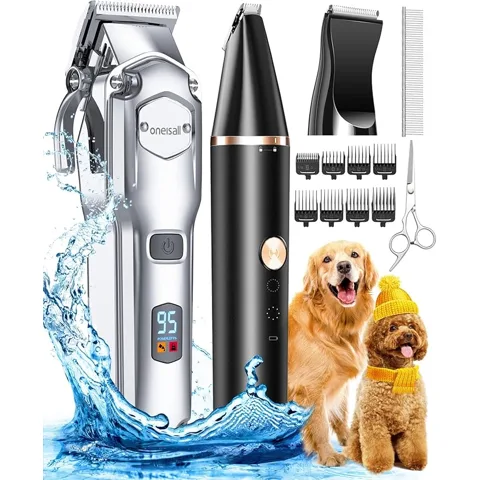
4. oneisall Dog Clipper Kit for Thick Coats
This is the kit oneisall sells for thick and double coats: a cordless clipper with a stainless steel blade and a 6,800 rpm motor, six guide combs and a separate small trimmer for paws, ears and the corners of the mouth. The 2,000 mAh battery is rated for up to 240 minutes, enough for several trims between charges.
It is the easiest way to start clipping at home, because the paw trimmer handles the job most double-coated dogs need most often. It holds 4.4 stars from nearly 4,000 ratings. Brush and dry the coat first; on a packed undercoat a fixed-blade clipper bogs down sooner than a rotary one.
Good: complete kit with a paw trimmer, long battery claim, no cord to tangle. Not great: the blade is fixed, so you can’t swap a hot blade or fit A5 guard combs, and the plastic combs flex in heavy fur.
Most-rated cordless clipper
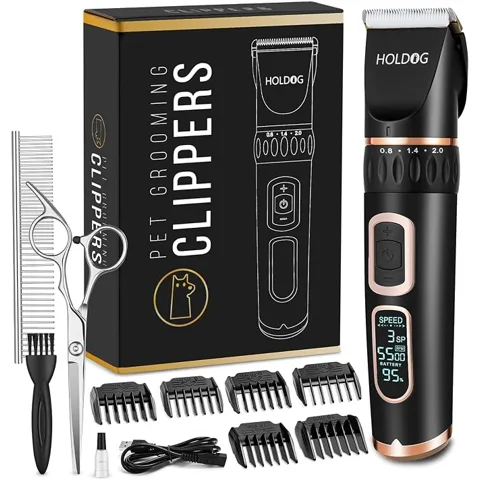
5. HOLDOG 3-Speed Cordless Clipper
With more than 30,000 ratings, the HOLDOG is one of the most-reviewed dog clippers on Amazon. It has three speeds and a 33-tooth blade with a ceramic moving blade, which HOLDOG says spreads heat more evenly than a standard 24-tooth head. The listing puts the noise at about 50 dB, quiet enough for dogs that flinch at a buzzing clipper.
Use the low speed on paws and the high speed on legs and pants. Like the oneisall, it is a trimming clipper with a removable but not A5-style blade, so guard combs and blades from the corded clippers won’t fit.
Good: three speeds, quiet, a huge review base. Not great: no A5 blade system, and like every cordless kit it is not built for full shave-downs of big dogs.
Blades and guard combs for thick coats
Blade numbers run backwards: the higher the number, the shorter the cut. “F” or “FC” means a finishing blade with full teeth that leaves a smooth finish. Skip-tooth blades have alternating long and short teeth that pull thick hair into the blade but nick skin more easily.
| Blade | Hair left | Use on a thick coat |
|---|---|---|
| #4F / 4FC | 3/8 in (9.5 mm) | Body trims that still look full |
| #5F / 5FC | 1/4 in (6.3 mm) | Short summer trims on doodles |
| #7F / 7FC | 1/8 in (3.2 mm) | Sanitary areas, short clips, shaving out mats |
| #7 skip tooth | 1/8 in (3.2 mm) | Coarse or packed coats before finishing |
| #10 | 1/16 in (1.5 mm) | Paw pads, sanitary areas, under guard combs |
| #30 + guard comb | Set by the comb, 1/8 in to 1 in | Leaving the coat long and even |
Groomers on r/doggrooming say a guard comb works best over a #30 blade, and only on a coat that is washed, dried straight and combed out.
Best body blade
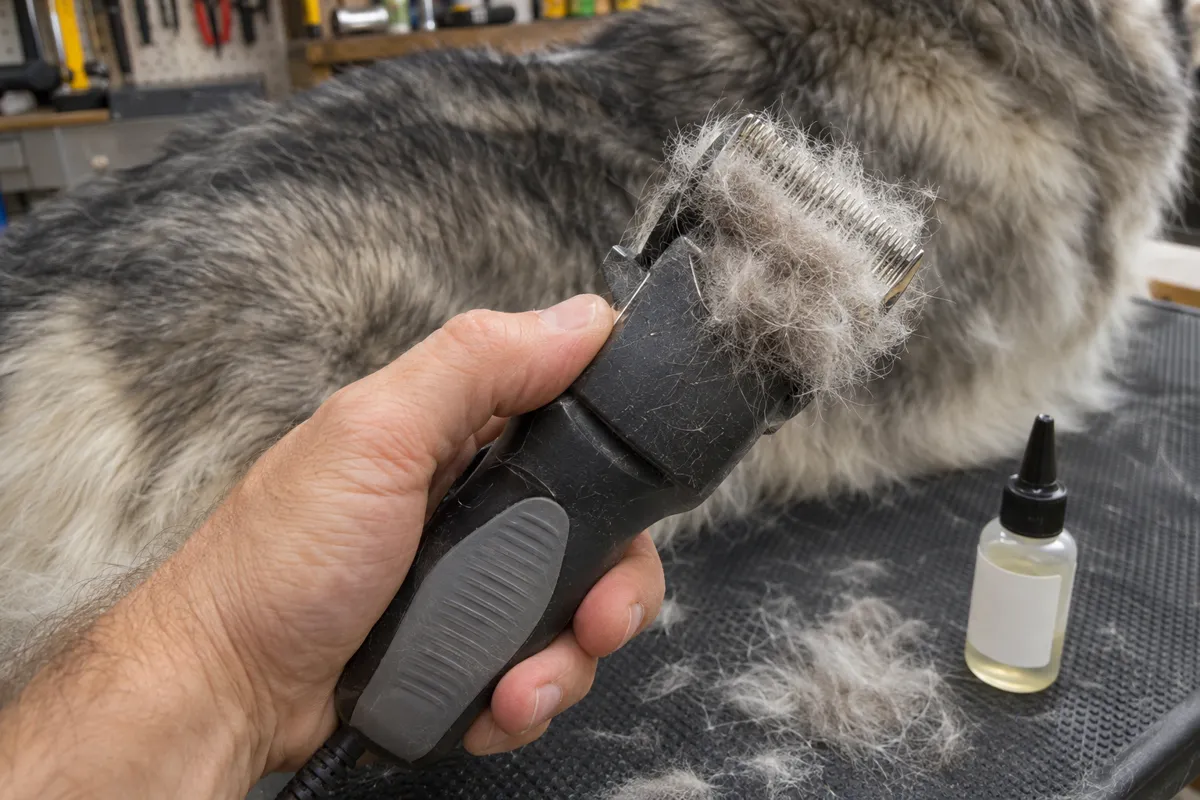
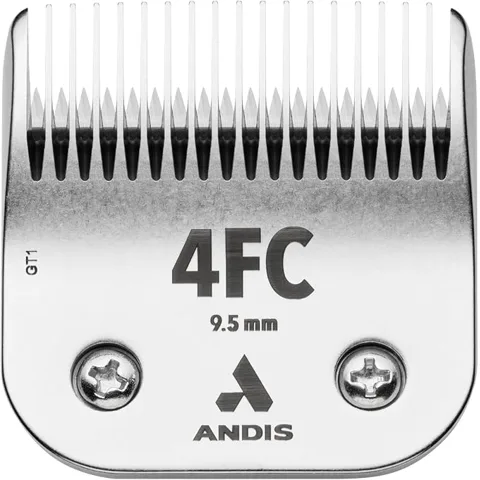
6. Andis UltraEdge 4FC Deep Tooth
A 4FC leaves 3/8 in of coat, long enough that a trimmed doodle still looks fluffy and the skin stays covered. The deep-tooth version has longer teeth that feed dense or slightly matted hair into the blade instead of riding over it. Andis makes it from carbon-infused steel and lists it for its AG, AGC, BG and other detachable clippers.
Good: natural-looking length, deeper teeth for dense coats, 4.6 stars from more than 6,000 ratings. Not great: too long for sanitary areas and paw pads; pair it with the #10 your clipper came with.
Best for a short trim
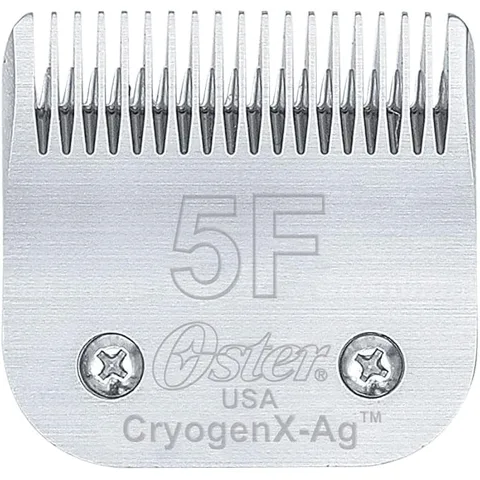
7. Oster CryogenX 5F
The 5F cuts to 1/4 in, the usual length for a doodle’s summer trim. Oster heat-treats the blade above 1,000°F and then freezes it cryogenically, which keeps the edge sharp longer. It fits the Oster A5 and A6 clippers and other A5-style clippers.
Good: a short, even finish that still leaves some coat. Not great: too short for a double-coated breed’s body; use it on single coats only.
Best for sanitary and short clips
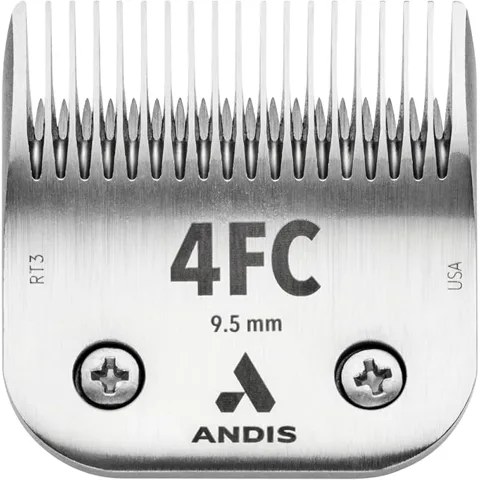
8. Andis UltraEdge 7FC
The 7FC leaves 1/8 in and is the blade groomers reach for when a coat has to come short: sanitary areas, matted patches and the summer clip a vet has signed off on. It fits Andis detachable clippers and the Oster A5. The listing title leaves out the size; the bullets confirm 7FC.
Good: clean finish, works on any of the three corded clippers. Not great: heats fast in thick coat; rotate it with a second blade.
Best for coarse, packed coats
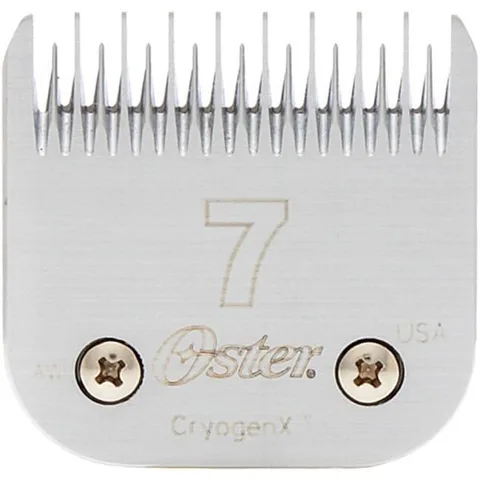
9. Oster Skip Tooth 7
Oster describes this blade as ideal for matted or heavy, coarse coats. The skipped teeth leave wider gaps that grab thick hair, so the blade clogs less than a finishing blade. Groomers use it for the first pass on a packed coat and finish with a 7F.
Good: gets under heavy coat that stalls a finishing blade. Not great: the gaps catch loose skin, so keep the skin taut and avoid armpits, flanks and the belly.
Best for trimming without shaving
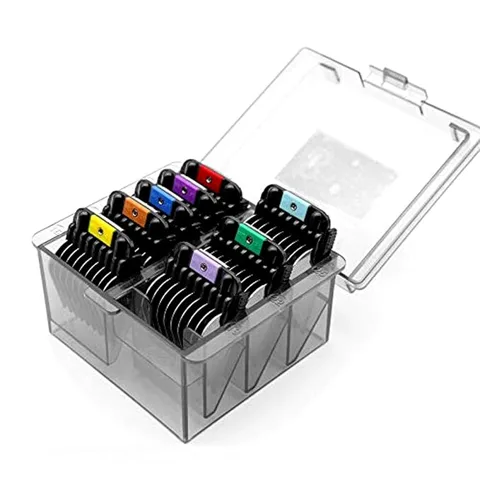
10. Stainless Steel Guard Comb Set (8 combs)
Guard combs are how you trim a thick coat without shaving it. These eight stainless combs snap over a #10, #15 or #30 A5-style blade and leave 1/8 in to 1 in of hair, color-coded so you grab the right length. Steel combs hold their shape in heavy fur, where plastic combs bend and let the blade dig in.
Good: eight lengths, steel teeth, fits the three corded clippers above. Not great: won’t fit the cordless kits, and a comb only works on a coat that is clean, dry and brushed out.
Prep tools: dryer, rake and brush
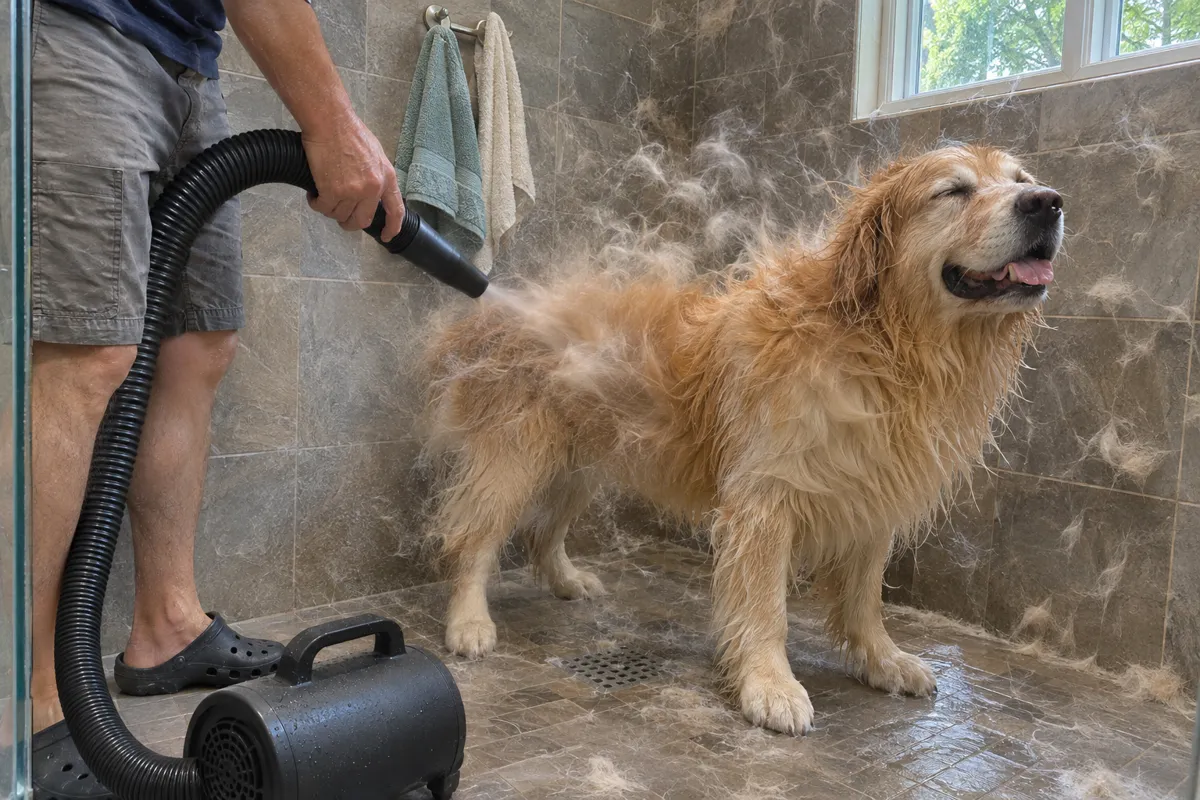
A groomer would bathe and blow out a thick coat before clipping. One r/doggrooming groomer put it this way: much of what looks like matting is loose coat held together by dirt and oil, and a high-velocity dryer blows it out once it is clean. If you clip a dirty, impacted coat, you have to drop to a short blade just to get under it.
Best dryer for most homes
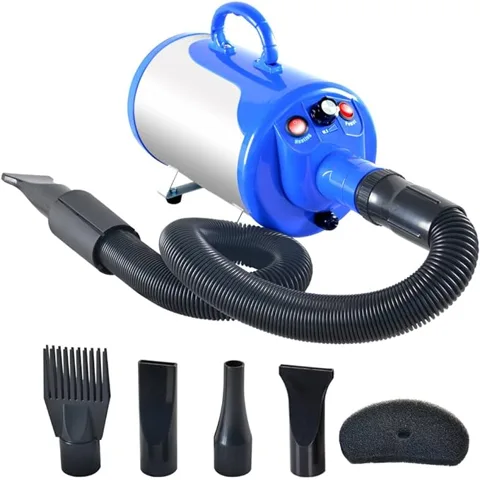
11. Shelandy Pet Hair Force Dryer
A high-velocity dryer does more for a double coat than any clipper. The Shelandy pushes air at 65 to 135 mph with adjustable power, two heat settings and four nozzles, and the hose stretches to 7 ft. It is one of the best-selling force dryers on Amazon, and Shelandy backs it with a one-year replacement warranty.
Good: variable airflow for nervous dogs, removes undercoat and cuts drying time. Not great: loud, like any force dryer; introduce it slowly and protect the dog’s ears.
Step-up dryer
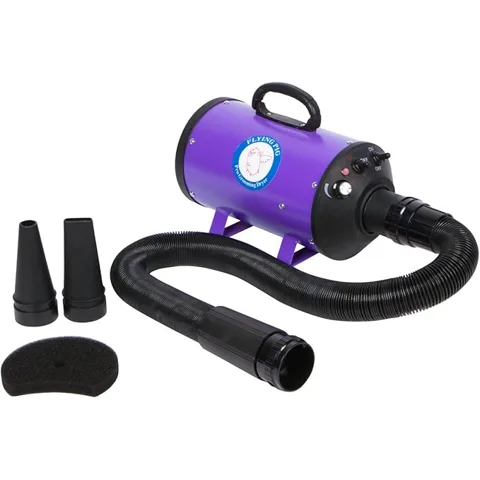
12. Flying Pig Flying One
Flying Pig is a grooming-supply brand, and the Flying One has a steel housing, a 10 ft hose and three heat settings from roughly 81°F to 160°F with adjustable airflow. The longer hose lets you work around a big dog without moving the dryer.
Good: steel body, long hose, wide heat range. Not great: two nozzles instead of four; use low heat on a dog’s skin.
Best undercoat rake
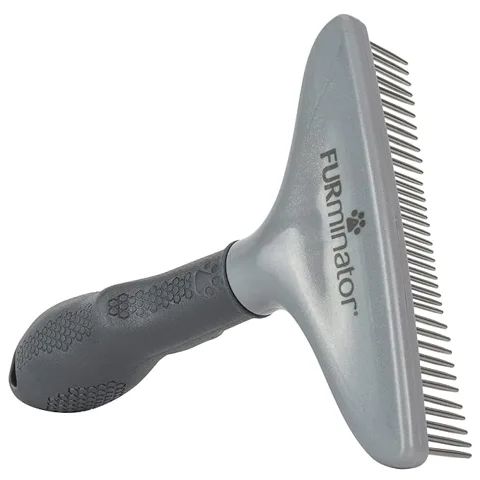
13. FURminator Grooming Rake
An undercoat rake loosens dead undercoat close to the skin. The FURminator rake has rotating metal teeth that roll through dense fur instead of dragging, and FURminator lists it for dense double coats. A Samoyed owner on Reddit called the undercoat rake their favorite daily tool: a few passes a couple of times a week saves time at bath day.
Good: gentle rotating teeth, works on any double coat. Not great: loosens hair but doesn’t finish the coat; follow with a slicker brush and a comb.
Best for shedding season
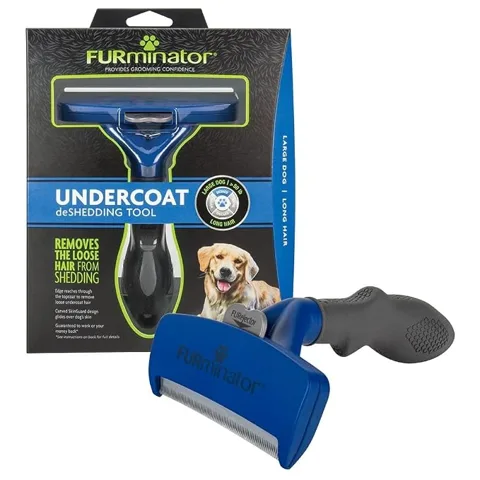
14. FURminator deShedding Tool, Large, Long Hair
This version is made for dogs over 50 lb with long hair. Its edge reaches through the topcoat and pulls out loose undercoat, and a button pushes the hair off the tool. During a coat blow it pulls out more undercoat per stroke than a rake, which is why it is one of the best-selling grooming tools on Amazon.
Good: fast at removing loose undercoat on big dogs. Not great: overuse thins the topcoat; a few minutes per area, once or twice a week in shedding season.
Best slicker brush
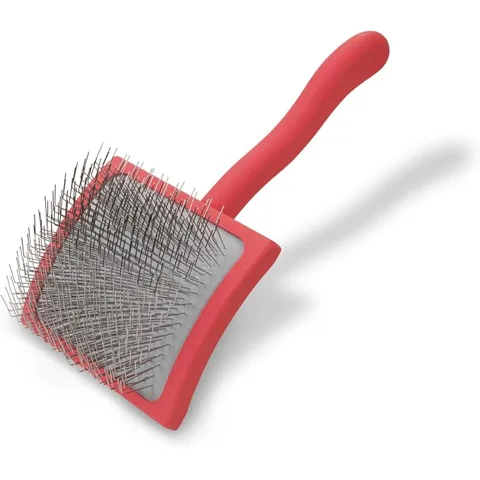
15. Chris Christensen Big G Slicker, Large
The Big G is the slicker groomers recommend most for doodles and double coats. Its long angled pins reach down to the undercoat, and it is the brush to use after the rake and before the clipper so the blade meets straight, separated hair. Brush in sections, from the skin out.
Good: long pins reach thick undercoat, holds the hair it removes. Not great: pressing hard causes brush burn; let the pins do the work.
Finishing tools and blade care
Best for blending
16. JASON 7″ Chunker Shears
Chunkers have wide teeth on one blade and remove hair in soft chunks instead of a straight line. They blend the step where a guard comb ends, thin out a heavy ruff and shape the feathering on goldens and Bernese without the shaved look. These are 7 in and made of 440C stainless steel.
Good: hides clipper lines, shapes thick coats that shouldn’t be clipped. Not great: pointed tips; keep them parallel to the skin and away from eyes and paws.
Best paw trimmer
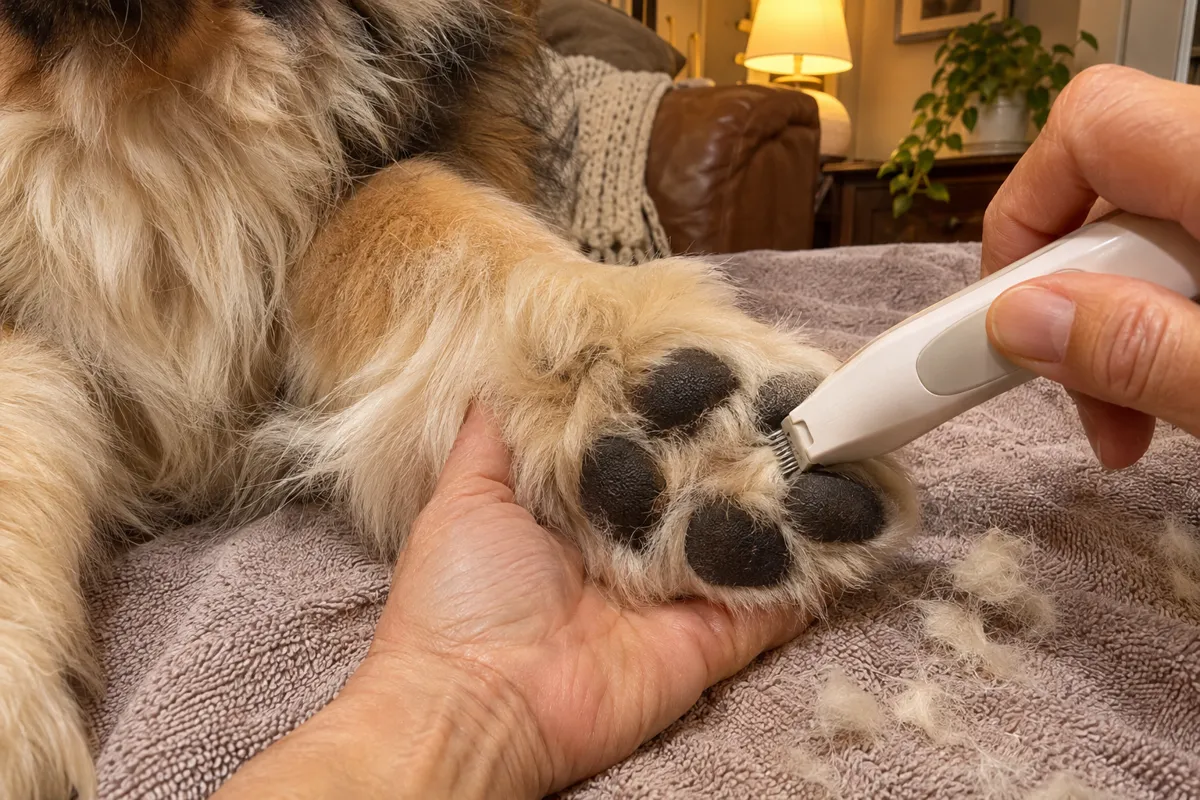
17. Mcbazel Micro Precision Trimmer
For a husky or Samoyed, this is the only clipper you may ever need. The 0.7 in blade fits between paw pads and around ears, the LED shows what you are cutting in dark fur, and the ceramic moving blade has rounded edges. It runs under 50 dB, which matters on a dog that won’t let a loud clipper near its feet.
Good: narrow blade, light, quiet. Not great: for detail work only; it won’t do legs or bodies.
Best blade spray
18. Clippercide 5-in-1 Spray
From the makers of Barbicide, Clippercide cleans, lubricates, cools, disinfects and prevents rust in one spray. The pressure blows hair out from between the teeth, which matters on a thick coat where undercoat packs the blade. It is EPA-registered as a disinfectant, useful if you clip more than one dog.
Good: clears packed hair and cools the blade between passes. Not great: some groomers say cooling sprays gum up blades over time; wipe the blade after spraying and still oil it.
Best blade oil
19. Andis Clipper Oil
A dry blade heats faster and pulls hair. Groomers on r/doggrooming oil lightly every 15 minutes and between every dog. Andis oil is clear and odorless, and one 4 oz bottle lasts a home groomer a long time. A drop on the front teeth and a drop on each side, run the clipper for a few seconds, wipe off the extra.
Good: longer blade life, cooler and quieter cutting. Not great: too much oil drips onto the coat; wipe the blade after every oiling.
How to clip a thick coat at home
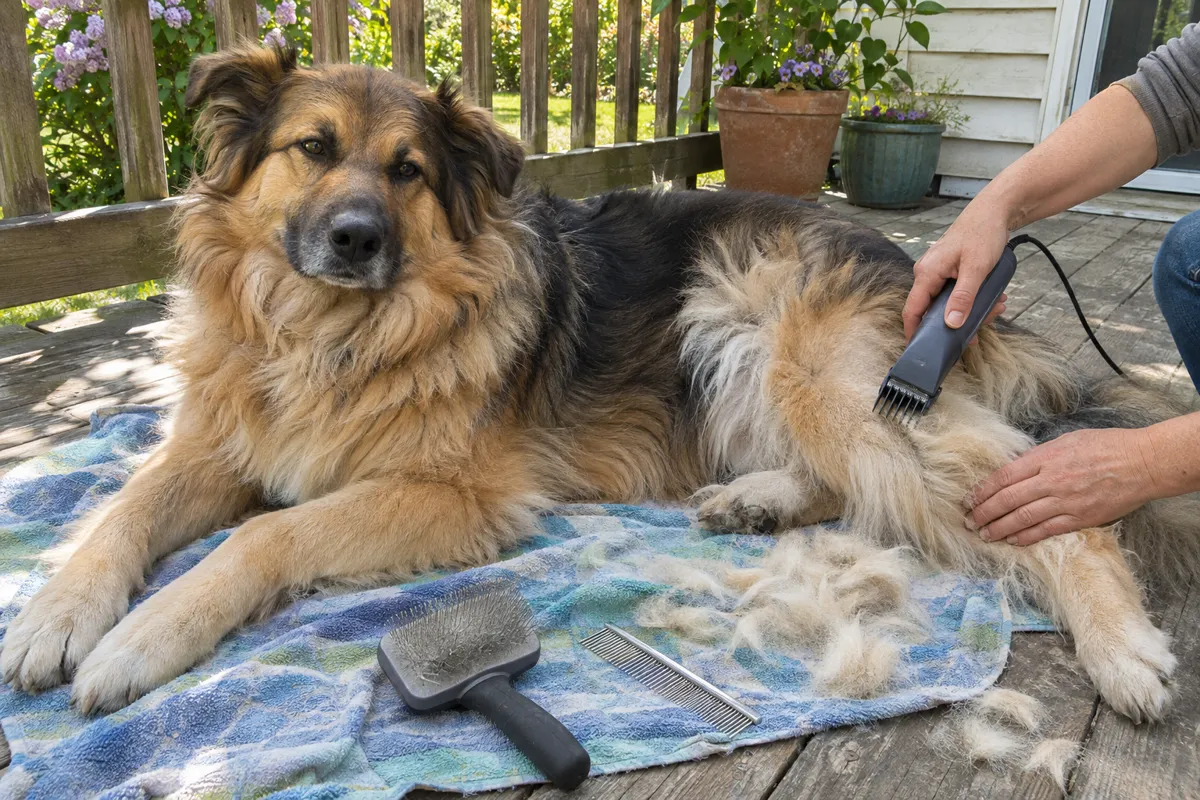
- Bathe and condition. Clippers drag through dirty coat, and dirt dulls blades.
- Dry completely with a high-velocity dryer. Blow the loose undercoat out while you dry. Never clip damp fur.
- Rake, then brush. Undercoat rake first, slicker second, then run a metal comb to the skin. If the comb catches, brush that spot again.
- Pick the length. Use a guard comb on a #30 or #10 blade for legs, pants and feathering on a double coat, and a 4FC or 5F for a doodle’s body.
- Clip with the grain. Follow the direction the hair grows, in long, even strokes, with the blade flat against the body. Going against the grain cuts shorter than the blade number.
- Check heat every few passes. Touch the blade to the inside of your wrist. If it feels hot to you, it is too hot for the dog. Swap blades or let it cool on a ceramic tile.
- Clean and oil every 15 minutes. Brush or spray the hair out of the teeth and add a drop of oil.
- Do the paws last. Clear the fur between the pads with a detail trimmer or a #10 on low speed, then blend leg lines with chunkers.
Stop and book a groomer if the dog is matted to the skin all over, panics at the clipper or has skin problems under the coat. A groomer who sees the dog every few months will also tell you if the coat is changing in ways your vet should see.
FAQ
What are the best dog clippers for thick coats?
The best dog clippers for thick coats are corded clippers with a rotary or brushless motor and detachable A5-style blades, such as the Andis UltraEdge Super 2-Speed, the Oster A5 Turbo or the Wahl KM10+. For light trims on feet and feathering, a cordless kit like the oneisall thick coat kit is enough.
What blade is best for thick dog hair?
For a body trim on thick hair, use a 4FC (3/8 in) or 5F (1/4 in) blade, or a stainless guard comb over a #30 or #10 blade to leave more length. A #7 skip-tooth blade gets under coarse, packed coats, and a #10 is the blade for paw pads and sanitary areas.
Can you shave a double-coated dog?
You should not shave a double-coated dog without a medical reason. The AKC says shaving removes insulation and sun protection, and some breeds, especially huskies, malamutes, Samoyeds and chows, can develop post-clipping alopecia, where the coat grows back slowly, patchy or not at all. Trim with guard combs instead.
Why do my clippers stop cutting thick fur?
Clippers stop cutting thick fur when the blade packs with undercoat, the blade is dull or dry, or the motor is too weak for the coat. Bathe, dry and rake the dog first, clean and oil the blade every 15 minutes, and have a dull blade sharpened or replaced. A magnetic-motor clipper may simply be too weak.
How do I keep clipper blades from overheating?
Keep clipper blades from overheating by rotating two or three blades, touching the blade to the inside of your wrist every few passes, spraying coolant between passes and oiling every 15 minutes. Setting a hot blade on a ceramic tile cools it faster.
Are cordless clippers strong enough for thick coats?
Cordless home clippers are strong enough for trims on thick coats: feet, pants, sanitary areas and feathering. For a full body clip on a large doodle or a thick-coated dog that needs a shave-down, a corded rotary or brushless clipper holds its speed and doesn’t run out of battery halfway.
Can I use human hair clippers on my dog?
Human hair clippers are not a good choice for a thick dog coat. They are built for finer, thinner hair, their blades clog in undercoat and they heat up quickly. Dog clippers have stronger motors and blades made for dense fur.
Should I bathe my dog before clipping?
Yes. Bathe and fully dry your dog before clipping. Clean, dry, brushed hair feeds through the blade evenly, and dirt dulls blades fast. The only exception is a dog so matted that a groomer shaves the mats off first with a short blade.
How often should a thick-coated dog be groomed?
Brush a thick double coat two or three times a week, and daily during the spring and fall coat blow. Bathe and blow out every 4 to 8 weeks. Doodles and other curly coats need a clip every 6 to 8 weeks.
Sources
- American Kennel Club: is it OK to shave your dog?
- Scott DW, Miller WH. Retrospective record review of canine postclipping hair follicle arrest. Veterinary Dermatology, 2012
- Andis: UltraEdge AGC Super 2-Speed specifications
- Oster: Turbo A5 2-Speed clipper
- Wahl: KM10+ clipper
- r/doggrooming: updated clipper recommendation thread
- r/doggrooming: best way to keep clipper blades cool
- r/doggrooming: bathe and blow out before shaving a thick coat
- r/samoyeds: owners on coat regrowth after shaving