Short answer: house spiders eat live insects and other small arthropods: flies, mosquitoes, moths, crickets, beetle larvae and sometimes other spiders. A spider left alone in your house feeds itself on whatever lands in its web or wanders past. If you keep one in a jar, feed it live flightless fruit flies while it is small, then house flies or small crickets no longer than half to three-quarters of its body. Never feed it bread, fruit, milk, meat, bees, wasps or bugs from outside, and take live prey out when it stops eating to molt. Adults need food only every few days to once a week, and they can survive months without it.
The chart below sorts common foods into safe staples, small amounts only and never feed. Search any food to see where it falls. Under the chart are notes on what each common indoor spider catches, how to feed one in a jar, water, a schedule by life stage, molting and a printable cheat sheet. Start with the box if you haven’t identified your spider yet.
Before you keep a house spider
Can a house spider eat it?
Safe staples (8)
- Safe to feed. The first food for spiderlings and tiny jumpers. Use flightless cultures: small D. melanogaster first, larger D. hydei as it grows.Ages instar 1–5#
- Safe to feed. Ideal prey for larger juveniles and adults. Flies can't hurt a molting spider. Buy feeder flies or pupae, not swatted ones.From instar 6#
- Safe to feed. Pinhead or small crickets no longer than half to three-quarters of the spider's body. Big ones bite back; remove any not eaten in an hour.From instar 4#
- Safe to feed. Small feeder roach nymphs suit larger spiders. Take out any not eaten within an hour: roaches can injure a spider getting ready to molt.From instar 6#
- Safe to feed. Small moths are natural prey for wolf and jumping spiders. Skip brightly colored moths, which may be toxic.From instar 6#
- Safe to feed. Soft feeder larvae that spider keepers list as regular prey for larger spiders. Pick one shorter than the spider's body.From instar 6#
- Safe to feed. A house spider left alone feeds itself on small household insects and other arthropods, catching them in a web or stalking them.All ages#
- Safe to feed. Spiders drink droplets. Mist one wall of the jar, not the spider, daily to every few days. Wolf spiders get most water from prey.All ages#
Small amounts only (7)
- Small amounts only. Lab house spiders were fed them and many larger spiders take them, but jumpers can be picky. Offer small ones and remove if ignored.From instar 6#
- Small amounts only. Web builders catch indoor mosquitoes on their own. Don't hand-feed swatted or sprayed ones: house insects may carry insecticide.From instar 4#
- Small amounts only. Most spiders hunt moving prey, but some take dead insects; recluses chose freshly killed prey in lab tests. Only fresh, never sprayed.All ages#
- Small amounts only. Jumping spiders drink flower nectar and prefer sugar water to plain water in lab tests. A tiny dilute drop is a treat, never a meal.From instar 4#
- Small amounts only. Most spiders avoid ants and jumpers dodge them on sight, though some cobweb spiders catch them. Don't add ants to a jar.From instar 6#
- Small amounts only. Wolf spiders eat small smooth caterpillars. Skip hairy, spiny or brightly colored ones and showy butterflies, which can be toxic.From instar 6#
- Small amounts only. Cobweb and funnel-web spiders in houses do catch brown marmorated stink bugs in their webs. Let it catch them; don't add them to a jar.From instar 6#
Never feed (9)
- Never feed. Stinging prey can kill the spider. Extension and keeper guides say never to offer bees, wasps or anything else that might injure it.
- Never feed. Both carry defensive chemicals. Wolf spiders dropped ladybird beetles within seconds, and jumping spiders rejected fireflies.
- Never feed. Cellar spiders do hunt other spiders, but prey spiders fight back. Never feed one spider to another or house two together.
- Never feed. Insects from outside or around the house may carry insecticide, parasites or other contaminants. Buy feeders instead.
- Never feed. Too big for house spiders. Prey should be about half the spider's body length; oversized prey bites back and can kill it.
- Never feed. A spider that stops eating may be about to molt. Remove live prey: crickets and roaches can injure or nibble a helpless molting spider.
- Never feed. Small spiders and their prey can drown in a water bowl. Mist instead, or fill any dish with gravel so they can climb out.
- Never feed. Spiders eat insects and other arthropods, not plants or crumbs. Fruit and food scraps just grow mold, which can kill a spider in a jar.
- Never feed. Not spider food. Small house spiders take live insects, and meat, ham, cheese, milk or cat and dog food only spoils in the jar.
Sources
- Myth: You swallow spiders in your sleep — Burke Museum, University of Washington (Rod Crawford)
- Myth: House spiders belong back outside — Burke Museum, University of Washington (Rod Crawford)
- Myth: Daddy-longlegs would be deadly — Burke Museum, University of Washington (Rod Crawford)
- Myth: Hobo spiders are aggressive — Burke Museum, University of Washington (Rod Crawford)
- Daddy long legs spider — Natural History Museum, London
- House spider — Natural History Museum, London
- Spiders in your home — Natural History Museum, London
- Kentucky Bugs: Care and Feeding (wolf spiders) — University of Kentucky Department of Entomology
- ENTFACT-622: Common Spiders Found Around Homes and Buildings — University of Kentucky Department of Entomology (Townsend, Yeargan)
- Exotic Bugs: Care and Feeding (tarantulas) — University of Kentucky Department of Entomology
- Commonly Encountered Pennsylvania Spiders — Penn State Extension (Steve Jacobs)
- Spiders (Backyard Gardener 177) — University of Arizona Cooperative Extension (Jeff Schalau)
- Pest Notes: Widow Spiders and Their Relatives — UC IPM, University of California (R. S. Vetter)
- Insect and Spider Bites: When to Worry — National Capital Poison Center (Poison Control)
- Tarantula caresheet — Amateur Entomologists' Society
- Feeding — British Tarantula Society
- Responses to Starvation in the Spiders Lycosa lenta and Filistata hibernalis (Ecology 55: 576-585, 1974) — J. F. Anderson, Ecology (record via FAO AGRIS)
- Jumping spiders (Araneae: Salticidae) that feed on nectar (Journal of Zoology 255: 25-29, 2001) — Jackson, Pollard, Nelson, Edwards, Barrion (catalog record)
- Phytophagy in jumping spiders: the vegetarian side of a group of insectivorous predators (Peckhamia 137.1, 2016) — M. Nyffeler, University of Basel
- The common house spider, Parasteatoda tepidariorum, maintains silk gene expression on sub-optimal diet (PLOS ONE, 2020) — Miller et al., PLOS ONE (PubMed Central)
- Mating Behavior, Reproductive Biology, and Development of Phidippus princeps (2002) — Robertson and Stephens, Transactions of the Illinois State Academy of Science
- Firefly femmes fatales acquire defensive steroids (lucibufagins) from their firefly prey (PNAS, 1997) — Eisner et al., PNAS (PubMed Central)
- Chemical defense of the ladybird beetle Epilachna paenulata (Chemoecology 16, 2006) — Camarano, Gonzalez, Rossini, Chemoecology
- Spider-Ant Associations: An Updated Review of Myrmecomorphy, Myrmecophily, and Myrmecophagy in Spiders (Psyche, 2012) — P. E. Cushing, Psyche
- Predation of the invasive brown marmorated stink bug by spiders associated with human dwellings (ESA 2015 abstract) — Poling, Morrison, Bryant, Quinn, Leskey (USDA-ARS), Entomological Society of America
- Poisonous spiders as reluctant hunters (on Sandidge, Nature 2003) — Science News Explores
- Regal Jumping Spider Care Guide — PetSmart (retailer)
- Pet Arthropods and Molting — PetSmart (retailer)
- Pet Jumping Spider Care Sheet — Bugs in Cyberspace (feeder and spider seller)
- General Jumping Spider Care Guide — Bug Frenzy (spider seller)
- Keeping a Pet Jumping Spider — Bug Frenzy (spider seller)
- Jumping Spider (Phidippus sp.) Care Sheet — The Tye Dye Iguana (pet store)
- ENTFACT-631: Brown Recluse Spider — University of Kentucky Department of Entomology (Michael F. Potter)
What house spiders eat in your home
Spiders “eat mainly insects, other spiders, and related arthropods, not plants,” University of Arizona Cooperative Extension writes, and the more insects a building has, the more spiders it tends to hold. They catch prey in one of two ways. Web builders wait for prey to hit their silk. Hunters stalk or chase it. That difference decides how you feed one in captivity.
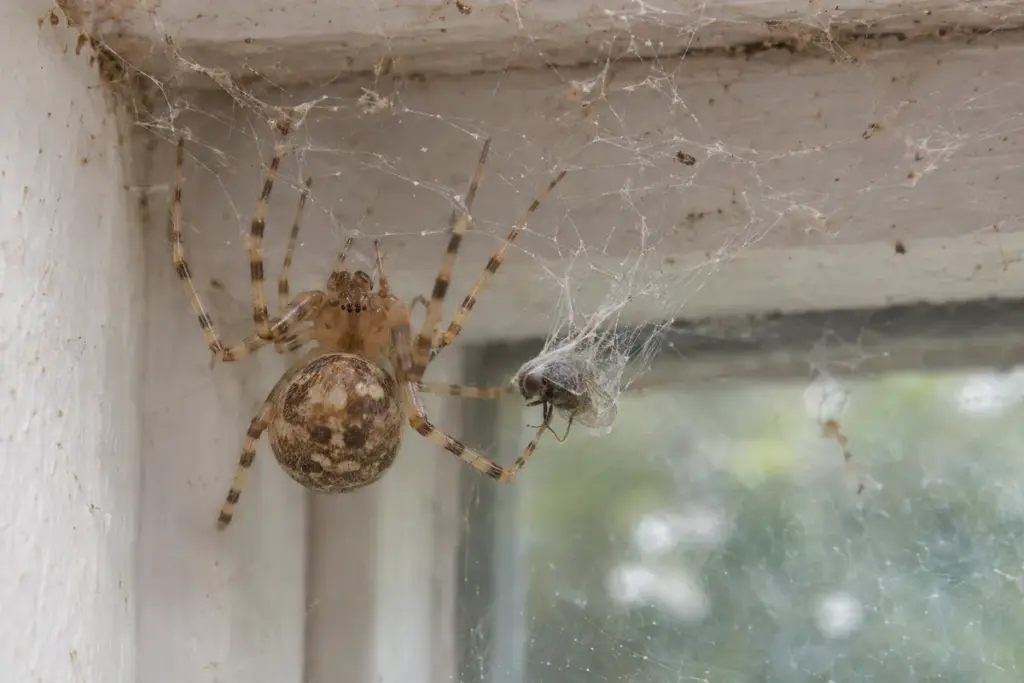
Common house spider (American house spider)
Parasteatoda tepidariorum builds a tangled cobweb in room corners, windows and basements, the University of Kentucky notes. It takes whatever flies or crawls into the web: flies, mosquitoes, moths, crickets and beetle larvae. A USDA study found cobweb spiders around houses catching invasive brown marmorated stink bugs. In a 2020 PLOS ONE lab study, house spiders fed one small cricket a week gained weight, while spiders fed five small flies a week held steady or lost weight.
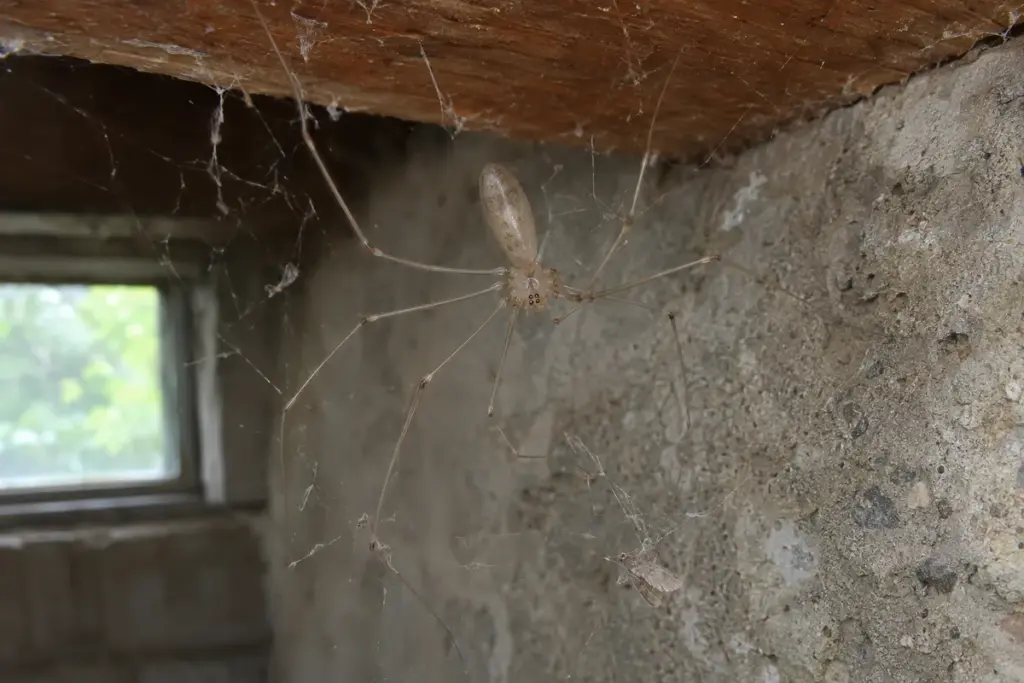
Cellar spider (daddy long legs)
Cellar spiders hang upside down in loose, messy webs in dark corners. The Natural History Museum in London says they eat “any insects found in homes” and also hunt other spiders, “including surprisingly large house spiders.” They can’t survive winter outdoors, so they stay in homes, garages and sheds.
Giant house spider and barn funnel weaver
These large brown spiders (Eratigena and Tegenaria) build flat sheet webs with a funnel retreat in garages, sheds, lofts and wall cavities. The ones you see crossing the floor in autumn are mostly males looking for females, the Natural History Museum notes; they generally die after mating. Funnel weavers catch crawling insects that walk onto the sheet, and the USDA study found them catching stink bugs too.
Jumping spiders and wolf spiders
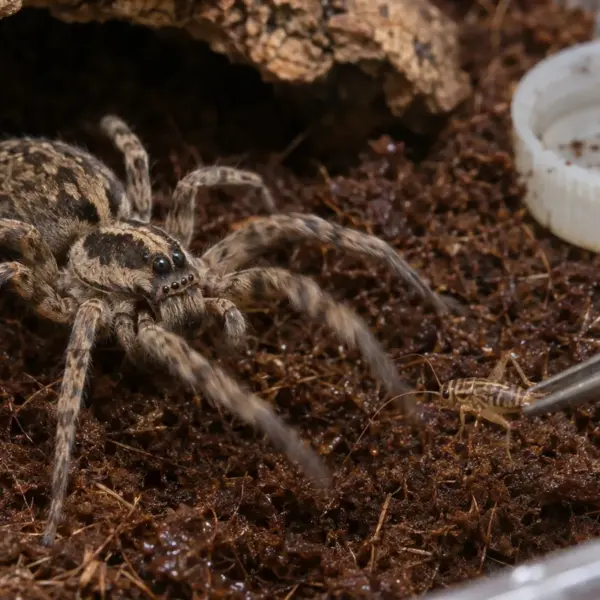
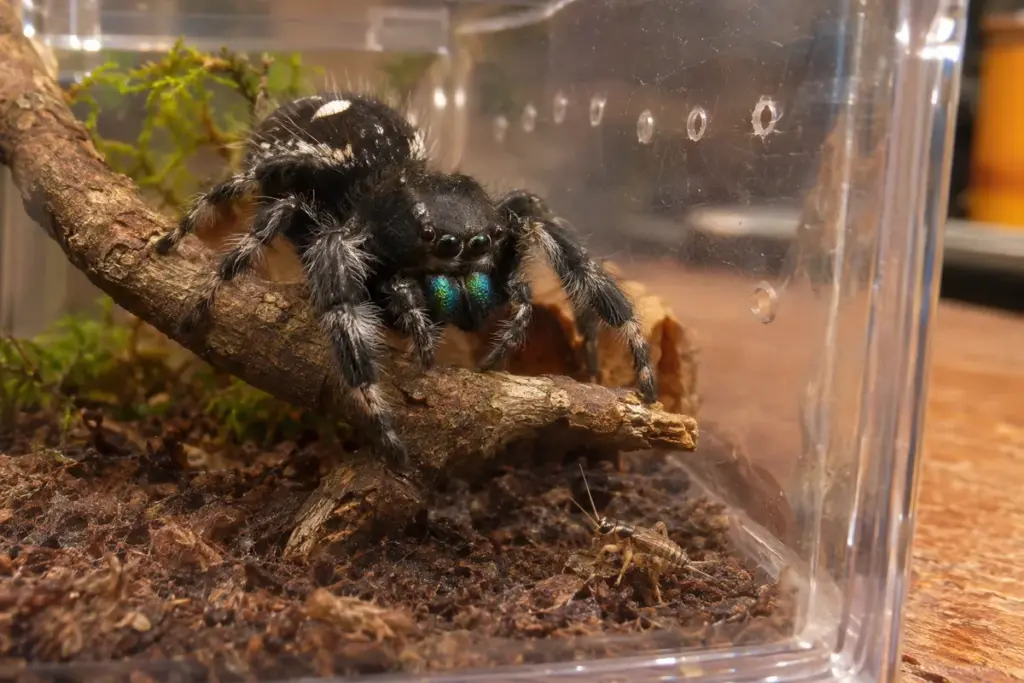
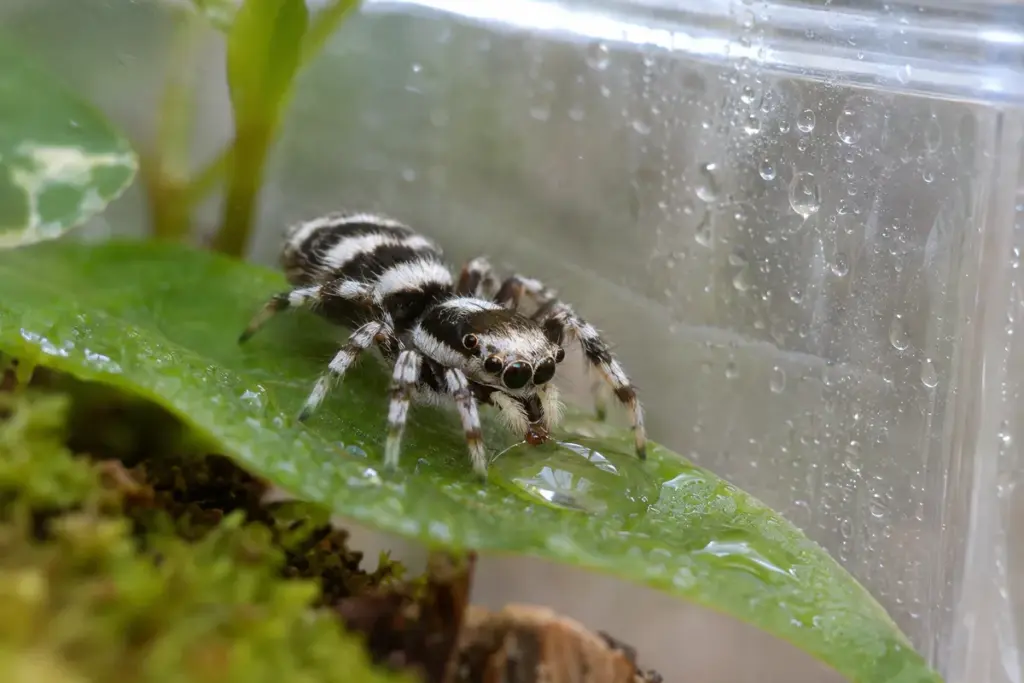
Jumping spiders such as the zebra spider and the bold jumper stalk prey and pounce from a short distance. Wolf spiders run it down on the ground. Neither uses a web to catch food. Both are outdoor spiders that wander indoors, mostly in autumn, and both need moving prey they can see. Jumping spiders also drink flower nectar: in a study in the Journal of Zoology, all 90 species tested fed from flowers in the lab.
What to feed a house spider you keep
Feed live, captive-bred insects sized to the spider. Pet stores and online feeder suppliers sell all of these:
- Flightless fruit flies. The standard first food for spiderlings and small spiders. Start with small Drosophila melanogaster and move to the larger D. hydei.
- House flies and blowflies. Good prey for larger juveniles and adults. A 2002 lab study raised jumping spiders on fruit flies and house flies alone. Flies can’t hurt a spider that is about to molt, which makes them the safest prey to leave in the jar.
- Small crickets. Pinhead crickets for small spiders, small crickets for adults. Keep them to half to three-quarters of the spider’s body length: the University of Kentucky uses half for wolf spiders, and Bugs in Cyberspace warns that a cricket that is too large can “bite back.”
- Small moths, waxworms and small roach nymphs. Extras for larger spiders. Skip brightly colored moths, which the British Tarantula Society warns may be toxic.
- Mealworms, now and then. Lab house spiders accepted them, but jumping spiders are often picky about them.
Web builders take prey from the web, so give a cobweb or cellar spider twigs or a frame to build on and drop prey into the silk. Hunters need to see prey move, so release it on the floor or a branch of the enclosure.
Foods that harm house spiders
- Bread, fruit, crumbs and cheese. Spiders don’t eat plants or scraps. Food left in a jar grows mold, which can kill a spider, Bug Frenzy’s care guide warns.
- Milk, meat and pet food. Not spider food. House spiders take live insects, and meat or milk only spoils in the enclosure.
- Bees and wasps. Stinging prey can kill the spider. The University of Kentucky says never to feed wasps, bees “or anything else that might injure the spider.”
- Ladybugs and fireflies. Both carry defensive chemicals. In lab tests, wolf spiders dropped ladybird beetles within seconds, and bold jumping spiders rejected all 41 fireflies offered to them.
- Insects from outdoors or around the house. They may carry insecticide, parasites or other contaminants. Buy feeders.
- Other spiders. Prey spiders fight back. Never put two spiders in one container.
- Superworms and oversized prey. Large prey bites, and a big worm or cricket can kill a small spider.
How to feed a house spider in a jar
- Use a ventilated container. The University of Kentucky keeps wolf spiders in a pint jar with an escape-proof, ventilated lid. Add twigs for a web builder or a hunter to climb.
- Pick prey by size. Half to three-quarters of the spider’s body length for crickets and roaches. Flies and moths can be up to the length of its body.
- Offer one to three prey. Drop flies into the web for a web builder. For a hunter, release prey where it can see it.
- Give it an hour. If the spider ignores the prey, take out crickets and roaches. A spider that refuses food may be about to molt.
- Check the abdomen. A plump, rounded abdomen means it has eaten enough. PetSmart says overfed jumping spiders can fall and rupture their abdomens.
- Clean out remains. Remove leftover prey parts and dead insects so mold can’t grow.
Water: mist, don’t pour
Spiders drink droplets from the walls of the enclosure, from plants and from their own legs. Mist one wall of the jar daily to every few days, not the spider itself, and let the droplets dry by the end of the day. PetSmart warns that water in a spider’s book lungs can be fatal, and Bug Frenzy warns that mold from over-misting can kill a spider. A deep water dish can drown a small spider and its prey. If you use a dish, fill it with gravel so both can climb out, or offer water on a damp cotton ball, as the 2002 lab study did. Wolf spiders get most of their water from prey, the University of Kentucky notes, but still benefit from misting.
House spider feeding schedule by life stage
Spiders grow by molting, so the schedule runs by instar (the stage between two molts) instead of weeks. Spiderlings and small juveniles eat two or three times a week, the rate used in the 2002 jumping spider lab study. Adults need less: jumping spiders every 2 to 3 days, web builders about one cricket a week, wolf spiders one small prey every other day. Keeper guides disagree on frequency, so the table uses the lower end and the abdomen check, since overfeeding causes more harm than a missed meal.
| Age | What it looks like | Food | Amount | How often | Notes |
|---|---|---|---|---|---|
| Spiderlings | Instars 1–3. Tiny, just out of the egg sac | Flightless fruit flies (D. melanogaster) | 1–3 fruit flies | 2–3 times a week | Give each spiderling its own container. A tiny water droplet or a light mist on the wall supplies water. |
| Small juveniles | Instars 4–5. Bigger than a fruit fly, smaller than a house fly | Larger fruit flies (D. hydei), then pinhead crickets | 1–3 prey, each no more than half to three-quarters of the spider's body length | 2–3 times a week | Molts come often at this size. Skip food when it hides in a silk retreat and stops eating. |
| Large juveniles | Instar 6 to subadult. Close to adult size, still molting | House flies, small crickets, small moths | 1–2 prey no longer than its body | Every 2–3 days | Feed when the abdomen looks thin. A plump, rounded abdomen means wait; overfed jumping spiders can fall and rupture the abdomen. |
| Adults | Full size; in house spiders, males wander in autumn looking for females | House flies, blowflies, small crickets, moths, small roaches, mealworms | 1–3 prey, each no bigger than the spider's body | Every 2–7 days, by type | Jumpers 1–3 prey every 2–3 days; web builders about one cricket a week; wolf spiders one small prey every other day. Starved lab spiders lived 7–9 months. |
| Molting | Before, during and just after a molt: stops eating, hides in a silk retreat, lies still | Nothing | Water droplets on the wall only | None until about a week after | Remove live prey and don't disturb it. Wait for the fangs to darken and harden; small spiders often eat again sooner. |
| Female with egg sac | Hides in its hammock or web, laying or guarding a silk egg sac | Normal adult prey once it comes out | 1–3 prey sized to the spider | May refuse food for days | Hides while laying or guarding eggs. Normal; don't disturb the sac. House spider females can make several egg sacs. |
Judge by the abdomen, not the calendar. A thin, shrunken abdomen means feed. A round one means wait.
Molting, egg sacs and changes with age
- Before a molt: the spider stops eating, hides in a silk retreat and may look dull. Remove live prey. The Amateur Entomologists’ Society warns that crickets left in can “nibble it while it is helpless.”
- After a molt: the new skin and fangs are soft. Keeper guides range from 2 to 3 days to at least a week before feeding again. Wait about a week; small spiders often eat sooner.
- Females with egg sacs: a female may hide and refuse food for days while laying or guarding eggs. That is normal. House spider females can make several egg sacs.
- Old age: giant house spider males usually die after mating in autumn, and many females live into a second year, the Natural History Museum notes. A spider that stops eating late in life may simply be old.
Can spiders eat fruit, sugar or honey?
Not fruit. Spiders eat insects and other arthropods, and fruit in a jar only grows mold. Sugar is a partial exception for jumping spiders. A 2001 study in the Journal of Zoology found jumping spiders spent more time drinking 30% sugar water than plain water, and a 2016 review by Martin Nyffeler of the University of Basel describes nectar as a supplement to their insect diet. A tiny drop of dilute sugar water is a treat for a jumping spider, never a meal. No source supports sugar for cobweb, cellar or funnel-web spiders.
How long can a house spider go without food?
Months. In a 1974 study in the journal Ecology, starved adult wolf spiders lived an average of 208 days and a web-building spider 276 days, and both cut their metabolic rate by 30 to 40% while starving. That is why house spiders survive in tidy homes with few insects and why a spider in a jar can skip a week of meals around a molt. Water matters more: keep misting even when the spider isn’t eating.
Spider diet myths
- “You swallow spiders in your sleep.” No case is on record in scientific or medical literature, says Rod Crawford, arachnology curator at the Burke Museum. Spiders hunt insects, not open mouths.
- “Spiders drink milk or eat crumbs.” Spiders eat arthropods. Milk and crumbs left near a spider only spoil and grow mold.
- “Daddy long legs are the most venomous spider.” The Burke Museum calls this “a full-fledged Urban Legend.” Cellar spider venom has “nothing special about it.”
- “Put house spiders back outside.” True house spiders mostly do poorly outdoors, the Burke Museum notes, and cellar spiders can’t survive winter outside. Wolf spiders and most jumping spiders found indoors are outdoor spiders and can go back out.
Signs something is wrong
- Refuses food and hides: usually a coming molt or an egg sac. Remove live prey and leave it alone. Some spiders stay in a molting hammock for up to 3 weeks.
- Shrunken, wrinkled abdomen: hungry or dehydrated. Mist the wall and offer a small prey item.
- Lying still for hours: often a molt in progress. Don’t touch it or open the jar until it moves again.
- Mold or a sour smell in the jar: too wet or food left in. Remove remains, mist less and improve ventilation.
Printable house spider feeding chart
The one-page cheat sheet lists the safe, small-amounts and never foods, the prey size rule and the schedule. Print it for a jar on a desk or a classroom bug project.
Supplies for feeding a house spider
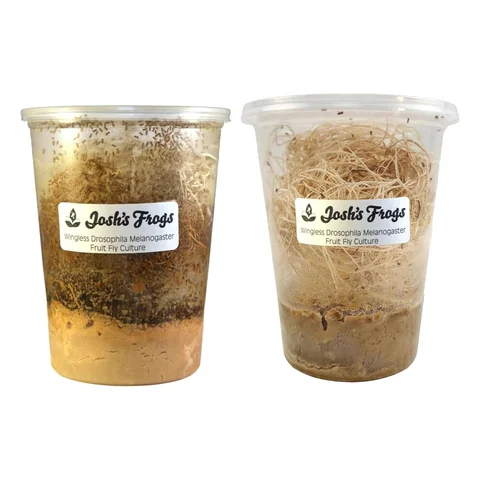
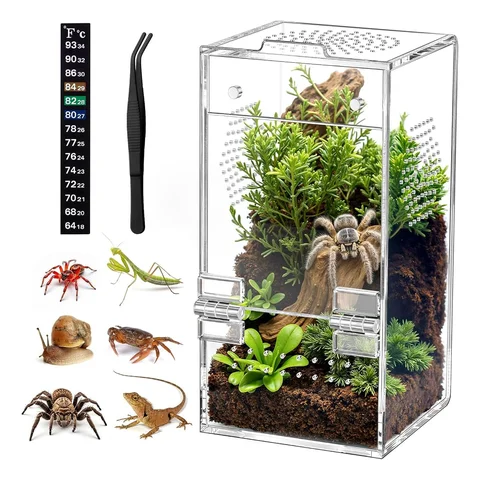
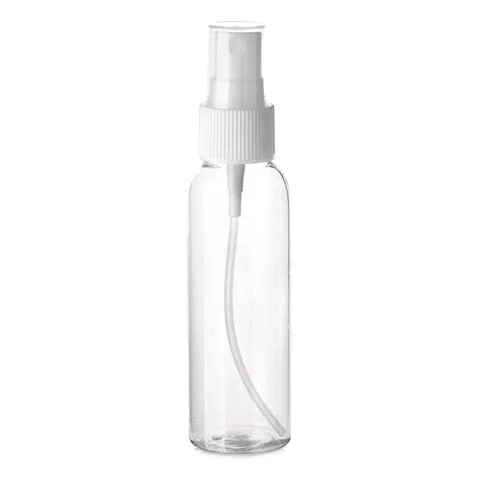
A short-term jar needs little: a ventilated container, a mister and a source of small live prey. Fruit fly cultures keep producing flies for weeks, which covers spiderlings and small jumping spiders.
More about spiders
- Eight-legged animals beyond spiders
- The world’s most dangerous arachnids, ranked by actual risk
- Forest spiders and green spiders
- Insect identification quiz
- All spider articles
Frequently asked questions
What do house spiders eat?
House spiders eat live insects and other small arthropods that land in their webs or wander past: flies, mosquitoes, moths, crickets, beetle larvae and other spiders. Cobweb and funnel-web house spiders also catch stink bugs. They don't eat plants, crumbs or food scraps.
What can I feed a house spider in a jar?
Feed live, captive-bred insects: flightless fruit flies for small spiders, then house flies, small crickets, small moths or waxworms for larger ones. Crickets and roaches should be no more than half to three-quarters of the spider's body length. Remove uneaten crickets after about an hour.
How often should I feed a house spider?
Spiderlings and small juveniles eat two or three times a week. Adult jumping spiders eat every 2 to 3 days, web builders about one cricket a week and wolf spiders one small prey every other day. Skip a feeding whenever the abdomen looks plump.
Do house spiders drink water?
Yes. Spiders drink droplets from walls, plants and their own legs. Mist one wall of the enclosure daily to every few days, not the spider itself, and avoid deep water dishes, which can drown small spiders.
Can spiders eat fruit or bread?
No. Spiders eat insects and other arthropods, not plants or scraps. Fruit and bread left in an enclosure grow mold, which can kill a spider.
Can spiders eat sugar or honey?
Jumping spiders drink flower nectar and, in lab tests, preferred sugar water to plain water, so a tiny drop of dilute sugar water is an occasional treat for them. It is never a meal, and no source supports sugar for cobweb, cellar or funnel-web spiders.
Can spiders eat dead insects?
Most spiders want moving prey, but some scavenge: brown recluses chose dead prey over live in lab tests. If you offer a dead insect, it should be freshly killed and never one that was sprayed with insecticide.
How long can a house spider live without food?
Months. In a 1974 lab study, starved adult wolf spiders lived an average of 208 days and a web-building spider 276 days, cutting their metabolic rate by 30 to 40%. Water matters more than food over short periods.
Why is my spider not eating?
It is most likely about to molt, guarding an egg sac or already full. Remove live prey, keep misting and leave it alone. After a molt, wait about a week before offering food again.
What do baby spiders eat?
Spiderlings eat tiny live prey. Flightless fruit flies are the standard first food, offered two or three times a week, with each spiderling in its own container so siblings don't eat each other.
Do house spiders eat other spiders?
Some do. Cellar spiders (daddy long legs) hunt other spiders, including large house spiders. Never house two spiders together or feed one spider to another.
Should I put a house spider outside?
True house spiders mostly do poorly outdoors, and cellar spiders can't survive winter outside, so a garage, shed or basement is a better spot. Wolf spiders and most jumping spiders found indoors are outdoor spiders and can be released outside.
Sources
- Common Spiders Found Around Homes and Buildings, University of Kentucky Entomology
- Kentucky Bugs: Care and Feeding, University of Kentucky Entomology
- Spiders, University of Arizona Cooperative Extension
- Spiders in your home, Natural History Museum, London
- Myth: House spiders belong back outside, Burke Museum
- The common house spider maintains silk gene expression on sub-optimal diet, PLOS ONE
- Mating Behavior, Reproductive Biology, and Development of Phidippus princeps, Transactions of the Illinois State Academy of Science
- Phytophagy in jumping spiders, Peckhamia, University of Basel
- Pest Notes: Widow Spiders and Their Relatives, UC IPM
- Insect and Spider Bites: When to Worry, Poison Control