As an Amazon Associate we earn from qualifying purchases. Disclosure
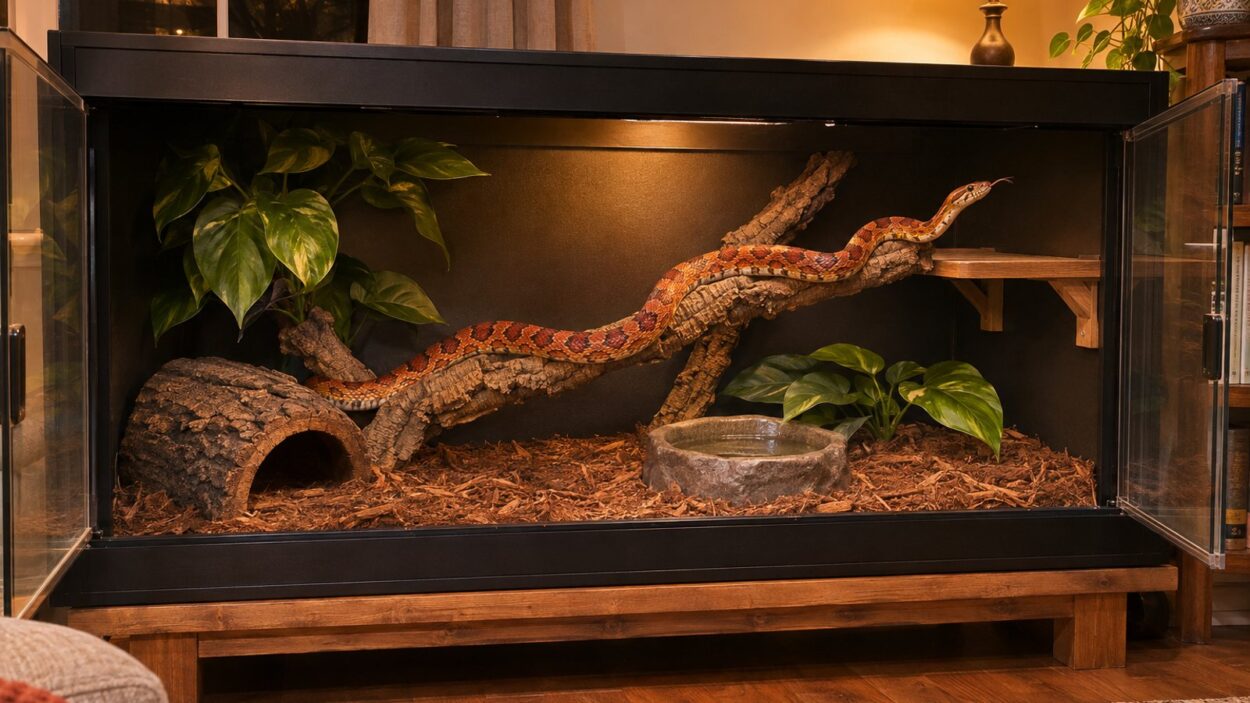
The best enclosure for a corn snake is a front-opening 4 x 2 x 2 foot enclosure (48 x 24 x 24 inches, about 120 gallons), which is the adult minimum ReptiFiles sets for the species. My pick for most keepers is the Reptile Habitats 4x2x2 PVC enclosure: PVC holds heat and humidity better than glass, and it ships flat and light enough to carry up stairs alone. If you want glass on every side, get the REPTIZOO 120 gallon glass terrarium. A hatchling can start in a small, front-opening glass tank such as the REPTI ZOO 30 x 12 x 12 and move up when it passes about 2 feet.
My corn snake, a wild-type female I named Paprika, came home in 2019 as a 9-inch hatchling in a deli cup. She went into a 20-gallon long glass tank with two hides and a water dish. Three months later the tank was empty at feeding time. She had pushed out through the gap where the thermostat probe cord ran under the screen lid, a space I would have sworn was too small for anything alive. I found her the next morning curled inside a running shoe in the hall closet. Every enclosure decision since then has started with one question: where could she get out?
Best corn snake enclosures at a glance
| Pick | Best for | Size (in) |
|---|---|---|
| Reptile Habitats 4x2x2 PVC | Most adults | 48 x 24 x 24 |
| REPTIZOO 120 Gallon Glass | Full view, bioactive | 48 x 24 x 24 |
| RepWild 4x2x2 PVC | PVC with a door lock included | 48 x 24 x 24 |
| Reptile Habitats 5x2x2 PVC | Adults over 5 feet | 60 x 24 x 24 |
| REPTI ZOO 50 Gallon Glass | Subadults, small adults | 36 x 18 x 18 |
| REPTI ZOO 24 x 18 x 12 Glass | Juveniles | 24 x 18 x 12 |
| REPTI ZOO 20 Gallon Long Glass | Hatchlings | 30 x 12 x 12 |
| REPTIZOO Dimming Thermostat | Controlling the heat lamp | Controller |
| Zoo Med ReptiSun T5 HO 5.0 Hood | UVB for a 4-foot enclosure | 36 long |
| Sliding Glass Door Ratchet Lock | Locking sliding doors | Lock |
What size enclosure does a corn snake need?
Corn snakes (Pantherophis guttatus) grow from 8 to 12 inches at hatching to 3 to 5 feet as adults, with most landing between 4 and 4.5 feet. They live 15 to 20 years or more, so the adult enclosure is a long-term purchase. You can check how far along your snake is with our snake years calculator.
The ReptiFiles enclosure chapter sizes the enclosure from the snake’s length:
- Length of the enclosure: at least the snake’s length
- Depth (front to back): at least half the snake’s length
- Height: at least 2 feet
For a 4-foot corn snake that works out to 48 x 24 x 24 inches, which ReptiFiles also gives as the absolute minimum for any adult. A snake over 5 feet needs a 5 or 6 foot enclosure. Bigger is always better: corn snakes use every inch, and they climb more than most people expect.
| Snake length | Stage | Enclosure |
|---|---|---|
| Under 20 in | Hatchling | 30 x 12 x 12 in (20 gallon long) |
| 20 to 30 in | Juvenile | 24 x 18 x 12 in or 36 x 18 x 18 in |
| 30 to 36 in | Subadult | 36 x 18 x 18 in (40 gallon breeder size) |
| 3 to 5 ft | Adult | 48 x 24 x 24 in minimum |
| Over 5 ft | Large adult | 60 x 24 x 24 in or 72 x 24 x 24 in |
Older care sheets list a 20 gallon tank for adults, then a 40 gallon breeder (36 x 18 x 18 inches). Both are now considered too small for a grown corn snake. The 40 gallon breeder still works as a step between the hatchling tank and the adult enclosure.
Can a baby corn snake live in an adult enclosure?
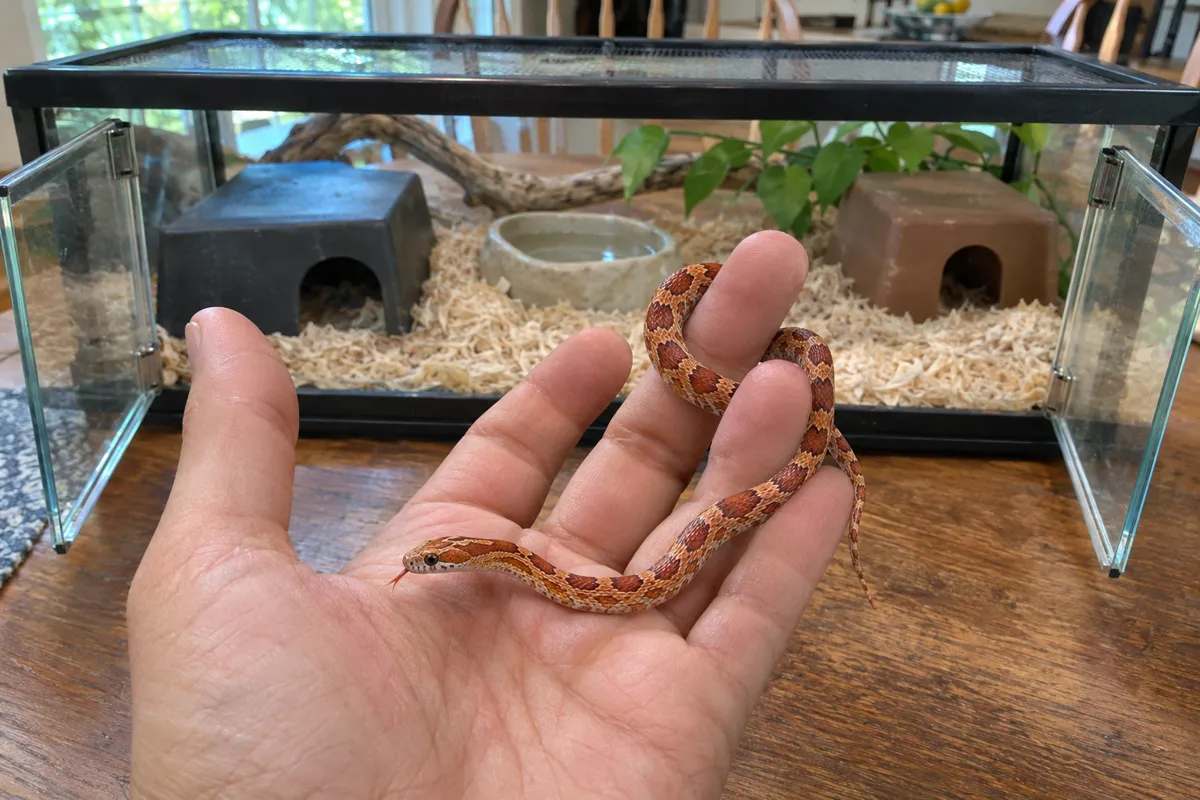
Yes, if the enclosure is escape-proof and full of cover. Young corn snakes stay hidden because everything wants to eat them, and in a big, bare enclosure a hatchling may hide all the time and refuse food. ReptiFiles says a young corn snake can go into a well-secured adult enclosure from day one, with plenty of hides, plants and clutter.
The catch is security. A hatchling is the width of a pencil. Large enclosures have more seams, cord ports and door gaps, and sliding glass doors often leave a gap of a few millimeters where the panels overlap. That is why ReptiFiles suggests a small glass grow-out tank with hinged front doors for snakes under a year old. Hinged doors close against a frame and leave no gap.
I kept Paprika in the 20 gallon long until she was about 22 inches, then moved her to a 36 x 18 x 18. She went into a 4 x 2 x 2 at about two and a half years old, at roughly 3.5 feet. With a hatchling today I would do the same: a small hinged-door tank first, then straight to the adult size.
The best enclosures for adult corn snakes
All four open from the front. A snake reads a hand coming down from above as a predator, so a top-opening tank makes every feeding and cleaning more stressful. Front doors also let you reach in without moving the lamps on the screen top.
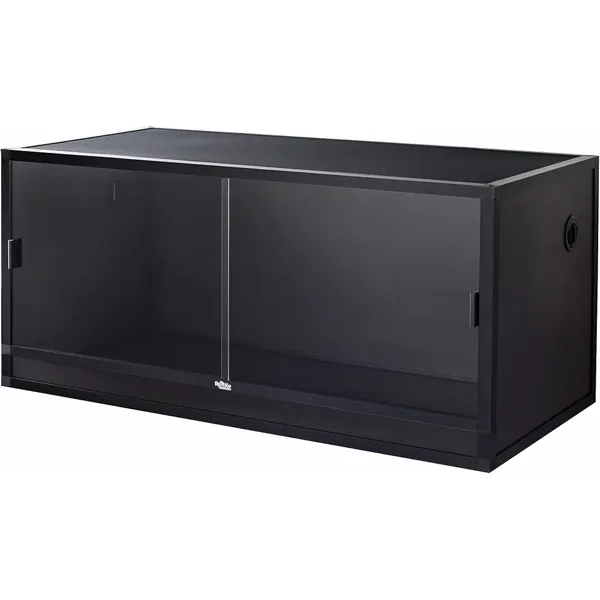
Best overall
1. Reptile Habitats 4x2x2 PVC Enclosure
This is the enclosure I would buy for an adult corn snake today. It meets the 48 x 24 x 24 inch minimum, and the solid PVC back, sides and floor hold warmth in a cool room, so the basking lamp runs at a lower setting. The solid walls also help with humidity, which corn snakes need more of than many keepers assume. Reptile Habitats is the in-house brand of Dubia.com. The V3 version has covered cord ports, which matters for an escape artist: every cord should go through a port, never under the lid.
- Exterior 48 3/16 x 24 3/16 x 24 3/16 in, 120 gallons
- PVC back, sides and floor, glass front doors, aluminum frame
- Heavy-duty screen top for a heat lamp and UVB fixture
- Ships flat; goes together with a mallet
Good: holds heat and humidity, light to move, covered cord ports. Not great: not waterproof out of the box (the maker says to seal the bottom seams with aquarium silicone), and the screen-top support bars are not rated to carry weight.
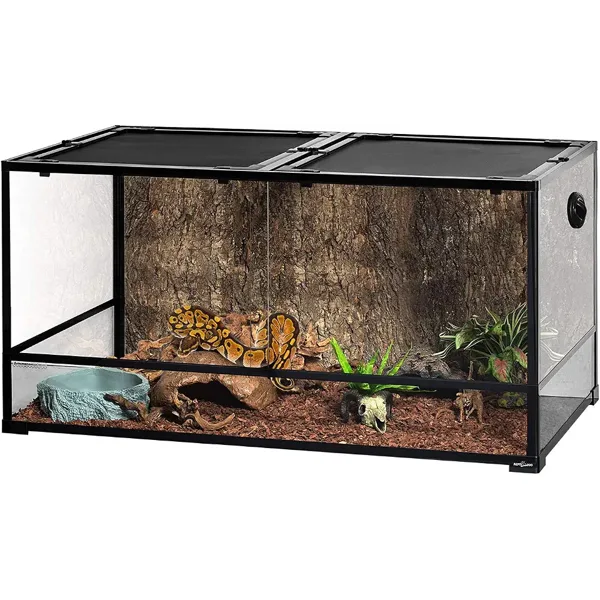
Best glass
2. REPTIZOO 120 Gallon Glass Terrarium
Same size as the top pick, in tempered glass on every side. Pick glass if you want to watch your snake from the side of the room, or if you plan a bioactive build with soil, live plants and cleanup insects. The base is watertight up to the door line, so damp substrate stays inside without sealing anything. The trade-off is weight: plan on two people and a stand built for a heavy glass tank. Glass also loses heat faster than PVC, so in a cold room you may need a higher-wattage bulb.
- 48 x 24 x 24 in, 120 gallons
- Tempered glass, sliding front doors with a lock
- Screen top, raised base, cable grommet for cords
Good: full view, watertight base, lock included. Not great: heavy; sliding doors need to be closed fully every time, because a corn snake will find a door left a finger’s width open.
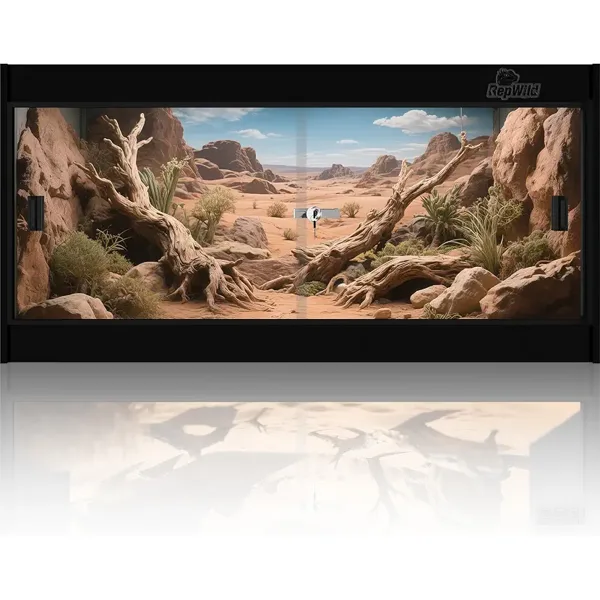
PVC with a lock
3. RepWild 4x2x2 PVC Enclosure
Another 48 x 24 x 24 inch PVC enclosure, with sliding glass doors and a lock in the box. That makes it a good fit for homes with kids or cats, where the risk is someone else opening the door. Like the top pick, it holds heat better than glass and has a heavy-duty screen top for lights. It has far fewer reviews than the Reptile Habitats model, which is why it sits third.
- 48 x 24 x 24 in, 120 gallons
- PVC panels, glass sliding doors with a lock
- Heavy-duty screen top
Good: lock included, holds heat. Not great: fewer reviews than the top pick; check the sliding door overlap for gaps before a young snake goes in.
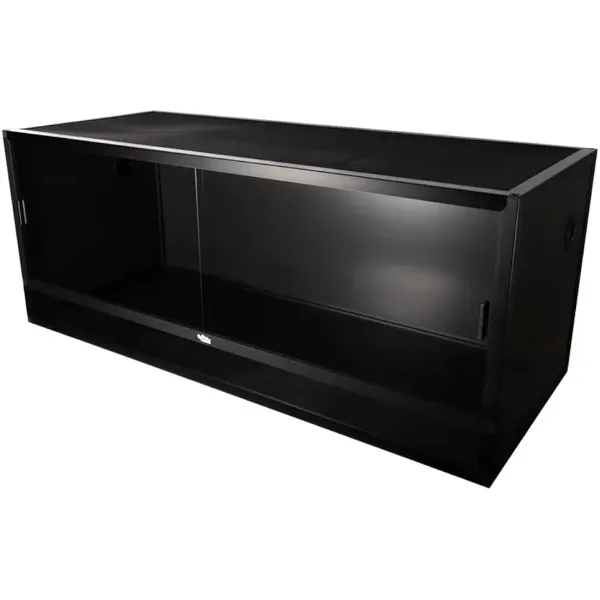
Best for snakes over 5 feet
4. Reptile Habitats 5x2x2 PVC Enclosure
Some corn snakes, most often big females and some line-bred morphs, pass 5 feet. By the ReptiFiles length rule, a 5-foot snake needs an enclosure at least 5 feet long. This is the same V3 design as the top pick with an extra foot of length, and that extra foot makes the gradient between the warm and cool ends easier to hold. If you have the wall space, it is also a good choice for an average snake: more room means more branches, more hides and more to explore.
- 60 x 24 x 24 in, 150 gallons
- PVC panels, glass doors, aluminum frame
- Heavy-duty screen top
Good: room for the biggest corn snakes. Not great: needs a 5-foot stand or wall; few Amazon reviews so far.
Best enclosures for hatchlings, juveniles and subadults
These three are glass with hinged front doors. Hinged doors close flush against the frame, which leaves a small snake fewer places to push through than sliding doors do. All three are also useful later as a quarantine tank or a hospital tank for a sick snake.
Best for hatchlings
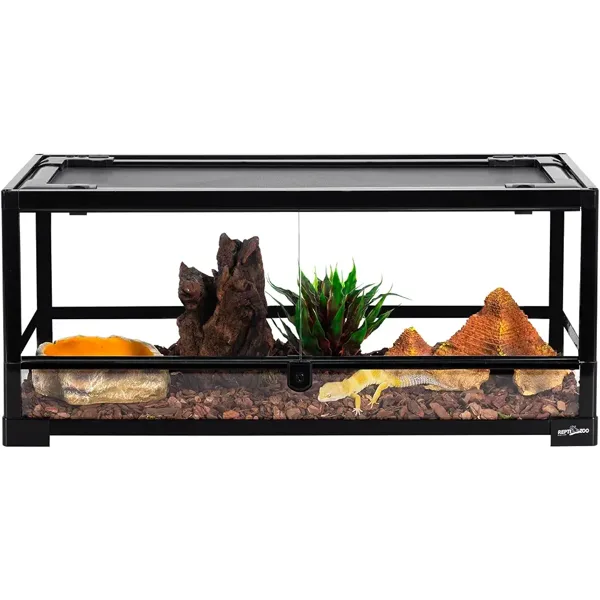
5. REPTI ZOO 20 Gallon Long Glass Terrarium
The 30 x 12 x 12 inch size is the classic 20 gallon long, the tank most corn snake hatchlings start in. Front doors make it easy to drop in a pinky mouse without lifting the lid, and the length gives enough room for a warm hide at one end and a cool hide at the other. It holds a hatchling until it reaches about 20 inches, usually in its first year.
- 30 x 12 x 12 in, 20 gallons
- Glass, hinged front doors, screen top
- Sold as escape-proof, with a locking lid
Good: right size for a hatchling, front access. Not great: 12 inches of height leaves little room to climb; plan the upgrade within a year.
Best for juveniles
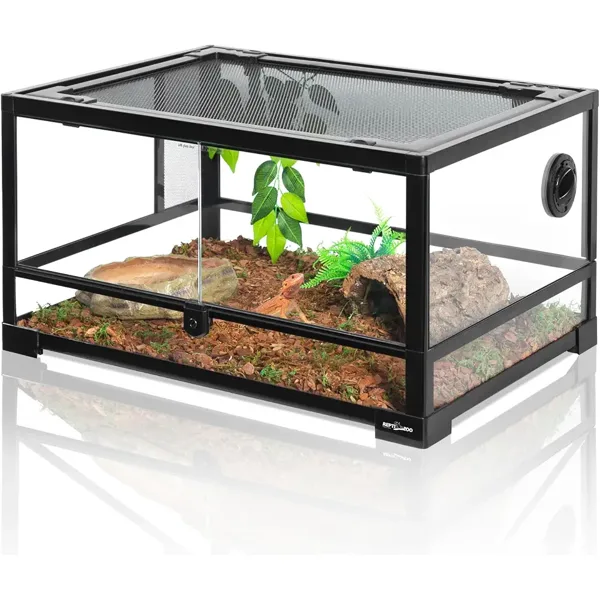
6. REPTI ZOO 24 x 18 x 12 Glass Terrarium
Also 20 gallons, but shorter and deeper than the 20 long. The 18-inch depth gives a juvenile room to turn and lets you fit two hides side by side with a water dish between them. It also fits on a desk or dresser where a 30-inch tank will not. Use it for a hatchling or a juvenile up to about 2 feet.
- 24 x 18 x 12 in, 20 gallons
- All glass, double hinged front doors
- Screen top, sold as escape-proof
Good: compact, deep floor, front access. Not great: shorter than the snake’s length rule allows once it passes 2 feet.
Best for subadults
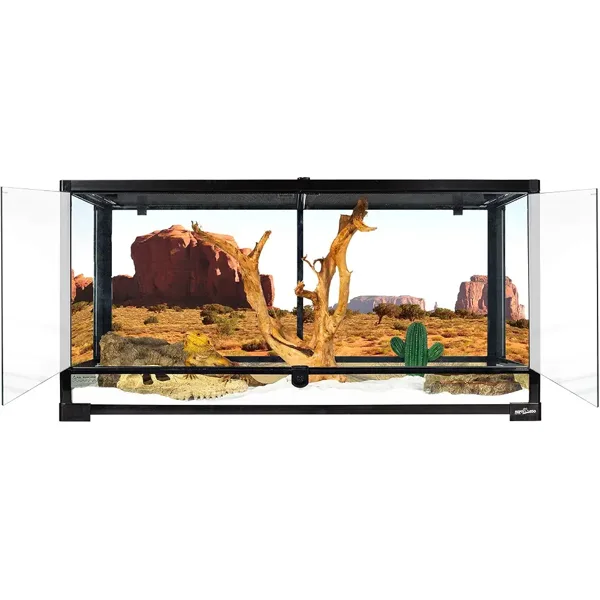
7. REPTI ZOO 50 Gallon Glass Terrarium (36 x 18 x 18)
This is the size of a 40 gallon breeder, the old adult standard, built as a front-opening terrarium. It is the right next step for a snake between 2 and 3 feet, and a small adult male that tops out near 3 feet can live in it. For an average 4-foot adult it is too short and too low. The base is watertight to the door line, and a raised frame leaves room under the floor if you use a heat mat.
- 36 x 18 x 18 in, 50 gallons
- Glass, two hinged front doors, screen top
- Closable cable ports, waterproof base
- Ships flat; assembles without tools
Good: large step up from a hatchling tank, front access, sealed cord ports. Not great: no lock listed; below the 24-inch height and depth an adult needs.
PVC vs glass for a corn snake
Both work. The choice comes down to your room and what you want to see.
| PVC | Glass | |
|---|---|---|
| Heat | Holds heat; lower bulb wattage | Loses heat; may need more wattage |
| Humidity | Holds it well | Drops fast under a screen top |
| Weight | Light, ships flat | Heavy; two people to move |
| View | Front only | All sides |
| Waterproof | Seal the seams first | Sealed base |
| Snake feels | Covered, more secure | Exposed unless you add a background |
In a cool or dry house, pick PVC. In a warm room, or for a bioactive build, glass is fine. Cover the back and sides of a glass enclosure with a background or dark paper so the snake has walls it cannot see through.
Ignore the 10 gallon starter kits sold for snakes. A 10 gallon tank is 20 x 10 x 12 inches, smaller than a hatchling needs within a few months, and most kits come with a top-opening lid and a heat rock or a heat mat with no thermostat.
How to make a corn snake enclosure escape-proof
Corn snakes are the best-known escape artists in the pet trade. They test every edge of the enclosure at night, and a snake can push through any gap its head fits into. Most escapes come through one of four places:
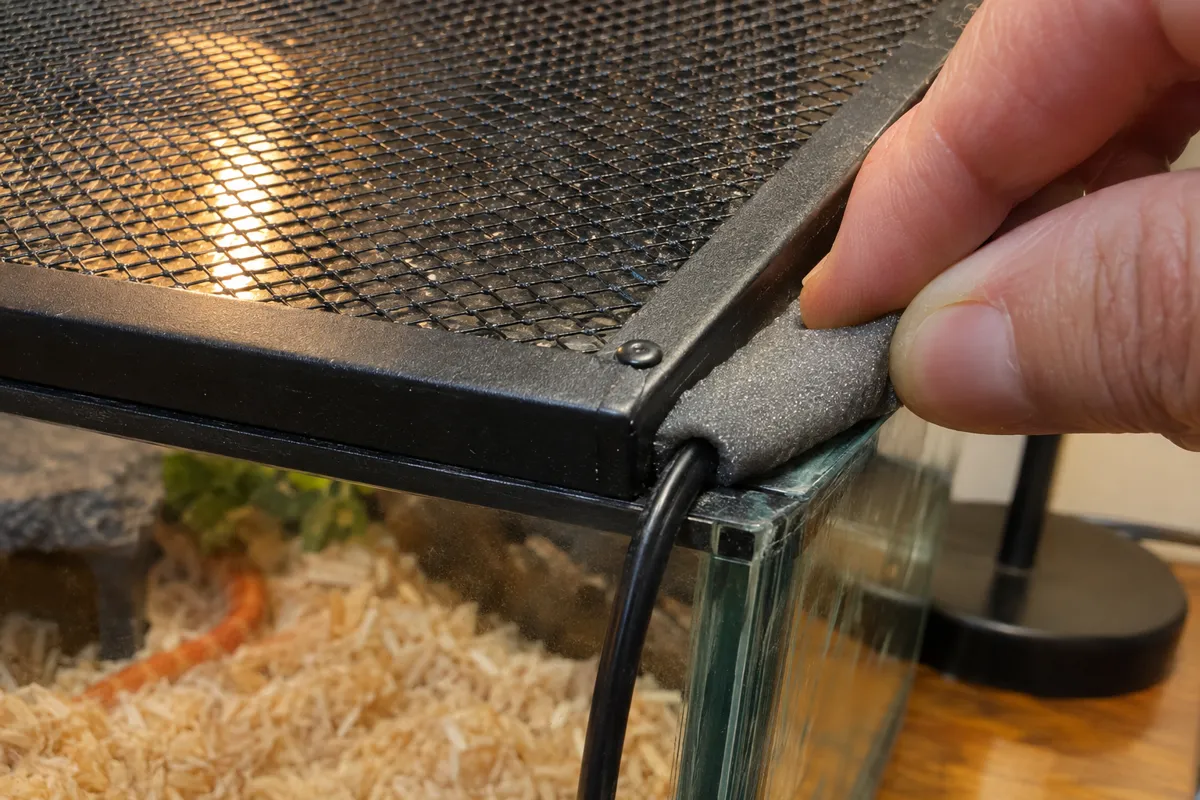
- Cord gaps. A cord running under the screen lid lifts the lid off the frame. That is how Paprika got out. Run every cord through a closable cable port, or fill the gap around it with foam weatherstrip.
- Sliding doors. Sliding glass doors overlap in the middle, and an unlocked pair can be pushed apart from inside. Lock them every time.
- Screen tops. A screen top that clips in can be pushed up by an adult snake. Check that every clip seats and the screen sits flat.
- Lid weight. Never trust a heavy object on a lid. Snakes push lids up from one corner, and the weight just slides.
Best lock for sliding doors
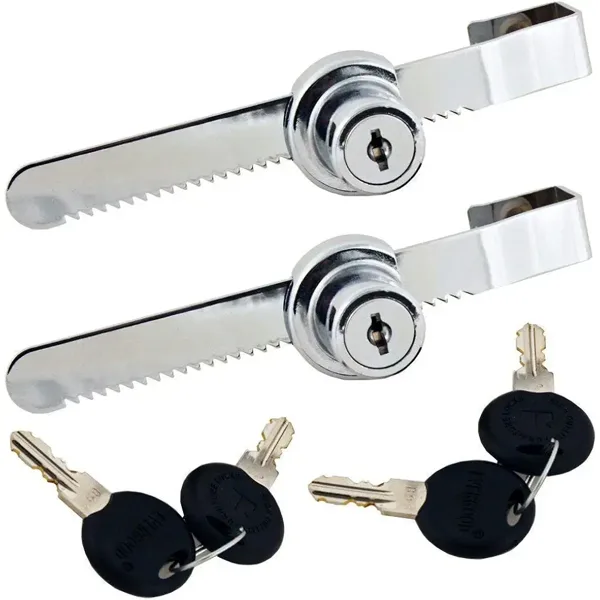
8. Sliding Glass Door Ratchet Lock (2 Pack)
These are display-case locks: a clamp slides onto the edge of the front glass panel and a ratchet bar holds the rear panel shut, so the two doors cannot slide apart. They fit most sliding-door glass terrariums that ship without a lock, or replace a lost one. The pack has two locks keyed alike, so one key opens both enclosures if you keep two snakes.
- Clamps onto the glass, no drilling
- Two locks, keyed alike
- Chrome finish
Good: stops doors from being pushed apart, keeps kids and guests out. Not great: check your door glass thickness against the listing; not for hinged doors.
Heat, light and humidity inside a corn snake habitat
A corn snake regulates its body temperature by moving between warm and cool spots, so the enclosure needs a gradient from one end to the other. The ReptiFiles heat and lighting chapter sets these targets:
| Zone | Target |
|---|---|
| Basking surface | 90°F (32°C) |
| Cool end | 75 to 82°F (24 to 27°C) |
| Night | Room temperature; heat off for most adults |
| Humidity | 65 to 75% average |
| Light cycle | 13 hours in summer, 11 hours in winter |
Heat from above. ReptiFiles recommends a halogen or incandescent heat bulb over the mesh at one end, because it heats the way the sun does. A heat mat under the floor works, but it warms the snake’s belly instead of its back, and it is the source of most belly burns when it runs without a thermostat. Whatever you use, put it on a thermostat. Corn snakes do not need a red or blue night light; it only disrupts their day and night cycle.
Best thermostat for a heat lamp
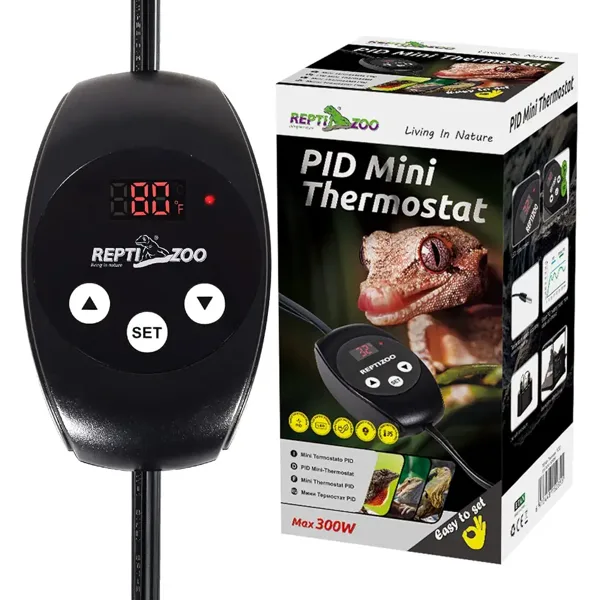
9. REPTIZOO Dimming Thermostat
A heat bulb needs a dimming thermostat, not an on/off one. An on/off thermostat switches the bulb on and off all day, which flickers the light and shortens the bulb’s life. A dimming thermostat lowers the power instead, so the lamp stays on and the basking spot holds steady. This one is a PID controller, which adjusts the power in small steps as the temperature nears the target, and it remembers your settings after a power cut.
- Dimming control for heat bulbs and heaters
- PID control, setting memory after power loss
- Probe goes on the basking surface
Good: steady basking temperature, made for bulbs. Not great: you still need a separate digital thermometer to check the cool end.
UVB. Snakes can live without UVB, and decades of captive breeding prove it. ReptiFiles still recommends it for every corn snake, citing work by Frances Baines and a study on how UVB affects the growth of hatchling corn snakes. The target is a UV index of 2.0 to 3.0 at the basking spot, from a T5 HO tube such as a Zoo Med ReptiSun 5.0 or an Arcadia Forest 6%. Replace the tube every 12 months.
Best UVB for a 4x2x2
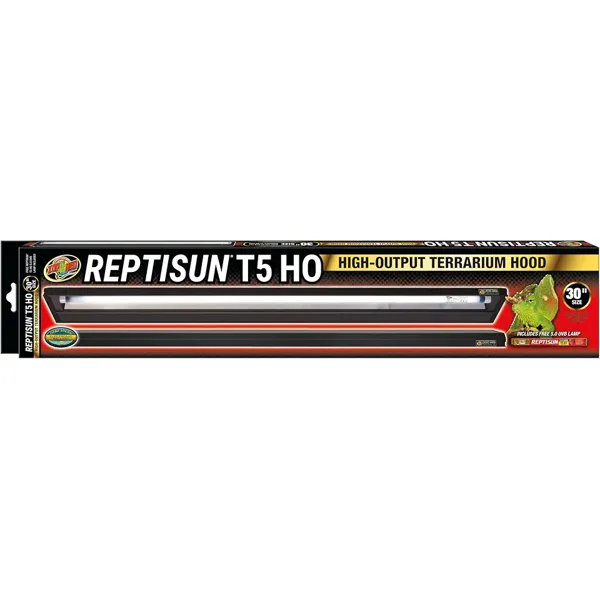
10. Zoo Med ReptiSun T5 HO 5.0 Terrarium Hood (36″)
The ReptiSun 5.0 is one of the two tubes ReptiFiles names for corn snakes. The 36-inch hood covers about three quarters of a 4-foot enclosure. Run it from the warm end and the cool end stays shaded, so the snake can choose how much UVB it gets. It sits on top of the screen; set the basking branch at the distance the lamp chart gives for mesh mounting.
- 36-inch T5 HO hood with a 5.0 UVB tube
- Sits on a screen top
- Reflector built into the hood
Good: the UVB strength ReptiFiles recommends for corn snakes. Not great: on a 3-foot enclosure, get a shorter hood instead so one end stays shaded.
Humidity. ReptiFiles puts corn snake humidity at 65 to 75%, higher than many older care sheets. A screen top lets moisture escape, so use a substrate that holds water, such as a soil and sand mix or cypress mulch, instead of only dry aspen. Add a humid hide: a closed hide with damp sphagnum moss inside. Paprika shed in pieces twice in her first winter in the 20 gallon long. After I added a humid hide with damp moss, every shed came off in one piece.
How to furnish a corn snake enclosure
A bare enclosure makes a corn snake hide more and move less. Fill it.
- Two hides minimum, one at the warm end and one at the cool end, both tight enough that the snake touches the walls. Add a third, humid hide in the middle.
- Branches and a ledge. Corn snakes climb, especially as adults. Run cork or grapevine branches up toward the basking spot and add a ledge near the top.
- Plants and clutter, real or fake, so the snake can cross the enclosure without being in the open.
- A water bowl big enough to soak in.
- Substrate 3 to 4 inches deep. Corn snakes burrow.
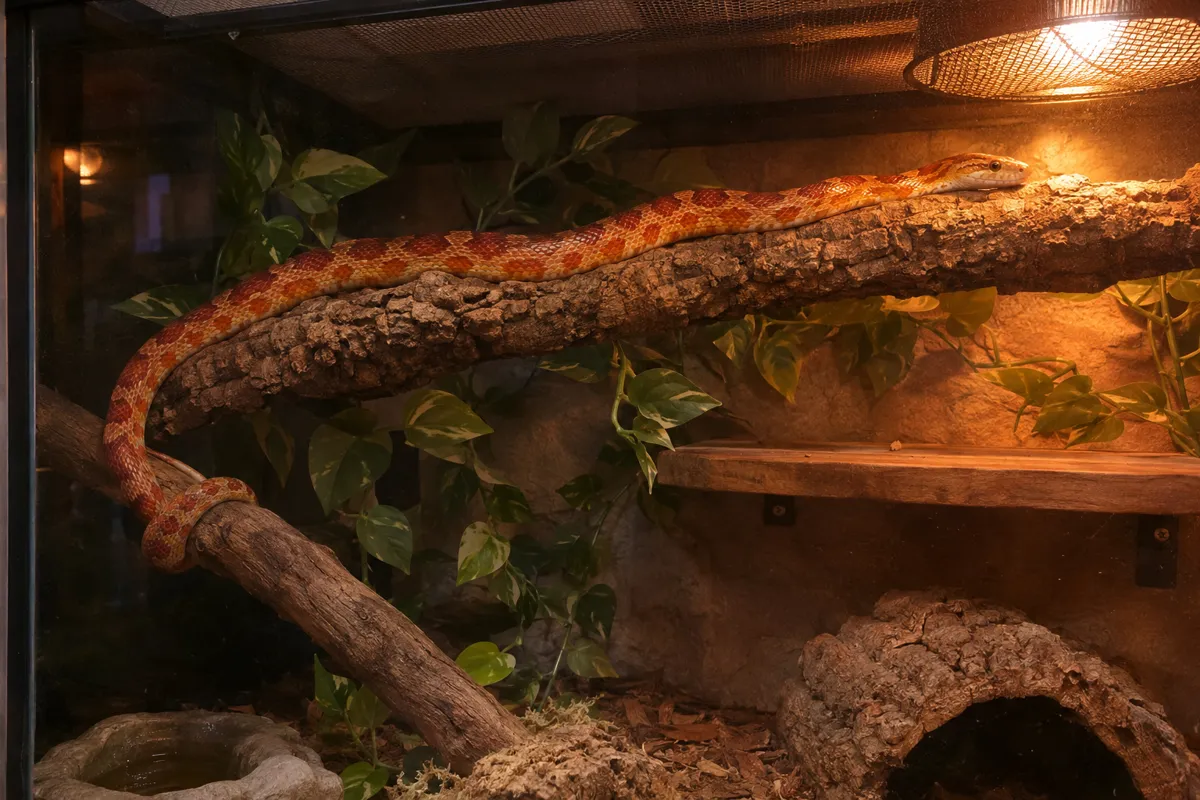
When Paprika first went into the 4 x 2 x 2, I set it up like her old tank: two hides, a water bowl, a flat floor. She spent most of the first week in one hide. Then I added two cork branches running up to a ledge under the lamp. Within a few days she was out every evening, stretched along the top branch near the basking spot. She uses the top third of the enclosure more than any other part of it.
For food and feeding schedules, see what to feed a baby snake. If you have not picked a species yet, our What Snake Should I Get? quiz compares corn snakes with 30 other pet species, and characteristics of a corn snake covers how they live in the wild.
Common corn snake enclosure mistakes
- Keeping an adult in a 20 or 40 gallon tank. A 4-foot snake cannot stretch out in either.
- Top-opening tanks. They stress the snake and make feeding harder.
- Cords run under the lid. The most common escape route.
- Heat with no thermostat. Heat mats and bulbs both overheat without one.
- Heat rocks. They burn snakes. Do not use them.
- A bare floor. A snake with nowhere to hide stops eating.
- Two snakes in one enclosure. Corn snakes are solitary, and cohabiting them risks stress, fighting over food and cannibalism. One snake, one enclosure.
FAQ
Is a 40 gallon tank big enough for a corn snake?
Only for a juvenile or a small adult under about 3 feet. A 40 gallon breeder is 36 x 18 x 18 inches. An average adult corn snake of 4 to 4.5 feet needs at least 48 x 24 x 24 inches, about 120 gallons.
What size tank does a baby corn snake need?
A 20 gallon long (30 x 12 x 12 inches) or a 24 x 18 x 12 inch front-opening tank. A hatchling can also go straight into an adult enclosure if it is escape-proof and packed with hides and cover.
Can a corn snake enclosure be too big?
No. A big enclosure is only a problem when it is empty. Fill it with hides, branches and plants, and a corn snake of any size will use it.
Is glass or PVC better for a corn snake?
PVC holds heat and humidity better and weighs less. Glass gives you a full view and a watertight base for bioactive builds. In a cool house, pick PVC.
Do corn snakes need a heat lamp?
They need a warm basking spot of about 90°F. A halogen or incandescent bulb over the mesh, on a dimming thermostat, is the method ReptiFiles recommends. A heat mat on a thermostat also works.
Do corn snakes need UVB?
They can survive without it, but ReptiFiles recommends UVB for every corn snake, with a UV index of 2.0 to 3.0 at the basking spot from a T5 HO 5.0 or 6% tube.
What humidity does a corn snake need?
65 to 75% on average, according to ReptiFiles. Use a moisture-holding substrate, a large water bowl and a humid hide with damp moss.
Can two corn snakes live together?
No. Corn snakes live alone in the wild, and cohabiting them causes stress and competition for food, and has led to one snake eating the other. Each snake needs its own enclosure.
Sources
- ReptiFiles: Corn Snake Enclosure Size
- ReptiFiles: Corn Snake Lighting, Heat and Humidity
- Exotic Reptile Care: Corn Snake Enclosure Setup
- ReptileWise: How to Set Up a Corn Snake Enclosure
More reptile housing guides: best ball python enclosure, best bearded dragon enclosure and best gargoyle gecko enclosure. Shopping for a snake keeper? See gifts for snake owners.