
Find the right pet snake for you


How the pet snake quiz works
The quiz answers “what snake should I get?” in 11 questions. It asks about your experience, how often you want to hold the snake, who lives with you, how much room you have, what you will feed, how much humidity care you can give, your setup budget and how many years you can commit. It ranks 31 pet snakes and shows your top 3 with a match percent, the reasons each one fits and what to know before you buy.
Answer for the home you have now. You can change any answer on the results page and the list updates. To see how old a snake is in human terms, try the snake years calculator.
How we score each snake
Every species gets a score from 1 to 5 on 16 traits: ease of handling, temper, feeding reliability, fit for a first-time keeper, hardiness, enclosure size, humidity care, how often you see it out, setup cost, lifespan, fit for a family, weight, prey size, color morphs, natural color and unusual habits. The scores are ours. We set them from care guides such as ReptiFiles, lifespan data from the MSD Veterinary Manual and species accounts, then compared the species against each other.
Your answers set limits on those traits. A one-point miss costs a little and a three-point miss costs a lot. Some answers act as hard rules. A Burmese python only appears for an experienced adult household with a whole wall or room for it, and never for a first snake. If you would rather not feed rodents, snakes that eat rats never reach your top 3.
Best pet snakes for beginners
These are the snakes the quiz picks most often for first-time keepers. All are captive-bred in large numbers, eat thawed frozen rodents (the garter snake eats fish and worms) and need no daily misting.
| Snake | Adult length | Lifespan | Best for |
|---|---|---|---|
| Corn snake | 3 to 5 ft | 10 to 25 years | Most first-time keepers |
| Ball python | 3 to 5 ft | 15 to 30 years | Calm, regular handling |
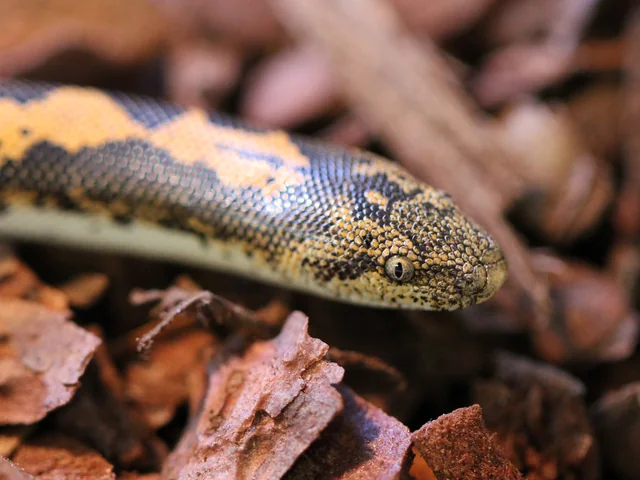
| Kenyan sand boa | 1 to 2 ft | 15 to 30 years | Small spaces |
| Rosy boa | 2 to 3 ft | 20 to 30 years | Families with school-age kids |
| California kingsnake | 3 to 5 ft | 10 to 25 years | A bold, hardy eater |
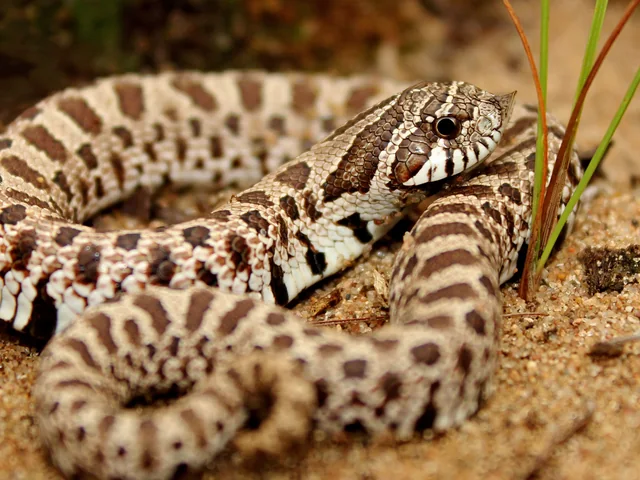
| Western hognose | 1 to 3 ft | 15 to 20 years | Unusual looks and habits |
| Common garter snake | 2 to 4 ft | 6 to 14 years | Keepers who won’t feed rodents |
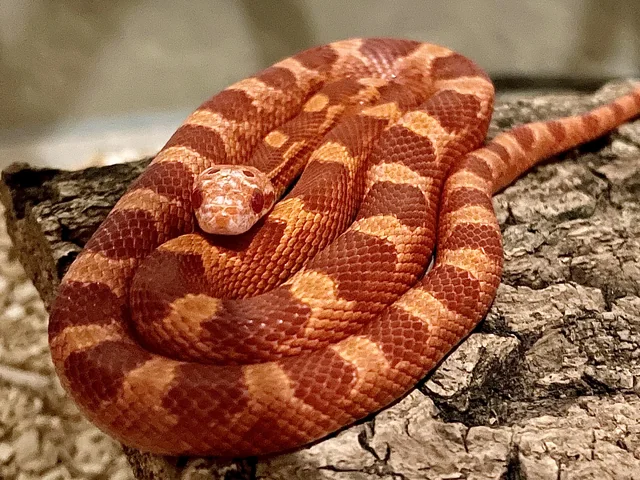
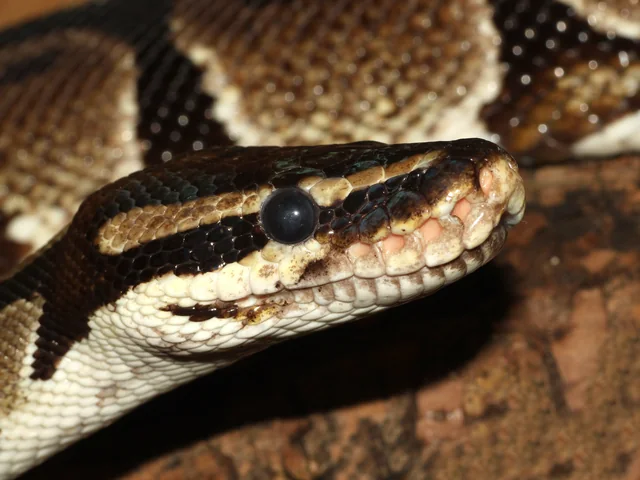
The corn snake is the most forgiving: it eats reliably, copes with small mistakes and comes in hundreds of color morphs. The ball python is calmer in the hand but can refuse food for weeks and needs more humidity. Read more in our guide to the characteristics of a corn snake.
Before you buy a pet snake
- Plan for 20 years or more. Ball pythons and boas often pass 25 years. Garter snakes are the shortest commitment at about 10.
- You will feed rodents. Almost every pet snake eats mice or rats. Buy them frozen and thaw them in warm water. Live feeding is rarely needed and can injure the snake.
- Lock the lid. Snakes push through small gaps. Corn snakes and kingsnakes are known escape artists.
- Find a reptile vet first. The Association of Reptile and Amphibian Veterinarians lists vets by area.
- Wash your hands. Reptiles carry Salmonella even when healthy. The CDC says children under 5 should not touch reptiles or their enclosures.
- Check the law. Hawaii bans pet snakes. Florida lists the Burmese python as a prohibited species. Some cities limit large constrictors.
Pet snake setup checklist
Buy and run the setup for a week before the snake arrives, so you can check that the temperatures hold. For a corn snake or ball python you need:
- A 4 x 2 x 2 ft enclosure with a locking front or lid
- A heat mat or deep heat projector for the warm side
- A thermostat on every heat source, which stops burns
- A digital thermometer and hygrometer with a probe
- Two hides, one on the warm side and one on the cool side
- A heavy water bowl, aspen bedding for dry species or cypress mulch for humid ones, and feeding tongs
Kenyan sand boas, rosy boas and hognose snakes do well in a 3 ft enclosure. A boa constrictor needs at least 6 x 3 ft as an adult.
Once your snake is home, test what you know with our snake identification quiz.
Pet snake questions
What snake should I get as a first pet?
A corn snake is the best first snake for most people. It stays 3 to 5 feet long, eats thawed mice reliably, needs no misting and copes with small care mistakes. A ball python is the calmer choice if you want to hold your snake often, and a Kenyan sand boa or rosy boa suits a small space. Take the quiz above to match a snake to your home, budget and experience.
What is the best pet snake for kids?
Corn snakes, rosy boas and ball pythons are the best snakes for families with children aged 5 to 12. They are calm, slow and rarely bite. An adult should own the care. The CDC says children under 5 should not touch reptiles or their enclosures, and everyone should wash their hands after handling a snake.
What is the smallest pet snake?
The Kenyan sand boa and the western hognose are the smallest common pet snakes. Male Kenyan sand boas stay around 1.5 feet and male hognose snakes 1 to 2 feet, with females a little larger. Both live well in a 3 foot enclosure. The rosy boa is close behind at 2 to 3 feet.
What is the friendliest pet snake?
Ball pythons, rosy boas and corn snakes are the most tolerant of handling. Snakes do not bond with people the way dogs do. A calm snake is one that stays relaxed in your hands and rarely bites. Short, regular handling sessions keep most snakes calm.
Should I get a ball python or a corn snake?
Get a corn snake if you want a hardy, active snake that always eats and likes a dry enclosure. Get a ball python if you want the calmest snake to hold and can keep humidity at 60 to 80 percent, which is far easier in the right ball python enclosure. Ball pythons often refuse food for weeks, which is normal but worries new keepers. Both stay 3 to 5 feet long and both come in hundreds of color morphs.
How much does a pet snake cost?
A common corn snake, ball python or kingsnake usually costs less than its setup. A full 4 foot setup with an enclosure, heat source, thermostat, thermometer and hides usually costs $300 to $700. Small species such as the Kenyan sand boa need a smaller setup. Running costs are low: frozen rodents every 1 to 3 weeks and a yearly vet visit.
How long do pet snakes live?
Most pet snakes live 15 to 30 years with good care. Ball pythons and boa constrictors often pass 25 years, corn snakes and kingsnakes commonly reach 15 to 20, and garter snakes live about 10. Plan for the snake to be with you for decades.
Do snakes like being held?
Snakes do not enjoy handling the way a cat enjoys petting, but many species tolerate it well. Handle for 10 to 15 minutes a few times a week. Wait 2 days after a meal and skip handling while the snake is about to shed, when its eyes turn cloudy blue.
Are pet snakes legal?
Pet snakes are legal in most of the US. Hawaii bans them entirely. Florida lists the Burmese python as a prohibited species, and some states and cities require permits for large constrictors. Check your state wildlife agency and your city rules before you buy.
Do pet snakes need live mice?
No. Most pet snakes eat frozen mice or rats that you thaw in warm water. Frozen prey is safer, because a live rodent can bite and injure a snake. The garter snake eats fish and worms, and the rough green snake eats live insects.