Table of Contents
- TLDR
- Marine Life: Turtles, Rays, Sharks and Whales
- Reef Fish
- Birds
- Reptiles and Amphibians
- Mammals
- Why the Caribbean Has So Many Endemic Animals
- Quick Reference Table
- Dangerous Animals in the Caribbean
- How to See Caribbean Wildlife Responsibly
TLDR
The most iconic animals of the Caribbean are sea turtles, southern stingrays, nurse sharks, manatees, humpback whales, parrotfish, flamingos, frigatebirds, iguanas, and the tiny coqui frog. Marine life is the easiest to find, since every island has reef. The land animals worth planning a trip around are the endemic ones: Cuba’s bee hummingbird, Grand Cayman’s blue iguana, Puerto Rico’s coqui and the solenodons of Cuba and Hispaniola. Pick the island first, because most of the famous species are tied to one or two places.
Marine Life: Turtles, Rays, Sharks and Whales
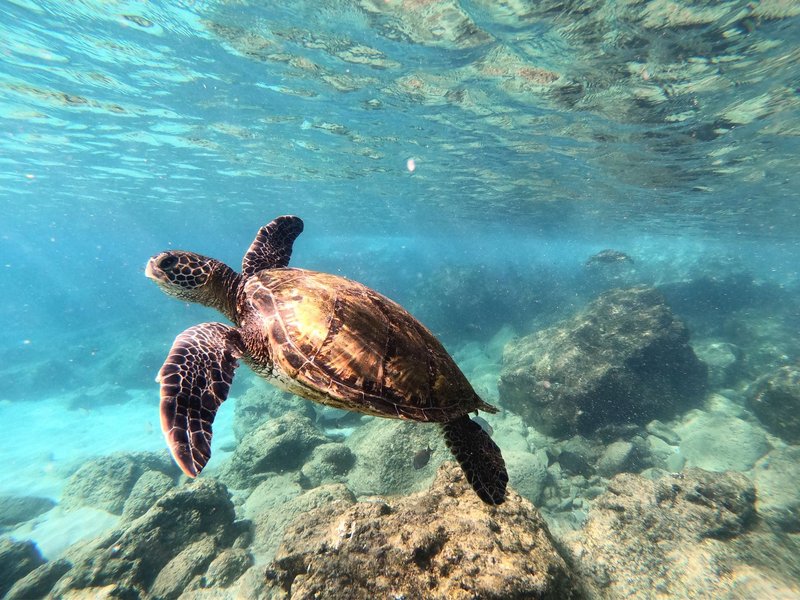
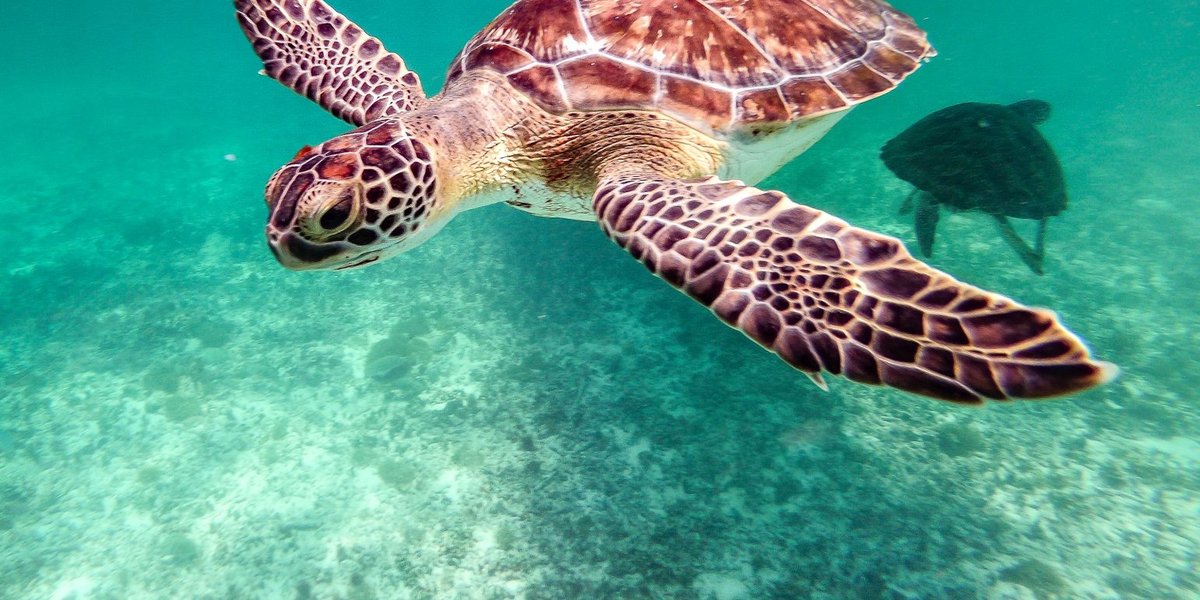
Green sea turtles. Adults are the size of a coffee table and graze seagrass in shallow bays, which is why you can often see them from a paddleboard. Bonaire, the Cayman Islands and Barbados all have dependable snorkel sightings. On the mainland edge of the Caribbean, Tortuguero in Costa Rica is the classic nesting beach, with the season running roughly July to October. NOAA Fisheries lists green turtles as threatened across most of their range, so stay at least a few meters back and never touch one.
Hawksbill turtles. Smaller, with a pointed beak and overlapping shell plates, hawksbills feed on reef sponges. Barbados hosts one of the largest hawksbill nesting populations in the eastern Caribbean, with nests from April to November and the heaviest activity in June through August. Mona Island off Puerto Rico is another stronghold. The hawksbill is critically endangered, largely because of the historical tortoiseshell trade.
Leatherback turtles. The largest turtle alive, reaching over 600 kilograms, nests on Trinidad’s Matura Beach and at Grande Riviere from March to July. Go with a licensed guide, use red light only, and expect to wait.
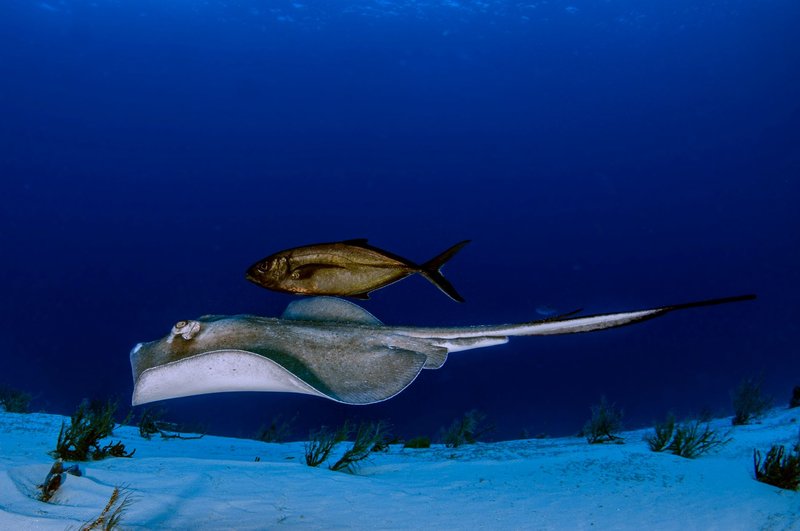
Southern stingrays. At Stingray City in Grand Cayman, the rays gather in waist-deep water over a sandbar and come to boats because they’ve learned boats mean squid. Antigua has a similar site. The experience is real, though it’s a feeding operation. Choose operators that limit group sizes and don’t let visitors pick the animals up.
Nurse sharks and reef sharks. Nurse sharks are docile bottom-dwellers that rest in caves and under ledges by day. Belize’s Hol Chan Marine Reserve and its Shark Ray Alley are reliable for them. Caribbean reef sharks are the dominant shark on healthy reefs, and the Bahamas and Roatán in Honduras are where divers see them most often. Shark diving in the Bahamas also draws tiger sharks to Tiger Beach.
West Indian manatees. Slow, whiskered and roughly 3 meters long, manatees are wetland grazers that live in warm lagoons, mangrove channels and river mouths. Belize (try the cayes around Swallow Caye), Puerto Rico, Cuba and the Dominican Republic all have populations. Manatees are shy, so the best approach is a quiet boat and binoculars.
Humpback and sperm whales. Humpbacks breed and calve in Samaná Bay and on Silver Bank off the Dominican Republic from January to March. Dominica is the sperm whale island: a resident group works the deep water just off its west coast, and sightings run through the year. Dominica’s drop-off close to shore is why this works, since sperm whales hunt squid at depth and don’t need to travel far.
Reef Fish
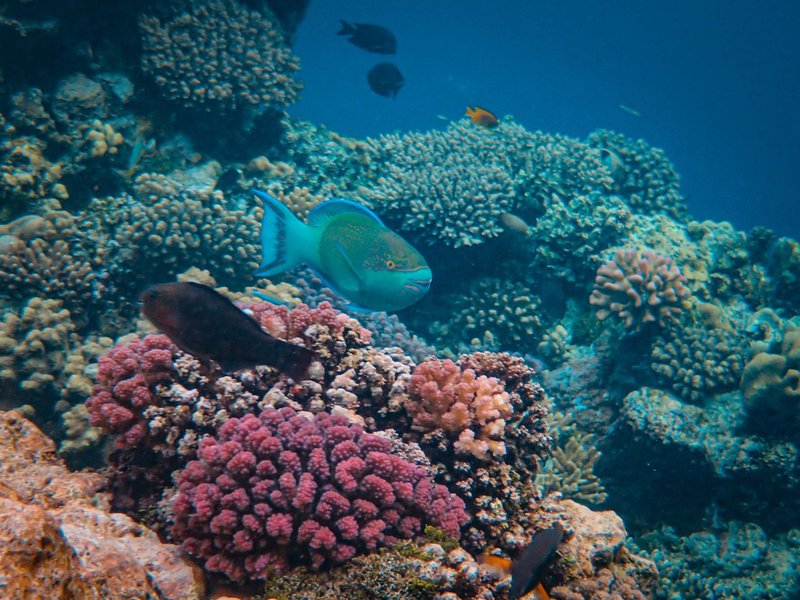
Parrotfish. Parrotfish scrape algae off coral with fused, beak-like teeth and excrete the ground-up rock as fine white sand. A single large parrotfish can produce hundreds of kilograms of sand a year, so part of that postcard beach really did pass through a fish. They’re also the reason algae doesn’t smother many reefs. Look for them at any snorkel site in the Virgin Islands, Bonaire or Belize.
Queen angelfish and blue tang. The queen angelfish is blue-yellow with a dark spot ringed in electric blue on its forehead, often called a crown. Blue tang schools move across reef flats in blue ribbons and are common from the Cayman Islands to the Lesser Antilles. Both are easy snorkel sightings in under five meters of water.
Nassau grouper. A large, banded grouper once abundant across the region, now critically endangered after spawning aggregations were fished out. It gathers in specific places around the full moon in winter. Cayman Brac’s aggregation is among the most protected, with a seasonal ban on fishing.
Spotted eagle rays and moray eels. Eagle rays glide along reef walls with white-dotted backs and long tails. Green morays tuck into crevices with their mouths opening and closing, which is breathing, not aggression. Both turn up on most dive itineraries in the Caribbean.
Lionfish. Not native. Red lionfish from the Indo-Pacific reached Florida waters in the 1980s and spread through the Caribbean by the early 2000s. They eat native juvenile fish and have no natural predators here. Many islands now run lionfish derbies and encourage divers to spear them. If you see one on a menu, order it.
Birds
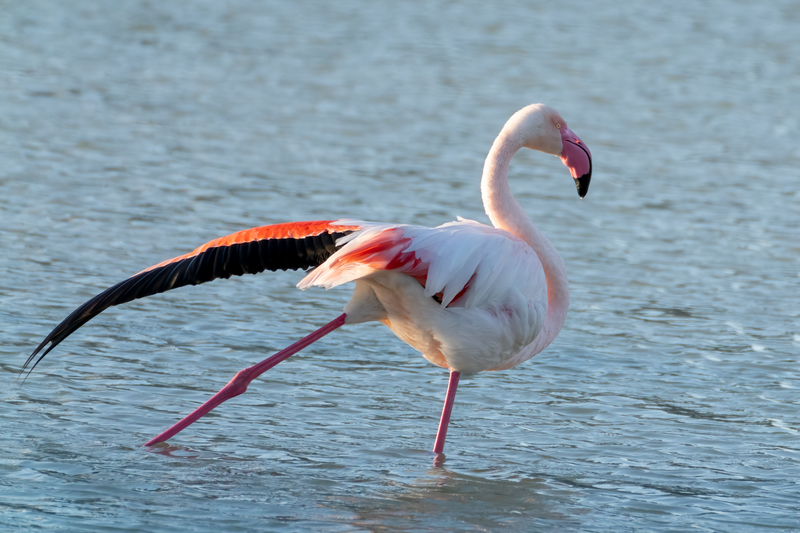
American flamingos. Great Inagua in the Bahamas holds the largest breeding colony in the Western Hemisphere, with tens of thousands of birds. Bonaire’s salt pans near Pekelmeer are easier to reach and have flamingos year-round, pink from the shrimp and algae they filter from hypersaline water. Keep to the road verges. Disturbance during nesting can make a whole colony abandon eggs.
Magnificent frigatebirds. Males inflate a red throat pouch the size of a balloon to attract females. Barbuda’s Codrington Lagoon has one of the biggest colonies in the Caribbean, reached by boat through the shallows, with breeding activity mainly in the cooler months from about September to April.
Bee hummingbird. Cuba’s endemic bee hummingbird is the smallest bird on Earth, around 5 to 6 centimeters long and about 2 grams. It looks like a large insect hovering at a flower. Zapata Peninsula and Cuban forest reserves are the usual places to find it, and you need a local birding guide who knows the flowers of Cuba.
Red-billed streamertail. Jamaica’s national bird, called the doctor bird, has two long black tail feathers that trail behind it in flight. It’s common around Blue Mountains gardens and forest edges.
Puerto Rican parrot. Critically endangered and found only in Puerto Rico. The wild population was reduced to a few dozen birds in the 1970s and has been rebuilt through captive breeding and release at El Yunque, though it remains small. Sightings are rare, and you’re more likely to hear one than see one.
Brown pelicans. Diving from heights, brown pelicans are common along nearly every Caribbean coast, and they’re the easiest bird to photograph on a cruise stop.
Reptiles and Amphibians
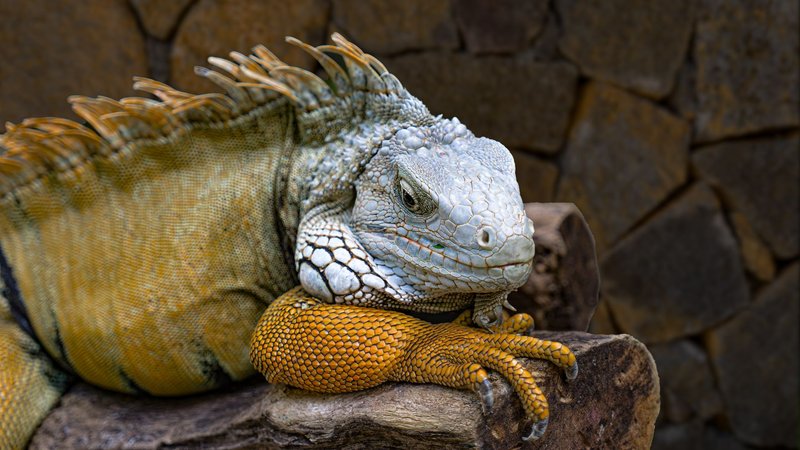
Blue iguana. Grand Cayman’s blue iguana is endemic and nearly went extinct, with a wild population dropping to a handful of animals in the early 2000s. A captive breeding program at the Queen Elizabeth II Botanic Park pulled it back to roughly a thousand animals. Visitors can tour the park and see adults up close.
Rock iguanas. Exuma’s Allen Cays in the Bahamas are home to the northern Bahamian rock iguana, a thick-bodied lizard that approaches boats at the beach. Bahamian operators hand out grapes, which encourages them. Resist the urge. Fruit sugar isn’t part of their diet.
Anole lizards. Anoles are the Caribbean’s most spectacular evolutionary story. On islands like Jamaica, Hispaniola and Cuba, different species evolved to fill separate niches, such as tree-trunk specialists, twig dwellers and grass perchers, each with different leg lengths and toe pads. Well over a hundred species live in the Caribbean. Males flash a colorful throat fan called a dewlap, and you can see them on almost any hotel wall.
Crocodiles. The American crocodile lives at Lake Enriquillo in the Dominican Republic and in Jamaica’s Black River. Cuba’s Zapata Swamp hosts the Cuban crocodile, a smaller, more aggressive species found nowhere else. Stay in boats and keep to marked walkways.
Antiguan racer. Once called the rarest snake on Earth, this harmless, thin snake clung to Great Bird Island off Antigua after mongooses wiped it out on the mainland. A conservation program raised the population from roughly 50 animals in the late 1990s to more than a thousand.
Puerto Rican coqui. This thumbnail-sized tree frog gets its name from its call, a two-note “co-KEE” that rises after dusk across El Yunque and the Puerto Rican countryside. Only males call, and the sound can reach 90 decibels in a thick chorus. A night walk with a flashlight turns up several.
Monte Iberia eleuth. Cuba’s tiny frog, around 10 millimeters long, is among the smallest vertebrates in the world. It’s rare, and not a casual tourist sighting, but it shows how small the endemic species can be.
Mountain chicken. Dominica and Montserrat once hosted this giant frog, one of the largest in the Caribbean, before a fungal disease wiped out most of the population. It’s critically endangered and rarely seen.
Mammals
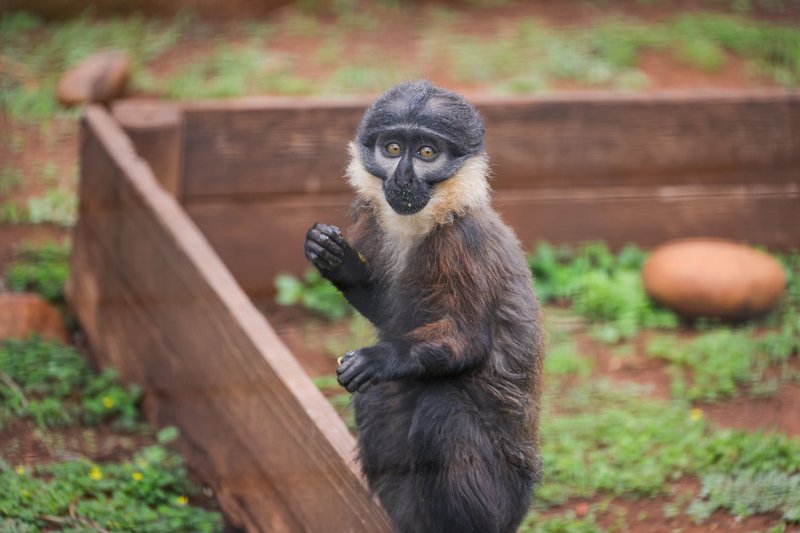
The Caribbean has few native land mammals, and most of the ones that survive are small, nocturnal or very rare. That’s partly because islands are hard for mammals to reach, and partly because many species disappeared after human arrival.
Cuban hutia. A tree-climbing rodent the size of a large rabbit, the Cuban hutia is the island’s largest native land mammal. It’s common on Cuba’s cays and in Cuban cuisine. Hutias in the Bahamas and other islands are endangered or extinct.
Solenodons. The Hispaniolan solenodon and the Cuban solenodon are shrew-like mammals with long snouts. They produce venom in glands near their lower incisors, which makes them one of very few venomous mammals. They’re nocturnal, shy and endangered. The Hispaniolan solenodon lives in the Dominican Republic and Haiti. The Cuban solenodon is among the rarest mammals in the world.
Green monkeys. Not native. Sailors brought vervet monkeys from West Africa in the 1600s, and wild populations now live on St. Kitts, Nevis and Barbados. St. Kitts has more monkeys than people by some estimates. Don’t feed them, because they bite and carry diseases.
Feral donkeys of Bonaire. Descendants of working animals brought by Spanish settlers, Bonaire’s donkeys roam freely and gather around the roads. The Donkey Sanctuary Bonaire looks after orphans and cares for injured ones.
Swimming pigs. The pigs of Big Major Cay in the Exumas are another feral population that became a tourist draw. They were not native either. The ecological effect is small, but the pigs get sunburned and sick from the wrong food, so bring none.
Fruit bats. Jamaica’s fruit bats and the Antillean bats elsewhere pollinate flowers and spread seeds. Bat caves in Jamaica and Cuba are open to visitors.
Why the Caribbean Has So Many Endemic Animals
Islands are isolated. Animals that reach them evolve separately from their mainland cousins, which is why the Caribbean is classified as a global biodiversity hotspot with a high proportion of species found nowhere else. Even small islands follow the same pattern, as Saint Lucia’s endemic animals show, with a parrot found nowhere else on Earth. The Greater Antilles (Cuba, Hispaniola, Jamaica and Puerto Rico) are large enough and old enough to sustain distinct lineages of frogs, lizards, small mammals and birds.
Isolation also makes native species vulnerable. The Caribbean monk seal is the only seal species in this region to go extinct in modern times. Hunted for oil and meat and disturbed by fishing, it was last confirmed in 1952 at Serranilla Bank. NOAA declared it extinct in 2008.
Invasive species cause most of the other damage. The small Indian mongoose was brought to Jamaica in 1872 to kill rats in sugarcane fields. It spread to other islands and preyed on ground-nesting birds, snakes and lizards, including the Antiguan racer. Cats, rats, lionfish and the Cuban tree frog (in Florida) have followed the same pattern.
Quick Reference Table
| Animal | Type | Best islands | Best season |
|---|---|---|---|
| Green sea turtle | Marine reptile | Bonaire, Cayman Islands, Barbados | Year-round (nesting July to October on Tortuguero) |
| Hawksbill turtle | Marine reptile | Barbados, Mona Island | April to November (nesting) |
| Leatherback turtle | Marine reptile | Trinidad | March to July |
| Southern stingray | Fish | Grand Cayman, Antigua | Year-round |
| Humpback whale | Marine mammal | Dominican Republic (Samaná Bay) | January to March |
| Sperm whale | Marine mammal | Dominica | Year-round |
| Parrotfish | Reef fish | Bonaire, Virgin Islands, Belize | Year-round |
| American flamingo | Bird | Great Inagua, Bonaire | Year-round |
| Magnificent frigatebird | Bird | Barbuda | September to April (breeding) |
| Bee hummingbird | Bird | Cuba | Year-round |
| Blue iguana | Reptile | Grand Cayman | Year-round |
| Puerto Rican coqui | Amphibian | Puerto Rico | Year-round, loudest in the wet season |
| Green monkey | Mammal | St. Kitts, Nevis, Barbados | Year-round |
| Hispaniolan solenodon | Mammal | Dominican Republic | Year-round (nocturnal, hard to see) |
Dangerous Animals in the Caribbean
Very little in the Caribbean is out to hurt you. Most incidents involve animals people approach or step on.
- Lionfish: Venomous spines. A sting is painful but rarely serious. Don’t grab one.
- Fire coral: Looks like yellow-brown coral and burns on contact. Not an animal you chase, but a common cause of rashes on snorkelers.
- Jellyfish and Portuguese man o’ war: Stings can cause welts and sometimes more serious reactions. Check beach flags.
- Sea urchins: Their spines break off in skin. Wear reef shoes.
- Stingrays: Shuffle your feet when entering shallow sandy water, and they’ll move away.
- Barracuda: Curious, toothy and almost never a problem. Don’t wear shiny jewelry in the water.
- Bull sharks and crocodiles: Rare encounters. Avoid swimming in river mouths at dusk.
How to See Caribbean Wildlife Responsibly
Maintain distance. For sea turtles, stay a few meters back and don’t block their path to the water. Never touch, ride or chase marine animals.
Don’t feed anything. Fed iguanas, monkeys and fish change their behavior, get hurt or become aggressive. The grapes handed to Bahamian iguanas and the hot dogs fed to Bonaire’s donkeys are bad for them.
Use certified guides for nesting beaches and bird colonies. Red-light flashlights only for turtles at night. No flash photography.
Wear reef-safe sunscreen, or cover up with a rash guard. Skip anything that harms coral, and stay off the reef when you swim.
Choose operators who limit group sizes and explain what the animals eat in the wild. Walk away from any attraction selling photos with a wild animal held in someone’s hands.