Well over a hundred fish species have been recorded in Ukrainian waters, and most lists present them as one long taxonomic table. That’s useful if you’re a biologist. It’s not much help if you want to know what’s actually swimming in the Dnipro, what lives in a Carpathian stream, and what ends up fried on a plate in Odesa.
This guide sorts the fish of Ukraine by where they live, because habitat explains almost everything else: size, diet, who catches them and how they get cooked. Each entry gives the common name, Latin name, Ukrainian name with transliteration, size, and one detail worth remembering.
Contents
- How Ukraine’s waters divide up
- Quick-reference table
- The Dnipro and its reservoirs
- The Dniester, the Danube and the Southern Bug
- Carpathian mountain streams
- The Black Sea and the Sea of Azov
- Crimea’s endemic fish
- Sturgeons and other protected species
- Invasive and introduced fish
- Fish in Ukrainian food
- What the war has done to Ukraine’s fish
- Where to start
How Ukraine’s waters divide up
Ukraine is mostly flat steppe and forest-steppe, cut by large, slow rivers that all drain south. The Dnipro (Dnieper in older English usage) is the backbone, about 2,200 km long and dammed into a staircase of big reservoirs. West of it, the Dniester and the Southern Bug run to the Black Sea, and the Danube forms the southwestern border before spreading into its delta. In the far west, the Carpathians feed cold, fast streams that belong to a completely different fish community.
At the bottom sit two seas. The Black Sea is salty and deep. The Sea of Azov, joined to it by the Kerch Strait, is shallow, brackish and one of the most productive fish nurseries in Europe.
That gives four working habitats: lowland rivers and reservoirs, the western rivers, mountain streams, and the coast. The fish below are grouped that way. Ukraine’s land animals sort into a similar set of natural zones, which you can see in the native animals guide by natural zone.
Quick-reference table
| Common name | Latin name | Ukrainian | Main habitat | Typical adult size |
|---|---|---|---|---|
| Common carp | Cyprinus carpio | короп (korop) | Dnipro, reservoirs, ponds | 40-80 cm |
| Prussian carp | Carassius gibelio | карась сріблястий (karas sriblyastyi) | Everywhere lowland | 20-35 cm |
| Northern pike | Esox lucius | щука (shchuka) | Rivers, reservoirs, lakes | 50-100 cm |
| Zander | Sander lucioperca | судак (sudak) | Dnipro, Dniester, Azov | 40-80 cm |
| Wels catfish | Silurus glanis | сом (som) | Large rivers, Danube | 1-2+ m |
| Common bream | Abramis brama | лящ (liashch) | Reservoirs, slow rivers | 30-50 cm |
| Roach | Rutilus rutilus | плітка (plitka) | Almost all fresh water | 15-30 cm |
| Silver carp | Hypophthalmichthys molitrix | товстолоб (tovstolob) | Reservoirs, ponds | 50-100 cm |
| Asp | Leuciscus aspius | жерех (zherekh) | Dniester, Dnipro, Danube | 50-80 cm |
| Burbot | Lota lota | минь (myn) | Cold rivers, northern lakes | 30-70 cm |
| Danube salmon (huchen) | Hucho hucho | лосось дунайський (losos dunaiskyi) | Tisza and Carpathian rivers | 80-120 cm |
| Brown trout | Salmo trutta | форель струмкова (forel strumkova) | Carpathian streams | 20-40 cm |
| Grayling | Thymallus thymallus | харіус (kharius) | Carpathian rivers | 25-40 cm |
| Black Sea sprat | Sprattus sprattus | шпрот (shprot) | Black Sea | 8-12 cm |
| Black Sea anchovy | Engraulis encrasicolus | хамса (khamsa) | Black Sea, Azov | 8-14 cm |
| Round goby | Neogobius melanostomus | бичок-кругляк (bychok-kruhliak) | Coast, estuaries, rivers | 10-20 cm |
| Black Sea turbot | Scophthalmus maeoticus | калкан (kalkan) | Black Sea | 40-80 cm |
| Beluga | Huso huso | білуга (biluha) | Danube, Black Sea, Azov | 2-4 m |
| Sterlet | Acipenser ruthenus | стерлядь (sterliad) | Dnipro, Danube | 40-70 cm |
The Dnipro and its reservoirs
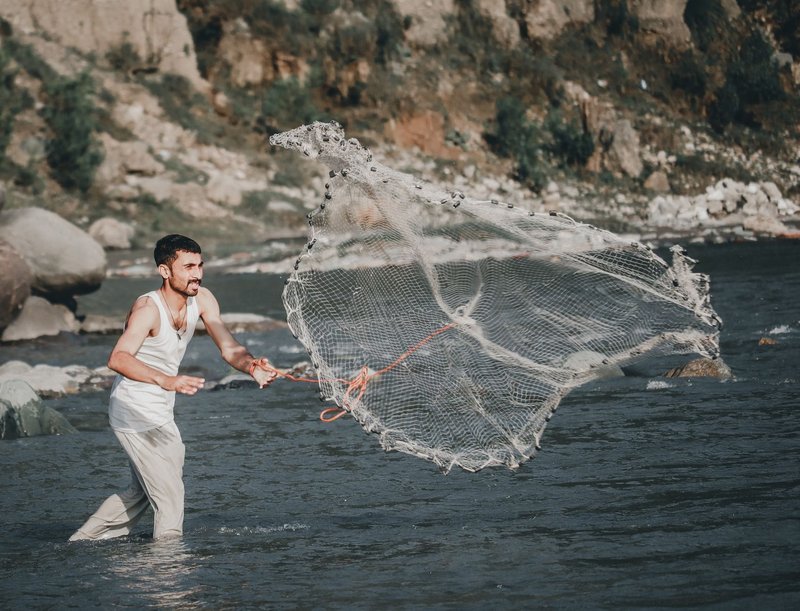
The Dnipro is Ukraine’s key fish habitat. Soviet engineers turned much of it into a chain of reservoirs, and those wide, shallow, warm basins suit one family above all: the carps and their relatives. If a Ukrainian angler tells you what they caught last weekend, it was probably from this section.
Common carp
Cyprinus carpio · короп (korop) · 40-80 cm, with big individuals much heavier
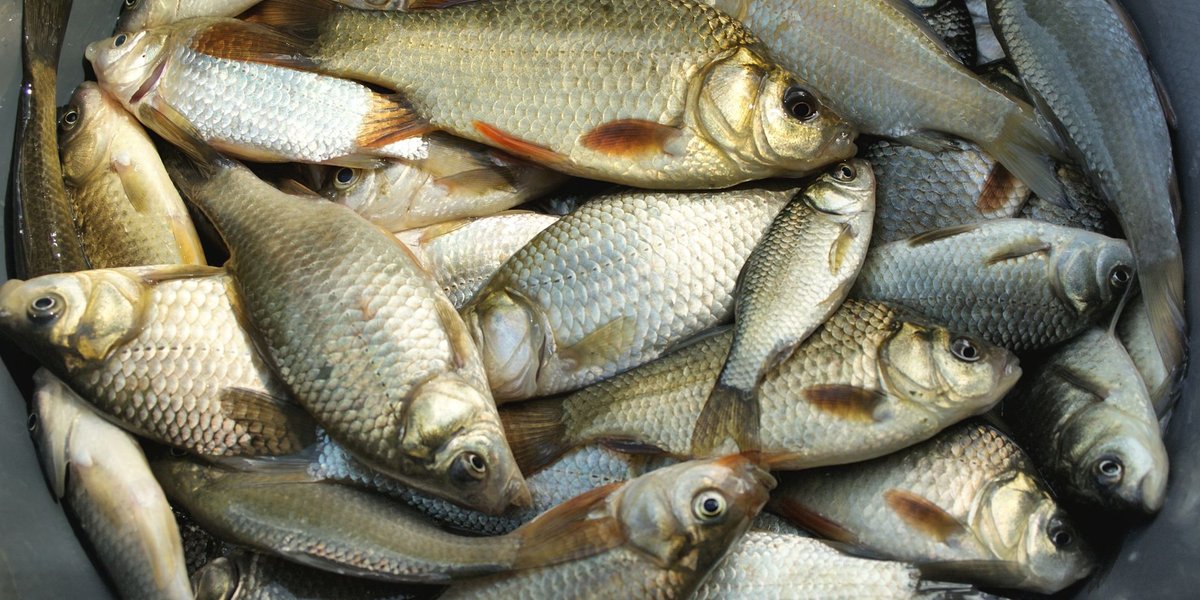
The wild ancestor of every farmed and ornamental carp in the world lives in the lower Danube and Dnipro basins, and the Ukrainian pond carp is still a major aquaculture fish. The FAO’s species profile puts carp among the most widely farmed freshwater fish on the planet. In Ukraine it’s also the default Christmas Eve fish, usually fried or baked whole.
Prussian carp
Carassius gibelio · карась сріблястий (karas sriblyastyi) · 20-35 cm
Most “crucian carp” caught in Ukraine today is actually this silvery relative. It spread west from Asia, and many populations are almost entirely female: they reproduce from unfertilized eggs triggered by the sperm of other cyprinids, so a single fish can colonize a pond. The native golden crucian carp (Carassius carassius, карась золотий, karas zolotyi) is being pushed out of the small ponds where it used to be common.
Northern pike
Esox lucius · щука (shchuka) · 50-100 cm
Pike sit in the weedy backwaters of the reservoirs and in river oxbows, waiting. They’re ambush predators and will take anything that fits, including their own species. Anglers go for them in autumn and early spring.
Zander
Sander lucioperca · судак (sudak) · 40-80 cm
Zander look like a slimmer, glassy-eyed perch, and they hunt in low light with a reflective layer behind the retina that works like a cat’s. It’s one of the most commercially important predatory fish in Ukraine, and the Dnipro reservoirs and the Sea of Azov are both major sources. The firm white fillet is the reason restaurants like it.
Wels catfish
Silurus glanis · сом (som) · 1-2+ m
This is Europe’s largest freshwater fish. Wels catfish in the big Ukrainian rivers can pass two metres, living in deep holes under undercut banks and feeding mainly at night. They have no scales, long whiskers and a mouth wide enough to swallow waterfowl, which they’ve been filmed doing in other European rivers.
Common bream and roach
Abramis brama · лящ (liashch) · 30-50 cm Rutilus rutilus · плітка (plitka) · 15-30 cm
These two are the bread and butter of Ukrainian freshwater fishing. Bream are tall, flat, slime-coated shoal fish that root along the bottom. Roach are the common small silver fish in every river, lake and reservoir. A migratory Black Sea and Azov form of roach, Rutilus heckelii, is what Ukrainians call taranya (тараня), the fish that gets salted and sun-dried.
Silver carp
Hypophthalmichthys molitrix · товстолоб (tovstolob) · 50-100 cm
A filter feeder from China’s Yangtze and Amur basins, silver carp was stocked into Soviet reservoirs from the 1960s to eat plankton and clear algae. It has a downward-pointing mouth set on a very large head (the Ukrainian name means “thick forehead”) and it leaps out of the water when startled by boat engines. It’s a standard market fish now, though it isn’t native.
Other fish you’ll meet in the Dnipro
- Perch (Perca fluviatilis, окунь, okun): striped, spiny-finned and found almost everywhere.
- Tench (Tinca tinca, лин, lyn): olive-green, sluggish, loves warm weedy ponds.
- Tyulka (Clupeonella cultriventris, тюлька, tiulka): a small herring relative that forms huge shoals in the reservoirs and is a main food of zander and pike.
The Dniester, the Danube and the Southern Bug
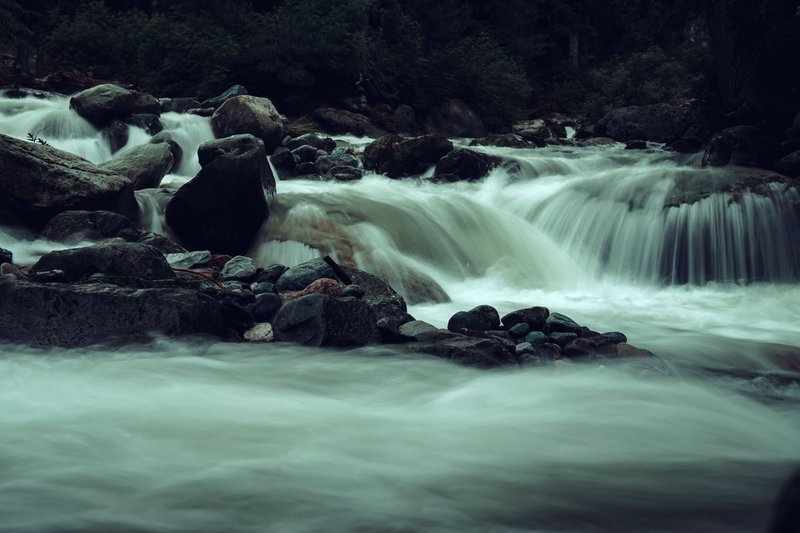
The western rivers run clearer and faster than the Dnipro, with gravel runs and rocky stretches. Fish here are more streamlined and several are rarely found elsewhere in Ukraine. The Danube, which reaches the Black Sea through Ukrainian territory in its delta, brings in species that never made it east.
Asp
Leuciscus aspius · жерех (zherekh) · 50-80 cm
Asp are the only European cyprinid that hunts other fish as an adult. They chase bleak and young roach at the surface, and the splash when an asp hits a shoal is loud enough to hear from the bank. Anglers prize them because they’re fast and fight harder than their size suggests.
Barbel, nase and vimba
Barbus barbus · марена звичайна (marena zvychaina) Chondrostoma nasus · підуст (pidust) Vimba vimba · рибець (rybets)
These are the classic fish of clean, current-swept gravel. Barbel feel for insects with four whiskers around the mouth. Nase scrape algae from stones with a hard, horny lip, which is why they only live where the water runs clear. Vimba migrate upriver to spawn.
Burbot
Lota lota · минь (myn) · 30-70 cm
The only freshwater member of the cod family. Burbot are mostly active in winter and spawn under the ice in January and February, which makes them the fish for people who want to be on a frozen river after dark.
Danube-only fish
The lower Danube has species like zingel (Zingel zingel) and streber (Zingel streber), bottom-dwelling perch relatives with a taste for fast water. Both are protected across much of their range.
Carpathian mountain streams
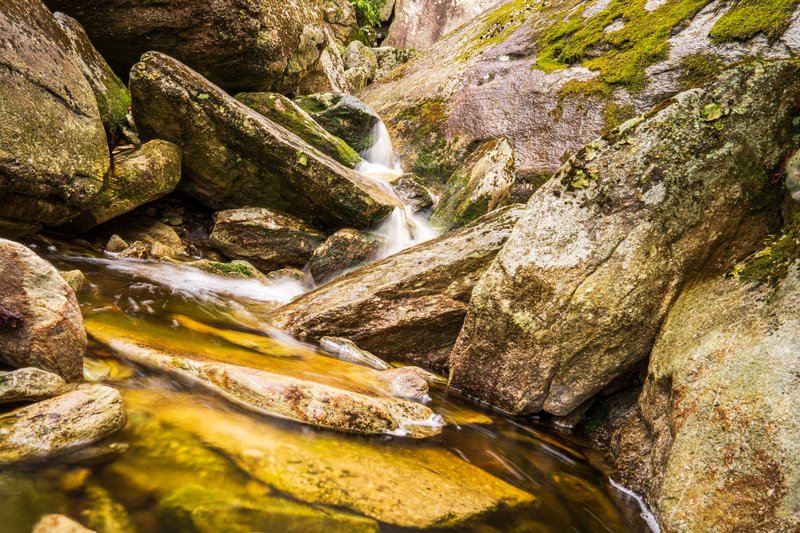
Cold, oxygenated, fast and gravelly: this is trout country, and the fish list shrinks to a handful of specialists.
Danube salmon (huchen)
Hucho hucho · лосось дунайський (losos dunaiskyi) · 80-120 cm, much larger historically
The largest salmonid that lives its whole life in fresh water. Huchen can grow past a metre, and the Tisza basin in Transcarpathia is one of the few places in Ukraine where they still live. They’re an apex predator in their reach of river and need unobstructed, clean water to spawn. Dams and gravel extraction have wiped them out across much of the Danube basin.
Brown trout
Salmo trutta · форель струмкова (forel strumkova) · 20-40 cm
The trout of Carpathian headwaters are small, dark-spotted and fast. Rainbow trout, introduced from North America, are farmed widely in the mountains, so a “trout” on a Transcarpathian menu is often a farmed rainbow.
Grayling
Thymallus thymallus · харіус (kharius) · 25-40 cm
Look for the tall, sail-like dorsal fin, patterned with a purple-and-red sheen. Graylings sit in clear, cool pools below the trout zone, and they’re one of the first fish to disappear when water quality drops, which is why biologists use them as an indicator.
Alpine bullhead and Carpathian barbel
The alpine bullhead (Cottus poecilopus, бічок-подкаменяр, bichok-podkamenyar) is a small, flat-headed bottom fish that hides under stones. The Carpathian barbel (Barbus carpathicus) is a lower-valley relative of the common barbel, found in the Tisza and neighbouring basins.
The Black Sea and the Sea of Azov
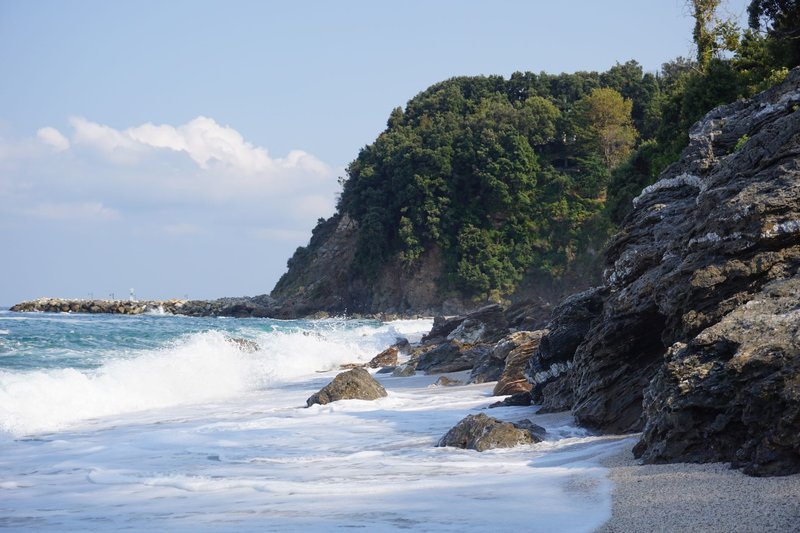
Ukraine’s long southern coast has a mixed fauna: Mediterranean visitors, brackish-water specialists and freshwater fish that tolerate estuaries. The Sea of Azov is so shallow (it averages around 7 m) and so low in salt that it behaves like a huge estuary, which is why anchovy, gobies and sturgeon use it as a nursery.
Black Sea sprat and anchovy
Sprattus sprattus · шпрот (shprot) Engraulis encrasicolus · хамса (khamsa)
These two small schooling fish are the foundation of the coastal food web and the backbone of the small-boat fishery. Khamsa gets fried whole in cornmeal or flour. Sprat is smoked, salted or canned in oil, and the tinned version is a classic Ukrainian party-table snack.
Gobies
Neogobius melanostomus · бичок-кругляк (bychok-kruhliak) Neogobius fluviatilis · бичок-песочник (bychok-pisochnyk) Ponticola kessleri · бичок-головач (bychok-holovach)
Gobies are the most numerous bottom fish along the coast and in the lower rivers. Small, big-headed, with a fused pelvic fin that works as a sucker. The round goby has a black spot on the first dorsal fin. In Ukrainian cooking, “bychky” are fried whole or canned in tomato sauce, a Soviet-era staple that’s still sold in every shop. The round goby is native here and invasive in the Baltic and Great Lakes, a good illustration of how the same fish can be a local snack and a foreign pest.
Black Sea turbot
Scophthalmus maeoticus · калкан (kalkan) · 40-80 cm
A flatfish with bony tubercles instead of scales, lying camouflaged on sand and gravel. Turbot is a premium restaurant fish, and wild stocks are depleted from overfishing.
Grey mullet
Mugil cephalus · лобань (loban) · 30-60 cm Planiliza haematocheila · сингіль (synhil)
Mullet cruise in the surface layer of estuaries and harbours. Synhil, the redlip mullet, is a newcomer: the species was brought from the Russian Far East to the Azov and Black Sea region in the 1970s and 80s and now supports a fishery.
Katran and the sea cat
Squalus acanthias · катран (katran) Dasyatis pastinaca · морський кіт (morskyi kit)
The Black Sea has two cartilaginous fish that surprise most visitors. The katran, a small spiny dogfish shark under 1.5 m long, is harmless to swimmers. The “sea cat” is a common stingray, whose tail spine carries venom and is the reason you shuffle your feet when wading on sandy beaches.
Crimea’s endemic fish
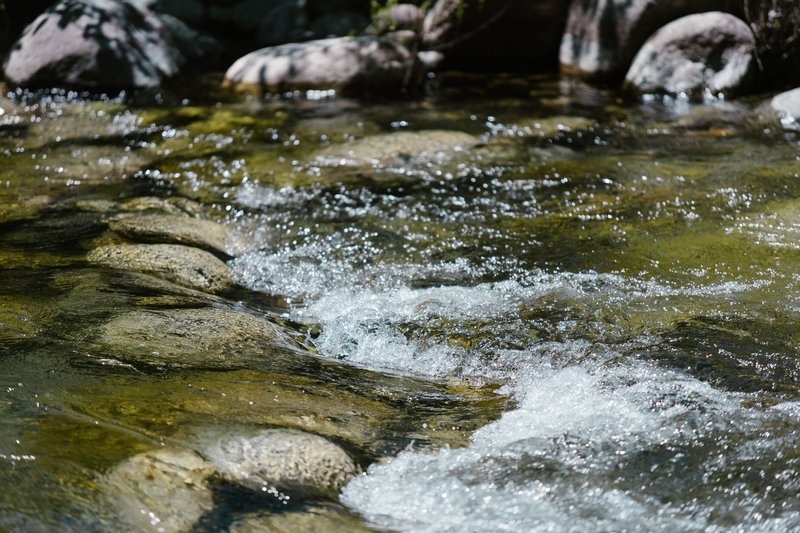
Crimea, which is Ukrainian territory occupied by Russia since 2014, has short, spring-fed mountain streams cut off from the mainland river systems. A handful of freshwater fish live nowhere else in the world, including the Crimean barbel (Barbus tauricus, марена кримська, marena krymska) and the Crimean gudgeon (Gobio delyamurei). Each population is small and tied to a few streams, so a single drought, dam or diversion can threaten an entire species.
Sturgeons and other protected species
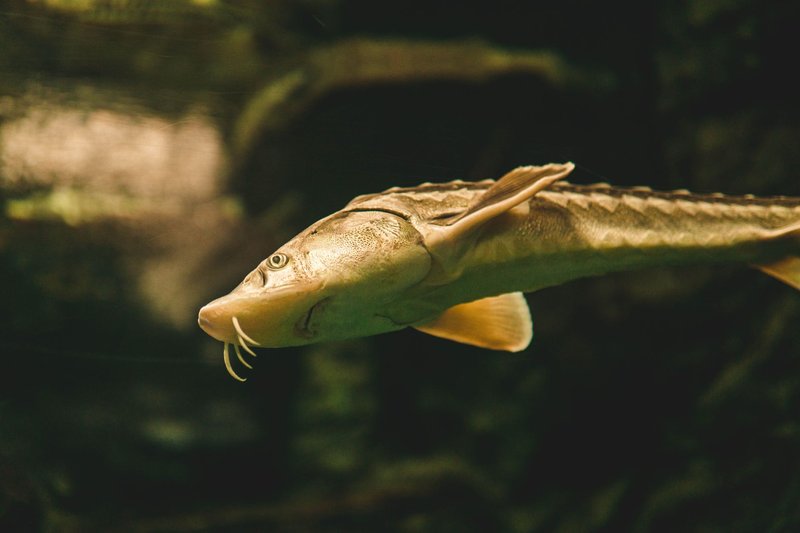
Ukraine’s most famous fish are also its most threatened. The Black Sea basin used to host a major sturgeon fishery, and the Danube delta and the lower Dnipro were spawning rivers for several species:
- Beluga (Huso huso, білуга, biluha): the largest, historically over 5 m and a ton or more.
- Russian sturgeon (Acipenser gueldenstaedtii, осетер російський, oseter rosiiskyi)
- Stellate sturgeon (Acipenser stellatus, севрюга, seviuha): the slender one with a long, narrow snout.
- Ship sturgeon (Acipenser nudiventris, шип, shyp)
- Sterlet (Acipenser ruthenus, стерлядь, sterliad): the smallest, and the only one that spends its whole life in fresh water.
Overfishing, poaching for caviar and dams that block spawning migration have hit all of them. The IUCN Sturgeon Specialist Group’s 2022 assessment found every remaining sturgeon species at risk of extinction, with seven of eight European species Critically Endangered and the sterlet moved from Vulnerable to Endangered. Commercial fishing for them is banned in Ukraine.
Other protected fish include the Danube salmon, the Carpathian zingel and streber, and the Dnieper barbel (Barbus borysthenicus, марена дніпровська, marena dniprovska), a rare river barbel from the Dnipro basin that needs clean, flowing water. For the wider group of threatened animals and plants, see the endangered species in Ukraine list. All of these depend on the same thing: rivers that still run like rivers.
Invasive and introduced fish
Soviet fisheries managers moved fish around the continent on purpose, and accidental arrivals did the rest. The result is a fish fauna where several of the commonest species are not native:
- Silver carp, bighead carp and grass carp: stocked from China for plankton and weed control, and now widely established.
- Prussian carp: spread west by itself and displaced the golden crucian carp.
- Amur sleeper (Perccottus glenii, ротан, rotan): a small, ferocious Far Eastern predator introduced by aquarium keepers. It eats the fry and tadpoles from small ponds and lets almost nothing else survive.
- Topmouth gudgeon (Pseudorasbora parva, чебачок амурський): a tiny carp relative that arrived in fish-farm shipments from China and carries pathogens that threaten native fish.
- Redlip mullet: introduced on purpose, discussed above.
Fish in Ukrainian food
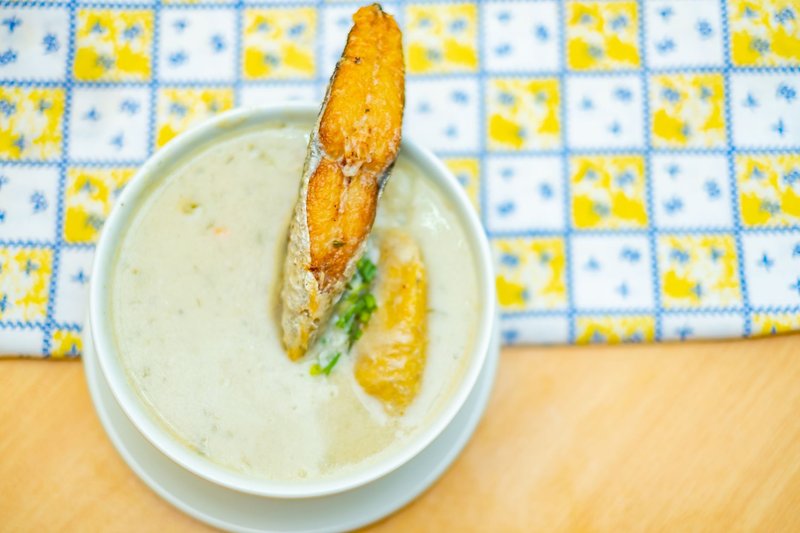
Most Ukrainian fish cooking falls into a small set of dishes:
- Fried carp (смажений короп): the Christmas Eve centerpiece, served whole or in thick steaks.
- Ukha (уха): fish soup, ideally made from several species at once, such as perch, roach, pike and zander, simmered with onion, bay leaf and sometimes a splash of vodka at the end. Riverbank versions are cooked over fire.
- Taranya and dried roach: salted, sun-dried and eaten torn into strips with beer.
- Herring (оселедець, oselets): the national party-table fish. It’s mostly sea-caught Atlantic herring, served with boiled potatoes and onion or layered in the “herring under a fur coat” salad (shuba).
- Bychky v tomati (бички в томаті): gobies canned in tomato sauce.
- Fried khamsa: Black Sea anchovies, cooked whole and eaten by hand.
- Stuffed fish (фарширована риба): carp or pike, popular in Jewish Ukrainian cooking, especially around Odesa.
The pattern holds across the country: freshwater fish are the home-cooked and pond-side dishes, sea fish are the street and market foods, and anything from the Carpathians involves trout.
What the war has done to Ukraine’s fish
The 2023 destruction of the Kakhovka dam drained the lowest of the Dnipro reservoirs within days. The reservoir held at least 43 fish species, and reports at the time described dead fish stranded across the exposed bed, while others were swept downstream into the Black Sea estuary where freshwater species can’t survive. Stocks will take years to rebuild, and the former reservoir bed is changing into a new wetland that fish may eventually recolonize.
Shelling, mines and fuel spills on the Azov and Black Sea coast have also disrupted commercial fisheries and made monitoring difficult. Reliable population numbers for several species aren’t available at the moment.
Where to start
If you only learn a few, make them these: common carp and Prussian carp for the lowland rivers, pike, zander and wels catfish for the top predators, huchen and brown trout for the Carpathians, and sprat, anchovy and gobies for the coast. The sturgeons, the Dnieper barbel and the Crimean endemics are the ones to protect. That covers most of the fish of Ukraine you’re likely to see, catch, cook or read about.