Ukraine’s native animals don’t live in one place. They sort themselves into five distinct habitats: mountains, forested wetlands, grassland, coast and delta, and the Crimean uplands. Learn the zones and the wildlife makes sense. Most lists skip this and just hand you ten animals in random order.
This guide goes zone by zone. Each animal gets its Ukrainian name, its global IUCN conservation status, and one detail worth remembering.
Quick Reference: Ukrainian Wildlife at a Glance
| Animal | Ukrainian name | Main zone | IUCN status |
|---|---|---|---|
| Brown bear | ведмідь бурий | Carpathians | Least Concern |
| Eurasian lynx | рись | Carpathians | Least Concern |
| Western capercaillie | глухар | Carpathians | Least Concern |
| European bison | зубр | Carpathians, Polisia | Near Threatened |
| Elk | лось | Polisia | Least Concern |
| Eurasian beaver | бобер | Polisia | Least Concern |
| Russian desman | хохуля | Polisia, river valleys | Endangered |
| Gray wolf | вовк | Nationwide | Least Concern |
| Great bustard | драхва | Steppe | Vulnerable |
| European ground squirrel | ховрах європейський | Steppe | Endangered |
| Steppe polecat | тхір степовий | Steppe | Least Concern |
| Saiga antelope | сайгак | Steppe | Near Threatened |
| Dalmatian pelican | пелікан кучерявий | Danube delta | Near Threatened |
| Black Sea harbour porpoise | морська свиня | Black Sea | Endangered |
| Black vulture | гриф чорний | Crimea | Near Threatened |
Table of Contents
- The Carpathian Mountains
- Polisia: Forests and Wetlands
- The Steppe
- Black Sea Coast and Danube Delta
- Crimea
- Where to See Ukraine’s Wildlife
- What the War Has Done to Wildlife
- Summary
The Carpathian Mountains
The Ukrainian Carpathians run along the country’s southwest corner, and they hold the largest block of intact forest left in Ukraine. Parts of it carry UNESCO status: the Primeval Beech Forests of the Carpathians are a World Heritage site that crosses several countries, with Ukrainian stands in the Uzhanskyi and Carpathian reserves.
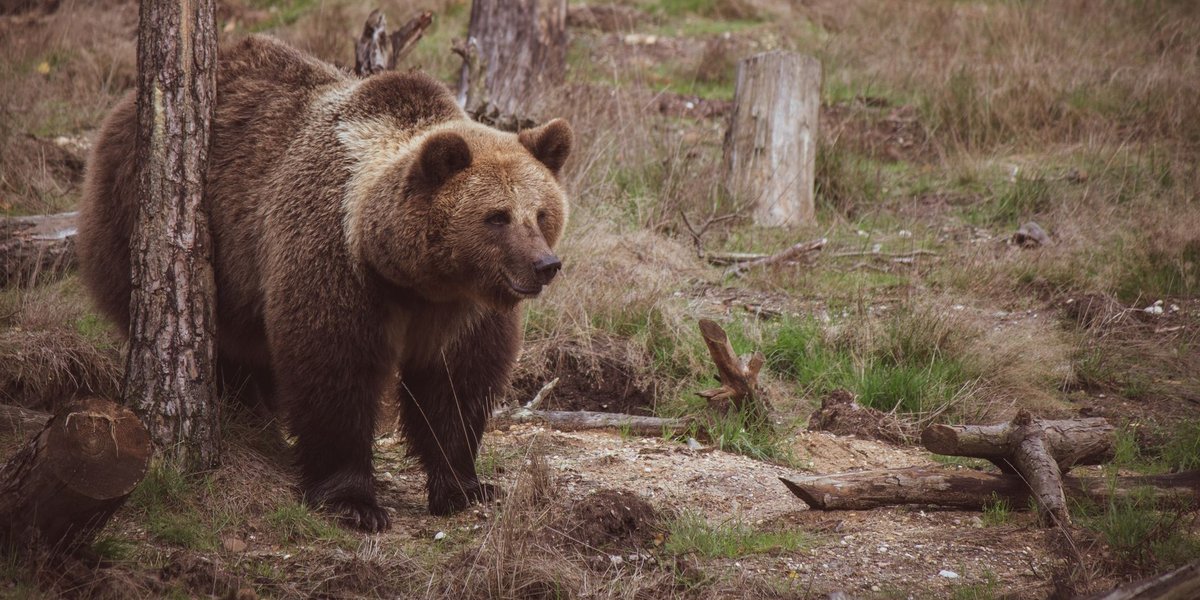
Brown bear (ведмідь бурий). Ukraine’s bears are almost entirely a Carpathian population, numbering in the low hundreds. Bears here eat mostly plants, berries and beechnuts, and den in the fall under root plates or in rock crevices. Status: Least Concern globally, but protected and rare within Ukraine.
Eurasian lynx (рись). The lynx hunts roe deer and hares in the beech and spruce forest, and almost no one sees one. Its tufted ears are not decoration. Lynx use them to sharpen directional hearing. Status: Least Concern.
Western capercaillie (глухар). A turkey-sized grouse of old spruce forest. Males perform a courtship display in spring so absorbed that, for a few seconds in the song, they go deaf to everything around them. Hunters once exploited this, which is partly why numbers fell. Status: Least Concern globally, protected in Ukraine.
European bison (зубр). The bison was extinct in the wild by 1927, with the last animals killed in the Caucasus. Zoo stock rebuilt the species, and free-ranging herds now exist in the Ukrainian Carpathians. It’s Europe’s heaviest land animal, and bulls can exceed 800 kg. Status: Near Threatened, an improvement on its earlier Vulnerable listing.
Gray wolf (вовк). Wolves live across the country, but the Carpathians and Polisia hold the most stable packs. Status: Least Concern.
Polisia: Forests and Wetlands
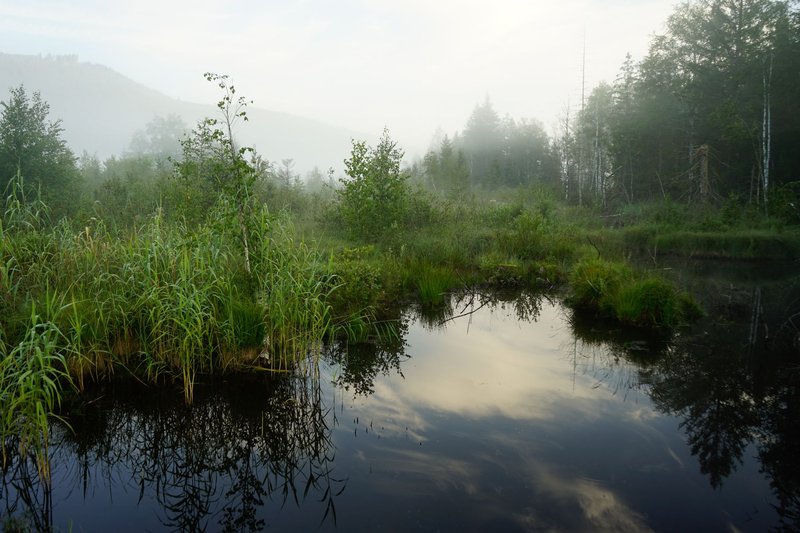
Polisia is a belt of pine forest, peat bog and river floodplain across northern Ukraine, stretching toward Belarus. It’s flat, wet and thinly populated, which makes it ideal for animals that dislike people.
Elk (лось). Known as moose in North America, the elk is the largest deer in Europe. It wades into shallow bog pools to feed on water plants, and a bull’s antlers can span over a meter. Status: Least Concern.
Eurasian beaver (бобер). Beavers were hunted nearly out of Ukraine by the early twentieth century and have since been reintroduced to many Polisian rivers. Their lodges and dams reshape streams, creating ponds that frogs, ducks and fish use. Status: Least Concern.
Russian desman (хохуля). The desman is a semi-aquatic mole-relative with a long, flexible snout and a flat scaly tail. It’s one of the oddest mammals in Europe and lives in burrows along clean, slow rivers. Pollution and the loss of floodplain pools have eliminated it from much of its range. Status: Endangered, and it appears in the Red Book of Ukraine.
White stork (лелека, бусол). Storks are woven into Ukrainian village life. Pairs build huge stick nests on roofs, utility poles and old chimneys, and returning each spring to the same nest is a good omen in folklore. Ukraine hosts one of the largest breeding populations in the world. Status: Least Concern.
Golden oriole (вивільга). Brilliant yellow males are easy to hear and hard to see. They sit in the tree canopy, whistling a flute-like call. Status: Least Concern.
The Steppe
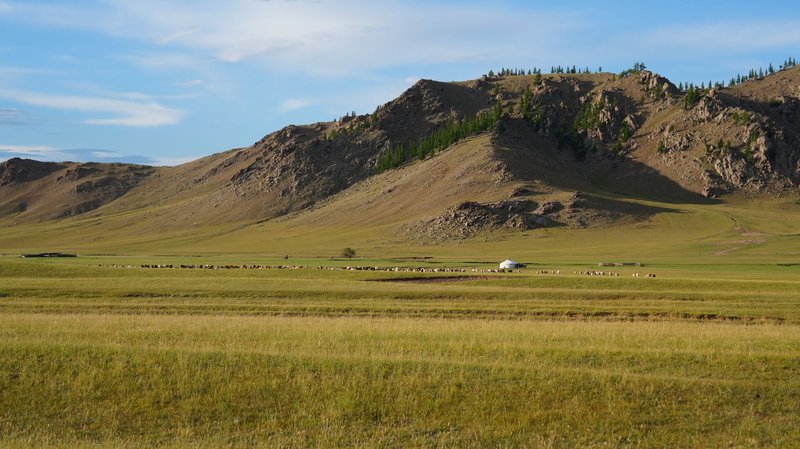
South and east of the forests, the land flattens into grassland. Most of the original steppe has been plowed, so the animals that remain depend on small reserves, field margins and old pasture. For a fuller roster of the country’s animals, including their ranges, see Animals Of Ukraine: The Complete List.
Great bustard (драхва). One of the heaviest flying birds, with males reaching up to 16 kg. Males inflate a throat sac and flip their wings inside out to display. Their numbers collapsed as farmland replaced grassland. Status: Vulnerable.
European ground squirrel (ховрах європейський). Also called the sousliks, these burrowers whistle an alarm and vanish into holes at the first shadow. They hibernate for around six months. They make the steppe work, since their burrows shelter other animals and their droppings feed the soil. Status: Endangered.
Steppe polecat (тхір степовий). Paler than the forest polecat, with a dark mask, the steppe polecat hunts ground squirrels and hamsters, and often takes over their burrows. It follows its prey, which means it declines when ground squirrels do. Status: Least Concern globally, though local numbers in Ukraine are low.
Saiga antelope (сайгак). Saigas, with their swollen, flexible noses, once ranged across the Ukrainian steppe. They were wiped out locally but have been reintroduced and now live in small numbers in protected steppe areas such as Askania-Nova. Status: Near Threatened.
Black Sea Coast and Danube Delta
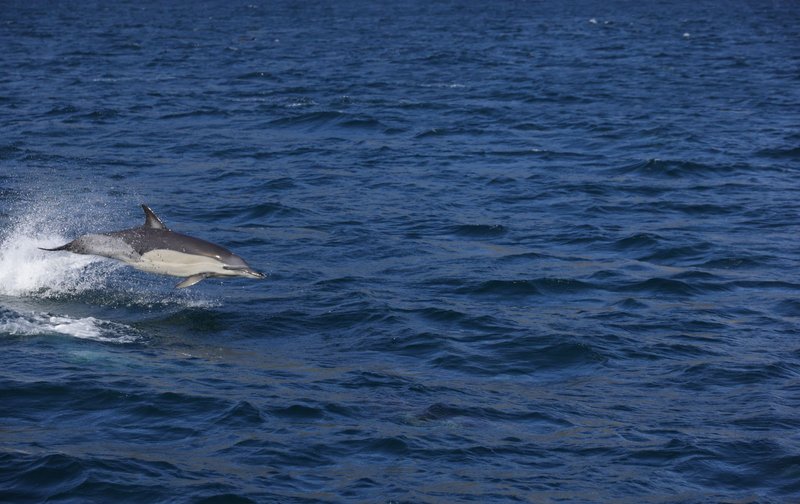
Ukraine’s coast faces the Black Sea, and the Danube delta in the southwest is a vast maze of reedbeds and channels that shelters millions of birds each year. The Ukrainian side is protected as the Danube Biosphere Reserve.
Dalmatian pelican (пелікан кучерявий). The largest pelican species. It has curly neck feathers and a wingspan of up to about 3 meters, and it nests in colonies in the delta reedbeds. Status: Near Threatened.
Pygmy cormorant (баклан малий). A small, dark waterbird of delta channels and wooded lake edges. It dives for fish and then hangs its wings open to dry. Status: Least Concern.
Black Sea dolphins and porpoises. Three cetacean species live in the Black Sea: the common bottlenose dolphin, the short-beaked common dolphin and the harbour porpoise. Each has its own Black Sea subspecies. The Black Sea harbour porpoise (морська свиня) is the smallest cetacean in the sea and is listed as Endangered by the IUCN, mostly because of fishing bycatch.
Eurasian otter (видра річкова). Otters live along delta waterways and reedy rivers across Ukraine. Status: Near Threatened.
Crimea
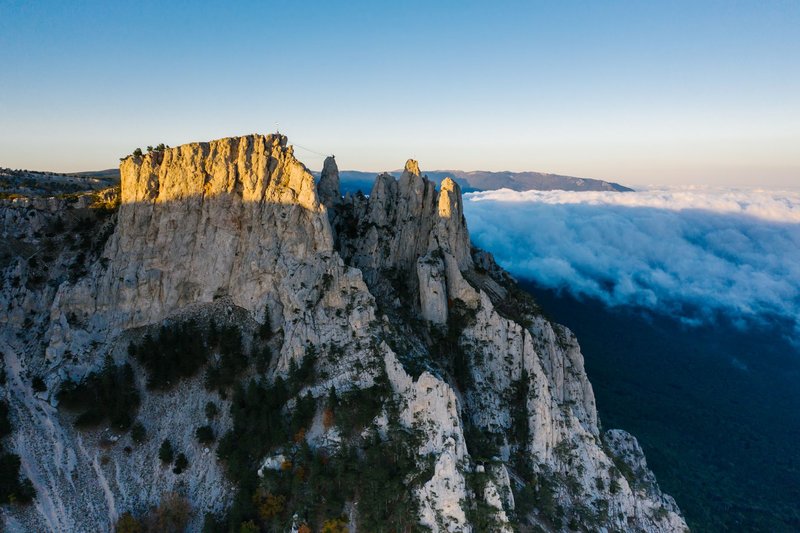
Crimea has its own mountain ecosystem on the peninsula’s southern edge, with dry forest, cliffs and rocky plateaus. The peninsula has been under Russian occupation since 2014, which has made independent wildlife monitoring close to impossible. Species lists here come largely from earlier surveys.
Black vulture (гриф чорний). One of the largest flying birds in Europe, with a wingspan around 2.8 meters. Crimea has long been one of the few places in Ukraine where it was found, and it has been reintroduced there. Status: Near Threatened.
Griffon vulture (білоголовий сип). A pale scavenger that nests on cliffs and rides thermals over the Crimean mountains. Status: Least Concern globally.
Crimean mouflon (муфлон). Many lists count it as native, but mouflon were introduced to Crimea in the early twentieth century. It’s a common error, so don’t count it among Ukraine’s native animals.
Where to See Ukraine’s Wildlife
Seeing wildlife in Ukraine takes planning, and security conditions matter. Check current government travel advice before going anywhere. For a realistic view of what the forests actually pose, read Dangerous Animals in Ukraine: A Realistic Risk Guide.
- Carpathian National Park (Ivano-Frankivsk region): the best base for mountain forest, with chances for deer, capercaillie and, if you’re lucky, bear sign. Bears and lynx are secretive; tracks are likelier than sightings.
- Askania-Nova Biosphere Reserve (Kherson region): the largest area of virgin steppe in Europe, founded as a private estate in 1898 by Friedrich von Falz-Fein. It holds bison, saiga and Przewalski’s horses. The horses are a captive-bred introduction, not native, and are best treated as an exotic extra.
- Danube Biosphere Reserve (Odesa region): the Ukrainian side of the delta, best visited by boat in spring and autumn for migrating pelicans, herons and ducks.
- Polisia reserves (Zhytomyr and Rivne regions): the place for elk, beaver and white-tailed eagles.
What the War Has Done to Wildlife
The full toll is hard to measure. Ukraine’s Ministry of Environment has reported hundreds of thousands of hectares of protected land affected by fighting, with shelling, fires and mines damaging habitat. The 2023 collapse of the Kakhovka dam flooded river and wetland areas near the Black Sea Biosphere Reserve. Biologists have also reported marine mammal deaths in the Black Sea, linked to naval activity and sonar noise, though causes are hard to confirm. Treat specific counts with caution, since monitoring is difficult in occupied and mined territory.
Summary
Ukraine’s native animals follow its geography: bears and lynx in the Carpathian beech forest, elk and desmans in the Polisia wetlands, bustards and ground squirrels on the steppe, pelicans and porpoises on the coast, and vultures in the Crimean uplands. The wildest-feeling species are also the most at risk. Great bustards, desmans and ground squirrels all depend on small remnants of habitat. Know the zone, and you know where to look.