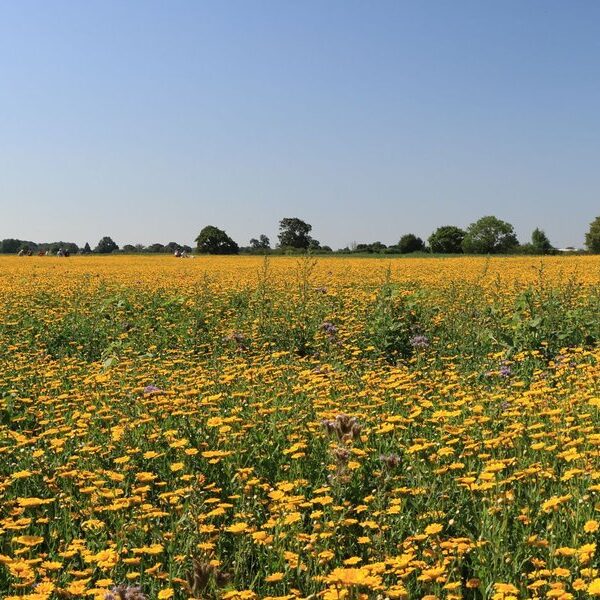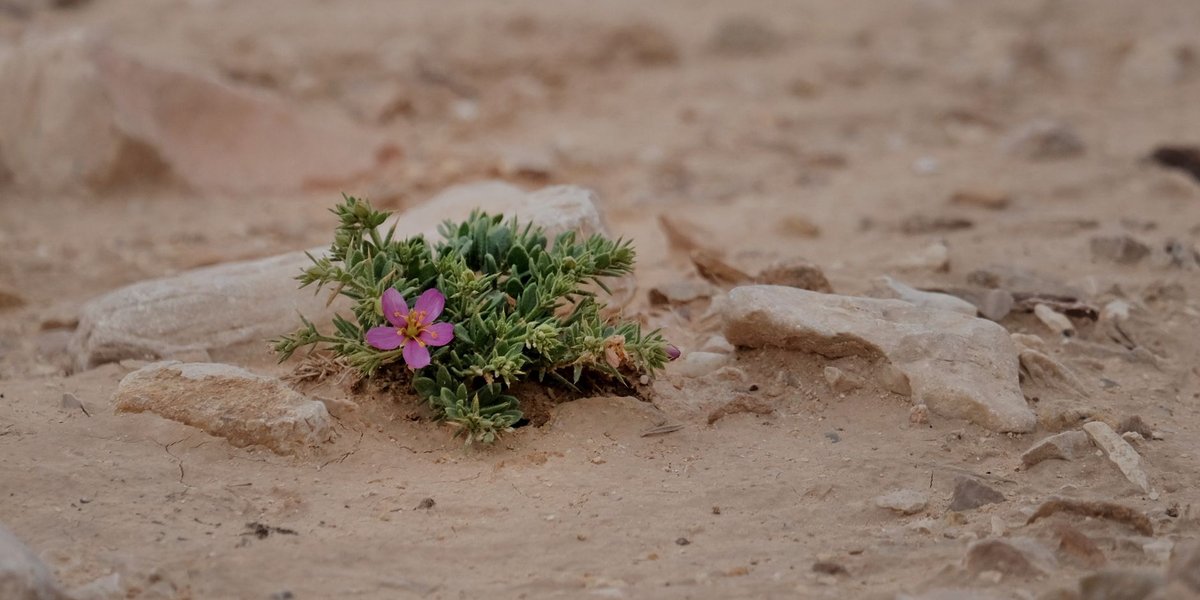
Saudi Arabia holds roughly 2,000 plant species, and a large share of them flower. Most of the color shows up in a short window after rain, which is why the country’s flowers surprise people who picture only dunes and gravel plains. The flowers of Saudi Arabia run from a rose that perfumes half the Gulf to wildflowers that carpet the north for a few weeks each spring.
This guide covers 12 of them, grouped by where you’d actually find them. Each entry gives the Arabic name where one is in common use, the scientific name, what the flower looks like, when it blooms, and what people do with it.
Contents
- Why a desert has so many flowers
- Taif and the western mountains
- Jazan and the southwest coast
- The north, AlUla and Najd
- Sand plains and wadis
- When to see Saudi Arabia’s flowers
- Summary
Why a desert has so many flowers
Rain in Saudi Arabia is rare, patchy and brief, so plants here don’t pace themselves. Annuals sit as seeds in the soil for years, then germinate, flower and set seed within weeks of a good winter rain. Perennials hold deep roots and bloom on the same signal.
Geography adds variety. The Sarawat mountains running down the west side climb above 3,000 meters in Asir and catch real rainfall, including summer monsoon showers that never reach the interior. The north and the central Najd plateau get winter and spring rain. The result is two separate bloom seasons in two very different landscapes. You can find a botanical checklist for the region on Kew’s Plants of the World Online database, which is the reference most researchers use for accepted plant names.
Taif and the western mountains
The highlands around Taif and the Asir range have the coolest nights and the most reliable moisture in the country, and the flower list reflects it.
1. Taif rose (Rosa damascena)
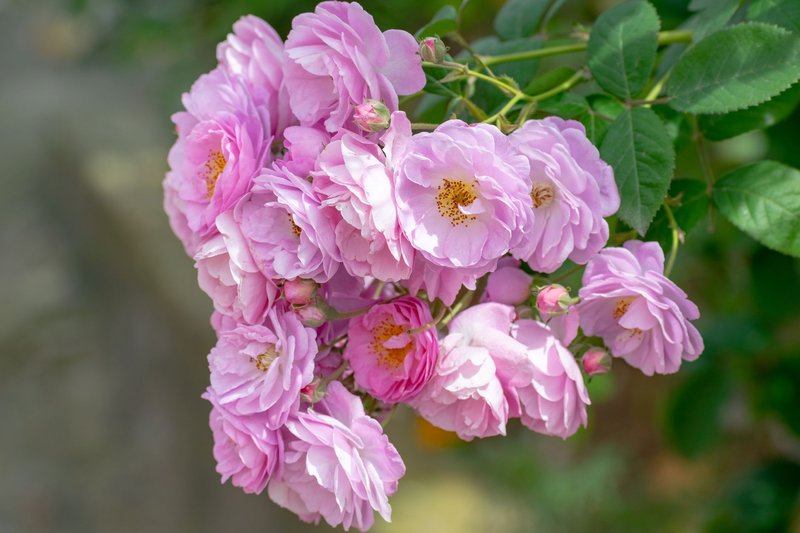
Arabic: ward taifi. Pink, with a dense cluster of petals and a scent that’s heavier and sweeter than a florist’s rose.
The Taif rose is a damask rose grown in terraced fields in the Al-Hada and Al-Shafa mountains near Taif, at around 1,700 meters. The harvest runs from roughly late March to early May, and pickers work before dawn because the oil evaporates as soon as the sun heats the petals. Rose oil is expensive for a simple reason: producing a kilogram takes several thousand kilograms of petals. Taif’s distilleries turn the harvest into rose water, rose oil and attar, and the oil is used in perfume and to scent the Kaaba during its washing.
Where to see it: the rose farms of Al-Shafa and Al-Hada, with the Taif Rose Festival in April.
2. Blood lily (Scadoxus multiflorus)
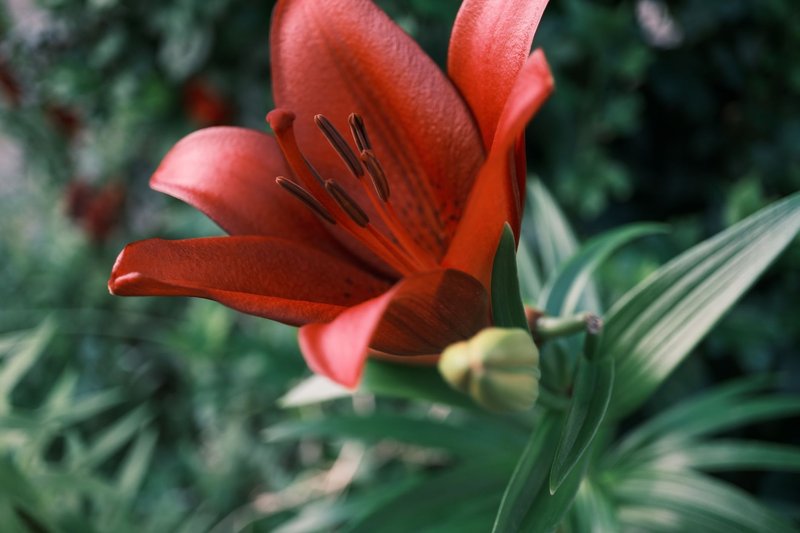
Red, and it looks nothing like a desert plant. A bulb sends up a single leafless stalk topped with a ball of tiny, star-shaped flowers, each with long stamens that make the whole head look fuzzy.
In Saudi Arabia it’s a southwestern species, found in the Asir highlands near the Yemen border, where it emerges after the summer rains. Bloom is brief and tied to rainfall, so timing matters more than the calendar. The sap and bulb are poisonous.
Where to see it: shaded, damp slopes in Asir during and just after the rainy months.
3. Desert rose (Adenium obesum)
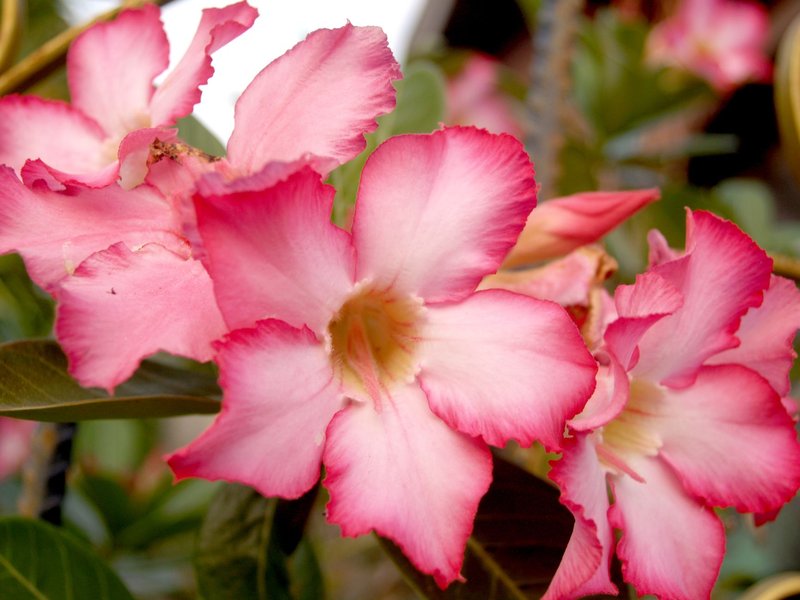
Arabic: adenium. Pink to crimson trumpets with a paler throat, opening on bare branches before the leaves return.
The swollen, bottle-shaped base of the trunk stores water, and it’s what makes the plant look sculpted in the wild. It grows on rocky slopes across the southwest, in Asir, the Tihama lowlands and Jazan. The milky sap is toxic, and in parts of Africa it was used to poison arrow tips. Today it’s more famous as an ornamental that nurseries sell worldwide, though the Saudi wild plants are the original stock of that trade.
Where to see it: rocky hillsides in the southwest during the warm months.
4. Oleander (Nerium oleander)
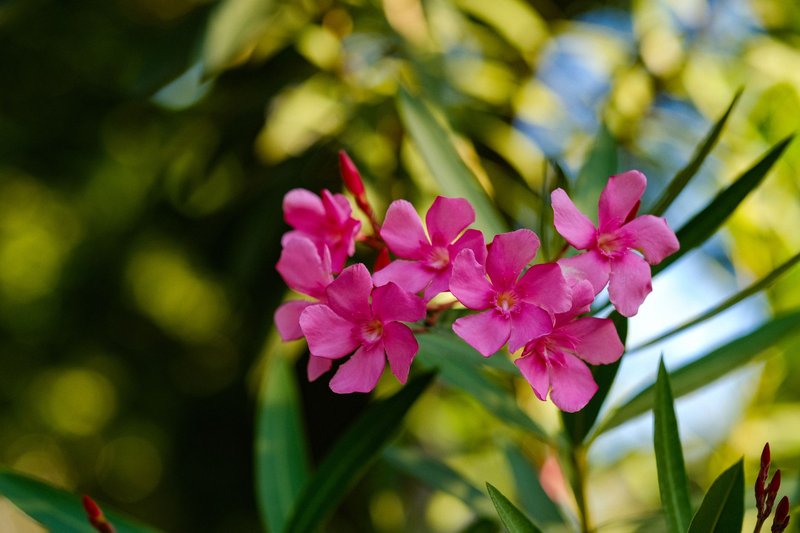
Arabic: difla. Clusters of pink, sometimes white, five-lobed flowers on a tall evergreen shrub with narrow, leathery leaves.
Oleander follows water. You’ll find it along wadi beds and seasonal streams in the western mountains, where its roots reach moisture that’s invisible on the surface. It blooms from spring into summer. Every part of the plant is poisonous, which is why livestock leave it alone and why it survives in grazed country.
Where to see it: wadi floors in Hijaz and Asir.
Jazan and the southwest coast
5. Arabian jasmine (Jasminum sambac)
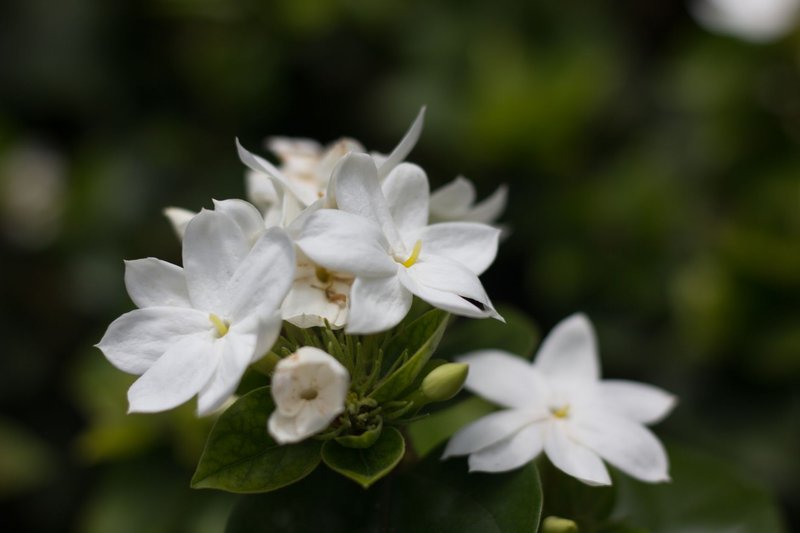
Arabic: fil in Jazan, yasmin more widely. Small white flowers with a strong sweet scent that gets stronger toward evening.
Jazan is the region most tied to jasmine in the Saudi imagination. Men there string the flowers into headbands and garlands, worn at weddings and festivals. The plant is cultivated rather than wild, a climbing shrub that blooms through the hottest months. Jasmine from Jazan and the surrounding southwest has been a trade good for generations, sold as loose blossoms and as strung garlands in the souks.
Where to see it: Jazan’s farms and markets, from late spring through summer.
The north, AlUla and Najd
The north gets most of its flowers from winter rain. A wet year turns the Northern Borders region, the AlUla area and the central rawdas (shallow depressions where water collects) into color. National Geographic’s feature on Saudi Arabia’s desert blooms is a good picture of what a good year looks like around AlUla.
6. Zamlouq (Arnebia decumbens)
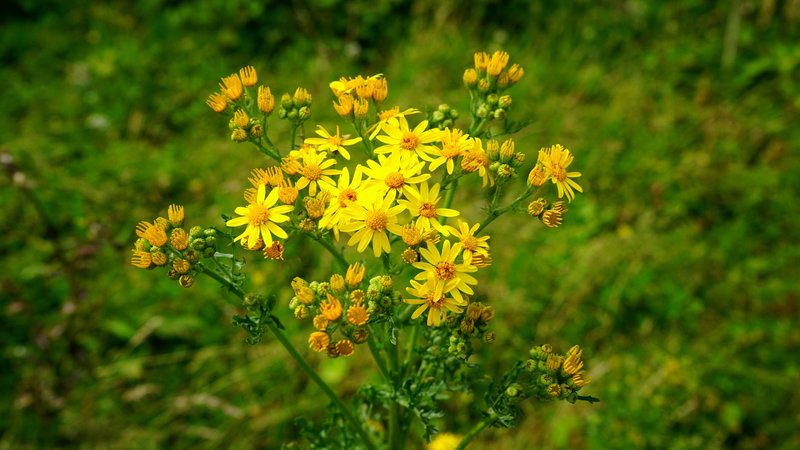
Yellow petals marked with dark purple spots, low to the ground on a hairy, gray-green plant.
The spots are the interesting part. In many Arnebia species they fade as the flower is pollinated, which signals to insects that a flower is no longer worth visiting. Known as zamlouq in the Northern Borders region, it grows in sandy ground and rawdas after winter rain and flowers in spring. Arnebia roots also produce a red dye, which is why the genus appears in traditional dyeing and medicine across the region.
Where to see it: Northern Borders and the sandy plains around AlUla in March and April, after a wet winter.
7. Golden chamomile (Matricaria aurea)
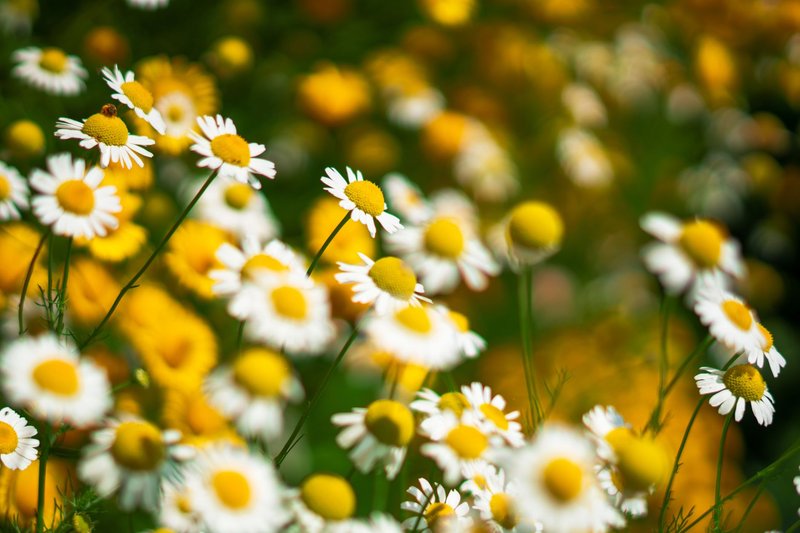
Arabic: babunaj. A small plant with a yellow button center and no white petals, which makes it look like a chamomile that lost its rays.
It grows in sandy soil and along roadsides after winter rain and flowers in late winter and spring. Locals use it the way the rest of the world uses chamomile: steeped as a tea for stomach complaints. It’s also one of the first flowers to appear, so a roadside covered in yellow buttons usually means the season has started.
Where to see it: sandy plains in the north and Najd, February to April.
8. Arfaj (Rhanterium epapposum)
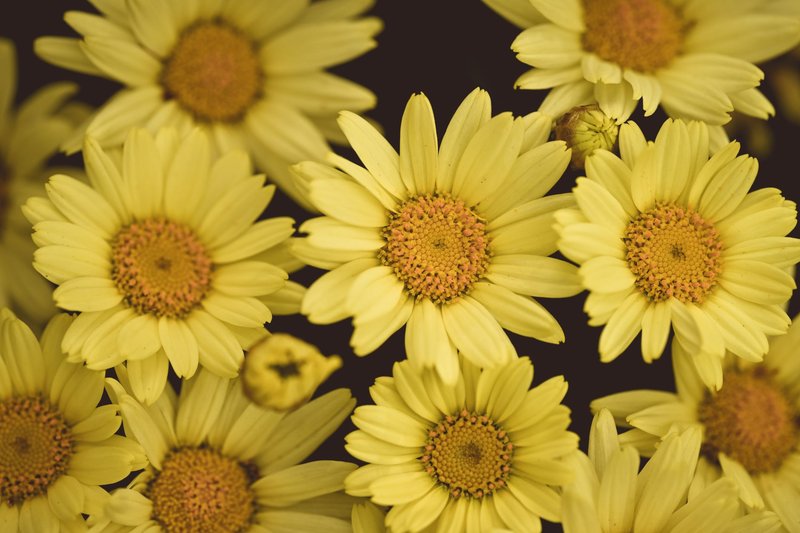
Arabic: arfaj. Bright yellow, daisy-like heads on a rounded, bushy shrub that grows up to about a meter tall.
Arfaj is a signature plant of the sandy Najd and northern desert, and one of the most important grazing shrubs for camels and sheep. It flowers in spring and the bloom is fragrant. Saudi Arabia has no single national flower that every source agrees on, but arfaj is the one most often associated with the Arabian desert. Kuwait made it its national flower.
Where to see it: open sandy plains across the north, Najd and the east, in spring.
Sand plains and wadis
9. Desert hyacinth (Cistanche tubulosa)
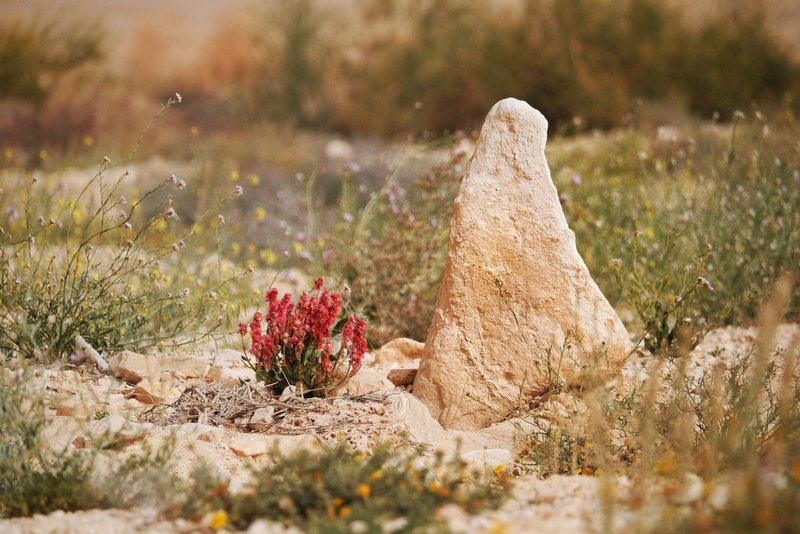
Arabic: dhanoon. A thick yellow spike, 30 to 60 centimeters tall, covered in tubular flowers and rising straight out of bare sand with no leaves at all.
It has no leaves because it makes no food. The plant is a parasite that taps the roots of desert shrubs, and the spike you see is almost everything above ground. The fleshy stem has been eaten and used as a tonic by Bedouin communities for centuries. It flowers from late winter into spring.
Where to see it: sandy plains and shrubby flats across the interior, February to April.
10. Caper bush (Capparis spinosa)
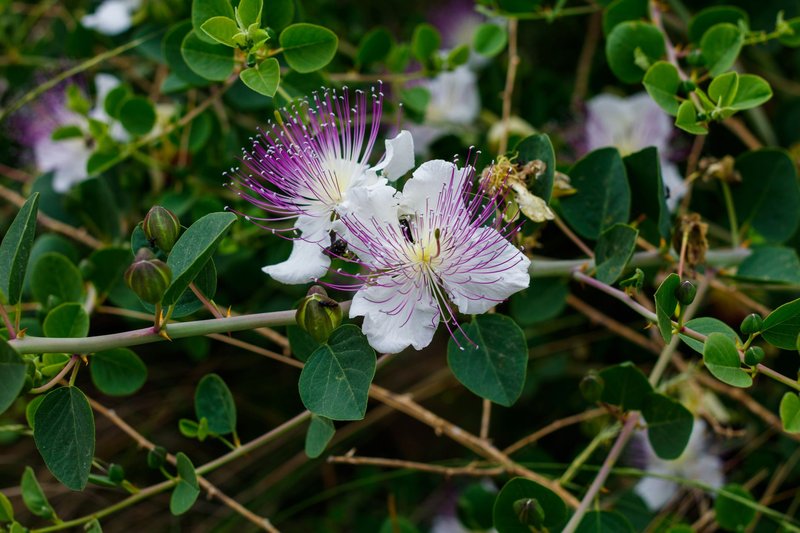
Arabic: kabar. White to pale pink petals with a burst of long purple stamens that look like a firework frozen in place.
Each flower lasts about a day, opening in the morning and wilting by afternoon, which makes catching one in good condition a little bit of luck. The sprawling shrub grows out of rock faces, old walls and gravelly slopes, where almost nothing else survives. The unopened buds are the capers sold in jars. It flowers from spring through summer.
Where to see it: rocky slopes, wadi edges and old stone walls across the country.
11. Apple of Sodom (Calotropis procera)
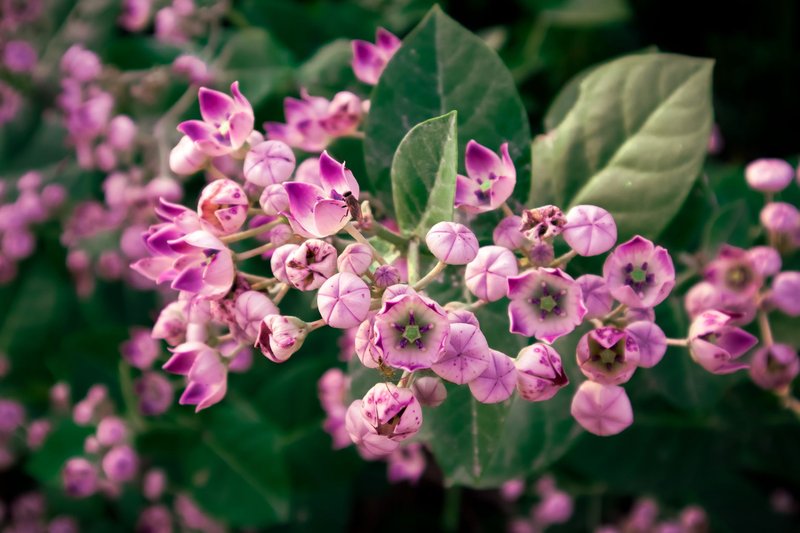
Arabic: ushar. Waxy, white flowers tipped with purple, on a large shrub with thick, blue-gray leaves.
It’s one of the most widespread wild plants in Saudi Arabia, especially in disturbed ground, roadsides and dry wadis. The flowers are followed by large, green, balloon-like fruits that split open to release silky seed floss. The white latex inside the plant is toxic and irritates skin and eyes. It blooms for much of the year wherever it’s warm.
Where to see it: roadsides, wadi beds and open ground in most regions, nearly year-round.
12. Umbrella thorn acacia (Vachellia tortilis)
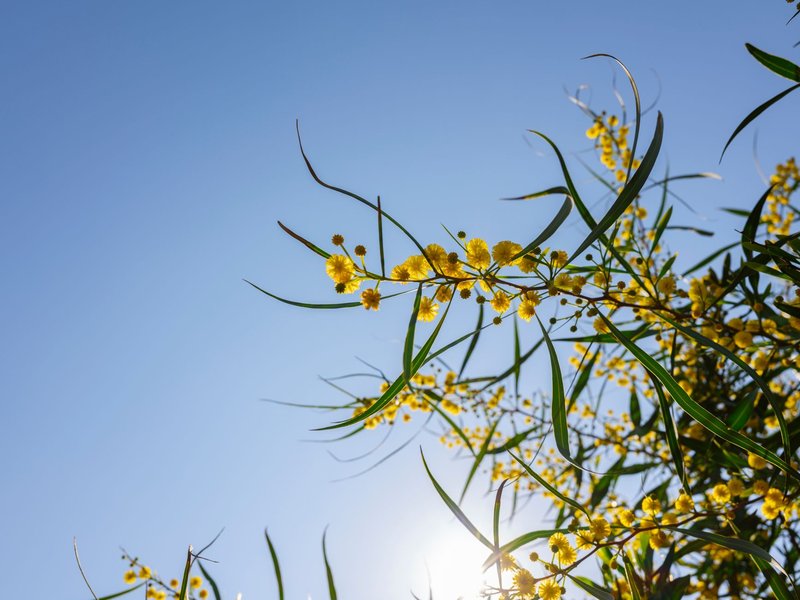
Arabic: samur. Small, cream-white puffballs on a flat-topped tree that gives the desert its classic silhouette.
The flowers are modest on their own, but the tree is the backbone of many wadi ecosystems, supplying shade, grazing and nectar when little else is flowering. Blooms are heaviest in spring and again after rain. The twisted seed pods are valuable fodder for goats and camels.
Where to see it: wadis and plains across the west and the interior, spring.
When to see Saudi Arabia’s flowers
There isn’t one season. There are three.
- February to April: The main wildflower season in the north, Najd and AlUla area, when zamlouq, golden chamomile, arfaj and desert hyacinth all bloom. A wet winter makes it spectacular, and a dry one makes it thin. Check rainfall reports from the previous November through February before planning a trip.
- March to May: The Taif rose harvest, with the Taif Rose Festival in April. This is the one reliably timed event on the calendar.
- July to September: The summer rains in Asir and the southwest, when blood lily and other highland species appear and jasmine is at its peak in Jazan.
Some practical rules. Go early, because many flowers close or wilt by midday heat. Stay on tracks and paths, since desert crusts and seedlings are fragile and the plants that look like weeds often hold the soil together. And don’t pick wild flowers, especially in protected areas, where picking is regulated. Conservation status for individual species is tracked in the IUCN Red List, and several of the region’s native plants are threatened by overgrazing and development.
Summary
The flowers of Saudi Arabia split neatly into three groups: cultivated stars like the Taif rose and Jazan’s jasmine, highland species in the Asir and Hijaz mountains, and desert wildflowers that bloom in short bursts after rain. The Taif rose is the easy one to plan a trip around, since its harvest dates are predictable. The wildflowers need a wet winter and some flexibility, but a good year in the north is worth the gamble.