Saint Lucia is 27 miles long and about 14 wide, and it holds a parrot found nowhere else on Earth, a lizard that lives on two islets, and one of the rarest snakes on the planet. The island has recorded roughly 186 bird species, five of them endemic. The national bird, the Saint Lucia parrot, is one of those five.
The animals of Saint Lucia sort into a few groups: forest birds, reptiles, a thin list of mammals, and a marine zone where sperm whales pass within a few miles of the west coast. This guide covers each group, says which species are endemic, and tells you where to look.
Table of Contents
- TLDR
- Birds of Saint Lucia
- Reptiles and Amphibians
- Mammals
- Marine Life
- Introduced Species
- Where to See Saint Lucia’s Wildlife
- Safety: The Lancehead and the Cane Toad
TLDR
- Must-see endemics: Saint Lucia parrot, Saint Lucia oriole, Saint Lucia whiptail, Saint Lucia racer, Saint Lucia lancehead.
- Easiest big wildlife encounter: a whale-watching boat off the west coast, where sperm whales and dolphins are seen year-round.
- Best forest birding: Edmund Forest Reserve and the Quilesse area, early in the morning.
- Only dangerous land animal: the lancehead (fer-de-lance). Bites are rare and avoidable.
- Not on the island anymore: the Saint Lucia giant rice rat is extinct, so skip any list that includes it.
Birds of Saint Lucia
Birds are the main event here. The island’s rainforest interior is steep and wet, and that is where the endemics hide. For a quick overview of the island’s wildlife, see Top 7 Tropical Wildlife of Saint Lucia.
Saint Lucia Parrot (Amazona versicolor)
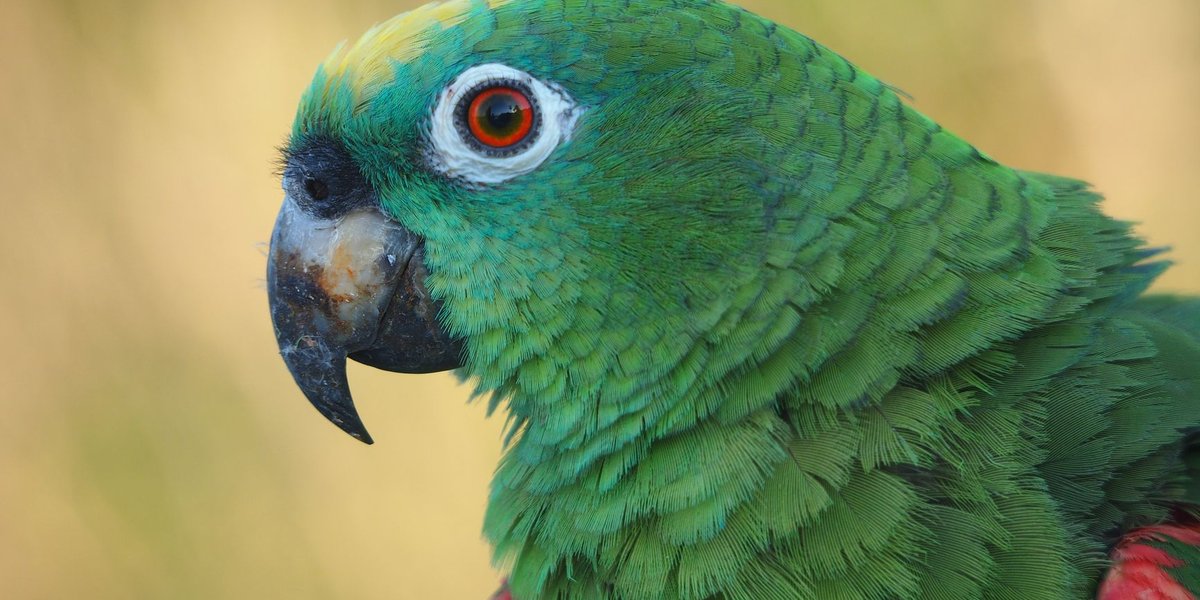
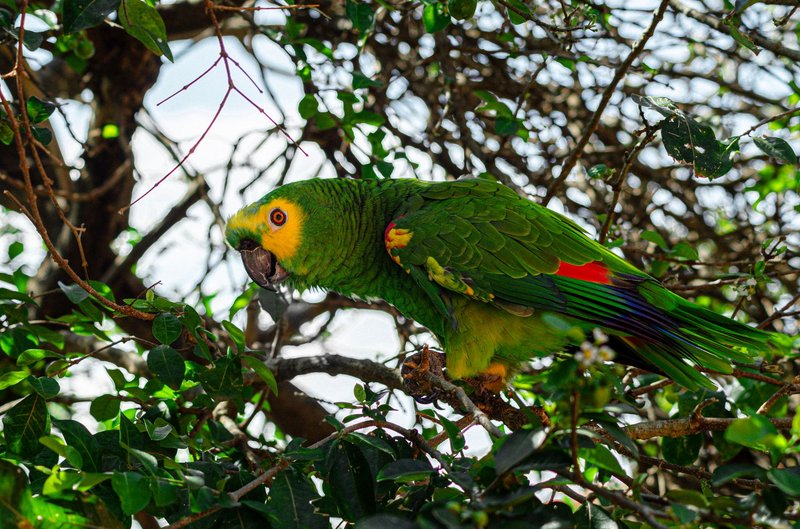
The national bird, known locally as the Jacquot. It is green with a blue forehead, a red patch on the chest, and a wash of violet-blue and red across the wings and belly that gives the species its Latin name. It lives only in the island’s mountain rainforest.
By the 1970s hunting and forest clearing had cut the population to roughly 100 birds. A national conservation campaign, backed by a hunting ban and a school education program, brought the population back, and the IUCN Red List now classes the species as Vulnerable rather than Endangered. Parrots fly over the forest canopy in pairs at dawn and dusk, screeching loudly enough that you often hear them before you see them. Edmund Forest Reserve and the Quilesse Forest Reserve are the most reliable places.
Saint Lucia Oriole (Icterus laudabilis)
A glossy black bird with a bright orange-yellow belly and rump. Locals call it the Cacique or “Carouge.” It is a forest bird of the wetter slopes and is classed as threatened. Look for it feeding in banana fronds and heliconia flowers, mostly on the east side of the central ridge.
Saint Lucia Black Finch, Pewee, and Warbler
The other three endemic birds are harder to find and less showy. The Saint Lucia black finch (Melanospiza richardsoni) scratches through leaf litter in forest undergrowth and looks like a plain dark sparrow. The Saint Lucia pewee (Contopus oberi) is a small olive-brown flycatcher that perches upright on mid-level branches. The Saint Lucia warbler (Setophaga delicata) is a small yellow-and-grey bird that sings from dry forest and scrub. You will need a guide or at least a bird call app to separate them from everything else.
Forest Thrush (Cichlherminia lherminieri)
A shy, brown, white-throated thrush that walks on the forest floor and flips leaves for insects. The species is listed as Vulnerable by the IUCN, and it is a staple target for birders because it is easy to miss. The Saint Lucia subspecies is found in the island’s mountain forest. Walk slowly, listen for rustling in the leaf litter, and expect to wait.
Hummingbirds and Garden Birds
Not every bird here needs a hike. The purple-throated carib, green-throated carib, and Antillean crested hummingbird visit hotel gardens and roadside flowers. The bananaquit, a small yellow-bellied bird called “sucrier” locally, will steal sugar from your breakfast table. The Lesser Antillean bullfinch and Carib grackle round out the common backyard crowd.
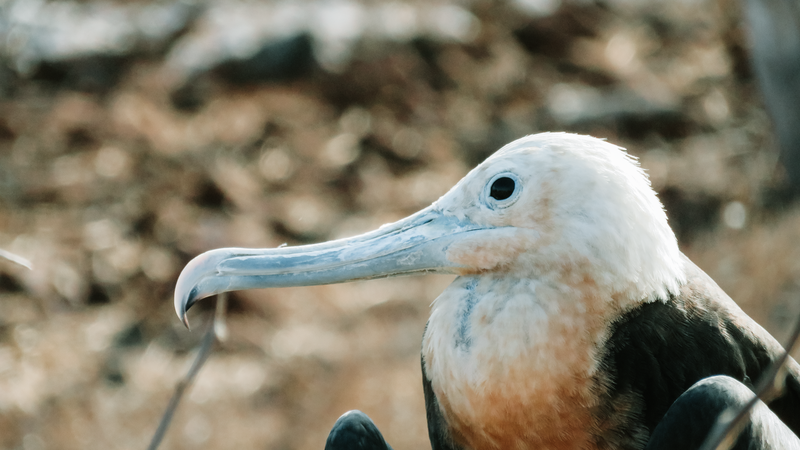
Magnificent Frigatebird (Fregata magnificens)
These birds nest on the Frigate Islands Nature Reserve off the east coast, where males inflate a bright red throat pouch to attract mates. The reserve is small, and access is by guided visit only, usually arranged through the Saint Lucia National Trust.
Reptiles and Amphibians
The reptiles are where Saint Lucia gets strange. Most of the interesting species are endemic, and several survive only because they found a refuge from the mongoose.
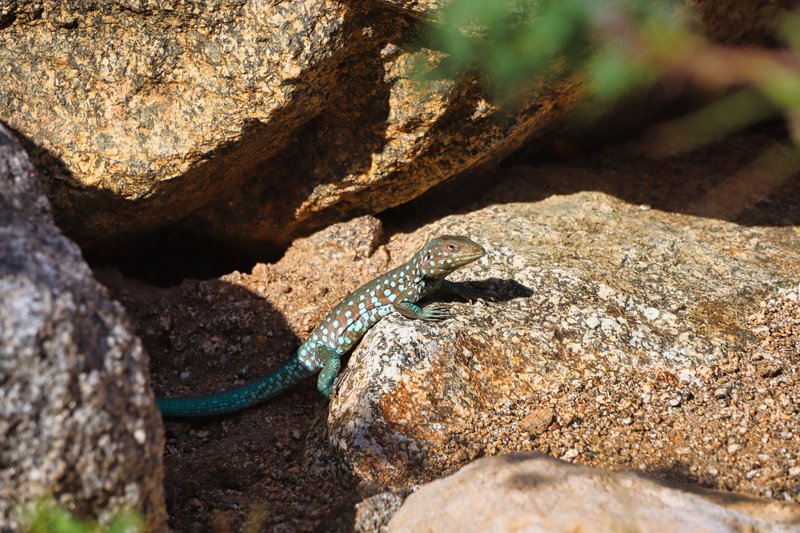
Saint Lucia Whiptail (Pholidoscelis vanzoi)
A slender, fast lizard with a long tail. Males are brown with pale stripes and blue on the tail and flanks. The whiptail lives only on the Maria Islands, two tiny islets off the south coast near Vieux Fort. Mongoose and rats wiped it out on the mainland, and the islets are a nature reserve now. It is classed as a threatened species, and the Maria Islands are the only place you can see it in the wild.
Saint Lucia Racer (Erythrolamprus ornatus)
The racer was once called the rarest snake in the world. It is a slim, non-venomous snake with a brown-and-cream pattern and a pale underside, and it lives on Maria Major. The IUCN lists it as Critically Endangered, with a population counted in the dozens, not thousands. It is harmless to people. Look for it under rocks and in dry scrub on guided Maria Islands visits.
Saint Lucia Boa (Boa constrictor orophias)
A subspecies of the common boa constrictor, locally called “tête chien” (dog head). It is non-venomous, grows past two metres, and eats rats, opossums, and birds. Boas are most active at night and mostly stay hidden in forest and plantations, so sightings are lucky, not planned.
Saint Lucia Lancehead (Bothrops caribbaeus)
Also called the fer-de-lance or “serpent.” This is the island’s only venomous snake and it is endemic. It is brown or grey with a triangular head and a patterned back, and it is usually under 1.5 metres. It lives in forest, cane fields, and banana plantations. See the safety section below for how to avoid trouble.
Saint Lucia Anole and Other Lizards
The Saint Lucia anole (Anolis luciae) is a green-to-brown lizard that does push-ups on tree trunks, and it is endemic. Smaller still are the geckos, including the Saint Lucia pygmy gecko (Sphaerodactylus microlepis), another endemic. Green iguanas live in the coastal forest and often sit on rocks over the road.
Frogs and Toads
Johnstone’s whistling frog is the source of the high, peeping night chorus that tourists mistake for insects. The cane toad is an introduced species and gets its own entry in the safety section.
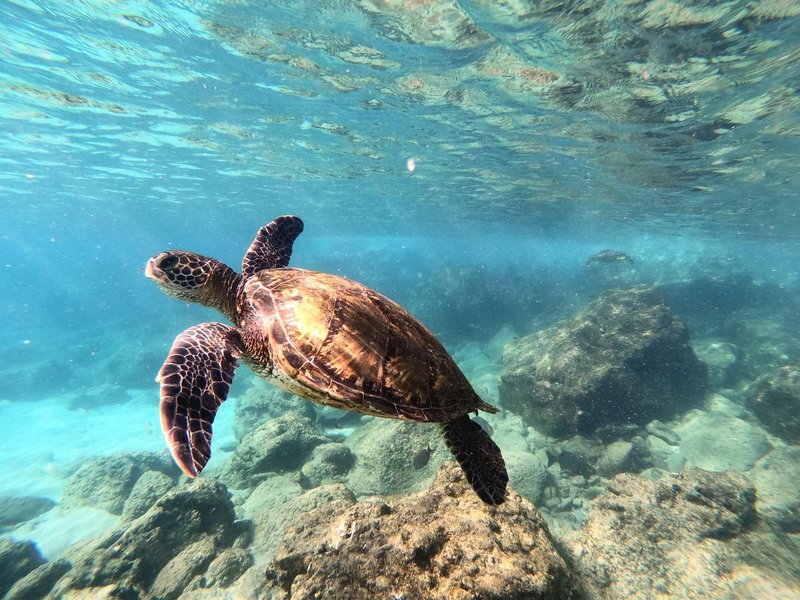
Sea Turtles
Leatherback, green, and hawksbill turtles nest on Saint Lucia’s beaches. Leatherbacks nest from roughly March to July, mainly at Grand Anse and Desbarras on the northeast coast, and community groups run supervised night walks. Go with a guide and do not use white light or flash on nesting females.
Mammals
Saint Lucia has few land mammals and almost no big ones. What it does have is bats, a handful of small mammals, and a lot of mongoose.
Bats
Bats are the island’s most numerous native mammals, with around a dozen species recorded. Several roost in caves and old estate buildings. You will see fruit bats and insect-eating bats at dusk around the hotels and the Pitons, even if you never find a roost.
Agouti
A rabbit-sized rodent with reddish-brown fur that forages on the forest floor for fallen fruit and seeds. It was probably brought to the island by Amerindians centuries ago. Local hunters know it, and you can spot it in the interior reserves if you walk quietly.
Opossum (Manicou)
The common opossum, called “manicou” on the island, is a nocturnal marsupial that eats fruit, insects, and small animals. It is common near villages after dark and is usually seen crossing a road.
An Extinct Mammal Worth Knowing
The Saint Lucia giant rice rat (Megalomys luciae) was a large native rodent. It disappeared in the 1880s, after introduced predators arrived. Some competitor lists still include it among the island’s animals. It is gone.
Marine Life
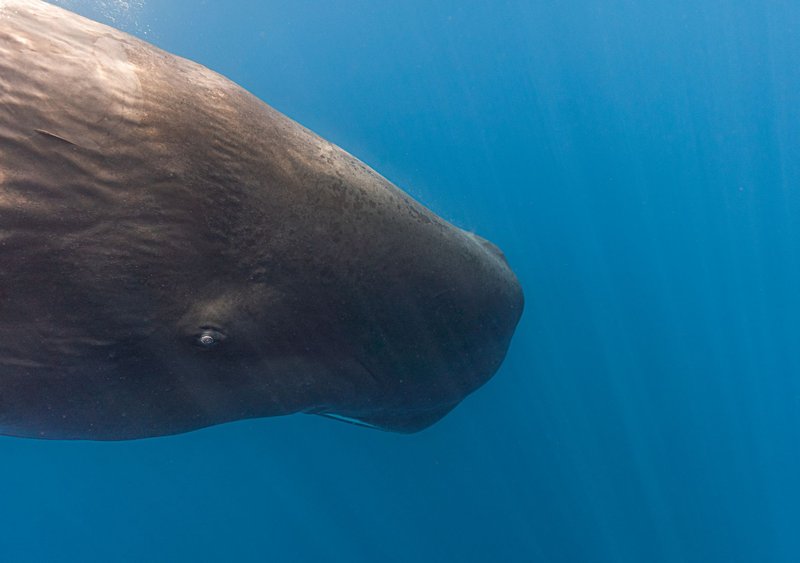
Saint Lucia sits on a steep underwater slope, so deep water starts a short boat ride from the west coast. That is why whale-watching works here.
Whales and Dolphins
Sperm whales are the headline species, and they are seen year-round. Short-finned pilot whales, spinner dolphins, bottlenose dolphins, and Atlantic spotted dolphins also turn up regularly, and humpback whales pass through between roughly December and April. Boat tours leave from Rodney Bay, Marigot Bay, and Soufrière, typically half-day trips. Dolphin pods often approach the boat on their own.
Reef Fish and Invertebrates
The Soufrière Marine Management Area, around the Pitons, protects a stretch of reef with parrotfish, sergeant majors, trumpetfish, and angelfish. Anse Chastanet and Anse Cochon are two shore dives and snorkel spots with easy entry. Seahorses and octopuses turn up on night dives.
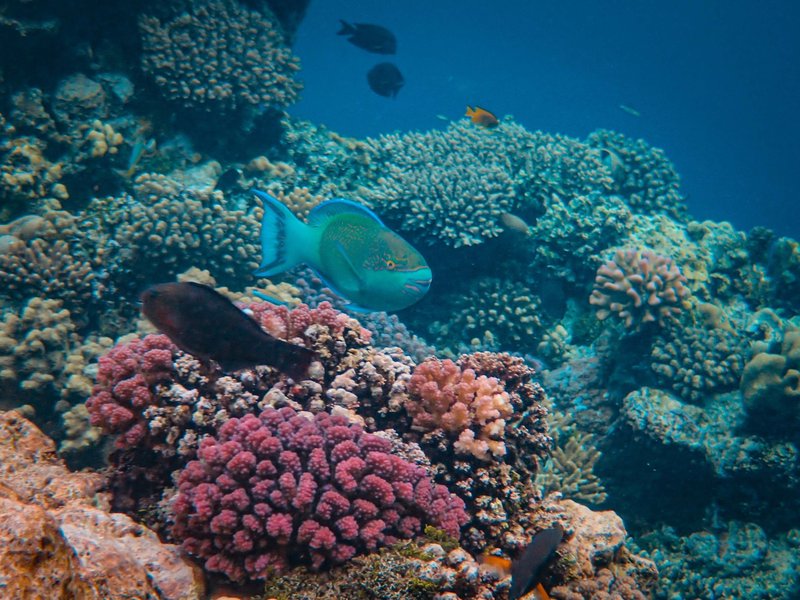
Sea Turtles in the Water
Green and hawksbill turtles graze on seagrass beds along the west coast and are often seen while snorkeling in the calm bays. Nesting leatherbacks are covered in the reptile section above.
Introduced Species
Not every animal here arrived on its own. The ones below came with people. The complete list of invasive species in Saint Lucia catalogs 22 of them, with each one’s native origin.
Small Indian Mongoose
Brought in during the late 1800s to control rats and snakes in the sugar cane fields. It did kill snakes, and it also nearly wiped out the racer, the whiptail, and the giant rice rat on the mainland. Today it is common and easy to see, usually darting across a road.
Cane Toad (Rhinella marina)
A large, warty toad with bulging glands behind the eyes. It was brought in to eat cane pests and has spread across the island. It is toxic to dogs and other animals that mouth it.
Lionfish (Pterois volitans)
This Indo-Pacific fish has invaded the Caribbean and now lives on Saint Lucia’s reefs. It has long spines and venomous fins. Local divers and dive operators cull lionfish to protect native reef fish.
Where to See Saint Lucia’s Wildlife
| Animal | Best place | Notes |
|---|---|---|
| Saint Lucia parrot | Edmund Forest Reserve, Quilesse | Early morning, with a guide |
| Saint Lucia oriole | Central rainforest slopes | Look in banana and heliconia |
| Whiptail and racer | Maria Islands Nature Reserve | Guided visits only, arranged in advance |
| Frigatebirds | Frigate Islands Nature Reserve | Guided visits through the National Trust |
| Sperm whales, dolphins | West coast boat tours | Year-round, humpbacks from about December |
| Leatherback turtles | Grand Anse, Desbarras | Nesting roughly March to July |
| Reef fish | Soufrière Marine Management Area | Snorkel at Anse Chastanet |
The Pitons are also worth the trip for the animals, not just the view. The twin peaks are a UNESCO World Heritage Site with forest that supports a good share of the island’s endemic birds and reptiles. The Gros Piton trail takes most people about three to four hours round trip.
Safety: The Lancehead and the Cane Toad
The lancehead. The World Health Organization treats snakebite as a medical emergency worldwide, and the same applies here. Lancehead bites on tourists are uncommon. You lower the odds further by wearing closed shoes on trails, keeping your hands out of dense brush and rock crevices, and carrying a light at night. If someone is bitten, keep them still, remove tight jewelry, and go directly to a hospital. Do not cut the wound or try to suck out venom.
The cane toad. It is not a danger to people who leave it alone, but its skin secretions are harmful if they reach your eyes or mouth. Wash your hands after touching one. Keep dogs away from them.
Most of the island’s animals are shy, and most visitors never meet a snake. The ones worth traveling for are the parrot, the whiptail, and the whales. Go early, hire a local guide for the forest and the Maria Islands, and you will see more than people who try it alone.