
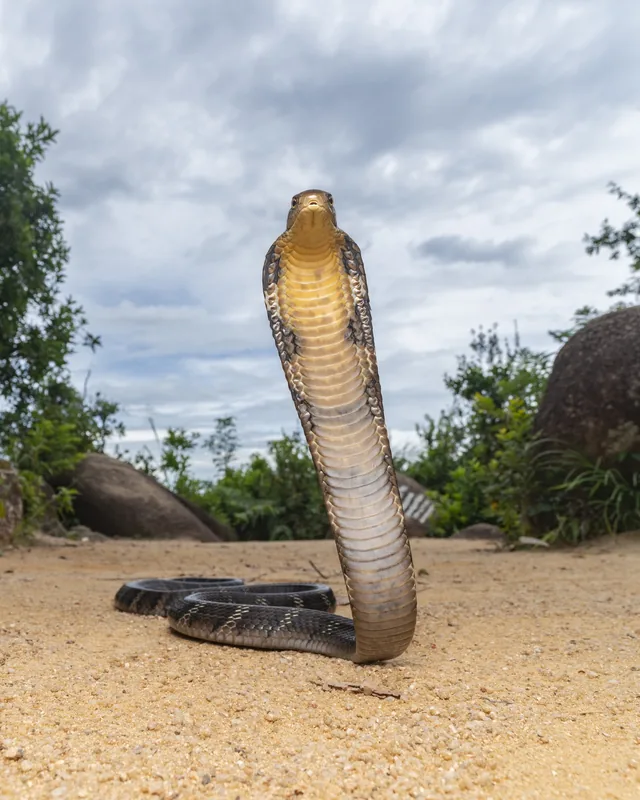
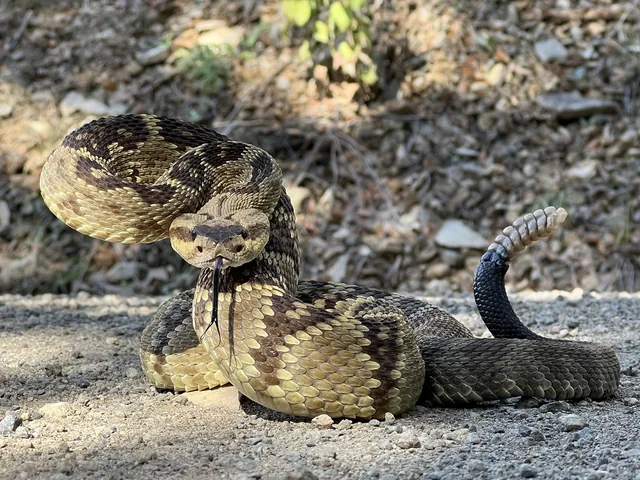
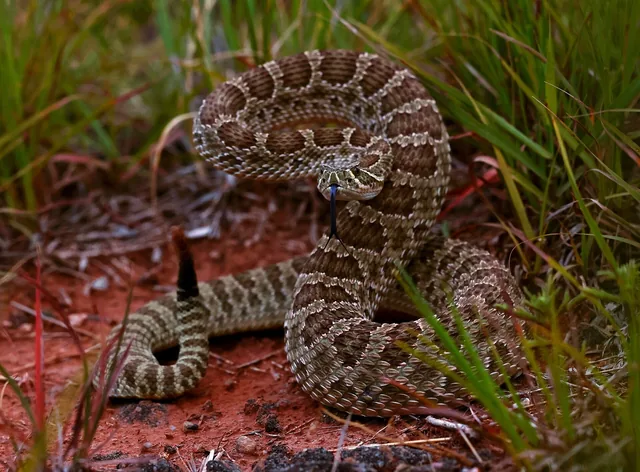
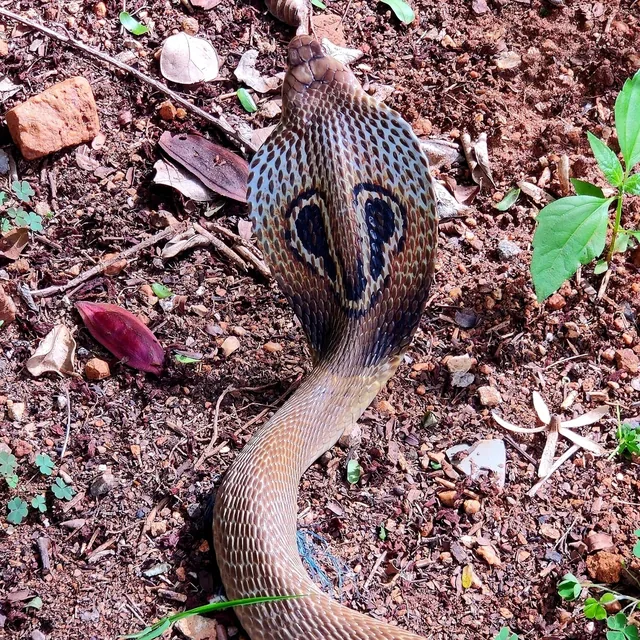
Can you name the snake?
Ten snake photos, four choices each, no timer. Pick a level.
Your photos
Keep reading about snakes
More quizzes
This snake identification quiz shows you 10 photos of real snakes and asks you to name each one from four choices. Use it as a snake ID quiz for beginners or as a test of how well you separate venomous snakes from their harmless look-alikes: pick Easy, Medium or Hard. After every answer the game shows the mark that identifies the snake, so each round of this snake identification game teaches you something for the next.
How the snake identification game works
The quiz holds 75 snakes, 25 per level. Every round draws 10 of them at random, so no two rounds are the same.
- Easy covers the most famous snakes in the world: the King Cobra, Green Anaconda, Black Mamba, Gaboon Viper and Green Tree Python. The wrong answers are other famous snakes, often from the same continent.
- Medium is the snakes North Americans find in yards, parks and on trails: the Common Garter Snake, DeKay’s Brownsnake, Ring-necked Snake, Eastern Hognose Snake, Eastern Copperhead and Timber Rattlesnake.
- Hard is built from the pairs people confuse most, usually a venomous snake and the harmless species that resembles it: the Eastern Coral Snake and Scarlet Kingsnake, the Cottonmouth and the watersnakes, the Mojave and Western Diamondback Rattlesnake, and the Smooth and Rough Green Snake.
Every snake on Hard can be identified from a clear photo. Pairs that only range, scale counts or a snake in the hand can separate, such as the Northern and Florida Cottonmouth or the Eastern and Western Massasauga, are left out.
Score 10 out of 10 to earn the top rank. Share your score and see whether your friends can beat it.
How to identify a snake from a photo
Herpetologists check a snake in a fixed order. The same order works on a photo.
- Pattern. Pattern identifies more snakes than anything else. Note whether the snake has stripes running along the body, bands or rings crossing it, blotches, diamonds or no pattern at all. A Common Garter Snake has three pale stripes. An Eastern Copperhead has dark bands shaped like an hourglass: wide on the sides and narrow on the back.
- Body shape. Pit vipers such as rattlesnakes, copperheads and cottonmouths are thick for their length, with a thin neck behind a wide head. Racers, whipsnakes and green snakes are slender, with long tails.
- Head and tail. Look for a rattle, a pale line through the eye, an upturned snout (hognose snakes) or a yellow tail tip (young copperheads and cottonmouths).
- Scales. Keeled scales have a ridge down the middle and give the snake a rough, matte look. Smooth scales look glossy. Keels are the only mark that separates the Rough Green Snake from the Smooth Green Snake.
- Color last. Color shifts with light, age and region, and many snakes darken just before they shed. Young snakes can look like a different species: a young Black Ratsnake is gray with dark blotches and looks nothing like the adult.
Head shape and pupils are less reliable than they seem. Many harmless snakes flatten their heads into a triangle when threatened, and the Eastern Coral Snake, one of the most venomous snakes in North America, has round pupils and a narrow head.
Does the coral snake rhyme work?
The rhyme goes “Red touches yellow, kills a fellow. Red touches black, venom lack.” It works for the coral snakes of the United States: on the Eastern, Texas and Arizona Coral Snake, the red bands touch yellow ones. On the Scarlet Kingsnake, Scarlet Snake and milksnakes, black separates the red from the yellow or white.
The rhyme fails in Mexico, Central America and South America, where some of the roughly 80 coral snake species have red touching black, and some harmless mimics have red touching yellow. It also fails on aberrant snakes with missing or broken bands. Treat any banded red snake as dangerous unless you know the species.
Identify the snakes in your own photos
The quiz uses photos we picked. For a snake in your garden or on a trail, WunderWild names the species from a photo you take on your iPhone. Every snake you identify goes into your Collection.
Take the photo from at least 6 feet away and zoom in. A snake can strike about half its body length, and most bites happen when people try to handle or kill a snake.
Frequently asked questions
How many snake species are there?
The Reptile Database lists more than 4,000 snake species. About 600 of them are venomous, and around 200 can cause death or serious injury to people.
How many venomous snakes live in the United States?
About 20 species, depending on how the authority counts them. All belong to four groups: rattlesnakes, copperheads, cottonmouths and coral snakes. Rattlesnakes are the largest group, with more than 15 species. The CDC estimates that 7,000 to 8,000 people are bitten by venomous snakes in the United States each year, and about 5 of them die.
Can you tell a venomous snake by the shape of its head?
Not reliably. North American pit vipers do have wide, triangular heads, but watersnakes, hognose snakes and many other harmless snakes flatten their heads when threatened. Coral snakes are venomous and have narrow heads. Pattern is a better guide, and that is what the Hard level tests.
What is the most common snake in North America?
The Common Garter Snake has the widest range of any snake on the continent, from Florida to Canada’s Northwest Territories. It lives in yards, parks, fields and wetlands, and it is the snake most people in the United States and Canada see first.
Are the photos of real snakes?
Yes. Every photo shows a real snake and comes from Wikimedia Commons, iNaturalist, Unsplash, Openverse or another library of freely licensed images. The photographer and license appear after you answer.
Can I put this snake quiz on my website?
Yes. Click “Embed this quiz” under the game and copy the code into your page. Teachers, nature centers and reptile clubs can use it at no cost.
More snakes to learn
Practice between rounds with our guides to the most venomous snakes in the world, colorful snakes, green snakes, forest snakes, swamp snakes, garter snakes and garden snakes and white snakes.