
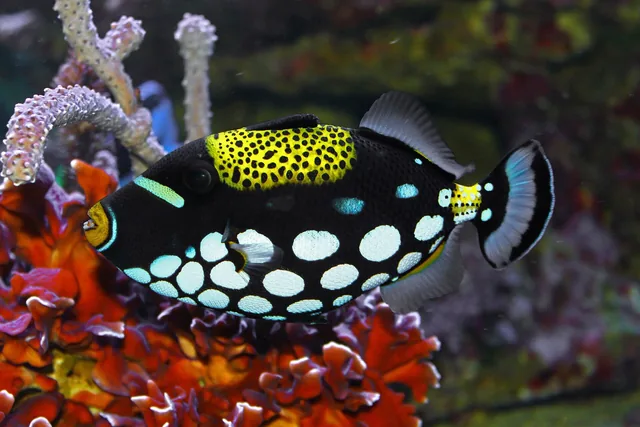
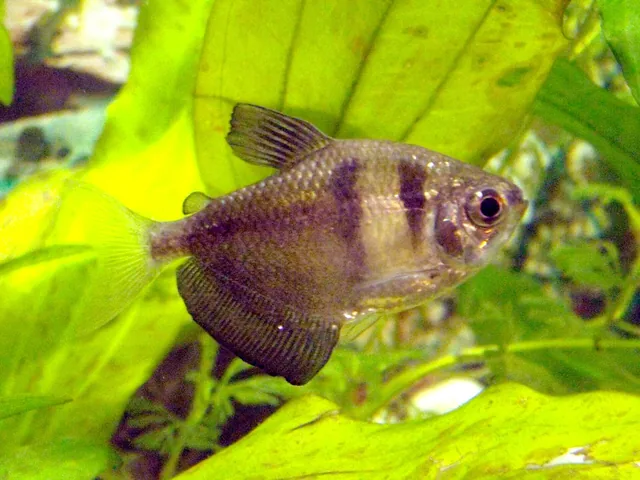
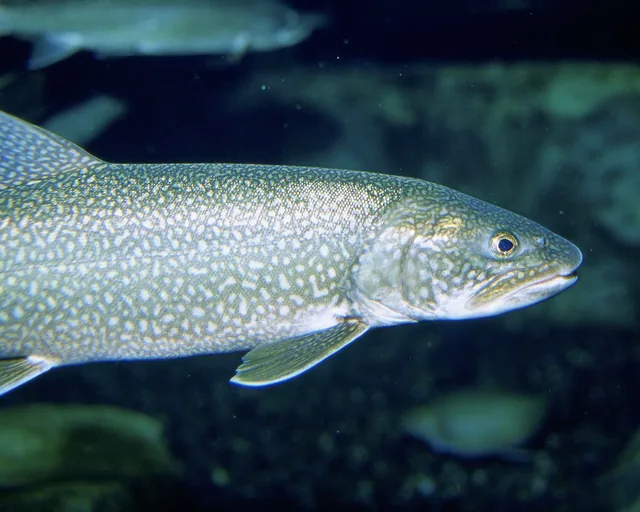
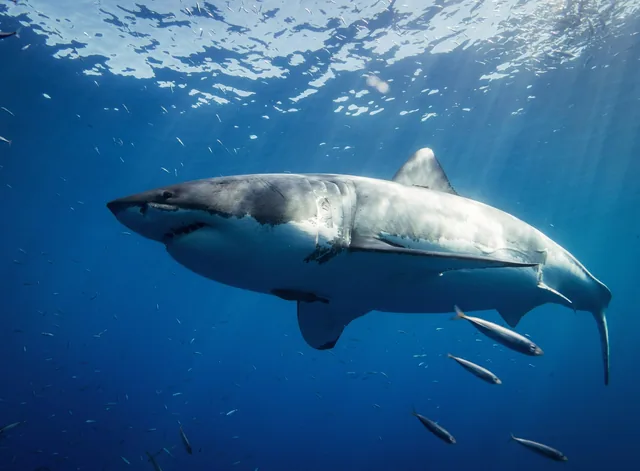
Can you name the fish?
Ten fish photos, four choices each, no timer. Pick a level.
Your photos
Keep reading about fish
More quizzes
This fish identification quiz shows you 10 photos of live fish and asks you to name each one from four choices. It works as a fish ID quiz for beginners, aquarium keepers and anglers: pick Easy, Medium or Hard. After every answer you see the mark that identifies the fish, so each round of the fish identification game teaches you something for the next.
How the fish identification game works
The quiz holds 120 fish, 40 per level. Every round draws 10 of them at random, so no two rounds are the same.
- Easy covers the most famous fish in the world: the Clownfish, Great White Shark, Whale Shark, Seahorse and Manta Ray. The wrong answers look nothing like the fish in the photo.
- Medium is the aquarium: the Neon Tetra, Cardinal Tetra, Discus, Oscar, Clown Loach and Royal Gramma. The wrong answers come from the same family or share the same colors.
- Hard is made of the North American game fish that anglers confuse: Largemouth and Smallmouth Bass, Walleye and Sauger, Northern Pike and Muskellunge, Black and White Crappie, and five Pacific salmon. One visible mark separates each pair.
Every photo shows a live fish in the water, on a reef, in a stream or in an aquarium. There are no fish on a hook or on a deck.
Score 10 out of 10 to earn the top rank. Share your score and see whether your friends can beat it.
How to identify a fish from a photo
Fish guides teach the same order for every species. It works on a photo as well as it does at the water’s edge.
- Body shape. A torpedo body belongs to a fast swimmer like a tuna, trout or shark. A tall, flat disc means a reef fish or a sunfish that turns in tight spaces. A long, thin body with a duckbill snout is a pike or a gar.
- Mouth. Its position tells you how the fish feeds. A mouth that points up takes food at the surface. One that points down, often with barbels, feeds on the bottom, like catfish, sturgeon and corydoras. A huge mouth with teeth belongs to a predator.
- Fins. Count the dorsal fins and look for spines. Bass, perch and walleye have a spiny front dorsal joined to a soft rear one. Trout, salmon and catfish carry a small fleshy adipose fin between the dorsal fin and the tail.
- Tail. A deeply forked tail points to an open-water swimmer. A square or rounded tail belongs to a fish that lives around cover. The Lake Trout has a deep fork, and the Brook Trout has an almost square tail.
- Markings and color last. Spots, bars and stripes stay the same, but color changes with light, water, mood and season. Salmon turn red, green or purple when they spawn, and many male aquarium fish are brighter than the females.
How to tell the look-alikes apart
These are the marks that decide the hardest pairs in the quiz.
- Largemouth or Smallmouth Bass: the Largemouth’s upper jaw reaches past the back of the eye, and a dark stripe runs along its side. The Smallmouth is bronze with vertical bars, and its jaw ends below the eye.
- Walleye or Sauger: the Walleye has a white tip on the lower lobe of its tail and a dark blotch at the back of the first dorsal fin. The Sauger has rows of black spots on that fin and no white tip.
- Northern Pike or Muskellunge: the Pike has light bean-shaped spots on a dark body. The Muskellunge has dark spots or bars on a light body.
- Black or White Crappie: the White Crappie wears faint vertical bars. The Black Crappie is covered in random black speckles.
- Brown, Rainbow or Brook Trout: the Brown Trout has black and red spots, often with pale rings. The Rainbow Trout has a pink stripe and a tail covered in small black spots. The Brook Trout has worm-like marks on its back and white edges on its lower fins.
- Neon or Cardinal Tetra: both have a glowing blue line. On the Neon the red covers only the rear half of the body. On the Cardinal it runs the whole length.
Identify the fish in your own photos
The quiz uses photos we picked. For a fish you spot while snorkeling, at a public aquarium or in a clear stream, WunderWild names the species from a photo you take on your iPhone. Every fish you identify goes into your Collection.
Frequently asked questions
How many fish species are there?
Eschmeyer’s Catalog of Fishes lists more than 36,000 valid fish species, and scientists describe several hundred new ones every year. Fish make up about half of all known vertebrate species.
Are sharks and rays fish?
Yes. Sharks, rays and skates are cartilaginous fish: their skeletons are made of cartilage instead of bone, and they breathe through gill slits. That is why the Great White Shark and the Manta Ray are on the Easy level.
What is the best way to practice fish identification?
Start with the 20 or 30 fish you are most likely to meet: the species in your local lake, at your fish store or on the reef you plan to visit. Then study one look-alike pair at a time, such as Black and White Crappie, until you can name the deciding mark without looking. A photo quiz helps because you see dozens of fish in a few minutes.
How do you tell a trout from a salmon?
Look at the tail and the spots. Atlantic Salmon have a slightly forked tail with few or no spots on it, and only a few black spots on the body, mostly above the lateral line. Brown Trout have a square tail and many black and red spots. Pacific salmon in the rivers are easier, because spawning turns them red, green or dark purple.
What are the hardest fish to identify?
Young salmon and trout, small minnows and shiners, and female aquarium fish. Juvenile salmon and trout all carry the same dark oval parr marks. Many minnows differ only in scale counts or the shape of their teeth. Female guppies, swordtails and bettas lack the colors that make the males easy to name.
Are the photos of real fish?
Yes. Every photo shows a live fish, in the wild or in an aquarium, and comes from Wikimedia Commons, iNaturalist, Unsplash, Openverse or another library of freely licensed images. The photographer and license appear after you answer.
Can I put this fish quiz on my website?
Yes. Click “Embed this quiz” under the game and copy the code into your page. Teachers, aquarium clubs, fishing clubs and nature centers can use it at no cost.
More fish to learn
Practice between rounds with our guides to the characteristics of fish, bony fish, the biggest fish in the world, the smallest fish, yellow fish and the fish of the Caribbean, or browse every species in the A to Z list of fish.