TLDR
England has roughly 35 to 40 native tree species, depending on how you count. The ones you’ll meet most often are English oak, ash, beech, silver birch, hazel, rowan and holly. Sycamore and horse chestnut are everywhere too, but both are introductions. The oak is England’s national tree, and ash and elm are the two species most damaged by disease.
Table of Contents
- Native or introduced?
- Native trees at a glance
- Common introduced trees
- Identify a tree by its leaf
- Ancient and famous trees of England
- Where to see them: England’s great woodlands
- Threats: ash dieback and Dutch elm disease
Native or introduced?
A native tree is one that arrived on its own after the last ice age, before people started shipping seeds around. England’s native list is short because the ice scraped the country bare about 10,000 years ago and the sea cut it off from Europe before many species could walk back in. The Woodland Trust’s guide to British trees is the standard reference if you want to check a species.
The native line-up is dominated by broadleaves: oak, ash, beech, birch, hazel, alder, hornbeam, field maple, wild cherry, the two limes, and a handful of willows. Only three conifers qualify: yew, juniper and Scots pine. Everything else you see in a park or hedge, from the monkey puzzle to the London plane, was planted.
Native trees at a glance
| Tree | Leaf | Bark | Where to see it |
|---|---|---|---|
| English oak | Lobed, almost stalkless | Deeply ridged, grey-brown | Hedgerows, parkland, Sherwood Forest |
| Ash | Compound, 9 to 13 leaflets, opposite | Pale grey, fissured with age | Limestone dales, hedgerows |
| Beech | Oval, wavy edge, silky when young | Smooth, grey, elephant-skin look | Chilterns, South Downs |
| Silver birch | Small, triangular, toothed | White, peeling, black diamond cracks | Heathland, the New Forest |
| Hazel | Rounded, soft, double-toothed | Smooth, brown, shiny | Coppiced woods, hedges |
| Rowan | Compound, toothed leaflets, red berries | Smooth, silvery grey | Moors, the Lake District |
| Hornbeam | Oval, ridged like a folded fan | Smooth, grey, twisted fluting | Essex, Hertfordshire, Epping Forest |
| Field maple | Small, five-lobed, rounded | Corky, fissured | Hedgerows, chalk downland |
| Holly | Glossy, spiny, evergreen | Smooth, grey-green | Woods, hedges, the New Forest |
| Yew | Flat needles, dark green | Reddish, flaking | Churchyards, chalk slopes |
| Scots pine | Paired needles in twos | Orange-red upper trunk | Surrey and Hampshire heaths |
| Alder | Rounded, sticky, notched tip | Dark, cracked | Riverbanks, wet woodland |
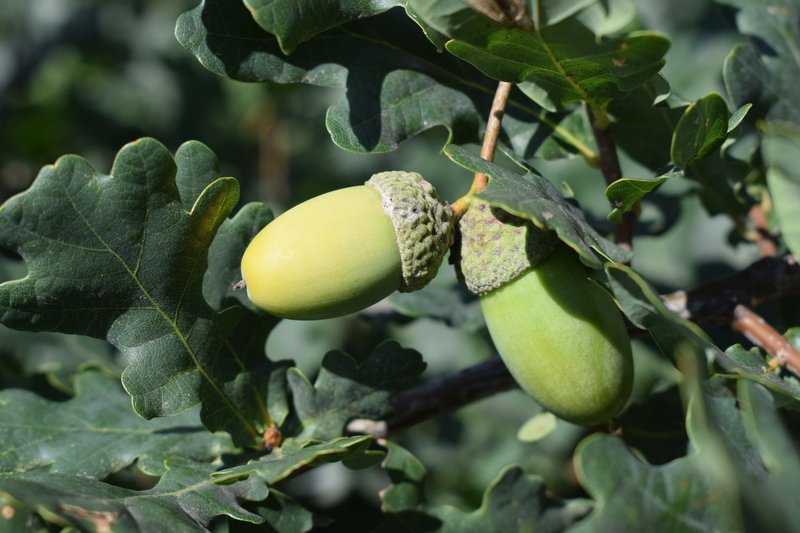
Oak earns its national-tree title. A mature English oak can support hundreds of insect species, which is why it feeds so much of the woodland food chain. Ash is a quieter case: it’s the tree with black buds in winter, an easy field mark when everything else is bare.
Wild service, small-leaved lime, large-leaved lime, aspen, whitebeam and crab apple round out the native list. They’re rarer, mostly in old woods on the right soil, and finding one is a small win.
Common introduced trees
Some of England’s most familiar trees are immigrants.
Sycamore is the big one. It was likely brought over in the 15th or 16th century, and it now seeds itself into woodland, gardens and rail embankments. The leaves are five-lobed and the fruits are the helicopter keys children throw.
Horse chestnut came from the Balkans in the 16th century. It’s the conker tree, with hand-shaped leaves split into five to seven leaflets and sticky buds in spring.
Sweet chestnut was probably brought by the Romans. Look for a spiralling trunk on old trees and spiny cases rather than the smooth conker shell.
London plane is a hybrid that thrives in pollution, shedding its bark in patches that leave a camouflage pattern. It dominates the streets of the capital.
Norway spruce and European larch are plantation conifers. If you’re walking through dark, regular rows, someone planted them for timber.
Identify a tree by its leaf
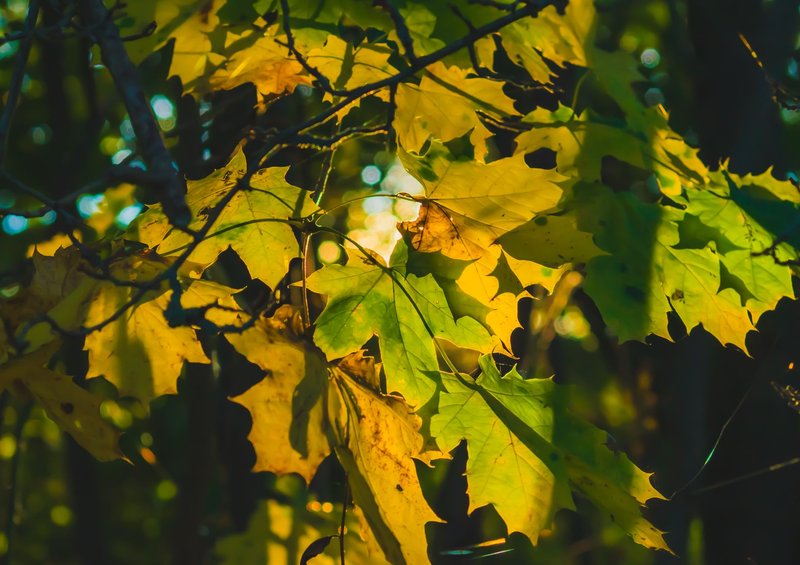
A key that works from May to October. Start at the top and stop at the first match.
- Needles or scales, not flat leaves. Needles in pairs: Scots pine. Flat, soft needles in two rows, red berry-like fruit: yew. Needles in tufts that fall in autumn: larch.
- Leaf made of several leaflets on one stalk. Leaflets opposite each other, black buds: ash. Leaflets with a red berry cluster: rowan. Leaflets fanning from one point like a hand: horse chestnut.
- Single leaf with lobes. Rounded lobes, nearly no stalk: English oak. Pointed, five-lobed, large and long-stalked: sycamore. Small and rounded lobes: field maple. Spiny and glossy: holly.
- Single leaf with no lobes. Heart-shaped and uneven at the base: lime. Strong parallel veins that fold like a fan: beech or hornbeam. Beech has a smooth edge with a wavy margin and hornbeam has a doubly toothed one. Small, triangular and toothed: birch. Rounded and fuzzy: hazel. Rounded with a notch at the tip: alder.
In winter, switch to buds and bark. Black buds mean ash. Long, slender, copper buds like cigars mean beech. Peeling white bark means birch.
Ancient and famous trees of England
England holds more ancient trees than the rest of north-western Europe combined, by most estimates, and the Ancient Tree Inventory lists tens of thousands of them. A tree counts as ancient mostly through girth and hollowing, not just age.
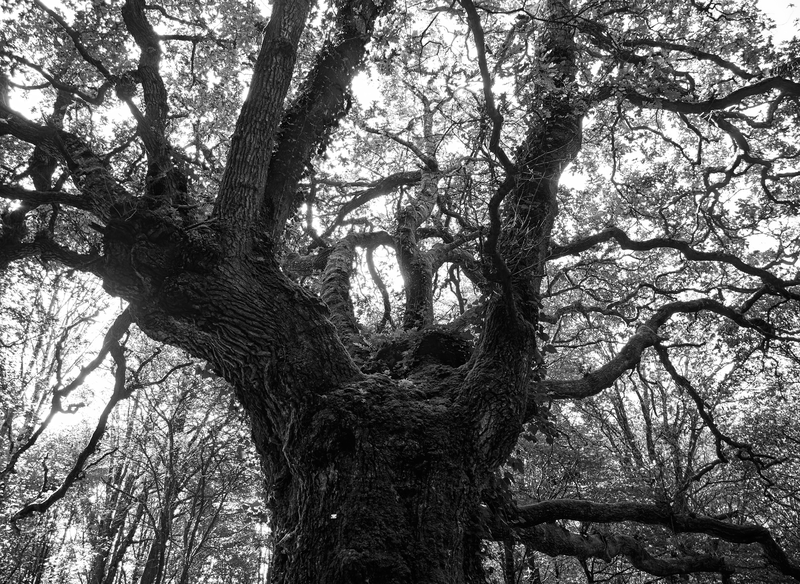
- The Major Oak, Sherwood Forest, Nottinghamshire. Estimated at 800 to 1,000 years old, with a crown held up by iron supports. Folklore says Robin Hood hid in it.
- Ankerwycke Yew, Runnymede, Surrey. Thought to be 2,000 years old or more, near the meadow where Magna Carta was sealed in 1215.
- Bowthorpe Oak, Lincolnshire. Often cited as one of the widest oaks in Britain, with a hollow big enough to have been used for dinner parties in the 19th century.
- Great Trees of London. The city keeps a register of notable trees, including plane trees planted in the 18th century that still line some squares.
Yews in churchyards are often older than the churches built beside them. Several of them are likely pagan sites that the church later claimed.
Where to see them: England’s great woodlands
The New Forest, Hampshire. A royal hunting ground since the 11th century, with ancient beech and oak pasture woodland where ponies still graze among the trunks.
Sherwood Forest, Nottinghamshire. The place to see veteran oaks, many of them well over 500 years old.
The Forest of Dean, Gloucestershire. One of the largest surviving ancient woodlands in England, with oak and beech, plus Norway spruce in the later plantations.
Epping Forest, Essex. Famous for pollarded hornbeam, cut high on the trunk centuries ago for firewood and now sprawling out in odd shapes.
The Chilterns. Beechwoods that turn copper in late October. The best autumn colour in the south of England.
Threats: ash dieback and Dutch elm disease
Two diseases have rewritten the English landscape in living memory.
Dutch elm disease arrived in the 1960s on imported timber and killed an estimated 25 million elms across the UK. Elm was once a hedgerow staple. Today you’ll find mostly suckers that die back once they reach a few metres.
Ash dieback is caused by the fungus Hymenoscyphus fraxineus, first recorded in the wild in England in 2012. Ash is the third most common tree in England, and Forest Research expects the disease to kill the majority of ash trees in the coming decades. Signs are blackened leaf stalks in summer and diamond-shaped lesions on the bark. A small share of trees show natural tolerance, which is why breeding programmes are using survivors.
If you spot a dying ash, don’t prune it in summer or move its leaves, because moving infected leaf litter can spread the fungus. The kinder step is to leave it, record it, and see whether it recovers.
The upside of the walk is that you now know what you’re looking at. Start with the oak, the ash and the beech, learn their leaves in summer and their buds in winter, and the rest follows.