Quick Answer
Gray’s beaked whales (Mesoplodon grayi) eat mostly deep-sea squid and fish, sucking them in at depth rather than biting them. Stomach contents from stranded animals have confirmed a few fish species, including hake-family fish and lightfish. Beyond that, the diet is largely inferred from close relatives. Direct data is thin because almost nobody has ever watched one feed.
Contents
- What Gray’s beaked whales eat
- Known versus presumed prey
- How a toothless-looking whale catches prey
- Why the evidence is so limited
- Gray’s versus Cuvier’s beaked whale
- Why they don’t fight sperm whales for dinner
- FAQ
What Gray’s beaked whales eat
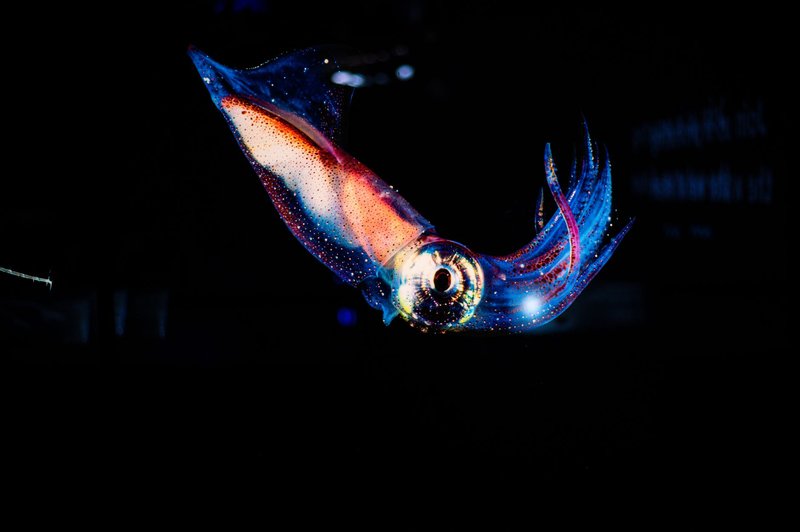
The Gray’s beaked whale diet comes down to two groups: squid and deep-water fish. Those are the prey animals that turn up in the stomachs of stranded whales, and they match what the rest of the genus Mesoplodon eats.
The fish side is the better documented. Recorded prey includes members of the hake family, silver lightfish, and some lanternfish, all of which live in the dark water column hundreds of meters down. Lanternfish are among the most abundant vertebrates in the ocean, which makes them a sensible target for an animal that has to find food in the dark.
The squid side is mostly inference. Other beaked whales in the genus eat squid families such as Ommastrephidae (flying squids), Octopoteuthidae, and Enoploteuthidae. Gray’s beaked whale almost certainly takes the same kinds of animals, but a species-level squid list for this whale doesn’t exist yet. Some references also suggest crustaceans and echinoderms. Those are presumptions, not confirmed meals.
Known versus presumed prey
The difference matters, because most pages on this species blur it. Here’s how the evidence sorts out.
| Prey | Status | Basis |
|---|---|---|
| Hake-family fish | Documented | Stomach contents of stranded whales |
| Silver lightfish | Documented | Stomach contents |
| Some lanternfish | Documented | Stomach contents |
| Ommastrephid squid | Presumed | Diet of other Mesoplodon species |
| Octopoteuthid squid | Presumed | Diet of other Mesoplodon species |
| Enoploteuthid squid | Presumed | Diet of other Mesoplodon species |
| Crustaceans, echinoderms | Speculated | General beaked whale feeding and anatomy |
If a source tells you flatly what a Gray’s beaked whale eats in a given month or region, it’s extrapolating.
How a toothless-looking whale catches prey
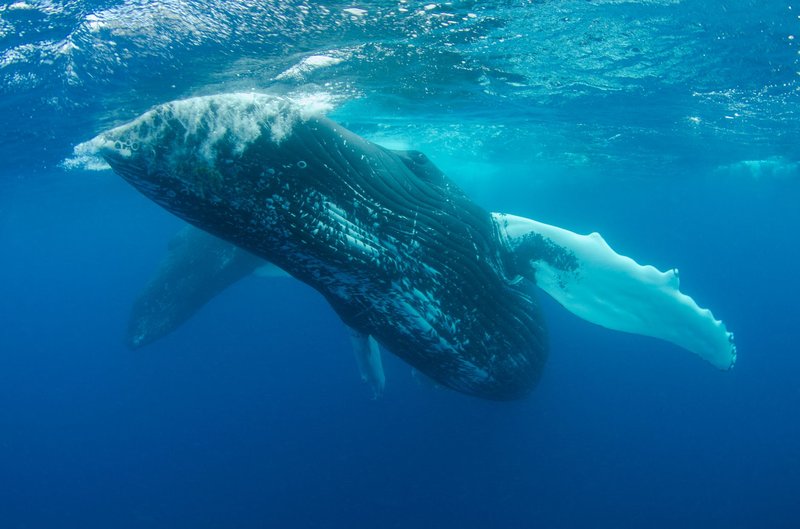
Gray’s beaked whale doesn’t chase prey and bite it. It sucks it in.
The mechanism works like a syringe. The whale has a small mouth and a thick, muscular tongue. When it drops its tongue back and expands the throat, the grooves under its chin spread open, the volume of the mouth jumps, and pressure falls. Water rushes in, and anything small and soft nearby goes with it. A squid has no time to react.
Teeth play almost no role. Gray’s beaked whale has a row of small teeth in the upper jaw, unusual for the family, but they’re tiny and do little to hold prey. The male’s lower-jaw teeth are the better-known feature. They sit partway along the jaw as short tusks and are used in contests between males, not for catching food. Females and calves don’t erupt them at all.
Suction feeding fits the habitat. In near-total darkness, a whale that locates prey with echolocation clicks can close the final gap with one fast gulp, with no need for a toothy lunge.
Why the evidence is so limited
Beaked whales are among the least-observed large mammals on Earth. They dive deep, stay down for long stretches, surface briefly, and avoid boats. Gray’s beaked whale lives in cold temperate waters of the Southern Hemisphere, far from most researchers.
So scientists lean on indirect methods:
- Stranded animals. Dead whales that wash ashore, mostly around New Zealand, Australia, South Africa, and South America, are the main source of stomach contents.
- Stomach contents. Fish bones and ear stones (otoliths) can be identified. Soft squid tissue digests fast and leaves little.
- Squid beaks. The hard beaks survive digestion and can be matched to species, which is why squid dominate the data for beaked whales generally.
Each method has a bias. Stranded whales may be sick or dying, so their last meals may not reflect normal feeding. A stomach sample is a snapshot of hours, not a season. And a species that leaves only a few strandings leaves only a few data points. That explains why the Australian Museum’s factsheet on the species states that nothing is known about its diet and only presumes what it eats.
Gray’s versus Cuvier’s beaked whale
Cuvier’s beaked whale is the best-studied member of the family, and the comparison shows how much we’re borrowing from it.
Researchers tagged Cuvier’s beaked whales off the California coast and recorded a dive to nearly 3,000 meters lasting more than two hours, the deepest and longest recorded for any air-breathing mammal at the time. Those tags and the NOAA Fisheries species profile give a feeding picture: deep dives, squid-heavy diet, suction capture.
Gray’s beaked whale is assumed to behave similarly, and its body plan supports that. But no one has tagged one and published dive depths, so any specific number for this species is a guess. The reasonable statement is that it’s a deep diver, likely feeding at hundreds of meters or more.
Why they don’t fight sperm whales for dinner
Sperm whales also eat squid at depth, so the overlap looks like competition. The most likely reason it isn’t: size and prey selection. Sperm whales are far larger and take bigger squid and a wider range of prey. Beaked whales target smaller, softer prey with a very different capture method, and different species of beaked whales likely partition the water column by depth and prey type. Gray’s beaked whale also favors cold southern waters, which cuts the overlap further. This is an ecological inference rather than a measured result, so treat it as the working explanation.
FAQ
Do Gray’s beaked whales have teeth?
Yes, but not for feeding. They have small teeth in the upper jaw, and males also have a pair of lower-jaw tusks used in fights. Prey is taken by suction.
How deep do Gray’s beaked whales dive?
Nobody has published tag data for this species. Related beaked whales dive to depths of 1,000 meters or more, and Cuvier’s beaked whale has been recorded at almost 3,000 meters. Gray’s is assumed to dive deep too.
Are they a threat to fish stocks?
No. The fish they eat, such as lanternfish and lightfish, aren’t commercially targeted at scale, and the whales are scarce and spread out. The more relevant concern runs the other way: beaked whales are sensitive to underwater noise, and the IUCN lists Gray’s beaked whale as Data Deficient because so little is known.
Summary
Gray’s beaked whale eats deep-sea squid and fish, captured by suction in the dark. The fish are partially documented. The squid are largely borrowed from relatives. The reason for the gaps is simple: this is a deep-diving, rarely seen whale, and most of what we know comes from animals that washed ashore.