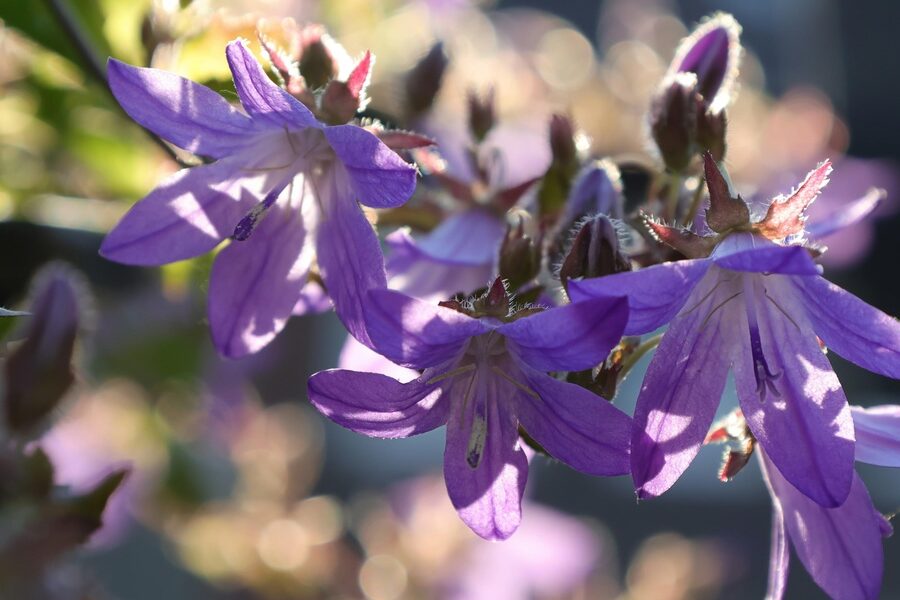
Germany’s landscapes—from coastal dunes and beech forests to lowland meadows and Alpine scree—support a surprisingly wide range of plant life. Knowing which species grow where helps hikers, gardeners, and naturalists connect with the seasons and local ecology.
There are 56 Plants of Germany, ranging from Bilberry (Heidelbeere) to Yarrow (Schafgarbe). For each entry you’ll find below the columns Scientific name, Native status, Habitat / region to make identification and regional comparison straightforward.
How were the species on this list chosen?
The list focuses on commonly recorded wild species across Germany’s major habitats, prioritizing native plants and widely observed natives that help illustrate regional variation; selections draw on floras, regional surveys, and herbarium records to balance commonness, ecological importance, and geographic spread.
How should I use the Scientific name, Native status, Habitat / region information?
Use the Scientific name to confirm identification, check Native status to understand whether a plant is indigenous or introduced, and consult Habitat / region to see where you’re most likely to encounter it or which sites are suitable for observation or restoration—combine those columns to plan visits, surveys, or planting that match local conditions.
Plants of Germany
| Common name | Scientific name | Native status | Habitat / region |
|---|---|---|---|
| Pedunculate oak (Stieleiche) | Quercus robur | Native | Lowland forests, river valleys across Germany |
| European beech (Buche) | Fagus sylvatica | Native | Mixed and beech-dominant forests, central and southern Germany |
| Norway spruce (Fichte) | Picea abies | Native | Higher elevations, forest plantations, Bavarian Alps and uplands |
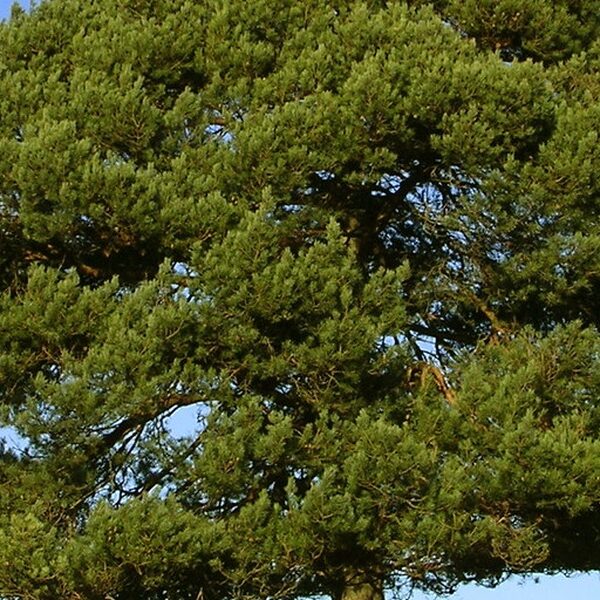
| Scots pine (Kiefer) | Pinus sylvestris | Native | Dry, sandy soils, heathlands, northern and eastern Germany |
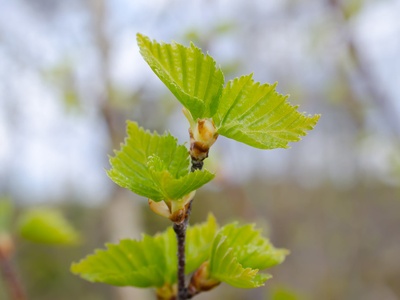
| Silver birch (Hänge-Birke) | Betula pendula | Native | Open woods, disturbed ground, across Germany especially north |
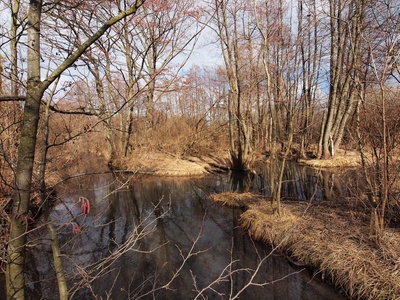
| Black alder (Schwarz-Erle) | Alnus glutinosa | Native | Wet soils, riverbanks, fens, throughout Germany |
| White willow (Silber-Weide) | Salix alba | Native | Floodplains, riverbanks, wet meadows across Germany |
| European aspen (Zitterpappel) | Populus tremula | Native | Woodland edges, hills, open stands across Germany |
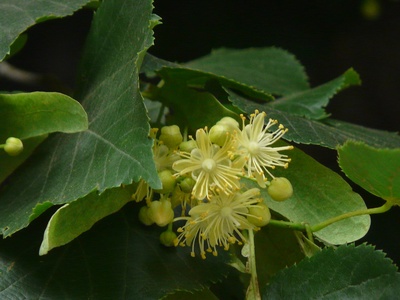
| Small-leaved lime (Winterlinde) | Tilia cordata | Native | Mixed woodlands, villages, lowlands and hills across Germany |
| European ash (Esche) | Fraxinus excelsior | Native | Mixed forests, hedgerows, river valleys across Germany |
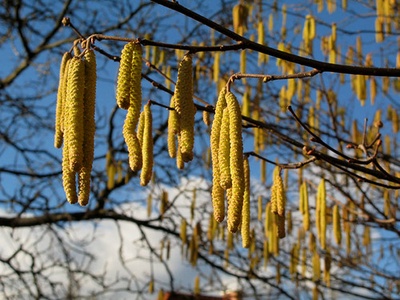
| Hazel (Hasel) | Corylus avellana | Native | Woodland edges, hedgerows, scrubby areas across Germany |
| Elder (Holunder) | Sambucus nigra | Native | Hedgerows, woodland margins, disturbed ground throughout Germany |
| Blackthorn (Schlehe) | Prunus spinosa | Native | Hedgerows, scrub, calcareous soils across Germany |
| Hawthorn (Maythorn) | Crataegus monogyna | Native | Hedgerows, farmland, woodland edges widespread across Germany |
| Dog rose (Heckenrose) | Rosa canina | Native | Hedgerows, scrub, woodland edges across Germany |
| Common reed (Schilfrohr) | Phragmites australis | Native | Wetlands, marshes, lakeshores across Germany |
| White water-lily (Seerose) | Nymphaea alba | Native | Calm waters, ponds, lakes across Germany |
| Meadow buttercup (Wiesen-Hahnenfuß) | Ranunculus acris | Native | Meadows, pastures, roadside verges throughout Germany |
| Wood anemone (Buschwindröschen) | Anemone nemorosa | Native | Deciduous woodlands, shady banks, across Germany |
| Cowslip (Schlüsselblume) | Primula veris | Native | Meadows, open grassland, calcareous soils mostly central and southern Germany |
| Early purple orchid (Männliches Knabenkraut) | Orchis mascula | Native | Woodland clearings, meadows, limestone areas, scattered Germany |
| Heath spotted-orchid (Geflecktes Knabenkraut) | Dactylorhiza maculata | Native | Heaths, acidic meadows, moorlands in uplands and north |
| Male fern (Wurmfarn) | Dryopteris filix-mas | Native | Woodland understory, shady slopes across Germany |
| Bracken (Wald-Farnkraut) | Pteridium aquilinum | Native | Heaths, woodland clearings, acidic soils nationally |
| Peat moss (Torfmoos) | Sphagnum palustre | Native | Bogs, peatlands, raised bogs mainly northern and east Germany |
| Common haircap moss (Kamm-Moos) | Polytrichum commune | Native | Heaths, open ground, acidic soils across Germany |
| Stinging nettle (Brennessel) | Urtica dioica | Native | Rich soils, hedgerows, waste ground widespread across Germany |
| Dandelion (Löwenzahn) | Taraxacum officinale | Native | Lawns, roadsides, meadows across Germany |
| Common daisy (Gänseblümchen) | Bellis perennis | Native | Lawns, grassy places, lowlands across Germany |
| Yarrow (Schafgarbe) | Achillea millefolium | Native | Meadows, roadsides, dry grasslands widespread across Germany |
| Greater plantain (Spitzwegerich) | Plantago major | Native | Compacted soils, paths, lawns, widespread across Germany |
| Sheep fescue (Schafsgras) | Festuca ovina | Native | Dry grasslands, calcareous soils, uplands across Germany |
| Smooth meadow-grass (Wiesen-Rispengras) | Poa pratensis | Native | Meadows, pastures, roadside verges widespread across Germany |
| Field horsetail (Acker-Schachtelhalm) | Equisetum arvense | Native | Disturbed ground, field margins, damp soils across Germany |
| Staghorn clubmoss (Bärlapp) | Lycopodium clavatum | Native | Acidic heaths, drier moorlands, uplands in Germany |
| Trumpet gentian (Alpenenzian) | Gentiana acaulis | Native | Alpine meadows, Bavarian Alps and highest peaks |
| Sweet violet (Duftveilchen) | Viola odorata | Native | Woodland edges, shaded banks, gardens naturalized across Germany |
| Great willowherb (Schmalblättriges Weidenröschen) | Epilobium hirsutum | Native | Wet margins, ditches, riverbanks throughout Germany |
| Small balsam (Drüsiges Springkraut) | Impatiens parviflora | Naturalised | Shaded woodlands, hedgerows, northern and central Germany |
| Himalayan balsam (Springkraut) | Impatiens glandulifera | Naturalised | Riverbanks, damp hedgerows, widespread invasive in Germany |
| Canadian goldenrod (Kanadische Goldrute) | Solidago canadensis | Naturalised | Roadsides, disturbed ground, river margins widespread naturalised |
| Japanese knotweed (Japanischer Staudenknöterich) | Reynoutria japonica | Naturalised | Ruderal sites, riverbanks, urban gaps widespread invasive |
| Black locust (Robinie) | Robinia pseudoacacia | Naturalised | Dry soils, roadsides, open forests widespread naturalised |
| Black cherry (Prunus serotina) | Prunus serotina | Naturalised | Woodland edges, hedgerows, disturbed woodlands across Germany |
| Giant hogweed (Riesen-Bärenklau) | Heracleum mantegazzianum | Naturalised | Roadsides, riverbanks, disturbed ground, scattered Germany |
| Cleavers (Klebkraut) | Galium aparine | Native | Hedgerows, wood margins, disturbed soils widespread across Germany |
| Oxeye daisy (Wiesen-Margerite) | Leucanthemum vulgare | Native | Meadows, roadsides, calcareous grassland across Germany |
| Biting stonecrop (Scharfer Mauerpfeffer) | Sedum acre | Native | Dry walls, rocky places, coastal and inland sunny sites |
| Edelweiss (Alpen-Edelweiß) | Leontopodium alpinum | Native | Alpine scree, rocky ledges in Bavarian Alps and high peaks |
| Lungwort (Lungenkraut) | Pulmonaria officinalis | Native | Shady woodlands, humus-rich soils western and central Germany |
| Liverleaf (Leberblümchen) | Hepatica nobilis | Native | Deciduous woods, calcareous slopes, central and southern Germany |
| Pyramidal orchid (Pyramiden-Hundswurz) | Anacamptis pyramidalis | Native | Calcareous grasslands, coastal dunes, southern Germany |
| Bogbean (Fieberklee) | Menyanthes trifoliata | Native | Bog pools, acidic fens, northern and upland peatlands |
| Marsh marigold (Sumpfdotterblume) | Caltha palustris | Native | Spring-flooded meadows, ditches, wetlands across Germany |
| Heather (Heidekraut) | Calluna vulgaris | Native | Heathlands, acidic dry soils, northern and low mountain areas |
| Bilberry (Heidelbeere) | Vaccinium myrtillus | Native | Acidic woodlands, heathlands, uplands and low mountains |
Images and Descriptions

Pedunculate oak (Stieleiche)
Large, broad-crowned deciduous tree with lobed leaves and long-stalked acorns; flowers in spring, green canopy in summer. Keystone species for wildlife, common in ancient woodlands and hedgerows, supports hundreds of insects and lichens.
European beech (Buche)
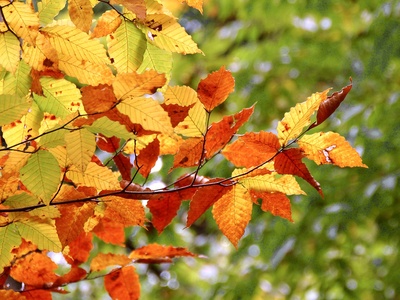
Tall, smooth-barked deciduous tree with glossy leaves turning golden-brown in autumn; produces small beechnuts. Forms dense, shady stands; ecologically dominant in many German uplands and valued for timber.
Norway spruce (Fichte)
Conical evergreen with needle-like leaves and hanging cones; year-round green, important timber species. Often planted in forests and reforested areas; habitat for birds and forest fauna.
Scots pine (Kiefer)
Tall evergreen with flaky orange-brown bark and paired needles; cones persistent on branches. Tolerant of poor soils and key in pine-dominated heath and forest landscapes.
Silver birch (Hänge-Birke)
Slender tree with white peeling bark and triangular leaves; catkins in spring. Pioneer species that colonizes clearings and poor soils, noticeable in early-successional habitats.
Black alder (Schwarz-Erle)
Medium tree with serrated leaves and small woody cone-like fruit; nitrogen-fixing root nodules. Common in riparian and swampy habitats, stabilizes banks and supports specialist fungi.
White willow (Silber-Weide)
Large willow with silvery underside of leaves and catkins in spring; fast-growing and moisture-loving. Important for riparian restoration and as early pollen source for insects.
European aspen (Zitterpappel)
Medium tree with trembling round leaves and smooth bark; reproduces by root suckers. Light-demanding pioneer commonly forming clonal stands on disturbed ground.
Small-leaved lime (Winterlinde)
Large, fragrant-flowered deciduous tree with heart-shaped leaves; dense summer canopy. Historically planted at village centers and valuable for pollinators due to abundant nectar-rich flowers.
European ash (Esche)
Tall tree with pinnate leaves and winged seeds (samaras); flowers early spring. Shade-tolerant and common in mixed stands; currently affected by ash dieback disease.
Hazel (Hasel)
Multi-stemmed shrub with rounded leaves and early catkins; produces edible nuts in autumn. Important understory shrub for birds and mammals, frequent in coppice and hedgerows.
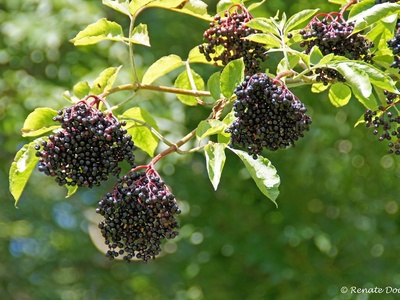
Elder (Holunder)
Multi-stemmed shrub with flat clusters of white flowers in late spring and dark berries in autumn. Flowers used for cordial; berries attract birds and wildlife.
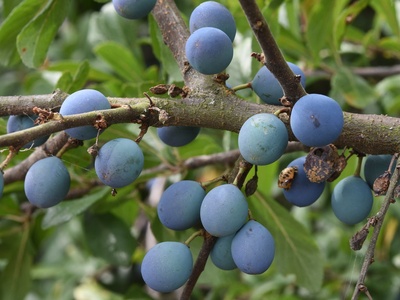
Blackthorn (Schlehe)
Spiny shrub with white spring flowers and small blue-black sloes by autumn. Dense hummock-forming hedge plant important for nesting birds and historic hedgerows.
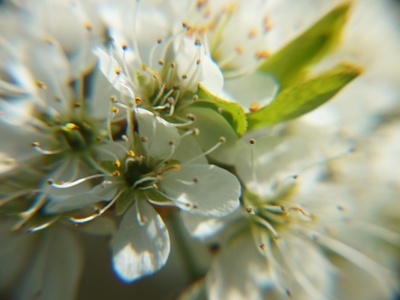
Hawthorn (Maythorn)
Bushy shrub with lobed leaves, fragrant white flowers in spring and red haws in autumn. Keystone hedgerow species, supports pollinators and songbirds.
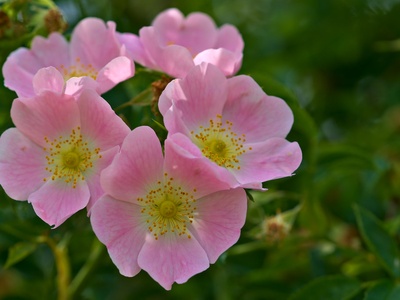
Dog rose (Heckenrose)
Arching shrub with pink to white fragrant flowers in summer and oval red hips later. Valuable for pollinators and birds; common in hedgerows and rough ground.
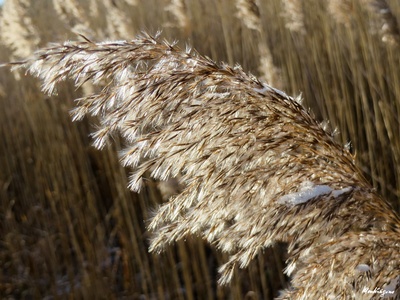
Common reed (Schilfrohr)
Tall perennial reed forming dense stands with plumed seed heads; flowers in late summer. Major component of wetlands, provides habitat for birds and stabilizes sediments.
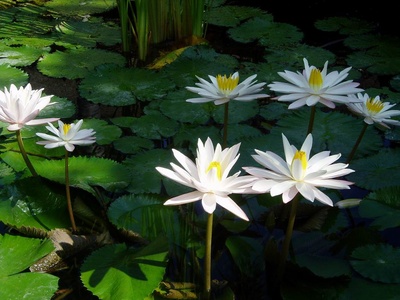
White water-lily (Seerose)
Floating perennial with large round leaves and showy white flowers in summer. Iconic aquatic species providing surface cover and shelter for aquatic life.
Meadow buttercup (Wiesen-Hahnenfuß)
Upright herb with glossy yellow flowers from late spring to summer; conspicuous in hay meadows. Indicator of unimproved grassland and supports a variety of insects.
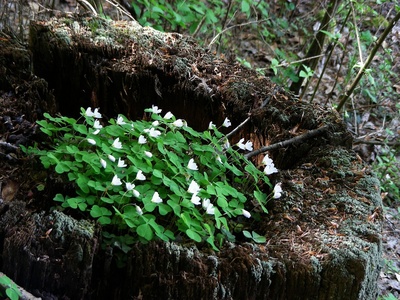
Wood anemone (Buschwindröschen)
Low spring-flowering perennial with white to pink-tinged flowers and divided leaves. Early woodland carpet in spring, short flowering period before canopy closure.
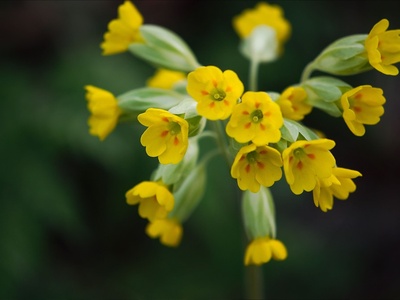
Cowslip (Schlüsselblume)
Basal rosette with nodding clusters of yellow tubular flowers in spring. Traditional meadow wildflower, important early nectar source for bees and butterflies.
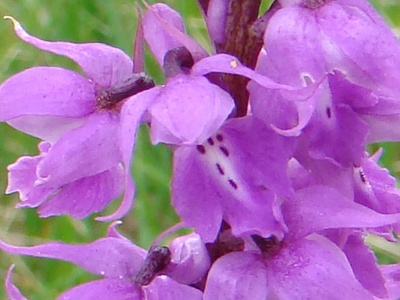
Early purple orchid (Männliches Knabenkraut)
Purple to pink spike of orchid flowers in spring; broad spotted leaves at base. Attractive spring orchid of nutrient-poor grassland and light woodlands.
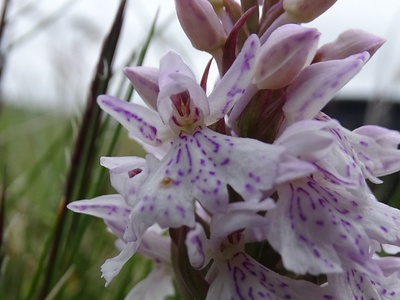
Heath spotted-orchid (Geflecktes Knabenkraut)
Slender orchid with spotted leaves and dense spike of pink flowers in summer. Typical of acidic, wet heathland and bog margins.
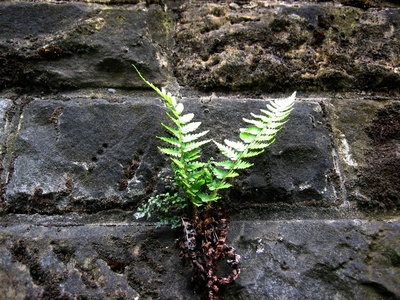
Male fern (Wurmfarn)
Robust evergreen fern with pinnate fronds emerging in spring; tolerates deep shade. Common forest fern, historically used medicinally.
Bracken (Wald-Farnkraut)
Large, highly branching fern forming extensive stands; fronds unfurl in spring and can dominate ground vegetation. Important but sometimes invasive on heathlands and disturbed sites.
Peat moss (Torfmoos)
Soft, spongy moss forming hummocks in acidic, waterlogged peat. Key peat-forming species that retains water and shapes bog ecosystems.
Common haircap moss (Kamm-Moos)
Dense, tall moss with upright stems and distinctive hair-like capsules. Forms velvety carpets on dry acidic soils and peat margins.
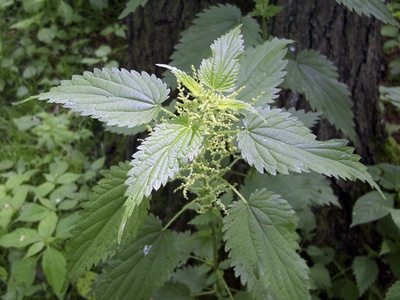
Stinging nettle (Brennessel)
Erect perennial with serrated leaves and stinging hairs; greenish flowers in summer. Nitrogen-loving species supporting many invertebrates and sign of fertile soils.
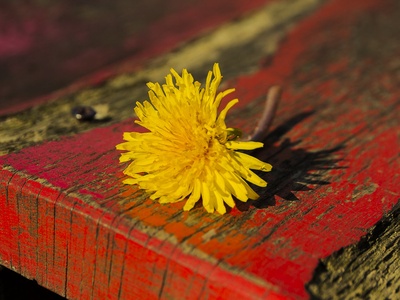
Dandelion (Löwenzahn)
Rosette-forming perennial with yellow composite flowers in spring and seed-heads dispersing by wind. Iconic hardy wildflower common in disturbed turf and meadows.
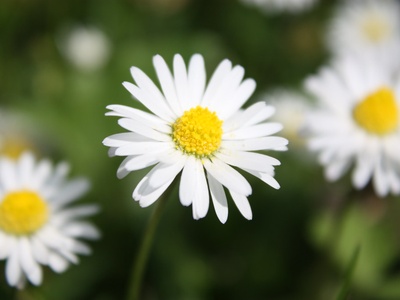
Common daisy (Gänseblümchen)
Small perennial with white ray florets and yellow disc flowerheads flowering most of year in mild seasons. Familiar lawn flower providing early nectar for insects.
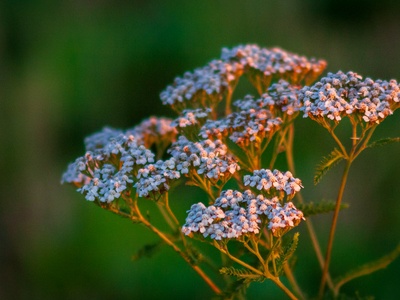
Yarrow (Schafgarbe)
Flat-topped clusters of small white-pink flowers above feathery aromatic leaves; flowers summer. Medicinally known, tolerant of poor soils and common in meadows.
Greater plantain (Spitzwegerich)
Low rosette with broad leaves and upright brownish flower spikes in summer. Very tolerant of trampling; traditional medicinal uses and common in urban areas.
Sheep fescue (Schafsgras)
Fine-leaved tufted grass forming low swards; flowers in late spring. Characteristic of species-rich, well-drained grasslands and grazed habitats.
Smooth meadow-grass (Wiesen-Rispengras)
Perennial grass forming dense turfs with fine leaves and open flowering panicles in summer. Important forage grass and common in hay meadows.
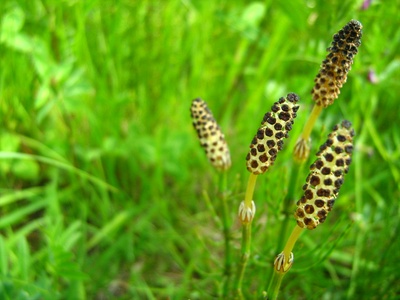
Field horsetail (Acker-Schachtelhalm)
Distinctive jointed, hollow stems with brush-like fertile shoots in spring and green sterile stems later. Ancient vascular plant, common in arable margins and damp soils.
Staghorn clubmoss (Bärlapp)
Low creeping clubmoss with trailing stems and cone-like sporophytes; evergreen appearance. Relict species of nutrient-poor acidic habitats, sensitive to disturbance.
Trumpet gentian (Alpenenzian)
Low rosette with striking deep-blue trumpet flowers in summer. Iconic alpine flower, restricted to high-elevation calcareous grasslands and rocky slopes.
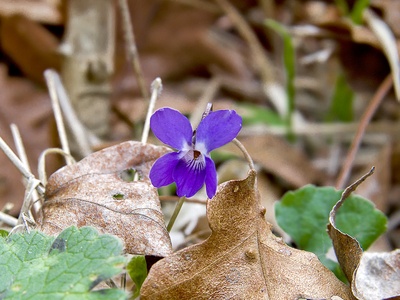
Sweet violet (Duftveilchen)
Low perennial with heart-shaped leaves and fragrant purple to white flowers in spring. Early nectar source for insects and popular garden wildflower that also grows wild.
Great willowherb (Schmalblättriges Weidenröschen)
Tall perennial with pink elongated flower spikes in summer and explosive seed capsules. Common in damp, nutrient-rich watersides and disturbed wetlands.
Small balsam (Drüsiges Springkraut)
Shade-tolerant annual with small yellow-green flowers in summer and explosive seed pods. Introduced from Asia but established in shady understories across Germany.
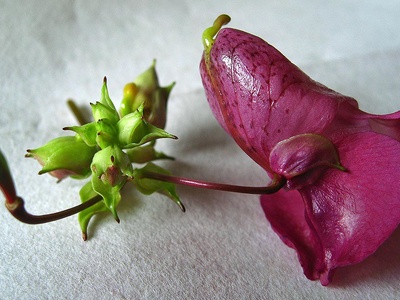
Himalayan balsam (Springkraut)
Tall annual with pink tubular flowers in summer and explosive seed dispersal. Highly invasive along waterways, outcompetes native flora and spreads rapidly.
Canadian goldenrod (Kanadische Goldrute)
Tall perennial with dense yellow flower panicles in late summer and autumn. Introduced ornamental turned invasive, forms dense stands that reduce native diversity.
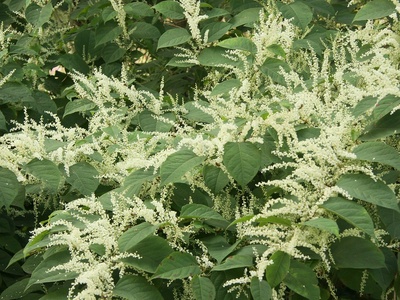
Japanese knotweed (Japanischer Staudenknöterich)
Stout bamboo-like stems with heart-shaped leaves and white flower clusters late summer. Extremely persistent rhizomes, major invasive species damaging infrastructure and native habitats.
Black locust (Robinie)
Fast-growing tree with pinnate leaves and fragrant pea-flowers in late spring; thorny young branches. Introduced from North America, now widespread and often transforms dry ecosystems.
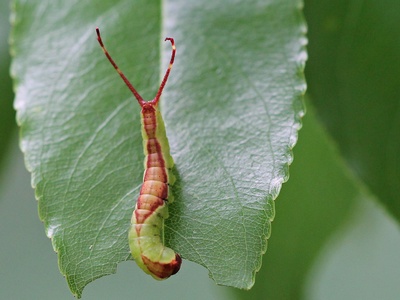
Black cherry (Prunus serotina)
Tall tree with lanceolate leaves and clusters of white flowers in spring; dark cherries in summer. Introduced from N. America, spreads by birds and naturalizes in woodlands.
Giant hogweed (Riesen-Bärenklau)
Very large umbellifer with white flowerheads in summer and sap that causes severe skin burns. Highly invasive and a public-health concern; managed in many regions.
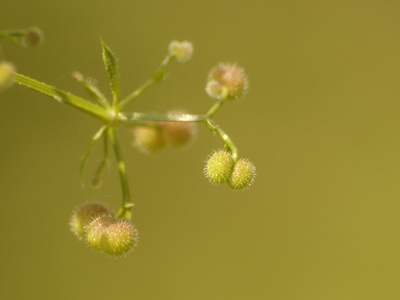
Cleavers (Klebkraut)
Annual with sprawling stems and tiny white flowers; hooks cling to animals and clothing. Common undergrowth species that spreads readily and seeds prolifically.
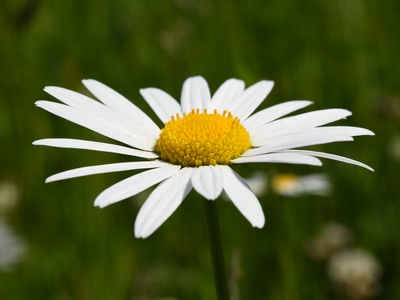
Oxeye daisy (Wiesen-Margerite)
Perennial with large white daisy-like flowers in summer on erect stems. Characteristic of traditional meadows and roadside verges, supports pollinators.
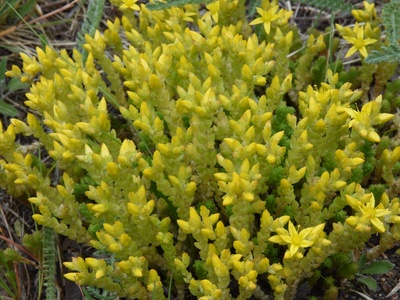
Biting stonecrop (Scharfer Mauerpfeffer)
Low succulent with tiny star-shaped yellow flowers in summer and fleshy leaves. Drought-tolerant pioneer on exposed rocky ground and old walls.
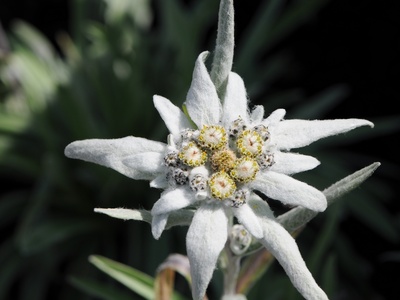
Edelweiss (Alpen-Edelweiß)
Small, woolly silver-white flowerheads in summer; distinctive star-like appearance. Iconic alpine symbol, adapted to harsh high-elevation conditions and legally protected in many regions.
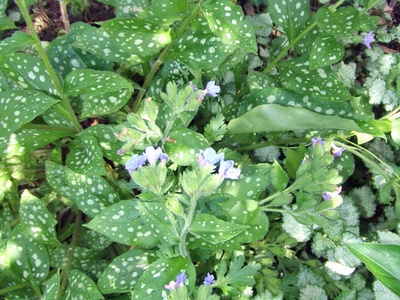
Lungwort (Lungenkraut)
Low perennial with spotted leaves and clusters of pink to blue flowers in spring. Early nectar source for bees; leaves historically used medicinally.
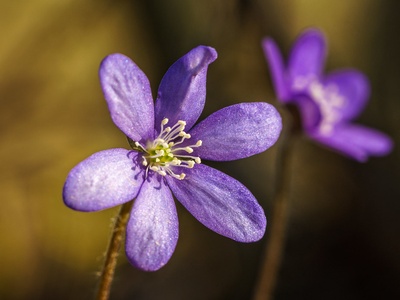
Liverleaf (Leberblümchen)
Low spring-flowering perennial with blue, pink or white cup-shaped flowers and three-lobed leaves. One of the earliest woodland flowers, forming colorful carpets in spring.
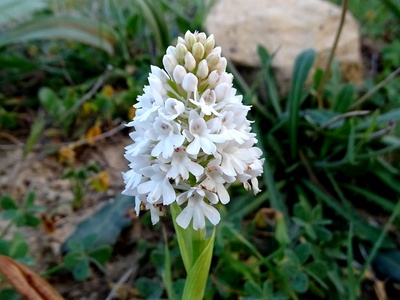
Pyramidal orchid (Pyramiden-Hundswurz)
Slender stem with dense pyramidal spike of pink flowers in late spring to summer. Attractive orchid of dry calcareous soils and species-rich meadows.
Bogbean (Fieberklee)
Rhizomatous aquatic plant with whorls of three leaflets and white fringed flowers in late spring. Typical of bog pools and shallow fen water; specialist of peatland ecosystems.
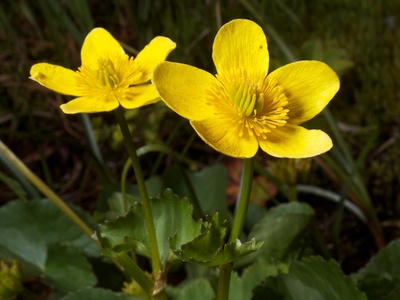
Marsh marigold (Sumpfdotterblume)
Low perennial with glossy yellow buttercup-like flowers in early spring. Brightens floodplain meadows and wet ditches; important nectar source for early insects.
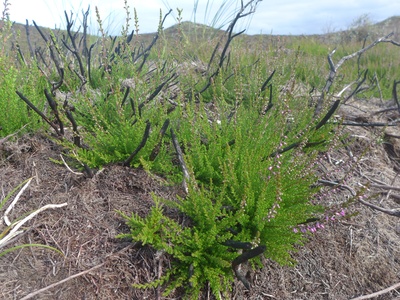
Heather (Heidekraut)
Low evergreen shrub with tiny scale-like leaves and pink bell-shaped flowers late summer. Characteristic of heath ecosystems, supports specialist insects and birds.
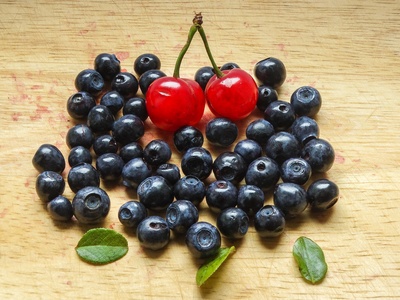
Bilberry (Heidelbeere)
Low shrub with small bell-shaped pinkish flowers and edible dark-blue berries in summer. Important food for wildlife and foragers; forms dense mats in acidic soils.